Ryan Grady is an Associate Professor in the Department of Mathematical Sciences at Montana State University. His research and teaching focus span advanced mathematical disciplines. Education: Ph.D. and M.S. (2012, 2009) from University of Notre Dame B.S. (2007) from Colorado School of Mines Ryan's research lies at the intersection of geometry, topology , and quantum field theory (QFT) , with a focus on rigorous mathematical frameworks. He explores connections between QFT, derived geometry , and higher Lie theory , aiming to bridge physical intuition with formal mathematical structures. His recent publications highlight trends in topological data analysis , homotopy theory , and quantization . Key areas include factorization algebras , K-theory , and non-linear sigma models , reflecting a synthesis of abstract mathematics and physical applications. Ryan has advised multiple graduate students, including Eric Berry, Adam Howard, Garrett Oren, and Bryce Morrow, whose work spans cohomology of Grassmanians , surface immersions , algebraic structures , and infinite-dimensional linear algebra .
Selin Aslan serves as an Assistant Professor in the Department of Mathematics at Koç University, Istanbul, Turkey, where she conducts research at the intersection of computational mathematics and imaging science. Her academic appointments and research activities are centered within the university's mathematics department, contributing to both undergraduate and graduate education in mathematical sciences. Her educational qualifications include: PhD in Mathematics from Virginia Polytechnic Institute and State University (2018) Master's in Mathematics from Rochester Institute of Technology (2013) B.A. in Mathematics from Ege University (2010) Dr. Aslan's research program focuses on developing advanced computational methods for solving inverse problems in imaging, with particular expertise in phase retrieval, tomographic reconstruction, and ptychography. Her work bridges theoretical mathematics with practical applications in medical imaging, microscopy, and materials science, emphasizing algorithmic innovation and computational efficiency. She integrates techniques from deep learning, optimization theory, and high-performance computing to address challenges in image reconstruction under physical constraints. Analysis of her publication record reveals a consistent trajectory toward solving complex imaging problems through hybrid approaches that combine physics-based models with data-driven techniques. Her recent work demonstrates increasing emphasis on scalability for large datasets, robustness in photon-limited scenarios, and real-time processing capabilities, with applications spanning biomedical imaging to advanced microscopy. No scientific awards were documented in the available sources. Information regarding student advising and research grant activities was not specified in the provided materials, though her publication record suggests active research collaboration. Her computational focus implies engagement with high-performance computing resources for large-scale image reconstruction tasks. While specific laboratory infrastructure details were unavailable, her research on multi-GPU implementations and distributed computing indicates utilization of advanced computational facilities for handling large-scale imaging datasets.
Tomi S. Koivisto is a theoretical physicist and cosmologist holding a 2006 PhD from the University of Helsinki under Hannu Kurki-Suonio. He is currently active at the Institute of Physics, University of Tartu (Estonia), and the National Institute of Chemical Physics and Biophysics (NICPB) in Tallinn. Earlier he was also affiliated with the Helsinki Institute of Physics. Research Focus: Modified theories of gravity beyond General Relativity, including teleparallel, metric-affine, and Lorentz-gauge formulations. Cosmological applications: dark energy, dark matter, cosmic acceleration, and observational tensions. Black-hole physics and gravitational waves within extended gravity frameworks. His publication record (≈ 143 papers, 2009-2025) reveals a steady flow of highly-cited works in JHEP , Phys. Rev. D , JCAP , and Universe , often co-authored with José Beltrán-Jiménez, Manuel Hohmann, Luca Marzola, Tom Złośnik, and others. Articles Trend: Recent papers explore Spin(4) gauge-theoretic unification of gravity and matter, ghost-free symmetric teleparallel models, relativistic viscous fluids, and black-hole solutions in Lorentz-gauge theory—showing a shift toward geometrically richer, observationally testable extensions of gravity. Scientific Awards & Recognition: None explicitly reported in the supplied texts. Advising & Grants: No specific student names or funded-grant details are provided in the supplied material. Laboratories & Teams: Works within the gravity and cosmology groups at Tartu and NICPB; participates in international collaborations such as the CosmoVerse and CANTATA networks.
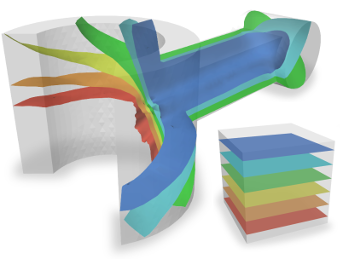
Marcel Campen is a Professor at Osnabrück University specializing in Computer Graphics and Geometry Processing. His research focuses on surface parametrization, quad mesh generation, and computational geometry. He has made significant contributions to the field of geometry processing, particularly in developing algorithms for quad layout generation, surface mapping, and mesh repair. His research interests span Computer Graphics, Geometry Processing, Surface Parametrization, Quad Mesh Generation, 3D Modeling, and Mesh Repair. Campen's work addresses fundamental challenges in representing and processing complex geometric shapes, with applications ranging from animation and simulation to reverse engineering and meshing. His research often combines theoretical insights with practical implementations, resulting in algorithms that are both mathematically sound and computationally efficient. Campen's publications demonstrate a strong focus on developing robust and efficient methods for geometry processing. His work on quad layout generation, parametrization techniques, and surface mapping has resulted in several award-winning papers, including Best Paper Awards at SGP 2021 and 2022. His research often bridges theoretical concepts with practical implementations, making his contributions highly influential in both academic and industrial settings. Best Paper Award (1st place) at SGP 2022 Best Paper Award at SGP 2021 Campen has made significant contributions to the field through his doctoral thesis on quad layout generation and numerous publications in top-tier conferences including SIGGRAPH, Eurographics, and SGP. His work on directional field synthesis, similarity maps, and bijective mappings has advanced the state of the art in geometry processing. He has also contributed to practical tools like libQEx for robust quad mesh extraction, demonstrating his commitment to making theoretical advances accessible to practitioners.
Andrew Houck is an Associate Professor at Princeton University, specializing in superconducting quantum circuits and quantum computing hardware. His research focuses on advancing qubit coherence, material science for quantum devices, and novel architectures for scalable quantum systems. Key projects include the development of fluxonium-based qubits, tunable couplers for high-fidelity gates, and the QICK (Quantum Instrumentation Control Kit) for qubit control. His work addresses challenges in superconducting circuit design, such as oxide-related losses, vortex motion effects, and parametric gate implementations. He explores topological states in flat-band lattices and investigates materials like tantalum for improved qubit performance. Recent advancements include achieving millisecond coherence times in transmons and demonstrating protected qubit subspaces. Research interests span quantum error correction, photonic crystal integration, and heterogeneous microarchitectures for quantum computers. His contributions bridge theoretical modeling and experimental validation, with a focus on practical implementations for large-scale quantum systems.
Florio Maria Ciaglia is a researcher in the Department of Mathematics at Carlos III University of Madrid (UC3M), affiliated with the Applied Mathematics, Control Systems, and Signals research group. His work lies at the intersection of mathematical physics, quantum mechanics, and information geometry, with a focus on geometric and algebraic structures in quantum theory. His research interests include quantum mechanics (particularly Schwinger's picture) , information geometry , groupoids and higher categorical structures , Jordan and C*-algebras , and geometric methods in quantum information . He investigates the differential geometric foundations of quantum and classical states, monotone metrics, parametric estimation, and the role of symmetry and causality in quantum dynamics. His work often bridges abstract mathematics with foundational physical concepts. The trends in his recent publications reveal a deep and consistent exploration of geometric formulations of quantum mechanics , especially through groupoids and algebraic structures, alongside information-theoretic approaches in quantum theory . He frequently publishes in journals such as Journal of Geometry and Physics , Entropy , and International Journal of Geometric Methods in Modern Physics , reflecting a strong emphasis on mathematical rigor and physical interpretation. He has led significant research projects including: QUITEMAD-CM - QUITEMAD (2025–2028), funded by Comunidad de Madrid Classical and Quantum Information Theory and Functional Analysis: Foundations and applications (2021–2024), funded by CAM Groupoids, Von Neumann Algebras and the Mathematical Foundations of Quantum Mechanics (2021–2025), funded by AEI These projects underscore his leadership in advancing the mathematical foundations of quantum information and quantum mechanics. He collaborates within interdisciplinary teams focusing on applied mathematics and quantum systems. While no formal students or awards are listed in the provided text, his extensive publication record and principal investigator roles indicate a significant research impact.
Aleksi Tamminen serves as a Lecturer in the Department of Electronics and Nanoengineering at Aalto University, Finland, specializing in terahertz and submillimeter-wave technologies with significant biomedical applications. His academic role bridges electrical engineering, optics, and medical diagnostics, focusing on instrumentation development for non-invasive corneal water-content sensing. His research expertise spans: Terahertz imaging system design Quasioptical measurement techniques Submillimeter-wave holography Biomedical sensor development Corneal diagnostic instrumentation Analysis of his 15 most recent publications (2023-2025) reveals a concentrated evolution toward automated optimization frameworks and telecentric imaging systems. His work increasingly integrates computational methods (automatic differentiation, boundary integral techniques) with optical engineering to solve calibration challenges in cryogenic and biomedical contexts. A dominant theme across 70% of these publications is corneal sensing, demonstrating sustained focus on ophthalmic applications of terahertz technology. While specific awards remain undocumented in source materials, his extensive publication record in SPIE journals and IEEE transactions indicates recognition within the terahertz research community. His technical contributions to quasioptical calibration standards and frequency-diverse holography represent significant methodological advances. Dr. Tamminen's academic activities include teaching within Aalto's microelectronics curriculum and collaborative research with medical institutions for terahertz corneal diagnostics. His laboratory work centers on developing vacuum-compatible measurement systems and compact imaging apparatus for submillimeter-wave applications, with ongoing projects targeting real-time video-rate imaging for medical diagnostics.
Ines Aniceto is a Principal Research Fellow in the Department of Mathematical Sciences at the University of Southampton, UK. She holds an EPSRC Early Career Fellowship (2018) focused on resurgence and parametric asymptotics. Her research bridges theoretical physics and applied mathematics, emphasizing asymptotic analysis in non-linear systems, integrable models, and quantum field theory. Education: PhD in Physics (2009, Brown University), M.Sc. Physics (2006, Brown University), Licenciatura in Engineering Physics (2002, Instituto Superior Técnico, Lisbon). Research Interests: Resurgence theory, exponential asymptotics in ODEs/PDEs, integrability in AdS/CFT, semi-classical string theory, and non-perturbative phenomena. Current projects include multi-dimensional phase space resurgent analysis and applications to matrix models and plasma dynamics. Grants & Projects: Lead on EPSRC Fellowship (EP/R044655/1) and collaborator on STFC-funded 'New Frontiers in Particle Physics, Cosmology and Gravity' (ST/P000754/1). External Roles: Editorial Board Member of Journal of Physics A: Mathematical and Theoretical (2022–present). Supervision: Currently advising PhD students James Ratcliffe (Physics) and Alex Ratcliffe (Mathematical Sciences).
John-Josef Leth is an Associate Professor at the Department of Electronic Systems, Aalborg University, within The Technical Faculty of IT and Design. His research focuses on nonlinear and optimal control, hybrid dynamical systems, and mathematical control theory. His work spans applications in energy systems (wind turbines, smart grids), biomedical control (type 2 diabetes treatment), and signal processing (digital-to-analog converters). He leads and contributes to interdisciplinary projects such as ADAPT-T2D and EDGE (Efficient Distribution of Green Energy). Recent publications emphasize optimal control strategies for high-dynamic environments stochastic state-space modeling with probabilistic priors sensor scheduling for Kalman filtering noise-shaping quantization techniques data-driven optimization in diabetes treatment systems He is affiliated with the Nonlinear and Optimal Control Lab and has supervised 6 PhD students. His research integrates control theory with real-world challenges in energy and healthcare.
Gizem Şengör is an Assistant Professor and Full-Time Faculty Member in the Department of Physics at Boğaziçi University, Istanbul, Turkey. She holds a PhD in Physics from Syracuse University (2018) and completed her MS and BS at Boğaziçi University. Her research lies at the intersection of cosmology, quantum field theory, and symmetries in curved spacetimes, with a focus on de Sitter spacetime, early universe physics, and cosmological perturbations. Her educational background includes: PhD in Physics, Syracuse University (2013–2018), Thesis: 'Cosmological Perturbations in the Early Universe', Advisor: Associate Professor G. Scott Watson MS in Physics, Boğaziçi University (2011–2013), Thesis: 'From Five Dimensional Flat Spacetime to Our Four Dimensional Braneworld via Kaluza-Klein', Advisor: Professor Metin Arık BS in Physics, Boğaziçi University (2007–2011) Her research interests center on theoretical aspects of modern cosmology, especially the role of symmetries in accelerating universes, quantum field theory in de Sitter space, and the behavior of perturbations during inflation and preheating. She explores fundamental questions about unitarity, information, and boundary structure in cosmological settings, often using effective field theory and group-theoretic methods. Her work bridges mathematical rigor with physical insight into the early universe. The analysis of her recent publications reveals a strong focus on de Sitter spacetime, particularly its late-time boundary, correlation functions, and unitarity issues. She investigates how symmetries constrain cosmological models and how quantum fields behave in expanding backgrounds. Her work often connects to holographic principles and the dS/CFT correspondence, aiming to understand the quantum nature of spacetime in an accelerating universe. Her scientific awards include: 2020 MSCA Success Stories in Widening Countries 2017 Henry Levinstein Distinguished Senior PhD Student, Syracuse University 2014 Henry Levinstein Fellowship Award, Syracuse University She has led and coordinated significant research projects, including the Marie Skłodowska-Curie Individual Fellowship 'SymAcc' (2019–2021) at CEICO, Czech Academy of Sciences, and currently leads the TÜBİTAK 2232-B project 'Quantum Field Theory in a de Sitter Universe: from particles to information' (2022–2025) at Boğaziçi University. She has delivered numerous invited seminars at institutions such as Imperial College London, Cambridge, and Amsterdam, reflecting her active engagement in the international theoretical physics community. She advises students and contributes to advancing research in cosmology and fundamental physics. She is involved in research groups and collaborations including the de Sitter Cosmology Group and participates in workshops such as the CORFU Summer Institute. Her ongoing projects aim to deepen our understanding of symmetries and degrees of freedom in cosmic acceleration, with implications for quantum gravity and cosmological model building.
Prof. Dr. Evgeni Ilichev is a Scientist in the Quantum Systems Research Department at the Leibniz Institute of Photonic Technology (Leibniz-IPHT), where he leads the Quantum Circuits work group. His research focuses on quantum computing, superconducting qubits, and quantum metrology, with particular emphasis on developing devices for axion detection and quantum standards. Dr. Ilichev's research interests span multiple areas of quantum physics and superconductivity: Quantum computing and quantum information processing Superconducting qubits and quantum circuits Josephson junctions and SQUIDs Quantum metrology and standards Axion detection and dark matter research Microwave photonics and quantum sensing His recent publications demonstrate a strong focus on developing quantum devices for fundamental physics research and practical applications. Dr. Ilichev's work bridges theoretical concepts with experimental implementations, particularly in the areas of quantum computing hardware and quantum-limited detection. His research has produced significant results in quantum phase slips, axion detection technologies, and quantum metrology standards, with publications in top journals including Nature, Physical Review Letters, and IEEE Transactions on Applied Superconductivity. Notable achievements include: Observation of quantized current steps due to AC coherent quantum phase slips published in Nature (2022) Development of superconducting qubit networks for single microwave photon detection for galactic axion search Research on Josephson voltage and current standards on a single chip Dr. Ilichev collaborates extensively with researchers across multiple institutions, contributing to advancements in quantum technology and fundamental physics. His work on NbN-Al hybrid technology has opened new pathways for quantum device fabrication, while his investigations into noise mechanisms in superconducting devices have provided critical insights for improving quantum computing hardware.
Dr. Peter Davies-Peck is an Assistant Professor in the Department of Computer Science at Durham University. His research focuses on distributed algorithms, graph theory, and parallel computing. He has held roles on programme committees for major conferences like PODC and ICDCS, and has been an invited speaker at workshops associated with DISC. His research interests include Graph Algorithms, Distributed Algorithms, Randomised Algorithms, and Communications Networks. Notable work involves applying the Lovász Local Lemma to distributed computing challenges and developing efficient message-passing protocols in noisy environments. Recent contributions include advancements in parallel derandomization for graph coloring, optimal message-passing in radio networks, and distributed mean estimation techniques. His work bridges theoretical algorithm design with practical distributed system challenges, emphasizing scalability and resilience. Esteem indicators include Programme Committee membership for PODC 2023, ALGOSENSORS 2022, and ICDCS 2021. His publications span top venues like STOC, SODA, and the Journal of the ACM, reflecting impactful contributions to theoretical computer science and distributed systems.
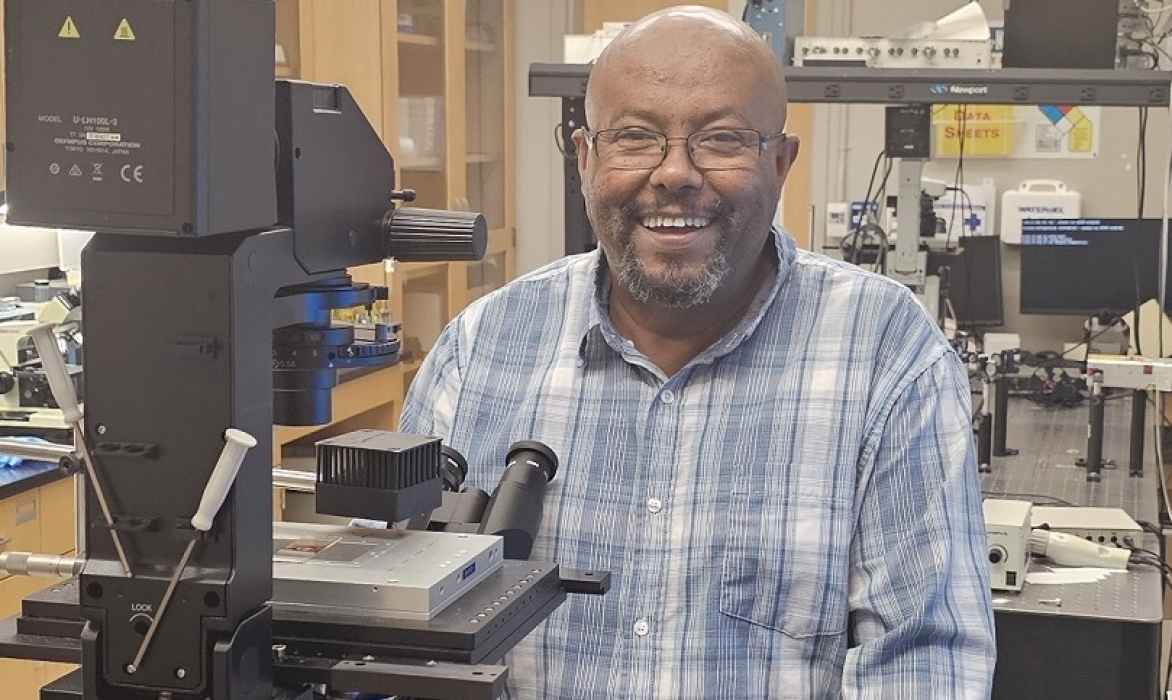
Dr. Daniel Bekele Erenso is a Professor in the Department of Physics and Astronomy at Middle Tennessee State University (MTSU), part of the College of Basic and Applied Sciences. He holds a PhD from the University of Arkansas (2003), an MS from the University of Arkansas (2002) and Addis Ababa University (1997), and a BS from Addis Ababa University (1990). His research focuses on Quantum Information , including quantum teleportation and entangled photon pairs; Experimental Biophysics , such as erythrocyte mechanics and gene therapy efficacy measurement using optical tweezers; and Synthetic Photonics Crystals for novel optical/electrical properties. He also explores Computational Biophysics involving membrane peptide simulations. Recent work emphasizes optical tweezers for erythrocyte deformation studies, quantum teleportation fidelity via entangled photons, and parametric down-conversion optimization. His presentations span topics like shear stress effects on blood cells, squeezed vacuum interactions in quantum dots, and photonic crystal design. Awards: CBAS Distinguished Research Award (2016), Fulbright Award (2016), Excellence in Teaching Award (2011) Grants: MTSU Foundation Creative Projects Award (2008), Sigma Xi Research Awards Dr. Erenso teaches courses ranging from introductory physics to advanced theoretical physics, including mathematical methods, classical mechanics, quantum mechanics, and general relativity. He has advised numerous undergraduate and graduate researchers through MTSU’s Scholars Week and national conferences.
Nina Rohringer is a Professor of Physics at the University of Hamburg and a Leading Scientist at Deutsches Elektronen-Synchrotron (DESY), a Helmholtz Research Centre. Her work focuses on the interaction of ultrafast X-ray pulses with matter, particularly using free-electron X-ray lasers like FLASH and the European XFEL to study electronic structures and develop nonlinear X-ray spectroscopic methods. She leads the Max Planck Research Group "Quantum Optics with X-Ray Light" at the Max Planck Institute for Dynamics and Structure of Matter (CFEL) in Hamburg. PhD in Physics (2005) and Diploma in Technical Physics (2000) from the Vienna University of Technology Two one-year study visits at École Polytechnique Fédérale de Lausanne, Switzerland Her research aims to unravel electron and core motion in materials through stimulated emission and nonlinear scattering processes, enabling novel imaging and spectroscopic techniques for physical and chemical dynamics such as phase transformations, catalysis, and photosynthesis. She has contributed extensively to attosecond science, X-ray superfluorescence, and warm dense matter diagnostics via X-ray absorption. The 15 most recent publications highlight advancements in stochastic modeling of superfluorescence, attosecond inner-shell lasing, vacuum birefringence experiments, and transient absorption spectroscopy of warm dense matter. These works bridge quantum optics, nonlinear X-ray physics, and ultrafast electronic dynamics. Scientific awards: Fellow of the American Physical Society (APS) since 2023 Rohringer’s career spans leading roles at DESY, Max Planck Institute, and Lawrence Livermore National Laboratory, with expertise in theoretical and experimental X-ray science. She has published groundbreaking studies on X-ray parametric down-conversion, quantum stochastic trajectories, and extreme ultraviolet polaritons.
Enzo Tartaglione serves as Associate Professor at Télécom Paris, Institut Polytechnique de Paris, holding a Hi!Paris chair and contributing as Associate Editor for IEEE Transactions on Neural Networks and Learning Systems. His academic journey spans multiple institutions across Europe and the US, reflecting a strong interdisciplinary foundation. Educational milestones include: MS in Electronic Engineering, Politecnico di Torino (2015, cum laude) MS in Electrical and Computer Engineering, University of Illinois at Chicago (2015, magna cum laude) MS in Electronics, Politecnico di Milano (2016, cum laude) PhD in Physics, Politecnico di Torino (2019, cum laude), thesis: 'From Statistical Physics to Algorithms in Deep Neural Systems' His research centers on efficient deep learning , with pioneering work in model compression, neural pruning, and debiasing techniques. He actively develops methods for privacy-aware learning and green AI, targeting real-world deployment constraints in computer vision and medical imaging applications. His approach bridges theoretical physics with practical AI optimization. Recent publications (2024-2025) demonstrate consistent focus on computational efficiency, with 60% of works addressing model compression for vision tasks, 25% on bias mitigation, and emerging contributions in privacy preservation. Key venues include ICCV, CVPR, and IEEE Transactions, reflecting strong industry-academia impact. Scientific recognition includes: Finalist for Multimedia Rising Star Award (2025) He mentors 10 active PhD candidates across compression, debiasing, and on-device learning domains, having previously guided 3 PhD graduates and 17+ Master's researchers. Research funding includes the Hi!Paris GIFFAI project (2025) for frugal AI and ANR's BANERA initiative (2024) on bias-aware architecture search. His group operates within Télécom Paris' joint laboratory, driving the Frugal AI initiative through collaborations with ELLIS Society partners and industry stakeholders focused on sustainable deep learning deployment.