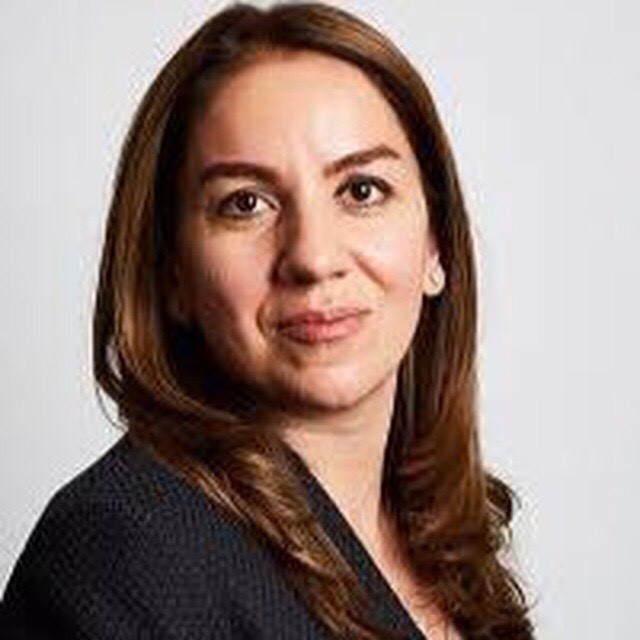
Delphine Périé-Curnier is a Full Professor in the Department of Mechanical Engineering at Polytechnique Montréal and Director of Graduate Studies. Her research focuses on developing quantitative MRI techniques for non-invasive characterization of living tissue mechanical properties, particularly in cardiotoxicity detection and musculoskeletal mechanobiology . She leads the Bioperformance Analysis and Innovation Laboratory (LIAB) and contributes to the Institute of Biomedical Engineering. Education: Ph.D. from Paul Sabatier University, Toulouse, France Her work bridges medical imaging , biomechanical modeling , and finite element analysis to predict disease progression through pathomechanism understanding. Key projects include exercise-induced cardiac changes in childhood cancer survivors and spinal biomechanics in scoliosis. Recent publications (2023-2024) emphasize cardiovascular MRI for childhood cancer survivorship and hemodynamic modeling in left ventricle analysis. She supervises 26 graduate students, with completed theses spanning topics like doxorubicin cardiotoxicity , knee replacement stability , and spatial cardiac MRI protocols . Teaching includes graduate courses in biomedical design , advanced biomechanics , and modeling techniques .
Aleksandr Zinoviev is a Senior Research Associate at the School of Engineering and Information Technology (SEIT) at UNSW Canberra, where he has been working since 2022. His research spans multiple institutions across the globe, including previous positions at Siemens Digital Industries Software in Belgium, University of Bremen and AMSIS GmbH in Germany, and Institute of Strength Physics and Materials Science of the Russian Academy of Sciences and Tomsk Polytechnic University in Russia. He has also conducted research stays at the University of Bremen (Germany) and São Paulo State University (Brazil). Dr. Zinoviev's research interests are highly interdisciplinary, focusing on metal additive manufacturing, thermodynamics of materials, computational materials science, solid mechanics, software engineering, and machine learning. He specializes in developing and applying novel knowledge-based approaches to address engineering challenges, particularly in improving materials and parts produced by advanced manufacturing, optimizing production processes, and enhancing data processing. His work bridges the gap between fundamental materials science and practical engineering applications, with a strong emphasis on computational modeling and simulation. Analysis of his recent publications (2021-2025) reveals a consistent focus on additive manufacturing process modeling, microstructure-property relationships in additively manufactured metals, and computational approaches to materials science. His research particularly emphasizes cellular automata modeling, multiscale simulation techniques, and the application of machine learning to materials processing. The publications demonstrate expertise in both experimental characterization and advanced computational methods for predicting mechanical behavior of additively manufactured components. Dr. Zinoviev actively mentors prospective PhD and Research Master's candidates, offering guidance on topics related to thermal modeling of additive manufacturing and process optimization. He has indicated that scholarships of up to $35,000 (AUD) are available for qualified candidates who achieved High Distinction in their undergraduate program and/or have completed a Masters by Research.
Jun.-Prof. Dr.-Ing. Federica Ferraro is an Assistant Professor in the Faculty of Mechanical Engineering at TU Braunschweig, leading the Reactive Flows in Aero Engines research group. Her work focuses on combustion dynamics, sustainable aviation propulsion, and numerical simulations of reactive flows. She investigates flame-wall interactions, soot formation mechanisms, and alternative fuels like hydrogen and oxymethylene ethers. Key projects include the Cluster of Excellence SE2A (C3.5) and CRC 150 (C07), addressing synthetic fuels and flame retardancy under aviation conditions. Ferraro teaches courses in numerical simulation and high-performance computing for CFD applications. Her research integrates advanced modeling techniques such as Large Eddy Simulation (LES), flamelet manifolds, and quadrature-based methods for particle dynamics. Her contributions span experimental validation, turbulent combustion analysis, and green fuel substitution strategies for decarbonizing aviation. Research Interests : Combustion physics, aero-engine propulsion, sustainable fuels, soot dynamics, CFD modeling, and thermo-chemical systems. Her studies often bridge fundamental combustion science with industrial applications in turbine design and emission control. Projects & Collaboration : Leads the Numerical investigations of synthetic fuel flames (SE2A) and Boundary layer flames with flame retardants (CRC 150). Collaborates with institutions like the Lower Saxony Graduate School on hydrogen/ammonia energy systems. Her team develops novel numerical frameworks for predictive combustion modeling. Labs & Teams : Manages the Reactive Flows group at TU Braunschweig's Institute of Jet Propulsion and Turbomachinery, fostering interdisciplinary research in propulsion and energy technologies.
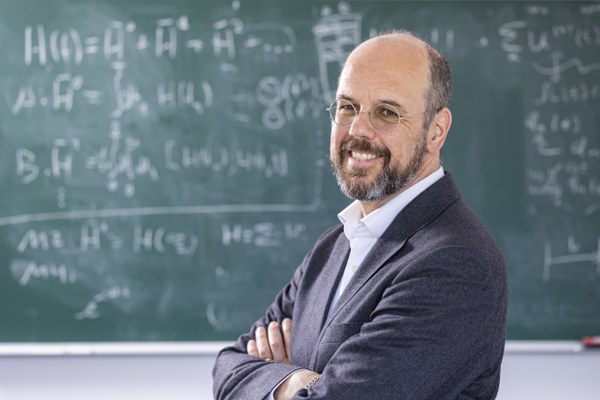
Associate Professor Christopher Wensrich is a faculty member in the School of Engineering at the University of Newcastle, Australia, specializing in Mechanical Engineering. He has a strong background in applied mechanics from both computational and experimental perspectives, with significant expertise in granular mechanics, neutron diffraction strain measurement, and Bragg-edge transmission strain tomography. Education: PhD, University of Newcastle Bachelor of Mathematics, University of Newcastle Bachelor of Engineering, University of Newcastle Professor Wensrich's research focuses on several interconnected areas within mechanical engineering and materials science. His primary expertise lies in granular mechanics, spanning from micromechanics and homogenization of granular systems to analytical modeling of granular dynamics (particularly the silo quaking problem) and computational modeling using the Discrete Element Method (DEM). He is also a pioneer in applying neutron diffraction strain scanning techniques to granular systems. In the broader field of applied mechanics, he has made significant contributions to neutron diffraction-based strain measurement, including breakthroughs in Bragg-edge Transmission Strain Tomography, where he demonstrated the world's first practical application outside of simple axisymmetric systems. His publication record demonstrates a consistent focus on developing and applying advanced techniques for strain measurement and reconstruction in granular and composite materials. His recent work has centered on tomographic reconstruction methods using neutron diffraction, with particular emphasis on Bragg-edge techniques for 2D and 3D strain field reconstruction. His research bridges theoretical mathematics, computational methods, and experimental validation, creating a robust framework for non-destructive stress measurement in complex materials. Professional Recognition: President of the Australian Neutron Beam User Group (ANBUG) since December 2022 Member of the ACNS Program Advisory Team at ANSTO (Australian Nuclear Science and Technology Organisation) since March 2019 Visiting Fellow at Clare Hall College, Cambridge University (January-June 2023) Visiting Researcher at Isaac Newton Institute for Mathematical Sciences (January-June 2023) Professor Wensrich has secured substantial research funding, with a total of $5,478,793 across 42 grants. His funding portfolio includes projects from the Australian Research Council (ARC), ANSTO, and international partners like Oakridge National Laboratory and Japan Proton Accelerator Research Complex. He has successfully supervised 11 PhD and Masters students to completion, with research topics spanning granular mechanics, conveyor systems, and neutron strain tomography. His current research involves collaborations with institutions worldwide, focusing on advanced strain measurement techniques and their application to complex material systems.
Lars BEEX is a Senior Research Scientist at the University of Luxembourg's Faculty of Science, Technology and Medicine, Department of Engineering. He holds the right to supervise PhD students and has directed five to completion. His research focuses on computational mechanics of solids, including Bayesian inference, multiscale methods, and quasicontinuum approaches, with applications to materials like textiles, foams, and medical devices. His academic journey includes a PhD from Eindhoven University of Technology (2008-2012), supervised by Marc Geers and Ron Peerlings, as well as MSc and BSc degrees from the same institution. **Research Interests:** - Computational mechanics of solids - Bayesian inference and uncertainty quantification - Multiscale modeling (quasicontinuum method) - Mechanical modeling of fibrous and discrete materials - Phase-field damage models - Contact mechanics and elastoplasticity **Awards:** - Biezeno Solid Mechanics Award 2013 (Best PhD thesis in solid mechanics, Netherlands) - Cum laude distinction for both MSc and BSc degrees **Industrial Collaborations:** - SISTO Armaturen - IEE - Kiswire International **Teaching:** - Numerical methods for continuous optimization - Courses for Computer Science, Mathematical Modelling, and Engineering students **Lab/Affiliations:** - Legato Team (part of the University of Luxembourg's engineering research cluster)
Associate Professor Jarryd Pla is an experimental physicist and electrical engineer at the University of New South Wales, specializing in quantum information processing and quantum technologies. He holds a PhD in Electrical Engineering from UNSW (2013) and a first-class honors BEng in Photonic Engineering (2009). Current ARC Future Fellow Former Bragg Gold Medal recipient His research focuses on: Spin-based quantum computation in silicon Superconducting quantum circuits Quantum-noise-limited microwave amplifiers Hybrid quantum systems for quantum memory Quantum sensing and spectroscopy Recent publications highlight: Room-temperature maser amplifiers Kinetic inductance parametric amplifiers Coherent control of donor spins Quantum-limited electron spin resonance Scientific Awards: ARC Future Fellowship (2024-2028) Bragg Gold Medal His grants include: ARC DECRA (2019-2022): Superconducting hybrid quantum technologies ARC Discovery Project (2021-2024): Quantum sensing with semiconductor devices ARC Future Fellowship (2024-2028): Room-temperature diamond-based microwave detection
Dr. Joshua Bostwick is an Associate Professor in the Department of Mechanical Engineering at Clemson University's College of Engineering, Computing and Applied Sciences. He joined Clemson in January 2016 after appointments as Golovin Assistant Professor at Northwestern University and postdoc researcher at NC State University, focusing on interfacial fluid mechanics with industrial and biological applications. Education: Ph.D., Theoretical and Applied Mechanics, Cornell University, 2011 B.S., Civil Engineering and Mechanics, University of Wisconsin-Milwaukee, 2005 B.S., Physics, University of Wisconsin-Milwaukee, 2005 His research centers on wetting phenomena and elastocapillarity—examining liquid interactions with soft substrates through mathematical modeling and experimentation. Key interests include surface tension-driven dynamics, pattern formation, soft matter physics, and interfacial instabilities. Current projects span droplet durotaxis, ultrasonic soldering, splashing on soft substrates, and granular raft mechanics, emphasizing fundamental physics with practical applications in microfluidics and manufacturing. Recent publications (2024-2025) reveal expanding work on granular-fluid systems, electrokinetic instabilities, and elastocapillary transitions, demonstrating cross-disciplinary impact in environmental remediation (oil spill cleanup), bioprinting, and semiconductor manufacturing. His group integrates theoretical frameworks with experimental validation across scales. Scientific Awards: NSF CAREER Award (2018) for elastocapillary fluid mechanics research Dr. Bostwick actively mentors graduate students and recruits researchers for his group, supported by federal grants including the NSF CAREER award. His ultrasonic soldering platform enables precise study of flux-free joining for dissimilar materials, with industry collaborations enhancing manufacturing applications. The research group collaborates with Clemson colleagues like X. Xuan on complex fluid microfluidics and develops experimental systems for studying droplet dynamics, soft fracture, and granular matter. Current initiatives include automated soldering platforms and investigations into mitochondrial membrane mechanics.
Professor Jitendrapal (Jit) Sharma is a Professor and former Inaugural Department Chair (2013-2018) of Civil Engineering at York University's Lassonde School of Engineering. He holds a P.Eng license in Saskatchewan and Ontario and has held academic positions globally, including at the University of Saskatchewan where he was a Professor of Geotechnical Engineering. His research focuses on theoretical and computational geomechanics, geotechnical centrifuge modeling, and soil-structure interaction. Dr. Sharma is an Associate Editor of the Canadian Geotechnical Journal (2006-2018) and a specialist in geotechnical engineering consulting. He is renowned for innovative teaching methods using web-based tools to enhance student engagement in problem-solving. His work emphasizes integrating out-of-classroom learning with in-class discussions. His research interests include unsaturated soil mechanics, ground improvement techniques, and geosynthetics. While no specific grants or labs are mentioned, his publications reflect advanced computational and theoretical contributions to geotechnical engineering. He has received multiple teaching excellence awards for his educational innovations.
Maths Karlsson is a Professor in Materials Science at Chalmers University of Technology since 2023. Previously, he worked at the European Spallation Source (2008–2011) and held visiting roles at Iowa State University (2004) and UC Santa Barbara (2012–2013). He chairs the Faculty Assembly of the Department of Chemistry and Chemical Engineering and serves on the Chalmers Faculty Senate. His research focuses on functional materials for energy applications, including proton-conducting oxides, metal halide perovskites, and inorganic phosphors. Utilizing advanced neutron and x-ray scattering techniques, his group explores structure-dynamics relationships in materials for devices like solid oxide fuel cells and solar cells. Experimental methods are emphasized, with a focus on developing novel scattering methodologies. Recent publications highlight advancements in optical communications, photonic integration, and machine learning applications in signal processing. Key themes include nonlinear optics, silicon nitride waveguide technologies, and polarization-insensitive receiver designs. His work bridges fundamental materials research with applied photonics for high-speed data transmission and network resilience. Awards: No specific prizes mentioned in the provided texts. Grants and advising details are absent from the data. Research group: Active in Chalmers' Department of Chemistry and Chemical Engineering, focusing on materials for energy and photonics. Collaborations include Institut Laue-Langevin and industry partners.
Pierrick Lotton serves as a CNRS Research Director at Le Mans University's Institute of Acoustics (LAUM), a joint research unit between CNRS and the university. He leads critical work within LAUM's Transducers team, focusing on fundamental and applied research in electroacoustics and thermoacoustics. His institutional affiliation places him at France's premier acoustics research laboratory, which maintains extensive facilities for acoustic measurements, ultrasonic experimentation, and transducer development across multiple specialized domains including materials science, opto-acoustics, and bioacoustics. Lotton's research program centers on two interconnected pillars: electroacoustics and thermoacoustics. His electroacoustic investigations pioneer advanced modeling, development, and characterization of audio transducers with particular emphasis on nonlinear behaviors in loudspeakers and electric guitar pickups. Simultaneously, his thermoacoustic research explores acoustic refrigeration systems, complex couplings between acoustic and thermal energy fields, and transient nonlinear phenomena. This dual focus enables innovative cross-pollination between audio engineering and thermal physics, driving advancements in both fundamental understanding and practical applications of acoustic energy conversion. Analysis of his 2019-2024 publications reveals a consistent trajectory in transducer physics, particularly MEMS-based piezoelectric speakers, voice coil dynamics in magnetic environments, and digital acoustic projection systems. His work demonstrates exceptional methodological diversity spanning analytical modeling, experimental validation, and educational innovation. Notable contributions include the ASKNOWN project's open-access acoustics courseware and breakthroughs in understanding transducer nonlinearities for both consumer audio and specialized applications like fish sound localization. No major scientific awards were documented in the available institutional materials, though his sustained publication record in high-impact journals and presentations at European Acoustics Association forums indicate significant peer recognition. His collaborative research network spans France, Germany, Italy, and the Czech Republic, reflecting strong international engagement. Lotton's academic supervision activities aren't explicitly detailed, but his educational initiatives like the ASKNOWN project demonstrate commitment to pedagogy. His research is supported through LAUM's institutional framework and collaborative projects including European initiatives and ANR-funded programs. Current work appears concentrated on advancing MEMS transducer technology, refining thermoacoustic cooling systems, and developing next-generation educational resources for acoustics. As a core contributor to LAUM's Transducers team, Lotton operates within one of Europe's leading acoustics laboratories. His current projects align with LAUM's strategic focus on transducer innovation and thermoacoustic applications, positioning him at the forefront of both theoretical acoustics research and practical engineering solutions. The laboratory's comprehensive infrastructure supports his work from fundamental wave propagation studies to applied device development.
Mark Wilson is a Professor in the Department of Chemistry at Durham University, where he leads the Computational Soft Matter research group. His laboratory is housed in the Wolfson Suite for Computational Chemistry, focusing on molecular dynamics and Monte Carlo simulations of complex molecular systems. The group's research is primarily funded by EPSRC grants, supporting investigations into liquid crystals, polymers, proteins, and nanostructured materials. Wilson's research integrates theoretical chemistry with computational physics to study: Self-assembly processes in chromonic liquid crystals and surfactants Multiscale modeling approaches combining atomistic and coarse-grained methods Protein dynamics and allosteric regulation mechanisms Phase behavior of bent-core liquid crystals and ferroelectric nematics Interfacial phenomena in polymer-surfactant systems Analysis of his 15 most recent publications reveals strong emphasis on: methodological developments in dissipative particle dynamics; molecular engineering of pharmaceuticals; and predictive modeling of soft material behavior. Recurring themes include surfactant phase diagrams, liquid crystal polymorphism, and computational methods validation through experimental collaboration. Wilson currently supervises four PhD students and maintains an active research team with six group members. His laboratory utilizes advanced high-performance computing resources for large-scale simulations, with recent work extending to biomolecular systems including beta-amyloid aggregation and antimicrobial peptides.
Dr. Farzaneh Tahmoorian is a Senior Lecturer in Civil Transport at the School of Engineering and Technology, Central Queensland University (CQU). She has been with CQU since 2015, progressing from Sessional Lecturer to Lecturer (2018-2022) and now Senior Lecturer (2022-present). Dr. Tahmoorian leads the Civil Engineering and Built Environment Research Group (CEBERG) and has established and manages the CQU Pavement Lab in Mackay, equipped with comprehensive testing facilities for asphalt mix, bitumen, and other pavement materials. Dr. Tahmoorian's educational background includes: PhD in "Application of Waste Materials in Flexible Pavements" from Western Sydney University (2015-2018) M.Eng from the University of Technology Sydney (2013-2015) B.Sc. from International University of Qazvin, Iran (1996-2001) Prior to academia, she worked as a site engineer and project manager in construction projects, bringing practical industry experience to her research and teaching. As an expert in road and pavement materials, Dr. Tahmoorian's research spans asphalt mix design, binder modification, concrete pavement, ground improvement techniques, and sustainability in construction. Her work focuses on utilizing waste materials in asphalt mixes, demonstrating a 6% reduction in bitumen consumption while enhancing durability and performance. She has published over 25 peer-reviewed papers and received $80,000 in CAT-3 industry funding and $130,000 in university funding for pavement research. Dr. Tahmoorian's publication record reveals a strong trend toward circular economy applications in construction, with emphasis on waste material recycling in asphalt production, life cycle assessment of sustainable methods, and innovative modular pavement systems. Her research bridges material science with practical engineering, addressing both performance requirements and environmental considerations in infrastructure development. Her editorial contributions include: Editor-in-Chief of the Australian Journal of Modernity in Road and Pavement Engineering Editor for the Journal of Engineering Solid Mechanics Editor of the book "Sandy materials in civil engineering: Usage and management" As a dedicated mentor, Dr. Tahmoorian supervises multiple research students, serving as Principal Supervisor for a Master of Research project on modular prefabricated pavement lifecycle costs and Associate Supervisor for projects on construction processes, disaster risk management, and railway ballast stabilization. She has also developed field testing facilities at Mackay Ooralea Campus for transitioning research from laboratory to field conditions with time-based performance monitoring.
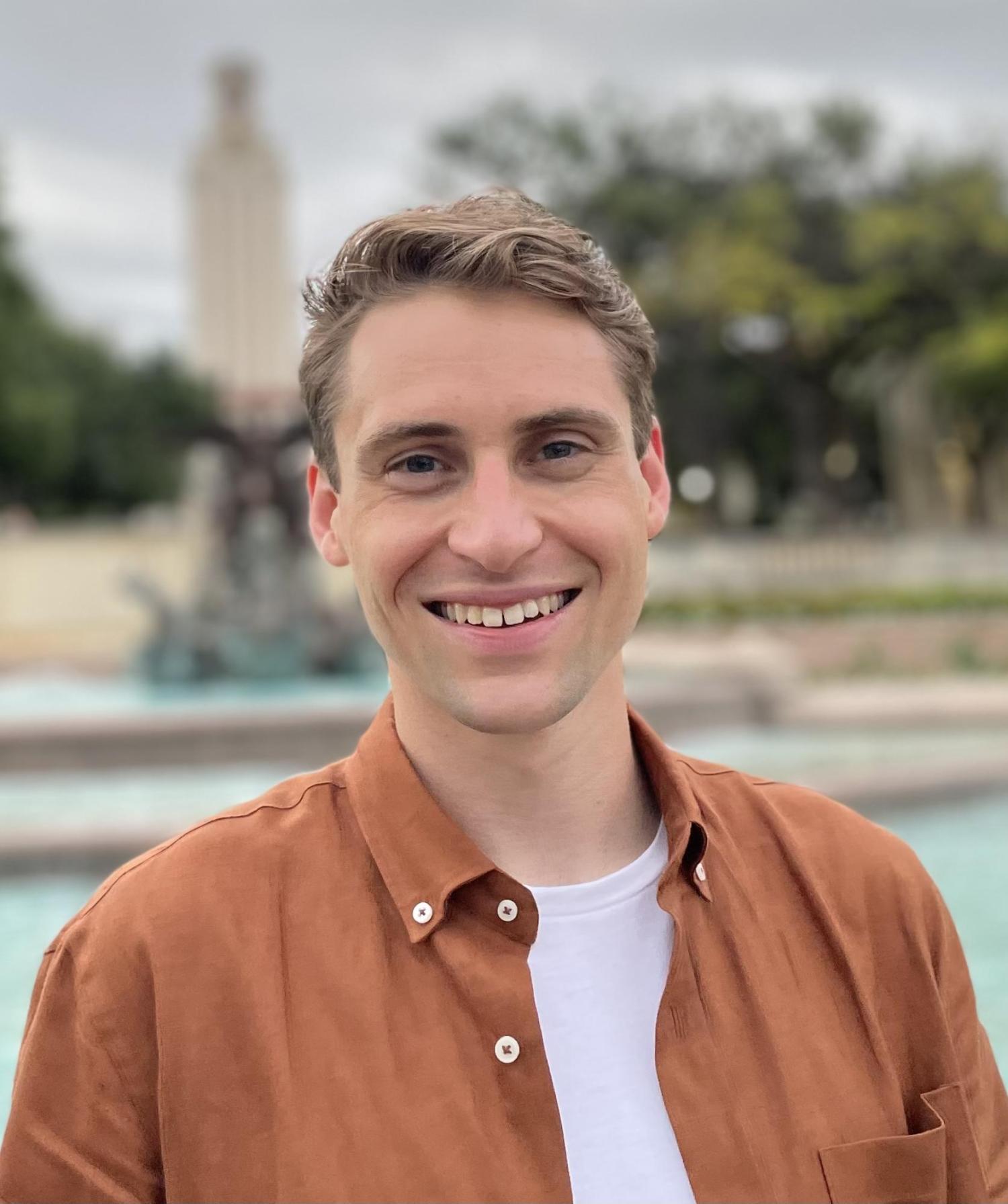
Cody Scarborough is an Assistant Professor in the Department of Electrical, Computer, and Energy Engineering at the University of Colorado Boulder. He earned his B.S. in Electrical and Computer Engineering from the University of Texas at Austin (2017) and his Ph.D. from the University of Michigan (2022). His research focuses on space-time modulated electromagnetic metamaterials, non-linear electromagnetics, and reconfigurable intelligent surfaces. He leads the Electromagnetic Metamaterials Research Group (EMRG), advancing next-generation communication systems and energy-harvesting technologies. Scarborough has pioneered novel boundary conditions like the interpath relation, reducing computational demands for analyzing space-time periodic structures. His work has earned best student paper awards at EuCAP 2021 and Metamaterials 2021. He teaches courses such as Electromagnetic Fields I and Electromagnetic Metamaterials, mentoring over 100 students. His research group explores parametric amplification, frequency conversion, and bandwidth enhancement through active metamaterial control. Education: B.S. UT Austin (2017), Ph.D. University of Michigan (2022) Labs/Teams: Electromagnetic Metamaterials Research Group (EMRG) Key Contributions: Space-time modulated antennas, N-path network analysis, interpath relation theory He holds provisional patents on parametric time-modulated antennas and efficient computational methods for metamaterial design. Beyond academia, he enjoys music, hiking, and skiing in Boulder's Flatirons.
Melvin Wong is an Assistant Professor in the Department of Urban Planning and Transportation within the Built Environment school at Eindhoven University of Technology. His research focuses on transportation engineering, machine learning applications in urban mobility, reinforcement learning for traffic systems, and sustainable transportation solutions. He utilizes advanced computational methods including graph neural networks, generative AI, and physics-informed models to address challenges in traffic prediction, electric vehicle infrastructure, and urban design. His research interests encompass transportation optimization, spatiotemporal modeling, generative design methods, and behavioral analysis in urban systems. Recent publications demonstrate a strong focus on AI-driven solutions for traffic management, battery-swapping systems, and multimodal design optimization. Dr. Wong has received recognition including the Best Research Paper Award (2024) and Swiss Government Excellence Scholarship (2020). He contributes to academic activities through conference presentations, peer reviews, and course development in urban mobility and big data analytics.
Tommaso Calarco serves as Director of the Institute for Quantum Control (PGI-8) at Jülich Research Centre, leading cutting-edge research in quantum optimal control methodologies for next-generation quantum technologies. His work focuses on developing transformative computational frameworks applicable to natural sciences, logistics, and high-performance computing through advanced quantum device engineering. His research spans quantum optimal control for computation and many-body systems, emphasizing physical model development, model reduction techniques, and machine learning integration for scalable quantum hardware. Key focus areas include spin-qubit optimization, diamond quantum register engineering, and error suppression in gate operations, with significant contributions to ultracold atom systems and semiconductor-based quantum platforms. Analysis of his 2024-2025 publications reveals concentrated efforts on hardware-specific challenges across multiple quantum modalities: spin shuttling fidelity in semiconductor systems, gate optimization for nitrogen-vacancy centers, and photon-spin interface engineering. This work demonstrates a unifying thread of optimal control solutions tailored to platform-specific decoherence mechanisms and scalability constraints. As Director of PGI-8 within the Peter Grünberg Institut, Calarco oversees a dedicated research team advancing quantum control theory and applications, contributing substantially to European quantum technology roadmaps including the Quantum Flagship initiative and strategic European Commission reports.