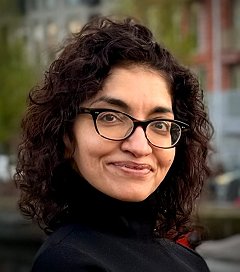
Mahsa Shirmohammadi is a CNRS researcher at Institut de Recherche en Informatique Fondamentale (IRIF) , Université de Paris. Her research focuses on verification, probabilistic models, infinite-state systems, automata theory, and numerical computation. Education : PhD from LSV, ENS de Cachan (France) and ULB (Belgium). Previous Affiliation : Postdoctoral researcher at University of Oxford (UK). Her work addresses stochastic games , timed automata , matrix groups , and algebraic computation . Recent publications analyze strategy complexity, synchronization in decision processes, and parametric algebraic problems. Key collaborators include Stefan Kiefer, Richard Mayr, James Worrell, and Patrick Totzke. Her research has been published in venues like ACM SIGLOG News, ICALP, LICS, and ISSAC. Contact: mahsa@irif.fr , +33 (0)1 57 27 92 29, Office 4017 (Sophie Germain building, Paris).
Tanya Braun is a Junior Professor in the Institute of Computer Science at the University of Münster, Department of Mathematics and Computer Science. She leads the Data Science research group, focusing on statistical-relational AI, human-aware AI, and text understanding. Her work bridges formal AI methods with real-world applications in healthcare, digital humanities, and public sector systems. Education: Bachelor's and Master's in Computational Informatics, Hamburg University of Technology Doctorate in Computer Science, University of Lübeck (2020), thesis: 'Rescued from a Sea of Queries - Exact Inference in Probabilistic Relational Models' Her research centers on probabilistic inference in relational domains , with a focus on lifted inference techniques that exploit symmetries to scale reasoning. She investigates human-aware AI , particularly how AI systems can reconcile learned models with human expectations to improve explainability and trust. Her work on text understanding addresses challenges in data-scarce settings such as digital humanities, where traditional large language models fail. She has developed methods for identifying and enriching subjective content descriptions, topic modeling in specialized domains, and feedback-driven model improvement. The 15 most recent publications highlight a strong trajectory in lifted inference, model compression, privacy-preserving AI, and explainability . Her work integrates formal AI foundations with practical concerns in high-stakes domains like healthcare. She frequently publishes in top venues such as AAAI, IJCAI, ECAI, and Artificial Intelligence, often in collaboration with Ralf Möller, Marcel Gehrke, and Jan Speller. Scientific Awards: No specific awards listed in the provided text. Tanya Braun actively advises students and leads the HAPPI project, which focuses on human-AI model reconciliation using lifted probabilistic inference. She has supervised multiple theses and mentored researchers including Jan Speller (PostDoc), Nazlı Nur Karabulut, and Sagad Hamid. She has secured funding from the Ministry of Culture and Science of North Rhine-Westphalia for her research. She is deeply involved in academic service: serving as program co-chair for KI 2025, guest-editing special issues in journals like Künstliche Intelligenz and Annals of Mathematics and Artificial Intelligence , and organizing major conferences including ICCS and KR. Labs and Teams: She leads the Data Science Group at the University of Münster, which conducts research in AI, probabilistic modeling, and data science. The group is actively involved in teaching and mentoring students in advanced AI topics.
Durdu Hakan Utku is an Associate Professor in the Department of Industrial Engineering at Ankara Yildirim Beyazit University. His research focuses on optimization techniques, supply chain management, and ergonomic design across diverse industries. Key Research Areas : Inventory optimization, production scheduling, energy systems, and hazardous waste management. Methodologies : Mixed-integer programming, simulation modeling, and stochastic approaches using tools like GAMS and ARENA. Publication Trends : Recent works emphasize mathematical models for minimizing logistics costs, ergonomic improvements in educational facilities, and multi-modal supply chain strategies for natural gas. Keywords include industrial engineering, operations research, and environmental sustainability. Collaborations : Co-authored studies with researchers like Fatih Kasimoğlu and Betül Soyöz, applying optimization frameworks to real-world problems in Turkey.
Kamel Lahouel is an Assistant Professor at the Early Detection and Prevention Division of the Translational Genomics Research Institute (TGen) . He joined TGen in February 2022 and focuses on mathematical and statistical models applied to cancer biology. Education : Ph.D. in Applied Mathematics and Statistics from Johns Hopkins University (2018). Dr. Lahouel specializes in machine learning and stochastic processes to analyze cell-free DNA for cancer early detection and minimal residual disease testing (MRD) . His methodological work includes branching processes , Markov chains , and non-parametric statistics for tasks like stochastic optimization and multiple hypothesis testing . His research also explores pattern recognition in latent dynamical systems . Recent publications highlight his development of generative models for tumorigenesis timelines (2020), supervised mutational signatures in cancer (2021), and data-driven blood testing combined with PET-CT (2020). His work bridges applied mathematics with clinical oncology , emphasizing computational approaches for early cancer detection.
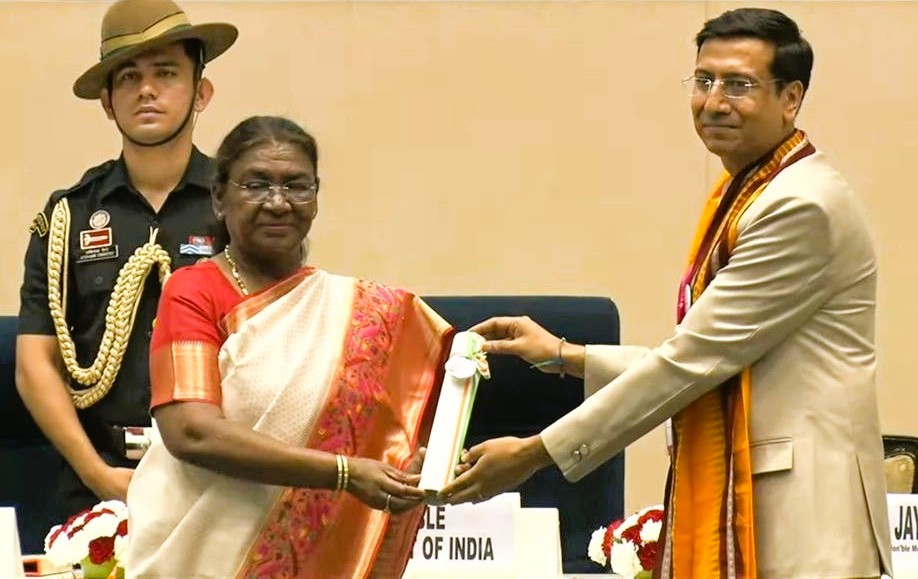
Prof. Kapil Ahuja is a Full Professor in the Department of Computer Science & Engineering at the Indian Institute of Technology Indore (IIT Indore), where he heads the Mathematics of Data Science and Simulation (MODSS) research lab. After completing dual Master's degrees and a Ph.D. from Virginia Tech (USA) followed by postdoctoral work at the Max Planck Institute in Germany, he has held visiting positions at UT Austin, IMT Atlantique, Sandia National Labs, TU Dresden, and TU Braunschweig. His administrative roles include founding Dean of International Affairs and former Head of Computer Science & Engineering at IIT Indore. Education: Ph.D. in Mathematics, Virginia Tech (2011) M.S. in Mathematics, Virginia Tech (2009) M.S. in Computer Science, Virginia Tech (2007) B.Tech. in Mechanical Engineering, IIT (BHU) Varanasi (2001) Research Focus: Prof. Ahuja's work bridges theoretical advances with real-world applications, emphasizing machine learning algorithms for plant/cancer studies, game-theoretic poverty reduction models, exascale climate modeling solvers, and drone trajectory optimization. His interdisciplinary approach integrates numerical linear algebra with network science to solve complex systems problems across healthcare, agriculture, and climate science, supported by 4.85 Crores INR in external funding. Publication Trends: Recent work demonstrates growing emphasis on AI-driven optimization for physical systems (drones, climate models) and biomedical applications (cancer classification). His publications increasingly feature cross-disciplinary collaborations between computer science, biology, and economics, with notable contributions in explainable AI for healthcare and resource allocation algorithms for social networks. Scientific Recognition: National Teacher's Award (2024) from the President of India Five-time recipient of IIT Indore's Best Teacher Award (2013-2023) Best Poster Award at International Workshop on Game Theory & Networks (2019) Steeneck Graduate Research Fellowship (Virginia Tech, 2011) Multiple SIAM travel awards for international conferences Mentorship & Service: Prof. Ahuja has graduated 5 Ph.D. and 4 M.S. (Research) students while mentoring 75 B.Tech. projects. He serves as Associate Editor for Applied Intelligence Journal (Springer Nature) and Knowledge and Information Systems, organizes international conferences, and reviews for 35+ academic sources. His administrative leadership significantly expanded IIT Indore's global partnerships through the Research Park initiative. Research Infrastructure: The MODSS lab maintains active collaborations with Oak Ridge National Lab, Sandia National Labs, and European institutions. Current projects include AI-optimized drone swarms for agricultural monitoring and game-theoretic models for poverty intervention, utilizing high-performance computing resources for large-scale simulations.
Amal Ahmed is a Professor and Associate Dean for Graduate Programs at Khoury College of Computer Sciences, Northeastern University, where she leads research in programming languages and secure compilation. She received her PhD in Computer Science from Princeton University and has established herself as a leading researcher in compiler correctness, language interoperability, and type systems. Her research focuses on correct and secure compilation across the software-hardware stack and safe language interoperability, including design of sound foreign-function interfaces (FFIs) and richly typed compiler intermediate languages. She makes extensive use of semantics and type systems for reasoning about imperative and probabilistic programming languages, multi-language systems, security, concurrency, and provenance. Her work has significantly advanced the understanding of gradual typing, compiler verification, and compositional language interoperability. Dr. Ahmed's publications reveal a research trajectory focused on building solid semantic foundations for language interoperability and secure compilation. Her recent work spans topics from probabilistic separation logic to WebAssembly interoperability, with consistent emphasis on formal verification and semantic techniques. She has developed frameworks for reasoning about multi-language systems that preserve security properties across language boundaries. NSF CAREER Award recipient Editorial Board: Journal of Functional Programming (2017–present) Editorial Board: Mathematical Structures in Computer Science (2016–present) Member: IFIP Working Group 2.8 (Functional Programming, 2014–present) As an educator and mentor, Dr. Ahmed has advised numerous PhD students, postdocs, and undergraduates, many of whom have gone on to successful academic and industry careers. She has organized the Programming Languages Mentoring Workshop and regularly teaches advanced courses in programming languages. She serves on the steering committees of major conferences including POPL, SPLASH, and PLMW, and has chaired program committees for ESOP and POPL.
Laure Petrucci is a Professor at Sorbonne Paris Nord University, affiliated with the Networks and Telecommunications Department and the LoVe (Logic and Verification) team at LIPN (Paris Nord Computer Science Laboratory, CNRS UMR 7030). She also serves as Deputy Scientific Director of CNRS for Normandy. Her research specializes in formal verification of concurrent systems using Petri nets and parameterized models, with a focus on combating state-space explosion through distributed algorithms. Her work spans formal methods , distributed systems , and model checking , emphasizing practical applications in network verification and synthesis. Recent publications explore controller synthesis for timed games, probabilistic model checking, and SMT-based analysis of Petri nets, reflecting a consistent focus on scalable verification techniques. She teaches undergraduate and master's courses in networks, databases, and programming at IUT Villetaneuse (France) and the University of Science and Technology of Hanoi (Vietnam).
Matteo Camilli is an Associate Professor in the Department of Electronics, Information and Bioengineering (DEIB) at Politecnico di Milano, Italy, where he leads research in software engineering and verification. His academic journey includes positions as Assistant Professor at Free University of Bozen-Bolzano and postdoctoral research at the University of Milan and University of Bergamo. His educational background includes a PhD in Computer Science (2015), MSc in Computer Science (2012), and BSc in Computer Science (2009), all from the University of Milan. His doctoral research focused on combining advanced abstraction techniques and big data approaches to address state explosion problems in formal verification. Camilli's research primarily centers on software verification, testing, and methods to improve dependability of autonomous, cyber-physical, service-based, and ML-enabled critical systems. His work spans formal methods, model-based testing, uncertainty quantification, and design-time/runtime verification with applications to complex distributed systems. His recent publications reflect a growing focus on explainable self-adaptation, quality assurance for LLM-based systems, and managing uncertainty in adaptive systems. His publication record includes papers in top journals (TOSEM, TAAS, JSS, EMSE) and conferences (ICSE, ISSRE, ICST, ICSA). He serves on program committees for prestigious conferences including ICSE, ICSA, ICST, and ECSA, and is on the steering committee for the International Workshop on Formal Approaches for Advanced Computing Systems (FAACS). Camilli actively contributes to the academic community through conference organization, including serving as Program Committee Member for numerous conferences and as Program Co-Chair for the Software Architecture track at ACM SAC. He also serves as guest editor for special issues on automated testing and dependable AI systems. His teaching portfolio at Politecnico di Milano includes Software Engineering 2, Software Engineering for Automation, and Distributed Software Development. Previously at Free University of Bozen-Bolzano, he taught Systems Engineering and Verification and Reliability for Dependable Systems.
Radu Calinescu is Professor of Computer Science at the University of York, UK, where he serves as Principal Investigator for the UKRI Trustworthy Autonomous Systems Node in Resilience and leads the Trustworthy Adaptive and Autonomous Systems and Processes (TASP) Research Team. His academic career includes previous positions as Lecturer in Computer Science at Aston University (2009-2012), Senior Researcher at the University of Oxford (2008-2009), and part-time Lecturer at Oxford (2005-2009). Professor Calinescu's research focuses on formal modelling, analysis, verification and controller synthesis for autonomous and self-adaptive systems, with particular emphasis on parametric and probabilistic model checking, automated and model-driven software engineering. His work applies these approaches to robotic, cyber-physical, embedded and service-based systems, with a strong commitment to using formal methods at runtime to enhance the resilience and safety of critical autonomous systems. His extensive publication record spans top-tier journals including IEEE Transactions on Software Engineering, Journal of Systems and Software, and Automated Software Engineering. His research demonstrates consistent focus on verification techniques for adaptive systems, with increasing attention to safety-critical applications in recent years. His work bridges theoretical formal methods with practical applications in robotics and autonomous systems. British Computer Society Distinguished Dissertation Award for his DPhil thesis on Autonomic-Independent Loop Parallelisation Principal Investigator for multiple major projects including Continual Verification and Assurance of Robotic Systems under Uncertainty (ORCA Hub/EPSRC), Safety of AI Techniques (AAIP/Lloyd's Register Foundation), and CSI:Cobot Program Committee Co-Chair for major conferences including SEFM 2021, SEAMS 2020, and SERENE 2019 Professor Calinescu actively supervises numerous PhD students and postdoctoral researchers, with current team members including Faisal Alhwikem, Xinwei Fang, Mario Gleirscher, James Harbin, and Colin Paterson. His research group is based at the Ron Cooke Hub in York, a purpose-built facility housing world-class research groups and startups. His former students have gone on to academic positions at institutions worldwide and industry roles at major technology companies.
Dr. Georgios Kokosalakis serves as Assistant Professor at the School of Business and Economics, American College of Greece (ACG), and Executive Director of the Center of Excellence in Logistics, Shipping and Transportation (CoELST). He maintains dual academic roles as Senior Research Associate at University of Patras' Civil Engineering Department and Educational Counselor at MIT, while also directing industry ventures through Proteus Marine Ltd. His academic credentials include: Science Doctorate in Civil and Environmental Engineering, MIT (2006) Master of Science in Civil and Environmental Engineering, MIT (2000) Diploma in Civil Engineering (Structural Division), National Technical University of Athens (1998) Dr. Kokosalakis' research centers on Maritime Systems and Environmental Protection, with emphasis on operational efficiency, energy conservation, and emissions control in shipping logistics. His interdisciplinary approach integrates large data analytics, systems modeling, and sensor technology to develop practical solutions for sustainable maritime operations while addressing environmental pollution challenges. Recent publications (2019-2021) reveal dual research trajectories: maritime-focused work on energy efficiency impacts on container ship valuation, regulatory responses in shipping, and pandemic effects on second-hand markets; and civil engineering contributions to water distribution network optimization through probabilistic modeling of minimum night flow and real losses. This cross-disciplinary pattern demonstrates his ability to transfer methodologies between maritime and infrastructure domains. His scientific recognition includes: Schoettler Fellowship Award from MIT (2002-2003) Technical Chamber of Greece Best Thesis Award (1998) Exceptional Student Performance Awards (1995-1997) Active grant funding supports his research through projects with Athens Water Supply Company (2021), Greece's Center for Renewable Energy Sources (2020), and Hellenic Foundation for Research Innovation (2019). His industry experience as a shipowner and Proteus Marine Ltd Director provides practical grounding for academic work, though specific student supervision details aren't documented in available materials. The Center of Excellence in Logistics, Shipping and Transportation (CoELST) functions as his primary research ecosystem, facilitating collaborations between ACG, University of Patras, MIT, and maritime industry partners to advance sustainable transportation solutions through integrated engineering and business perspectives.
Pascal Bruniaux is a Full Professor and Research Supervisor at the École Nationale Supérieure des Arts et Industries Textiles (ENSAIT) in Roubaix, France, where he leads research in textile engineering and human-centered design. His work focuses on the intersection of textile science, digital technologies, and human anatomy, with particular emphasis on creating innovative solutions for garment design and customization. Professor Bruniaux's research spans four major themes: (1) Modeling, simulation and multi-scale perception of textile materials; (2) Modeling of the Human/Clothing/Environment interface; (3) Analysis and classification of typical and atypical human morphologies; and (4) Development of personalized co-creation processes integrating 3D virtual prototyping, human perception, and knowledge. His work bridges the gap between traditional textile manufacturing and cutting-edge digital technologies, with applications ranging from everyday apparel to specialized medical garments and protective clothing. His recent publications demonstrate a strong trend toward integrating artificial intelligence and machine learning with 3D garment design and virtual prototyping. The research spans disciplines including textile engineering, computer science, human factors engineering, and sustainable fashion, with particular emphasis on improving garment fit, comfort, and customization through digital technologies. His work addresses critical challenges in the fashion industry, including reducing waste through virtual prototyping and improving accessibility for people with atypical body morphologies. Professor Bruniaux has received significant recognition for his contributions to the field: 2016 Gratitude Diploma from Gheorghe Asachi Technical University of Iasi for supporting and promoting their interests PEDR Award for PhD students and research supervision, received annually from the French Ministry of National Education since 2021 Throughout his career, Professor Bruniaux has supervised numerous PhD students and led multiple significant research projects funded by various programs including FUI, Erasmus Mundus, and European H2020. His research has been supported by collaborations with institutions across Europe and Asia, demonstrating the international impact of his work. He has also contributed to the development of innovative teaching methods in textile and apparel design, integrating digital tools into the curriculum. As a key member of the GEMTEX laboratory at ENSAIT, Professor Bruniaux leads the Human Centered Design Group, which focuses on developing technologies that place human needs at the center of textile and apparel innovation. The group's work has applications in diverse areas including adaptive clothing for people with physical disabilities, personalized sportswear, and advanced protective garments.