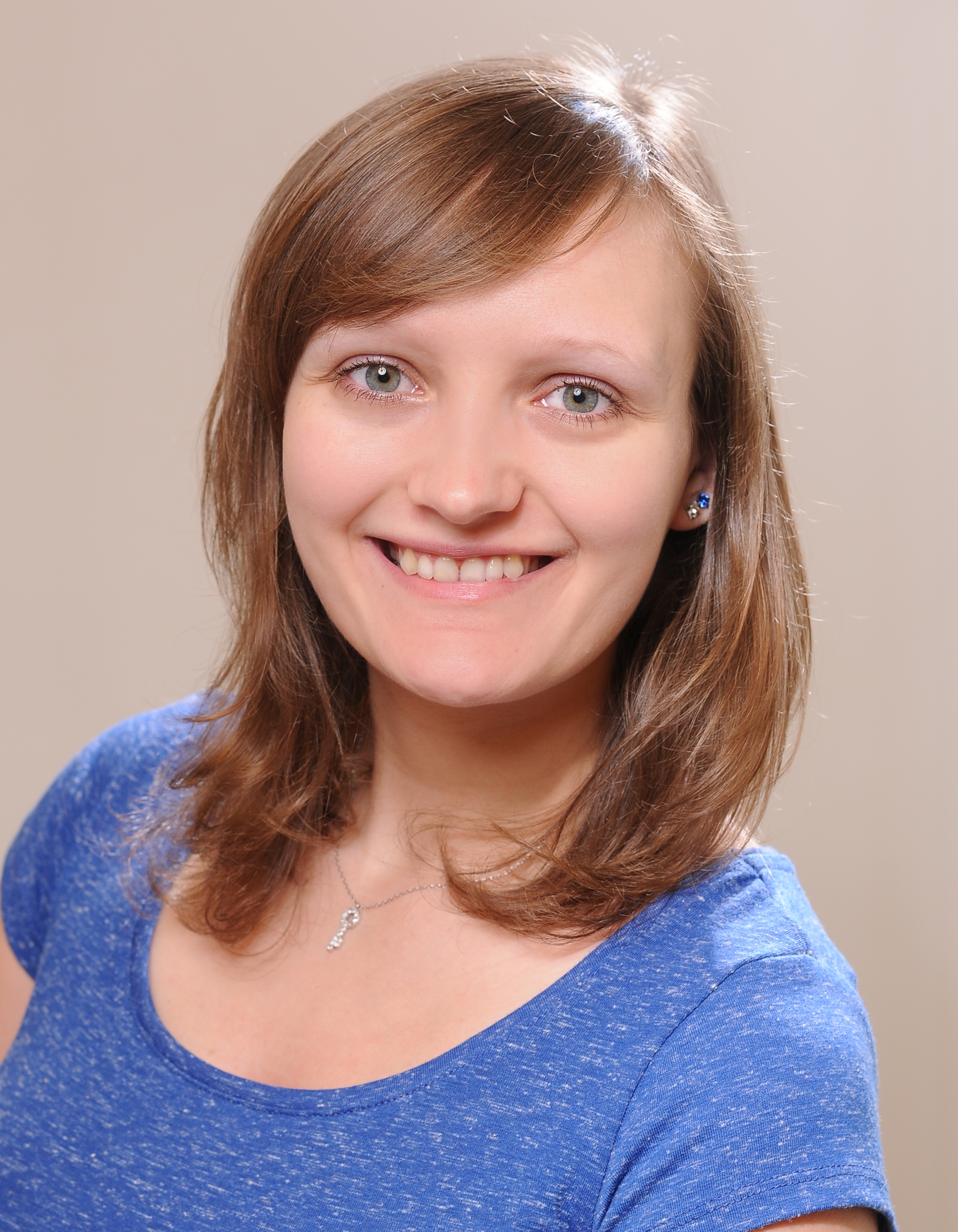
Franziska Mueller is a Research Scientist at Google Zurich , specializing in Augmented Perception . Prior to joining Google, she earned her Ph.D. in Computer Science at Saarland University under the supervision of Prof. Dr. Christian Theobalt, focusing on real-time hand reconstruction from RGB and depth images. Ph.D. in Computer Science (2016-2020) at Saarland University Master’s and Bachelor’s in Computer Science at Saarland University Research visits at Stanford University (2018) and Reality Labs Research (2019) Her research emphasizes the integration of model-based techniques and machine learning components for real-time 3D hand pose estimation, occlusion handling, and hand-object interaction tracking. Key contributions include methods for single-camera reconstruction and datasets like HandSeg. Scientific Awards : Dr. Eduard Martin Award (2021) Google PhD Fellowship (2017) Günter-Hotz-Medal (2016) Bachelor Award (2015) Völklinger Abiturpreis (2012)
Ian Ewart is an Associate Professor at the University of Reading's School of the Built Environment, serving as Head of Construction and Engineering Management and Research Group Lead for Organisation, People and Technology. He chairs the Research Ethics Committee since 2016 and supervises undergraduate/postgraduate dissertations. His academic journey spans engineering and anthropology: DPhil Social and Cultural Anthropology, University of Oxford, St Hugh's College (2007-2012) MSc Material Anthropology and Museum Ethnography, University of Oxford, St Hugh's College (2006-2007) BA (Hons) Archaeology and Anthropology, University of Oxford, Harris Manchester College (2003-2006) Diploma in Management Studies, University of the West of England (1990-1994) BEng (Hons) Mechanical Engineering, Staffordshire University (1983-1987) Ewart's research integrates ethnographic methods with digital technology studies, examining human-technology interactions in construction and domestic settings. His work bridges engineering practice and social anthropology, focusing on skill transmission, sustainable design, and multisensory experiences in virtual environments. Publications from 2025-2013 reveal a dominant trajectory in digital twins for socio-ecological sustainability, VR-based occupant behavior prediction, and HBIM for heritage conservation. The corpus demonstrates consistent cross-disciplinary innovation, merging archaeological reconstructions with healthcare applications while maintaining anthropological rigor. Key recognition: ESRC Future Research Leader fellowship (2013) for Designing Healthy Homes project He supervises PhD candidates like Afolabi Dania (Nigerian sustainable construction) and Joanna Hull (Heritage BIM), leveraging ESRC funding for ethnography-VR health studies. His grants emphasize participatory design and real-world impact assessment in built environments. Leaders the Organisation, People and Technology research group, developing multisensory Roman town reconstructions with sound/smell integration to advance archaeological and architectural experience modeling.
Vadim Lozin is a Professor of Mathematics at the University of Warwick, affiliated with the Department of Mathematics within the School of Mathematics. His research interests span graph theory, combinatorics, and discrete mathematics, focusing on areas such as clique-width, Ramsey numbers, and structural graph theory. He has held visiting positions at institutions including the Université Paris-Dauphine, EPFL, and KAUST. Lozin has received several accolades, including the Best Paper Award for 'Linear Ramsey numbers' in 2018 and a 2024 award at the International Symposium on Algorithms and Computation. His work involves collaborations with global researchers and contributions to conferences like IWOCA and WG. Lozin serves on editorial boards for journals such as Discrete Applied Mathematics and Electronic Notes in Discrete Mathematics . His research explores foundational problems in graph theory, with applications in algorithm design and complexity analysis. Lozin’s publications include studies on union-closed sets, functional graph properties, and algorithmic approaches to graph parameters. He has also contributed to books like Words and Graphs , bridging formal language theory with graph structures. His grants focus on clique-width and stability in graphs, reflecting his commitment to advancing theoretical and applied discrete mathematics.
Prof. Dr. Johannes Sauer is a Professor at the Technical University of Munich (TUM), holding dual affiliations with the TUM School of Management and the TUM School of Life Sciences . His academic focus is on production and resource economics, with expertise in agricultural sustainability, policy evaluation, and circular economy strategies in Asia-Pacific and Latin America. Education: Bachelor’s/Master’s in Agricultural Economics from Universities of Tübingen, Hamburg, and Imperial College London. Doctorate (summa cum laude) in Agricultural Economics from the University of Bonn (2004). Research Interests: Prof. Sauer’s work spans productivity and resilience in agricultural systems, adoption of sustainable technologies, water resource valuation, and bioeconomic trends. He emphasizes smart technologies and circular economy applications in developing regions. His research employs econometric methods to analyze policy impacts and environmental-economic trade-offs. Key Trends in Publications: Recent articles highlight climate-smart agriculture, ICT adoption in rural China, and agroforestry’s role in reducing ecological-economic trade-offs. He explores behavioral drivers of policy participation and innovative tools like the IoFarm decision support system. Awards: 2021 Honorary Professorship at ANU OECD Fellow Awards (2010, 2016) Best Paper Awards (2008–2015) Consulting & Roles: OECD and Asian Development Bank consultant, ESRC Peer Review College member, and liaison lecturer for the German National Academic Foundation. He advises on agri-environmental policies and international development. Labs/Teams: Active in collaborative projects such as PONDERFUL Framework and IPM Popilia , focusing on nexus research and pest management strategies.
Assoc. Prof. Dr. Sema Alaçam Doğan has been affiliated with Istanbul Technical University since 2014, serving as an Associate Professor in the Department of Architecture . She has held administrative roles including Deputy Head of Department and Erasmus Coordinator. Education : PhD in Informatics in Architectural Design (2008-2014), MS in Informatics in Architectural Design (2005-2008), and BS in Architecture (1999-2005) from Istanbul Technical University. Her research explores Computational Design , Artificial Intelligence in Architecture , and Sustainable Material Innovation . She investigates digital tools for heritage preservation, daylight optimization in BIM, and cognitive development in architecture students. Recent publications analyze AI-assisted design literacy , machine learning for Sinan mosques , and environmental comfort in Harran houses . Her work integrates algorithmic frameworks with sustainable practices. Scientific awards include multiple ITU Publication and Performance Awards (2021-2024), FABFEST Prizes , and the 2024 Artemis Educator Award from NASA. Active projects like "Physical Computation in Architectural Drawing" and "Robotic Fabrication with Recycled Wind Turbine Blades" demonstrate her leadership in computational and sustainable research.
Vladimir Kazeev is an Assistant Professor at the Faculty of Mathematics, University of Vienna , where he has held a faculty position since 2019. He also held previous academic appointments as a Szegő Assistant Professor at Stanford University (2017–2019), a postdoctoral researcher at the University of Geneva (2015–2017), and research positions at ETH Zurich (2011–2015), Russian Academy of Sciences (2008–2011), and Moscow Institute of Physics and Technology (2009). His research focuses on adaptive, data-driven numerical methods for differential equations, nonlinear low-parametric approximation, and numerical linear algebra. His work intersects computational mathematics, tensor methods, and high-dimensional problem-solving, particularly in the context of partial differential equations (PDEs) and stochastic modeling. The 15 most recent publications reveal a strong emphasis on quantized tensor-structured methods for PDEs, low-rank approximations, and high-dimensional numerical analysis. His research spans theoretical advancements in tensor decomposition, practical applications in chemical reaction networks, and novel discretization techniques for multiscale and degenerate diffusion problems. Scientific awards include the prestigious ETH Medal for outstanding doctoral theses (2016) Russian Academy of Sciences Medal for outstanding student works in mathematics (2011) Advising and teaching activities include supervising Jason Zhu (Stanford, 2019) and Simon Etter (ETH Zurich, 2014), as well as teaching advanced courses in tensor methods, numerical analysis, and PDEs at the University of Vienna, Stanford University, and the University of Geneva. His service to the community includes peer review for 15+ journals and co-organizing minisymposia at SIAM meetings.
Preet Singh is a Professor and Associate Chair for Graduate Studies in the School of Materials Science and Engineering at Georgia Tech, with affiliations to the College of Engineering. His research focuses on corrosion science, electrochemistry, and environmental degradation of materials, particularly metals and alloys. Prior to joining Georgia Tech in 2003, he was a faculty member at the Institute of Paper Science and Technology (IPST), where he investigated corrosion issues in the pulp and paper industry. Professor Singh's work explores fundamental mechanisms of material degradation in industrial environments, aiming to develop mitigation strategies against environment-induced failures. Key research areas include corrosion fatigue, hydrogen embrittlement, stress corrosion cracking, and oxidation behavior. His group employs experimental approaches to study material reliability under varying chemical and mechanical conditions. Recent publications demonstrate interdisciplinary collaboration across oncology, agriculture, and energy systems, reflecting broad applications of materials science principles. Research trends show increased focus on biomedical materials and sustainable technologies alongside core corrosion studies. Professor Singh advises graduate students including Abdullah Alzubail, Yousif Al Rabie, Sai Shreeya, Yara, and Sean Li. He directs the Corrosion and Materials Reliability Laboratory (CMCRL), which partners with industry to solve practical engineering challenges related to material performance.
Professor Paul Goulart is a full Professor of Engineering Science at the University of Oxford and Tutorial Fellow at St Edmund Hall, positions he has held since 2014. He leads research and teaching in robust optimization, control systems, and high-speed numerical methods, with applications spanning fluid flows, traffic networks, and economics. Education SB & MSc, Aeronautics and Astronautics – Massachusetts Institute of Technology (MIT) PhD, Control Engineering – University of Cambridge (Gates Scholar, 2007) Research Interests Professor Goulart’s work lies at the intersection of control engineering and optimization . His core expertise includes: Robust and high-speed convex optimization Model predictive control (MPC) and control barrier functions Neural-network-based control and system identification Optimization over traffic and economic networks Real-time and embedded optimization solvers These interests are reflected in prolific publication output and active supervision of doctoral researchers. Publications & Trends From 2020 to 2025 Professor Goulart has co-authored more than thirty papers. A dominant theme is the development of fast, reliable algorithms for conic optimization and robust control , often leveraging machine-learning techniques to enhance scalability and real-time performance. Recent works emphasize safety certificates, GPU-accelerated solvers, and neural-network controllers for uncertain systems. Awards & Honors Gates Cambridge Scholar (2003) Advising & Grants Professor Goulart actively seeks DPhil students in control engineering and optimization . He leads the Control Group within the Department of Engineering Science and has been involved in multiple industrially funded projects, although specific grant identifiers are not provided in the supplied text. Laboratory & Teams He is a member of the Control Group , Department of Engineering Science, University of Oxford, and serves as Secretary to the Governing Body of St Edmund Hall (Michaelmas Term 2024).
Professor Gregor Verbic is a faculty member at the University of Sydney in the School of Electrical and Computer Engineering , where he serves as Director of the Centre for Future Energy Networks . Previously, he held an assistant professor position at the University of Ljubljana and was a NATO-NSERC Postdoctoral Fellow at the University of Waterloo. His career spans academic research, industry leadership as Head of Interenergo's Investment Department, and extensive collaboration with IEEE. PhD in Electrical Engineering (University of Ljubljana) Senior IEEE Member Research Interests focus on transforming power systems to zero-carbon grids through: Aggregation and control of distributed energy resources (DERs) Frequency control with wind generation and electric vehicles Stochastic optimization for multi-energy systems Smart home energy management with phase change materials Notable Contributions include: 2006 IEEE prize paper for voltage instability prediction 2010-2024: 15 recent publications on DER coordination, network tariffs, and low-inertia grid stability Teaching includes courses on: ELEC3203/ELEC9203: Electricity Networks ELEC5213: Engineering Optimisation ELEC5206: Sustainable Energy Systems Labs & Initiatives Centre for Future Energy Networks The Net Zero Institute
Govind P. Agrawal is a Professor of Optics and Physics at the University of Rochester. He holds concurrent positions as a Fellow of the IEEE and the Optical Society of America (OSA). His research focuses on theoretical optics, nonlinear optics, laser physics, and semiconductor lasers, with notable contributions to fiber optics and optical communications. Education: Agrawal earned his MS (1971) and PhD (1974) from the Indian Institute of Technology, New Delhi. He has held prior positions at École Polytechnique (Paris), City University of New York, and AT&T Bell Laboratories before joining the University of Rochester in 1989. Research Interests: Agrawal's work explores quantum electronics, soliton dynamics, Raman scattering, and temporal reflection phenomena. He has authored seminal books such as Nonlinear Fiber Optics and Semiconductor Lasers , and published over 300 journal articles. His recent studies emphasize spatiotemporal dispersion, multimode fiber optics, and integrated photonics systems. Editorial Roles: He served as Topical Editor for Journal of the Optical Society of America B (1993–1998) and currently contributes to editorial boards for optics journals and book series. Awards: Honored as a Fellow of the IEEE and OSA for his transformative contributions to optics and photonics. Key Contributions: Pioneered theories on graded-index fiber amplifiers, temporal reflection in nonlinear media, and soliton-based technologies. His research bridges fundamental optics with practical applications in telecommunications and photonics systems.
Daniel Kifer is a Professor in the Computer Science and Engineering department at Pennsylvania State University, with affiliations to the Huck Institutes of the Life Sciences. His work bridges computer science, privacy-preserving machine learning, and geoscience applications. With over 10,000 citations and a high h-index, he focuses on methods to unify theoretical and applied research. Research Interests: Differential Privacy, Privacy-Preserving Machine Learning, Physics-Informed Neural Networks, Landslide Prediction, and Formal Verification of Privacy Systems. Recent projects include grants from the National Science Foundation: SaTC: CORE: Small (2024): privacy-preserving user data embedding in machine learning pipelines. SaTC: CORE: Medium (2017-2023): formal methods for differential privacy and accuracy optimization. His research outputs span domains like geoscience, database systems, and policy analysis, emphasizing precision and scalability of privacy-preserving algorithms.
Giancarlo Ferrari Trecate is an Adjunct Professor at the Swiss Federal Institute of Technology Lausanne (EPFL) , affiliated with the School of Engineering and the SCI-STI-GFT department. He is also involved in teaching and research through the STI-SGM and EDRS-ENS programs. Research Interests : Automatic control, state estimation, system identification, machine learning, distributed control, hybrid systems, microgrids, biochemical networks, voltage and frequency stabilization in AC/DC microgrids. Publications Trends : His recent work focuses on integrating Neural ODEs and Hamiltonian structures for stable control systems, regret minimization in distributed control, and robust state estimation under uncertainty. Applications include autonomous mobility-on-demand , power grid optimization , and secure microgrid control against cyber-attacks. Scientific Awards : No specific awards mentioned in the provided data. Teaching & Advising : He supervises PhD students in mechanical engineering and teaches courses on Multivariable control and Networked control systems . His lab, DECODE , specializes in Dependable Control and Decision systems.
Bryon Aragam is an Associate Professor of Econometrics and Statistics and Robert H. Topel Faculty Scholar at the University of Chicago Booth School of Business. His research focuses on the intersection of causality, statistical machine learning, and probabilistic modeling, with particular emphasis on applications to artificial intelligence systems including large language models like ChatGPT and generative models like DALL-E. Dr. Aragam completed his PhD in Statistics and a Masters in Applied Mathematics at UCLA, where he was an NSF graduate research fellow. Prior to joining the University of Chicago, he was a project scientist and postdoctoral researcher in the Machine Learning Department at Carnegie Mellon University. Research Focus: Causal structure learning in probabilistic generative models Key Areas: Causal machine learning, deep generative models, latent variable models, statistical learning theory Applications: AI interpretability, ethics, and fairness in artificial intelligence systems Teaching: Business Statistics, Econometrics and Statistics Colloquium His recent publications demonstrate a strong theoretical foundation combined with practical applications, particularly in understanding and improving AI systems. His work spans causal discovery, graphical models, deep learning, and latent variable modeling, with particular attention to the theoretical properties of these methods and their applications to real-world AI challenges. The research shows a progression toward increasingly complex problems in causal representation learning and AI interpretability. Scientific Awards: Robert H. Topel Faculty Scholar NSF Graduate Research Fellow Dr. Aragam's work has been published in top statistics and machine learning venues including the Annals of Statistics, Neural Information Processing Systems (NeurIPS), the International Conference on Machine Learning (ICML), and the Journal of Machine Learning Research (JMLR). His research group publishes broadly across both statistical and machine learning communities, demonstrating the interdisciplinary nature of his work at the intersection of statistics, machine learning, and causal inference. As a data science consultant for technology and marketing firms, Dr. Aragam has applied his expertise to problems in survey design, customer retention, logistics, and ranking, bridging the gap between theoretical research and practical applications.
Toni Kotnik is an Associate Professor in the Department of Architecture at Aalto University, Finland. He holds dual expertise in mathematics and architecture, with a Ph.D. from the University of Zurich and a second degree in architecture. His roles include principal of d’HKL , a Zurich-based experimental architecture firm, and adjunct lecturer at institutions like Harvard University and the Bartlett School of Architecture. His research focuses on integrating science, engineering, and computation into architectural design, emphasizing structural innovation and sustainability. Education: Ph.D. in Mathematics (Dr. sc. Nat.), University of Zurich, 1999 Second degree in Architecture Research Interests: Computational design and generative systems Structural aesthetics and neuroaesthetics Sustainable urban and architectural solutions Parametric modeling and material systems Key Contributions: Advances in graphic statics and form-finding Design strategies for high-density urban environments Integration of AI and generative tools in architectural practice Recent Work Trends: Recent articles emphasize computational methods for industrial layout optimization, AI’s role in architecture, and embodied perception in structural design. His work bridges theoretical research with practical applications, such as the Singapore Hawker Centre redesign and experimental structures like hypar-combined shells. Awards: Aalto University Doctoral Thesis Awards (2022) Best Presentation Award (2019) Oscari-Vilamo Award (2023) Advising & Grants: Supervised 4 theses, including recipients of awards like the Metex Award shortlist. Active in international academic networks, serving on conference committees (e.g., International Association for Shell and Spatial Structures) and editorial roles (e.g., Automation in Construction journal). Labs & Teams: Leads the d’HKL studio, collaborating globally on projects like the AA/ETH Pavilion and the Hypercube for Gardens by the Bay. Research focuses on experimental design and material systems.
Andrew Li is an Associate Professor of Operations Research at Carnegie Mellon University's Tepper School of Business since 2024, previously serving as Assistant Professor since 2018. His research bridges statistics, optimization, and machine learning with applications to healthcare operations and retail management. Current teaching: Optimization, Business Analytics Capstone, and Topics in Optimization and Statistics PhD from MIT's Operations Research Center (2018), BS in Operations Research/Applied Mathematics from Columbia University (2012) Research Focus: Dr. Li develops data-driven decision frameworks for complex systems. Key areas include: Experience-based learning models with fairness constraints (organ allocation) Anomaly detection in low-rank matrices (retail inventory accuracy) Nanoparticle-based diagnostic systems for CAD and Alzheimer's Nonstationary demand forecasting in supply chains Publication Trends: Recent work combines bandit algorithms with healthcare applications (split liver transplants, CAD detection) and retail operations (inventory accuracy). Theoretical contributions include regret-optimal policies and entrywise anomaly detection guarantees. Scientific Honors: INFORMS Nicholson Award (2018) INFORMS Pierskalla Award (2021) NSF CAREER Award (2023) Professional Leadership: Active in INFORMS and CMU committees including MBA Analytics Curriculum, Thompson Award, and ENAiBLE AI-driven retail collaborative co-founder since 2021.