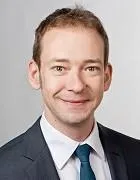
Prof. Dr.-Ing. Tobias Leopold is a faculty member at Hochschule Esslingen , serving as Associate Dean for Mobility and Technology , Head of Lab Service , and Academic Director of Automotive Engineering (Bachelor's Program) . His research focuses on Reliability Engineering , Design of Experiments , and Service Engineering . Research Trends : His recent publications emphasize Reliability Demonstration Testing , Uncertainty Quantification , and Robust Design Optimization in automotive systems. Teaching : He lectures on Technical Mechanics , Vehicle Technology , and Reliability Engineering at both Bachelor's and Master's levels. Contact : Email Tobias.Leopold@hs-esslingen.de
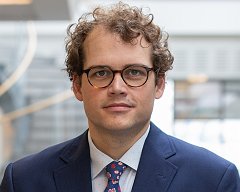
Prof. Dr.-Ing. André Borrmann is an academic leader at the Technical University of Munich (TUM) , where he has headed the Chair of Computing in Civil and Building Engineering since 2011 (formerly Computational Modeling and Simulation). He serves as Director of the TUM Georg Nemetschek Institute - AI for the Built World since 2025 and Spokesperson for the Leonhard Obermeyer Center since 2013. Research Interests Artificial Intelligence in Civil Engineering Digital Twinning Building Information Modeling (BIM) Pedestrian Dynamics Knowledge Representation Construction Simulation His work focuses on AI application across the built environment lifecycle - from generative design to maintenance prediction - with significant contributions to BIM standardization and buildingSMART International IFC extensions. He co-authored the German Ministry of Transport BIM Roadmap and led the BIM4INFRA2020 project. Awards include the 2024 Konrad Zuse Medal and multiple best paper awards at international conferences.
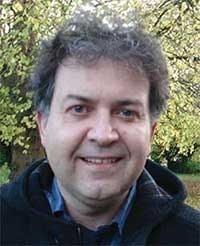
Max S. New is an Assistant Professor in Computer Science & Engineering at the University of Michigan, affiliated with the MPLSE research community . He works on the mathematical foundations of programming languages, focusing on Gradual Typing , Category Theory , Secure Compilation , and Effect Handlers . His research bridges formal methods with practical language design. Educational background : PhD in Computer Science, Northeastern University (2020) Postdoctoral Research, Wesleyan University (with Dan Licata) Max's recent work explores the intersection of Dependent Lambek Calculus and parsing verification, Synthetic Guarded Domain Theory for gradual typing semantics, and Relative Monads in computational models. His publications span top venues like PLDI , POPL , and ICFP , emphasizing formal verification and category-theoretic abstractions. He has served as Committee Member in OOPSLA and POPL, Session Chair for type systems tracks, and Program Co-Chair for HOPE workshops. His PhD students include Eric Giovannini, Steven Schaefer, and Jesse Slater (co-advised with Xinyu Wang).
Giuseppe Palaia is an Assistant Professor at the Department of Mechanical and Aerospace Engineering (DIMEAS) within Politecnico di Torino . He serves as a Course Collaborator for multiple programs, including Aerospace Vehicle Design and Space Environment, Access, and Operations across academic years 2024/25 and 2025/26. His research focuses on sustainable aerospace design , with emphasis on hybrid-electric propulsion , hydrogen-powered aircraft , and unconventional configurations like box-wing systems . Academic Affiliation: Politecnico di Torino Teaching Roles: Collaborator for courses in Aerospace Engineering and Engineering and Management Specializations: Aircraft performance analysis, satellite data applications, and sustainable aviation technologies Prioritized research themes span gust spectrum assessment via satellite data , liquid hydrogen propulsion , and hybrid-electric regional aircraft development . Publications highlight innovations in unconventional configurations and emission reduction strategies for next-generation aviation. His work integrates parametric modeling and benchmarking methodologies for aerospace systems.
Dan Steinberg is a senior research scientist and team leader of the Decisions & Statistical Learning team at CSIRO Data61 in Canberra, Australia. His expertise lies in probabilistic machine learning, variational inference, Bayesian deep learning, causal inference, and their application to domains spanning synthetic biology, geospatial analytics, and algorithmic fairness. Education PhD in Computer Vision / Machine Learning (2013) – University of Sydney, Australian Centre for Field Robotics Bachelor of Engineering (Mechatronics, First-Class Honours) – University of Sydney (2008) Bachelor of Commerce (Finance) – University of Sydney (2008) Research Interests Steinberg’s core research agenda revolves around building scalable probabilistic models that can learn efficiently from limited or noisy data and provide principled uncertainty estimates. Key themes include: Variational Inference & Bayesian Deep Learning: developing lightweight yet powerful algorithms for approximate posterior inference in complex models (e.g., Aboleth, Revrand). Active Learning & Experimental Design: creating methods that decide which experiments or measurements will maximise information gain, with recent focus on in-silico protein engineering via Variational Search Distributions (VSD). Causal Inference: leveraging machine-learning tools to perform robust observational causal studies for evidence-based policy, including work on youth well-being and academic outcomes. Algorithmic Fairness: translating normative notions of equity into quantifiable objectives for regression-based decision systems. Large-scale Spatial Analytics: Landshark—an open-source TensorFlow toolkit for supervised learning on massive geospatial raster datasets. Notable Software & Tools Aboleth: A minimal-overhead TensorFlow framework for Bayesian deep learning. Landshark: Command-line tools for large-scale spatial inference. Revrand: Scalable Bayesian generalised linear models with non-conjugate likelihoods. libcluster: Extensible C++ library for hierarchical Bayesian clustering. Scientific Awards Oral Presentation Award – ICML 2025 Workshop on Scaling up Intervention Models (SIMS) Oral Presentation Award – NeurIPS 2024 Workshop on Bayesian Decision-making and Uncertainty (BDU) Oral Presentation Award – NeurIPS 2023 Workshop on Adaptive Experimental Design and Active Learning Spotlight Paper Award – NeurIPS 2014 (Extended and Unscented Gaussian Processes) Research Team & Collaborations As Team Leader – Decisions & Statistical Learning at CSIRO Data61, Steinberg directs a multi-disciplinary group that partners with government agencies (e.g., Jobs and Skills Australia, Australian Institute of Health and Welfare) and industry to deploy machine-learning solutions at scale. He has previously held roles as Principal Researcher at Gradient Institute (2019-2023), Senior Research Engineer at CSIRO Data61 (2016-2019), Researcher at NICTA (2013-2016), and Research Associate at the University of Sydney (2012-2013).
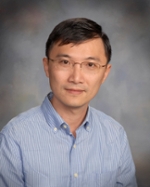
Rongning Wu is an Associate Professor at the Paul H. Chook Department of Information Systems and Statistics within the Zicklin School of Business at Baruch College, City University of New York . Holding a Ph.D. and M.S. in Statistics from Colorado State University and a B.S. in Applied Mathematics from Southeast University, Dr. Wu specializes in advanced statistical modeling with particular focus on time series analysis and count data models. Education : Ph.D./M.S. in Statistics (Colorado State University), B.S. in Applied Mathematics (Southeast University) Current Roles : Associate Professor, Committee Chair (Statistics Faculty Recruiting), Co-organizer (Department Research Seminar Series) Dr. Wu's research explores robust statistical methodologies for complex time series data, including Least Absolute Deviation estimation , single-index models with time series errors , negative binomial models for count series , and tail-trimmed absolute deviation techniques . His work addresses challenges in parameter estimation, variance modeling, and structural change detection for both finite and infinite variance processes. Recent publications highlight advancements in change-point estimation for count time series , conditional maximum likelihood for INGARCH models , and semiparametric approaches for discrete-valued processes . Dr. Wu's methodological contributions find applications in financial data analysis and public health research, particularly in modeling HIV transmission dynamics related to incarceration. Scientific Honors : Honored Faculty, Baruch College (2009-2011) IMS Travel Award (2009) James L. Madison Memorial Award (2004) Franklin A. Graybill Award (2003) As an active researcher, Dr. Wu has secured multiple PSC-CUNY grants (2008-2022) totaling over $52,000 for projects spanning time series estimation, regression modeling, and empirical likelihood methods. He has served on various academic committees including the ZSB Graduate Curriculum Committee and the Statistics Faculty Recruiting Committee, while maintaining editorial reviewing roles for 15+ international journals.
Fabio Favoino is an Associate Professor at the Department of Energy (DENERG) at the Polytechnic of Turin, Italy, and a member of the FULL Interdepartmental Center - Future Urban Legacy Lab. His academic career focuses on building physics and energy systems, with particular expertise in building envelope technologies, energy efficiency, and sustainable building design. Research Interests Professor Favoino's research spans multiple areas of building science and technology, with a strong emphasis on energy performance and sustainable design. His primary research interests include building energy performance and nearly zero-energy buildings, advanced building envelope systems and facade technologies, building insulation materials and responsive building elements, smart glazing and electrochromic window systems, double-skin facades with integrated thermal storage, building simulation and performance assessment methodologies, integration of renewable energy systems in buildings, and thermal comfort and indoor environmental quality. Publication Trends Professor Favoino's recent publications demonstrate a clear focus on advanced building envelope technologies, particularly responsive and adaptive systems. His work increasingly integrates multi-domain analysis, combining thermal, acoustic, and daylight performance assessment. There is a strong emphasis on experimental validation of novel technologies like electrochromic windows, double-skin facades with phase change materials, and smart ventilation systems. His research also shows growing interest in living lab methodologies, sensor networks for building performance monitoring, and the integration of IoT infrastructure for building management systems. Professional Recognition Editorial Board Member for Building and Environment (2022-present) Editorial Board Member for Glass Structures & Engineering (2018-present) Effective Member of the Italian Thermotechnical Association (2018-present) Effective Member of CIBSE, United Kingdom (2016-present) Founding Partner of IBPSA Italy (2012-present) Effective Member of REHVA, European (2011-present) Effective Member of AICARR, Italy (2011-present) Research Leadership Professor Favoino actively supervises PhD students working on cutting-edge building technologies and leads several significant research projects including MIRABLE (2023-2025) on measurement infrastructure for healthy and zero-energy buildings, and the PRIN-funded iclimabuilt project (2021-2025) on functional and advanced insulating materials for climate adaptive building envelopes. He has also led commercial research projects on high-performance glazing systems and participated in the Cost Action TU1403 - Adaptive Facade Network (2014-2018) as coordinator. Research Infrastructure Professor Favoino's work with the FULL Interdepartmental Center - Future Urban Legacy Lab and involvement with the HIEQLab facility provide platforms for interdisciplinary research on sustainable urban development, building technologies, and human-centered environmental quality assessment.
Kyle D. Rudser is a Professor in the Division of Biostatistics and Health Data Science at the School of Public Health, University of Minnesota - Twin Cities. He serves as the Director of the Biostatistical Design and Analysis Center (BDAC) within the Clinical and Translational Science Institute (CTSI). His educational background includes: PhD in Biostatistics from University of Washington (2007) MS in Biostatistics from University of Washington (2005) BA in Mathematics and Chemistry from St. Olaf College (2002) Dr. Rudser's research focuses on statistical methodologies including clinical trial design and monitoring, survival analysis techniques, longitudinal data analysis, and nonparametric approaches. His work emphasizes developing innovative statistical models for complex biomedical data with applications across diverse clinical domains. His publication portfolio demonstrates extensive expertise in survival analysis methodologies and clinical trial design, with recent collaborative work expanding into interdisciplinary health research areas including obesity interventions, urinary health epidemiology, and chronic disease management. Awards and recognition: Member, Delta Omega Honorary Society in Public Health As BDAC Director, he leads biostatistical support for translational research initiatives across the university medical center.
Olgu ÇALIŞKAN, Professor at the Department of City and Regional Planning, Faculty of Architecture, Middle East Technical University (Ankara, Turkey), specializes in urban morphology, parametric urban design, and generative urbanism. With a PhD in Urbanism from Delft University of Technology (2013) and MSc/BSc in Urban Design and City Planning from METU, his work bridges theoretical frameworks with computational methodologies. Education : PhD (Urbanism, TU Delft, 2013); MSc (Urban Design, METU, 2004); BSc (City Planning, METU, 2001) Research interests include physical planning , urban design theory , and design thinking , with a focus on socio-morphological perspectives. Recent publications analyze typological diversity in Ankara (2023), parametric modeling for urban heat island mitigation (2018), and heterotopian urbanism (2019). His work extends to editorial roles in Urban Design and Planning , Built Environment , and METU Journal of The Faculty of Architecture . Prof. ÇALIŞKAN supervises 18 Master’s theses on topics such as urban stigma, parametric landscape urbanism, and spatial censorship. Current projects emphasize sustainable coexistence of agriculture and industry in Türkiye (2025) and AI integration in urban planning (2025).
Mariken de Wit, MSc is a Postdoctoral Researcher in Infectious Disease Epidemiology at Wageningen University & Research. Her academic trajectory includes completing a PhD on arbovirus modeling, transitioning into her current postdoctoral position where she continues advanced research on vector-borne disease transmission dynamics. Her research focuses on mathematical modeling of arbovirus transmission systems, with particular expertise in West Nile virus, Usutu virus, and Rift Valley fever virus. De Wit specializes in developing mechanistic models that incorporate vector competence, host susceptibility, and environmental factors to understand disease emergence patterns. Her work bridges theoretical epidemiology with practical public health applications for disease surveillance and control. Analysis of her recent publications reveals a strong methodological focus on spatial-temporal modeling, multi-host systems, and parametrization techniques for vector-borne diseases. Her research consistently applies mathematical approaches to address specific questions about spillover events, transmission thresholds, and the ecological drivers of disease emergence in the Netherlands and beyond. Her collaborative network includes prominent researchers at Wageningen University such as Q.A. ten Bosch and M.C.M. de Jong, with whom she has developed sophisticated modeling frameworks for understanding arbovirus dynamics across different ecological contexts. De Wit's research program demonstrates significant potential for informing vector control strategies and early warning systems for emerging arboviral diseases, with implications for both human and animal health sectors within the One Health framework.
Ayhan Demircan is an Adjunct Professor at the Leibniz School of Optics and Photonics in Leibniz University Hannover. He leads the Micro and Nano Photonics task group and contributes to institutions including the Institute of Quantum Optics , Ultrafast Laser Laboratory , and Hannover Centre for Optical Technologies (HOT) . His work spans photonics, quantum optics, and nonlinear dynamics, with applications in terahertz technology, soliton physics, and optical modeling. Research Interests: Photonics, quantum optics, terahertz radiation, soliton dynamics, nanophotonics, and computational modeling of optical systems. Key Institutions: Leibniz School of Optics and Photonics, Institute of Quantum Optics, HOT, and PhoenixD Cluster of Excellence. Technical Expertise: Develops Python-based tools for nonlinear Schrödinger equations, optical parametric oscillators, and ultrafast laser systems. Contact: demircan@iqo.uni-hannover.de
Nik Cunniffe is a Professor in the Department of Plant Sciences at the University of Cambridge, specializing in epidemiological modeling of plant pests and pathogens. His research focuses on developing theoretical and applied models to inform policy decisions regarding disease detection, control, and evolutionary dynamics. Key Research Areas: Theoretical epidemiology (deterministic, stochastic, and spatial models) Applied plant disease management (Phytophthora ramorum, ash dieback) Computational simulation techniques at large spatial scales Projects: Approximate models for complex disease management Stakeholder behavior impact on control efficacy Optimal fungicide resistance strategies Trap/repellent companion plants for virus control Collaborations: Cambridge NERC Doctoral Training Partnership (C-CLEAR DTP) NERC-funded CREATES program Email: njc1001@cam.ac.uk
Dr. Nicole Lesley Gardner is a Registered Architect (NSW ARB 7921) and Program Director of Computational Design at the School of Built Environment, UNSW Sydney . Her interdisciplinary research examines digital transformation in architecture, urban technology, and the ethics of smart cities. A Chief Investigator for the $9M Australian Research Council (ARC) Industrial Transformation Training Centre , she has led multiple Commonwealth-funded grants and co-authored over 40 peer-reviewed publications. Education: PhD in Architecture (UTS 2018), Bachelor of Architecture (Adelaide 2000), Bachelor of Design Studies (Adelaide 1998) Leadership: Chair of CAADRIA 2024 , co-editor of CAADRIA Post-Carbon proceedings (2022) Research Interests span computational design, smart city paradigms, and digital transformation in the AEC sector. Her work integrates ethical frameworks, gender dynamics, and material innovation in urban technology, with a focus on practice-based design research and industry collaboration. Scientific Awards : ADA Faculty Research Fellowship (2021-2022)
Shen-Shyang Ho is a Full Professor in the Department of Computer Science at Rowan University's College of Science & Mathematics. His work spans machine learning, data mining, and edge computing with applications in urban mobility, precision agriculture, and data privacy. He leads NSF-funded research projects on dynamic graph analysis and spatiotemporal anomaly detection. Ph.D. in Computer Science, George Mason University Post-Doctoral Associate, Caltech & NASA JPL B.S. in Mathematics with Computational Science, National University of Singapore Research expertise includes graph-based machine learning, conformal prediction, cooperative inference, and privacy-preserving ML. Current work focuses on federated learning for edge devices and anomaly detection in evolving systems. He has developed tools like SplitTracer for cooperative inference evaluation and ParkGauge for urban mobility monitoring. Recent publications highlight his contributions to 2026 Pattern Recognition journal (martingale-based graph analysis), 2025 IEEE ICAIC conference (blockchain gas optimization), and 2024 ACM SAC symposium (shared mobility systems). His work integrates machine learning with real-world constraints across energy grids, transportation, and agricultural technology. NSF Grant (2022) for Dynamic Graph Anomaly Detection NSF Grant (2018) for Spatiotemporal Analysis Google Scholar Classic Paper Recognition (2017) for 2006 Radar Micro-Doppler Study Professional memberships include the Association for Computing Machinery (ACM). His teaching portfolio ranges from introductory programming to advanced ML courses. He previously held positions at Nanyang Technological University before joining Rowan in 2016.
Cyril Touzé is a Professor at ENSTA Paris, affiliated with the Fluid Dynamics and Acoustics team within the Mechanics Unit (UME). His research focuses on nonlinear dynamics of mechanical systems, particularly geometric nonlinear vibrations and invariant manifold theory. Expertise in model reduction methods Specializes in wave turbulence transition Develops passive control techniques using nonlinear dampers Applications in acoustic black hole effect and MEMS structures His recent work explores invariant manifold parametrization for nonlinear oscillators, vibro-impact vibration absorbers, and computational methods for geometrically nonlinear systems. He serves as a Topical Associate Editor for Nonlinear Dynamics and collaborates on experimental validations in structural acoustics. Key contributions include: Advanced reduced-order modeling techniques Wave turbulence analysis in thin structures Innovative vibration control strategies Nonlinear coupling mechanisms in musical acoustics Applications to MEMS and aerospace systems