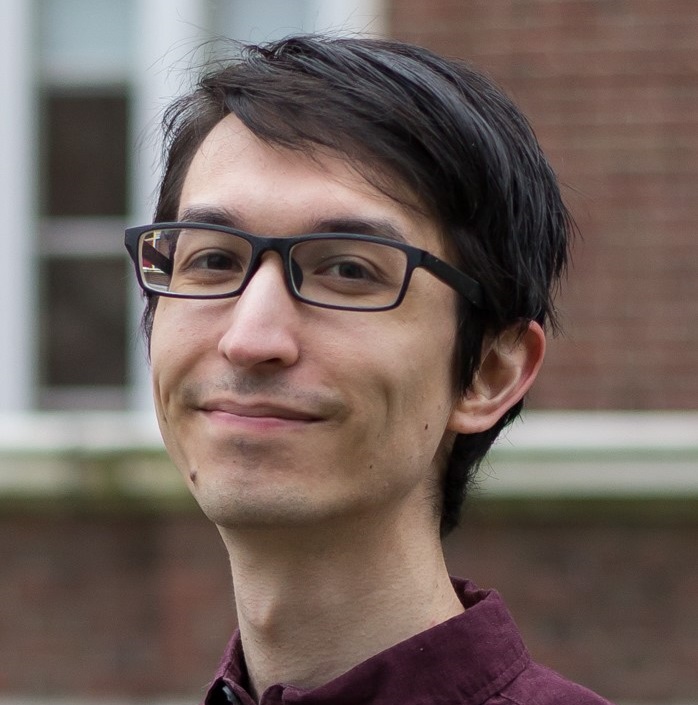
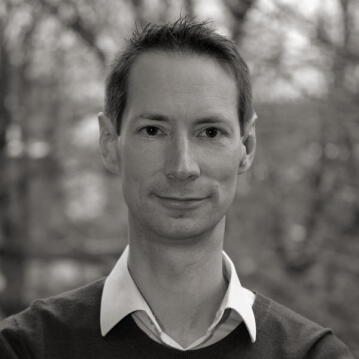
Professor Daniel Axehill is affiliated with the Department of Electrical Engineering (ISY) at Linköping University, specializing in planning and optimization-based control for autonomous systems. His research bridges theoretical developments and industrial applications. His recent work focuses on robust motion planning for autonomous vehicles, optimal task and motion planning algorithms, execution-time analysis for model predictive control, and high-performance solvers for multi-parametric quadratic programming. Key methods include lattice-based planning, disturbance estimation, and real-time optimization. He contributes to the Wallenberg Autonomous Systems Program (WASP), collaborating on advancements in robotics, sensor fusion, and complex network control systems.
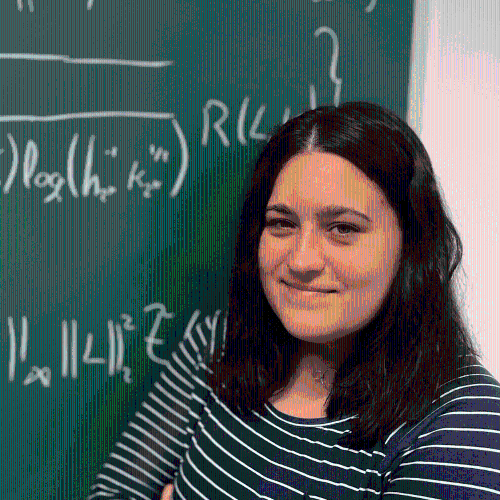
Mogens Bladt is a Professor of Applied Probability and Insurance Mathematics at the Department of Mathematical Sciences, University of Copenhagen. He has held positions since 2018 after 24 years as Principal Researcher at the National University of Mexico (1994-2018), with visiting professorships at Technical University of Denmark and University of Copenhagen since 2001. Research: Focuses on time-inhomogeneous phase-type distributions, matrix-oriented life insurance models, heavy-tailed distributions, and diffusion bridge simulation Teaching: Offers graduate/undergraduate courses in Applied Probability, Stochastic Processes, Risk Theory, and Numerical Analysis Scientific Contributions: Developed R packages for Markov jump processes, phase-type distributions, and diffusion bridges. Holds grants from Mexico and Denmark, including Danish Research Council funding (2007–2008). Supervised 5 PhD, 8 Master’s, and 13 Bachelor’s theses Organized academic workshops and served as Associate Editor for Stochastic Models since 1997
Associate Professor Jarryd Pla is an experimental physicist and electrical engineer at the University of New South Wales, specializing in quantum information processing and quantum technologies. He holds a PhD in Electrical Engineering from UNSW (2013) and a first-class honors BEng in Photonic Engineering (2009). Current ARC Future Fellow Former Bragg Gold Medal recipient His research focuses on: Spin-based quantum computation in silicon Superconducting quantum circuits Quantum-noise-limited microwave amplifiers Hybrid quantum systems for quantum memory Quantum sensing and spectroscopy Recent publications highlight: Room-temperature maser amplifiers Kinetic inductance parametric amplifiers Coherent control of donor spins Quantum-limited electron spin resonance Scientific Awards: ARC Future Fellowship (2024-2028) Bragg Gold Medal His grants include: ARC DECRA (2019-2022): Superconducting hybrid quantum technologies ARC Discovery Project (2021-2024): Quantum sensing with semiconductor devices ARC Future Fellowship (2024-2028): Room-temperature diamond-based microwave detection
Joshua Speagle is an Assistant Professor jointly appointed in the Department of Statistical Sciences and the David A. Dunlap Department of Astronomy & Astrophysics at the University of Toronto. He is also an Associate Member of the Dunlap Institute for Astronomy & Astrophysics and a Member of the Data Sciences Institute. His research lies at the intersection of statistics, astronomy, and computer science, focusing on astrostatistics and data-intensive astrophysics. His research interests include astrostatistics, data science, machine learning, statistical inference, and Bayesian methods. He develops novel statistical learning techniques to extract insights from large, complex datasets, particularly from astronomical surveys. His work emphasizes interpretability, robust inference, and computational efficiency, with applications to galaxy formation, stellar photometry, and 3D dust mapping. The trends in his recent publications reflect a strong focus on interdisciplinary methodologies, particularly in Bayesian inference, nested sampling, and machine learning applied to astrophysical problems. His work consistently bridges theoretical statistics with practical applications in astronomy, emphasizing open-source software and reproducible research. Banting Postdoctoral Fellowship Dunlap Fellowship Joshua Speagle is deeply committed to mentorship and collaboration. He co-leads the Astrostatistics Research Team (ART) with Gwen Eadie, mentoring students and postdocs across disciplines. He is involved in graduate and undergraduate research programs, including the Astronomy & Astrophysics Summer Undergraduate Research Program (SURP). He teaches courses in statistics and astronomy and serves on committees within the University of Toronto and professional societies such as the AAS, ASA-AIG, and SSC-DSA. He co-leads the interdisciplinary Astrostatistics Research Team (ART), which fosters a collaborative, inclusive environment focused on cutting-edge research at the intersection of statistics and AI. The team emphasizes open and accessible science, releasing open-source tools like dynesty and brutus , and mentoring the next generation of data scientists.
María Alonso-Peña is an Assistant Professor at the University of Santiago de Compostela , affiliated with the Faculty of Biology and the Department of Statistics, Mathematical Analysis, and Optimization . Her research focuses on nonparametric statistical methods, particularly in circular regression models and their applications in neuroscience and animal behavior analysis. She holds a PhD in Statistics from the University of Santiago de Compostela (2022), with a thesis titled New approaches to nonparametric circular regression models . Education: PhD in Statistics (2022), University of Santiago de Compostela Research Interests: Nonparametric statistics, circular regression, optimization, and statistical modeling in neuroscience and ecology Her work bridges theoretical statistics with applied problems, such as analyzing neuronal spike counts and animal escape behavior using advanced circular regression techniques. She has collaborated with institutions like KU Leuven and Universidad de Granada. Recent research includes a grant from the Xunta de Galicia (ED481A-2019/139) for neuroscientific applications. Key contributions include frameworks for circular local likelihood regression and parametrically guided kernel density estimators for spherical data. These methods address challenges in modeling directional and multimodal datasets, with implications for fields like neuroscience and environmental science.
Ilaria Prosdocimi is an Associate Professor in the Department of Environmental Sciences, Computer Science and Statistics at Ca' Foscari University of Venice. She holds a PhD in Statistics from KU Leuven and has expertise in extreme value statistics and generalized additive models applied to environmental and hydrological problems. Her teaching spans courses in Data Analytics, Predictive Analysis, and Statistical Models across undergraduate and graduate programs, including the Science and Management of Climate Change and Environmental Sciences. Her research focuses on extreme value theory in hydrology, with a particular interest in flood frequency analysis, rainfall extremes, and climate change impacts. She has contributed to projects like RISE (Rethinking and Innovating Statistics for Extremes), funded by MIUR, and serves on editorial boards for journals like Hydrological Sciences Journal and Advances in Water Resources . Prosdocimi’s recent work analyzes air quality policies in Venice, trends in hydrological extremes across Europe, and the statistical attribution of environmental changes. She collaborates internationally, including with UK institutions, and has published extensively on methodologies for coherent estimation of rainfall and flood risks. Grants & Projects RISE: Rethinking and Innovating Statistics for Extremes (MIUR-PRIN, 2023–2026) Labs/Teams Active in the Environmental Statistics research group at Ca' Foscari, collaborating with Isadora Antoniano Villalobos and international hydrological networks.
Hsein Kew is a Senior Lecturer in the Department of Econometrics and Business Statistics at Monash University. He holds a PhD in Economics from the University of Melbourne and previously worked as a researcher at the Melbourne Institute of Applied Economic and Social Research, focusing on empirical analyses of social security and labor market interactions. PhD in Economics, University of Melbourne Researcher, Melbourne Institute of Applied Economic and Social Research Senior Lecturer, Department of Econometrics and Business Statistics, Monash University His research primarily centers on time series analysis , heteroskedastic models , and non-parametric methods , with applications in financial econometrics and forecasting. He teaches Financial Econometrics and Data Analysis in Business, contributing to both theoretical and applied econometric education. The recent publications by Hsein Kew span from 2014 to 2024 and reflect a consistent focus on advanced econometric methodology. The articles demonstrate expertise in predictive regression models , unit root testing under volatility shifts , long memory processes , and autocorrelation testing under complex dependency and heteroskedastic structures . These works are published in top-tier journals such as the Journal of Econometrics and Econometric Theory , indicating a strong contribution to econometric theory and robust inference under non-standard conditions. Notable research projects include an Australian Research Council (ARC)-funded project titled A new class of statistical methods for analysing long memory time series models with heteroskedasticity (2010–2013), where he served as a Chief Investigator. This project aligns with his ongoing research interests in modeling time series with long memory and time-varying volatility. ARC Research Project: A new class of statistical methods for analysing long memory time series models with heteroskedasticity (2010–2013) While no scientific awards are listed in the provided text, his sustained publication record and involvement in funded research indicate active scholarly engagement. He has collaborated with prominent econometricians such as David Harris and Jiti Gao, suggesting integration into a strong research network. There is no mention of advising students or leading a lab, but his role as a Senior Lecturer implies teaching and mentorship responsibilities.
Bernard Haasdonk is a Professor at the University of Stuttgart, affiliated with the Institute of Applied Analysis and Numerical Simulation (IANS), part of the Faculty of Mathematics and Computer Science. His research focuses on model reduction techniques for parametrized partial differential equations (PDEs), kernel-based methods, numerical analysis, and machine learning applications in scientific computing. He leads a research group in numerical mathematics and has contributed to software tools like RBMatlab and KerMor. Affiliations: Institute of Applied Analysis and Numerical Simulation, University of Stuttgart Roles: Academic Researcher, Software Developer, Grant Principal Investigator His work bridges numerical simulation, machine learning, and reduced basis methods, addressing challenges in optimal control, fluid dynamics, and biomechanics. Haasdonk has held multiple funded projects, including those on kernel methods for model reduction and certified RB-ML-ROM surrogate models. Research Interests: Model reduction for PDEs, kernel methods, greedy algorithms, numerical analysis, optimal control, and applications in fluid dynamics and porous media. He emphasizes structure-preserving methods for Hamiltonian systems and data-driven approaches for surrogate modeling. Publications: Over 200 articles in journals like SIAM, BIT Numerical Mathematics, and Physica D, focusing on convergence analysis, kernel-based approximation, and reduced-order modeling. Recent trends include adaptive greedy algorithms, symplectic model reduction, and energy-conserving surrogates. Awards: IEEE PerCom 2017 Best Paper Award, Teaching Excellence Awards (2012-2017), and early-career research grants. Grants: DFG-funded projects on model reduction, SimTech Cluster contributions, and collaborations on fuel cells and biomechanics. Teams: Leads the Numerical Mathematics Research Group at IANS, collaborating with interdisciplinary teams on projects like MORCOS (Model Order Reduction of Coupled Systems) and KerMor (Kernel Methods for Model Reduction).
Dr Kelvin Ng is a Postdoctoral Research Fellow at the University of Birmingham's School of Geography, Earth and Environmental Sciences. His research focuses on meteorological and climatological extremes, particularly tropical cyclones and their impacts. He holds an MSci in Physics from Imperial College London and a PhD in Atmospheric Sciences from the University of Hong Kong. Key roles include contributions to projects such as INPAIS (NERC-funded collaborative research with Swiss Re and Beijing Normal University), PRE-CAX (Newton Fund-supported projects with the University of Reading), Ex-Storms (NERC-funded European windstorm predictability study), and HURACAN (UK-US consortium exploring cyclone risks). He is also involved in initiatives like the Met Office Summer Testbed 2023 and SR-Hazards (Swiss Re-funded). Ng's research interests span tropical cyclone intensity dynamics, extreme rainfall prediction, and climate model assessment (e.g., CMIP6). He is a member of the Royal Meteorological Society (RMetS) and European Geosciences Union (EGU). Recent publications highlight advancements in Mei-yu front analysis, storm surge impact modeling, and causal-guided statistical approaches for extreme weather prediction. His work bridges academic research with industry collaboration, aiming to improve parametric insurance thresholds for typhoons and enhance climate change adaptation strategies for regions like China and Europe.
Erkan Günpınar is an Associate Professor at the Department of Mechanical Engineering, Istanbul Technical University (ITU), specializing in Additive Manufacturing and Computer-Aided Design. His research focuses on optimizing printing paths, material properties, and geometric precision in additive manufacturing processes. He has pioneered work on lattice structures, patient-specific medical systems, and structural optimization for marine applications. Key research interests include generative design methodologies, support structure optimization, and machine learning applications in manufacturing. His work bridges engineering disciplines, integrating mechanical principles with computational techniques to solve complex design challenges. Awards: Best Presentation Award (2016, 2018), Outstanding Contribution in Reviewing (2016), Session Best Paper (2017) Projects: Includes initiatives on yacht hull optimization, cross-derivative surface modeling, and liquid flow-inspired printing paths Advising: Supervises 8 ongoing theses in additive manufacturing and geometric modeling Dr. Günpınar’s recent projects emphasize interdisciplinary collaboration, particularly in biomedical and marine engineering contexts. He actively contributes to journals like Journal of Manufacturing Processes and Computer-Aided Design .
Benjamin Kromoser is a Professor for Resource Efficient Structural Engineering at the Institute of Green Civil Engineering (BOKU Vienna). He leads research projects on sustainable construction methods, including additive manufacturing of biobased materials, timber-concrete composites, and topology optimization of structural elements. His work bridges digital fabrication, circular economy principles, and industry 4.0 in civil engineering. Head of Institute of Green Civil Engineering (2022–present) Speaker of Doctoral School Build.Nature (2021–2022) University Professor for Biobased Design (2018–2022) His research focuses on reducing environmental impacts through automated design, 3D printing of concrete, and non-metallic reinforcement. Recent projects include 3DP Biowalls (biobased recyclable walls) and prestressed carbon-UHPC elements. Scientific awards include the fib Achievement Award (2019) , Inits Award (2016) , and Bundespreis für Ecodesign (2016) .
Eduardo Costa serves as a Senior Lecturer in Computational Architecture at the University of the West of England's College of Arts, Technology and Environment, where he bridges computational methodologies with architectural design and fabrication. His academic credentials include a PhD in Architecture specializing in Digital Design and recognition as a Fellow of the Higher Education Academy (FHEA). Research centers on parametric and procedural modeling for automating architectural shape generation, analysis, and optimisation. Costa integrates advanced digital fabrication techniques—including stone CNC milling, ceramic 3D printing, and concrete reconfigurable forming—with design workflows, while developing user-friendly software tools to implement these processes. Key research collaborations include: Bath University Cambridge University University of Dundee Pennsylvania State University University of Lisbon No scientific awards were documented in the source material. Information regarding student advising, research grants, and laboratory facilities was either not provided or insufficiently detailed for inclusion.
Felix Schindler is a Researcher at the Institute for Analysis and Numerical Analysis , part of the Department of Mathematics and Computer Science at the University of Münster . His work bridges numerical analysis, machine learning, and scientific computing, with a focus on model reduction for partial differential equations (PDEs), adaptive algorithms, and computational efficiency. Research Interests include: Numerical analysis of parametric and multiscale PDEs Localized reduced basis methods (LRBM) and adaptive enrichment Integration of model order reduction (MOR) with machine learning (ML) Conservative flux reconstruction techniques Development of software libraries like dune-xt and pyMOR Recent Publications highlight trends in applying deep kernel models for surrogate modeling, localized training strategies for PDE-constrained optimization, and hybrid full/reduced-order pipelines for reactive flow prediction. His work emphasizes certified error control, hierarchical adaptivity, and cross-disciplinary computational frameworks. Collaborations span institutions such as AIMS Senegal, Springer Nature, and DUNE project teams. He actively contributes to conferences like GAMM, ENUMATH, and Algoritmy.
Drew Heard is an Associate Professor at the Norwegian University of Science and Technology (NTNU), Trondheim, supported by the Trond Mohn Foundation. His research bridges stable homotopy theory and tensor triangulated geometry, with a focus on chromatic homotopy theory, Balmer spectra, and descent techniques. He has collaborated extensively with researchers at institutions like Regensburg University, Haifa University, and the Max Planck Institute for Mathematics in Bonn. Key Research Areas: Stable homotopy theory, chromatic homotopy theory, tensor triangulated geometry, and equivariant homotopy theory. Publications: His work includes classifications of thick subcategories in functor calculus, cosupport theory, and stratification theorems in equivariant homotopy theory. Recent papers explore connections between tensor triangulated geometry and algebraic structures like Picard groups, Balmer spectra, and local duality. Grants and Collaborations: Supported by the Trond Mohn Foundation, he has worked with teams at the SFB Higher Invariants, SPP 1786, and in projects like 'tt-geometry in Trondheim.'
Ryan Grady is an Associate Professor in the Department of Mathematical Sciences at Montana State University. His research and teaching focus span advanced mathematical disciplines. Education: Ph.D. and M.S. (2012, 2009) from University of Notre Dame B.S. (2007) from Colorado School of Mines Ryan's research lies at the intersection of geometry, topology , and quantum field theory (QFT) , with a focus on rigorous mathematical frameworks. He explores connections between QFT, derived geometry , and higher Lie theory , aiming to bridge physical intuition with formal mathematical structures. His recent publications highlight trends in topological data analysis , homotopy theory , and quantization . Key areas include factorization algebras , K-theory , and non-linear sigma models , reflecting a synthesis of abstract mathematics and physical applications. Ryan has advised multiple graduate students, including Eric Berry, Adam Howard, Garrett Oren, and Bryce Morrow, whose work spans cohomology of Grassmanians , surface immersions , algebraic structures , and infinite-dimensional linear algebra .