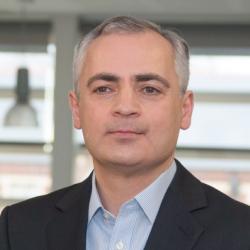
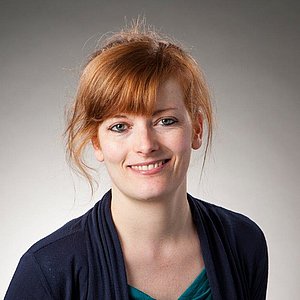
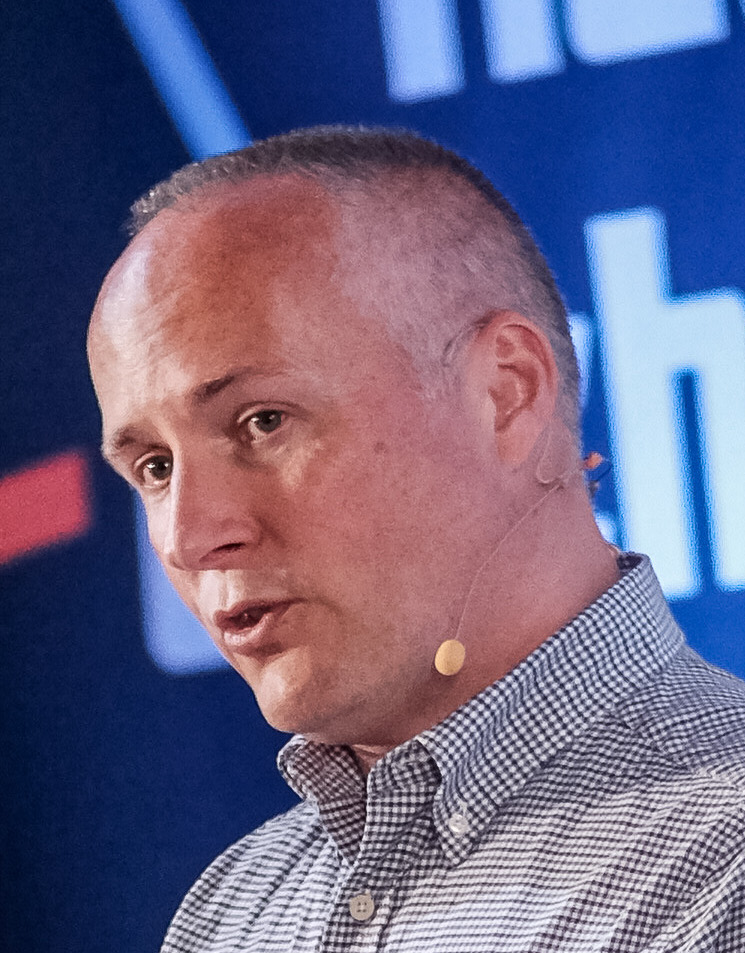
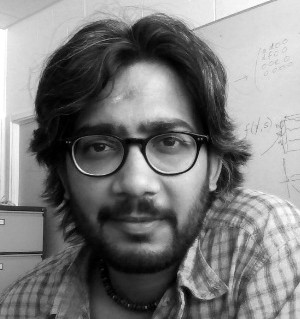
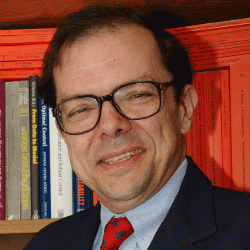
Kathrin Smetana is Assistant Professor in the Department of Mathematical Sciences at Stevens Institute of Technology, holding an NSF CAREER Award for randomized multiscale methods. Research develops computational mathematics for model reduction of multiscale PDEs, combining randomized algorithms with traditional numerical techniques. Key research thrusts: Randomized error estimation for parametrized systems Localized model reduction frameworks Adaptive enrichment strategies Stable discretizations for kinetic equations Publications demonstrate integration of probabilistic and deterministic approaches, with 60% focusing on model reduction and 25% on randomized algorithms. Current NSF project extends methods to nonlinear heterogeneous PDEs.
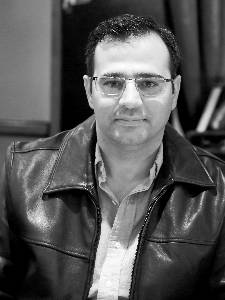
Sergey Sorokin is a Professor in the Department of Materials and Production at Aalborg University, Faculty of Engineering and Science, Denmark. His research centers on solid and computational mechanics, with a focus on structural dynamics, wave propagation, vibro-acoustics, and finite element modeling. His research interests include: Wave propagation in periodic and elastic structures Vibro-acoustics and noise control Finite element methods and reduced-order modeling Nonlinear dynamics of beams and shells Acoustic black hole effects and vibration suppression Structural optimization and industrial system analysis The recent publications (2020–2025) demonstrate sustained activity in mechanical wave analysis, nonlinear structural behavior, and acoustic optimization. Key themes include the suppression of bending waves, asymptotic modeling of cylindrical shells, and bi-orthogonality in waveguides. These works reflect an interdisciplinary blend of theoretical mechanics, numerical simulation, and engineering applications. Scientific contributions include: Active participation in long-term research projects on mechanical vibro-acoustics and wave transmission since 2010 Supervision of at least four PhD students Extensive publication record (188 research outputs) with consistent contributions to journals like the Journal of the Acoustical Society of America and European Journal of Mechanics A/Solids He has advised several researchers and contributed to collaborative projects involving structural optimization and industrial component analysis. His work is deeply integrated into both theoretical and applied mechanical engineering, with emphasis on modeling and enhancing structural performance under dynamic loads. Sergey Sorokin is actively involved in research through ongoing projects such as 'Mechanical Vibro-Acoustics and Noise' and 'Analysis and Optimization of Wave Propagation in Periodic Structures'. These efforts are supported by advanced computational modeling and collaboration with peers like N. Olhoff and E. Lund.
Professor Fehmi Cirak is a faculty member at the University of Cambridge, Department of Engineering, specializing in Computational Mechanics. He joined Cambridge in 2006 after five years as a Senior Scientist at the California Institute of Technology (Caltech). His research integrates advanced computational methods with structural and materials analysis, emphasizing innovation in finite element techniques and data-informed modeling.
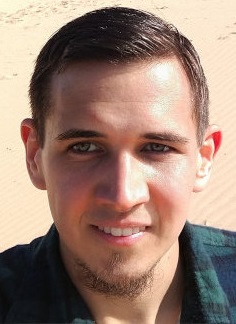
Dr. Zoltan Kocsis is a mathematical logician and educator based at the University of New South Wales (UNSW), where he currently holds the position of Adjunct Lecturer. His research spans multiple areas including proof theory, nonstandard analysis, category theory, and computational logic, with a focus on logical verification, degree of satisfiability, and structured decompositions. PhD in Mathematics from the University of Manchester (2019) Adjunct Lecturer at UNSW Work with interactive theorem proving software like Agda Dr. Kocsis' work on degree of satisfiability explores the probability of logical formulas holding in algebraic structures, revealing gaps in equations from Heyting algebras to group theory. His research on structured decompositions and spined categories provides categorical frameworks for fixed-parameter tractability and tree-width generalizations. In formal verification, he contributed to the seL4 kernel on RISC-V architecture. Recent publications include Proof-theoretic methods in quantifier-free definability (2025), Apartness relations between propositions (2024), and Degree of satisfiability in Heyting algebras (2024). Earlier works cover pseudo-random sequences, homology, and nonstandard analysis in group theory. He has received the CSIRO SCS Engineering and Technology award (2021) and the IBM Prize (2018) for his contributions to logical satisfiability. His collaborations include work with Ben Bumpus on spined categories and Jade Master on structured decompositions, alongside teams at CSIRO and Tallinn University of Technology.
Dr. Tahsin Khajah is an Assistant Professor in the Department of Mechanical Engineering at the University of Texas at Tyler. He holds a Ph.D. in Mechanical Engineering from Old Dominion University (2015), where he specialized in computational mechanics, finite elements, and isogeometric analysis. Prior to joining UT Tyler, he served as Adjunct Faculty and Visiting Lecturer at Old Dominion University and worked in the industry for over a decade as a design engineer. His research focuses on acoustic scattering, metamaterial design, isogeometric analysis, and optimization techniques. He has contributed to advancements in numerical methods for wave propagation, boundary conditions, and computational acoustics. Dr. Khajah’s work bridges theoretical developments with practical applications in noise reduction, structural dynamics, and material science. His academic journey includes degrees from Razi University (B.S., 2001), Sharif University of Technology (M.S., 2006), and Old Dominion University (Ph.D., 2015). He has collaborated with institutions like the U.S. Army Research Laboratory and published extensively in high-impact journals. His teaching and research emphasize experiential learning, as highlighted in his 2021 paper on adapting engineering education during the pandemic.
Dr. Hendrik Kleikamp is a Researcher at the Institute for Analysis and Numerical Analysis within the Department of Mathematics and Computer Science at the University of Münster. His research focuses on numerical analysis, machine learning, and scientific computing, with a particular emphasis on nonlinear model order reduction, optimal control of dynamical systems, and scientific machine learning techniques such as neural networks and kernel methods. He is actively involved in international conferences and workshops, including SIAM CSE and MATHMOD, where he has presented talks on topics like adaptive model hierarchies and certified machine learning approaches for parameterized problems. Kleikamp collaborates with institutions globally and contributes to open-source tools like pyMOR. His work bridges theoretical advancements and practical applications in computational science. His research interests include reducing computational complexity in transport-dominated problems, developing efficient algorithms for optimal control scenarios, and integrating machine learning into model reduction frameworks. Recent contributions involve certified algorithms for parametrized systems and knowledge graph development for applied mathematics models. He maintains an active publication record in journals such as ESAIM: Mathematical Modelling and Numerical Analysis and SIAM Journal on Scientific Computing. Kleikamp’s affiliations include Mathematics Münster and the ON-DEM COST Action, where he has conducted workshops on model order reduction. His technical contributions span software development, conference organization, and collaborative research on interdisciplinary computational challenges. Contact: hendrik.kleikamp@uni-muenster.de, Room 120.007.
Prof. Dr.-Ing. Fabian Duddeck is a Professor of Computational Mechanics at the Technical University of Munich (TUM), affiliated with the TUM School of Engineering and Design. His research focuses on numerical methods for structural simulation and optimization, including topology optimization for crashworthiness, material modeling for composites/biomaterials, and uncertainty quantification in multi-physics systems. He holds a Dr.-Ing. and Habilitation from TUM, with prior roles at BMW Group, Queen Mary University of London, and École des Ponts ParisTech. His work bridges academia and industry, addressing challenges in automotive and aerospace design. Education: Diplom (Civil Engineering, TUM 1990), Dr.-Ing. (Mechanics, TUM 1997), Habilitation (TUM 2002) Research Interests: Crash simulation optimization, composite materials, nonlinear dynamics, and uncertainty-aware design methodologies Scientific awards include the Spindler Award (1991). Over 50+ students have graduated under his supervision, with notable works in crashworthiness, composite structures, and multi-fidelity optimization. His lab collaborates internationally, integrating advanced algorithms with industrial applications.
Melina Freitag is Professor for Data Assimilation at the Institute for Mathematics, University of Potsdam. Her research spans numerical linear algebra, inverse problems, and model order reduction, with applications in geophysics, image processing, and machine learning. She leads the Data Assimilation Group and contributes to the SFB 1294 Collaborative Research Center. Education : Prof. Freitag earned her Diplom in Mathematics at TU Chemnitz (2004) and PhD in Mathematical Sciences from University of Bath (2007). Research Themes : Her work focuses on Krylov subspace methods, low-rank approximations, and preconditioning for large-scale systems. She bridges classical numerical analysis with modern data assimilation, addressing challenges in: Bayesian inverse problems with unstable systems Optimized spectral sampling in X-ray imaging Physics-informed neural networks for Navier-Stokes inversion Parameter-dependent eigenvalue analysis Collaborations & Grants : She collaborates with institutions like KTH Stockholm and Arizona State University. Her group secures funding through SFB 1294 and participates in INI Cambridge networks. Leadership : Co-Chair of GAMM Activity Group on Applied Numerical Linear Algebra SIAM Activity Group on Linear Algebra Chair (2022) Teaching : Delivers courses on numerical optimization, matrix methods in data science, and inverse problems, integrating computational theory with real-world applications.
Dr. Avi H. Giloni serves as Associate Dean, Chair of the Information and Decision Sciences Department, and Associate Professor of Operations Management and Statistics at Yeshiva University's Sy Syms School of Business. He holds a PhD in Statistics and Operations Research from New York University's Stern School of Business (2000), along with prior degrees from NYU. His research focuses on robust forecasting, optimization, stochastic systems, and their applications to supply chain management. He teaches courses emphasizing randomness modeling and risk analysis in Operations Management and Statistics. His work bridges theoretical advancements in robust statistical methods (e.g., LAD regression) with practical challenges in supply chain coordination, inventory management, and demand forecasting. Notable contributions include analyzing ARMA demand models, information sharing mechanisms, and inventory policy optimization. He has published extensively on topics like cluster analysis for aggregated demand forecasting and the impact of exponential smoothing techniques. Dr. Giloni's recent research trends highlight advancements in supply chain transparency through information sharing, minimizing forecasting errors via clustering methodologies, and evaluating robust statistical techniques under varying conditions. His articles often address the interplay between operational decisions and systemic risks in dynamic environments. He advises on graduate studies as the school's area coordinator for Information and Decision Sciences, fostering academic-industry collaboration through Yeshiva University's multi-campus presence (Wilf and Beren). His offices are located at both campuses, reflecting his active role in campus administration and pedagogy.
Dr. Li Mingwu is an Assistant Professor and doctoral supervisor in the Department of Mechanics and Aerospace Engineering at Southern University of Science and Technology (SUSTech). He joined SUSTech in 2023 after completing a postdoctoral fellowship at ETH Zurich (2020-2022). Education: B.Eng. in Engineering Mechanics (2013), Huazhong University of Science and Technology M.Eng. in Computational Mechanics (2016), Dalian University of Technology Ph.D. in Mechanical Engineering (2020), University of Illinois at Urbana-Champaign His research focuses on nonlinear dynamics and control, with achievements in high-dimensional nonlinear vibration model reduction, spacecraft trajectory optimization algorithms, complex mission design, fluid-structure interaction, and flexible multibody dynamics. He has published over 20 first/corresponding author papers and developed key software tools: COCO (Continuation Core for nonlinear analysis) SSMTool 2.x (Exact Nonlinear Model Reduction Toolbox) Research trends include: Exact reduced-order models for nonlinear systems Applications in soft robotics and rotating machinery Bifurcation analysis and multistability phenomena Computational optimization for control systems Scientific recognition: NODYCON23 Best Paper Award (twice) ICDVC 2022+1 Best Oral Presentation Award Organizer of ICVE 2021 and ECCOMAS 2022/2024 Young Editor of Acta Mechanica Sinica Guest Editor for Journal of Dynamics and Control special issue Teaching contributions include courses on: Vibration Theory (MAE318) Advanced Numerical Analysis (MAE5002) Nonlinear Dynamics and Chaos (MAE5034)
Dr. Nicholas Bennett is an Associate Professor at the School of Mechanical and Mechatronic Engineering, University of Technology Sydney. His research focuses on solving thermal management challenges for space missions and defense applications through innovative phase-change materials, thermoelectric devices, and additive manufacturing techniques. Bennett led a satellite payload development project launched to low-Earth orbit in 2024 that established space heritage for novel thermal solutions. Education: PhD, University of Surrey MPhys, University of Warwick PGCert Academic Practice, Heriot-Watt University Research Interests: Thermal management under SWaP constraints (size, weight, power) Phase-change material heat sinks for electronics Hydrogen storage systems using metal hydrides Space instrumentation thermal regulation Additive manufacturing for heat exchanger optimization Scientific Contributions: Recent work includes TPMS-based lattice heat sinks with 28% faster phase change, vacuum condition thermal control solutions with 66% temperature reduction, and laser defense thermal systems four times smaller than conventional models. His articles span thermal modeling, experimental validation, and system optimization for extreme environments. Scientific Awards: Australian Space Awards - 'Academic of the Year' finalist (2024) Australian Defence Industry Awards - 'Academic of the Year' finalist (2025) Grants & Supervision: Currently supervising multiple PhD candidates through grants like Australia’s Economic Accelerator Seed Grant and SmartSat CRC funding. Past grants include EPSRC and Science Foundation Ireland support for thermoelectric research.
Marika Kieferova is a Senior Lecturer at the School of Computer Science, University of Technology Sydney (UTS), and a researcher at the UTS Centre for Quantum Software and Information (QSI). She previously held a postdoctoral position at UTS and earned her PhD in Physics and Astronomy from the University of Waterloo (2019) with a cotutelle from Macquarie University. Research Interests Her work spans quantum computing, quantum simulation, and quantum information theory. Key areas include developing quantum algorithms for Hamiltonian simulation, error mitigation strategies, and entanglement-induced optimization challenges in quantum neural networks. She explores non-Abelian anyon braiding, engineered dissipation for correlated states, and bound states of interacting photons in superconducting qubit arrays. Article Trends Her recent publications focus on quantum dynamics in many-body systems, error suppression techniques, and algorithmic advancements. Topics include phase transitions in random circuits, superdiffusive quantum transport, and randomized multi-product formulas for efficient simulation. These works highlight her contributions to quantum chemistry, topological quantum computing, and NISQ-era applications. Scientific Awards QIP Best Poster Award (2020) IQC Achievement Award (2019) Grants and Leadership She leads the QB-suite grant for quantum algorithm design (2024-2027) and contributes to defense quantum optimization projects (2021-2024). She serves as an associate editor for Quantum Science and Technology and participates in peer review for Physical Review A.
Graham Hutton is a Professor of Computer Science at the University of Nottingham , where he leads the Functional Programming Lab and serves as Director of the Midlands Graduate School . He co-founded the Quotient Haskell project and maintains key roles in Journal of Functional Programming editorial work and Haskell Foundation governance. Co-leader, Functional Programming Lab (2008–date) Director, Midlands Graduate School (2023–date) ACM Distinguished Scientist Principal investigator for £912k EPSRC project (2024–2027) His research focuses on mathematical approaches to program construction , particularly through functional languages like Haskell and Agda . He develops techniques for compiler correctness , type system design , and program optimization , with recent work on quotient polymorphism and denotational cost models . Key article themes include: Compiler derivation from formal semantics Effect handling in functional languages Graph-based code generation over traditional tree structures Quotient type systems with SMT solver integration Concurrency semantics using choice trees Operational improvement with parametric polymorphism Scientific awards include: ACM Distinguished Scientist (2013) Best Paper & Best Student Paper (2018) EPSRC funding for compiler correctness projects He advises current PhD students in compiler calculation and memory safety , while maintaining extensive educational contributions through his widely-used textbook Programming in Haskell and open course materials.
Kartic Subr is an Associate Professor and Royal Society University Research Fellow at Heriot Watt University's School of Engineering and Physical Sciences, specifically within the Institute of Sensors, Signals & Systems. His research focuses on computer graphics, particularly Monte Carlo methods for image synthesis, stochastic sampling techniques, and advanced rendering algorithms. Before joining Heriot Watt in July 2014, he was a post-doctoral researcher at Disney Research in Edinburgh and held a Royal Society's Newton International Fellowship at University College London. Dr. Subr received his PhD in June 2008 from the University of California, Irvine under the guidance of Jim Arvo. His dissertation explored sampling decisions in Monte Carlo image synthesis. Prior to his PhD, he earned a Bachelor of Technology degree in Computer Science and Engineering from PESIT (Bangalore University, India) and worked for a year as a Telecommunications engineer at Hewlett Packard. Dr. Subr's research centers on improving the efficiency and accuracy of image synthesis through advanced sampling strategies. His work spans Monte Carlo integration techniques, frequency analysis of light fields, and novel approaches to rendering effects like depth of field and motion blur. He has made significant contributions to understanding the statistical properties of stochastic sampling patterns and their impact on integration error. His research bridges computer graphics, signal processing, and statistical methods to develop more efficient rendering algorithms. His most recent publications demonstrate a clear trajectory toward more sophisticated analysis of light transport and image formation. The 2013-2014 papers focus on error analysis of combined sampling strategies, Fourier analysis of stochastic methods, and efficient handling of 5D light fields. His work consistently addresses fundamental challenges in rendering while developing practical algorithms that balance computational efficiency with visual quality. Dr. Subr has received several prestigious awards for his research: Royal Society University Research Fellowship (2014) Newton International Fellowship (2010) Best Paper award at I3D 2011 for "Real-time rough refraction" Best-paper-honorable-mention at I3D 2012 Dr. Subr has supervised numerous research projects and collaborated extensively with institutions including Disney Research, INRIA-Grenoble, and University College London. His research has been supported by competitive fellowships from the Royal Society and has resulted in multiple publications at top-tier graphics and vision conferences. He actively seeks PhD students in the areas of stochastic sampling and signal processing, indicating ongoing research funding and project development. While specific lab information isn't detailed in the provided text, Dr. Subr's research appears to be conducted within the Institute of Sensors, Signals & Systems at Heriot Watt University, with strong connections to the broader computer graphics research community through collaborations with researchers at Disney Research, INRIA, and UCL.
Athanasios Antoulas is a Professor of Electrical and Computer Engineering at Rice University, where he has served since 1982. He is also a Max Planck Fellow (since 2016) and has held visiting positions at institutions such as the Australian National University and Kyoto University. His research focuses on dynamical systems, model reduction, and data-driven methods, particularly through the Loewner framework. Education: Ph.D. in Mathematics (1980), and Diplomas in Mathematics and Electrical Engineering (both 1975) from ETH Zurich. He was the sole Ph.D. student of renowned control theorist R.E. Kalman in Switzerland. Research interests include large-scale system approximation, nonlinear dynamics, and applications in energy systems and control. His work emphasizes data-driven techniques for modeling and reducing complex systems, with contributions to the Loewner framework for parametric and nonlinear systems. Notable awards include IEEE Fellow (1991), AIAA Best Paper Prize (1992), and JSPS Fellowship (1995). He has served as Editor-in-Chief of Systems and Control Letters and on editorial boards of major journals like IEEE Transactions on Automatic Control. His publications span model reduction, nonlinear system identification, and applications in electrochemical systems. He has advised numerous researchers but no explicit student names are listed in the provided data. Labs/Teams: Collaborations include the Max Planck Institute through his fellowship, and leadership in the Loewner framework development for systems engineering.