- Logic
- Well Quasi-Orders
- Verification
- +۷ مورد دیگر
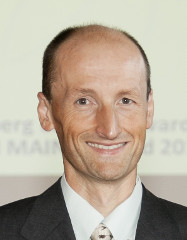
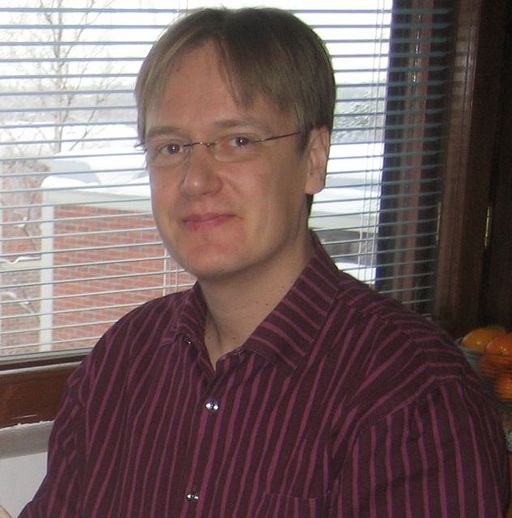
Sylvain Schmitz is a Professor of Computer Science at Université Paris Cité, affiliated with the Institut de Recherche en Informatique Fondamentale (IRIF). He leads the automata and applications team and is a member of the modelling and verification team. His research focuses on logic, well quasi-orders, verification, formal languages, and database theory. He is actively involved in the academic community, serving on steering and program committees for major conferences such as STACS, LICS, and CSL. PhD in Computer Science, defended on September 24, 2007, at I3S Laboratory, Sophia Antipolis. Habilitation titled Algorithmic Complexity of Well-Quasi-Orders , defended on November 27, 2017, at ENS Paris-Saclay. His research interests span logic, well quasi-orders, verification, formal languages, database theory, theoretical computer science, complexity theory, program verification, automata theory, and model checking. His recent work explores complexity bounds in vector addition systems, reachability problems, and logical foundations of verification. His publications exhibit a strong focus on theoretical foundations of computation, particularly in the analysis of infinite-state systems, complexity hierarchies beyond elementary, and logical characterizations of computational problems. Key themes include well-structured transition systems, non-elementary complexity, and applications of ordinal analysis to verification. IUF junior (2018–2023) Sylvain Schmitz has supervised several PhD students, including Hector Buffière, Aliaume Lopez, Anthony Lick, and Simon Halfon, often in joint supervision with researchers such as Jean Goubault-Larrecq, David Baelde, and Philippe Schnoebelen. His research has been funded by multiple ANR projects including BraVAS, PRODAQ, ReacHard, and AVeriSS. He is a key member of the IRIF laboratory, contributing to research in automata, verification, and logic. He has organized major events such as ICALP 2022 and RP 2020, and is deeply involved in the European theoretical computer science community through committee memberships and conference organization.