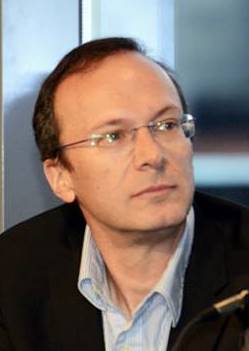
Fedor V. Fomin is a Professor in the Department of Informatics at the University of Bergen, Norway, where he leads the Algorithms Research Group. His work is central to theoretical computer science and combinatorics, with significant contributions to algorithm design and analysis. His primary research interests include: Parameterized Algorithms and Kernelization Exact (Exponential Time) Algorithms Graph Algorithms and Graph Minors Approximation Algorithms and Treewidth Matroid Algorithms and Metric Embedding Algorithmic Fairness and Pursuit-Evasion Problems The selected publications reflect a strong trend in foundational algorithmic techniques, particularly in parameterized complexity, kernelization, and exact algorithms. His work often bridges theoretical depth with practical applicability, especially in graph-theoretic problems and preprocessing methods. His scientific recognition includes: EATCS Nerode Prize 2015 EATCS Nerode Prize 2017 Fedor V. Fomin has made substantial contributions through major textbooks such as Parameterized Algorithms (2015) and Kernelization (2019), which have become essential resources in the field. He has collaborated with leading researchers including Daniel Lokshtanov, Saket Saurabh, and Dieter Kratsch. While specific advising roles are not listed, his publications and books suggest extensive mentorship and collaboration. He is actively involved in organizing academic events like FPT Fest and GRASTA, indicating leadership in the research community. He is affiliated with the Algorithms Research Group at the University of Bergen, contributing to a vibrant research environment focused on discrete algorithms and complexity.
Roopsha Samanta serves as an Assistant Professor in the Department of Computer Science at Purdue University, where she leads the Purdue Formal Methods (PurForM) research group and participates in the Purdue Programming Languages (PurPL) initiative. Her academic foundation includes a PhD from the University of Texas, Austin (2013) and postdoctoral research at the Institute of Science and Technology Austria prior to joining Purdue in 2016. Education: PhD in Computer Science, University of Texas, Austin (2013) Postdoctoral Researcher, Institute of Science and Technology Austria Professor Samanta's research centers on bridging formal methods with programming languages to enhance software reliability, with core expertise in program verification, program synthesis, and concurrency. Her work uniquely targets both professional developers and non-programmers, developing techniques to ensure programs align with user intent through automated reasoning and synthesis. Recent efforts focus on distributed systems verification where traditional methods face scalability challenges. Analysis of her 2020-2024 publications reveals a dominant trajectory in distributed agreement systems, particularly advancing parameterized verification for unbounded process networks. Key innovations include bounded verification techniques for doubly-unbounded systems, explainable synthesis through specification localization, and secure multi-party computation frameworks like HACCLE. Her work consistently integrates theoretical formal methods with practical system implementation. Scientific Awards: NSF CAREER Award (2019) for “Robustness of Inductive Reasoning Engines” Amazon Research Award (2021) supporting secure computation research Her research is primarily funded through competitive grants including the NSF CAREER award and Amazon Research Award, enabling exploration of verification robustness and secure multi-party computation. While specific advising details aren't publicly documented, her leadership of the PurForM group indicates active mentorship of graduate researchers in formal methods. Current projects suggest expanding applications to privacy-preserving technologies and explainable AI-assisted programming. The PurForM research group, under her direction, develops foundational tools for program verification and synthesis with emphasis on distributed and concurrent systems. Collaborations within PurPL and industry partners like Amazon drive translational research from theoretical models to practical verification frameworks applicable to real-world distributed infrastructure.
Nathalie Bertrand is an Inria Researcher and Head of the DEVINE team at Inria Centre Rennes and IRISA lab. She co-heads the working group on Verification of the GDR IFM of the CNRS with Pierre-Alain Reynier, and co-leads the gender equality commission of IRISA and Inria Rennes with Elisa Fromont. She is also an active member of the Inria committee on gender equality and equal opportunity. PhD from ENS Cachan (October 2006) 1-year post-doc at TU Dresden Hired as Inria researcher (October 2007) Habilitation (HDR) from University Rennes 1 (November 2015) Dr. Bertrand's research focuses on formal methods, verification, model checking, parameterized systems, quantitative models, automata, and games. Her work bridges theoretical computer science with practical applications in distributed systems, probabilistic verification, and game theory. She develops efficient model-based formal methods to verify and enforce functional and non-functional properties of dependable distributed systems that include quantitative aspects such as time, cost, or probabilities. Her recent publications demonstrate a strong trend toward parameterized verification of distributed algorithms, probabilistic systems, and game-theoretic approaches to verification problems. Her research has evolved from foundational work on timed automata and probabilistic systems to increasingly complex problems involving distributed algorithms with arbitrary numbers of participants, blockchain consensus, and randomized fault-tolerant systems. Dr. Bertrand serves on the editorial boards of JLAMP and TCS, and has been a program committee member for numerous prestigious conferences including STACS, TACAS, Concur, QEST, LICS, FoSSaCS, ICALP, MFCS, and many others. She has co-chaired program committees for Formats'20, QEST'17, QAPL'14, and QAPL'15. As an advisor, she has supervised numerous PhD students including Nicolas Waldburger, Bastien Thomas, Suman Sadhukhan, Anirban Majumdar, Engel Lefaucheux, Paulin Fournier, and Amélie Stainer. She currently supervises postdoc Gaëtan Staquet and PhD candidates Pranav Ghorpade, Luca Paparazzo, and Luc Lapointe. She leads the DEVINE project-team (created January 2024), which focuses on developing efficient model-based formal methods to verify and enforce properties of dependable distributed systems with quantitative aspects. Previously, she was part of the SUMO team. Her current projects include ANR MAVeriQ (2021-2025), ANR BISouS (2022-2025), and ANR PaVeDyS (2024-2028).
Craig Gotsman is a Professor and Dean at the Ying Wu College of Computing, New Jersey Institute of Technology. He previously held roles at Cornell Tech, Technion, ETH Zurich, and MIT. His research focuses on computational geometry, computer graphics, and 3D animation. Ph.D. in Computer Science, Hebrew University of Jerusalem (1991) His work spans geometric modeling, mesh processing, and applications in animation and visualization. Recent research trends include gaze correction in video conferencing, mesh parameterization, and spectral compression techniques. Notable awards include Fellowships in the US National Academy of Inventors and the Academy of Europe, multiple best paper awards, and the Technion's Hewlett Packard Chair in Computer Engineering. Gotsman has mentored over 50 postgraduate students and holds ten US patents. He co-founded three companies: Virtue 3D Inc. (acquired by NVIDIA), Estimotion Inc. (now ITIS Israel Ltd.), and CatchEye.
Piotr Micek is a professor in the Theoretical Computer Science Department at the Faculty of Mathematics and Computer Science, Jagiellonian University , Kraków, Poland. He is an active researcher in combinatorics, particularly in structural graph theory and poset combinatorics, and maintains extensive international collaborations. University: Jagiellonian University School: Faculty of Mathematics and Computer Science Department: Theoretical Computer Science Department Email: firstname.lastname@gmail.com Office: Room 3151, Łojasiewicza Street 6, 30-348 Kraków Phone: +48 12 664 7594 Duty hours: Wednesdays 11:00–13:00 His main research interests include structural graph theory, combinatorics of partially ordered sets (posets), geometric intersection graphs, graph coloring and choosability, and the entropy compression method. He also works on approximation and on-line algorithms and combinatorial geometry. His work often bridges deep theoretical insights with algorithmic applications. The recent publications highlight a strong focus on graph structure and coloring problems. Key themes include product structure of planar graphs, poset dimension and its relation to height and planarity, weak coloring numbers, and adjacency labelling. His work frequently appears in top venues such as Journal of the ACM , Combinatorica , SIAM Journal on Discrete Mathematics , and SODA, indicating sustained high-impact contributions. Associate Editor, SIAM Journal on Discrete Mathematics (2025–) Former Associate Editor, Discrete Mathematics (2010–2022) Former Associate Editor, Discrete Mathematics & Theoretical Computer Science (2012–2020) He has supervised numerous students at all levels, including PhD candidates Jędrzej Hodor , Marcin Briański , and Michał T. Seweryn , and has led major research grants such as OPUS 24 and WEAVE-UNISONO funded by NCN. He has also been involved in significant trilateral projects with researchers from Belgium and Germany. His recent talks include tutorials on product structure theory and centered colorings, reflecting his leadership in these areas. He actively participates in the academic community, having served on program committees (e.g., SODA 2021, WG 2022) and organized workshops such as the Order & Geometry series. His research is supported by substantial funding, including over 900,000 PLN for current projects.
Prof. Volker Grimm is a Professor in the Department Ecological Modelling at the Helmholtz Centre for Environmental Research (UFZ) in Leipzig, Germany. His research focuses on developing and applying ecological models to understand complex environmental systems, with a strong emphasis on individual-based and agent-based modelling approaches. Key areas include pattern-oriented modelling for predictive environmental decision-making, ecological theory exploration (e.g., resilience and stability), and model standardization through protocols like ODD. He leads projects such as VIBee (honeybee vitality monitoring) and BioDT (Biodiversity Digital Twin), leveraging AI and simulation models like BEEHAVE and FORMIND. Active in interdisciplinary initiatives like CauSES (causality in sustainability science), Grimm bridges ecological and social sciences. His work addresses global challenges like pesticide risk assessment, invasive species management, and climate change impacts on ecosystems. Notable achievements include the ODD protocol for model documentation, advancing ecological informatics, and contributions to EU projects such as CREAM (pesticide risk assessment) and BioDT (supercomputing for biodiversity). Collaborations span institutions like FORMIND and EcoEpi, with a focus on open-access publishing and model reusability.
Dr. Yangchen Pan is a Departmental Lecturer in Machine Learning at the University of Oxford's Department of Engineering Science. His research focuses on achieving sample-efficient generalization in machine learning, particularly in settings involving distribution shifts (e.g., adversarial learning, domain adaptation) and adaptive capabilities like offline/online reinforcement learning and continual learning. He has contributed to foundational work in reinforcement learning, robustness, and risk-averse optimization. Education and Academic Background: While specific degree details are not explicitly listed, his academic trajectory includes roles at leading institutions such as the University of Alberta (PhD, 2017-2020), where he collaborated with prominent researchers like Martha White and Amir-massoud Farahmand. Additional affiliations include teaching roles at the University of Waterloo, University of Toronto, and Indiana University. Research Interests: Pan's work spans machine learning theory and applications, with emphasis on scalable algorithms for complex decision-making systems. Key areas include adversarial robustness, offline reinforcement learning, and mitigating distribution shifts in real-world deployments. His recent contributions explore risk-aware policy optimization and novel approaches to sample efficiency. Professional Service: Pan serves on the program committees of top conferences like NeurIPS, ICML, and ICLR. He has reviewed for journals including the Journal of Machine Learning Research and Transactions on Machine Learning Research. Teaching: Pan teaches advanced courses in optimization, machine learning, and AI at the University of Oxford, including C25 Optimization and AI/ML with Python. He has also taught at the University of Alberta and Indiana University. Labs/Teams: While no specific lab name is mentioned, his research is closely tied to Oxford's Engineering Science department and collaborative projects with institutions like the ZERO Institute (as seen in event leadership at IMAD2025).
Lars Moberg Salbu is a Postdoctoral Fellow at the Department of Informatics, University of Bergen. His research focuses on computational geometry, algebraic topology, and parameterized complexity, with contributions to graph theory, metric analysis, and algorithm design. He has collaborated with institutions such as the Department of Mathematics and Department of Computer Technology at Western Norway University of Applied Sciences. His work bridges theoretical mathematics and computer science, addressing challenges in topological data analysis and combinatorial optimization. Key publications include studies on transition graph dynamics, minimum bounded chains, and homology determination from data samples. Salbu’s research emphasizes interdisciplinary approaches, leveraging discrete mathematics and geometric principles to solve complex computational problems. No scientific awards are listed, but his active participation in international journals like IEEE Access and Mediterranean Journal of Mathematics highlights his academic contributions. Collaborations with co-authors such as Morten Brun and Belen Garcia Pascual underscore his collaborative approach to advancing theoretical frameworks in his field.
Professor Sergei Petrovskii is a Chair in Applied Mathematics at the University of Leicester's School of Computing and Mathematical Sciences. His research focuses on mathematical ecology, ecological modeling, and complex systems analysis, with a particular emphasis on climate change impacts, oxygen depletion in oceans, and ecological catastrophes. He has published over 150 peer-reviewed papers and four books, including influential work on global anoxia and mass extinction dynamics. As Editor-in-Chief of Ecological Complexity (2011–2021) and Section Editor-in-Chief of Mathematics ' Mathematical Biology section since 2020, he has significantly shaped interdisciplinary research agendas. His research interests span modeling ecological transients, population dynamics, and invasive species spread. Key contributions include frameworks for landscape decision-making, stochastic models of protest dynamics, and the MPDE conference series he founded. Despite no explicit mention of awards, his editorial roles and prolific publishing underscore his academic influence. His work integrates mathematical modeling with real-world challenges, addressing issues like oxygen minimum zones and the socioeconomic dimensions of climate change. Publications highlight his exploration of transient dynamics, regime shifts, and ecological responses to environmental change. His interdisciplinary approach bridges ecology, epidemiology, and social systems, evidenced by studies on protest dynamics and pandemic modeling. While no lab names are explicitly stated, his research often involves collaborative projects like the Landscape Decisions initiative and MPDE conferences.
Ulrich Meyer is a Professor at the Institute for Computer Science at Goethe University Frankfurt. He serves as a prominent researcher in algorithms for big data, with extensive contributions to parallel and external-memory graph algorithms. His work spans theoretical foundations and practical implementations for processing large-scale data sets. Spokesperson of the DFG priority program (SPP 1736) on Algorithms for Big Data in Germany SEA23 Symposium on Experimental Algorithms, Steering Committee Chair ALENEX23 Algorithm Engineering and Experiments, Program Committee Member Professor Meyer's research interests focus on the theoretical and experimental aspects of processing large data sets on advanced computational models. His work particularly emphasizes parallel and external-memory graph algorithms, with recent focus on efficient large-scale network generation according to various stochastic models. His research has produced significant contributions including the parallel Delta-Stepping algorithm (which received the ESA Test of Time Award in 2019) and the first BFS approach with sublinear I/O. He has also explored more specialized topics like energy-efficient sorting (with records in the JouleSort competition 2009/10 and the Germany Land of Ideas Award) and fragile computing (which earned him a best-paper award at ESA 2019). His recent publications demonstrate a strong focus on graph algorithms, network generation, and parallel computing techniques. The research trends show consistent advancement in scalable algorithms for massive graphs, with particular emphasis on efficient sampling methods, shortcutting techniques, and communication-free distributed approaches. His work bridges theoretical computer science with practical engineering considerations for real-world big data applications. ESA Test of Time Award 2019 for Parallel Delta-Stepping algorithm Records in the JouleSort competition 2009/10 Germany Land of Ideas Award Best-paper award at ESA 2019 for fragile computing research Professor Meyer has made substantial contributions to the academic community through his leadership in the DFG priority program on Algorithms for Big Data, which has fostered significant research collaborations across Germany. His extensive publication record in top venues demonstrates sustained research productivity and impact in the algorithms community. While specific grant details aren't provided in the text, his role as spokesperson for a major DFG priority program indicates substantial research funding and leadership responsibilities. His work appears to be conducted within collaborative research environments focused on algorithm engineering and experimental evaluation. His research appears to be conducted within the Institute for Computer Science at Goethe University Frankfurt, likely involving collaborations with other researchers in the Algorithms for Big Data priority program. The extensive list of co-authored publications suggests active participation in research teams focused on parallel algorithms, graph processing, and network generation.
Professor Dingxuan Zhou is a distinguished academic serving as Professor and Head of School of Mathematics and Statistics at The University of Sydney, joining the institution on August 29, 2022. He is also a member of The Net Zero Institute and has held significant editorial positions, including editor-in-chief of the journal "Analysis and Application" of "Mathematical Foundations of Computing" and serving on the editorial boards of over ten international journals. Educational Background: BSc in Mathematics from Zhejiang University, China (1988) PhD in Mathematics from Zhejiang University, China (1991) Professor Zhou's research spans learning theory, neural networks, wavelet analysis, and approximation theory, with his current focus on the theory of deep learning. His work aligns with the Faculty of Science Research Strengths in Complex Systems, Precision and Digital Health, Data and Decisions, and National Security. His research demonstrates a consistent progression from foundational mathematical theory to cutting-edge applications in machine learning and artificial intelligence, with particular emphasis on understanding the theoretical underpinnings of neural networks and deep learning systems. His extensive publication record reveals a strong trend toward distributed learning frameworks, approximation theory for neural networks, and the mathematical foundations of deep learning. Recent work focuses on federated learning, transformers, physics-informed neural networks, and the theoretical analysis of over-parameterized networks, reflecting the evolving landscape of machine learning research with increasing emphasis on theoretical guarantees and practical applications. Scientific Awards: Humboldt Research Fellowship (1993) Fund for Distinguished Young Scholars from the National Science Foundation of China (2005) Highly-cited Researcher by Thomson Reuters/Clarivate Analytics (2014-17) World's Top 2% Scientist by Stanford University (2021, 2022, 2023) Professor Zhou has demonstrated exceptional leadership in research and mentorship, having conducted over 40 research grants as Principal Investigator, supervised more than 20 PhD students, and co-organized over 20 international conferences. His collaborative approach is evident in his extensive co-authorship network across multiple institutions globally. He has also served in significant administrative roles including Head of Department of Mathematics (2006-12), Associate Dean of School of Data Science (2018-22), and Director of the Liu Bie Ju Centre for Mathematical Sciences (2019-22) at City University of Hong Kong.
Summer Rupper is a Professor at the School of Environment, Society & Sustainability at the University of Utah, where she has held her position since July 2019. Her research focuses on understanding the interactions between climate, glaciers, and water resources, with particular emphasis on high mountain regions including High Mountain Asia, the Himalayas, and polar regions. She leads multiple research projects examining glacier dynamics, hydrological processes, and climate change impacts on water security for downstream populations. BS in Geology from Brigham Young University (2001) MS in Geology from University of Washington (2004) PhD in Earth and Space Sciences from University of Washington (2007) Professor Rupper's research spans physical geography, environmental geoscience, and climate change science, with specific expertise in glaciology, hydrology, and atmospheric sciences. Her work integrates field measurements, remote sensing, and numerical modeling to understand glacier dynamics, snow processes, and water resource availability in mountainous regions. She has particular expertise in High Mountain Asia, where glaciers provide critical water resources for over a billion people. Her research addresses fundamental questions about glacier response to climate change, hydrological partitioning, and the implications for water security in vulnerable regions. Her recent publications demonstrate a consistent focus on understanding glacier dynamics, hydrological processes, and climate interactions in mountainous regions. The work spans multiple methodologies including remote sensing analysis, numerical modeling, statistical approaches, and field-based measurements. Key themes include glacier melt contributions to river systems, precipitation patterns in complex terrain, snow density modeling, and the impacts of climate change on water resources in High Mountain Asia and polar regions. Her research often integrates multiple data sources and approaches to address complex questions about cryospheric processes and their societal implications. Superior Research Award (2024, CSBS, University of Utah) G.K. Gilbert Award for Excellence in Geomorphic Research (2022) Outstanding Utah Higher Education Science Teacher (2021) Top Researcher Award, Celebrate U showcase (2017) Antarctic Service Medal (2010, USAF) Professor Rupper actively mentors graduate students through thesis research courses at both the PhD and Master's levels, as well as individual projects. She has secured significant research funding from multiple federal agencies including NSF, NASA, and USAID, with current projects examining climatic controls on Antarctic ice sheets, glacier dynamics in High Mountain Asia, and historical glacier changes. Her collaborative work extends across international boundaries, working with scientists in Pakistan, Bhutan, and other regions to address shared water security challenges. She also engages in community outreach through workshops with school districts and science teacher associations to communicate climate science to broader audiences. Professor Rupper participates in multiple collaborative research teams including the NASA High Mountain Asia Team (HiMAT), where she contributes expertise in glacier dynamics and hydrology. She serves on several scientific committees including the NSF Ice Core Facility Sample Allocation Committee and the American Geophysical Union Cryosphere Section Fellows Committee. Her research often involves interdisciplinary teams combining expertise in glaciology, hydrology, remote sensing, and climate modeling to address complex questions about mountain water systems under changing climate conditions.
Professor Ola Isaksson is a faculty member in Product Development at Chalmers University of Technology, where he leads the Systems Engineering Design research group. With over 40 research projects nationally and internationally, his work bridges academic research and industrial application, particularly in aviation and transport-related manufacturing sectors. His expertise spans digitalization, sustainability, and advanced manufacturing methods in product development. Ola Isaksson received his PhD in Computer Aided Machine Design from Luleå University of Technology in 1999. Prior to his academic career, he had a specialist career at GKN Aerospace Engine Systems (formerly Volvo Aero) in Trollhättan, focusing on design and product development until 2015. Professor Isaksson's research focuses on developing new product development capabilities to address societal and industrial needs through digitalization and advanced manufacturing. His primary interests include platform-based development, Set Based Engineering, multidisciplinary engineering methods, Value-driven development, and knowledge-intensive system support. He has particular expertise in additive manufacturing integration, design space exploration, and sustainability transition in product development. Analysis of Professor Isaksson's recent publications reveals a strong focus on integrating digital technologies with sustainable manufacturing practices. His work demonstrates a progression from traditional design methodologies toward AI-assisted design, digital twins, and advanced data analytics. Key thematic areas include additive manufacturing implementation, design margin management, sustainability integration, and aerospace component optimization, reflecting his commitment to bridging theoretical research with industrial applications. Professor Isaksson is one of the founders of the Swedish Product Development Academy and maintains active membership in the Design Society, ASME, and SIG PM, reflecting his significant contributions to the field of engineering design. With over 100 scientific publications and leadership in more than 40 research projects, Professor Isaksson has established himself as a leading figure in product development research. His work frequently involves close collaboration with industry partners, particularly in the aviation sector, securing substantial research funding for projects addressing digitalization, sustainability, and advanced manufacturing challenges. Professor Isaksson leads the Systems Engineering Design research group at Chalmers University of Technology. His team focuses on developing methodologies for complex product development, with particular emphasis on digital tools, sustainability integration, and manufacturing innovation. The group maintains strong industry connections, especially with aerospace manufacturers, facilitating the translation of research into practical applications.
Professor Alex Archibald is the Professor of Atmospheric Chemistry in the Yusuf Hamied Department of Chemistry at the University of Cambridge. His research group investigates atmospheric chemistry-climate interactions through fundamental laboratory studies atmospheric observations numerical model simulations . Research interests focus on chemistry-climate feedbacks , including hydrogen economy impacts biogenic hydrocarbon oxidation air pollution mitigation marine sulfur cycling machine learning applications . Recent publications emphasize hydrogen-soil deposition dynamics ozone-temperature relationships DMS chemistry in Earth systems hydrogen economy climate implications AI-driven climate modeling transboundary pollution studies . Teaching includes Part I Kinetics of Chemical Reactions Part II Chemistry in the Atmosphere Part III IDP1 projects . The research team has 15+ current and former students working on topics from Martian atmospheric modeling to urban temperature extremes.
Gerhard Pfister is a professor of Mathematics at the University of Kaiserslautern. He holds the academic rank of Professor and specializes in Singularity Theory, Computer Algebra, Algebraic Geometry, and Complex Analysis. His career includes positions at Humboldt-Universität zu Berlin and University of Kaiserslautern, where he served as a professor from 1993 until his retirement in 2012, followed by a Senior Professorship until 2016. He has supervised numerous Ph.D. students, many of whom contributed to areas like computational algebra and singularity theory. Education: Gerhard Pfister earned his Diplom in Mathematics (1970) and Dr. rer. nat. (1971) from Humboldt-Universität zu Berlin. He habilitated in 1976 and became a professor there in 1983 before moving to Kaiserslautern in 1993. Research Interests: Pfister's work focuses on singularity theory, computational algebra, and the development of the SINGULAR computer algebra system. His research bridges theoretical and algorithmic aspects of algebraic geometry and commutative algebra, with contributions to Gröbner bases, standard bases, and modular computation techniques. He has co-authored foundational textbooks and over 140 publications. Key Contributions: Pfister is a co-developer of the SINGULAR software, a leading system for polynomial computations in algebraic geometry and singularity theory. His work includes algorithmic approaches to primary decomposition, normalization of rings, and classification of singularities. He has also contributed to the theoretical underpinnings of Neron desingularization and semicontinuity in algebraic geometry. Grants & Awards: While no specific awards are listed, his sustained contributions to computational algebra and singularity theory have had significant impact. He has supervised over 25 Ph.D. students and co-authored multiple influential books. Labs/Teams: He is a core contributor to the SINGULAR project and collaborates actively with researchers in computational commutative algebra and algebraic geometry.