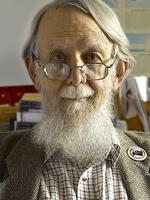
Professor Michael Edgeworth McIntyre is a Professor in the Department of Applied Mathematics and Theoretical Physics (DAMTP) at the University of Cambridge. His primary research focuses on atmospheric dynamics, fluid mechanics, and climate science, with contributions to geophysical fluid dynamics, wave dynamics, and astrophysics. He is affiliated with the Astrophysics and Atmosphere-Ocean Dynamics research groups within DAMTP. While specific educational background details are not provided, his academic career is centered at the University of Cambridge. His work spans theoretical and applied aspects of fluid dynamics, including gravity wave parameterization, stratosphere-troposphere interactions, and interdisciplinary approaches to climate science. His publications emphasize understanding complex atmospheric phenomena, such as climate uncertainties, wave-vortex interactions, and the mathematical foundations of fluid dynamics. Notable contributions include studies on potential vorticity conservation and the dynamics of musical instruments, showcasing his interdisciplinary reach. McIntyre’s research has advanced methodologies in climate modeling, particularly through simplified spectral parameterizations for general circulation models. He actively engages with the broader scientific community through his research groups and collaborations, though specific grants or advising details are not detailed here.
Stéphane FONT is a Professor at CentraleSupélec, affiliated with the Laboratoire des signaux et systèmes (L2S). He holds a prominent role in the Control Department and has extensive experience in both academia and industrial research. His primary roles include teaching across multiple engineering curricula, overseeing doctoral research, and contributing to curriculum development. He returned to full-time research in late 2020 after serving in administrative roles such as Director of Studies and Head of the Electronic Signals and Systems Department. Research Interests: Dr. FONT focuses on robust control, optimization in control systems, and their applications in autonomous vehicles, energy systems, and industrial automation. His work emphasizes the integration of modern optimization techniques like convex optimization and μ-analysis to address challenges in system robustness and performance. Recent research includes trajectory planning for autonomous vehicles in mixed environments and energy network optimization. Teaching & Mentorship: He has taught core modules in optimization, automatic control, and system modeling across multiple institutions including Supélec, University Paris XI, and École Nationale Supérieure de Techniques Avancées (ENSTA). He has supervised numerous PhD students and advanced projects, fostering innovation in areas like game theory for autonomous decision-making and multi-energy network management. Awards & Recognition: His contributions include a patent for anti-vibration algorithms and a Best Student Paper Award at the IEEE Conference on Control Applications (2002). His work bridges theoretical advancements and practical industrial applications, particularly in magnetic bearings, missile control systems, and energy systems. Labs & Collaborations: He is part of the COMEDY and MODESTY research groups at L2S, focusing on dynamical systems modeling and estimation. His collaborations span industries like S2M (for magnetic bearings) and EDF (energy networks), ensuring real-world impact of his research.
Jose Matias Cutillas Lozano is an Adjunct Professor (part-time) at the University of Murcia's Faculty of Informatics, affiliated with the Department of Computer Science and Systems Engineering. He is associated with the Scientific Computing and Parallel Programming research group. His doctoral thesis (2014) focused on modeling and auto-optimization of parallel metaheuristics and hyperheuristics applied to optimization problems in science and engineering, supervised by Dr. Domingo Giménez Cánovas. His research interests span parallel computing, metaheuristics, hyperheuristics, optimization algorithms, scientific computing, and computational biology. He has also contributed to interdisciplinary studies involving medical applications of computational methods and educational technology integration. Publications demonstrate expertise in hybrid metaheuristics for vector autoregression, parallel hyperheuristics in molecular docking (HYPERDOCK), and computational solutions for medical diagnostics (e.g., echocardiography analysis). Recent work addresses urban flood risk modeling under climate change and ICT integration in education. Dr. Cutillas has no explicitly listed scientific awards but maintains active collaboration through his research group. His work emphasizes multi-level parallelism and optimization techniques, with applications spanning engineering, medicine, and education.
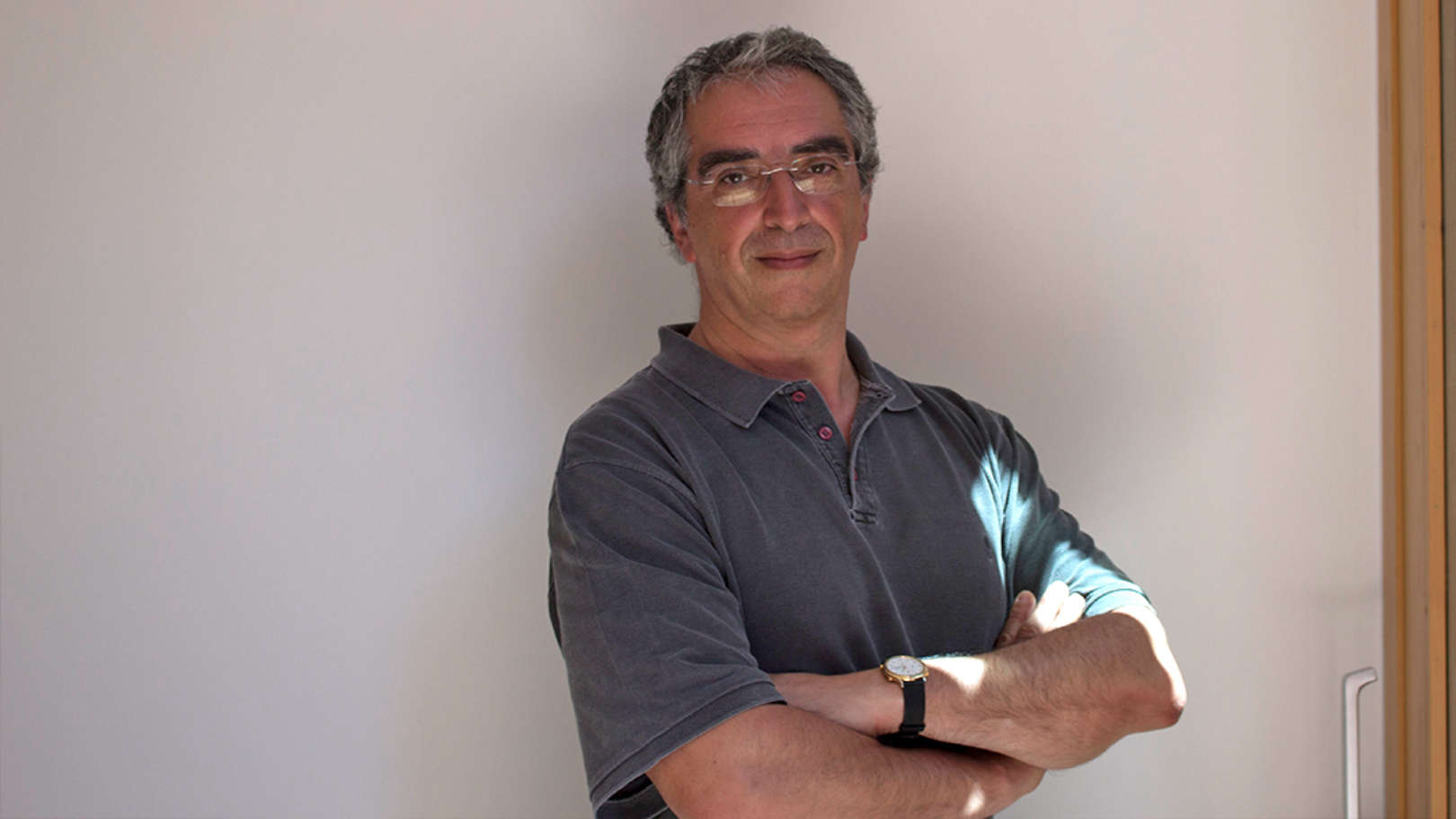
Luís Soares Barbosa is a Full Professor at the Department of Informatics, University of Minho, and Senior Researcher at HASLab INESC TEC. He serves as Deputy Head of UNU-EGOV (United Nations University Unit on Electronic Governance) and leads the Quantum Software Engineering Research Group at INL. His research focuses on program semantics, coalgebra theory, and quantum computing applications. He has coordinated multiple national and international projects, including the ALFA EU-Latin America network. Barbosa has supervised numerous PhD students, with one recipient of the 2013 IBM Scientific Prize. He actively contributes to academic governance, serving as Director of the Joint Doctoral Programme MAP-i and Chair of IFIP TC1 on Foundations of Computer Science. Research Interests: Program semantics and calculi for systems understanding Coalgebra theory and modal/hybrid logics Quantum software engineering and algorithms Paraconsistent transition systems for inconsistency management Publications: His recent work spans quantum reinforcement learning, non-perturbative quantum simulations, and formal methods for software engineering. These contributions highlight advancements in quantum advantage, scalable algorithms, and robust system modeling. Professional Roles: Member of IFIP WG1.3 and Chair of IFIP TC1 Invited lecturer at Universities of Bristol, Tartu, and Peking Founder of MAP-i Joint Doctoral Programme Labs/Teams: Leads the Quantum Software Engineering Group at INL, advancing quantum algorithm development and software rigor.
Fedor Fomin is a Professor in Algorithms at the Department of Informatics, University of Bergen, Norway, since 2002. His research focuses on fundamental problems in computer science and mathematics, particularly in algorithm design and graph theory. Research Interests: His work spans advanced algorithmic techniques such as Matroid algorithms Algorithmic graph minors Treewidth and its applications Exact and exponential time algorithms Pursuit-evasion games and graph searching Parameterized algorithms and kernelization Graph coloring Publications: He has authored over 150 peer-reviewed journal articles in venues like J. ACM, SIAM J. Computing, and Combinatorica, alongside 160 conference papers in top-tier events including FOCS, STOC, and AAAI. His research demonstrates expertise in bridging theoretical computer science and discrete mathematics. Scientific Awards: EATCS Fellow (2019) ERC Advanced Investigator Grant (2010) EATCS-IPEC Nerode Prize 2017 (with F. Grandoni and D. Kratsch) EATCS-IPEC Nerode Prize 2015 (with E. D. Demaine, M. T. Hajiaghayi, and D. M. Thilikos) Norway's Outstanding Young Investigator Award (2005) Grants: He has secured major grants from The Research Council of Norway (NFR), the Russian Ministry of Education and Science (mega-grant), and the European Research Council (ERC) as Principal Investigator.
Tyson Ritter is an Associate Professor in the Department of Mathematics and Physics at the University of Stavanger, affiliated with the Faculty of Science and Technology. His research focuses on complex analysis and geometry, particularly holomorphic embeddings, several complex variables, and Oka principles. He is based in office KE E-526. His research interests include studying proper holomorphic embeddings of Riemann surfaces, Carleman-type theorems with parameters, and properties of ball complements in complex spaces. Recent work explores parameterized families of embeddings and their applications to Stein manifolds. He has published in prestigious journals like the Journal of Geometric Analysis, Journal für die Reine und Angewandte Mathematik, and Mathematische Zeitschrift. No scientific awards or grants are explicitly mentioned in the provided text. No information about academic advising of students, lab affiliations, or future research directions was found in the source material.
Joshua Grochow is an Associate Professor in Computer Science at the University of Colorado Boulder, with joint appointments in Mathematics. His research spans theoretical computer science, algebraic complexity, and complex systems. Key research areas: Algebraic approaches to matrix multiplication complexity Isomorphism problems for groups/tensors/polynomials Geometric complexity theory and circuit lower bounds Network analysis and complex systems modeling Recent publications feature breakthroughs in tensor isomorphism completeness and parallel algorithms for group isomorphism. Research combines representation theory, combinatorics, and complexity theory. Awards include Omidyar and Dean's Fellowships. Leads research groups in complexity theory and complex networks. Organizes workshops on wildness in computer science.
Lia Schütze is a Researcher at the Max Planck Institute for Software Systems (MPI-SWS) in Kaiserslautern, Germany, with an office in Room 612, Building G 26. Her work falls under the institute's research domains including Algorithms, Theory & Logic, Programming Languages & Verification, Cyber-Physical Systems, and Security & Privacy. She maintains an active research profile with publications spanning theoretical foundations to applied verification systems. Her research program centers on formal verification of infinite-state computational models, with dual expertise in theoretical computer science and network performance analysis. Key contributions include: Advancing verification techniques for Vector Addition Systems with States (VASS) and reversal-bounded counter machines Developing novel approaches to unboundedness problems through amalgamation methods Establishing tighter bounds for coverability and reachability in computational models Applying network calculus to verify industrial control systems and stochastic network performance Investigating well-quasi-orderings and monotone descending chains for termination analysis Analysis of her 2017-2025 publications reveals a clear evolution from applied network calculus toward increasingly sophisticated theoretical verification frameworks. Her work consistently bridges abstract mathematical foundations with practical verification challenges, particularly in cyber-physical systems where theoretical guarantees meet real-world performance constraints. The recurring focus on improving computational bounds demonstrates her commitment to making verification techniques practically feasible. No scientific awards or fellowships are documented in the available information about Dr. Schütze's career. While specific doctoral advisees are not mentioned in the provided materials, her active publication record and institutional role at MPI-SWS suggest ongoing mentorship within research teams. Similarly, though no explicit grants are referenced, her sustained research output implies successful funding acquisition for projects in formal methods and verification. As a core researcher at MPI-SWS, Dr. Schütze contributes to one of Europe's premier computer science research environments. Her work intersects with multiple institute focus areas, particularly within the Algorithms and Theory group and Programming Languages and Verification initiatives. The collaborative structure of MPI-SWS enables her theoretical advances to directly impact practical verification tools and methodologies used across the software systems research community.
Dave Marcum is the ExxonMobil Professor and Chief Scientist in Computational Fluid Dynamics at Mississippi State University's Center for Advanced Vehicular Systems (CAVS). With a Ph.D. from Purdue University, he leads research in unstructured mesh generation and high-performance computing. His work integrates computational methods with aerospace and automotive engineering. Research interests include adaptive mesh refinement, viscous flow simulations, and parallel algorithm design. His publications emphasize CFD optimization for industrial applications, such as missile aerodynamics and propeller design. Awards include ExxonMobil Endowed Professorship, Inria International Chair, and multiple outstanding researcher recognitions. He collaborates globally with institutions like MIT and INRIA. Key labs include CAVS and HPC², focusing on scalable CFD solutions for DoD, NASA, and aerospace partners.
Charis Papadopoulos is a Professor at the Department of Mathematics, University of Ioannina, Greece. He holds a PhD in Computer Science (2005) and MSc (2001) from the University of Ioannina, and conducted postdoctoral research at the University of Bergen, Norway (2005-2007). His academic activities include visiting researcher positions at the University of Ioannina (2008-2010) before joining the faculty in 2011. Education: MSc and PhD in Computer Science, University of Ioannina Postdoc: Algorithms Research Group, University of Bergen (2005-2007) His research interests focus on Theoretical Computer Science, particularly: Design and analysis of algorithms Algorithmic graph theory Graph modification problems Width parameters and graph layouts Combinatorial enumeration Algorithm engineering Recent publications address structural parameterization of cluster deletion, subset feedback vertex set problems, avoidable vertex/path enumeration, and connectivity-preserving subgraphs. His work spans both journal publications (e.g., Algorithmica , Theory of Computing Systems ) and conference proceedings (e.g., WALCOM , SODA ). He has served on program committees for major conferences including: CIAC 2025 EuroCG 2025 WADS 2023 WALCOM 2023 Current projects include FANTA (Efficient Algorithms for Network Analysis) funded by H.F.R.I. and Separators and Cut Problems under HFRI grants. He has supervised PhD and Master's dissertations and collaborated with European research institutions.
Yoshio Okamoto is a Professor at the Department of Computer and Network Engineering, Graduate School of Informatics and Engineering, at The University of Electro-Communications in Tokyo, Japan. He has held this position since April 2017, after serving as an Associate Professor at the same institution from April 2012 to March 2017. Prior to his appointment at the University of Electro-Communications, he held academic positions at Tokyo Institute of Technology, Japan Advanced Institute of Science and Technology, and Toyohashi University of Technology. His educational background includes: Bachelor of Systems Science from The University of Tokyo (1999) Master of Systems Science from The University of Tokyo (2001) Doctor of Theoretical Science from ETH Zurich (2005) Professor Okamoto's research spans several interconnected areas in theoretical computer science and discrete mathematics. His primary interests include Discrete and Computational Geometry, Graph Algorithms, Combinatorial Optimization and Polyhedral Combinatorics, Discrete Mathematics and Combinatorics, and Game Theory. His work often explores the interplay between these fields, developing theoretical foundations with practical algorithmic implications. He has made significant contributions to understanding the structural properties of geometric and combinatorial objects, as well as designing efficient algorithms for related problems. His recent publications demonstrate a continued focus on fundamental problems in discrete mathematics and theoretical computer science, with increasing applications in quantum computing, fair division, and reconfiguration problems. His work often appears in top-tier journals such as ACM Transactions on Algorithms, Algorithmica, and Theoretical Computer Science, reflecting his standing in the theoretical computer science community. Professor Okamoto has received several prestigious awards recognizing his contributions to the field: IPSJ-CS Outstanding Achievement and Contribution Award (January 2024) Research Award from The Operations Research Society of Japan (September 2020) Best Review Paper Award (with colleagues) from Japan Society for Software and Technology (September 2014) Research Encourage Award from The Operations Research Society of Japan (September 2012) 8th EATCS/LA Presentation Award (February 2010) Editors' Choice 2003 from Discrete Applied Mathematics (September 2004) As an educator, Professor Okamoto has taught numerous courses at The University of Electro-Communications since 2012, including Discrete Mathematics, Graphs and Networks, Discrete Mathematical Engineering, and Foundations of Discrete Optimization. He has served as an editor for multiple prestigious journals including Graphs and Combinatorics (Managing Editor since 2020), Acta Informatica, Journal of Computational Geometry, and Journal of Graph Algorithms and Applications. His extensive service on program committees for major conferences in theoretical computer science demonstrates his active engagement with the research community. Professor Okamoto leads a research laboratory at The University of Electro-Communications, where his team explores fundamental questions in discrete mathematics and theoretical computer science. The lab maintains strong connections with researchers worldwide, as evidenced by his numerous international collaborations. His research has been supported through various channels, including Japan Society for the Promotion of Science grants, and he has served as a reviewer for international funding agencies including the Swiss National Science Foundation and The Netherlands Organization for Scientific Research.
Dr. Pradeesha Ashok is an Associate Professor and Controller of Examinations at IIIT Bangalore. She holds a Ph.D. from the Indian Institute of Science, Bangalore, and previously worked as a Postdoctoral Fellow at the Institute of Mathematical Sciences, Chennai. Her research focuses on Theoretical Computer Science, with specializations in Algorithms, Graph Theory, Combinatorics, and Parameterized Complexity. Her research interests include geometric problems such as polygon guarding, covering, and packing, as well as conflict-free coloring in graphs and hypergraphs. She has contributed to developing exact and parameterized algorithms for these problems. Dr. Ashok has also taught courses like Exact and Parameterized Algorithms, Graph Theory, and Design and Analysis of Algorithms. Her publications span conferences like IWOCA, CSR, and COCOON, as well as journals such as Discrete Applied Mathematics and SIAM Journal on Discrete Mathematics. Her work emphasizes algorithmic efficiency and combinatorial optimization in geometric and graph-theoretic contexts. Dr. Ashok has advised several students, including PhD candidates and MTech thesis students, focusing on topics like the chromatic art gallery problem and parameterized complexity of coloring problems. She is affiliated with the Department of Computer Science & Engineering at IIIT Bangalore and contributes to the institute's academic governance through her role as Controller of Examinations. Her research also extends to geometric separability, bichromatic covering problems, and experimental studies of the Steiner Tree problem. She collaborates on projects involving theoretical and applied aspects of computational geometry and algorithms.
James Abello Monedero is a Professor in the Computer Science Department at Rutgers University , specializing in algorithms, graph mining, and visualization of massive datasets. He earned a Ph.D. in Computer Science from the University of California, San Diego, and held postdoctoral and academic positions at UC Santa Barbara, Texas A&M University, and Bell Labs. Ph.D. in Computer Science, UC San Diego M.S. in Computer Science, UC Santa Barbara His research interests span external memory algorithms , graph mining , relational learning , and visual analytics for massive datasets. He has pioneered techniques for dynamic weighted multi-digraph analysis, large-scale network visualization, and interdisciplinary applications in epidemiology and cultural analytics. James’s publications focus on scalable graph algorithms, visual metaphors for data exploration, and network decomposition. His work includes foundational contributions to graph sketches , quasi-clique detection , and 3D graph navigation , with applications to telecommunications, web graphs, and homeland security. Scientific awards include the ESA Test of Time Award (2017) , Best Teaching Award at Rutgers (2015) , and Fellow of the Institute of Combinatorics (1993) . He has advised numerous Ph.D. and M.S. students, and his research has been funded by NSF , DHS , and LLNL . James leads the Universal Information Graphs Project at DyDAn (DHS Center) and has developed software systems like MGV and Ask-GraphView for interactive graph analysis. He is an active organizer of conferences and workshops in data mining and visualization.
Karthik C. S. is an Assistant Professor in the Department of Computer Science at Rutgers University, specializing in complexity theory, discrete geometry, and parameterized complexity. He is supported by the NSF CAREER Award Simons Foundation Junior Faculty Fellowship National Science Foundation grants . His research explores hardness of approximation, fine-grained complexity, and algorithm design in metric spaces.
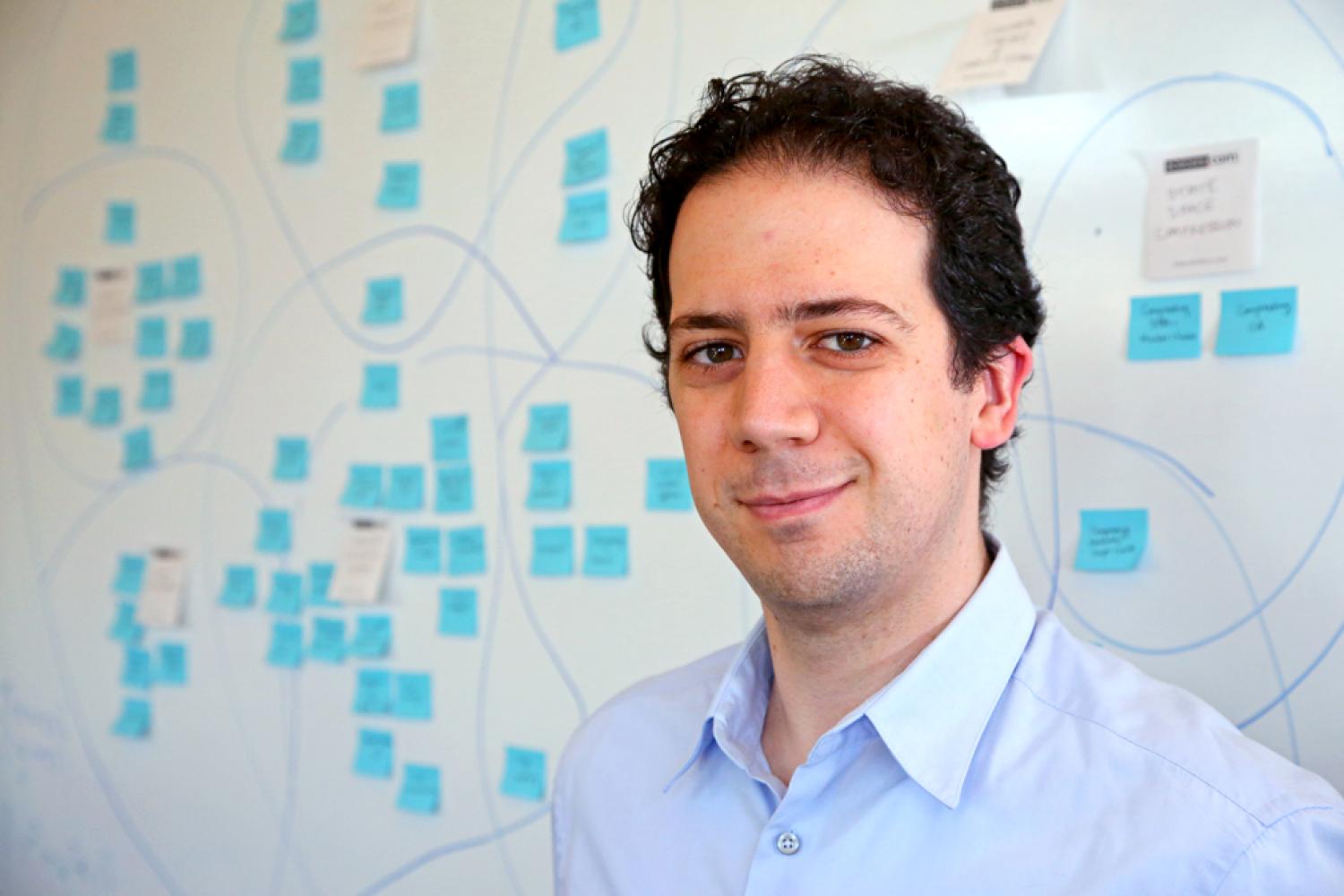
Professor Marco Mondelli is a faculty member at the Institute of Science and Technology Austria (ISTA), where he has been employed since 2019. He was promoted from Assistant Professor to full Professor in 2025. His research focuses on machine learning, high-dimensional statistics, data science, information theory, and modern coding theory. He maintains affiliations with the ELLIS network as an ELLIS Member and collaborates extensively across European institutions. His research interests span theoretical foundations of machine learning with particular emphasis on high-dimensional phenomena, neural network theory, information limits in statistical inference, and applications in quantitative genetics. He has made significant contributions to understanding neural collapse phenomena, spectral methods for high-dimensional estimation, and privacy-preserving machine learning in overparameterized regimes. His work combines rigorous mathematical analysis with practical applications in modern AI systems. Mondelli's recent publications demonstrate strong trends in theoretical machine learning, particularly analyzing the behavior of deep neural networks, developing optimal estimation algorithms for high-dimensional problems, and establishing fundamental limits for various learning tasks. His research bridges statistical physics approaches with modern machine learning theory. ERC Starting Grant recipient for project "Inference in High Dimensions: Light-speed Algorithms and Information Limits" Co-organizer of the "Youth in High Dimensions" conference series Editor for IEEE BITS special issue on Generative Models Associate Editor for IEEE Transactions on Information Theory Professor Mondelli actively mentors PhD students and postdoctoral researchers, currently supervising seven PhD students and one postdoc. His group has secured significant funding through the ERC Starting Grant, supporting multiple positions at all levels. He serves on program committees for top machine learning conferences including NeurIPS, ICML, and ICLR, and has organized workshops on high-dimensional learning dynamics.