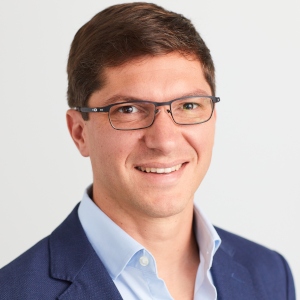
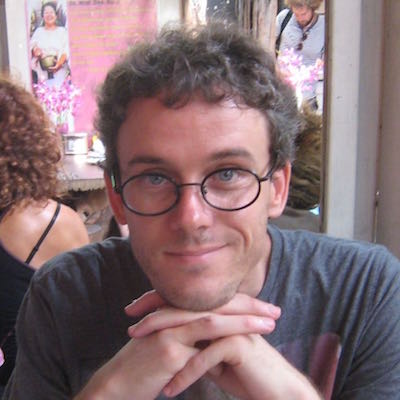
Professor Daniel Oron is affiliated with the University of Sydney, where he joined in 2004 after completing his PhD in Operations Research at the Hebrew University of Jerusalem. His research focuses on Combinatorial Optimization, particularly Scheduling Theory, addressing challenges like batch scheduling with setups, customer delivery models, and scheduling under deteriorating conditions. He teaches courses such as Quantitative Business Analysis, Management Science, and Business Analytics Honours. His editorial role includes serving on the board of the Journal of Industrial & Management Optimization . Recent research contributions span multi-agent scheduling, energy recharging in scheduling, and coupled task optimization. He advises two current PhD students: Johnson (Two-agent scheduling problems) and Renjie Yu (Multi-agent scheduling with parallel batching). Publications highlight advancements in scheduling algorithms, resource allocation, and optimization under constraints. Notable works include minimizing late jobs with step-learning models and analyzing parameterized complexity in single-machine scheduling.
Professor Steven Armfield is a faculty member at the University of Sydney's School of Aerospace, Mechanical and Mechatronic Engineering. He holds a BSc in Applied Mathematics from Flinders University and a PhD from the University of Sydney. His research focuses on fluid mechanics, particularly buoyancy-driven flows, computational modeling, and thermal convection in environmental and industrial contexts. He has led major projects on river management strategies, building ventilation systems, and large-scale fluid dynamics models. As FluD Director, he leads fluid dynamics research initiatives. Education: BSc Applied Mathematics, Flinders University PhD, University of Sydney Research Interests: Professor Armfield's work spans computational fluid dynamics (CFD), natural convection boundary layers, turbulent mixing in stratified flows, and heat transfer applications. His studies address environmental challenges (e.g., river stratification) and engineering systems (e.g., HVAC efficiency). He employs experimental, theoretical, and numerical methods to advance understanding of complex fluid behaviors. Publications: His recent work emphasizes parameterization of turbulent flows, buoyancy effects in stratified systems, and scaling laws for natural convection. Key themes include improving predictive models for environmental and industrial fluid dynamics. Awards: Australian National Research Fellowship Stanford University UPS Visiting Professorship Saitama University Visiting Scholarship Shundoh International Foundation Research Scholarship Advising & Grants: Supervises PhD students in topics like urban fluid dispersion and Navier-Stokes solvers. Secured funding for projects involving CFD analysis of data centers and thermal stratification in open channels. Labs/Teams: Led the School of Aerospace, Mechanical and Mechatronic Engineering (2008–2015) and currently directs the Fluid Dynamics (FluD) research group.
Dr. Sasha Rubin is a Senior Lecturer and leader of the Computational Logic for AI (LOGIC-AI) group at the School of Computer Science, The University of Sydney. He holds a PhD in Mathematics and Computer Science from the University of Auckland and previously worked at the University of Naples Federico II. His research focuses on logic foundations of AI, including synthesis, planning, formal methods, and multi-agent systems. He teaches courses like Models of Computation and supervises students in topics like probabilistic systems and reinforcement learning. Research Interests: Mathematical Logic, Formal Verification, Temporal Logic Synthesis, Automated Reasoning, and Multi-Agent Systems. He has published extensively in top venues like IJCAI, AAAI, and ACM Transactions. His work includes verification of agent navigation, strategy logic, and planning under uncertain environments. Awards: Recognized as an Australian Research Field Leader in Theoretical Computer Science (2020). He serves on editorial boards for JAIR and conferences like KR, and organizes events such as the Australasian Association for Logic Conference (2024). Supervision and Grants: Current students include Ethan HIRSCHOWITZ and Kunal OSTWAL. Past supervision spans MPhil/PhD projects on probabilistic systems, ML classifier fairness, and symbolic automata. His grants include studies on logic and robots in anonymous graphs. Professional Activities: Member of EATCS, ACM, and mentor for the Sydney Summer Innovation Programme. He leads the LOGIC-AI lab and collaborates internationally, notably with Giuseppe De Giacomo at Sapienza University of Rome.
Professor Dingxuan Zhou is a distinguished academic serving as Professor and Head of School of Mathematics and Statistics at The University of Sydney, joining the institution on August 29, 2022. He is also a member of The Net Zero Institute and has held significant editorial positions, including editor-in-chief of the journal "Analysis and Application" of "Mathematical Foundations of Computing" and serving on the editorial boards of over ten international journals. Educational Background: BSc in Mathematics from Zhejiang University, China (1988) PhD in Mathematics from Zhejiang University, China (1991) Professor Zhou's research spans learning theory, neural networks, wavelet analysis, and approximation theory, with his current focus on the theory of deep learning. His work aligns with the Faculty of Science Research Strengths in Complex Systems, Precision and Digital Health, Data and Decisions, and National Security. His research demonstrates a consistent progression from foundational mathematical theory to cutting-edge applications in machine learning and artificial intelligence, with particular emphasis on understanding the theoretical underpinnings of neural networks and deep learning systems. His extensive publication record reveals a strong trend toward distributed learning frameworks, approximation theory for neural networks, and the mathematical foundations of deep learning. Recent work focuses on federated learning, transformers, physics-informed neural networks, and the theoretical analysis of over-parameterized networks, reflecting the evolving landscape of machine learning research with increasing emphasis on theoretical guarantees and practical applications. Scientific Awards: Humboldt Research Fellowship (1993) Fund for Distinguished Young Scholars from the National Science Foundation of China (2005) Highly-cited Researcher by Thomson Reuters/Clarivate Analytics (2014-17) World's Top 2% Scientist by Stanford University (2021, 2022, 2023) Professor Zhou has demonstrated exceptional leadership in research and mentorship, having conducted over 40 research grants as Principal Investigator, supervised more than 20 PhD students, and co-organized over 20 international conferences. His collaborative approach is evident in his extensive co-authorship network across multiple institutions globally. He has also served in significant administrative roles including Head of Department of Mathematics (2006-12), Associate Dean of School of Data Science (2018-22), and Director of the Liu Bie Ju Centre for Mathematical Sciences (2019-22) at City University of Hong Kong.
Steven Mascaro is a Senior Research Fellow in the Department of Data Science & AI at Monash University. His research focuses on advancing Bayesian network methodologies and their application in complex domains such as public health, biosecurity, and policy analysis. He collaborates on projects like 'Fitting AI technology to complex policy problems' and 'The Development of Novel Bayesian Network and Multi-Criteria Decision Analysis Techniques.' Key research areas include causal modeling for medical decision support, risk assessment frameworks for invasive species, and expert elicitation techniques. Mascaro's work bridges theoretical AI advancements with practical implementations in healthcare and environmental management. His contributions span over 27 peer-reviewed outputs, emphasizing interdisciplinary collaboration. Projects: 2 major research initiatives funded through 2022 Publications: Over 25 articles since 2001, with recent focus on Bayesian networks in pandemic response and clinical diagnostics Expertise: Bayesian network parameterization, causal inference, and decision-support tool development His current efforts prioritize scalable AI solutions for policy challenges and improving diagnostic accuracy through causal modeling.
Professor Nam Mai-Duy is a faculty member at the University of Southern Queensland (USQ), holding the position of Professor in Computational Engineering within the School of Engineering. His research focuses on advanced numerical methods for fluid dynamics, including integrated radial basis functions (IRBF), finite volume schemes, and dissipative particle dynamics (DPD). He has expertise in computational fluid dynamics (CFD), viscoelastic fluids, and multiphase systems. Qualifications include a Master of Engineering from Ho Chi Minh University of Technology and a PhD from USQ. His work emphasizes high-order numerical techniques for solving partial differential equations in complex geometries and non-Newtonian fluid behavior. Research interests span computational engineering, numerical analysis, and engineering simulations. His publications address topics like boundary-fitted grids, embedded-boundary methods, and microstructure modeling in viscoelastic materials. He collaborates with the Institute for Advanced Engineering and Space Sciences. Advising involves doctoral research in computational methods for fluid flows, such as soliton propagation in waveguides and particulate suspensions. No scientific awards are explicitly listed, though his contributions to numerical methods are widely recognized.
Eduardo Nebot is Emeritus Professor and former Patrick Chair in Automation and Logistics at the University of Sydney, where he founded the Australian Centre for Robotics. His research develops perception and navigation systems for autonomous vehicles, focusing on robust operation in complex environments. Nebot's work enables autonomous systems for mining, transportation, and field robotics applications. Research interests include sensor fusion, cooperative perception, probabilistic tracking, and validation methods for autonomous systems. Current projects investigate V2X-enabled cooperative driving, pedestrian trajectory prediction, and robust localization under environmental changes. Publication trends highlight multi-sensor perception systems, with recent work emphasizing domain adaptation for 3D detection, safety validation frameworks, and human-robot interaction in autonomous driving. Articles consistently address real-world deployment challenges in industrial and urban settings. Fellow of the Australian Academy of Technology and Engineering (2016) Fellow of the IEEE (2016) The Australian Centre for Robotics collaborates with industry partners on autonomous haulage systems and intelligent transportation. Nebot has supervised numerous PhD candidates in robotics and maintains research partnerships with mining and automotive sectors.
Dr. Jia Liu serves as a Research Fellow at the Australian National University's Research School of Biology (Division of Ecology and Evolution) and concurrently holds a Technical Officer position in the Research School of Earth Sciences. Holding a PhD in Statistics, Dr. Liu conducts interdisciplinary research spanning statistical methodology, earth sciences, and computer vision applications. Education: PhD in Statistics Research focuses on Bayesian statistics, spatial data analysis, image analysis, geostatistics, and experimental design. Dr. Liu applies these methods to paleomagnetism, atmospheric science, and computer vision, with recent emphasis on uncertainty quantification and deep learning architectures for complex data analysis. Publication trends reveal dual trajectories: earth sciences applications (2020-2022) featuring directional statistics for paleomagnetic data and cloud physics modeling, alongside computer vision advancements (2021-2025) in 3D reconstruction, object detection, and segmentation. Core methodological contributions include novel approaches for spatiotemporal survey design and aleatoric uncertainty modeling. Awards: No major scientific awards documented Student advising activities and research grant funding details are not publicly available. The researcher maintains affiliations across multiple ANU schools but specific laboratory or team memberships were not specified in source materials.
Ryszard Kozera holds the position of Adjunct Associate Professor in the Department of Computer Science and Software Engineering at The University of Western Australia (UWA). He is affiliated with the School of Physics, Maths and Computing. His research focuses on computational mathematics, machine learning, and applied computer vision. Key research interests include spline interpolation, trajectory estimation, neural networks, and their applications in microbiology and hardware optimization. He has contributed to projects like 'Smoothness in geometry and computer vision' funded by ARC Small Grants. Recent work explores machine learning applications in soil microorganism identification and Apple Silicon performance analysis. Collaborations span international conferences such as ICCS and ESM.
Professor Serge Gaspers is a faculty member in the School of Computer Science and Engineering at the University of New South Wales (UNSW), specializing in algorithms for computationally intractable problems. His research focuses on parameterized algorithms, quantum algorithms, and graph theory, with applications in computational social choice and constraint satisfaction. He joined UNSW in 2012 as an ARC DECRA Fellow and later held an ARC Future Fellowship. Gaspers obtained his PhD from the University of Bergen (Norway) in 2008, followed by postdoctoral positions in Montpellier, Santiago, and Vienna. His research interests include algorithms for NP-hard problems, quantum computing, and fair resource allocation. He has been awarded grants totaling over A$2 million, including an ARC Discovery Project (DP210103849) on improved algorithms via random sampling and collaborations with Data61/CSIRO and NICTA. Notable awards include the ARC Future Fellowship (2014), IJCAI 2013 Most Educational Video Award, and DECRA (2012). Teaching: Gaspers teaches COMP6741 - Algorithms for Intractable Problems . His advising spans parameterized algorithms, quantum algorithms, and graph algorithms. Research grants highlight his work in algorithms, with a focus on turbocharging heuristics and computational complexity of resource allocation problems.
Luke Mathieson is a Senior Lecturer and Deputy Head of School (Teaching and Learning) in the School of Computer Science at the University of Technology Sydney. His academic career spans theoretical computer science with a focus on computational complexity and its applications. Dr. Mathieson's educational background includes a PhD in Theoretical Computer Science from Durham University, a Masters and Postgraduate Diploma in Higher Education from Macquarie University, and dual Bachelor's degrees in Computer Science (Honors) and Science (Chemistry) from the University of Newcastle Australia. His research interests are centered on parameterized complexity and its applications, extending to various areas of complexity theory, algorithmics, quantum computing, graph theory, and related mathematics. A major theme of his research is the complexity of graph editing problems, a topic in which he specializes. His recent work bridges theoretical complexity with practical applications in AI education, network science, and quantum computing. Dr. Mathieson has taught an extensive range of computer science subjects, particularly focusing on the theory of computation, computational complexity, and algorithmics. At UTS, he teaches or has taught subjects including Data Structures and Algorithms, Applications Programming, Computing Science Studio, Theory of Computing Science, Programming, and Advanced Algorithms. He serves as the Course Director for the Bachelor of Science in Information Technology suite of degree programs and the Course Coordinator for the IT Core. Senior Lecturer, University of Technology Sydney, School of Computer Science (2022-present) Lecturer, University of Technology Sydney, School of Computer Science (2021-2022) Scholarly Teaching Fellow, University of Technology Sydney, School of Computer Science (2017-2021) Research Associate, University of Newcastle Australia, Centre for Information Based Medicine (2014-2017) Adjunct Lecturer, Macquarie University, Department of Computer Science (2014) Postdoctoral Fellow, Macquarie University, Department of Computer Science (2011-2013) Research Associate, University of Newcastle Australia, School of Electrical Engineering and Computer Science (2010-2011) His research demonstrates consistent productivity across theoretical computer science with notable contributions to parameterized complexity and network controllability. Recent publications show an expanding scope incorporating quantum computing applications and educational technology innovations. The QB-suite: a framework for quantum algorithm design and benchmarking (2024-2027) National Industry PhD Program: Improving biosecurity through livestock history recording (2024-2028) Random Number Generation and Analytics for Client Understanding (2018-2019) He maintains active research collaborations across multiple institutions and is affiliated with the Faculty Centre for Quantum Software and Information (QSI) at UTS, reflecting his growing involvement in quantum computing research.
Dr Baihua Fu is an Honorary Senior Lecturer at the Fenner School of Environment and Society, Australian National University. Her research focuses on developing and improving environmental models for decision-making in water quality management, uncertainty assessment, ecological modeling, and integrated systems analysis. She has contributed to over 40 publications and led/co-led 9 projects between 2010–2032, including strategic partnerships like the One Basin CRC Tier 1 Agreement (2022–2032). Her work emphasizes catchment-scale modeling, particularly in Australia, addressing challenges like groundwater management, socio-environmental systems modeling, and interdisciplinary collaboration. Projects include strategic foresight for Queensland water resources (2020–2022), uncertainty analysis in water quality models (2019–2021), and improving model constituent frameworks (2017–2020). Research interests include uncertainty quantification, decision-relevant modeling frameworks, and scenario analysis for complex socio-environmental systems. She has explored innovative approaches like factor-fixing frameworks, bricolage-style scenario analysis, and formative evaluation methods for interdisciplinary teams. Key contributions span model validation, stakeholder engagement strategies, and bridging gaps between technical modeling and policy implementation. Her work bridges environmental science with practical management solutions, emphasizing usability, reliability, and feasibility in model design.
Benjamin Burton is a Professor in the School of Mathematics and Physics at the University of Queensland. His research bridges computational geometry/topology, combinatorics, and information security, with a focus on algorithmic approaches to 3- and 4-dimensional problems. He leads development of the open-source Regina software for topological computation and has held roles such as Director of the Australian Informatics Olympiad training program. His work includes knot recognition algorithms, manifold triangulation analysis, and parameterized complexity studies. He has authored over 70 research papers and supervised multiple PhD students in computational topology and combinatorics. Education: PhD in Geometry/Topology, University of Melbourne Bachelor (Honours) in Science (Combinatorics), University of Queensland Research Interests: His work combines pure mathematics with computer science, focusing on computational methods for topological problems such as unknot recognition, manifold enumeration, and algorithmic complexity. Recent projects explore hardness results for normal surface problems and applications of discrete Morse theory. Grants & Recognition: ARC Discovery Project grants for topological computing and knot theory UQ Early Career Researcher Grant Recipient of awards for contributions to Olympiad training programs Advising & Outreach: Supervised 10+ PhD students in areas like 4-manifold topology and combinatorial optimization. Active in training programs for the International Olympiad in Informatics (IOI), including 9 years as Director of Australian training and 6 years on the International Scientific Committee. Labs & Collaboration: Primary developer of the Regina software package, used globally for computational topology. Collaborates internationally on projects involving algorithm design, complexity analysis, and geometric software systems.
Jonathan Spreer is an Associate Professor at the School of Mathematics and Statistics, The University of Sydney , where he has held positions since 2021. His research bridges low-dimensional topology , combinatorics , and parameterized complexity theory , with applications in mathematical software development . Education : Doctorate in natural sciences (2011, University of Stuttgart; advisor: Prof. W. Kühnel) Diploma in mathematics and computer science (2008, University of Stuttgart) Maîtrise in mathematics (2007, Université Pierre et Marie Curie) Research themes include: Tight triangulations : Generalizing convexity in discrete geometry, with recent focus on 3- and 4-manifolds. 3- and 4-manifold topology : Computational methods for minimal triangulations and crosscap number algorithms. Graph-encoded manifolds : Studying combinatorial representations of manifolds via colored graphs. Parameterized complexity : Developing efficient algorithms for topological problems under bounded parameters. Scientific contributions : Lead developer of the simpcomp software package for simplicial complex analysis in GAP. Key publications on Turaev-Viro invariants, JSJ decomposition complexity, and quantum invariants of 3-manifolds. ARC Discovery Project grants for Triangulations: linking geometry and topology with combinatorics (2022) and Trisections, triangulations and the complexity of manifolds (2019). Teaching and supervision spans computational geometry, topology, and related fields. Current research students include William Hobkirk, Damian Lin, and James Morgan, working on problems in 3-manifold topology and algorithmic complexity.
Prof. Michael Bremner is a Professor of Computer Science and Director of the Centre for Quantum Software and Information (CQSI) at the University of Technology Sydney (UTS). He leads the UTS node of the ARC Centre of Excellence for Quantum Computation and Communication Technology, and serves on the Executive Advisory Board of the Sydney Quantum Academy. He is co-Editor in Chief of the Nature Partner Journal Quantum Information . Research Focus : Theoretical quantum computation, quantum architectures, quantum supremacy, and complexity theory Leadership : Director of CQSI, UTS node leader for ARC Centre of Excellence, advisory board member of Sydney Quantum Academy Key Contributions : Pioneering work on quantum sampling problems (BosonSampling, IQP Sampling), demonstrating quantum supremacy with sparse noisy devices, and advancing fault-tolerant quantum computing through transversal injection protocols. His research spans quantum algorithms, error correction, and quantum benchmarking. Scientific Awards : ARC Future Fellowship (FT110101044) UTS Chancellor's Research Fellowship