Alessia Ferrari is a fixed-term researcher in the Department of Engineering and Architecture at the University of Parma, Italy. She lectures on Hydrology within the Bachelor’s degree programme in Civil and Environmental Engineering and serves as the reference teacher for the same programme across multiple academic years (2020/2021 – 2025/2026). Research Focus Ferrari’s research integrates advanced numerical modelling with real-world flood-risk management. Key themes include: High-resolution 2-D shallow-water simulations using GPU-parallel codes. Porosity-based approaches for large-scale urban flood modelling. Levee-breach hydraulics and emergency-action planning. Calibration of hydraulic models using tools such as PEST. Integration of machine-learning techniques with physics-based flood forecasting. Publication Trends Across more than 25 peer-reviewed works (2015-2025), Ferrari has concentrated on computational hydraulics applied to extreme flood events in Northern Italy (e.g., Parma 2014, Lamone 2024). Her papers consistently advance numerical schemes (ADER, HLLEM Riemann solvers) and GPU acceleration while validating models against field data, thereby bridging theoretical development and practical flood-mitigation strategies. Contact & Office E-mail: alessia.ferrari@unipr.it Office: Science and Technology Campus – Pavilion 10, Engineering Scientific Headquarters, Parco Area delle Scienze 181/A, 43124 Parma, Italy.
Philipp Eichmeir is a Researcher at the Research Center Wels within the Upper Austria University of Applied Sciences . His work focuses on optimal control , multibody dynamics , and adjoint methods applied to robotics and automotive systems. Expertise in adjoint gradient computation for extremal value optimization Active in automotive/mobility and smart production domains Philipp's research spans computational mathematics , robotics , and mechanical engineering , utilizing advanced numerical methods and simulation modeling for complex dynamic systems. His recent publications focus on multibody dynamics , adjoint optimization , and inequality constraint handling in control systems. Collaborative projects include IOMMS (Innovative Optimization Methods for Multibody Systems) and JR-Centre for Thermal NDE of Composites . Scientific Awards Best Paper Award (2020) Automatisierte Körperschallauswertung (2015)
Thomas Berger is a Professor at the University of Hohenheim , affiliated with the Faculty of Agricultural Sciences and leading the Department of Economics of Land Use . He also contributes to the Computational Science Hub and Hohenheim Tropics initiatives. Focus Areas: Climate change adaptation, land-use modeling, biodiversity-productivity trade-offs, agent-based simulation, and machine learning in agricultural systems. Key Projects: Simulation frameworks for smallholder resilience in Ethiopia, bioeconomic modeling in the Amazon, and hybrid intelligence applications in European agricultural policy. Recent Publications: 2025 study on climate change effects on insecticide reduction in Germany, 2024 work on reconciling biodiversity with productivity via hybrid models, and 2023 methodological contributions to surrogate modeling and seasonal forecast integration. Research Trends: Interdisciplinary integration of climate science, agricultural economics, and computational modeling, with increasing emphasis on AI-assisted decision support systems and sustainability policy validation. Teaching & Outreach: Offers Agricultural Economics seminars and Hohenheim Tropics discussions, requiring advance email registration for office hours.
Sharan Vaswani is an Assistant Professor in the School of Computing Science at Simon Fraser University (SFU), Canada. His research focuses on designing algorithms for sequential decision-making under uncertainty, stochastic optimization, and their application to modern machine learning, particularly reinforcement learning and generalization analysis. Education & Career: PhD in Computer Science (2015-2018), University of British Columbia (UBC), supervised by Laks Lakshmanan and Mark Schmidt. Postdoc (2019-2021) at Mila - Quebec AI Institute with Simon Lacoste-Julien, and University of Alberta with Csaba Szepesvári. MSc in Computer Science (2015), UBC, focusing on influence maximization in social networks. BS from Birla Institute of Technology and Science, Pilani (2012), followed by research engineering at Siemens Corporate Research. Research Interests: Algorithmic development for decision-making in uncertain environments (bandits, reinforcement learning). Stochastic optimization methods with provable guarantees. Generalization and theoretical foundations of machine learning models. Recent Trends in Publications: Focus on optimization algorithms (e.g., stochastic gradient methods, line search, momentum techniques) with theoretical analysis. Contributions to reinforcement learning, including policy gradient methods and constrained MDPs. Exploration of adaptive algorithms for continual learning and over-parameterized models. Awards: Best Paper Honorable Mention (AISTATS 2022). Best Paper Award (2nd IEEE International Conference on Parallel Distributed and Grid Computing 2012). Research Group: Leads a team at SFU focused on machine learning optimization and decision-making systems. Active in organizing workshops at NeurIPS and ICML on optimization and reinforcement learning theory.
Lane A. Hemaspaandra (formerly Hemachandra) is a Professor at the Department of Computer Science, University of Rochester, New York. His academic career spans over three decades, with research focusing on computational complexity theory (especially structural complexity) and computational social choice theory . He holds a Ph.D. in Computer Science from Cornell University (1987) and has been recognized with prestigious awards such as the Friedrich Wilhelm Bessel Research Award from the Alexander von Humboldt Foundation and NSF Presidential Young Investigator (1989–1995). Education: B.S. in Computer Science and Mathematics & Physics, Yale University (1981) M.S. in Computer Science, Stanford University (1982) M.S. in Computer Science, Cornell University (1984) Ph.D. in Computer Science, Cornell University (1987) Hemaspaandra's research bridges theoretical computer science with political science and economics , particularly analyzing the computational complexity of election systems. His work includes foundational studies on Carroll/Dodgson voting , control complexity , and manipulative attacks in single-peaked societies. He has pioneered the use of complexity as a shield against election manipulation and control. The 15 most recent articles (2021–2024) span topics like backbone opacity , electoral control dichotomies , iterative constant-setting for complexity , and online bribery in sequential elections . These works often intersect with parameterized complexity , multi-agent systems , and game-theoretic models . Scientific Awards: AAAI Senior Member (2020–...) ACM Distinguished Scientist (2007–...) Alexander von Humboldt Foundation Renewed Research Stay (2018–2019) SIGACT Distinguished Service Prize (2013) Edward Peck Curtis Award for Undergraduate Teaching (2012) Hertz Foundation Fellowship (1982–1987) He has advised 15 Ph.D. students and postdocs, including prominent researchers like Prof. Piotr Faliszewski (AGH University) and Dr. Curtis Menton (Google). His NSF-funded projects explore complexity-theoretic approaches to election systems, and he has collaborated with institutions in Germany, Japan, and Poland.
Jose Israel Rodriguez is an Assistant Professor in the Department of Mathematics at the University of Wisconsin-Madison, with additional affiliations in the Department of Electrical & Computer Engineering and the Institute for Foundations of Data Science. He joined UW Madison in Fall 2020 after completing postdoctoral positions at the University of Chicago (with Lek-Heng Lim) and Notre Dame (with Jonathan Hauenstein). Rodriguez earned his PhD in 2014 from UC Berkeley under the supervision of Bernd Sturmfels. His research focuses on applied algebraic geometry and algebraic methods for statistics, with particular interests in nonlinear algebra and nonlinear eigenvalue problems, algebraic statistics and nearest point problems, and applications of monodromy and Galois groups. Rodriguez has made significant contributions to numerical algebraic geometry, particularly in solving polynomial systems, maximum likelihood estimation, and Euclidean distance degree calculations. His work bridges theoretical mathematics with practical computational methods. Rodriguez's recent publications demonstrate a strong trend toward developing numerical methods for solving complex algebraic problems with applications in statistics, optimization, and engineering. His research shows increasing sophistication in handling decomposable systems, multiparameter eigenvalue problems, and braid group computations, often implementing these methods in software tools like Macaulay2. His work connects abstract algebraic geometry with concrete computational approaches. NSF Postdoctoral Fellow Provost's Postdoctoral Scholar Rodriguez currently advises PhD students Julia Lindberg (expected graduation May 2022, joint with B. Lesieutre) and Zinan Wang. He has organized numerous seminars and conferences including SIAM_SAGA, Algebra in Statistics and Computation Seminar, and Applied Algebra Seminar. His research has been supported by various grants that enable his work in numerical algebraic geometry and its applications. Rodriguez is actively involved in the algebraic geometry and statistics communities, organizing several seminars and minisymposia at major conferences. He has developed several software tools including implementations for decomposable sparse polynomial systems, multiregeneration, algebraic optimization, Galois groups, and maximum likelihood obstruction functions. His work connects theoretical mathematics with practical computational applications across various domains.
Dr. Lata Narayanan is a Professor in the Department of Computer Science and Software Engineering at Concordia University, Montreal, Canada. Her research spans theoretical and applied aspects of distributed systems, with a focus on algorithms for mobile agents, communication networks, and sensor networks. Department: Computer Science and Software Engineering University: Concordia University Research Interests Lata Narayanan specializes in algorithms for mobile robots and ad hoc networks , with expertise in routing on distributed networks , parallel algorithms , and social network analysis . Her work addresses challenges in sensor network optimization, barrier coverage, and time-energy tradeoffs for evacuation systems. Article Trends Her recent publications (2021-2025) emphasize game theory for network dynamics, cloud resource allocation , and temporal graph exploration . Key themes include strategic diversity, truck-drone delivery logistics, and energy-sharing protocols for mobile agents.
Prof. Dr.-Ing. Weihan Li is a Junior Professor at RWTH Aachen University, specializing in Artificial Intelligence and Digitalization for Batteries. He is affiliated with the Institute for Power Electronics and Electrical Drives (ISEA) and the Center for Ageing, Reliability, and Lifetime Prediction of Electrochemical and Power Electronic Systems (CARL). His research bridges informatics, electrochemistry, and power electronics to advance battery technology through AI. B.Sc. in Automotive Engineering (Tongji University, 2014) M.Sc. in Automotive Engineering and Transport (RWTH Aachen, 2017) Ph.D. in Electrical Engineering and Information Technology (RWTH Aachen, 2021, summa cum laude) Prof. Li’s research focuses on AI-driven battery modeling, diagnostics, and optimization. Key areas include digital twin technology, electrochemical parameterization, and lifetime prediction using field data. He explores multi-scale kinetic processes, thermal management, and mechanical-electrochemical coupling effects in battery systems. The articles listed reflect his leadership in AI-powered battery analytics, spanning degradation prediction, fast charging, failure mode analysis, and grid-scale storage. His work emphasizes both theoretical innovation (e.g., diffusion models, physics-informed neural networks) and practical applications (e.g., second-life battery screening, automotive integration). Clarivate Highly Cited Researcher 2024 BMBF BattFutur Research Group (€2M+) German Thesis Award (Körber Foundation) Reichart Prize vgbe Innovation Prize Battery Young Research Award Umbrella Award RWTH Innovation Award Prof. Li leads an interdisciplinary research group with over €6 million in grants from BMBF, BMWK, BMDV, European Commission, and industry partners. His teams focus on battery informatics, AI-driven diagnostics, and digitalization of testing processes at CARL and ISEA.
Nicole Wein is an Assistant Professor in the Department of Electrical Engineering and Computer Science at the University of Michigan, where she is a member of the Theory of Computation Lab within the Computer Science and Engineering Division. Her research focuses on theoretical computer science, particularly graph algorithms and lower bounds across various domains including distance-estimation, dynamic, parameterized, distributed, and online algorithms. Education: PhD in Computer Science from MIT, advised by Virginia Vassilevska Williams Master's in Computer Science from Stanford University B.S. in Computer Science/Mathematics from Harvey Mudd College Nicole's research centers on theoretical aspects of graph algorithms and computational complexity. She investigates fundamental questions about how algorithms can efficiently handle changing data, extract information from graphs in linear time, and understand the structure of shortest paths, especially in directed graphs. Her work spans multiple algorithmic paradigms including dynamic algorithms that adapt to changing inputs, parameterized approaches for hard problems, and fine-grained complexity that establishes precise relationships between problem difficulty. Analysis of Nicole's recent publications reveals a strong focus on graph algorithms, particularly shortest path problems, spanners, and hardness results. Her work often bridges theoretical insights with practical implications, developing novel techniques for distance estimation, dynamic graph processing, and approximation algorithms. A significant portion of her research examines the structural properties of graphs that enable or constrain efficient computation, with applications across computer science. Nicole actively mentors students at various levels. She currently advises PhD student Jubayer Nirjhor and has worked with undergraduate researchers including Sam Hiken (now a pre-doc at MIT), Michael Wang, and Tony Zhang. Her teaching includes foundational courses like EECS 376: Foundations of Computer Science and specialized courses such as EECS 598: Graph Algorithms. Nicole contributes to the academic community through service as a program committee member for major conferences including SOSA 2025, FOCS 2025, SODA 2025, and others. She co-organized the June 2023 DIMACS workshop on Modern Techniques in Graph Algorithms and previously organized Algorithms Office Hours at MIT to improve communication between theory and applications of algorithms.
Stefano Grivet-Talocia is a Full Professor at the Department of Electronics and Telecommunications at the Polytechnic University of Turin, where he also serves as Director of the Doctoral School and President of the Doctoral School Council. He is a member of the Interdepartmental Center SmartData@PoliTO - Big Data and Data Science Laboratory, the University Committee for Research, Technology Transfer and Services to the Territory, and the Commission for the Promotion of Library, Archive and Museum Heritage. His academic career spans over two decades at Politecnico di Torino, where he has established himself as a leading researcher in electromagnetic modeling and signal integrity. Grivet-Talocia earned his Laurea degree (summa cum laude) in Electronic Engineering in 1994 and his Ph.D. in Electronic and Communication Engineering in 1998, both from the Polytechnic University of Turin. Between 1994 and 1996, he conducted research at NASA/Goddard Space Flight Center in Greenbelt, Maryland. His educational background laid the foundation for his expertise in electromagnetic modeling, wavelet analysis, and signal processing. His research focuses on behavioral modeling, electromagnetic compatibility, macromodeling, model order reduction, numerical modeling, passivity, power integrity, signal integrity, transmission lines, and wavelets . Grivet-Talocia is particularly renowned for his work on passive macromodeling of interconnect structures, development of the TOPLine technique for transmission line simulation, and pioneering contributions to passivity enforcement algorithms. He has co-authored the first book entirely dedicated to Macromodeling (2016) and developed innovative approaches to waveform relaxation and wavelet-based signal processing. His recent publications (2024-2025) demonstrate continued leadership in model order reduction, with significant contributions to data-driven modeling of linear and nonlinear systems, power integrity analysis, and electromagnetic compatibility. His work spans both theoretical advances in numerical methods and practical applications in circuit design, with strong industry relevance particularly for semiconductor and electronic design automation companies. IEEE Fellow (2018-present) Three Intel SRS Grants (2022-2024) Three IBM SUR Grant Awards (2007-2009) Best Associate Editor Award - IEEE Transactions on Components, Packaging and Manufacturing Technology (2020) Multiple Best Conference Paper Awards (2006-2020) URSI Young Scientist Awards (1999) Ranked among the "top 2% worldwide researchers" (Stanford) since 2019 Grivet-Talocia actively supervises doctoral students including Michele Cusano, Sara Paknezhad Panahi, Antonio Carlucci, and Kun Zhao. He has secured numerous research grants from competitive national calls (PRIN) and commercial contracts with industry partners including Intel, IBM, Nokia, Hitachi, Infineon, and Cadence. His technology transfer activities include co-founding the spin-off IdemWorks (2007-2016), which was acquired by CST in 2016. He also developed the autoCircuits web service for automated circuit problem generation, widely used in electrical engineering education. He leads the EMC Group (Electromagnetic Compatibility) at DET and has been instrumental in establishing the Compact Dynamical Modeling research area. His work has practical applications in high-speed electronics design, with algorithms embedded in commercial tools like IBM PowerSPICE. Grivet-Talocia maintains strong industry connections through his research projects and serves as Associate Editor for IEEE Transactions on Components, Packaging and Manufacturing Technology.
Professor Daniel Oron is affiliated with the University of Sydney, where he joined in 2004 after completing his PhD in Operations Research at the Hebrew University of Jerusalem. His research focuses on Combinatorial Optimization, particularly Scheduling Theory, addressing challenges like batch scheduling with setups, customer delivery models, and scheduling under deteriorating conditions. He teaches courses such as Quantitative Business Analysis, Management Science, and Business Analytics Honours. His editorial role includes serving on the board of the Journal of Industrial & Management Optimization . Recent research contributions span multi-agent scheduling, energy recharging in scheduling, and coupled task optimization. He advises two current PhD students: Johnson (Two-agent scheduling problems) and Renjie Yu (Multi-agent scheduling with parallel batching). Publications highlight advancements in scheduling algorithms, resource allocation, and optimization under constraints. Notable works include minimizing late jobs with step-learning models and analyzing parameterized complexity in single-machine scheduling.
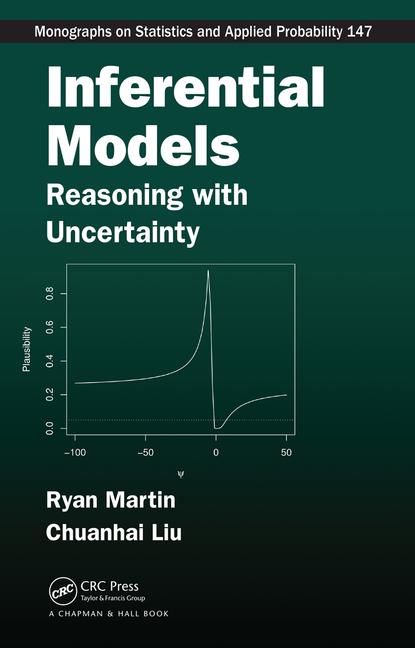
Chuanhai Liu is an Associate Head and Professor of Statistics at Purdue University’s Department of Statistics. He specializes in computational methods for statistical inference, Bayesian analysis, and big data computing systems. His research emphasizes robust algorithms, inferential models, and probabilistic methods. Education: M.S., Wuhan University, Probability and Statistics (1987) M.A., Harvard University, Statistics (1990) Ph.D., Harvard University, Statistics (1994) Research Interests: Computational methods (EM algorithms, MCMC), statistical software systems for big data, theoretical foundations of inference, and prior-free probabilistic modeling. His work bridges computational efficiency and statistical validity, with applications in network analysis, environmental data, and machine learning. Awards: Fellow of the American Statistical Association (2007) Elected Member of the International Statistical Institute (2006) Frank Wilcoxon Prize (2000) Advising & Grants: Supervised 9 Ph.D. students, including interdisciplinary collaborations. His grants focus on distributed statistical computing and inferential frameworks. Active in software development for large-scale data analysis. Labs/Teams: Leads statistical computing initiatives at Purdue, contributing to scalable algorithms and probabilistic inference systems.
Martin Berggren is a Professor at the Department of Computing Science , Umeå University , Sweden. His work focuses on Computational Design Optimization , combining computer simulations and numerical optimization to enhance engineering designs for devices like antennas, microwave components, and loudspeakers. Berggren is also active in mathematical modeling of physical phenomena, particularly wave propagation and fluid mechanics, with a strong emphasis on finite-element methods . His research addresses large-scale conceptual design problems using thousands to millions of design variables, relying on gradient-based algorithms and adjoint-based computations of design sensitivities—similar to back-propagation in deep learning. Key application areas include acoustic and electromagnetic devices, where he investigates damping mechanisms, boundary conditions, and material distribution. Other interests, though less active, involve flow control and unsteady fluid–structure interaction . Berggren collaborates extensively on projects such as Structured Regularization , Topology Optimization of Acoustic Black Holes , and Design of Microstrip-to-Waveguide Transitions . His publications span journals like Journal of Computational Physics , Pattern Analysis and Applications , and IEEE Transactions on Antennas and Propagation , often co-authored with researchers like Linus Hägg , Eddie Wadbro , and Disi Lin .
Per Enqvist is an Associate Professor in the Division of Numerical Analysis, Optimization and Systems Theory within the Department of Mathematics at KTH Royal Institute of Technology, Stockholm, Sweden. He has held this position since 2009 after progressing from Assistant Professor (2006-2009) and post-doctoral roles at INRIA France and CNR Italy. His academic background includes: Ph.D. in Optimization and Systems Theory from KTH (2001), supervised by Professor Anders Lindquist M.Sc. in Engineering Physics (Civilingenjör) from KTH (1994) with Applied Mathematics focus Post-doctoral studies at INRIA Sophia-Antipolis (2003-2004) and CNR Padova (2001-2003) Enqvist's research centers on mathematical modeling of stochastic processes, scheduling, and queueing theory with applications across operations research, systems engineering, and signal processing. His principal interests span Optimization, Operations Research, Systems Engineering, Signal Processing, Mathematical Systems Theory, and Modeling and Simulation. He has made significant contributions to spectral estimation, covariance interpolation, and resource allocation frameworks. Publication analysis reveals an evolution from foundational systems theory work (2000s) on spectral estimation and minimal realization toward applied optimization in healthcare operations (2010s-2020s). Recent articles address radiation therapy scheduling and contact center modeling using queueing theory with risk-sensitive measures like CVaR, while earlier work established theoretical frameworks for covariance interpolation and passive system synthesis. No scientific awards are documented in the provided information. He has received funding from Vetenskapsrådet (Swedish Research Council) and led the ACCESS seed project on "Robust Spectral Estimation". Enqvist is course responsible for multiple master's program tracks including Aerospace systems and Industrial Engineering, and oversees the Optimization and Systems Theory seminar series. No student advisement details are provided. He maintains affiliations with the ACCESS Linnaeus centre, Center for Industrial and Applied Mathematics (CIAM), and serves on the Swedish Operations Research Society (SOAF) board.
Hugh Churchill is a Professor in the Department of Physics at the University of Arkansas, College of Arts & Sciences. His research focuses on quantum materials and devices, particularly condensed matter physics with applications in 2D systems and quantum transport. Education: PhD in Physics from Harvard University, BA in Physics and BM in Music Performance from Oberlin College Recent research trends include studies on 2D materials like transition metal dichalcogenides and black phosphorus, investigating quantum transport phenomena, supercurrent tuning, strain engineering for exciton control, and applications of machine learning in quantum material discovery. His work also explores THz emission mechanisms and quantum noise mitigation strategies. Arkansas Research Alliance Fellow Presidential Early Career Award for Scientists and Engineers NSF CAREER Award ORAU Powe Junior Faculty Award AFOSR Young Investigator Connor Faculty Fellowship Hugh teaches graduate and undergraduate courses in quantum mechanics, modern physics, and 2D materials, including PHYS 5413 Quantum Mechanics I and PHYS 6713 Condensed Matter Physics II.