
Sebastian Ordyniak is an Associate Professor in the Department of Algorithms and Complexity at TU Wien. His research focuses on parameterized complexity, algorithms, computational complexity, and applications in artificial intelligence and graph theory. He holds a PhD and the prestigious START Prize (2014–2022), a renowned Austrian award for outstanding researchers. Key projects include the ERC-funded 'Parameterized Complexity of Local Search' (2010–2014) and ongoing initiatives like 'Parameterized Analysis in Artificial Intelligence' (2021–2026). His work bridges theoretical foundations with practical applications, such as algorithmic fairness, machine learning interpretability, and graph drawing. Research highlights include contributions to SAT solving, backdoor analysis, and clustering algorithms. He has advised at least one student, Hossein Maleki, on practical algorithms for deletion to small components. His interdisciplinary approach integrates logic, computational geometry, and multi-agent systems.
جستجوی استاد راهنمای دانشگاهی
برای مسیر پژوهشیتان، استاد راهنما، استاد دانشگاه و پژوهشگر مناسب را پیدا کنید و با آنها ارتباط بگیرید.
نمایش ۱۶-۳۰ از ۶۴ استاد راهنما
اطلاعات پروفایلها از صفحات عمومی دانشگاهها گرفته شده و ممکن است بهروز نباشد.
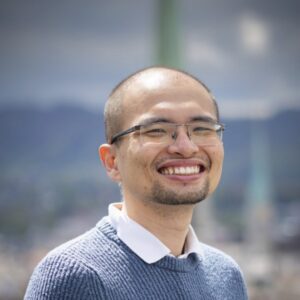
Phuc Hung Hoang is a postdoctoral researcher in the Algorithms and Complexity Group at Technische Universität Wien (TU Wien) since November 2023, mentored by Robert Ganian. Prior to this, he worked as an Applied Scientist at Amazon EU (2021–2022) and earned his doctorate at ETH Zurich in 2022 under Bernd Gärtner and Emo Welzl. He holds a Master’s in Operational Research from the London School of Economics (2018) and a Chartered Accountant background from the National University of Singapore. His research bridges algorithmic design, discrete structures, and interdisciplinary applications. Key areas include graph algorithms, combinatorial optimization, computational complexity, reconfiguration problems, and efficient enumeration. His work often explores how structural properties of problems enable faster algorithms, with a focus on parameterized complexity, combinatorial games, and computational geometry. Recent publications highlight trends in reconfiguration problems , graph theory , and combinatorial optimization , including analyses of k-opt for TSP, degree-constrained spanning trees, and flip-based enumeration techniques. He secured the FWF ESPRIT Grant (2025–2028) as Principal Investigator for the project Structural Analysis of Combinatorial Reconfiguration . At TU Wien, he teaches courses like Efficient Algorithms and Hypercube Structures . He has supervised over 12 theses, including works on signotopes, lattice congruences, and graph safety. Beyond academia, he integrates humanistic and artistic perspectives through initiatives like Letter Earthlings and the Intercultural Science-Art Project .
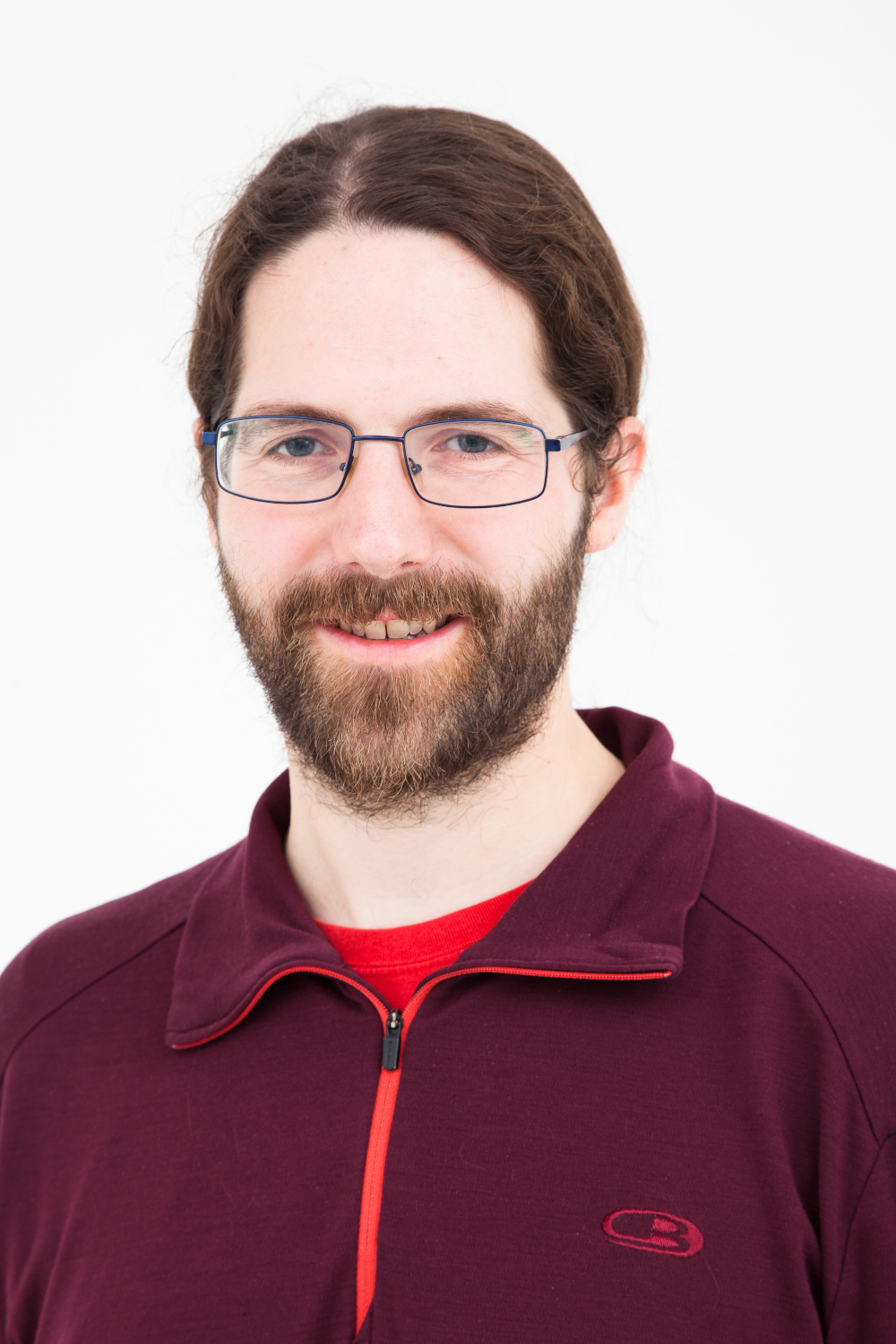
Fabian Kluteمشاهده پروفایل
پژوهشگر ارشد
- Graph drawing
- Automated cartography
- Map labeling
- +۳ مورد دیگر
Fabian Klute is a Research Fellow at Universitat Politècnica de Catalunya, specializing in discrete and computational geometry. His research focuses on graph drawing, automated cartography, map labeling, and geometric computing, with emphasis on theoretical foundations and algorithm development. Klute's publications demonstrate consistent focus on geometric complexity, graph visualization, and combinatorial optimization. Recent works establish hardness results for segment folding and edge insertion problems, develop algorithms for geometric set diversity, and advance boundary labeling techniques. A significant research thread explores parameterized complexity in graph modification problems. His contributions in graph drawing include innovations in confluent drawings, book embeddings, and 1-planar extensions. Cartography-related research advances automated labeling and spatial representation for complex curve arrangements.
Wolfgang Faberمشاهده پروفایل
پژوهشگر
Wolfgang Faber is a researcher at Vienna University of Technology (TU Wien) specializing in Knowledge-Based Systems within the Faculty of Informatics. Holding the position of Privatdozent, he has completed his habilitation and is qualified to teach at the university level. His academic work centers on Answer Set Programming (ASP), Logic Programming, and Knowledge Representation, with significant contributions to theoretical foundations in these fields. Dr. Faber's research spans multiple areas of computational logic: Answer Set Programming and its theoretical underpinnings Epistemic logic programs and equivalence properties Knowledge representation and reasoning systems Nonmonotonic reasoning formalisms Integration of logic programming with external data sources His publication history reveals a sustained focus on theoretical aspects of ASP, with particular emphasis on program equivalence concepts (strong equivalence, uniform equivalence), computational complexity analysis, and applications to knowledge representation. Over two decades, his research has evolved from foundational work in disjunctive logic programming to specialized topics in epistemic reasoning within ASP frameworks. Dr. Faber has led and participated in numerous research projects including START (2014-2022) on Uniform Equivalence of Epistemic Logic Programs, SemDat (2012-2016), and multiple projects related to hybrid knowledge bases and Answer Set Programming from 2005-2015. His collaborative research extends across European institutions, evident through extensive co-authorship with researchers like Thomas Eiter and Stefan Woltran. While specific awards aren't documented in the available information, his sustained research output and leadership in multiple projects indicate significant recognition within his field. Dr. Faber has made substantial contributions to major systems in the field, most notably the DLV system for knowledge representation and reasoning, which has influenced both academic research and practical applications of Answer Set Programming.
- Combinatorial Optimization
- Algorithms
- Graph Theory
- +۲ مورد دیگر
Gregory Gutin is a Professor of Computer Science at Royal Holloway, University of London, UK. He has held academic positions at Brunel University (Lecturer in Mathematics, 1996), Odense University (Visiting Lecturer in Computer Science, 1995; Postdoctoral Researcher, 1993), and was a PhD student at Tel Aviv University's School of Mathematics (1991). His career spans roles as a School Teacher in Gomel (Byelorussia, 1979), Researcher in Byelorussian institutions (1982-1987), and academic staff in the UK, Denmark, and Israel. He earned a PhD in Mathematics from Tel Aviv University, with prior research roles in Byelorussia (geology, oil, mathematics). His work bridges theoretical and applied computer science, focusing on combinatorial optimization, parameterized algorithms, and information security. Dr. Gutin's research centers on combinatorial optimization and parameterized algorithms , with applications in graph theory , constraint satisfaction , and access control in information security. His publications address arc routing problems, workflow satisfiability, and probabilistic methods for parameterized complexity, contributing both to foundational theory and practical implementations. His selected publications highlight a focus on fixed-parameter tractable algorithms for constraint satisfaction, arc routing in operations research, and access control mechanisms. These works solved open problems in algorithm design and influenced subsequent research in parameterized complexity and security systems. Best Paper Award at ACM SACMAT 2016 Best Paper Award at ACM SACMAT 2015 Royal Society Wolfson Research Merit Award 2014 Kirkman Medal 1996 Wolf Prize for PhD Students 1992 Dr. Gutin has collaborated extensively with researchers like Magnus Wahlstrom, Anders Yeo, and David Karapetyan. His work on workflow satisfiability introduced novel constraint classes used in access control systems, and he co-authored the influential textbook Digraphs: Theory, Algorithms and Applications (2009). The Royal Society award in 2014 recognized his sustained contributions to algorithmic research.
Olga Saukhمشاهده پروفایل
دانشیار
Olga Saukh is an Associate Professor at TU Graz's Institute of Computer Engineering, leading the Embedded Learning and Sensing Systems (ELSS) group. Her research focuses on resource-efficient AI, on-device learning, and robust sensing systems for IoT and environmental monitoring applications. She holds a Dr.rer.nat. and MSc in Computer Science, with expertise in embedded systems and wireless sensor networks. Her work integrates machine learning with hardware constraints, addressing challenges in energy efficiency, real-time adaptation, and adversarial robustness. Notable projects include PCDCNet for air quality forecasting and SensorFormer for sensor calibration. She has contributed to OpenSense Zurich's air pollution monitoring and automated pollen sensing systems. Her research spans over 50 publications since 2006, emphasizing practical deployments in structural health monitoring, smart agriculture, and urban environmental sensing. She leads interdisciplinary projects combining AI, embedded hardware, and data-driven decision-making.
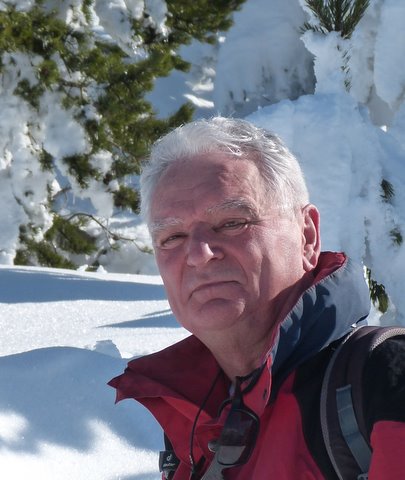
Nicolas Halbwachs is a Research Director at CNRS and Director of the Verimag Laboratory, affiliated with the University of Grenoble. His work focuses on formal methods for embedded systems, synchronous programming, and verification techniques. He co-developed the Lustre language, which forms the basis of the industrial tool Scade, and contributed to Linear Relation Analysis for program verification. Halbwachs has held positions including Invited Professor at Stanford University (1992-93) and has been recognized with the 2004 Michel Monpetit Award. He has supervised 10 PhD theses and contributed to major research projects like the SYRF Esprit project and the ASSERT initiative. His research spans verification of real-time systems, abstract interpretation, and automated invariant discovery in array-manipulating programs. Education: State Thesis in Mathematics (Grenoble, 1984), Third Cycle Thesis in Computer Science (Grenoble, 1979) Research Highlights: Synchronous Programming Foundations, Linear Relation Analysis, Lustre Language Development Leadership: Editor of Formal Methods in System Design, Program Committee Chair for CAV'99, TACAS'05, and EMSOFT'09 His recent work addresses invariant discovery in array-based programs, extending abstract interpretation techniques to handle complex data structures.
Sofia Henna Elisa Simola is a PreDoc Researcher and Researcher at the Vienna University of Technology (TU Wien), affiliated with the Department of Algorithms and Complexity within the Faculty of Informatics. She holds the role of Projektass.in (Research Assistant) and is engaged in advanced algorithmic research. Her research focuses on algorithmic aspects of social choice mechanisms, including multi-winner elections, coalition formation, and parameterized algorithms. Notable projects include investigations into refugee resettlement optimization and hedonic games with complex social dynamics. She contributes to courses like Advanced Research in Algorithmics and Algorithmic Social Choice. Education: MSc degree (specific field unspecified) Project: Structural and Algorithmic Aspects of Preference-based Problems in Social Choice (2019–2027) Her work bridges theoretical computer science with applications in social policy and multi-agent systems, emphasizing computational efficiency and real-world applicability.
Josef Widderمشاهده پروفایل
دانشیار
Dr. Josef Widder is an Affiliated Researcher and Privatdozent at Technische Universität Wien's Embedded Computing Systems department. His research develops formal methods for verifying fault-tolerant distributed systems, with contributions to model checking and concurrent system verification. Core research areas include parameterized verification techniques, Byzantine fault tolerance, and synchronization in distributed algorithms. Recent work focuses on efficient model checking approaches for synchronous systems and counter abstraction methods. Supervision activities include doctoral students working on SMT-driven verification techniques and symbolic verification of distributed algorithms. Recognized through dissertation awards for contributions to distributed computing theory.
Jules Wulmsمشاهده پروفایل
پژوهشگر
Jules Wulms is a researcher at the Institute of Logic and Computation, Vienna University of Technology (TU Wien), within the Faculty of Informatics. His work focuses on computational geometry, algorithm design, and visualization techniques. He has contributed to areas such as graph drawing, geometric algorithms, and dynamic data structures. Wulms' research emphasizes theoretical foundations with applications in spatial data analysis and information visualization. His academic contributions include studies on planar graph modifications, dynamic point labeling, and reconfiguration problems in modular robotics. Wulms collaborates frequently with institutions like TU Wien and international conferences, publishing in venues like the Journal of Computational Geometry and ACM Transactions on Spatial Algorithms and Systems. His doctoral thesis, available online, further details his foundational work in algorithmic complexity and geometric computing. Key themes in his publications include optimizing geometric structures (e.g., minimizing corners in grids), developing efficient algorithms for dynamic datasets, and exploring stability in kinetic frameworks. While no specific awards are listed, his extensive publication record highlights his impactful contributions to theoretical computer science and computational geometry.
Frank Sommerمشاهده پروفایل
پژوهشگر ارشد
Frank Sommer is a Humboldt fellow (Feodor Lynen scholarship for Postdocs) at Vienna University of Technology since June 2024. He is affiliated with the Institute of Logic and Computation, where he conducts research in theoretical computer science and algorithms. Previously, he held postdoc positions at Friedrich Schiller University Jena (May 2023-May 2024) and Philipps University Marburg (November 2022-May 2023). Dr. Sommer earned his PhD in Mathematics from Philipps-University Marburg (2017-2022), following a Master's degree (2015-2017) and Bachelor's degree (2012-2015), both in Mathematics from Friedrich Schiller University Jena. His research focuses on parameterized algorithms , algorithm engineering , and graph algorithms , with applications to hard problems in Data Science and Machine Learning. He has made significant contributions to the theoretical foundations of graph problems, particularly in network analysis, community detection, and subgraph optimization. His methodology combines theoretical analysis with practical implementation, emphasizing both computational complexity and real-world applicability. Dr. Sommer's publication record shows a strong emphasis on parameterized complexity, kernelization techniques, and practical algorithm implementations. His work spans from theoretical foundations to practical applications in network analysis, machine learning, and data science, with particular expertise in graph-theoretic problems and their computational aspects. Scientific Awards: Humboldt fellow (Feodor Lynen scholarship for Postdocs) Dr. Sommer collaborates extensively with researchers including Christian Komusiewicz, Niels Grüttemeier, and Tomohiro Koana. His work is supported by the Humboldt Foundation and has been published in top-tier computer science venues including Algorithmica, Journal of Graph Algorithms and Applications, and proceedings of major conferences like ESA and ISAAC. He is part of the Algorithms and Complexity Group within the Institute of Logic and Computation at TU Vienna, contributing to research on fundamental algorithmic problems with applications across various domains. His current research explores the intersection of theoretical computer science with practical challenges in data science and machine learning.
Martin Nöllenburg is a Full Professor in the Department of Algorithms and Complexity at TU Wien, Vienna University of Technology. He holds roles as Curriculum Coordinator for the Bachelor and Master’s programs in Theoretical Informatics and Algorithms and Complexity. His research focuses on algorithm engineering, computational geometry, graph algorithms, and information visualization. He leads projects such as 'Parameterized Graph Drawing' and 'Human-Centered Algorithm Engineering', funded by WWTF and FWF. His research interests span algorithm design, graph drawing, and visualization techniques for networks and biological systems. Recent work includes advancements in boundary labeling, graph bundling, and metro map visualization. He has supervised over 20 graduate students, producing impactful contributions to visualization and algorithmic research. Key contributions include the development of GDmetriX (a NetworkX extension for graph metrics) and studies on dynamic map labeling and combinatorial optimization. He actively participates in academic governance, serving on TU Wien’s Faculty Council and Curriculum Commission.
Georg Weissenbacher is a Full Professor in the Institute of Logic and Computation at TU Wien, leading the Formal Methods in Systems Engineering group. His research focuses on automated software verification, formal methods, and concurrency bug analysis. He holds a DPhil from Oxford and has held positions at Princeton and ETH Zurich. Education: TU Wien (since 2010), Postdoctoral Researcher at Princeton University (2010–2012), PhD from Oxford University (2008–2010), Research Assistant at ETH Zürich (2005–2010), Master's at TU Graz (until 2003). Research Interests: Automated software verification, formal methods, model checking, concurrency bug detection, logic and automated reasoning, symbolic simulation, and test case generation. His work addresses challenges like Heisenbugs in concurrent systems and robustness verification of neural networks. Grants & Projects: Lead projects such as AutoTest (Vienna Science Fund), LogiCS-Scholarships (2017–2025), and contributions to the National Research Network 'Rigorous Systems Engineering' (FWF). Active in the FWF-funded doctoral college 'Automated Reasoning' (2025). Advising: Supervised over 20 PhD and master's students, including notable works on Heisenbugs, mutation testing, and neural network verification. Current advisees include Thomas Hader and Sarah Sallinger. Labs & Teams: FORSYTE Group at TU Wien, collaborating on formal methods and automated reasoning. Engaged in international conferences like CAV and FMCAD as program chair/co-chair.
Alexander Firbas serves as a Researcher at the Institute of Logic and Computation within Vienna University of Technology's Faculty of Informatics, specializing in theoretical computer science with emphasis on graph algorithms and computational complexity. His academic background includes a Diploma Engineer (Dipl.-Ing.) and Bachelor of Science (BSc), with his 2023 Diploma Thesis establishing foundational work on vertex splitting for hereditary graph properties. Current doctoral research extends into parameterized complexity and geometric graph representations. Firbas investigates structural graph properties through computational lenses, focusing on tractability boundaries for problems involving vertex splitting, cluster modifications, and geometric thickness. His methodology integrates fine-grained complexity analysis with algorithmic design for NP-hard graph problems. Recent publications demonstrate consistent exploration of graph modification paradigms, evolving from hereditary property establishment (2023) to cluster vertex splitting (2024) and geometric thickness tractability (2025), reflecting deepening specialization in parameterized approaches to graph-theoretic challenges. He contributes to the multi-year 'Parameterized Graph Drawing' project (2023–2027) while teaching Algorithmic Geometry and Graph Algorithms seminars. His advising activities include supervising master's theses within the Algorithms and Complexity research framework. As an active member of the Algorithms and Complexity research group, Firbas collaborates on theoretical projects examining computational boundaries in graph theory, with ongoing work targeting degree-constrained spanning trees and geometric embedding problems.
Liana Khazaliya is a PreDoc Researcher in the Department of Algorithms and Complexity at Vienna University of Technology , specializing in parameterized complexity and graph theory. Her work intersects computational complexity, graph drawing, and structural decomposition techniques. Research Focus: Double-exponential lower bounds for NP problems, crossing number analysis, planar graph extensions, and metric dimension parameterizations Key Collaborations: Works with teams in computational geometry, graph drawing, and algorithmic research Her recent publications analyze algorithmic hardness through treewidth and vertex cover parameterizations, contributing to the understanding of complexity thresholds in graph problems. She actively participates in international conferences like SoCG, GD, and IPEC, advancing fixed-parameter tractability frameworks.