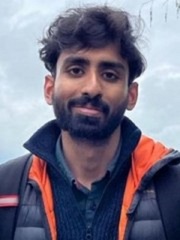
Bala Ayikudi Ramachandrakumar is a post-doctoral researcher at the Max Planck Institute for Software Systems (MPI-SWS), working under Rupak Majumdar. He holds a Ph.D. from the Technical University of Munich, advised by Prof. Javier Esparza. His research focuses on parameterized verification, automata theory, and formal methods applied to cyber-physical systems and distributed computing. Key interests include the analysis of threshold automata, VASS models, and well-quasi orders. Education: Ph.D. in Computer Science (2019–2024), Technical University of Munich; Prior academic background not explicitly detailed. Research Interests: Parameterized Verification, Automata Theory, Formal Verification, Theoretical Computer Science, Cyber-Physical Systems, and Distributed Systems. His work bridges foundational theory with practical verification challenges in concurrent and networked systems. Publications (2024–2018): Recent work includes decidability results for affine continuous VASS and complexity analyses of threshold automata. Over 15 peer-reviewed articles in top venues like LICS, POPL, and CONCUR. Grants and Awards: None explicitly listed in provided texts.
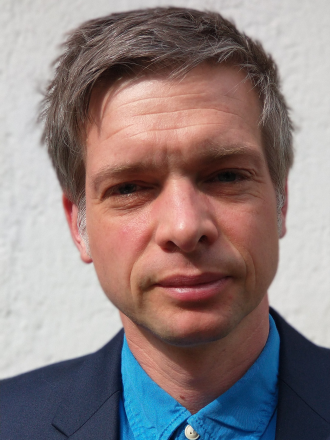
Matthias Mnich is a Professor and Head of the Institute for Algorithms and Complexity at Hamburg University of Technology (TUHH), within the School of Electrical Engineering, Computer Science and Mathematics. He also serves as Deputy Dean International, reflecting his leadership in academic administration and international collaboration. He is a principal investigator at the Helmholtz Graduate School for the Structure of Matter, further emphasizing his interdisciplinary impact. His research lies at the intersection of theoretical computer science and practical algorithm design, focusing on parameterized algorithms , approximation algorithms , combinatorial optimization , scheduling , and algorithmic game theory . His work often bridges theoretical guarantees with real-world applications in energy systems, quantum computing, and logistics. The recent publications (2023–2025) highlight his sustained excellence in top-tier venues such as FOCS, ICALP, ESA, STACS, and journals like Mathematical Programming and ACM Transactions on Algorithms . These works explore foundational problems in vector bin packing , integer programming , graph algorithms , and kernelization , while also applying algorithmic techniques to microgrid energy optimization and quantum algorithm engineering . He is deeply embedded in the theoretical computer science community, having served on program committees of major conferences including: STACS 2023 ESA 2024 FOCS 2023 ICALP 2024 IJCAI 2019–2025 AAAI 2018 SWAT 2018 He has successfully supervised several PhD students to completion, including Matthias Kaul , Roland Vincze , and Alexander Göke , many of whom have taken postdoctoral positions at institutions like the University of Bonn and University of Augsburg. His current research projects include PATTERN (2025–2031) , Hamburg Quantum Computing (2024–2029) , and Kernelization for Big Data , indicating long-term funding and strategic research directions. He leads the Institute for Algorithms and Complexity (E-11) , fostering a research environment focused on high-impact algorithmic research.
Prof. Dr.-Ing. Katharina Schmitz serves as Institute Director and Vice Dean at the Institute for Fluid Power Drives and Systems, RWTH Aachen University. Her leadership within the Production Technology Cluster and extensive contributions to fluid power engineering establish her as a leading authority in mechanical engineering research and education. Her research spans fluid power systems, hydraulic component design, tribology, and physics-informed machine learning applications. She pioneers sustainable propulsion solutions through bio-hybrid fuels research while addressing fundamental challenges in polymer material behavior under hydraulic stresses. Current work focuses on carbon-neutral heavy-duty transportation, physics-based neural networks for lubrication modeling, and advanced control systems for electro-hydraulic actuators. Analysis of her 15 most recent publications reveals a dominant trend toward integrating physics-based modeling with deep learning to solve complex engineering problems. Her team consistently develops novel frameworks for cavitation prediction, flow rate determination, and material compatibility assessment - significantly advancing fluid power system reliability, efficiency, and digitalization. Scientific recognition includes: GfT Förderpreis 2023 for experimental and simulative investigation of partially hydrostatic relieved contacts in variable speed axial piston machines As head of the Institute for Fluid Power Drives and Systems, she leads cutting-edge research in sustainable fluid power technologies. The institute maintains strong industry partnerships while driving innovation in hydraulic component design, digital twins for condition monitoring, and next-generation propulsion systems through its position within RWTH Aachen's Production Technology Cluster.
Prof. Henning Bruhn-Fujimoto is a faculty member at the Institute for Optimization and Operations Research at Ulm University. His research focuses on graph theory, combinatorial optimization, and discrete mathematics , with notable contributions to Erdős-Pósa properties, cycle packing, and algorithmic graph theory. He teaches courses in mathematical foundations of machine learning and combinatorics. Academic Background: - Habilitationsschrift : Graphs and their Circuits (2009) - PhD Thesis: Infinite circuits in locally finite graphs (2005) - Diploma Thesis: Generating the cycle space by induced non-separating cycles (2001) Research Interests: - Structural graph theory and algorithm design - Optimization in discrete systems - Applications of combinatorial mathematics Thesis Supervision: He regularly oversees bachelor's and master's theses in optimization, graph theory, and related fields. Notable past thesis topics include elevator system optimization, Erdős-Posa properties in graphs, and container ship unloading algorithms. Labs/Teams: His work is centered within the Institute's optimization group, collaborating with researchers on projects involving graph algorithms and combinatorial optimization.
André Nichterlein is a Permanent Research Associate at the Technical University of Berlin, specializing in Algorithmics and Complexity Theory. He completed his PhD at TU Berlin (2014) and holds a Diploma from Friedrich Schiller University Jena (2010). His career includes postdoctoral research at Durham University (UK) under a DAAD fellowship and extensive work as a research assistant at TU Berlin. Research Focus: Nichterlein's work centers on parameterized algorithms , kernelization techniques , graph problem optimization , and algorithm engineering . His research addresses fundamental challenges in computational complexity through practical algorithmic solutions, particularly in graph theory and network optimization. Publication Trends: His recent articles (2020-2023) demonstrate a strong focus on parameterized complexity frontiers, efficient data reduction methods for NP-hard problems, and applications in network design. Recurring themes include kernelization innovations, graph modification problems, and experimental algorithmics, with consistent contributions to theoretical foundations of computer science.
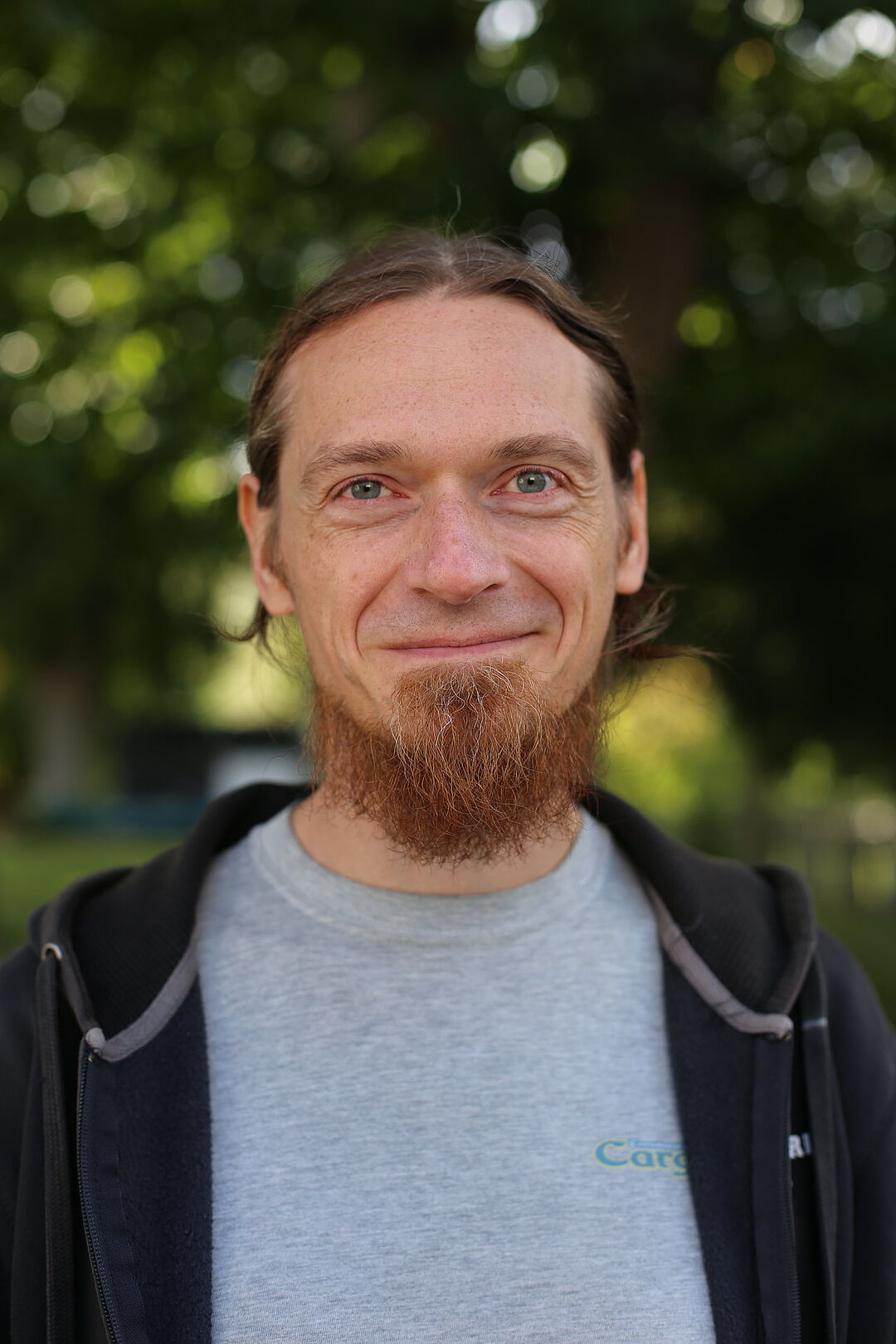
Mathias Weller is a Professor and Chair of the AKT group at Université Gustave Eiffel (Paris), France. Previously, he held a Full-Time Researcher position at CNRS/LIGM (2018–2022) and postdoctoral roles at LIRMM (2013–2017). He earned his PhD in Theoretical Computer Science from TU Berlin (2012) and a Diploma in Computer Science from Friedrich Schiller University Jena (2009). His research focuses on Parameterized Algorithmics, Genome Scaffolding, Phylogenetic Networks, and Structural Parameterization. He has contributed extensively to algorithm design for computational biology, including preprocessing techniques and kernelization concepts. Weller’s work bridges theoretical computer science and applied bioinformatics, addressing challenges in phylogenetic analysis, genome assembly, and combinatorial optimization. His publications span algorithmic efficiency, network analysis, and complexity theory, with a focus on practical applications in genomics and phylogenetics.
Alexandre Vigny is a junior professor at University Clermont Auvergne, France, where he conducts research at the intersection of logic, algorithms, and graph theory. His work focuses on theoretical computer science, particularly in model checking, query enumeration, and distributed algorithms on sparse graph classes. Research Interests: Theoretical Computer Science Logic in Computer Science Parameterized and Distributed Algorithms Graph Theory and Structural Sparsity Database Query Evaluation Reconfiguration Problems His recent publications explore algorithmic meta-theorems, first-order logic with connectivity, elimination distance, and distributed domination, primarily on sparse and structurally constrained graphs. His work appears in top venues such as LICS, ICALP, PODS, and JACM. Scientific Awards: No awards explicitly mentioned. Advising and Grants: Co-supervising Jona Dirks, PhD student since October 2024, with Mamadou Kanté. No specific grants mentioned, but active in collaborative research with prominent figures like Sebastian Siebertz, Luc Segoufin, and Patrice Ossona de Mendez. Labs and Teams: Previously part of Sebastian Siebertz’s team at the University of Bremen. Collaborates with researchers across Europe, including in Warsaw and Paris. Involved in the theoretical computer science community, co-organizing the PODC-DARE workshop.
V. Arvind is a Professor in the Theoretical Computer Science faculty at the Institute of Mathematical Sciences (IMSc) , Chennai. His research is centered on computational complexity theory, with a focus on structural complexity, randomized and algebraic computation, and quantum information and computation. He explores the deep connections between theoretical computer science and mathematics. Institution: Institute of Mathematical Sciences (IMSc), Chennai School: Theoretical Computer Science Academic Rank: Professor Arvind's research interests include computational complexity, structural complexity theory, algebraic computation, derandomization, and quantum computing. He is particularly interested in the interplay between mathematical structures and computation. His work often bridges theoretical computer science with algebra, combinatorics, and logic. His recent publications, primarily expository articles in the EATCS Bulletin’s Computational Complexity Column, cover a wide range of topics such as robust oracle machines, the Alon-Roichman theorem, noncommutative arithmetic circuits, graph isomorphism, and quantum computation. These works reflect trends in foundational complexity theory, algebraic methods in computation, and the exploration of quantum models. The articles emphasize structural insights, lower bounds, and connections to mathematical disciplines. Professional Service and Editorial Roles: Associate Editor, ACM Transactions on Computation Theory Editor, EATCS Computational Complexity Column (since June 2011) Editorial Board Member, International Journal of Computer Mathematics (2009–2013) Co-organizer, ICM Satellite Conference on Algebraic and Probabilistic Aspects of Combinatorics and Computing Program Committee Member for WALCOM 2014, STACS 2012, COCOON 2009, FSTTCS (multiple years, including chair roles), CCC 2006, INDOCRYPT (2002, 2005), and others Teaching: Arvind has taught advanced courses including Computational Complexity, Algorithms, Algebra and Computation, and Discrete Mathematics, often based on foundational texts and notes from leading experts. Lecture notes from his courses have been compiled by students and collaborators. Collaborations: He has an extensive list of co-authors, including prominent researchers such as Manindra Agrawal, Eric Allender, Johannes Köbler, Meena Mahajan, Jacobo Torán, and Ramprasad Saptharishi, indicating strong collaborative research networks in complexity theory and algorithms.
Martin Lackner is a Researcher at the Vienna University of Economics and Business (WU Wien) within the Institute for Data, Process and Knowledge Management. He previously held postdoctoral positions at the University of Oxford and TU Wien, and earned his doctoral degree (Dr. techn.) in computer science from TU Wien in 2014. His research focuses on artificial intelligence, computational social choice, and algorithm design, with a particular emphasis on multi-winner voting systems, approval-based methods, and fairness in decision-making processes. Education: PhD in Computer Science (TU Wien, 2014), Mathematics in Computer Science studies at TU Wien, and a semester at the University of Illinois at Urbana-Champaign (USA). Research interests include computational social choice topics such as multi-winner voting, approval-based committee rules, liquid democracy, and axiomatic analysis of voting systems. He has contributed to the development of the abcvoting Python library for implementing approval-based voting rules and co-authored the book Multi-Winner Voting with Approval Preferences (Springer, 2023). His work bridges theoretical computer science with practical applications in democratic processes and algorithmic fairness. Key contributions include studies on proportional representation mechanisms, participatory budgeting fairness, and long-term decision-making frameworks. Lackner's research frequently addresses the algorithmic aspects of collective decision-making, with publications in venues like Artificial Intelligence , Journal of Economic Theory , and top conferences such as AAAI and IJCAI. Grants and Projects: Principal investigator of the FWF-funded project Algorithms for Sustainable Group Decision Making (TU Wien, 2025–present), and co-developer of the abcvoting open-source software project.
Stefan Funke is a researcher at the University of Stuttgart, Germany, with a focus on algorithms and computational geometry. His work spans wireless communication, route planning, and trajectory analysis. Research Interests: Algorithms, Computational Geometry, Wireless Communication, Route Planning, Trajectory Segmentation His recent publications (2024-2025) explore topics like 3D epithelial cell dynamics, graph radius computation, and polyline simplification, emphasizing scalability and efficiency. Earlier works (2017-2019) investigate contraction hierarchies, energy-efficient routing, and trajectory storage systems. Stefan collaborates frequently with Sabine Storandt, Claudius Proissl, and Tobias Rupp. He applies geometric methods to problems in wireless networks, road systems, and data structures, with a recurring emphasis on optimization and robustness.
Tomáš Jakl is a mathematician and computer scientist affiliated with the Czech Technical University (CTU). His research focuses on the intersection of topology, algebra, and category theory, with applications in theoretical computer science and logic. He is currently conducting the Marie Skłodowska-Curie project ALGACOM (Algorithms and Game Comonads), which bridges category theory with parameterized complexity through game comonads. Supervisor: Dušan Knop (CTU) Funding: EU Horizon Europe grant agreement No 101111373 Research Highlights: Jakl explores dualities between topology and algebra, leveraging category theory's compositional tools to analyze algorithmic efficiency and limitations in computational problems. His recent work includes applying game comonads to finite model theory and constraint satisfaction problems. Scientific Contributions: Jakl has published preprints on categorical approaches to PCSP and constraint satisfaction, and collaborated with researchers like Anna Laura Suarez, Max Hadek, and Jakub Opršal. His ALGACOM project integrates category theory into algorithm analysis and parameterized complexity. Awards & Activities: Marie Skłodowska-Curie Fellowship Lecturer at ESSLLI 2025 Submitted ERC Starting proposal and GACR grant Presented at Summer School on General Algebra and Ordered Sets Active in CTU's GGOAT seminar
Prafullkumar Tale is an Assistant Professor in the Department of Mathematics at the Indian Institute of Science Education and Research (IISER) Pune, India. He previously served as an Assistant Professor in the Electrical Engineering and Computer Science department at IISER Bhopal from January 2024 to April 2025, and was an INSPIRE Faculty Fellow at IISER Pune. He conducted postdoctoral research at the Max-Planck Institute for Informatics and CISPA Helmholtz Center for Information Security under Prof. Daniel Marx. Ph.D.: IMSc Chennai, supervised by Prof. Saket Saurabh Integrated M.Sc. in Applied Mathematics: IIT Roorkee His research focuses on the design and analysis of algorithms, particularly parameterized algorithms for NP-hard graph problems and conditional lower bounds. His work lies at the intersection of theoretical computer science and discrete mathematics, contributing to foundational understanding in computational complexity and algorithmic tractability. The available articles in his profile (not listed here) would reflect strong contributions in theoretical computer science, especially in parameterized complexity and graph algorithms, suggesting consistent work in top-tier theoretical venues. INSPIRE Faculty Fellowship Prafullkumar Tale has mentored researchers during his postdoctoral and faculty roles, though no formal advisees are listed. He has secured competitive research funding through the INSPIRE Faculty Fellowship, supporting independent research at IISER Pune. His academic trajectory reflects a strong foundation in theoretical computer science with sustained research output and institutional affiliations at premier research institutes in India and Germany. He has been associated with leading research groups, including those led by Prof. Daniel Marx at Max-Planck Institute and CISPA, and Prof. Saket Saurabh at IMSc Chennai. These collaborations place him within a prominent network in the global parameterized complexity community.
Stefan Funke is a Professor at the University of Stuttgart's Institute for Formal Methods in Computer Science, part of the Faculty of Computer Science, Electrical Engineering and Information Technology. His work focuses on algorithm design and computational geometry with applications in road networks, trajectory analysis, and geographic information systems. He leads the Algorithmics Group, developing efficient algorithms for shortest path planning, network optimization, and privacy-preserving queries. Research interests include geometric algorithms, graph theory, and practical implementations of theoretical results in transportation and spatial data analysis. Notable contributions involve contraction hierarchies for fast shortest path queries, trajectory mining techniques, and methods for preserving privacy in network-based computations. Recent work emphasizes scalable solutions for large-scale road networks, including simplification methods that preserve topological features and energy-efficient routing strategies for electric vehicles. His research often bridges theoretical foundations with real-world applications in navigation systems and smart mobility solutions. Awards and grants are not explicitly listed in the provided data, but his extensive publication record indicates sustained recognition in algorithmic research. He advises on multiple interdisciplinary projects involving spatial data processing and algorithm engineering.
Prof. Dr. Tobias Glasmachers is a Full Professor at the Institut für Neuroinformatik , Ruhr-Universität Bochum, Germany, specializing in the Theory of Machine Learning . He leads the Optimization of Adaptive Systems group and holds appointments in both Computer Science and Interdisciplinary AI research. Key Research Areas : Optimization algorithms, evolutionary computation, reinforcement learning, supervised learning, and neural networks Technical Focus : Gradient-based methods, support vector machines, and adaptive coordinate descent Applications : Robotics, waste sorting facilities, 3D game environments (e.g., Doom/Minecraft), and human-centered AI design Notable Contributions : Development of LM-MA-ES evolution strategy, Hessian Estimation Evolution Strategy, and tachAId tool for ethical AI design. His work bridges theoretical analysis with practical implementations across diverse domains. Teaching : Offers courses in Informatik 1 - Programmieren, Machine Learning: Supervised Methods, and Evolutionary Algorithms. Supervises numerous Bachelor's and Master's theses on AI/ML applications.
Petra Mutzel is a Professor of Computer Science at the University of Bonn. Her research focuses on graph algorithmics, temporal networks, and combinatorial optimization with applications in data science and bioinformatics. She holds a PhD in Computer Science from the University of Cologne (1994) and a Diplom in Mathematics from the University of Augsburg (1990). Her work emphasizes algorithmic solutions for complex graph problems, including temporal graph analysis, graph learning, and optimization frameworks for real-world networks. She has contributed to open-source libraries like Tglib for temporal graph processing and frameworks like Scaffold Hunter for medicinal chemistry. Her research spans theoretical foundations and practical implementations, with notable contributions to graph drawing, vehicle routing optimization, and protein complex analysis. Mutzel’s recent publications (2022-2025) explore temporal network dynamics, robust combinatorial optimization, and scalable graph kernel methods. She actively engages in academic leadership, organizing conferences such as WALCOM 2022, and serves on editorial boards for journals in algorithms and computational geometry.