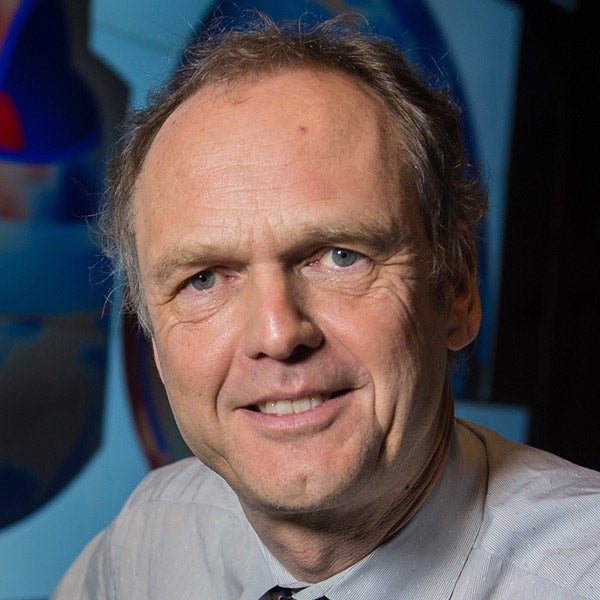
Maarten de Hoop is the Simons Chair and Professor of Computational and Applied Mathematics at Rice University, part of the George R. Brown School of Engineering. He holds visiting roles at MIT and the Chinese Academy of Sciences. His research spans seismic wave analysis, inverse problems, deep learning, and planetary seismology. He earned his Ph.D. in Technical Sciences from Delft University of Technology (1992), and earlier degrees from Utrecht University. Notable awards include the 1996 J. Clarence Karcher Award and 2001 Fellowship from the Institute of Physics. His work integrates computational mathematics with geophysics, focusing on extracting signal information from large datasets, developing novel inverse scattering methods, and applying deep learning to geoscience challenges. Recent studies include transformer models for in-context learning, semialgebraic neural networks, and seismic waveform foundation models like SeisLM. He leads the Geo-Mathematical Imaging Group, fostering interdisciplinary projects in planetary missions and data-driven discovery.
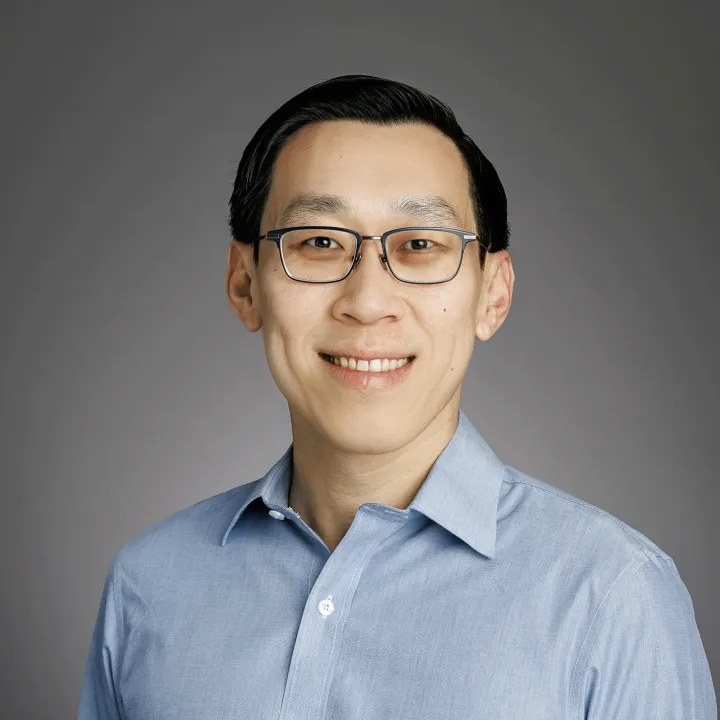
Andre Wibisono serves as Assistant Professor in Yale University's Department of Computer Science with a secondary appointment in Statistics & Data Science, joining the faculty in 2021 after postdoctoral research at University of Wisconsin-Madison and Georgia Institute of Technology. His educational background includes: Ph.D. in Computer Science, UC Berkeley M.A. in Statistics, UC Berkeley M.Eng. in Computer Science, MIT S.B. in Mathematics and Computer Science, MIT Wibisono's research focuses on algorithm design for machine learning through optimization, sampling, and game theory , leveraging dynamical systems and information theory to develop accelerated discrete-time algorithms from continuous dynamics. His work provides theoretical foundations for efficient machine learning systems with applications in generative modeling and constrained optimization. Recent publications (2023-2025) demonstrate consistent innovation in Hamiltonian-based optimization , constrained-space sampling , and min-max game convergence , characterized by rigorous mathematical analysis connecting continuous dynamics to discrete algorithms. Key trends include randomized integration for acceleration, phi-divergence convergence guarantees, and symplectic geometry applications to mirror descent. Scientific recognition includes: NSF CAREER Award for developing algorithmic frameworks bridging continuous and discrete dynamics He actively mentors current students (Siddharth Mitra, Kaylee Yang, Jane Lee, Qiang Fu, Peter Wang) and has guided two postdocs to faculty positions. Research is funded through the NSF CAREER award and collaborative CIF grants focused on Hamiltonian dynamics for sampling and optimization. His Yale research group develops theoretical foundations for next-generation machine learning algorithms, emphasizing mathematical rigor in optimization and sampling with applications to generative modeling and constrained inference problems.
Assoc Prof Ying Chen is an Associate Professor at the National University of Singapore , affiliated with the Department of Mathematics, Asian Institute of Digital Finance (as Academic Director of PhD Program in Digital FinTech 2022–2024), Risk Management Institute (2019–2023), Department of Statistics and Data Science (2019–2023), and Department of Economics (2018–2023). She also contributes to NUS Graduate School for Integrative Sciences and Engineering since 2016. Research Interests include: AI forecasting and quantum computing for finance Nonstationary time series and functional data analysis Energy data analytics and precision medicine Network autoregression and spatial-temporal modeling Explainable AI and citation metrics Portfolio liquidation and market-making algorithms Article Trends demonstrate expertise in: Adaptive forecasting for gas flows and electricity prices Blockchain network influence detection Quantum computing applications in finance Functional autoregression with mixed predictors Credit rating fairness and explainability High-resolution implied volatility modeling Scientific Awards include: ISI Elected Member (2016–) International Statistical Institute Council (2023–2027) IASC Scientific Secretary (2017–2019, 2023–2025) Advisory roles for EU FIN-TECH and xAIM projects
James B. Rawlings is the Mellichamp Process Control Chair in the Department of Chemical Engineering at the University of California, Santa Barbara, and holds the rank of Professor. His research focuses on chemical process control, reaction engineering at the molecular level, and computational modeling with tools like Octave. He has held prominent roles, including the Paul A. Elfers Chair at UW Madison and the Steenbock Professor of Engineering. Education: PhD in Chemical Engineering from the University of Wisconsin-Madison (1985), BS in Chemical Engineering from The University of Texas at Austin. Postdoctoral training at the Institute for System Dynamics and Process Control, University of Stuttgart (1985-1986). Research interests include nonlinear systems, model predictive control (MPC), moving horizon estimation (MHE), and stochastic reaction engineering. His work bridges theory and industrial applications, emphasizing robustness and practical implementation. Awards: Elected Fellow of the National Academy of Engineering (2016), IFAC (2016), and IEEE (2012). Recipient of the Process Automation Hall of Fame (2016), Vilas Distinguished Achievement Professor (2015), and numerous AIChE awards. Honorary doctorate from Technical University of Denmark (2011). Grants & Leadership: Led NSF-funded projects on MPC and control systems. Developed Octave, a widely used computational tool. Active in academic leadership and curriculum development, recognized with teaching awards including the Chancellor’s Distinguished Teaching Award (2013). Labs & Teams: Directs research groups focused on control theory, computational tools, and industrial process optimization. Collaborates with industry on MPC implementation and disturbance modeling.
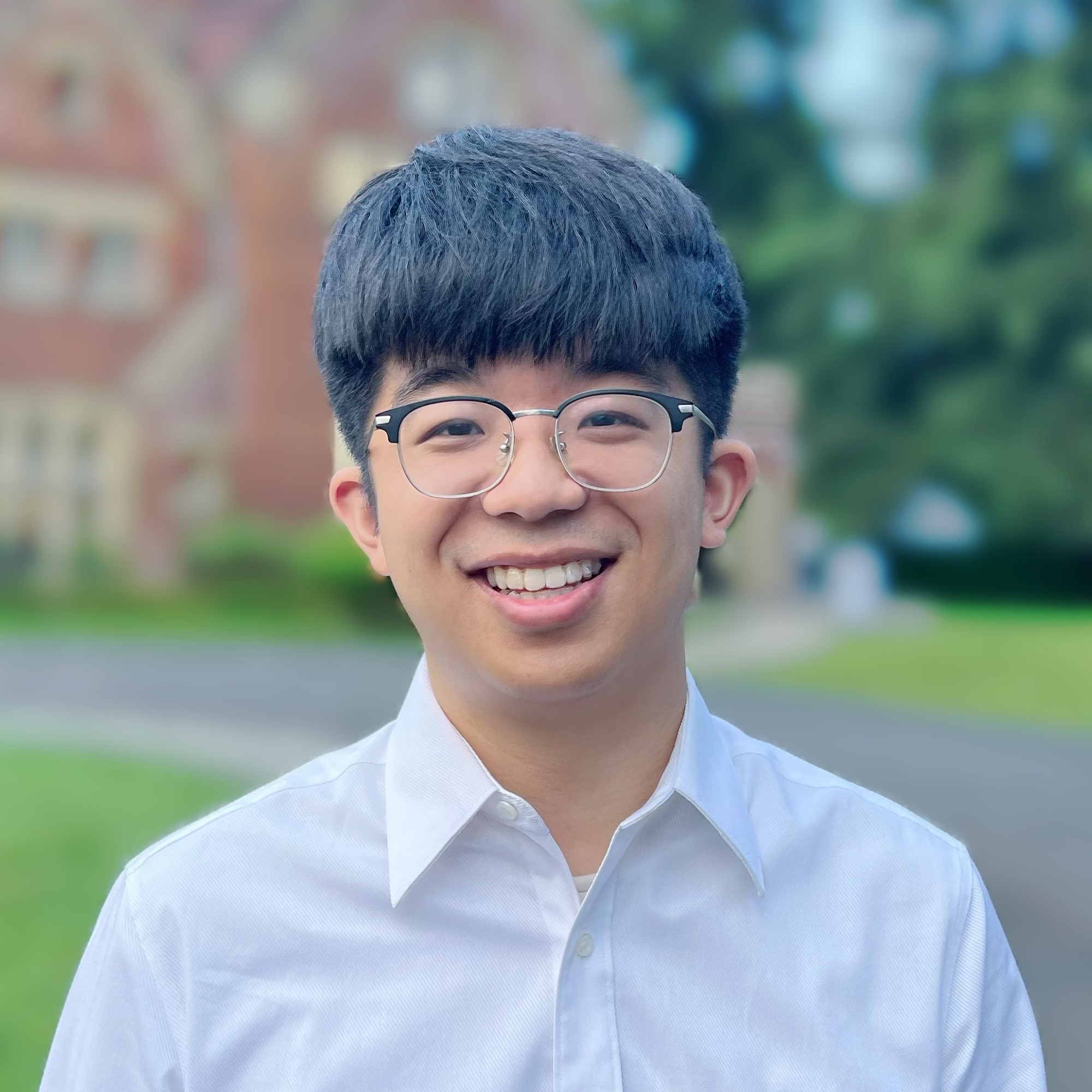
Zhijian Liu is a Research Scientist at NVIDIA with a PhD from MIT, advised by Song Han. His work focuses on efficient machine learning and systems through sparse computation and hardware-aware neural network design. Rising Star in Data Science (UChicago/UCSD) Rising Star in ML and Systems (MLCommons) Qualcomm Innovation Fellowship awardee Research highlights include: SPVCNN++ for LiDAR segmentation HAQ framework in Intel OpenVINO TorchSparse framework for 3D CNN efficiency His recent publications explore: Efficient visual language models (NVILA) Contextual sparsity in LLM fine-tuning (SparseLoRA) Training-free acceleration of diffusion LLMs Query-aware visual sparsity mechanisms Contact: zhijian@mit.edu
Frede Blaabjerg is a Professor at Aalborg University (AAU Energy) , affiliated with the Faculty of Engineering and Science . Since 1998, he has pioneered power electronics research in applications such as wind turbines , photovoltaic (PV) systems , reliability engineering , and Power-2-X technologies. Education : PhD in Electrical Engineering (1995, Aalborg University) Honorary Degrees : Honoris Causa at University Politehnica Timisoara (2017) and Tallinn Technical University (2018) His research focuses on power electronics control , system optimization , and reliability for renewable energy and electric mobility . Recent work includes grid-forming converters , virtual synchronous generators , and smart EV charging systems. Key publication trends span 15+ years , with over 3,733 peer-reviewed articles and 900+ journal papers in power electronics , renewables , and energy storage . Notable book series: Control of Power Electronic Converters and Systems (4 volumes, Elsevier). Scientific Awards : 46 IEEE Prize Paper Awards 2020 IEEE Edison Medal 2019 Global Energy Prize 2014 IEEE William E. Newell Power Electronics Award Leadership Roles : Editor-in-Chief, IEEE Transactions on Power Electronics (2006–2012) Chairman, Danish Council for Research and Innovation Policy (2020–) President, IEEE Power Electronics Society (2019–2020)
Prof. Dr. Michael Ulbrich is a full professor and Chair of Mathematical Optimization at the Technical University of Munich (TUM), within the School of Computation, Information and Technology. He has held this position since 2006 and previously served as Dean of Studies (2007–2010) and Vice Dean of the Faculty of Mathematics (2012–2015). His research focuses on nonlinear optimization, optimal control, and numerical analysis, with applications in fluid dynamics, shape optimization, and PDE-constrained systems. He leads projects in the DFG SPP 1962 and IGDK 1754, and has received prestigious awards including the Howard Rosenbrock Prize (2015) and the Doctoral Award from the TUM Association of Friends (1996). Ulbrich is Editor-in-Chief of Optimization and Engineering and contributes to multiple journals. His work bridges theoretical foundations and practical applications, including CO2 sequestration, fluid-structure interaction, and distributed optimization algorithms. Education: PhD (1996), Habilitation (2002) in Mathematics at TUM. Research stays at Rice University (USA) under DFG funding. Research Areas: Semismooth Newton methods, PDE-constrained optimization, optimal control of Navier-Stokes equations, and distributed parameter systems. Awards: Rosenbrock Prize, Teaching Excellence Awards, and recognition for doctoral work. Leadership Roles: Department Head of Mathematics (2022–), Member of TUM Senate (2019–2022), and Co-Chair of GAMM 2018. Ulbrich has authored influential textbooks like Semismooth Newton Methods for Variational Inequalities and Nichtlineare Optimierung . His recent projects include OptiGeoS (2024–2026) and collaborations on nonsmooth optimization and stochastic algorithms. His academic contributions span over 100 publications, emphasizing both algorithmic innovation and rigorous mathematical analysis.
Assoc Prof Ng Teng Yong is an Associate Professor at the School of Mechanical & Aerospace Engineering (NTU), specializing in numerical modeling and simulation. With a background as Research Manager at A*STAR Institute of High Performance Computing, his work spans materials science, nanotechnology, and aerospace engineering. Current focus on graphene-based desalination membranes Expertise in molecular dynamics simulations Investigates nanoscale fluid mechanics and structural dynamics Recent publications highlight advancements in energy-efficient electrodialysis, smart robotics, and nonlinear vibration analysis. His interdisciplinary approach integrates computational methods with experimental validation in additive manufacturing and soft material mechanics.
Claire Donnat is an Assistant Professor in the Department of Statistics at the University of Chicago, specializing in statistical and machine learning methods for graph-structured and high-dimensional data. Her work bridges theoretical innovation with applications in biomedical research, environmental science, and public health. Education: B.S. and M.S. in Applied Mathematics from Ecole Polytechnique; Ph.D. in Statistics from Stanford University (2020). Her research focuses on three methodological directions: (1) statistical foundations for graph neural networks (GNNs), (2) structured estimation with graph constraints, and (3) multimodal data integration with uncertainty quantification. Key applications include thermotolerance in photosynthetic microbes, family network analysis for child welfare, and spatial transcriptomics. The 15 most recent publications highlight her work in GNNs, CCA, tensor modeling, and epidemic analysis, with keywords spanning statistics, machine learning, and network science. Her methodological contributions address challenges in sparsity, graph topology, and heterogeneous data fusion. Scientific Awards: Facebook Research Award (2021), C3.AI COVID Grand Challenge winner (2020), Lumiata hackathon winner (2020), Stanford Centennial Award (2019), and others. Claire's research group actively recruits postdocs and students for projects involving graph-based modeling, data integration, and biomedical applications. She also provides research consulting in statistical methodology and graph modeling for life sciences.
Nori Franco serves as Professor in the Department of Physics at the University of Michigan and Chief Scientist at RIKEN's Theoretical Quantum Physics Laboratory in Japan. His dual appointments reflect his significant contributions to both American and Japanese academic communities, with continuous service at Michigan since 1990 and at RIKEN since 2002. His research spans quantum information, condensed matter physics, and quantum optics, with particular focus on light-matter interactions, superconducting qubits, optomechanics, and quantum open systems. Franco's work bridges theoretical foundations with experimental implementations, especially in circuit quantum electrodynamics and quantum computing applications. Analysis of his recent publications reveals a strong emphasis on non-Hermitian quantum systems, quantum control techniques, and applications of quantum information science to fundamental physics problems. His research group consistently produces highly cited work, with publications appearing in top journals across quantum physics and condensed matter disciplines. Scientific Awards: Charles Hard Townes Medal (2024) - sole recipient for fundamental contributions to quantum optics and quantum information processing Research Doctorate Honoris Causa from University of Messina (2024) Highly Cited Researcher for eight consecutive years (2017-2024) Member of Academia Europaea (2023) Willis E. Lamb Medal (2023) for quantum electronics research Throughout his career, Franco has secured significant research funding and mentored numerous students and postdoctoral researchers. His work has received international recognition through invitations to deliver prestigious lectures including the Stanislav Ulam Lecture and Sir Nevill Mott Lecture in 2024. His research group maintains strong collaborations across multiple continents, reflecting his global impact on quantum physics. At RIKEN, Franco leads the Quantum Information Physics Theory Research Team within the Quantum Computing Center, directing cutting-edge theoretical work that complements experimental efforts in quantum computing hardware development.
Anne E. White is the School of Engineering Distinguished Professor of Engineering and associate vice president for research administration at the Massachusetts Institute of Technology (MIT). She serves in the Department of Nuclear Science and Engineering within MIT's School of Engineering and is a key researcher at the Plasma Science and Fusion Center (PSFC). White has held significant leadership roles including NSE department head from 2019 to 2023 and co-chair of the MIT Climate Nucleus from 2021 to 2024. She currently chairs the Fusion Energy Sciences Advisory Committee (FESAC), providing federal advisory input to the U.S. Department of Energy Office of Science. White received her PhD in physics from UCLA, where she conducted research at the Electric Tokamak. Her early career included research positions at the National Spherical Torus Experiment at Princeton Plasma Physics Laboratory and the DIII-D National Fusion Facility at General Atomics before joining MIT as a faculty member. Her educational background laid the foundation for her expertise in plasma physics and fusion energy research. Professor White's research focuses on magnetic fusion energy, specifically on understanding turbulent transport in magnetically confined fusion plasmas. Her work spans diagnostic development, novel experimentation, and validation of nonlinear gyrokinetic codes. She aims to demonstrate nuclear fusion as a practical part of the world's sustainable energy future. Her group develops and uses radiometers, reflectometers, and interferometers to measure fluctuations in plasma density, temperature, and flows in tokamaks. This research is critical for improving predictive capabilities of turbulent transport models, which is essential for developing viable fusion reactors. Analysis of Professor White's recent publications reveals a strong focus on plasma diagnostics and turbulence measurements across multiple tokamak facilities. Her work spans experimental measurements on ASDEX Upgrade, Alcator C-Mod, NSTX, and DIII-D tokamaks, with particular emphasis on electron temperature fluctuations, turbulence characterization, and transport model validation. A significant theme is the development and application of novel diagnostic techniques for simultaneous measurements of multiple plasma parameters. Her research increasingly incorporates computational approaches, including gyrokinetic simulations and machine learning methods, to interpret experimental data and advance predictive capabilities in fusion plasma physics. Professor White has received numerous prestigious awards throughout her career: Fellow, American Physical Society Division of Plasma Physics (2019) Cecil and Ida Green Career Development Professor, MIT (2014) American Physical Society Katherine E. Weimer Award (2014) Fusion Power Associates Excellence in Fusion Engineering Award (2014) Junior Bose Award for Excellence in Teaching, MIT (2014) PAI Outstanding Faculty Award from MIT student chapter of the American Nuclear Society (2013) Norman C. Rosenbluth Career Development Professor, MIT (2012-2014) Department of Energy Early Career Award (2011-2016) Marshall N. Rosenbluth Outstanding Doctoral Thesis Award (2009) As an educator and mentor, Professor White has advised numerous students through MIT's Department of Nuclear Science and Engineering. She has taught courses including Principles of Plasma Diagnostics, Seminar in Fusion & Plasma Physics, and Introduction to Plasma Physics. Her leadership extends to developing educational resources, notably leading a team in 2018 to create a free MITx MOOC focused on nuclear science and engineering for global high school learners. Professor White has secured significant research funding through Department of Energy awards, including the Early Career Award (2011-2016) and various fusion energy fellowships throughout her career. Her research group at MIT's Plasma Science and Fusion Center has contributed to multiple major fusion facilities and has been instrumental in advancing understanding of plasma turbulence and transport. Professor White leads the Fusion and Plasmas Lab at MIT, which focuses on diagnostic development and turbulence measurements in fusion plasmas. Her team has made significant contributions to research on four major tokamaks: Alcator C-Mod, ASDEX Upgrade, DIII-D, and National Spherical Torus Experiment Upgrade. At MIT's Plasma Science and Fusion Center, she previously served as assistant division head for magnetic fusion energy collaborations and ran the Gyrokinetic Simulation Working Group and the Alcator C-Mod Transport Group. Her lab maintains close collaboration between experimental work, theoretical modeling, and computational simulation to advance the understanding of plasma turbulence and transport phenomena critical for fusion energy development.
W. Brent Lindquist is a Professor in the Department of Mathematics and Statistics at Texas Tech University, affiliated with the TTU Mathematical Finance Program. His contact details include office location in the Mathematics & Statistics building (Room 104), phone (+1 806 834 2348), and email brent.lindquist@ttu.edu. His research spans computational financial mathematics, porous media flow, neuroscience applications, and quantum electrodynamics. Key contributions include dynamic asset pricing with market microstructure integration, pore-scale flow modeling using 3D micro-tomography, automated neuron morphology identification, and QED computations for electron magnetic moments. Recent work emphasizes ESG factor incorporation into financial models. Analysis of 2023–2025 publications reveals a dominant focus on sustainable finance, particularly ESG-integrated option pricing and portfolio optimization. Methodologies include random forests for market microstructure analysis, skew random walks for volatility modeling, and Lévy processes for Bitcoin dynamics. Cross-cutting themes involve hedonic real estate models with ESG factors and unified asset pricing frameworks bridging classical finance theories.
Kumar Varoon Agrawal is an Associate Professor at École Polytechnique Fédérale de Lausanne (EPFL), holding the Gaznat Chair for Advanced Separations. He is affiliated with the School of Basic Sciences (SB), the Institute of Chemical Sciences and Engineering (ISIC), and the Laboratory of Advanced Separations (LAS) in Sion, Switzerland. Additionally, he contributes to the Swiss Doctoral School in Chemical and Bioengineering (SCGC) and serves as Vice President of the Confédération des Chimistes et des Génie Chimique (CCE). Research Focus: Material Chemistry & Engineering at the Ångström scale for high-performance inorganic and hybrid membranes, emphasizing energy-efficient molecular separations. Teaching: Courses include Fundamentals of separation processes , Diffusion and mass transfer , and Chemical engineering product design . Scientific Contributions: His 15 most recent publications (2025-2020) span topics like graphene pore engineering , 2D material synthesis , carbon capture , and gas separation membranes , with keywords such as Nanotechnology , Materials Science , and Molecular Transport . Subfields include Atomic-Scale Pores , Membrane Stability , and Industrial Scalability . Students and Collaborations: He advises 10 current PhD students and has mentored 9 past PhD candidates in areas like graphene membranes , ion separation , and MOF films . He is an Academic Referent for the EPFL Carbon Team and a committee member for the EDCH Doctoral Program in Chemistry and Chemical Engineering.
Giancarlo Ferrari Trecate is an Adjunct Professor at the Swiss Federal Institute of Technology Lausanne (EPFL) , affiliated with the School of Engineering and the SCI-STI-GFT department. He is also involved in teaching and research through the STI-SGM and EDRS-ENS programs. Research Interests : Automatic control, state estimation, system identification, machine learning, distributed control, hybrid systems, microgrids, biochemical networks, voltage and frequency stabilization in AC/DC microgrids. Publications Trends : His recent work focuses on integrating Neural ODEs and Hamiltonian structures for stable control systems, regret minimization in distributed control, and robust state estimation under uncertainty. Applications include autonomous mobility-on-demand , power grid optimization , and secure microgrid control against cyber-attacks. Scientific Awards : No specific awards mentioned in the provided data. Teaching & Advising : He supervises PhD students in mechanical engineering and teaches courses on Multivariable control and Networked control systems . His lab, DECODE , specializes in Dependable Control and Decision systems.
Lili Zheng is an Assistant Professor in the Department of Statistics at the University of Illinois. Her research focuses on statistical methodology, machine learning, and high-dimensional data analysis with applications in neuroscience and network science. Key areas of expertise include graphical models, stochastic processes, and algorithmic optimization. She collaborates extensively on projects involving functional connectivity analysis, neuronal data imputation, and interpretable machine learning frameworks. Her work bridges statistical theory and computational practice, addressing challenges in model inference, feature importance assessment, and low-rank tensor completion. Notable contributions include techniques for distribution-free inference, spectral clustering in patchwork learning, and Gaussian process parameter estimation using mini-batch stochastic gradient descent. Dr. Zheng's research emphasizes interdisciplinary applications, particularly in neuroimaging (calcium imaging, functional connectivity) and multi-modal data integration. She actively explores statistical challenges in big data contexts, emphasizing robust methodologies for real-world datasets.