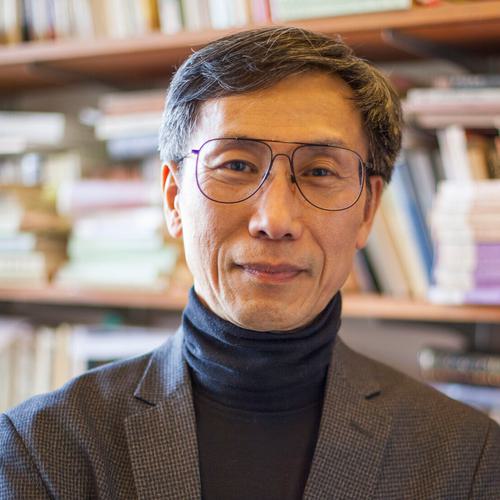
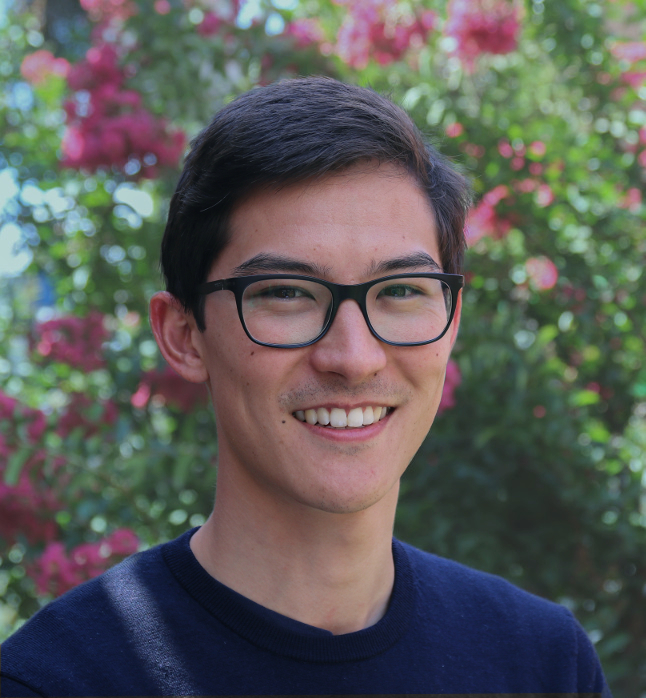
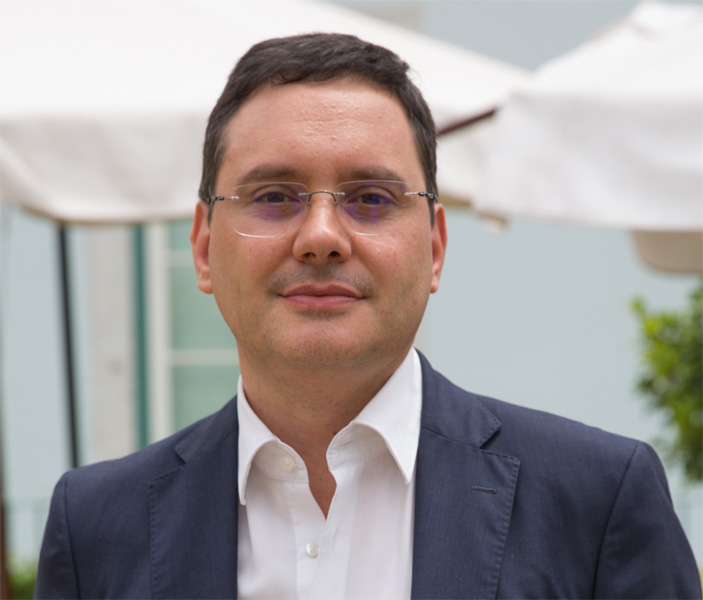
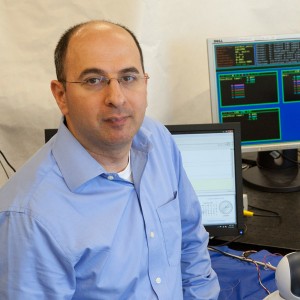
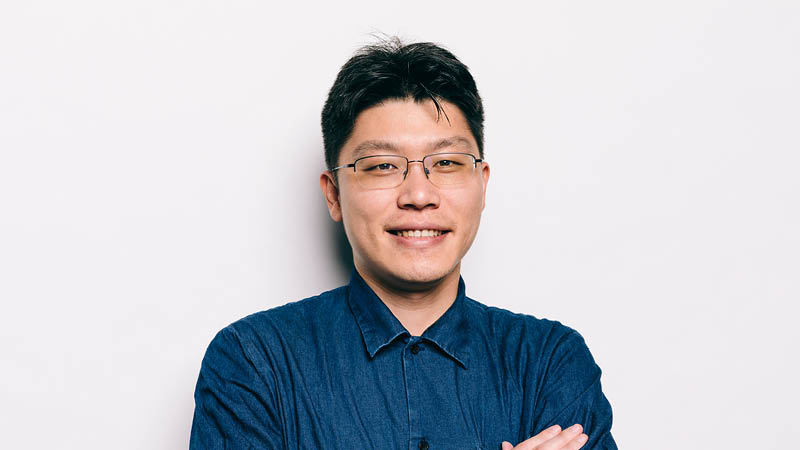
Heping Liu is an Associate Professor of Art History at Wellesley College , specializing in Chinese painting of the Song dynasty . His research explores intersections of art, literature, environment, science, and technology during China's 10th-12th centuries. Ph.D. from Yale University Recipient of NEH and ACLS Fellowships Teaches courses on Japanese/Chinese art, poetic painting, and Song imperial painting academy Focuses on hands-on art education through museum sessions Key research themes include: Political exile in Song landscapes Imperial patronage systems Buddhist iconography adaptation Urban/rural representations Cross-cultural artistic exchange Notable publications analyze: Qingming Shanghe Tu (2011) Juecheng's Buddhist works (2007) Empress Liu's Maitreya portrait (2003) Water-mill technological symbolism (2002) Scientific recognition: National Endowment for the Humanities Fellowship American Council of Learned Societies Fellowship Teaching philosophy emphasizes direct engagement with artworks through: Davis Museum resources Boston-New York institutional partnerships Object-based learning sessions Comparative East Asian studies
Jonathan Weissman is a Professor of Biology at the Massachusetts Institute of Technology (MIT) and a Member of the Whitehead Institute. He is also an Investigator of the Howard Hughes Medical Institute and the Landon T. Clay Professor of Biology. His research spans protein folding mechanisms, ribosome profiling, CRISPR-based tools (CRISPRi/a), and genetic interaction mapping. Whitehead Institute Member MIT Professor HHMI Investigator Co-founder, Maze Therapeutics & KSQ Therapeutics Research Interests focus on: Protein folding in cellular contexts Endoplasmic reticulum (ER) function and stress responses Genome-wide CRISPR screening for gene regulation High-density genetic interaction maps in mammals Mitochondrial protein targeting and quality control Epigenomic engineering with synthetic tools Scientific Awards include: Protein Society Irving Sigal Young Investigator Award (2004) Raymond & Beverly Sackler Prize (2008) National Academy of Sciences election (2009) NAS Award for Scientific Discovery (2015) Genetics Society of America Ira Herskowitz Award (2020) Labs & Collaborations : Leads the Weissman Lab at MIT/Whitehead Institute, co-leads the Laboratory for Genomic Research with GlaxoSmithKline, and chairs the Stowers Institute Scientific Advisory Board.
Professor Stuart C. Althorpe is a Professor of Theoretical Chemistry at the Department of Chemistry, University of Cambridge, where he leads the Althorpe Research Group. His work focuses on quantum dynamics and the application of quantum mechanics to chemical reactions, particularly examining how quantum effects influence atomic and molecular motion in systems ranging from isolated reactions to liquid water and ice. Professor Althorpe's research interests center on quantum dynamics , with specific focus on quantum tunneling , conical intersections , and path-integral methods . His group develops computational techniques that bridge quantum statistics and classical dynamics, creating methods like Matsubara dynamics to model quantum effects in complex systems. Key research areas include visualizing complete wave functions of chemical reactions, calculating tunneling splittings in water clusters, and investigating quantum interference effects at electronic degeneracies. The group employs both pen-and-paper theoretical derivations and high-performance computational algorithms for parallel CPUs and GPUs to tackle these challenging problems. The trends in Professor Althorpe's recent publications (2018-2024) reveal an evolution from foundational quantum dynamics methods toward increasingly sophisticated applications in complex, dissipative environments. His work consistently bridges computational chemistry and quantum physics, with growing emphasis on connections between quantum dynamics, chaos theory, and quantum information concepts. The publications demonstrate methodological innovation in path-integral approaches, particularly in handling quantum effects in condensed-phase systems like water and ice, while maintaining strong connections to experimental observations. Professor Althorpe has mentored over two dozen PhD students and postdoctoral researchers who have secured positions at leading institutions including ETH Zürich, UCL, EPFL, and various industry roles. His research group maintains active international collaborations, most notably with Professor D.J. Wales at Cambridge (on water clusters) and Professor Richard N. Zare at Stanford University, where theoretical calculations interpret detailed experimental measurements of reaction dynamics. The Althorpe Group operates within the Department of Chemistry at the University of Cambridge as part of the Theoretical Research Interest Group. The group's work contributes significantly to understanding quantum mechanical phenomena in chemical processes, with implications for fields ranging from atmospheric chemistry to biochemistry. Professor Althorpe organized the 2019 Faraday Discussion on "Quantum effects in complex systems," demonstrating his leadership in advancing theoretical frameworks for quantum phenomena in chemistry.
Alireza Poshtkohi is an interdisciplinary researcher at the University of Hertfordshire , affiliated with the School of Physics, Engineering & Computer Science and the Department of Computer Science . He applies computational and mathematical approaches to neuroscience, physics, and engineering challenges, focusing on modeling the human nervous system and brain diseases at the cellular level using supercomputing technologies. Education: PhD in Neuroscience (Ulster University, 2023), MSc in Parallel Simulation of Electronic Systems (Shahed University, 2011), BSc in Embedded Systems and Computer Networks (2006). His research spans computational neuroscience , mathematical modeling , and high-performance computing , with publications on microglia dynamics, P2X receptors, and parallel system modeling. Recent work includes a 2024 study on the PI3K/Akt pathway and a 2023 book on distributed systems. He collaborates with experimental neuroscientists from the University of Reading and Michigan State University , integrating molecular neurobiology with computational frameworks. His technical expertise includes grid computing, cybersecurity, and simulation environments.
Matthew K. Tam is an Associate Professor at the School of Mathematics and Statistics, The University of Melbourne, specializing in Operations Research. He is also an investigator at the Melbourne Centre for Data Science and an associate investigator in the ARC Training Centre OPTIMA. PhD in Mathematics (2016) from University of Newcastle under Jonathan Borwein Postdoctoral research at University of Göttingen with RTG-2088 and Alexander von Humboldt Foundation Junior Professor at University of Göttingen (2017-2020) His research focuses on continuous optimization, monotone operator theory, and variational analysis, with applications in wavelet construction and inverse problems. Key trends include distributed algorithms, resolvent splitting, and convergence analysis for feasibility problems. Discovery Early Career Researcher Award (DECRA) Alexander von Humboldt Fellowship He collaborates with institutions like ANZIAM, Springer, and IEEE, with publications spanning mathematical optimization, harmonic analysis, and computational mathematics. His work emphasizes algorithmic design for complex data systems and real-world applications in imaging and industrial modeling.
Dr. Carrie R. Ferrario is a dual-appointed Associate Professor at the University of Michigan, holding positions in both the Medical School's Department of Pharmacology and the College of Literature, Science, and the Arts Department of Psychology . She leads the Ferrario Lab, which investigates the neurobiological intersections of obesity and drug addiction, focusing on glutamatergic transmission in the striatum. Education : Postdoctoral Fellow at University of Michigan Medical School (2012) and Rosalind Franklin University of Medicine and Science (2008) Research Focus : Her work integrates addiction neuroscience, learning theory, and feeding behavior to explore how sugary/fatty foods alter brain function, particularly in relation to individual susceptibility to obesity and parallels between eating urges and substance abuse mechanisms. Scientific Awards : 2023 John J. Abel Award in Pharmacology Collaborations : Co-Director of the NIDA-funded Biology of Drug Abuse Postdoctoral T32 program, with affiliations in the Domino Addiction Research Center, Neuroscience Graduate Program, and Multidisciplinary Training Program in Basic Diabetes Research. Her lab employs advanced behavioral and neurochemical analyses to study motivation and plasticity in obesity and addiction contexts.
Hernan Eduardo Morales Villegas is an Associate Professor at the Section for Hologenomics within the Globe Institute of the University of Copenhagen, holding dual affiliations with the Faculty of Science and Faculty of Health and Medical Sciences. His research bridges evolutionary biology and conservation science through genomic approaches to biodiversity crises. Dr. Morales specializes in genomic erosion—the loss of genetic diversity during population collapse—and its implications for extinction risk and species recovery. Leading the Evolutionary and Conservation Genomics Group, he integrates paleogenomics, evolutionary modeling, and quantitative analyses to study endangered species, museum specimens, and simulated evolutionary dynamics. His work spans adaptation mechanisms, speciation processes, and conservation genetics, with emphasis on how anthropogenic pressures alter genomic landscapes across taxa. Recent publications (2019-2025) reveal a cohesive research trajectory applying genomic tools to urgent conservation challenges. Studies on the kākāpō, woolly mammoth, and Iberian wolf demonstrate how genetic load, adaptive introgression, and habitat fragmentation influence species resilience. His work increasingly focuses on predictive modeling of genomic erosion dynamics, with methodologies evolving from single-species analyses toward cross-taxon comparative frameworks that inform conservation prioritization. As director of the Evolutionary and Conservation Genomics Group, Morales fosters international collaborations evidenced by multi-institutional publications in high-impact journals. His research attracts significant scientific attention, with studies covered by hundreds of news outlets and cited extensively in policy discussions, highlighting the translational impact of genomic insights for biodiversity conservation in the Anthropocene.
David Colon is a Tenured Lecturer at the Centre for History (CHSP) of University of Paris Institute of Political Studies, specializing in propaganda, communication, and digital history. His research focuses on mass persuasion mechanisms, information warfare, and media influence from historical and contemporary perspectives. Position: Tenured Lecturer Institution: Sciences Po (University of Paris Institute of Political Studies) Research Themes: • Propaganda and psychological manipulation • Digital history and modern information warfare • Political communication and social movements Scientific Awards: Prix Akropolis 2019 Prix Jacques Ellul 2020 Teaching & Publications: Holder of the agrégation in history, Colon contributes to graduate studies and has published extensively on propaganda, including works on Edward Bernays, cognitive warfare, and artificial intelligence's role in information manipulation.
Nelson Ribeiro is a Full Professor and Vice-Rector for Transformation, Collaboration, and International Affairs at Universidade Católica Portuguesa. He serves as Dean of the Faculty of Human Sciences (2016–2025) and coordinates the Doctoral Program in Communication Sciences and the research group 'Media Narratives and Cultural Memory' at the Center for Communication and Culture Studies (CECC). As a member of Academia Europaea (elected 2023) and ethics committee member at the International Panel on the Information Environment (IPIE), he holds leadership roles in academic governance. His research spans Media history Propaganda and disinformation Media and colonialism Journalism studies Political economy of media . He has authored extensively on radio broadcasting in authoritarian regimes, transnational media history, and disinformation frameworks. Recent publications focus on Media propaganda in the digital age Colonial broadcasting models Political media manipulation Historical radio analysis Crisis journalism Transnational media diplomacy , reflecting his interdisciplinary approach to communication history. Scientific accolades include: 2022 Hoover Institution Fellowship 2022 CAPES-Brazilian University Grant 2015 University of Augsburg Fellowship 2004 & 2000 Institute for Social Communication Prizes . He founded the Lisbon Winter School for Communication Study, partnering with global institutions like Annenberg and Helsinki University.
Professor Amr Rizk is the Director of the Networks and Communication Systems (NCS) Lab at the University of Duisburg-Essen, where he has been serving as Professor since April 2021. Previously, he was Assistant Professor at Ulm University (2019-2021) and completed his habilitation at TU Darmstadt in 2019. His academic journey includes research positions at prestigious institutions including University of Massachusetts Amherst, University of Warwick, and TU Darmstadt where he was an Athene Young Investigator. Professor Rizk's research spans multiple aspects of networking and communication systems with a particular focus on network performance analysis, stochastic modeling, and practical implementations. His work bridges theoretical foundations with real-world applications, especially in content delivery, video streaming, and network protocols. He has made significant contributions to network calculus, quality of experience optimization, and novel approaches to congestion control and caching mechanisms. His publication record demonstrates consistent high-impact contributions across top networking conferences and journals. Recent work shows a growing emphasis on programmable data planes, AI/ML applications in networking, and advanced techniques for network measurement and performance prediction. His research group at Duisburg-Essen maintains strong connections with both academic and industrial partners in the networking ecosystem. Best Paper Award at ACM MMSys Conference (2023) Distinguished TPC Member for IEEE INFOCOM (2020, 2022) Best Paper Award at ACM/USENIX Middleware Conference (2017) Athene Young Investigator Award, TU Darmstadt (2017) Professor Rizk serves as Associate Editor for Elsevier Computer Communications and has extensive experience with research funding bodies as a reviewer. His leadership extends to conference organization, including roles as PC Co-Chair for IEEE MIPR (2023) and Steering Committee member for Workshop on Network Calculus (2022). He maintains active participation in numerous top networking conferences as Technical Program Committee member, reflecting his standing within the international networking research community.
Nabil Simaan is a Professor of Mechanical Engineering at Vanderbilt University with secondary appointments in Computer Science and Otolaryngology . He leads the Advanced Robotics and Mechanism Applications (ARMA) laboratory, focusing on surgical robotics, continuum robots, and intelligent human-robot interaction. Education : Ph.D., M.Sci., and B.S. in Mechanical Engineering from the Technion—Israel Institute of Technology . Postdoctoral Research at Johns Hopkins University NSF ERC-CISST (2003-2004). Research Interests : Medical robotics for minimally invasive procedures Kinematic modeling and optimization of parallel/continuum robots Telemanipulation and semi-autonomous control Flexible mechanisms and actuation redundancy Article Trends : His recent work emphasizes subretinal surgical robots, continuum manipulators for transurethral operations, and multi-scale dexterity through mathematical synthesis using screw theory and algebraic geometry. Scientific Awards : NSF Career Award (2009) for intelligent surgical robots IEEE Senior Member (2013) for contributions to robotics Advising & Grants : Advises PhD/MSc students in robotics and mechanism design. NIH-funded work on OCT-guided retinal surgery robots. NSF grants for continuum robot kinematics and redundancy control. Labs & Collaborations : Leads the ARMA Lab , bridging engineering and clinical medicine. Collaborates with Vanderbilt Institute for Surgery and Engineering (VISE) and industry partners like AURIS Surgical Robotics. Translational focus through Titan Medical Inc. partnerships.
Dengfeng Sun is a Professor and Associate Head of the Gambaro Graduate Program in the School of Aeronautics and Astronautics at Purdue University. His research focuses on distributed control systems, autonomy, resilient networks, and air traffic management. Sun holds a B.Eng. from Tsinghua University, an M.S. from The Ohio State University, and a Ph.D. from UC Berkeley. His work spans advanced air mobility, UAV trajectory planning, and stochastic optimization for large-scale systems. Key contributions include resilient UAV traffic control, distributed state estimation algorithms, and fault detection methods for navigation systems. Sun's research has been published in top journals like IEEE Transactions on Intelligent Transportation Systems and Transportation Research Part E. Education: B.Eng., Tsinghua University (2000) M.S., Ohio State University (2002) Ph.D., UC Berkeley (2008) He advises on cutting-edge projects integrating robotics, autonomous systems, and cloud-based traffic modeling. His lab develops solutions for urban air mobility, emergency medical UAV networks, and next-generation air traffic control systems. Notable collaborations include work with NASA and industry partners on continuous descent approach procedures and metroplex routing paradigms. Sun's work bridges theoretical control systems with practical applications in aviation and infrastructure optimization.
Yongle Zhang is an Assistant Professor in the Department of Computer Science at Purdue University, joining in Spring 2021. His research focuses on systems software, particularly improving reliability and availability in complex distributed systems through failure detection and diagnosis. He holds a Ph.D. from the University of Toronto and has prior degrees from Shandong University and the Chinese Academy of Sciences. **Education:** Ph.D., University of Toronto, Computer Engineering (2020) Master, Institute of Computing Technology, Chinese Academy of Sciences (2013) Bachelor, Shandong University, Computer Science (2010) **Research Interests:** His work addresses challenges in distributed systems, including root cause diagnosis in cloud environments, diagnosable software design, and concurrency bugs in persistent memory applications. Recent projects include analyzing live debugging activities in production systems and detecting cross-system interaction failures. **Awards & Grants:** SIGOPS Dennis M. Ritchie Thesis Award (2021) Meta 2022 Systems Research Award NSF Core Grant (2021) **Advising & Labs:** Advises PhD and Master’s students in distributed systems research (e.g., Shangshu Qian, Panchapakesan Chitra Sruthi). Leads a lab focused on production system reliability, with collaborations on cloud infrastructure and failure analysis tools.
Konstantin Makarychev is a Professor of Computer Science and Associate Chair for Graduate Studies at Northwestern University's McCormick School of Engineering. His research focuses on designing efficient algorithms for computationally hard problems, with an emphasis on approximation algorithms, beyond worst-case analysis, and applications of high-dimensional geometry. Before joining Northwestern, he was a researcher at Microsoft and IBM Research Labs, and earned his Ph.D. from Princeton University in 2007 under Moses Charikar. He holds a B.S. in Mechanics and Mathematics from Moscow State University and an M.S. from the Department of Mathematics at Moscow State University. His academic career includes roles at Microsoft Research, IBM Research, and teaching positions at the University of Washington. Research interests include approximation algorithms for constraint satisfaction problems, clustering algorithms, and algorithmic approaches to machine learning. He has published extensively in top conferences like SODA, ICML, and STOC, and his work often bridges theoretical computer science with practical applications in data storage and bioinformatics. Awards: IBM A-Level Accomplishment (2011), IBM Pat Goldberg Best Paper Award (2009), IBM PhD Fellowship (2006–2007). Grants: NSF Award CCF-1955351 (2020–2025), participation in IDEAL Institute (2019–2022). Teaching: Courses include Design and Analysis of Algorithms, Approximation Algorithms, and Advanced Algorithm Design. His work on correlation clustering, explainable k-means, and DNA data storage has led to impactful contributions in both theory and practical applications.
Dr. Sie Teng Soh is an Associate Professor at Curtin University's School of Electrical Engineering, Computing and Mathematical Sciences. With qualifications including a PhD from Louisiana State University, he specializes in computer networks, wireless systems, and algorithm design. Research focuses on: Network topology optimization for UAV systems Energy-efficient IoT task scheduling Reliable wireless communication protocols Game-theoretic network management Green computing in software-defined networks Publication trends show advancing work in UAV network optimization, with recent articles addressing max-min rate optimization, energy harvesting in IIoT, and machine learning approaches for coverage prediction. His research consistently addresses practical challenges in wireless network deployment under real-world constraints. Teaching areas include advanced courses in network reliability and traffic engineering. Professional service includes editorial roles for IEEE Transactions on Parallel and Distributed Systems and program committee memberships for major conferences including FAST and EuroSys.