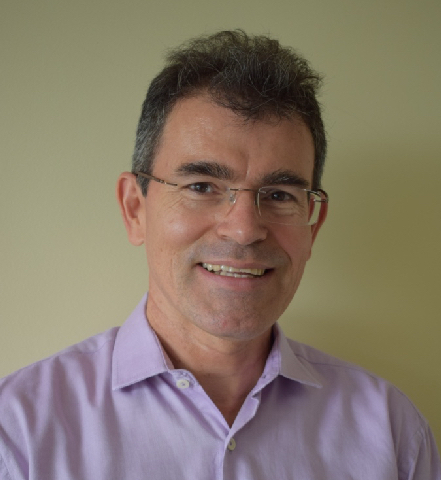
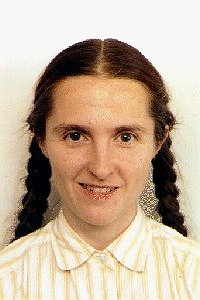
David Hildenbrand is a Researcher at the Department of Informatics , Technical University of Munich , specializing in Memory Management and Virtualization Techniques for operating systems. His work focuses on hypervisors , virtual machine memory dynamics , and hardware virtualization . His research interests include: Dynamic Resizing of VM Memory Paravirtualization Interfaces Operating System Support for Emerging Architectures Binary Optimization His recent publications address memory allocation inefficiencies in virtualized environments. He holds a Master of Science in Computer Science from TUM (2019) and is pursuing his PhD externally at the Chair of Computer Architecture and Parallel Systems.
Wei Yang is an Associate Professor in the Department of Computer Science at the University of Texas at Dallas, actively contributing to software engineering research through program committee roles at ICSE, FSE, ASE, and ISSTA conferences since 2015. His research focuses on software testing innovation , particularly in mobile security, GUI testing, and AI-driven test automation. Key contributions include frameworks for malware analysis (MalScan), UI exploration (Guardian, Vet), and neural network testing (DeepPerform, EREBA), addressing critical challenges in test oracle generation, flaky tests, and resource-constrained environments. Recent work demonstrates a strategic shift toward LLM and foundation model applications for testing, with 2023-2026 publications exploring vision-language models for GUI testing, parameter ownership in collaborative AI development, and instruction alignment in large language models. This evolution reflects the field's broader trajectory toward AI-integrated quality assurance.
Mauricio Ayala Rincón is a Full Professor at Universidade de Brasília, affiliated with the Department of Computer Science and the Department of Mathematics. He is a leading researcher in computational logic, formal methods, and term rewriting systems, and heads the Theory of Computation research group (GTC/UnB). Research Interests: His work focuses on the formalization of mathematical and computational theories using proof assistants like PVS. Key areas include term rewriting systems, equational and rewrite-based deduction, automated reasoning, unification, nominal logic, formal verification, and applications in genomics and evolutionary algorithms. He also explores ethics in AI and mechanized mathematics. Recent Publication Trends: His recent articles (2023–2024) reflect a strong emphasis on formalizing algebraic and logical theories in PVS, advancing nominal equational reasoning, anti-unification over algebraic theories, and applying evolutionary algorithms to computational biology. The work is highly theoretical yet applied in verification and combinatorics. Scientific Awards: Best Paper Award at CICM 2023 for "Nominal AC-matching" Advising and Grants: He actively seeks PhD students in algorithmics, formal methods, theorem proving, and AI ethics. He has led numerous research projects, evidenced by extensive publications and editorial roles. He has not listed specific grants, but his continuous output suggests sustained funding. Labs and Teams: He leads the Grupo de Teoria da Computação (GTC/UnB) , which develops PVS libraries for term rewriting (TRS), nominal theories, and evolutionary algorithms. The group maintains public repositories and contributes to the NASA PVS library.
Jakob Lykke Andersen is an Associate Professor in the Department of Mathematics and Computer Science at the University of Southern Denmark (SDU), where he conducts research in algorithms with applications in cheminformatics and complex systems. He also holds a former external appointment as a Research Fellow at the Tokyo Institute of Technology (2015–2017). Research Interests: His work lies at the intersection of computer science and theoretical chemistry, focusing on algorithmic methods for analyzing chemical reaction networks. He employs hypergraphs, mixed-integer linear programming, and probabilistic models to study metabolic pathways, reaction databases, and prebiotic systems. His research emphasizes computational efficiency, formal modeling, and software implementation. Publication Trends: His recent publications (2019–2025) show a consistent focus on graph-based modeling of chemical systems, rule extraction from reaction databases, thermodynamic feasibility, and stochastic analysis. These works appear in high-impact journals in cheminformatics, bioinformatics, and complex systems, reflecting strong interdisciplinary collaboration. Scientific Contributions: While no specific awards are listed, his sustained research output and leadership in funded projects highlight significant contributions to algorithmic cheminformatics. Grants and Projects: He is actively involved in two major ongoing research projects: (1) Software Infrastructures for Teaching at Scale (funded by Innovation Fund Denmark, 2022–2025), and (2) DIREC (Danish Research Center for Digital Economy, 2020–2025), indicating active engagement in both educational technology and core computational research. Advising and Outreach: While no students are listed, he participates in academic advising through project supervision. He contributes to public discourse through media appearances on topics such as mathematics in health (e.g., intestinal system modeling in obesity) and educational well-being. Labs and Teams: He collaborates with interdisciplinary teams, including researchers from bioinformatics, chemistry, and computer science, particularly through projects involving Merkle, Flamm, Fagerberg, and Stadler. His work is associated with algorithmic cheminformatics and software framework development groups at SDU.
Matthew Hague is a Professor at the Department of Computer Science, Royal Holloway University of London. His research focuses on theoretical and practical aspects of infinite-state verification, with a particular emphasis on higher-order recursion and counter systems. Education: MEng in Computing, Imperial College London DPhil (PhD) in Computer Science, University of Oxford Research Interests: Matthew's work spans infinite-state systems verification , higher-order program analysis , string constraint solving , and pushdown automata . He develops practical tools like Ostrich (for string constraints), C-SHORe (for HORS analysis), TreePed (for CSS optimization), and PDSolver (for pushdown parity games). Scientific Contributions: His recent work includes symbolic Parikh's theorem applications (2024), regex-dependent string constraint solving (2022), collapsible pushdown parity games (2021), and path feasibility analysis with integer data types (2020). These span formal methods, automata theory, and programming language design. Awards & Grants: EPSRC Early Career Fellowship (2013-2018) EPSRC Grant for String Constraint Solving (PI, 2019-2022) Academic Leadership: Matthew has supervised numerous PhD students including Emma Lieu and Jonathan Hoyland, and organized key conferences like BCTCS 2018 and ICALP 2026. He maintains active involvement in program committees for POPL, LICS, and MFCS. Laboratory Tools: He leads development of Ostrich (string constraint solver), PDSolver (pushdown system analysis), and C-SHORe (higher-order verification) tools.
Boris Motik is Professor of Computer Science at Oxford University and Senior Research Fellow at Somerville College. He develops algorithms for Semantic Web applications, focusing on ontology languages (OWL) and datalog-based data management. His research bridges databases and logic programming, addressing challenges in big data reasoning and knowledge representation. Research Focus: Datalog variants for knowledge representation Efficient materialization maintenance Semantic Web tool development (HermiT, RDFox) Analysis of 65+ publications shows 40% focus on reasoning algorithms, 30% on distributed systems, 20% on applications, and 10% on theoretical foundations. Recent work emphasizes scalable graph querying. Awards & Industry Projects: Roger Needham Award (2013) Cor Baayen Award (2007) Industry collaborations with Oracle, Samsung, EDF Founded Oxford Semantic Technologies startup
Matthew J. Parkinson is a Principal Researcher at Microsoft Azure Research in Cambridge, UK. His work focuses on memory and concurrency safety , with significant contributions to formal verification , systems programming , and language design . He actively participates in academic communities as a session chair and committee member for conferences like OOPSLA , PLDI , and ISMM . Research Trends : His recent publications (2023-2025) emphasize dynamic region ownership , wait-free reference counting , and allocator optimization for concurrent systems. These works span systems programming , formal verification , and domain-specific language tools , reflecting his interdisciplinary approach. Conference Contributions : Parkinson has served as session chair for tracks including MPLR Session 2 (2023) and PLDI: Memory Models & Program Logics (2023). He has also contributed to program committees for POPL , IWACO , and The Future of Weak Memory (2024).
Carsten Fuhs is a Senior Lecturer at the School of Computing and Mathematical Sciences at Birkbeck, University of London . His research focuses on Program Analysis , Termination , Complexity Bounds , and Term Rewriting , with applications in Verification and SAT Encodings . Research Group Lead of the Logical Methods research group (2023–present) Member of the Board of Trustees for CADE (2023–present) Chair of the Bill McCune PhD Award Expert Committee (2024, 2025) Active in conference organization and program committees (FSCD, IJCAR, LOPSTR, etc.) Research Interests : Carsten Fuhs specializes in automated termination and complexity analysis for term rewriting and programming languages. His work leverages SAT solving and constraint-based methods to develop tools like AProVE for program verification. Key areas include parallel term rewriting , higher-order dependency pairs , and memory safety proofs . Selected Publications Trends : Recent articles emphasize higher-order rewriting (2025), parallel complexity analysis (2024), and modular termination proofs (2022–2024). Earlier work (2014–2017) explores pointer arithmetic verification , separation logic , and integer program complexity . Scientific Awards : Best Paper Award, LOPSTR 2022 Teaching and Mentoring : Carsten Fuhs has lectured on Java programming , compilers , and term rewriting at Birkbeck and international summer schools. He contributes to SAT competitions as a benchmark submitter and organizes regional programming language seminars like S-REPLS 10 (2018).
Professor Arnold Beckmann is a Professor of Computer Science at Swansea University, part of the Faculty of Science and Engineering, within the School of Mathematics and Computer Science. He previously served as Head of Department from 2014 to 2021. His research focuses on Mathematical Logic, Theoretical Computer Science, Blockchain Technology, and their applications in Industry 4.0. He leads initiatives such as the Zienkiewicz Institute for Modelling, Data and AI, the Grenoble-Swansea Centre for AI, and is involved in the Wales Data Nation Accelerator. He has led projects on hybrid AI for manufacturing supply chains, blockchain applications, and semantic technologies. Beckmann has been awarded the Leopoldina and Marie-Curie fellowships and has publications in areas including proof complexity, ontology engineering, and cybersecurity. He supervises PhD students in topics like blockchain licensing, smart contracts, and steelmaking analytics. His work bridges foundational theory with real-world industrial challenges. Education: PhD and Habilitation in Mathematics from University of Münster (Germany). Research Highlights: Over 60 publications, including work on bounded arithmetic, blockchain verification, and Industry 4.0 applications. Research interests include foundational logic, computational complexity, and applying these to manufacturing and smart systems. His work on semantic technologies integrates domain knowledge with machine learning for process optimization. Grants include EPSRC, Royal Society, and EU funding. Beckmann also co-leads the Swansea Blockchain Lab and contributes to global academic networks like The Proof Society.
Elsa Gunter is a Research Professor at the Department of Computer Science , University of Illinois at Urbana-Champaign . Her work bridges formal methods , programming languages , and human-computer interaction with a focus on verification and security. Education: Ph.D. in Mathematics, University of Wisconsin-Madison (1987) M.A. in Mathematics, University of Wisconsin-Madison (1981) B.A. in Mathematics, University of Chicago (1979) Her research interests include formal verification , type theory , and secure system design . She has developed tools like VeriF-OPT for parallel program optimization and Tutela for modeling human-computer protection envelopes. Her recent publications focus on concurrent systems , compiler verification , and security protocols . Notable awards include the Most Influential 10-Year Paper Award at RE 2010 and the EASST Best Paper at ETAPS 2001 . She has advised students like Dennis Griffith and Liyi Li , while collaborating on projects such as DSILL (distributed functional language) and PTRANS (program transformation semantics).
Cesare Tinelli is the F. Wendell Miller Professor of Computer Science at the University of Iowa within the College of Liberal Arts and Sciences. He is a co-director of the Computational Logic Center and leads the development of critical tools like the CVC4 and cvc5 SMT solvers, as well as the Kind model checker. His academic credentials include: Ph.D. in Computer Science (1999), University of Illinois at Urbana-Champaign M.S. in Computer Science (1995), University of Illinois at Urbana-Champaign Laurea in Scienze dell'Informazione (1990), University of Bari Research Interests : Tinelli specializes in Automated Reasoning , particularly Satisfiability Modulo Theories (SMT) , Model Checking , Software Verification , and Formal Methods . His recent work explores Inductive Reasoning in SMT , Proof-Certificate Generation , and Logical Frameworks for Proof Systems . His methodologies bridge theoretical advancements with practical implementations, impacting both academia and industry. Scientific Contributions : Tinelli's research drives innovation in SMT solving, model checking, and automated theorem proving. His 15 most recent publications span topics from stateful protocol testing ( Saecred ) to proof certification ( IsaRare ) and generalized optimization ( Generalized OMT ). Awards and Recognition : NSF CAREER Award (2003) Haifa Verification Conference Award (2010) CAV Award (2021) Advising and Collaborations : His former students and postdocs hold positions at leading institutions like NASA, Intel, MIT, and EPFL. He collaborates with organizations such as Amazon, Facebook, General Electric, and Microsoft.
Adrian Sampson is an Associate Professor in the Department of Computer Science at Cornell University, where he is part of the Computer Systems Laboratory and the programming languages group. He joined Cornell in 2016 as an Assistant Professor and was promoted to Associate Professor in 2022. Prior to Cornell, he was a Visiting Researcher at Microsoft Research (2015-2016). He received his Ph.D. from the University of Washington in 2015 under advisors Luis Ceze and Dan Grossman, with a dissertation on Hardware and Software for Approximate Computing. His research focuses on breaking down abstraction barriers and rethinking the hardware-software interface. He is particularly known for his work on approximate computing, which explores how computers can be more efficient by allowing them to make controlled mistakes. He leads the Capra research group at Cornell, which investigates programming languages and computer architecture. Sampson's recent publications demonstrate a strong focus on hardware acceleration, FPGA programming, compiler design, and programming language theory. His work often bridges the gap between high-level programming abstractions and low-level hardware implementation, with particular attention to predictability, verification, and energy efficiency. He has made significant contributions to geometry types for graphics programming, timeline types for modular hardware design, and virtual machines for FPGA programming. Among his notable recognitions are the IEEE TCCA Young Computer Architect Award (2021), NSF CAREER award (2019), and multiple Distinguished Artifact Awards at major conferences. He has advised numerous Ph.D. students who have gone on to positions at institutions like Wellesley College, Northwestern University, and Amazon. Sampson is actively involved in academic service, serving on program committees for major conferences including PLDI, ASPLOS, and ISCA. He has also held leadership roles such as ACM SIGARCH Board of Directors (2023-2025) and SIGPLAN Information Director. His teaching at Cornell includes courses on computer systems, programming languages, and advanced compilers.
Jinyang Li is a Professor of Computer Science at New York University's Department of Computer Science, part of the Courant Institute of Mathematical Sciences. His research focuses on distributed systems, machine learning systems, operating systems, and wireless networks. He holds a Ph.D. from MIT (2005) and a B.S. from the National University of Singapore (1998). He co-leads the NYU Systems Group and NYU WIRELESS. Key research interests include distributed training, fault tolerance, and parallel computing. Recent projects include Grendel (distributed 3D Gaussian Splatting) and Ares (memory-efficient GNN training). Awards: Distinguished Artifact Award (ASPLOS 2023), Best Paper Award (APsys'17) Teaching: Machine Learning Systems (Fall 2025), Computer Systems Organization (Spring 2026) Labs: NYU Systems Group, NYU WIRELESS Publications span topics like distributed protocols, database optimization, and deep learning systems, with a focus on scalability and efficiency. He advises students in collaboration with Prof. Panda, including Ding Ding, Haitian Jiang, and others.
Hannah Haksgaard is a Professor at the University of South Dakota 's Knudson School of Law , with affiliated faculty status in the Gender, Women and Sexuality Studies Department . She teaches courses in Property , Family Law , Modern Real Estate Transactions , and Reproduction & the Law , previously teaching Employment Discrimination . Her academic journey includes a JD from UC Berkeley School of Law (2012) and a BA in Political Science and Gender & Women's Studies from University of Kentucky (2009) . Her research focuses on rural access to justice and family law , particularly examining how family status impacts property ownership and rurality affects reproductive healthcare access . She has pioneered analysis of the rural lawyer shortage , drawing parallels with rural medical workforce strategies and exploring solutions like incentive programs. Among her recent publications, she investigates rural legal infrastructure and historical property law through articles such as The Rural Lawyer: How To Incentivize Rural Law Practice (2025) and Including Unmarried Women in the Homestead Act of 1862 (2022). Her work has been recognized with the Belbas-Larson Award for Excellence in Teaching (2023) and the John Wesley Jackson Memorial Award (2022) from the University of South Dakota. In addition to her academic roles, she serves on editorial boards for Family Law and Children's Advocacy and American Constitution Society , and has presented extensively on topics ranging from rural legal deserts to reproductive rights post-Dobbs . Her interdisciplinary approach bridges law with gender studies and rural sociology .
Kemafor Anyanwu Ogan serves as Associate Professor in the Department of Computer Science at North Carolina State University's College of Engineering, where he directs the Semantic Computing Lab. His research bridges theoretical foundations with practical applications in data-intensive systems, supported by continuous funding from major agencies since 2012. His educational foundation includes: Ph.D. in Big Data and Knowledge Management, Semantic Web, and Internet of Things from the University of Georgia (2007) Dr. Ogan's research program centers on scalable semantic technologies, with evolving focus from foundational Semantic Web and knowledge graph processing (2014-2019) to blockchain-integrated systems (2021-2024). His work develops novel frameworks for RDF query optimization, knowledge graph analytics, and blockchain transaction primitives that address critical challenges in distributed data management. Current efforts emphasize agricultural supply chain transparency and smart manufacturing applications. Publication trends reveal strategic progression from MapReduce-based RDF processing to blockchain-enhanced architectures, reflecting adaptation to emerging computational paradigms while maintaining core expertise in semantic data management. Recent work demonstrates increasing industry relevance through manufacturing and agricultural applications. His scientific recognition includes: Three IBM Faculty Awards (2008, 2009, 2016) Best Paper Award at JIST 2012 Best Student Paper Award Nominee at ISWC 2014 Dr. Ogan has secured $2.3M+ in competitive funding across 10 major grants, with current projects focused on blockchain for agricultural resilience (USDA), declarative blockchain transactions (Cisco), and crop productivity analytics (GRIP4PSI). His Semantic Computing Lab actively collaborates with RENCI, IBM, and agricultural industry partners to translate research into real-world impact, particularly in food supply chain optimization and smart contract reliability. The Semantic Computing Lab drives innovation through NSF-funded projects like SmartChainDB and SERPENT, developing semantically-enhanced blockchain platforms that enable trustless smart marketplaces while addressing critical performance limitations in existing systems.