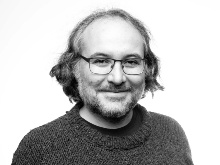
Daniel Hernández is a Postdoctoral Researcher at the Institute for Artificial Intelligence (KI) under the Cluster of Excellence IntCDC at the University of Stuttgart. He is part of the Analytic Computing group within the Institute for Parallel and Distributed Systems (IPVS). His work focuses on Semantic Web technologies , particularly SPARQL , RDF , and knowledge graph applications in interdisciplinary design workflows . Research Trends : His publications (2015–2025) emphasize semantic query processing , provenance computation , and interoperability between architectural data and knowledge graphs . Key innovations include the eSPARQL language for epistemic queries, NPCS for native provenance in SPARQL, and BHoM to bhOWL for integrating building data with ontologies. Teaching & Collaborations : He has held teaching roles at the University of Stuttgart ( Human-Computer Interaction with Knowledge Graphs ), University of Aalborg ( Group Supervisor ), and University of Chile ( Lecturer for The Web of Data ). Collaborations span institutions like Buro Happold , TU Wien , and INRIA , with publications in journals like Proceedings of the VLDB Endowment and conferences such as WWW and ISWC .
Raffi Khatchadourian is an Associate Professor in the Department of Computer Science at Hunter College and the Graduate Center of the City University of New York (CUNY). His research focuses on techniques for automated software evolution, particularly automated refactoring and source code recommendation systems, with the goal of easing the burden associated with evolving large and complex software through automated tools. He also conducts research on the automated analysis of Object-Oriented programs. Ph.D., Computer Science & Engineering, Ohio State University (2011) MS, Computer Science & Engineering, Ohio State University (2010) BS, Computer Science, Monmouth University (2004) Khatchadourian's research spans multiple areas of software engineering and programming languages, with particular emphasis on automated software evolution techniques. His work addresses critical challenges in refactoring legacy systems to modern language constructs, optimizing parallel processing in Java 8 streams, and addressing technical debt in machine learning systems. His recent research has expanded into deep learning program transformation, where he develops techniques to convert imperative deep learning code to more efficient graph execution models while ensuring safety. His approach combines static analysis, program transformation, and empirical validation to create practical tools that developers can integrate into their workflows. Analysis of Khatchadourian's recent publications reveals a strong focus on bridging the gap between theoretical program analysis and practical software engineering challenges. His work increasingly intersects with machine learning systems, examining both how to improve ML code through refactoring and how to ensure safety in deep learning frameworks. The research demonstrates consistent evolution from foundational work on Java language features toward more complex systems involving concurrency, deep learning, and automated program transformation. Distinguished Paper Award at SCAM '18 for work on Java 8 stream optimization EAPLS Best Paper Award at FASE '20 for study on Java 8 stream usage EAPLS Distinguished Paper Award at FASE '25 for Deep Learning refactoring work Best Paper Award nominee at IJCAI '24 for AI safety framework Khatchadourian actively mentors graduate and undergraduate students, with several advisees going on to successful academic and industry positions. His former Ph.D. student Tatiana Castro Vélez accepted a tenure-track Assistant Professor position at the University of Puerto Rico. He has supervised numerous master's theses and undergraduate research projects, often resulting in co-authored publications at top software engineering venues. His research has been supported by various grants, though specific funding details are not prominently featured in the available information. Through his work on tools like Fraglight for aspect-oriented programming and Hybridize Functions for deep learning refactoring, Khatchadourian has established a research group focused on practical program analysis and transformation. His lab develops Eclipse plugins and other IDE-integrated tools that help developers with automated refactoring, bug detection, and code optimization. The group maintains active collaborations with researchers at other institutions and contributes to open-source projects on GitHub.
Val Tannen is a Professor at the University of Pennsylvania, specializing in database systems, provenance analysis, and programming languages. His research focuses on data management, query languages, and systems like DBSP and ORCHESTRA. Collaborations include work with co-authors such as Zachary Ives, Susan Davidson, and Todd Green. Key research interests include provenance for databases, incremental view maintenance, and data integration. His work bridges theoretical foundations and practical applications in systems like DBSP for stream processing and ORCHESTRA for collaborative data sharing. Publications span provenance frameworks, query optimization, and distributed systems. While no awards are explicitly listed, his contributions to database theory and systems are widely recognized.
Yvo Desmedt is the Jonsson Distinguished Professor in Computer Science at the University of Texas at Dallas and Director of the Cyber Security Research and Education Institute. An IACR Fellow and member of the Belgium Academy of Science, he invented e-Passports and e-Visas in 1988. His research spans cryptography, quantum computing, network security, and critical infrastructure protection. Desmedt pioneered techniques in binary software hardening including control-flow integrity and object flow integrity protections. Recent innovations include crook-sourcing for intrusion detection improvement and confidential computing for deep learning inference. His work bridges theoretical cryptography with practical security applications, earning recognition including the NSF IUCRC Technology Breakthrough Award. With over 200 publications, he has chaired major conferences including Crypto and Public Key Cryptography. Current projects examine vulnerability detection using graph learning and renewable control-flow integrity mechanisms for software security.
Professor Foto N. Afrati is a Distinguished Faculty Member at the National Technical University of Athens, specifically within the School of Electrical and Computing Engineering and the Division of Communication, Electronic and Information Engineering. She has held this position since 1993, following previous academic ranks at the same university as Associate Professor (1989-1993), Assistant Professor (1985-1989), Lecturer (1982-1985), and Research Fellow (1980-1982). She completed her PhD in Electrical Engineering at Imperial College of the University of London in March 1980, with a dissertation focused on Error Correcting Codes by Algorithms. Her academic journey also included a Diploma from Imperial College (March 1980) and an earlier Diploma in Electrical and Mechanical Engineering from the National Technical University of Athens (June 1976). Professor Afrati's research interests span several critical areas in computer science: Parallel and distributed computation Processing of very large data (including MapReduce) Data and web mining Database Systems Information integration Query optimization Computation and complexity of algorithms Approximation algorithms Her most recent publications demonstrate expertise in MapReduce environments, query optimization with views, and data exchange frameworks. These works are published in prestigious venues like EDBT, VLDB, PODS, and ICDT, with specific focus areas including adaptive sampling techniques, data source integrity, and algorithm complexity in database environments. Professor Afrati has received significant recognition in her field, including Fellow of the Association for Computing Machinery (ACM) Best Paper Award at the International Conference on Database Theory (ICDT) 2009 She has advised numerous PhD students throughout her career, including Theodoros Mitakos, Ezz Hattab, Nikos Kiourtis, and Angelos Vasilakopoulos. Her current PhD students include Victor Kyritsis and Nikos Stassinopoulos. Professor Afrati maintains strong professional networks through her various visiting positions at institutions such as Google, Stanford University, IBM Research Center, University of Helsinki, University of Paris, DIMACS, and others. She has served as associate editor and reviewer for major academic journals and conferences including IEEE TKDE, ACM Transactions of Database Systems (TODS), Journal of ACM (JACM), and Theoretical Computer Science (TCS). Her extensive work in research projects spans both national and international initiatives, with funding from sources including the European Union's Thalis project, ESPRIT working groups, HCM networks, and Greek General Secretariat of Research and Technology grants.
Alin Deutsch is a Professor of Computer Science at the University of California, San Diego (UCSD), specializing in database systems, graph databases, and formal verification. He has contributed significantly to research areas including query optimization, data integration, and privacy-preserving systems. His work spans theoretical foundations and practical implementations, such as the Linked Data Benchmark Council (LDBC) and the TigerGraph database system. He co-authored over 100 papers and has been involved in major conferences like SIGMOD and VLDB. Research interests include graph query processing, parallel computing, data-centric business processes, and automated system verification. Recent work focuses on scalable hybrid analytics and graph databases. Deutsch is also active in database education, co-authoring a paper on UCSD's database curriculum. He has led projects in privacy-aware systems, such as policy-aware location-based services, and contributed to tools like CLIDE for interactive query formulation in service-oriented architectures. His collaborations involve industry partners like TigerGraph and academic institutions globally.
Jeffrey Stackert is the Caroline E. Haskell Professor of Hebrew Bible at the University of Chicago Divinity School, with affiliations in Classics and Middle Eastern Studies. He holds a PhD from Brandeis University and specializes in siting the Hebrew Bible within ancient Near Eastern contexts, focusing on Pentateuchal composition, prophecy, cultic texts, and law. His major works include Rewriting the Torah (2007), A Prophet Like Moses (2014), and Deuteronomy and the Pentateuch (2022), which explore biblical legal collections and their intertextual relationships. Research interests emphasize Pentateuchal sources, ancient Near Eastern legal comparisons, and the relationship between prophecy and law. He leads the CEDAR digital humanities project and edited the Oxford Handbook of the Pentateuch . His scholarship has been honored with the 2010 John Templeton Award for Theological Promise. Stackert serves on editorial boards for Maarav , Die Welt des Orients , and The Catholic Biblical Quarterly , and co-leads the Divinity School's MA program. His current projects include a Deuteronomy commentary and studies on Priestly literature.
Professor Manolis Koubarakis is a faculty member at the Department of Informatics and Telecommunications, National and Kapodistrian University of Athens. His research focuses on geospatial data science, knowledge graphs, entity resolution, and AI applications in Earth observation. He leads projects like ExtremeEarth and Plato, advancing semantic data cube systems and geospatial question answering engines. His work bridges AI and geospatial technologies, with contributions to frameworks like pyJedAI and Strabo 2 for managing big geospatial data. Research Interests include: Geospatial Question Answering Systems Entity Resolution and Entity Linking Ontology-Based Data Access (OBDA) Knowledge Graph Construction and Applications Earth Observation Data Analytics AI for Geoinformatics Notable Projects: ExtremeEarth: Combines Copernicus satellite data with machine learning for environmental analytics. Plato: Semantic data cube system enabling advanced querying of multidimensional datasets. GeoQA2: A geospatial question answering engine evaluated on large benchmarks. JedAI Family: Tools for scalable entity resolution in structured/semi-structured data. His publications span 20+ years, with recent emphasis on: AI-driven Earth observation systems Geospatial RDF benchmarking 3D geospatial interlinking Large language models for legal and health content delivery
Eric Van Wyk is a Professor in the Department of Computer Science and Engineering at the University of Minnesota's College of Science and Engineering. His research focuses on programming languages, particularly extensible languages and language tools. He leads the Minnesota Extensible Language Tools (MELT) group and has made significant contributions to attribute grammars, compiler design, and language specification techniques. Professor Van Wyk's research centers on programming languages, especially extensible languages. His team has developed techniques for specifying languages and extensions that add new syntax and semantics to a "host" language. His work focuses on mechanisms guaranteeing that independently-developed domain-specific extensions can be automatically composed into well-defined languages. He has created two major systems: Silver, an attribute grammar specification language enabling highly-modular language specification, and Copper, an integrated parser and context-aware scanner generator that uses parser information to return more discriminating tokens. His publication record shows a clear progression from foundational work on language composition to increasingly sophisticated techniques for metatheoretic reasoning, scope management, and strategic tree rewriting. The research demonstrates a consistent pattern of developing practical tools (Silver, Copper, ableC) alongside theoretical advances in language specification and composition, bridging the gap between formal methods and practical language implementation. Distinguished Paper award at SLE2020 Professor Van Wyk has advised multiple Ph.D. students including Ted Kaminski (2017), Lijesh Krishnan (2012), August Schwerdfeger (2010), Jimin Gao (2007), and Dawn Michaelson (2024). His research has received substantial support from the National Science Foundation through projects such as "FMitF: Track I: ComScaN" (2021-2026), "XPS: EXPL: Enabling An Ecosystem of Parallel Programming" (2016-2021), and "SI2-SSE: Collaborative: Extensible Languages for Sustainability" (2010-2015). He leads the Minnesota Extensible Language Tools (MELT) group, which has developed influential systems for language specification while advancing theoretical understanding of language composition and extensibility. The group's work has established significant contributions to the field of software language engineering with particular expertise in attribute grammars and language composition techniques.
Georg Gottlob is a Professor at the University of Oxford's Department of Computer Science, with additional affiliation at TU Vienna's Faculty of Informatics. He has maintained an exceptionally productive research career spanning over four decades, with 494 publications documented in the DBLP database from 1983 to the present. His research interests focus on Database Theory , Logic Programming , and Knowledge Graphs , with particular expertise in hypertree decompositions, Datalog systems, and existential rules. His work bridges theoretical foundations with practical applications, as evidenced by his development of the Vadalog system for knowledge graph reasoning. Gottlob's recent publications (2023-2025) demonstrate continued innovation in query optimization, rule-based reasoning, and the integration of large language models with database systems. His work shows a consistent trend toward making theoretical advances in database theory practically applicable, particularly in the context of knowledge graphs and semantic web technologies. Scientific Awards: 2020 ACM PODS Alberto O. Mendelzon Test-of-Time Award for influential contributions to database theory Gottlob maintains extensive research collaborations with scholars including Reinhard Pichler, Andreas Pieris, and Matthias Lanzinger. His work has significant practical impact through systems like Vadalog, which combines machine learning with logical reasoning for knowledge graph applications. He has supervised numerous PhD students (though specific names aren't listed in the DBLP record) and has been instrumental in advancing the field of database theory from theoretical foundations to real-world applications. His research group focuses on the intersection of database theory, knowledge representation, and artificial intelligence, with particular emphasis on developing efficient algorithms for complex query processing and reasoning tasks over large knowledge graphs.
Binoy Ravindran is a Professor at Virginia Tech’s College of Engineering, Department of Electrical and Computer Engineering, leading the Systems Software Research Group (SSRG). His research focuses on computer systems, emphasizing security, performance, concurrency, distributed systems, and real-time computing, with recent work in software verification and heterogeneous-ISA platforms. Key projects: Low-level Reasoning Machine (LLRM), Popcorn Linux, LibrettOS, Hyflow, HermiTux, SlimGuard, HydraVM, KairosVM. He has co-authored 15+ papers from 2025 to 2022, spanning venues like ASPLOS, POPL, PLDI, VEE, PPoPP, and MIDDLEWARE, with awards including ACM Distinguished Scientist and eight Best Paper Awards. Service roles: Editorial Boards (IEEE Transactions on Cloud Computing, ACM TECS), Program Co-Chair (ACM Systor 2025), Committee memberships across ASPLOS, PLDI, and more.
Zhenjiang Hu is a Chair Professor and Dean of the School of Computer Science at Peking University. He serves as Director of the Programming Languages Laboratory and has held significant academic positions including Professor at the National Institute of Informatics and University of Tokyo. BS and MS from Shanghai Jiaotong University (1988, 1991) PhD from University of Tokyo (1996) Lecturer/Assistant Professor at University of Tokyo (1997) Associate Professor at University of Tokyo (2000) Full Professor at National Institute of Informatics (2008) Full Professor at University of Tokyo (2018-2019) Professor Hu's research primarily focuses on programming languages and software engineering, with special emphasis on functional programming, bidirectional transformation, and software adaptation. His work explores transformational programming approaches for automatic program optimization, systematic parallelization of sequential programs, efficient manipulation of structured documents, and bidirectional model transformation for software development. His research has significantly advanced the field of bidirectional programming, developing foundational theories and practical applications that enable more reliable and maintainable software systems. His recent publications demonstrate a strong trajectory in bidirectional programming, program synthesis, and graph processing. The research shows increasing sophistication in handling program transformations, with growing emphasis on practical applications in software engineering contexts. His work increasingly integrates formal methods with practical programming language design, creating systems that maintain theoretical soundness while addressing real-world software development challenges. The research spans multiple venues including top conferences like PLDI, POPL, ICFP, and OOPSLA, reflecting its broad impact across programming language research. Fellow of JFES (Japan Federation of Engineering Society, 2016) ACM Distinguished Scientist (2016) Member of Academia Europaea (2019) IEEE Fellow (2020) Member of Engineering Academy of Japan (2020) Professor Hu actively mentors students and has welcomed excellent candidates to join his group through Peking University's International Elite PhD Program and Boya Postdoctoral Fellowship Program. He serves on numerous program committees for major conferences including PLDI, POPL, ICFP, and OOPSLA, and holds editorial positions for prestigious journals such as Journal of Functional Programming and Science of Computer Programming. His leadership extends to conference organization, having served as PC Chair for CNCC 2024 and General Co-Chair for SoICT 2019. As Director of the Programming Languages Laboratory at Peking University, Professor Hu leads a research team focused on advancing programming language theory and practice. His lab has developed influential frameworks like BiGUL for bidirectional programming and Fregel for graph processing. The laboratory maintains strong international collaborations and contributes to both theoretical foundations and practical implementations in programming languages and software engineering.
Laure Gonnord is a Full Professor in Computer Science at Grenoble INP , affiliated with the Esisar Engineer School in Valence, France, since September 2021. She is a member of the CTSYS research team at the LCIS laboratory and an external member of the CASH team at the University of Lyon / CNRS / LIP / Inria. Her research focuses on compilation , static analysis , and applications to safety , security in high-performance and embedded systems . Fields of Interest : Compiler Design Static Analysis for Safety & Security Abstract Interpretation Embedded Systems High-Performance Programming Hardware Security Engineering Research Trends (from recent publications): Her work explores modular verification through monadic abstract interpreters, complexity bounds in term rewriting , and educational tools for theorem proving . Notable contributions include compiler hardening schemes for hardware security and memory layout optimizations for algebraic data types. Academic Leadership : Scientific Director of the Summer School EJCP (École Jeune Compilation et Programmation) Board Member of the French national research group GDR GPL Teaching Responsibilities at Grenoble INP include courses in architecture , compilation , programming languages , algorithms , and databases . She has also taught at University of Lyon, ENS Lyon, Polytech'Lille, and INSA.
Uli Sattler is a Professor in the Computer Science Department at the University of Manchester, specializing in logics for knowledge representation and automated deduction. He holds a PhD from RWTH Aachen (1998) and a habilitation from TU Dresden (2003). His research focuses on Description Logics, ontology engineering, and their applications in fields like molecular biology. He contributes to ontology languages such as OWL and develops practical inference algorithms. Research Interests: Description Logics, automated reasoning, ontology engineering, and their integration with AI systems. His work addresses challenges like module extraction, entailment explanation, and decision procedures using automata and tableau techniques. Awards: Best Paper Award (2008) ISWC Best Student Paper Award (2011) SWSA Ten-Year Award (2018) Advising & Grants: Supervised 17 students and participated in initiatives like Gender Advancement through Transforming Institutions. Active in organizing conferences and peer-review panels. Labs/Teams: Part of the Information Management Group and the Data Science Institute at the University of Manchester.
Renaud Vilmart is a researcher at LMF (Laboratoire Méthodes Formelles), part of Inria Saclay, affiliated with Université Paris-Saclay, CNRS, and ENS Paris-Saclay. He holds an Inria Starting Faculty Position (ISFP), placing him in a research-intensive faculty role. He is actively involved in the scientific committee of Inria Saclay and co-supervises the Groupe de Travail Informatique Quantique (GTIQ) under the GdR-IFM. His research focuses on quantum computing, particularly on the ZX-Calculus —a graphical language rooted in category theory that enables visual reasoning about quantum processes. This formalism unifies quantum circuits and measurement-based models, offering intuitive tools for verification and optimization. His work addresses foundational questions such as the completeness of the ZX-Calculus with respect to quantum mechanics. The 15 most recent articles reflect a strong trend in formal methods for quantum computing , with emphasis on diagrammatic reasoning, categorical semantics, and completeness proofs. Key topics include stabilizer theory, Clifford+T circuits, fermionic circuits, and scalable extensions of the ZX-Calculus. These publications demonstrate a deep integration of logic, algebra, and quantum theory. His scientific achievements have been recognized with: Kleene Award for best student paper at LiCS (Logics in Computer Science) Accessit (honorable mention) for the Gilles Kahn Award from the Société Informatique de France He is actively involved in mentoring and academic leadership through co-supervising GTIQ and serving on the Inria Saclay scientific committee. Though no specific grants are listed, his ISFP position is typically grant-funded, indicating sustained research support. He contributes significantly to education through teaching in the QDCS and QMI master’s programs and the ARTeQ year, focusing on advanced complexity and quantum computing topics. His research is conducted within the LMF (Laboratoire Méthodes Formelles), a collaborative lab between Inria, CNRS, and ENS Paris-Saclay, which fosters interdisciplinary work in formal methods and theoretical computer science.