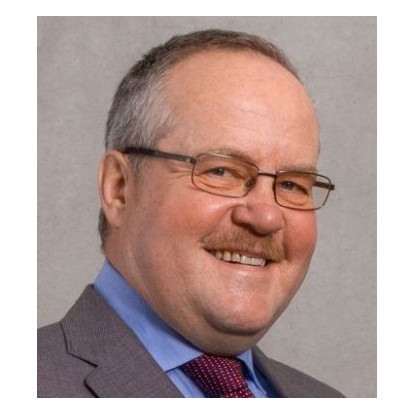
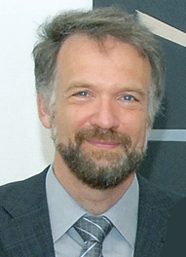
Prof. Dr. Christian Bischof is Professor of Computer Science at TU Darmstadt, leading research in high-performance computing and automatic differentiation. His work includes adaptive computing systems and parallel algorithms.
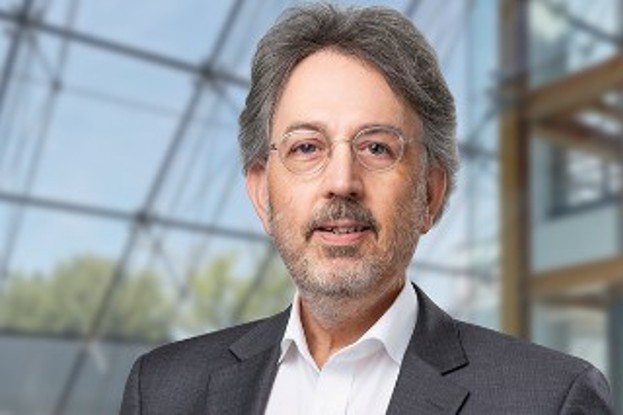
Prof. André Stork is a Professor at Technische Universität Darmstadt and Industry Director (Automotive) at Fraunhofer IGD. He holds a PhD in Computer Science (2000) and a diploma (1992) from TU Darmstadt. His research focuses on geometry modeling/processing, 3D interaction, simulation, and visualization. He leads projects in automotive/ manufacturing industries, coordinating over 200 R&D initiatives. His work emphasizes real-time simulation, CAD-AM integration, and GPU-based algorithms. Education: PhD in Computer Science (TU Darmstadt, 2000) Key Roles: Department Head (2002–2023), Editor-in-Chief of IEEE CG&A Research interests include graded multi-material CAD, iso-geometric analysis, and interactive design tools. He has authored/co-authored 200+ papers (h-index 25), focusing on fields like real-time rendering, mesh processing, and Industry 4.0 applications. Recent articles highlight trends in GPU-accelerated simulation, digital twin technologies, and metaverse infrastructure. His work bridges academia and industry, addressing challenges in additive manufacturing and virtual prototyping. Students advised: 6 doctoral/master’s students (e.g., Daniel Ströter, Christian Altenhofen) Key Projects: GraMMaCAD, CloudiFacturing, and Industry 4.0 studies He chairs conferences like VAST and serves on editorial boards for journals including IEEE CG&A and Applied Sciences.
Martin Lanser is a Researcher at the University of Cologne's Department of Mathematics and Computer Science and a Core Scientist at the Center for Data and Simulation Science (CDS). His work focuses on developing efficient numerical methods for computational science and engineering problems, particularly targeting modern many-core architectures with million-way parallelism. His research spans Computational Science and Engineering, Numerical Methods, and Parallel Computing, with specialized expertise in Domain Decomposition Methods, Multigrid Approaches, and Computational Homogenization for heterogeneous solid mechanics. Lanser's theoretical work emphasizes nonlinear solvers for strongly heterogeneous materials, integrating algebraic multigrid techniques to enhance scalability in extreme-scale simulations. Analysis of his publication record reveals consistent innovation in scalable domain decomposition methods since 2014, with recent work targeting exascale computing through the FE2TI software framework. His research demonstrates strong interdisciplinary connections between computational mathematics, materials science, and high-performance computing, particularly in applications for dual-phase steel modeling. No scientific awards are documented in the provided information. Lanser's advising and grant activities are not specified in the source material, though his collaborative publications indicate extensive partnerships with researchers like Axel Klawonn and Oliver Rheinbach on projects including SCALEXA and High-Q club initiatives. As a core developer of the FE2TI software package—a computational homogenization implementation selected for the High-Q club—Lanser contributes to the CDS's research in quantitative modeling of complex physical systems. His work directly supports exascale computing projects focused on parallel domain decomposition methods and is integrated into the university's numerical analysis research infrastructure at numerik.uni-koeln.de.
Leonard Wörteler is a Researcher at the University of Konstanz's Department of Computer and Information Science, affiliated with the Database and Information Systems group. He joined as a PhD student in 2015 after completing his Bachelor's (2012) and Master's (2015) in Computer and Information Science at the same institution. His research focuses on query optimization, including architectures, parallel heuristic algorithms, and non-relational databases. He has contributed to teaching, including courses on database systems and computer science fundamentals. His research explores advanced optimization techniques, such as neural language models for cardinality estimation and landmark-based algorithms for graph databases. He has published in venues like IDA, DBPL, and SIGRAD, addressing topics ranging from XQuery optimization to real-time transportation visualization. Wörteler's work emphasizes practical implementations, such as optimizing Neo4j's performance through landmark embedding. His contributions bridge theoretical optimization frameworks with real-world applications in databases and data mining.
Dr. Ivo Dravins is a PostDoc at the Chair of Numerical Analysis within the Faculty of Mathematics at Ruhr-Universität Bochum, working in Prof. Katharina Kormann's research group. He focuses on preconditioning techniques for implicit time-stepping algorithms, particularly within the PDExa project. His research spans numerical linear algebra, implicit Runge-Kutta methods, and PDE-constrained optimization. Research Interests: Preconditioning of large-scale linear systems Implicit time-stepping algorithms for PDEs High-order numerical methods Optimal control problems with constraints Numerical linear algebra applications Key Research Trends: His work emphasizes scalable preconditioning strategies for parallel computing environments, with a focus on achieving high-order accuracy in time integration. Recent efforts have addressed stage-parallel Runge-Kutta implementations and spectral analysis of preconditioned matrices in PDE-constrained optimization contexts. Labs/Teams: Member of Prof. Kormann's Numerical Analysis group, contributing to the PDExa project. Associated with the Kormann Group within the Faculty's Numerics division.
Prof. Dr.-Ing. Nico Sneeuw is a Professor and Vice Dean of the Geodetic Institute at the University of Stuttgart's Faculty of Aerospace Engineering and Geodesy. His research focuses on geodetic applications of satellite data, particularly in gravimetry, hydrology, and remote sensing. He leads projects like STREAM and HydroSat , advancing global water storage monitoring and runoff estimation. His work integrates satellite missions (GRACE, GRACE-FO, CryoSat-2) with advanced statistical and computational methods to address climate change impacts on water resources. Key projects include developing spatial downscaling techniques for GRACE data, improving satellite altimetry waveform processing, and quantifying flood dynamics using remote sensing. He has contributed to orbital optimization for future gravity missions and pioneered probabilistic drought characterization frameworks. His research bridges geophysics, hydrology, and computational methods, with applications in environmental monitoring and disaster assessment. Publications highlight innovations in inverse problem solving, gravitational modeling, and sensor data fusion. He collaborates internationally on initiatives like the ESA St3TART project and coordinates interdisciplinary teams for satellite-derived hydrological products.
Dr. Birgit Schwartz-Reinken is a Lecturer at the University of Hamburg's Business School, affiliated with the Institute of Business Information Systems. She holds a Ph.D. in parallel computing and business planning from 1994. Her research focuses on Operations Research, Parallel Algorithms, Supply Chain Management, and E-Learning. She has authored or co-authored 8 publications since 1990, including works on Eclipse-based GUI design and adaptive virtual learning environments. Her work bridges computational optimization and business informatics. Education: Ph.D. in Parallel Processing and Business Planning (1994) Research Interests: Combines parallel algorithm design with business optimization challenges, particularly in supply chain and production planning. Explores E-Learning methodologies for adaptive instructional systems. Publications: Recent work emphasizes software tools like Eclipse for enterprise development, while earlier research addressed parallel computing applications in combinatorial optimization and manufacturing systems. Grants/Advising: No specific grants or advisee records noted in provided texts.
Prof. Katharina Anders is a Professor of Remote Sensing Applications at the Technical University of Munich (TUM), affiliated with the TUM School of Engineering and Design. Her research focuses on methodological advancements in analyzing remote sensing data for understanding Earth surface processes, particularly in natural hazards, climate change, and human-environment interactions. She holds a PhD in Geoinformatics from Heidelberg University, with postdoctoral research at TU Delft. Education: Bachelor/Master in Geography with Computer Science and Environmental Physics at Heidelberg University PhD in Geoinformatics (cum laude), Heidelberg University (2020) Research interests emphasize 4D observation techniques (3D space + time) for geo-environmental monitoring, including automated change detection in LiDAR time series and machine learning integration. Notable contributions include the '4D objects-by-change' method for spatiotemporal segmentation of geomorphic changes. Awards: Fellowship, Baden-Württemberg Stiftung (2022) Heidelberg University Digital Teaching Prize (2020) ISPRS Geospatial Week Best Paper Award (2019) Advising and Grants: While specific grants are not detailed, her work has involved collaborative projects like the LOKI initiative for infrastructure monitoring and E-TRAINEE e-learning program. No formal student advisee list is documented here. Labs/Teams: Leads the Remote Sensing Applications group at TUM, focusing on sensor data fusion, 4D analysis, and environmental modeling.
Prof. Hartwig Anzt is a Professor at TU Munich, leading the Chair of Computational Mathematics within the TUM School of Computation, Information, and Technology. He also holds a professorship at the University of Tennessee and directs the Innovative Computing Lab (ICL). His research focuses on high-performance computing, particularly in sparse linear algebra, iterative methods, Krylov solvers, and preconditioning. He emphasizes sustainable software development and leads the Ginkgo open-source library for scientific computing. Academically, Anzt earned his PhD in 2012 from the Karlsruhe Institute of Technology (KIT) and led a Helmholtz junior research group there. He has extensive collaborations with institutions like Sandia National Laboratories, Argonne National Laboratory, and the University of Tennessee. His software projects include Ginkgo and MAGMA-sparse, both part of the xSDK ecosystem. Recent talks highlight his work on exascale computing, GPU optimization, and software sustainability. He advocates for platform-portable numerical libraries and has contributed to the Exascale Computing Project (ECP). His research addresses challenges in energy efficiency, fault tolerance, and algorithm design for multi/manycore architectures.
Christian Eichler is a researcher at Friedrich-Alexander University Erlangen-Nuremberg, affiliated with the Department of Computer Science (INF) and the Chair of Computer Science 4 (System Software). His work focuses on real-time systems, embedded computing, and cyber-physical systems. His research in real-time and embedded systems includes invasive computing frameworks, deterministic I/O management, and energy-constrained system analysis. He has contributed to tools like TASKers and GenEE for benchmarking and timing analysis of real-time software. His publications from 2017-2022 span conferences like HICSS, CCS, ISORC, and workshops on benchmarking, invasive computing, and cyber-physical systems. Key co-authors include Wolfgang Schröder-Preikschat and other researchers from FAU and international institutions.
Johannes Ponge is a Researcher at the Chair of Information Systems and Supply Chain Management at the University of Münster, affiliated with the School of Business and Economics. He holds an M.Sc. in Business Informatics from the same institution. His research focuses on epidemiological modeling, agent-based simulation (ABM), and decision support systems for epidemic prevention. He has contributed to projects such as HosNetSim, a tool integrating epidemiological models with hospital resource management, and has explored parallelization strategies for large-scale simulations. Education: Bachelor of Science in Information Systems (2011–2015) Master of Science in Information Systems (2015–2018) with a semester abroad at UNIST, South Korea Research interests emphasize computational epidemiology, healthcare system optimization, and the application of agent-based models to public health challenges. His work bridges computer science and public health through innovations in simulation tools and scalable frameworks for disease intervention analysis. He has supervised theses on topics like non-pharmaceutical intervention strategies, model validation in epidemic simulations, and parallelization techniques for agent-based systems. His projects are funded by the German Federal Ministry of Research, including efforts to develop user-oriented simulation platforms for pathogen-specific epidemic modeling.
Prof. Dr. Fernando Buarque is a Visiting Professor at the University of Münster, affiliated with the School of Business and Economics and the Department of Business Information Systems and Logistics. His research focuses on swarm intelligence algorithms, evolutionary computation, parallel computing, and optimization techniques applied to supply chain management. He collaborates closely with Prof. Hellingrath's research group and holds a DIC PhD and AvH (likely Alexander von Humboldt) fellowships. Key research areas include parameter control for optimization algorithms, high-level parallelization strategies, and application of metaheuristics to real-world problems. His work emphasizes GPU-based parallelization, algorithmic skeletons, and sensitivity analysis of hyper-heuristics. Recent contributions address parameterless population size control and learning properties of reinforcement learning in algorithmic frameworks. Publications span journals like Applied Soft Computing and International Journal of Parallel Programming, with conference contributions at IEEE events and the Genetic and Evolutionary Computation Conference (GECCO). His research bridges theoretical advancements with practical implementations in logistics and supply chain optimization.
Florian Grützmacher is a researcher at the University of Rostock's Department of Computer Science, focusing on model-based embedded system design and energy-efficient sensor systems. His work bridges wearable technology, cyber-physical systems, and biomedical applications. Research Interests: Model-based embedded system design and analysis Energy-efficient activity recognition via sensor networks Optimized algorithms for wearable IMUs Scientific Contributions: Developed piecewise linear approximation techniques for energy savings in wearables Created dataflow models for gesture/activity recognition systems Innovated in real-time sensor data synchronization for wireless protocols His recent publications (2023-2025) emphasize biomedical sensor applications, animal behavior modulation via embedded systems, and industrial IoT optimizations. Awards include a Best Paper Nominee at UbiComp/ISWC 2019.
Prof. Dr. Andreas Frommer is a Professor of Applied Computer Science at the Department of Mathematics, Wuppertal University, Germany. His research focuses on computational methods for large-scale numerical problems in theoretical physics and validated computing. Editorial roles: SIAM Journal on Matrix Analysis and Applications, ETNA, Linear Algebra and its Applications Research interests: Parallel numerical algorithms, Scientific computing in theoretical physics, Numerical linear algebra, Validated numerics Contact: Room G.14.21 | Phone +49 202 439-2979 | Email: frommer@math.uni-wuppertal.de
Ayesha Afzal is a researcher and PhD student at the Erlangen National High Performance Computing Center (NHR@FAU), part of Friedrich-Alexander University Erlangen-Nuremberg. She holds a master's degree in computational engineering from FAU and a bachelor's degree in electrical engineering from the University of Engineering and Technology, Lahore, Pakistan. Her research focuses on high-performance computing with expertise in analytic performance models, parallel simulation frameworks, and first-principles performance modeling of distributed-memory parallel programs. She investigates multi-core and parallel architectures, parallel computing algorithms, programming models, and domain-specific languages to understand and optimize parallel application performance through advanced modeling techniques. Dr. Afzal's publication record demonstrates consistent innovation in understanding parallel program dynamics, particularly around idle waves, desynchronization phenomena, and performance bottlenecks. Her research has pioneered approaches like the physical oscillator model for supercomputing and developed frameworks such as DisCostiC for simulating MPI applications without code execution, revealing novel insights into hardware-software interactions in HPC systems. ISC PhD Forum Award (1st place, 2021) IEEE TPDS Best Paper Runner-up Award (2023) SC PMBS Best Short Paper Award (2023) SC Best Research Poster Finalist (2024) ISC Best Research Poster Award (1st place, 2025) Top 100 Future Leaders Role Model List (2022-2025) WeAreTheCity's Global Award for Achievement (2023) Dr. Afzal actively contributes to the HPC community through teaching and mentorship. She teaches courses on parallel programming of high-performance systems and supervises multiple bachelor's and master's theses on topics ranging from energy consumption analysis to MPI collective implementation. As vice chair of the IEEE Computer Society Germany Section Chapter and founder of the NHR Women in HPC chapter, she plays a significant leadership role in advancing the field and promoting diversity. She is deeply involved in major HPC initiatives including KONWHIR with the Leibniz Supercomputing Centre on performance optimization and NHR's EEC project focused on enhancing energy efficiency and managing operational costs across NHR centers, demonstrating her commitment to addressing real-world challenges in high-performance computing infrastructure.