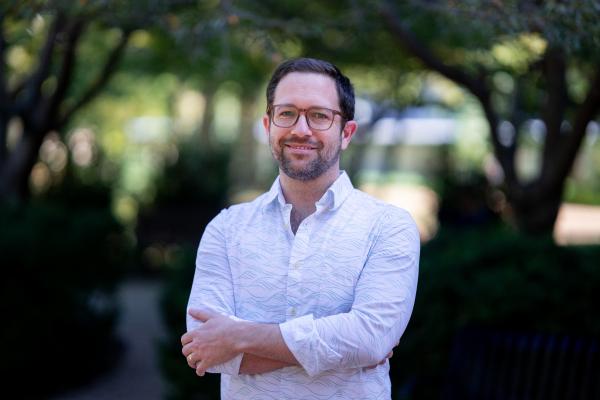
Michael Landis is Assistant Professor of Biology at Washington University in St. Louis, developing statistical models and computational tools to reconstruct evolutionary patterns. Research integrates phylogenetics, biogeography, and trait evolution to study historical biodiversity dynamics across deep timescales. Key research areas: Developing Bayesian methods for phylogenetic biogeography Modeling biome shifts and diversification patterns Creating open-source software for evolutionary analysis (RevBayes, phyddle) Reconstructing ancestral networks for pierid butterflies Recent work includes novel approaches for state-dependent diversification modeling, deep learning applications in phylogenetics, and global-scale analyses of butterfly evolution. The lab emphasizes collaborative software development and evolutionary hypothesis testing.
Professor Christopher Nemeth of Lancaster University's School Of Mathematical Sciences is a leading researcher in computational statistics and probabilistic machine learning. His work focuses on Markov chain Monte Carlo (MCMC), sequential Monte Carlo (SMC), Gaussian processes, and approximate Bayesian computation, with applications in environmental science, target tracking, and econometrics. He currently holds a UKRI Turing AI Acceleration Fellowship and leads the ProbAI research hub. Research Interests: Development of probabilistic AI algorithms for large-scale learning, state-space modeling, and intersections between sampling and optimization algorithms. Grants: £9M UKRI-EPSRC ProbAI hub (2024-2029), £1.1M Turing AI Acceleration Fellowship (2021-2026), and multiple NERC grants. Academic Roles: Turing University Academic Liaison (2023-present), Associate Editor for ACM Transactions on Probabilistic Machine Learning (2023-present), and leadership roles in the Royal Statistical Society. Supervision: Completed supervision of 7 PhD students with projects on scalable Gaussian processes, Monte Carlo methods, and network modeling.
Andrea Guerrieri serves as an Associate Professor at the School of Engineering, University of Applied Sciences and Arts Western Switzerland Valais (HES-SO Valais-Wallis), specializing in reconfigurable computing and electronics design automation. His research has established significant industry impact through tools like DynaRapid and Dynamatic, with technology adopted by major semiconductor companies including MIPS, Intel, and AMD-Xilinx. BSc HES-SO in Industrial Systems - System-on-Chip specialization BSC HES-SO in Computer and Communication Systems - Digital Design specialization MSc HES-SO in Engineering - Embedded Hardware and Firmware specialization Professor Guerrieri's research focuses on reconfigurable computing, electronics design automation (EDA), and security, with particular emphasis on FPGA design, high-level synthesis, and post-quantum cryptography implementations. His work bridges the gap between theoretical computer architecture and practical hardware implementations, with strong applications in space technology and embedded security systems. His recent publications demonstrate increasing focus on energy-efficient implementations for space applications and quantum-resistant cryptographic systems. Analysis of his 15 most recent publications reveals a clear research trajectory toward optimizing FPGA implementations for post-quantum cryptography and space applications. His work consistently addresses the performance bottlenecks in high-level synthesis while maintaining practical applicability for industry partners like NASA, CERN, and major semiconductor companies. The recent surge in best paper awards (three in 2024 alone) reflects growing recognition of his contributions to efficient FPGA compilation techniques and cryptographic implementations. Scientific Awards: Best Paper Award at FPL 2024 Best Paper Award at HPEC 2024 Best Paper Award at ISFPGA 2020 Outstanding Short Paper Award at IEEE HPEC 2024 Outstanding TPC Member Award at DAC 2024 IEEE Senior Member (2021) Multiple Best Paper nominations (FCCM 2022, FPL 2022, HiPEAC 2022) Professor Guerrieri actively participates in international research projects including the DyReCte project (2019-2021) on dynamically reconfigurable cryptoengines for nano-satellites. He currently chairs the Onboard Computing topic for the Swiss consortium CHEESE affiliated with NASA SSERVI and collaborates extensively with industry partners including AMD-Xilinx, NVIDIA, Arm, NASA, and CERN, as well as academic institutions like ETH Zurich and University of Geneva. His current research focuses on developing next-generation EDA tools and reconfigurable computing platforms for both terrestrial and space applications. His laboratory work centers around FPGA-based prototyping and validation, with specialized facilities for space applications testing. Professor Guerrieri leads a research team that includes Andres Upegui, Quentin Berthet, Laurent Gantel, and Gabriel Da Silva Marques, focusing on practical implementations of reconfigurable architectures for security and space applications.
Vladimir Plungian is a distinguished Russian linguist currently serving as Professor and Head of the Department of Theoretical and Applied Linguistics at Moscow State Lomonosov University's Faculty of Philology. He also holds significant leadership positions as Deputy Director of the Vinogradov Institute for Russian Language and Head of the Department of Linguistic Typology at the Institute of Linguistics, all part of the Russian Academy of Sciences. Plungian earned his undergraduate and graduate degrees at Moscow State Lomonosov University and The Institute of Linguistics of the Russian Academy of Sciences. His academic career spans several decades with continuous appointments at Moscow State University since 1989, progressing from Junior Research Fellow to full Professor. His research encompasses a remarkably broad spectrum of linguistic fields including general linguistics, morphology, grammatical typology, corpus linguistics, and poetics. Plungian has conducted extensive fieldwork on diverse language families including Slavic languages, African languages (particularly in Mali), languages of the Caucasus, and Austronesian languages. His work demonstrates a unique intersection between theoretical linguistics and practical language documentation. An analysis of his recent publications reveals a continued focus on grammatical typology, corpus linguistics, and the documentation of lesser-studied languages. His work spans both theoretical explorations of grammatical categories and practical applications in corpus construction, with particular attention to Slavic languages, Pamir languages, and Armenian. The Eastern Armenian National Corpus represents one of his major collaborative achievements. Full member, Russian Academy of Sciences (Department of History and Philology), 2016 "Prosvetitel" Prize (Humanities) for best popular-scientific book publication in Russian, 2011 Corresponding Member, Russian Academy of Sciences (Department of History and Philology), 2009 Plungian has played a significant role in developing major linguistic resources, most notably as one of the creators of both the Russian National Corpus and the Eastern Armenian National Corpus. Since 2016, he has served as editor-in-chief of Voprosy Jazykoznanija, the leading Russian linguistics journal. His international collaborations include work at scientific centers across Europe (Belgium, Germany, Norway, France) and fieldwork in Africa and various regions of the Russian Federation. Plungian leads multiple research teams across different institutions, including the Department for Corpus and Poetic Studies at the Vinogradov Institute for Russian Language, where he has directed research since 2003. His work bridges theoretical linguistics with practical applications in language documentation and corpus construction, creating a unique research environment that connects Slavic linguistics with the study of African and Caucasian languages.
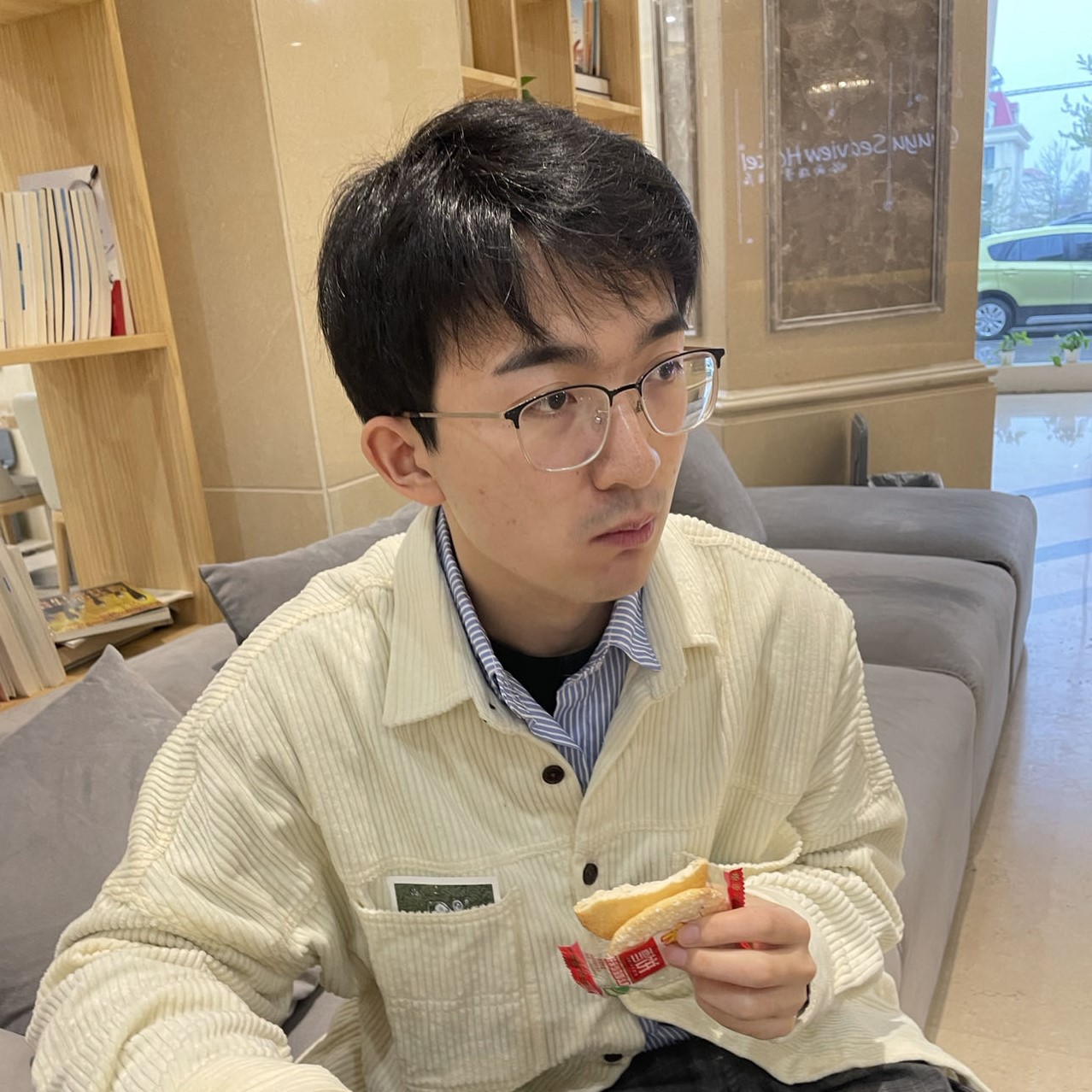
Dan Hu is a Lecturer in Mechanical Engineering at the CEES School of Engineering. He specializes in biomechanical modeling, vehicle dynamics, and estimation algorithms. His research focuses on human movement analysis, musculoskeletal systems, and advanced control systems for automotive applications. He is currently accepting PhD students in two projects: developing predictive modeling tools for personalized rehabilitation devices and creating experiment-free clinical diagnosis systems using machine learning. Dr. Hu holds a Doctorate in Biomechanics & Automotive Engineering from Jilin University (2014), where his thesis addressed musculoskeletal modeling of drivers' hands. He also earned an MSc in Automotive Engineering (2009), focusing on Kalman filter applications for vehicle state estimation. His research interests span biomechanical engineering, computational modeling of human motion, and vehicle state estimation using extended Kalman filters. Notable contributions include 3D whole-body walking models, metatarsophalangeal joint kinematics studies, and biomimetic prosthetics design. His work bridges biomechanics with automotive engineering, aiming to improve healthcare technologies and vehicle safety systems. Dr. Hu has peer-reviewed for journals like Scientific Reports , IEEE Transactions on Neural Systems , and Computer Methods in Biomechanics . His research collaborations span biomechanics, robotics, and automotive control systems. Current projects emphasize predictive modeling and clinical diagnosis innovation.
Prof. Dr. Wolfgang Rösler is a leading scholar of Classical Philology at Humboldt University of Berlin, specializing in ancient Greek literature and cultural history. His research focuses on oral and literate traditions in archaic Greece, early Greek poetry (Sappho, Alcaeus), Athenian tragedy (Sophocles, Aeschylus), pre-Socratic philosophy, and Herodotean historiography. He held the Chair of Greek Studies from 1994-2009 and received the prestigious Heisenberg Fellowship (1979-1984). His work bridges literary analysis with anthropological and media theoretical perspectives, exploring how cultural revolutions in antiquity parallel modern digital transformations. Key contributions include groundbreaking studies on Homeric poetry's fictionalization processes, the socio-political function of Greek tragedy, and the material culture of literacy in archaic Greece. His edited volumes and translations (e.g., Walter Burkert's essays) further cement his role in preserving and advancing classical scholarship. Education: Doctorate 1969, Habilitation 1977 Professional Path: Positions at University of Konstanz (1971-1994), Humboldt University (1994-2009) Research Interests: Orality/Literacy dynamics, Greek lyric poetry, tragic poetics, historiographical methods His awards include recognition for advancing classical studies through interdisciplinary approaches. Current research continues examining ancient literary forms' influence on modern cultural theory.
Prof. Wan Fokkink is a Full Professor in Theoretical Computer Science at Vrije Universiteit Amsterdam (VU) and holds a part-time position as Professor of Model-Based System Engineering at Eindhoven University of Technology (TU/e). His research focuses on distributed systems, formal analysis of protocols, and supervisory control synthesis. He leads the Theoretical Computer Science group at VU and has authored three influential textbooks: Introduction to Process Algebra , Modelling Distributed Systems , and Distributed Algorithms: An Intuitive Approach . Education: MSc in Mathematics (University of Amsterdam, 1990) and PhD in Computer Science (University of Amsterdam, 1994). Postdoctoral work at Utrecht University and lectureship at Swansea University preceded his leadership roles at CWI (2001–2004) and VU (since 2004). Teaching includes courses on logic, concurrency, and distributed algorithms. He is editor of Logical Methods in Computer Science and co-founder of the Electronic Proceedings in Theoretical Computer Science . Active in professional organizations: co-founder of IFIP WG 1.8 (Concurrency Theory) and steering committee member of the CONCUR conference. Research interests span formal verification, concurrency theory, and practical applications of supervisory control in engineering systems (e.g., traffic management, ship locks). His work aligns with sustainable development goals through contributions to reliable system design and optimization. Recent articles explore model-based specification, distributed control under communication delays, and tools like Eclipse ESCET for supervisory control synthesis. Collaborations span international teams in Europe and beyond.
Jose Miguel Reynolds Barredo is an Associate Professor and Director of the Doctorate in Plasmas and Nuclear Fusion at Carlos III University of Madrid. His research focuses on plasma physics, magnetohydrodynamics (MHD), and energy systems resilience. He leads studies on stellarator reactor design, plasma confinement optimization, and the integration of renewable energy into power grids. His work spans advanced MHD equilibrium solvers (e.g., SIESTA, FLIPEC) and fusion device optimization for ITER and Wendelstein 7-X. He also investigates climate impacts on renewable energy efficiency and power grid stability under high renewable penetration. Notable contributions include HVDC grid segmentation strategies and non-axisymmetric plasma transport modeling. Key Areas: Fusion reactor design, MHD stability, power grid resilience, climate-energy interactions Tools: SIESTA, FLIPEC, GENE, OPA cascading blackout model Projects: Doctorate in Plasmas and Nuclear Fusion, W7-X bootstrap current studies, climate-energy system interdependencies Research emphasizes computational plasma physics and interdisciplinary energy solutions, blending theoretical, numerical, and applied engineering approaches.
Dr. Maria Ribera Sancho is a Professor at the Polytechnic University of Catalonia (BarcelonaTech), holding roles as Dean of the Faculty of Informatics of Barcelona (2004–2010), Vice-Dean (1998–2004), and currently Manager of the Education and Training Department at the Barcelona Supercomputing Center (BSC-CNS). She chairs the EQANIE Accreditation Committee and serves on the ACM-W Europe Executive Committee. Her research focuses on Software Engineering, Conceptual Modeling, Ontologies, Learning Analytics, and IoT applications. Notable contributions include work on automated design using conceptual models, model-driven software development, and semantic-based IoT infrastructure monitoring. She leads projects like LinDaFIX (social welfare data tools) and REMEDiAL (ontology-driven software automation). Key awards include the UPC Quality in Teaching Prize (2005, 2021), Jaume Vicens Vives Distinction (2005), Sapiens Award (2011), and Festibity Award (2011). She advises doctoral and master’s students on topics like IoT semantic monitoring and educational ontology development. Academic director of the inLab FIB Talent Program, she also directs the PRACE Advanced Training Center at BSC. Main projects include TINTIN (SQL integrity tool), e-Catalunya (collaborative government platform), and PILARES (learning analytics for secondary education). Her work bridges academia and industry through competitive projects with companies and institutions.
Dr. Ying Zhou is a Lecturer in the School of Computer Science at The University of Sydney. She holds a BSc and MEng from Nanjing University (1997) and a PhD from the School of Computing at the National University of Singapore (2003). Her research focuses on human-centred data management, including large-scale data storage, user behavior analysis, and improving image query systems. Current projects include mining socially tagged images and accountability mechanisms for multitenant cloud platforms. Teaching responsibilities include courses on Advanced Data Models (COMP5338), e-Commerce Technology (COMP5347), and Cloud Computing (COMP5349). She collaborates with industry partners like Amazon and IBM, and advises four research students. She is a member of the Sydney Southeast Asia Centre. Her publication record spans 20 years, with recent work emphasizing machine learning applications, big data systems, and cloud security. Research trends include optimizing distributed computing frameworks (Hadoop/Spark/Flink), adversarial machine learning, and trustworthy database systems. Earlier work focused on social network analysis, web communities, and blogosphere dynamics. Current research projects address both technical challenges (e.g., efficient image search, cloud platform accountability) and applied solutions for leveraging social media data. Her lab activities involve interdisciplinary collaboration between computer science and information systems domains.
Dr. Xin Wang is a Research Fellow at the University of Oxford's Institute of Biomedical Engineering, affiliated with the Computational Health Informatics (CHI) Lab under Professor David Clifton. He joined Oxford in 2024 after completing his PhD in Computer Science and Technology at Tsinghua University, where he was advised by Professor Ling Feng. His research bridges Data Mining and Natural Language Processing with healthcare applications, focusing on: Computational mental health diagnostics using social media/video analysis Knowledge graph development for biomedical contexts AI agent design for therapeutic interventions Large language model applications in healthcare Wang's publications demonstrate consistent focus on AI-driven mental health solutions , evolving from social media text analysis to multimodal systems incorporating video, knowledge graphs, and real-time intervention frameworks. Recent work shows increased emphasis on clinical applicability and human-AI collaboration. He actively contributes to academic communities as reviewer for premier venues including NeurIPS, ACL, KDD, and IEEE journals. He maintains open-source research outputs like the SSE framework for stress-specific NLP modeling.
Stefano Markidis is a leading researcher in High-Performance Computing (HPC) and quantum computing. His work focuses on developing advanced simulation frameworks, such as the Neko framework for computational fluid dynamics, and optimizing algorithms for heterogeneous architectures. He collaborates extensively with institutions and researchers globally, contributing to fields like plasma physics, quantum systems, and machine learning applications. His research emphasizes scalability, performance optimization, and the integration of cutting-edge technologies like GPU acceleration and quantum computing. Key research interests include extreme-scale simulations, quantum algorithms, and in-situ data analysis techniques. He has published over 200 articles, with recent work addressing challenges in NISQ systems, tensor network simulations, and CUDA-based performance enhancements. His contributions span theoretical and applied domains, bridging computational methods with real-world applications in fusion energy, materials science, and space exploration. Notable collaborations include projects with Philipp Schlatter, Niclas Jansson, and the NISQ application development community. Markidis also explores hybrid frameworks combining classical and quantum computing, aiming to leverage emerging hardware for scientific breakthroughs.
Shyamprasad Natarajan Raja is a Researcher at the Department of Micro and Nanosystems at KTH Royal Institute of Technology. His work focuses on developing solid-state nanogap and nanopore platforms for single molecule sensing applications. He holds a BEng in Mechanical Engineering from IIT Madras (India), and MSc and PhD degrees from ETH Zurich (Switzerland). His research spans nanomaterials, nanofabrication, microfluidics, and sensing technologies, with a strong emphasis on phonon transport in low-dimensional materials like nanowires and graphene. His research has been supported by grants such as the SSF Sweden Israel Research Collaboration (2022–2027) and the Ragnar Holm Foundation (2018). Key areas of exploration include nanofabrication techniques for precise sensors, molecular interactions using nanopores, and thermal properties of nanomaterials. Recent advancements include scalable fabrication of silicon nanopores, high-bandwidth measurement systems for tunnel junctions, and studies on graphene thermal conductivity under annealing conditions. Raja’s publications highlight interdisciplinary approaches, blending materials science, electronics, and biotechnology. His work on crack-defined gold break junctions and phonon transport limits in nanowires demonstrates a deep integration of experimental and theoretical methodologies. Future research directions include expanding applications of nanopore-based biosensors and optimizing nanogap platforms for real-time molecular analysis.
Fredrik Kjolstad is an Assistant Professor of Computer Science at Stanford University. His research focuses on compilers, programming models, and systems for sparse computing, with an emphasis on separating algorithms from data representation. He leads efforts in developing compilers like TACO, Simit, and Legate Sparse to optimize sparse tensor algebra and distributed computations. Kjolstad's work spans compiler design, hardware-software co-design, and programming languages for high-performance computing. His research group aims to enable portable applications across diverse data representations and architectures. Notable projects include the TACO compiler for sparse tensor algebra, the Simit programming language for physical simulations, and the Copy-and-Patch compilation technique for fast runtime code generation. He has also contributed to distributed systems like Legate Sparse and hardware accelerators such as Onyx. Kjolstad has received prestigious awards including the NSF CAREER Award and the MIT EECS PhD Thesis Award. His publications cover topics like sparse tensor compilation, compiler optimization, and agile hardware design. He advises multiple PhD students and collaborates with researchers like Kunle Olukotun and Alex Aiken. Key areas of impact include efficient sparse data processing, compiler-driven hardware design, and scalable distributed computing frameworks. His work bridges theoretical compiler techniques with practical system implementations, aiming to simplify and accelerate complex computational tasks.
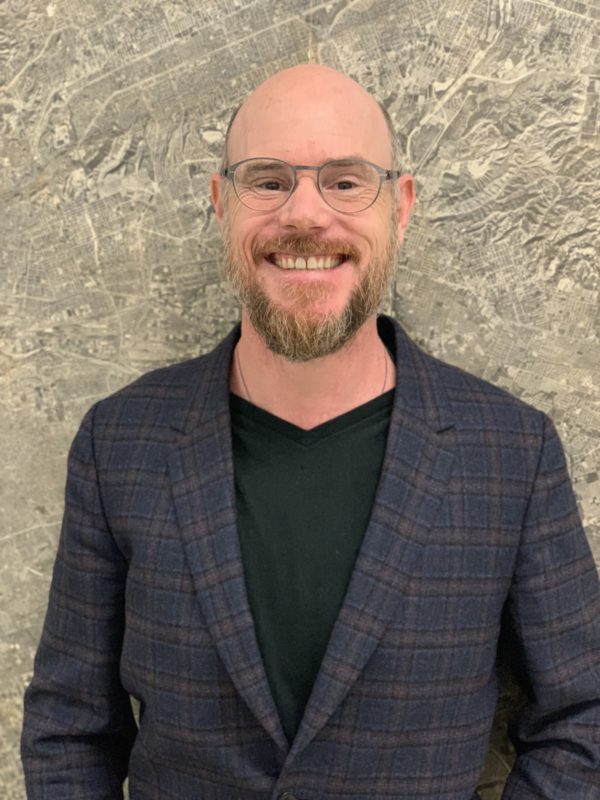
Gregory S. Okin is a Professor of Geography and Chair of the Department of Geography at UCLA, affiliated with the Institute of the Environment and Sustainability. He holds a PhD in Geochemistry from Caltech (2001) and has been at UCLA since 2006. His research focuses on dryland geomorphology, aeolian processes, and mineral aerosol dynamics, with emphasis on dust emission impacts on climate, ecosystems, and human health. Okin employs remote sensing, field studies, and modeling to analyze soil-vegetation-atmosphere interactions in arid regions, particularly wind erosion's role in grassland-to-shrubland transitions. He co-leads NASA's Earth Surface Mineral Dust Source Investigation (EMIT), creating global mineral maps using imaging spectroscopy. Recent work addresses dust-climate links, wildfire health impacts, and rangeland monitoring via satellite-cloud computing integration. Education Background: Ph.D., Geochemistry, California Institute of Technology (2001) M.S., Geology, California Institute of Technology (1997) B.A., Chemistry & Philosophy (Double Major), Middlebury College (1995) Postdoctoral Research, Geography, UC Santa Barbara (2001–2002) Research Interests: Dr. Okin's work integrates aeolian geomorphology , remote sensing , and Earth system modeling to explore: - Dust emission mechanisms and climate feedbacks - Dryland ecosystem resilience under climate change - Vegetation-soil connectivity in arid landscapes - Applications of imaging spectroscopy (e.g., EMIT mission) His projects often involve interdisciplinary collaborations, combining field measurements with computational modeling. Scientific Contributions: Key innovations include developing dust emission models (e.g., MAPTALE) and advancing spectral unmixing techniques for mineral mapping. His findings on pet food environmental impacts (e.g., carbon pawprints) have gained media attention.