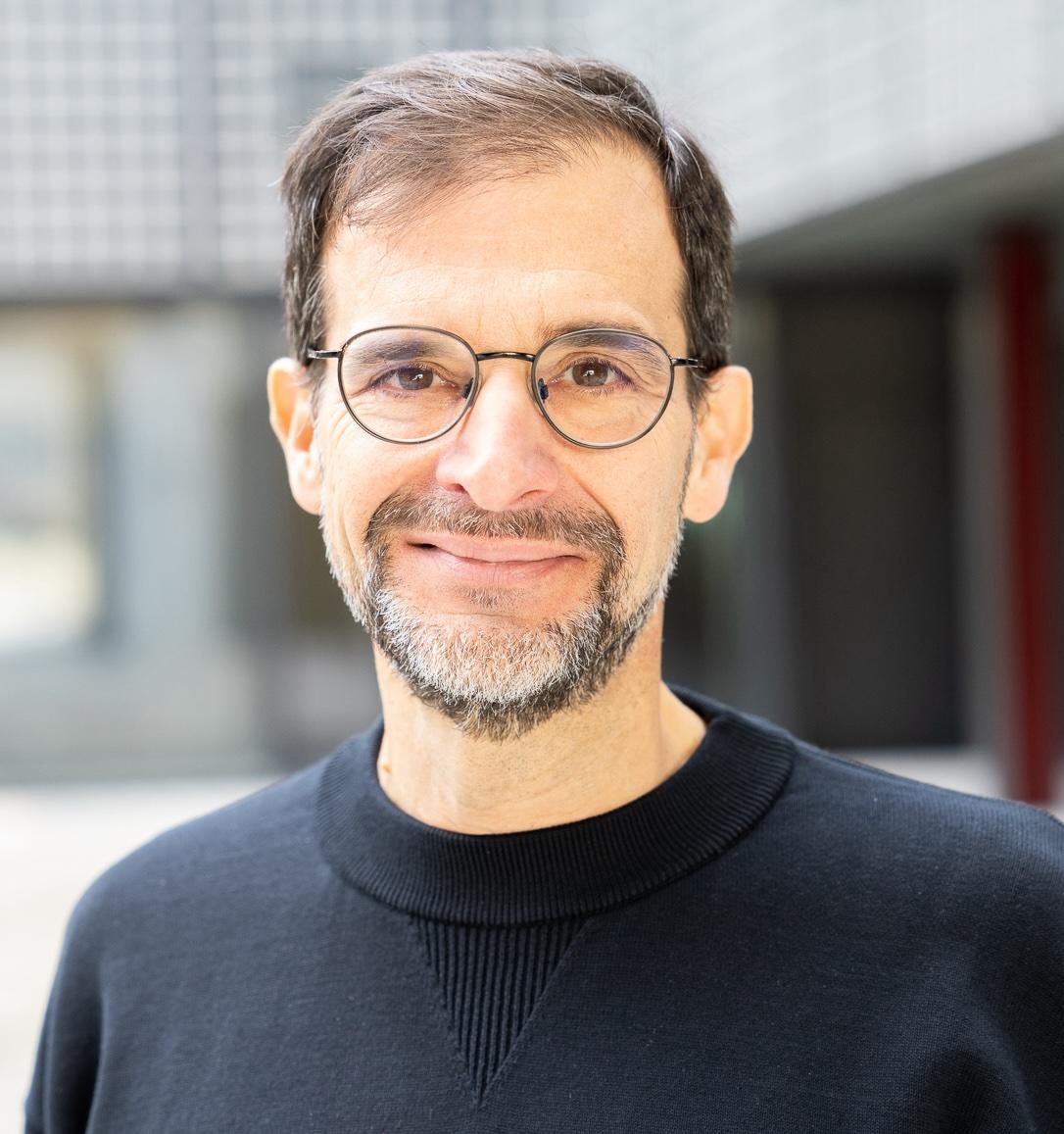
John Lygeros is a Full Professor and Head of the Institute for Automatic Control at ETH Zurich's Department of Information Technology and Electrical Engineering. He received his B.Eng. (1990) and M.Sc. (1991) from Imperial College London, and Ph.D. (1996) from UC Berkeley. Before joining ETH Zurich in 2006, he held academic positions at the University of Cambridge and University of Patras. His research focuses on: Modeling and control of hierarchical hybrid systems Large-scale dynamical systems applied to biochemical networks Control of automated transportation systems via wireless networks Energy systems and advanced manufacturing control His research demonstrates strong emphasis on optimization methods, distributed control architectures, and machine learning applications in control systems, with significant contributions to real-time optimization algorithms and data-driven control methodologies. Major scientific awards include: HSCC Test of Time Award (2024) ERC Advanced Grant (2018) O. Hugo Schuck Best Paper Award (2018) IEEE George S. Axelby Paper Award (2016) Three Golden Owl teaching awards from ETH Zurich He leads the Automatic Control Laboratory at ETH Zurich and serves as Director of the National Centre of Competence in Research 'Dependable Ubiquitous Automation'. He has advised over 60 doctoral candidates since 2017, with research spanning optimization algorithms, power systems, autonomous systems, and machine learning applications.
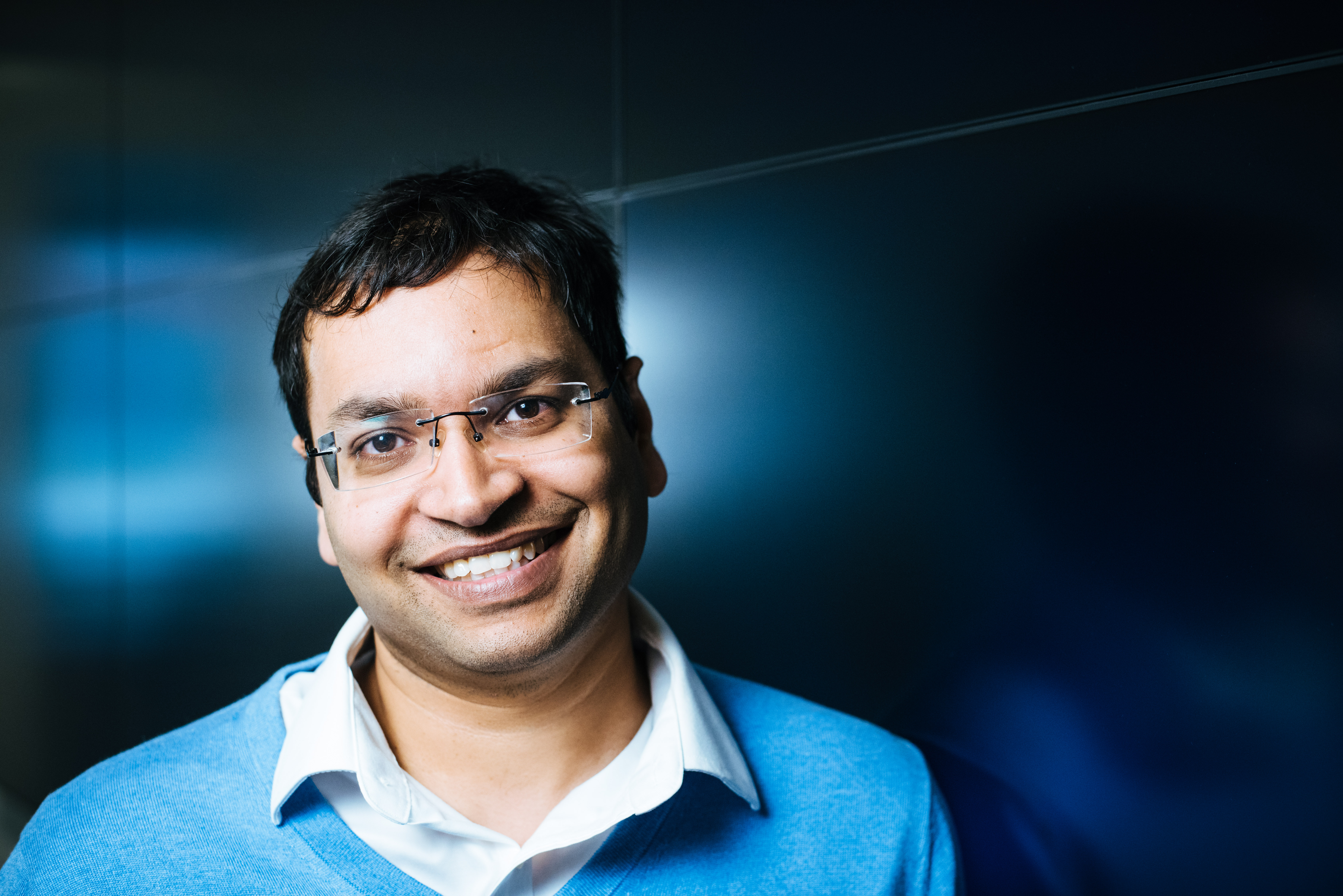
Subhasish Mitra is the William E. Ayer Professor of Electrical Engineering and Computer Science at Stanford University, holding dual appointments in both departments. He leads the Stanford Robust Systems Group and serves on the leadership team of the Microelectronics Commons AI Hardware Hub under the US CHIPS and Science Act. His research spans Robust Computing, NanoSystems, Electronic Design Automation (EDA), and Neurosciences, with breakthroughs in X-Compact test compression, carbon nanotube computing, and 3D integration. He has held international roles like the Carnot Chair at CEA-LETI and Visiting Professorships globally. Education & Honors: Recipient of over 40 awards including the IEEE Computer Society’s Harry H. Goode Memorial Award, ACM/IEEE’s A. Richard Newton Technical Impact Award, and the Intel Achievement Award. He earned top academic accolades from IIT Kharagpur and Jadavpur University, and is a Fellow of ACM and IEEE. Research Impact: Pioneered first-of-their-kind systems like the carbon nanotube computer and monolithic 3D integration. His work on robust computing techniques like QED validation and X-Compact compression has industry-wide adoption, saving billions in manufacturing costs. Collaborates with industry leaders like Intel, Google, and Samsung. Publications & Grants: Over 400 publications, including award-winning papers in DAC, ISSCC, and IEEE journals. Leads grants from NSF, DoE, and industry partnerships. His lab explores cutting-edge topics like neuromorphic computing, 3D thermal scaffolding, and AI hardware acceleration. Administration & Outreach: Serves as Associate Chair (Faculty Affairs) for Stanford’s Computer Science Department. Recognized by students for mentorship, and frequently invited to global forums like the World Economic Forum and National Academy of Engineering.
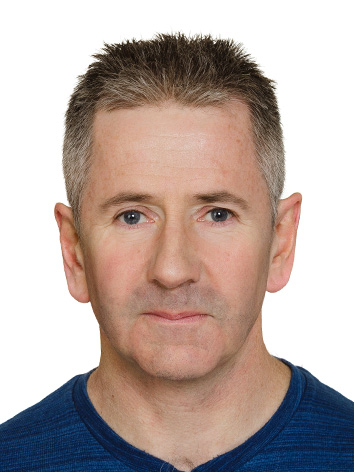
Rakesh Kumar is a Professor and John Bardeen Faculty Scholar in the Electrical and Computer Engineering Department at the University of Illinois at Urbana-Champaign. His work focuses on computer architecture, system-level design automation, and low-power computing. PhD in Computer Engineering from University of California, San Diego BS in Electrical Engineering from IIT Kharagpur His research spans all layers of the computing stack, with key contributions to flexible computer systems , waferscale computing , error-resilient architectures , and approximate computing . He has pioneered work on voltage-reliability tradeoffs and peak power management techniques. Recent publications highlight trends in space microdatacenters , printed microprocessors , and neural graph accelerators . His work on plastic chips was recognized as one of the three biggest semiconductor headlines of 2022 by IEEE Spectrum. IEEE Fellow (2024) ISCA Influential Paper Award MICRO Test-of-Time Award ICCAD Ten Year Retrospective Most Influential Paper Award Best Paper Awards at CASES, SELSE, HPCA He has received teaching accolades including the Stanley H. Pierce Faculty Award and Ronald W. Pratt Outstanding Teaching Award . His research group explores hardware-software co-design for emerging applications in AI, IoT, and sustainable computing.
Gert Cauwenberghs is a Professor of Bioengineering at the University of California San Diego (UCSD), affiliated with the Jacobs School of Engineering. He co-directs the Institute for Neural Computation and holds a visiting professorship at MIT. His research focuses on neuromorphic engineering, energy-efficient neural interfaces, and wearable biosensors. Key contributions include silicon-based adaptive neural circuits, implantable neural recording systems, and in-ear biosensing devices. Education: M.Eng. in Applied Physics (University of Brussels, 1988), M.S. and Ph.D. in Electrical Engineering (Caltech, 1989–1994). Prior roles include Professorships at Johns Hopkins University and Visiting Professor at MIT. Research Interests: Biomedical integrated circuits, neuromorphic computing, brain-machine interfaces, and energy-efficient neural systems. His work bridges neuroengineering and clinical applications, emphasizing adaptive intelligence and low-power designs. Recent Work: Development of femtojoule-efficient neural chips, high-density neural interfaces, and closed-loop wearable systems. Projects include neurobench benchmarking frameworks and RRAM-based neuromorphic hardware. Awards: NSF Career Award (1997), ONR Young Investigator (1999), PECASE (2000), IEEE Distinguished Lecturer (2003–2004). Grants & Labs: Active in NIH and DoD-funded projects, co-directs the UCSD Institute for Neural Computation. Collaborates with industry on neural interface technologies. Labs/Teams: Cauwenberghs Lab at UCSD focuses on integrated neuroengineering systems, including neural recording systems and neuromorphic computing architectures.
Michael O'Boyle is a Professor at the University of Edinburgh's School of Informatics, where he serves as Director of the ARM Research Centre of Excellence and the EPSRC Centre for Doctoral Training in Pervasive Parallelism. Holding an EPSRC Established Career Research Fellowship, he leads pioneering work in compiler technology for heterogeneous architectures, bridging theoretical advances with practical high-performance computing applications. Professor O'Boyle's research spans multiple cutting-edge areas including heterogeneous code discovery and optimization, neural machine translation for program synthesis, deep neural network system stack optimization, software-defined hardware, and compiler/architecture co-design. His approach integrates constraint analysis, program synthesis, and machine learning to address complex challenges in high-performance computing across diverse hardware platforms. His recent publications reveal a strong trend toward integrating machine learning with traditional compiler techniques, particularly in neural program synthesis, tensor optimization, and architecture-aware compilation. This work represents a paradigm shift in compiler design, moving from rule-based systems to learning-based approaches that can automatically adapt to diverse hardware targets. IEEE/ACM CGO 2025 Distinguished Paper Award for 'Tensorize: Fast Synthesis of Tensor Programs from Legacy Code' IEEE/ACM CGO 2024 Test of Time Award ACM GPCE 2023 Best Paper Award for 'C2TACO: Lifting Tensor Code to TACOM' ACM ASPLOS 2021 Distinguished Paper Award IEEE HPCA 2021 Best Paper Award for 'Prodigy: Improving the Memory Latency of Data-Indirect Irregular Workloads' Professor O'Boyle has successfully mentored numerous PhD students who have secured prominent positions in academia (including at Cambridge, Edinburgh, Leeds, and McGill) and industry (including Meta, NVIDIA, Qualcomm, Huawei, and Microsoft). His research is supported by significant funding from EPSRC, ARM, and European projects including Bonseyes and Transmuter, demonstrating strong international recognition and industry impact. He leads the influential Compiler and Architecture Design (CArD) Group at the University of Edinburgh and is a founder of the HiPEAC Network of Excellence, which has grown into a major European initiative connecting researchers and practitioners in high-performance and embedded computing.
Amadeus Gebauer is a Researcher at the Chair of Computational Mechanics within the Institute for Computational Mechanics at the Technical University of Munich (TUM), serving as a Research Associate since 2019. His work specializes in computational biomechanics with emphasis on cardiac mechanics modeling, growth and remodeling processes, and multi-physics simulation frameworks. Education: Master of Science (M.Sc.) in Mechanical Engineering, Technical University of Munich, 2019 Research Interests: Gebauer's research centers on cardiac mechanics modeling, including growth and remodeling of cardiac tissue, cardiac active tissue mechanics, and medical image processing. He develops advanced computational methods for parallel and high performance computing, particularly through the 4C multi-physics simulation framework. His work integrates constrained mixture models to simulate organ-scale biological processes, bridging computational mechanics with clinical cardiology applications and focusing on mechanobiological stability in cardiac systems. Publication Trends: Gebauer's publications (2018-2025) demonstrate consistent innovation in computational cardiology, primarily using constrained mixture models to address cardiac growth and remodeling. His recent work introduces adaptive integration techniques for history variables and homogenized modeling approaches, while expanding into software benchmarking for cardiac elastodynamics and gastric motility simulations. These contributions highlight his expertise in developing robust numerical methods for multi-physics biomedical problems, with increasing focus on patient-specific applications and high-performance computing solutions. Teaching and Advising: Gebauer teaches core computational mechanics courses including Finite Elemente and Numerische Festkörpermechanik across multiple semesters. He has supervised diverse student projects ranging from term papers to Master's theses, with notable collaborations including Maximilian Grill's shoulder biomechanics research (2020) and Janina Datz's artery geometry framework development (2021). His advising consistently focuses on cardiac mechanics, computational modeling, and medical device simulation. Research Environment: As part of Professor Wolfgang A. Wall's Institute for Computational Mechanics (LNM) at TUM, Gebauer contributes to a leading research group in computational solid/fluid mechanics. The LNM develops the 4C simulation framework for complex engineering and biomedical challenges, with current emphasis on cardiac growth modeling, multi-physics integration, and high-performance computing applications in personalized medicine.
Alexandre Bouchard-Côté is a Professor of Statistics at the University of British Columbia (UBC), affiliated with the Department of Statistics within the Faculty of Science. His research focuses on computational statistics, Bayesian methods, and Monte Carlo techniques, with applications in evolutionary biology, cancer genomics, and computational linguistics. Education : PhD in Computer Science (with Designated Emphasis in Statistics) from UC Berkeley (2010), BSc in Mathematics and Computer Science from McGill University (2005). Affiliations : Director of the Blang probabilistic programming project and leader of the Bouncy Particle Sampler research group. Research Interests : Bouchard-Côté develops scalable Bayesian computational methods, including non-reversible Monte Carlo algorithms like the Bouncy Particle Sampler, and applies these to problems in cancer phylogenetics, evolutionary dynamics, and historical linguistics. His work emphasizes bridging theoretical foundations with practical tools for data science. Publications Trends : Recent work spans distributed sampling frameworks (e.g., Pigeons.jl), variational phylogenetic inference, and cancer clonal evolution modeling. His articles often address algorithmic scalability and interdisciplinary applications in biology and astronomy. Awards : CRM-SSC Prize in Statistics (2024) PIMS-UBC Mathematical Sciences Young Faculty Award (2018) Tweedie New Researcher Award (2016) Advising & Grants : Supervises graduate students (e.g., Son Luu, Nikola Surjanovic) and leads funded projects on distributed MCMC and cancer genomics. Collaborates with institutions like the Simons Foundation and the Canadian Statistical Sciences Institute (CANSSI). Labs/Teams : Core member of the UBC Statistical Machine Learning group, contributing to open-source tools like Blang and the Bouncy Particle Sampler implementation.
Gustavo Alonso is Full Professor at the Department of Computer Science (D-INFK) of ETH Zurich and Head of the Institute for Computing Platforms . He has been at ETH since 1995, first as a post-doc, then as Assistant Professor from April 1998, and promoted to Full Professor in October 2001. Within the Systems Group he leads the Information and Communication Systems Research Group . Education: 1989 – Telecommunications Engineering (undergraduate), Madrid Technical University (UPM-ETSIT), Spain 1992 – M.S. Computer Science, University of California, Santa Barbara (UCSB) 1994 – Ph.D. Computer Science, University of California, Santa Barbara (UCSB) Research Interests: His work spans databases, distributed systems, cloud-computing architecture, FPGAs, hardware acceleration for data science, parallel and reconfigurable computing . The group investigates how modern heterogeneous hardware—from GPUs to SmartNICs—can be integrated into data-processing systems to achieve orders-of-magnitude performance gains, energy savings, and new functionality such as in-network computation and serverless acceleration. Scientific Awards & Honors: Fellow of the ACM (Association for Computing Machinery) Fellow of the IEEE (Institute of Electrical and Electronics Engineers) Distinguished Alumnus, Department of Computer Science, UC Santa Barbara Four Test-of-Time / Most Influential Paper Awards across databases, programming languages, cloud computing, and software engineering Labs & Projects: He directs the Information and Communication Systems Research Group within the Systems Group ( systems.ethz.ch ). The lab develops open-source platforms such as Coyote v2 for FPGA abstractions, Shuhai for HBM benchmarking, and MicroRec for micro-second recommendation serving, while collaborating with industry on SmartNICs, serverless analytics, and cloud-scale data analytics.
Nuno F. Loureiro is Professor of Nuclear Science and Engineering and the Herman Feshbach (1942) Professor of Physics at MIT, and serves as Director of MIT's Plasma Science and Fusion Center (PSFC) since May 2024. He holds joint appointments in MIT's School of Engineering and School of Science, and is affiliated with the MIT Kavli Institute for Astrophysics and Space Research and the MIT Energy Initiative. Director, Plasma Science and Fusion Center (2024-present) Professor of Nuclear Science and Engineering (2016-present) Herman Feshbach (1942) Professor of Physics (current) Loureiro earned his MEng in Physics from Instituto Superior Técnico in Lisbon (2000) and his PhD in Physics from Imperial College London (2005). He completed postdoctoral work at Princeton Plasma Physics Laboratory (2005-07) and UKAEA Culham Centre for Fusion Energy (2007-09) before returning to lead the Theory and Modeling Group at the Institute for Plasmas and Nuclear Fusion at IST Lisbon. Loureiro's research focuses on fundamental aspects of magnetized plasma dynamics, with particular emphasis on magnetic reconnection, magnetic field generation and amplification, confinement and transport in fusion plasmas, and turbulence in strongly magnetized, weakly collisional plasmas. His work bridges theoretical physics with computational simulations using state-of-the-art tools like the Viriato code, which he developed for reduced-gyrokinetic modeling. His research has significant implications for both understanding cosmic phenomena and advancing practical fusion energy solutions. Analysis of Loureiro's recent publications reveals a strong focus on magnetic reconnection mechanisms across multiple scales, from electron-only reconnection to relativistic plasma turbulence. His work increasingly incorporates computational innovations, including quantum computing approaches for plasma modeling. The research spans applications from solar physics and astrophysical phenomena to practical fusion energy challenges, demonstrating the unifying nature of plasma physics across disciplines. NSF Presidential Early Career Award for Scientists and Engineers (PECASE) (2025) American Physical Society Fellow (2022) NSF CAREER Award (2017) Thomas H. Stix Award for Outstanding Early Career Contributions (2015) Loureiro leads the Loureiro Group at MIT, which conducts research at the interface of analytical theory and numerical simulations on supercomputers. His laboratory has developed the Viriato code for plasma simulations and investigates phenomena relevant to both fusion energy and astrophysical plasmas. As Director of the PSFC, he oversees one of MIT's largest research laboratories with over 250 full-time researchers, staff members, and students working across 250,000 square feet of lab space.
Andy Pavlo is an Associate Professor with Indefinite Tenure in the Computer Science Department at Carnegie Mellon University's School of Computer Science. He is an active member of the CMU Database Group and the Parallel Data Laboratory, where he leads research in database management systems with a focus on self-driving architectures, transaction processing, and large-scale analytics. His work bridges academic research and industry applications through projects like NoisePage, OtterTune (which he co-founded and served as CEO before it ceased operations), and Peloton. Dr. Pavlo's research interests span database management systems with particular emphasis on autonomous database architectures that can self-tune and optimize without human intervention. His work explores transaction processing systems that can handle high-throughput workloads while maintaining consistency, and large-scale data analytics techniques that efficiently process massive datasets. He has made significant contributions to query optimization, database extensibility, and automatic database tuning using machine learning techniques. His recent work on database extensibility revealed critical issues in PostgreSQL's extension ecosystem, showing that approximately 16% of extensions are incompatible with at least one other extension due to API violations and memory errors. His research output demonstrates a consistent focus on practical database systems challenges, with recent publications examining database extensibility, user-defined function optimization, and the cyclical nature of database research. The articles show a strong trend toward making database systems more autonomous, with increasing integration of machine learning techniques for automatic tuning and optimization. His work often combines deep theoretical analysis with practical implementation in open-source systems. Dijkstra Award 2024 for contributions to database systems research Dr. Pavlo actively mentors graduate students, with current advisees including Wan Shen Lim, William Zhang, and Sam Arch (co-advised with Todd Mowry). His former students have gone on to successful careers in both industry and academia. He has secured significant research funding through CMU's affiliate program with major database companies including ClickHouse, DataStax, dbt, Firebolt, MotherDuck, RelationalAI, SingleStore, Spiral, PingCAP/TiDB, Yellowbrick, and Yugabyte. His research is supported by these industry partnerships and likely includes NSF funding given his active participation in the database research community. At CMU, Dr. Pavlo leads the Database Group and organizes several seminar series including "SQL or Death," "Database Building Blocks," and "ML⇄DB Technical Talks." These seminars bring together researchers and practitioners to discuss cutting-edge developments in database systems. He also runs a summer research internship program that has attracted students for multiple consecutive years, indicating a strong research group with ongoing projects and funding.
Dr. Mo Adda is a Principal Lecturer at the University of Portsmouth's School of Computing, part of the Faculty of Technology. He holds a PhD in Distributed Systems and Parallel Processing from the University of Surrey. His research focuses on network security, distributed systems, wireless networks, and cybercrime prevention. He leads projects in the Centre for Cybercrime and Economic Crime, exploring fault management in networks, blockchain applications, and IoT forensics. With 16 supervised theses, he advises on topics like energy-efficient cloud systems and machine learning for environmental modeling. His work bridges academia and industry, addressing challenges in software-defined networks, traffic control, and secure data sharing in social networks. Education: PhD in Distributed Systems (University of Surrey) Affiliations: Centre of Excellence in Defence, Risk & Resilience; Portsmouth Centre for Advanced Materials and Manufacturing Research Interests Dr. Adda's research spans: Network security and fault detection mechanisms Blockchain applications in IoT and forensics Energy-efficient cloud data center optimization Machine learning for climate modeling Self-organizing network protocols Grants & Collaborations His projects include collaborations with industry partners on secure data leakage detection in cloud systems and resilient wireless protocols for harsh environments. He has pioneered fault classification systems using clustering algorithms and fuzzy logic. Labs & Teams He contributes to the Centre for Cybercrime and Economic Crime, focusing on digital forensics and network intrusion analysis. His team develops frameworks for privacy management in social networks and proactive routing in software-defined networks.
Hrvoje Jasak is a Professor of Continuum Physics at the Department of Physics (Cavendish Laboratory), University of Cambridge. He holds a fellowship at Christ’s College. His academic journey includes a BSc in Mechanical Engineering from the University of Zagreb (1992) and a PhD in CFD from Imperial College London (1996). Prior to academia, he held engineering roles at CD-adapco (now Siemens PLM), Nabla Ltd, and Ansys-Fluent Inc., contributing to CFD software development. His research focuses on numerical simulation methods, continuum physics, multiphase flows, naval hydrodynamics, and software development. He co-created OpenFOAM, chairs its Numerics Technical Committee, and leads the Computational Continuum Mechanics (CCM) research group within the Laboratory for Scientific Computing. His work integrates advanced numerical techniques like the partially rotating grid method, finite volume algorithms, and multiphysics coupling frameworks. Jasak is a seasoned developer with 25+ years of C++ expertise, having authored ~1 million lines of code. His group’s projects include the Naval Hydro Pack , fluid-structure interaction solvers, and the Eulerian multi-fluid model for dense sprays. He actively collaborates on international initiatives like the NUMAP-FOAM Summer School and the OpenFOAM community. His teaching spans MPhil programs, PhD supervision, and specialized CFD courses. Current research explores wave-ice interaction, lubricated contact modeling, and open-source software innovation. The CCM group’s work bridges academia and industry, addressing challenges in marine engineering, energy systems, and computational mechanics.
Yang Zhou is an Associate Professor in the Department of Computer Science and Software Engineering at Auburn University, part of the Samuel Ginn College of Engineering. His research focuses on big data algorithms, machine learning, data mining, and distributed computing. He has contributed to advancements in federated learning frameworks, graph mining tools, and spatial machine learning for environmental applications like flood mapping. Education includes a Ph.D. in Computer Science from Georgia Tech (2021), M.E. in Computer Application Technology from Chongqing University (2016), and B.E. in Engineering from Jiangnan University (2014). His work emphasizes scalable algorithms for large-scale systems, with tools like DirDense for dense subgraph mining and FedASMU for federated learning optimization. Recent publications explore adversarial robustness, blockchain strategies in IoT, and curriculum-based learning for large language models. He advises on interdisciplinary projects at the intersection of AI and environmental science.
Prof. Hayden Kwok Hay SO is an Associate Professor at the University of Hong Kong (HKU), affiliated with the Department of Electrical and Electronic Engineering. He currently serves as Acting Director of the School of Innovation and previously co-directed the Computer Engineering Program. His research focuses on reconfigurable computing systems, FPGA-based architectures, and their applications in AIoT, medical imaging, and high-performance computing. He holds a B.S., M.S., and Ph.D. in Electrical Engineering and Computer Sciences from UC Berkeley (1998–2007). Prof. So has been recognized with awards such as the IEEE-HKN Teaching Award (2021), Croucher Innovation Award (2013), and multiple teaching excellence awards. He leads the Computer Architecture & System Research Lab (CASR) and co-founded the Joint Lab on Future Cities (JLFC). His work spans FPGA overlay architectures, graph processing systems, and hardware-software co-design for efficient computing. Key research contributions include advancements in FPGA-based reconfigurable systems, sparse dataflow architectures, and medical imaging accelerators. He has secured grants for projects like 'Advanced machine vision guided aquatic surface vehicles' and 'Efficient and Productive Parallel Data Processing in Hybrid FPGA-CPU Clusters.' Prof. So has advised numerous students and researchers, contributing to over 150 peer-reviewed publications. His current projects explore AI hardware acceleration, neuromorphic computing, and FPGA-driven solutions for big data challenges.
James C. Hoe is Professor of Electrical and Computer Engineering at Carnegie Mellon University (College of Engineering). He is on sabbatical at MangoBoost and directs research in computer architecture, reconfigurable computing, and high-level hardware design. Education Ph.D., Electrical Engineering and Computer Science, MIT (2000) M.S., Electrical Engineering and Computer Science, MIT (1994) B.S., Electrical Engineering and Computer Science, UC Berkeley (1992) Research Interests Professor Hoe’s work spans computer architecture , reconfigurable computing , FPGA architectures , and high-level hardware synthesis . His group created the CoRAM abstraction for virtualized FPGA computing and leads efforts in power-efficient accelerators, in-network computing, and security-oriented FPGA systems. Scientific Awards IEEE Fellow (2013) Intel Outstanding Researcher Award (2021) Research Funding & Projects Intel / VMware Crossroads 3D-FPGA Academic Research Center – co-leading exploration of FPGA roles in future datacenters. DARPA BRASS program ($2.7 M, 4 years) – ensuring long-lived software systems remain robust to resource changes. Pigasus open-source IDS – world’s fastest FPGA-accelerated intrusion-detection system (100 Gb/s on one server). Labs & Teams He heads activities within the Computer Architecture Lab at Carnegie Mellon (CALCM) , supervising graduate researchers on CoRAM++, SPIRAL autotuning, and FPGA overlays for stream processing.