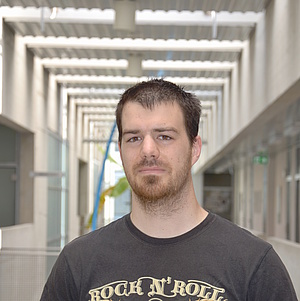
Bernhard Kerbl is a Researcher and Teaching Assistant at the Institute of Computer Graphics and Vision, Technical University of Graz (TU Graz). He holds a Master’s degree in Software Engineering and Economics. His research focuses on parallel and distributed processing, with special emphasis on adaptive rendering and GPU optimization under Prof. Dieter Schmalstieg and Dr. Markus Steinberger. His interests include real-time graphics, high-performance rendering, and Virtual Reality (VR). He contributes to teaching by organizing lectures on computer graphics. His recent work involves publications in areas like adaptive radiance caching and distributed rendering systems. Collaborations include projects with industry and academic partners, though specific grants or lab affiliations are not detailed in the provided texts.
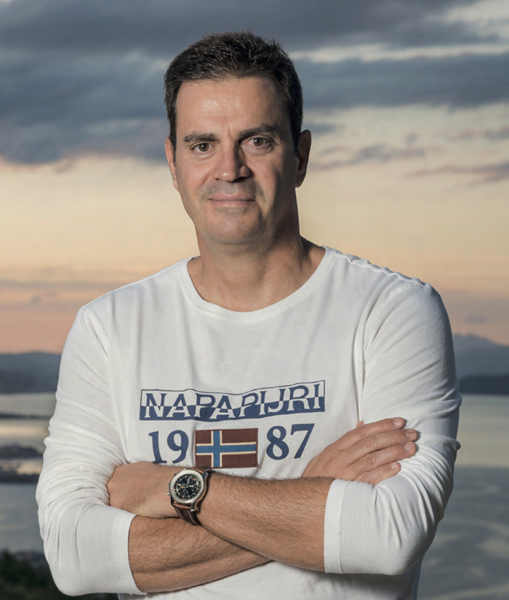
Minos Garofalakis is a Professor at the School of Electrical and Computer Engineering , Technical University of Crete, and serves as Director of the Information Management Systems Institute at the Athena Research & Innovation Center in Athens. He has held senior research roles at Bell Labs, Intel Research, Yahoo! Research, and academic positions at UC Berkeley as an Adjunct Associate Professor. Currently, he is a Senior Research Consultant at Huawei Edinburgh Research Center and co-founder of Agora Labs , focusing on medical data privacy. Research Interests His work centers on Big Data Analytics , encompassing private data analytics , machine learning , federated analytics , and blockchain systems . He has pioneered advancements in data stream management , query optimization , and approximation algorithms , with applications in distributed systems and privacy-preserving technologies. Scientific Awards ACM Fellow (2018) IEEE Fellow (2017) Excellence in Research Award, Technical University of Crete (2015) FP7 Marie-Curie International Reintegration Fellowship (2010-2014) Bell Labs President’s Gold Award (2004) Central Bell Labs Teamwork Award (2003) Patents and Citations Garofalakis holds 29 issued US patents (36 filed) with applications in data management and analytics. His research has garnered over 16,000 citations on Google Scholar and an h-index of 69.
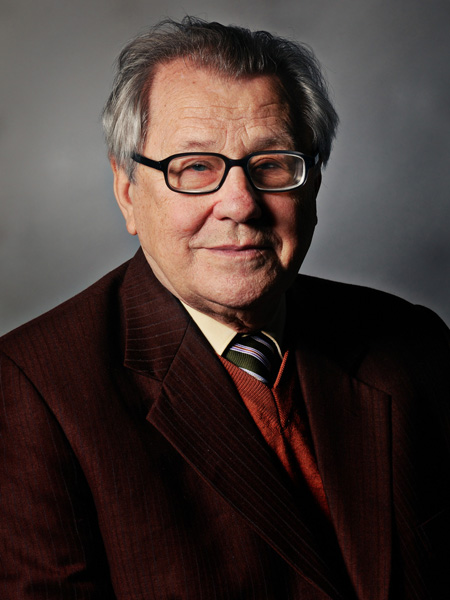
Michał Karoński is a Professor of Mathematics at the Faculty of Mathematics and Computer Science, Adam Mickiewicz University, Poznań, Poland, and serves as head of the Department of Discrete Mathematics. He has held visiting professorships at Emory University, The Johns Hopkins University, Purdue University, and Southern Methodist University since 1975, with ongoing engagements at Emory University since 1992. Research Focus: Discrete mathematics, random discrete structures, graph theory, and theoretical computer science. Leadership Roles: Editor-in-Chief of Random Structures & Algorithms (since 1990), Chairman of the Council of National Science Centre (2010–2016), and organizer of 17 bi-annual conferences on random structures. His research group in random structures gained international recognition in the 1970s. He has authored 60 publications, delivered over 30 plenary lectures, and collaborated globally at institutions like Microsoft Research, Bellcore, and BRICS. Scientific Awards: 2016 Medal 'Homini Vere Academico' (AMU Rector) 2013 Polonia Restituta Officer Cross (President of Poland) 1990 Minister of Science and Higher Education Prize His work spans probabilistic combinatorics, algorithm theory, and graph irregularity, with influential publications on stochastic Kronecker graphs, random intersection graphs, and distributed complexity in matchings.
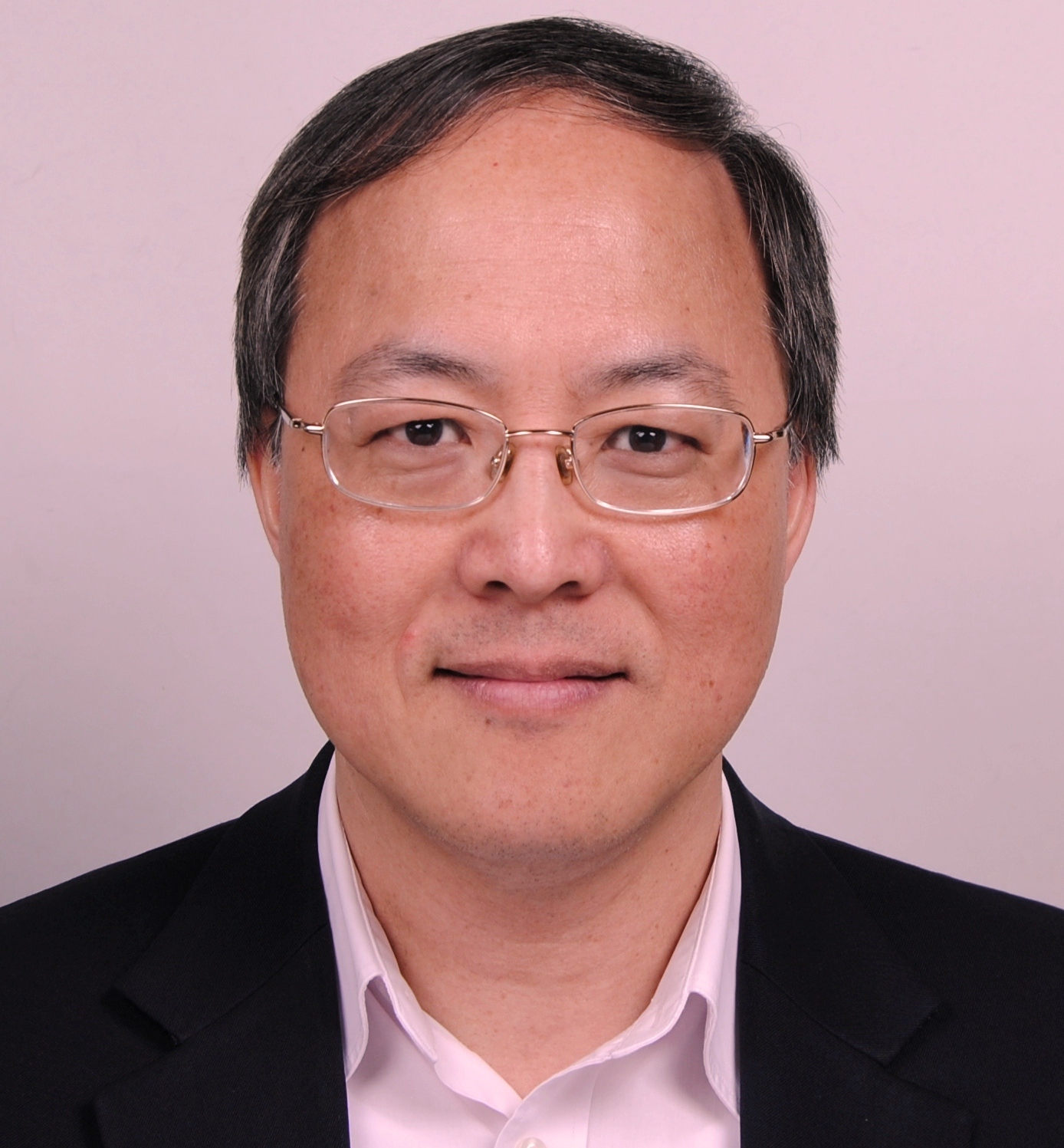
Kin K. Leung is the Tanaka Chair Professor in the Electrical and Electronic Engineering and Computing Departments at Imperial College London. He serves as the Head of the Communications & Signal Processing Group (2009-2024) and Deputy Director of the University Defence Research Centre in Signal Processing. Previously, he held senior technical roles at AT&T Bell Labs and Lucent Technologies. Education: B.S. from Chinese University of Hong Kong (1980), M.S. and Ph.D. from University of California, Los Angeles (1982, 1985). Research Interests: Focuses on wireless technologies, communication networks, stochastic modeling, machine learning, optimization, and emerging quantum computing applications. His work integrates theoretical frameworks with practical implementations in multi-antenna systems, cross-layer network designs, and distributed quantum architectures. Publication Trends: Recent works (2021-2025) demonstrate a strong focus on quantum computing integration with networking systems, federated learning optimizations for edge devices, and reinforcement learning solutions for resource allocation in wireless environments. Awards and Honors: Fellow of Royal Academy of Engineering (2022) IEEE Fellow (2001) IET Fellow (2021) Royal Society Wolfson Research Merit Award (2004-2009) IEEE Communications Society Leonard G. Abraham Prize (2021) IEEE Best Survey Paper Award (2022) Grants and Leadership: Principal Investigator for EPSRC TITAN/HASC Com Hubs, DCIT Centre, and DQC & App (distributed quantum computing). Leads the Communications & Signal Processing Group and co-directs the School of Convergence Science in Space, Security and Telecoms.
Stefan Haeussler is an Associate Professor at the Department of Information Systems, Production and Logistics Management within the University of Innsbruck , Austria. His academic career spans since 2009, starting as a University assistant while completing his PhD in Management. He holds dual diplomas in Business Administration (2009) and Political Science (2010) from the same university. Specializing in production and logistics management, Häussler combines optimization techniques with machine learning approaches to address complex manufacturing challenges. His research focuses on Workload control systems Order release mechanisms Lead time management Reinforcement learning applications Semiconductor manufacturing optimization Behavioral operations in supply chains Recent publications highlight his work on integrated production planning , explainable AI for powertrain control , and dynamic workload allocation . He actively presents at major conferences like Winter Simulation Conference, EURO, and International Working Seminar on Production Economics. Häussler also teaches master's level courses and supervises thesis work in production economics, while serving as a guest lecturer on topics at the intersection of AI and manufacturing.
Martin Feda is an Associated Researcher at the Institute of Computer Graphics, Vienna University of Technology, where he previously served as Assistant Professor. His research focuses on advancing radiosity methods for photorealistic image synthesis, with significant contributions to algorithmic efficiency and visual quality in global illumination rendering. Feda's primary research interests include radiosity, photorealistic image synthesis, and parallel graphics algorithms. He has pioneered techniques for stochastic radiosity, progressive refinement, and parallel implementations to accelerate computation. Key innovations involve hierarchical subdivision algorithms, methods for reducing shadow leaks without explicit meshing, improvements to intermediate radiosity images through directional light, and overshooting techniques to speed up progressive radiosity. His work consistently bridges theoretical advancements with practical applications for handling highly complex scenes. Analysis of his 1991-1997 publication record reveals a clear evolution in radiosity research: early work established parallel implementations on transputers and foundational radiosity algorithms, while later contributions developed sophisticated stochastic and hierarchical methods. The trajectory shows increasing emphasis on Monte Carlo techniques and computational optimizations to achieve greater efficiency and visual fidelity in global illumination, with consistent publication in top-tier graphics venues like Eurographics and Computer Graphics Forum.
Kathrin Hanauer is an Assistant Professor at the University of Vienna, where she is affiliated with the Research Group Theory and Applications of Algorithms and the Research Network Data Science. She conducts research in the design, analysis, and experimental evaluation of fast algorithms, with a focus on Algorithm Engineering connecting theoretical foundations with practical implementations. Her research interests include: Algorithm Engineering for practical algorithm implementation Dynamic algorithms for efficiently handling changing data Graph algorithms and network analysis Reachability problems on directed graphs Ranking problems, particularly the NP-hard Feedback Arc Set problem Network analysis, motif search, and subgraph counting Dr. Hanauer's recent publications demonstrate a strong focus on dynamic graph algorithms, with significant contributions to reachability queries, subgraph counting, and datacenter network optimization. Her work spans both theoretical algorithm design and practical implementation, often with C++ software projects. Notable contributions include the O'Reach algorithm for faster reachability queries in large graphs and several dynamic algorithms for subgraph counting and network analysis. Her scientific contributions: O'Reach: A novel approach to reachability queries in large graphs that outperforms previous methods Dynamic algorithms for four-vertex subgraph counting with efficient update operations Work on demand-aware link scheduling for reconfigurable datacenters Interdisciplinary research on normative reasoning with Aristotelian diagrams Dr. Hanauer actively supervises student research, with numerous completed theses focusing on dynamic graph algorithms, geometric algorithms, and reachability problems. Her lab maintains several software projects related to graph algorithms, including a modular algorithms library for dynamic graphs written in C++ and specialized implementations for reachability queries and subgraph counting.
Prasanna Viktor is a Professor of Electrical and Computer Engineering and Computer Science at the University of Southern California (USC), holding the Charles Lee Powell Chair in Engineering. He also serves as Director of the Center for Energy Informatics and has held leadership roles in interdisciplinary research centers such as the USC Infosys Center for Advanced Software Technologies. With a BE from Bangalore University, ME from Indian Institute of Science, and PhD from Pennsylvania State University, he is a globally recognized expert in reconfigurable computing, FPGA accelerators, and parallel computing. His research focuses on high-performance architectures for applications in networking, security, HPC, and machine learning. Over 25 years, he has secured research grants totaling over $50M, including $12.9M from 2016–2021. He has advised over 70 doctoral students and published over 600 papers, earning 22 best paper awards. His work has led to IP cores with improved throughput, latency, and energy efficiency. Prasanna is a Fellow of the IEEE, ACM, and AAAS, and an elected member of Academia Europaea. He has received prestigious awards such as the W. Wallace McDowell Award (2015) and the Distinguished Alumnus Award from IISc (2019). He currently serves as Editor-in-Chief of the Journal of Parallel and Distributed Computing. He leads interdisciplinary efforts in energy informatics and smart oilfield technologies, bridging computer science, engineering, and energy sectors. His contributions include foundational work in reconfigurable computing and FPGA-based accelerators for diverse applications.
Jozef Gruska is a Professor at the Faculty of Informatics, Masaryk University in Brno, Czech Republic, where he has been a faculty member since 1997. A pioneer in computer science in Czechoslovakia, he has spent over six decades contributing to theoretical computer science, particularly in descriptional complexity, quantum information processing, and automata theory. His international career includes positions at the Slovak Academy of Sciences, University of Hamburg, and University of Minnesota. Gruska's research interests span multiple areas of theoretical computer science. He is considered one of the founders of research into descriptional complexity and systolic automata. His recent work has focused on quantum information processing, quantum automata, and entanglement. He has been instrumental in establishing quantum computing as a significant research area in Europe and Asia, particularly through the AQIS conference series. His perspective on informatics as a fundamental science that encompasses mathematics has been influential in shaping theoretical computer science in Central Europe. His research output shows a clear evolution from classical automata theory to quantum computing, with significant contributions in both areas. The publications demonstrate his ability to bridge theoretical computer science with physics, particularly in understanding quantum phenomena from an information processing perspective. His work on quantum entanglement as an information resource has been particularly influential in establishing connections between computer science and quantum physics. Computer Pioneer Award of the IEEE Computer Society (1996) IFIP Silver Core medal (1995) Gold medal of Masaryk University (1997) Main award of the Rector of Masaryk University (twice) Bolzano medal of Czech Academy of Sciences (2004) Elected member of Academia Europaea (2006) Gruska has been highly active in academic service, founding four major conference series (MFCS, SOFSEM, LATIN, AQIS) and serving on numerous program committees. He led significant research projects including Parallel and Distributed Computing (2005-2011) and Quantum Information Processing (2000-2008). As head of the Graduate School at Masaryk University, he supervised numerous PhD students. His international collaborations, particularly with Asian institutions, have been extensive, with 24 talks in India alone and multiple visits to Japan, Korea, and China. He has organized regular research activities throughout his career, including the weekly ALA (Algorithms, Languages and Automata) seminar for 35 years in Bratislava and Informatics colloquia at Masaryk University for 23 semesters. His leadership in establishing the Central European Quantum Information Processing workshop (annually since 2004) and MEMICS for PhD students (since 2005) demonstrates his commitment to fostering research communities.
Henri Bal is a Full Professor in the Department of Computer Science at Vrije Universiteit Amsterdam's Faculty of Sciences, leading a research group of over 20 members in High Performance Distributed Computing since 2005. His career at the university spans from Research Assistant (1982) to current Professor, with prior appointments including Associate Professor (1994) and split Full Professor roles across Computer Science and Physics (1998). Education: PhD in Computer Science, Vrije Universiteit Amsterdam (1989) MSc in Mathematics, Delft University of Technology (1982) Professor Bal's research integrates fundamental distributed systems with real-world applications, specializing in programming environments for clusters, grids, clouds, and mobile systems. His work spans semantic web reasoning, distributed model checking, and scientific applications in astronomy (LOFAR), high-energy physics (NIKHEF), and climate modeling (Utrecht University), evidenced by systems like Orca, MagPIe, Manta, and Ibis/JavaGAT. Scientific Awards: NWO PIONIER award (1993-1997), comparable to an ERC starting grant Work on Awari recognized in 'The Math Book' as a historic mathematics achievement Multiple first prizes in IEEE International Scalable Computing Challenges (2008, 2010) Two EuroSys Roger Needham PhD awards for his students (2010, 2013) He established foundational Dutch research infrastructure through the NWO DAS project, creating distributed testbeds used by ~100 PhD candidates. As adjunct director of the €40M Virtual Lab for e-Science (2004-2009), he catalyzed the Netherlands eScience Center's formation and participated in EU projects (Gridlab, XtreemOS, Contrail). Currently, he chairs the Department of Computer Science Science committee and explores GPU and smartphone-based distributed systems. His research group actively collaborates with NIKHEF, LOFAR, and Utrecht University on domain-specific applications while advancing hybrid distributed computing frameworks.
Wolfgang Nejdl is a Professor affiliated with TU Wien's Faculty of Informatics, specifically within the Department of Distributed Systems. His expertise lies in distributed systems, networking, and software engineering. He holds academic titles including Dipl.-Ing. and Dr.techn. Affiliation: TU Wien Role: Professor Department: Distributed Systems (E194-02) His research focuses on advancing distributed computing paradigms and their applications in modern informatics systems. No specific awards or grants are listed in the provided text, but his work likely contributes to interdisciplinary fields such as cloud computing and parallel processing.
Sascha Hunold is an Associate Professor at TU Wien, affiliated with the Department of Parallel Computing within the Faculty of Informatics. He holds roles as Vice Dean of Academic Affairs for Informatics Bachelor programs and Curriculum Coordinator for the Master's program in High-Performance Computing. His research focuses on parallel computing, MPI optimization, scheduling algorithms, and reproducible HPC experiments. Education: Habilitation (venia docendi) in Computer Science from TU Wien, PhD in Computer Science from the University of Bayreuth, and MSc in Computer Science from Martin Luther University Halle-Wittenberg. Research interests include MPI collective communication performance, HPC benchmarking, algorithm selection, and task scheduling. He has contributed to tools like ReproMPI and Scheduling.jl. Key awards include Best Paper awards at IEEE CLUSTER 2020 and EuroMPI/Asia 2014, and recognition for reproducible research methodologies. His work emphasizes practical applications of parallel computing in large-scale systems. Teaching responsibilities include courses on parallel algorithms, scientific programming with Python, and HPC project supervision. Active in program committees for major conferences like IPDPS and SC.
Prof. Jesper Larsson Träff is a Full Professor and Head of the Research Unit in Parallel Computing at Technische Universität Wien (TU Wien). His academic role is centered within the Department of Computer Engineering. He holds an MSc and PhD, and has contributed extensively to the field of parallel computing through his research and leadership in international projects. His research focuses on parallel algorithms, scheduling, and optimization of the Message Passing Interface (MPI), with emphasis on high-performance computing (HPC) systems and distributed architectures. Key projects include the Process Mapping initiative (2019–2024), Autotune (2021–2025), and contributions to Exascale Programming Models. He has also led efforts in evaluating MPI performance tools and their reproducibility challenges. Research Areas: Parallel Algorithms, MPI Optimization, HPC, Process Mapping, Collective Communication, and Memory Models. Notable Achievements: Awarded the Best Paper at EuroMPI 2014 and recognized by the Innovation Radar for his work on PGAS-based MPI interoperability in 2018. Teaching: Teaches courses such as Advanced Multiprocessor Programming, Bachelor/Master Thesis supervision, and seminars in Computer Engineering and Theoretical Computer Science. Prof. Träff’s advising includes students researching topics like lock-free data structures, MPI datatype optimization, and task scheduling. His grants span Austrian and EU funding bodies, addressing challenges in exascale computing and reproducible experimental research. He is affiliated with the Vienna Mapping and Sparse Quadratic Assignment (Vienna Mapping) project and actively contributes to international workshops and conferences.
Stephen B. Furber is the ICL Professor of Computer Engineering in the Department of Computer Science at the University of Manchester, UK. He previously served as Head of Department from 2001 to 2004. His educational background includes a PhD in aerodynamics from the University of Cambridge (1974-1980), followed by a Rolls-Royce Research Fellowship at Emmanuel College, Cambridge (1978-1981). Prior to his academic career, he worked at Acorn Computer Ltd in Cambridge from 1981 to 1990, where he progressed from hardware designer to head of Advanced R&D. Professor Furber's research focuses on computer engineering with specialization in low-power system design, asynchronous digital systems, systems-on-chip, networks-on-chip, and neural systems engineering. His work is primarily associated with the Advanced Processor Technologies (APT) group at Manchester, which conducts cutting-edge research in many-core systems and neuromorphic computing, including the development of the million-core SpiNNaker brain-modelling machine. His research has significant implications for energy-efficient computing, brain science, and improving the energy efficiency of machine learning and AI applications. The APT group's work addresses challenges posed by the impending end of Moore's Law through advanced architectural techniques. CBE (Commander of the Order of the British Empire), for services to computer science (2008) Member of Academia Europaea (2008) IET Faraday Medal (2007) Fellow of the IEEE (2005) Royal Society-Wolfson Research Merit Award (2004-2009) Royal Academy of Engineering Silver Medal (2003) Fellow of the Royal Society, UK (2002) Fellow of the Royal Academy of Engineering, UK (1999) Professor Furber leads research that bridges hardware design and neural systems engineering. His work on the SpiNNaker platform represents one of the world's largest neuromorphic computing systems, supporting an open service under the European Human Brain Project with global users. He actively collaborates with industry leaders to address challenges in energy-efficient computing at scale. The Advanced Processor Technologies group he is affiliated with conducts research across multiple domains including many-core systems, neuromorphic computing, and parallel and distributed computing. The group welcomes postgraduate students interested in MPhil or PhD studies and seeks collaborations with companies and academic groups.
Juraj Hromkovič is a Full Professor of Computer Science at the Swiss Federal Institute of Technology (ETH Zurich) , holding this position since 2004. His academic career spans multiple institutions, including Professorships at Christian Albrechts University in Kiel (1994-1997), RWTH Aachen (1997-2003), and earlier roles at Comenius University and the University of Paderborn. Education : 1977–1982: Studied Computer Science at Comenius University, Bratislava 1982: Dr. rer. nat. (PhD equivalent) from Comenius University 1986: CSc (Ph.D.) in Theoretical Cybernetics 1990: Dr. Sc. in Mathematics and Physics Research Interests focus on Theoretical Computer Science , particularly Algorithms , Complexity Theory , and Communication Protocols . His work explores Randomized Algorithms , Approximation Techniques , and Automata Theory , with notable contributions to understanding exponential gaps in computational models and optimizing information dissemination in networks. His publications span books, journal articles, and conference papers addressing foundational and applied aspects of computing. Scientific Awards include membership in the Slovak Academy of Sciences (2001) and two awards from the Slovak Literature Foundation for Scientific Literature (2002, 2004). He has supervised 11 PhD dissertations and one habilitation, demonstrating his commitment to academic mentorship.