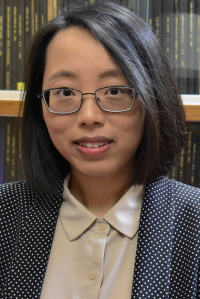
Sam Westrick is an Assistant Professor in the Courant Institute of Mathematical Sciences at New York University . Previously, he was a postdoctoral researcher at Carnegie Mellon University , where he also earned his PhD in 2022 . Research Focus : Provably efficient implementations of high-level parallel programming languages, with key contributions in parallel garbage collection , automatic granularity control , and functional language design Teaching : Currently teaching CSCI-GA.3033-121: Programming Parallel Algorithms at NYU; was a TA for CMU courses 15-210 and 15-122 His work includes the development of MaPLe (MPL) , an open-source parallel functional language with performance comparable to C/C++. Notable awards include the SIGPLAN Reynolds Doctoral Dissertation Award (2023) and best/distinguished paper recognitions at QCE'24, POPL'24, and others. Selected Publications explore topics like quantum circuit simulation , cache coherence specialization , and separation logic for disentanglement . Active in conference service as ML Family Workshop chair and PLDI/SPAA committee member. Mentoring : Advises PhD students, master's and undergraduate researchers at NYU and CMU Collaborators : Umut Acar, Guy Blelloch, Stephanie Balzer, and 20+ others
Alicia Wanless is the Director of the Information Environment Project at the Carnegie Endowment for International Peace, where she leads initiatives to advance evidence-based policy for information-environment governance. Concurrently, she serves as a Visiting Researcher at the University of Bath's School of Management, affiliated with the Institute for Digital Security and Behaviour. She holds a D.Phil. in War Studies from King’s College London and a B.A. from York University. Her research examines the dynamics of information ecosystems, with emphasis on: Disinformation resilience and counter-influence strategies Digital sovereignty and policy frameworks for information integrity Ecological approaches to understanding conflict in digital spaces Generative AI's societal impacts and measurement methodologies Her publications focus on cross-disciplinary themes including crisis response in information environments, AI governance, and democratic resilience. Recent work emphasizes multinational collaboration, metrics for assessing information ecosystems, and historical parallels in disinformation combat. She holds advisory roles with the Aspen Institute’s Commission on Information Disorder and the World Economic Forum’s Global Coalition for Digital Safety. She is developing the Institute for Research on the Information Environment—a multinational facility to accelerate governance-focused research.
Maurice Herlihy serves as the An Wang Professor of Computer Science at Brown University, where he leads research in distributed systems and blockchain technology. His academic career spans decades with continuous contributions to concurrency theory and practical distributed system design. Education: PhD in Computer Science from Massachusetts Institute of Technology (1984) MS in Computer Science from Massachusetts Institute of Technology (1980) BA from Harvard University (1975) His research focuses on fundamental problems in distributed computing, particularly transactional memory systems and blockchain scalability. Recent work centers on overcoming concurrency limitations in blockchain execution through sharding techniques, optimized transaction scheduling, and cross-chain protocols. He investigates how hardware features like trusted monotonic counters can enhance Byzantine fault tolerance in asynchronous networks. Analysis of his 2020-2025 publications reveals a dominant focus on blockchain systems, with 85% of recent work addressing scalability, concurrency, and security challenges. Key trends include sharded permissioned ledgers for enterprise applications, concurrent execution models for Ethereum, and formal verification of cross-chain protocols. His work bridges theoretical distributed computing with practical cryptocurrency system design. He has secured significant research funding including NSF SHF grants for run-time support in concurrent programming. While specific advisees aren't listed in source materials, his teaching of advanced courses like CSCI 1760 (Multiprocessor Synchronization) indicates active graduate mentorship in distributed systems.
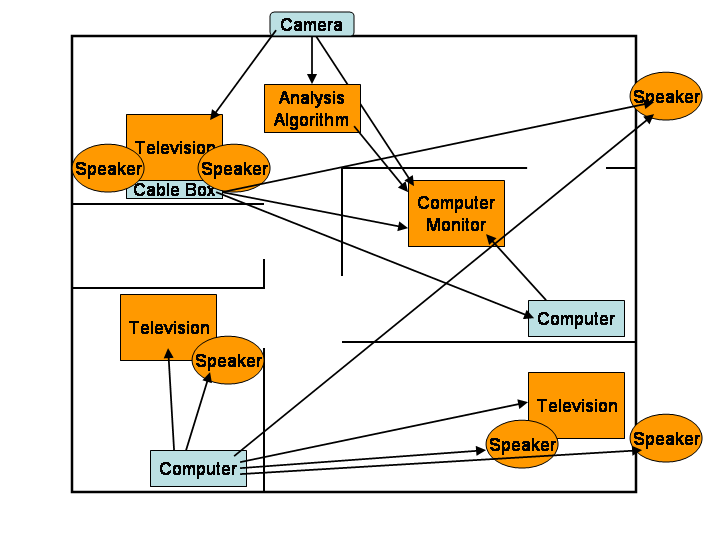
Umakishore Ramachandran is a Professor in the School of Computer Science at Georgia Institute of Technology's College of Computing, where he directs the Embedded Pervasive Lab. He received his Ph.D. from the University of Wisconsin-Madison in 1986 and has led transformative initiatives including the Online MS in Computer Science (OMSCS) program. His research spans distributed systems, edge computing, and real-time sensor networks, with applications in smart surveillance and connected vehicles. His research interests include architectural design of parallel/distributed systems, large-scale situation awareness using camera networks, cloud-edge continuum optimization, and latency-sensitive applications for geo-distributed infrastructures. Recent work focuses on elevating edge computing to parity with cloud resources. His publications show strong emphasis on edge computing innovations (MicroEdge, FogStore), real-time video analytics (EVA, ClairvoyantEdge), and adaptive mobile systems (Foresight). Trends include multi-tier architectures, quality-of-experience optimization, and scalable processing for IoT workloads. Major Awards: IEEE Fellow (2014) NSF Presidential Young Investigator (1990) ACM/IFIP Middleware Best Paper (2022) 3x College of Computing Dean's Awards He has advised 40+ PhD students, with recent graduates at Google, Microsoft, and academia. Current NSF/CPS grants support his work on geo-distributed latency-sensitive applications. He co-leads the STAR Center and Samsung-funded embedded software programs. His Embedded Pervasive Lab develops systems like Stampede (stream processing) and DFuse (sensor fusion), with testbeds in the Aware Home and transportation networks. Teams collaborate with Intel, Microsoft, and Bosch on edge-AI deployments.
Massachusetts Institute of TechnologyUnited States
Xiaokang Qiu is an Associate Professor at the Elmore Family School of Electrical and Computer Engineering , Purdue University , with a Ph.D. in Computer Science from University of Illinois at Urbana-Champaign (2013). His research focuses on Programming Languages and Software Engineering , particularly theories, algorithms, and tools for program synthesis, verification, and logic-based analysis. Research Interests His work addresses: Formal methods for heap-manipulating programs using separation logic Automated deduction and decision procedures for data structures Syntax-guided synthesis of concurrent and bit-vector programs Integration of machine learning with formal verification Scalable verification of hardware memory consistency Network protocol optimization through program synthesis Recent Publications Recent work includes PLDI 2025 on concurrent string synthesis, POPL 2024 on bit-vector synthesis, and POPL 2023 on comparative network design. His tools like STRAND and VCDryad enable automated verification of complex data-structure manipulations. Grants & Awards Recipient of: NSF SHF Small Award (2024, co-PI, $593K) NSF FMitF Award (2023, PI, $750K) Tenure at Purdue (2023) Professional Service Active in program committees for PLDI , POPL , CAV , and ATVA conferences. Developed tools like DryadSynth (PLDI 2020), ImpSynt (OOPSLA 2017), and JSketch (ESEC/FSE 2015).
Nan Li is an Assistant Professor in the Life Sciences Communication department at the University of Wisconsin–Madison . Her research bridges computational methods with interdisciplinary applications, as evidenced by her lab's work in the Discovery Building. Research Interests Dr. Li's work focuses on neural architecture search , GPU optimization , and deep learning efficiency . She develops algorithms for black-box optimization , path planning , and distributed training of neural networks, leveraging Monte Carlo Tree Search and action space design . Publication Trends Recent publications highlight expertise in GPU-accelerated algorithms , model compression , and automated machine learning . Key themes include gradient sparsification , tensor decomposition , and heterogeneous computing . Labs & Collaborations She contributes to the Discovery Building research ecosystem via her lab's website SCIMEP , fostering interdisciplinary innovation in computational sciences.
Yann André LeCun is the Jacob T. Schwartz Professor of Computer Science, Data Science, Neural Science, and Electrical and Computer Engineering at New York University, and serves as Chief AI Scientist at Meta. He holds appointments across multiple NYU institutions including the Courant Institute of Mathematical Sciences, the Center for Data Science, the Center for Neural Science, and the Tandon School of Engineering. LeCun leads the CILVR Lab (Computational Intelligence, Learning, Vision, Robotics) at NYU and is a key figure in Meta's FAIR (Fundamental AI Research) organization. LeCun's research spans machine learning, deep learning, computer vision, robotics, and computational neuroscience. He pioneered convolutional neural networks in the 1980s-90s, which became foundational to modern AI. His recent work focuses on self-supervised learning, energy-based models, and developing architectures for predictive world models that could enable machines to understand and interact with the physical world. LeCun advocates for open-source AI development through projects like Meta's Llama language models. His publication record shows consistent high-impact contributions since the 1980s, with recent work emphasizing self-supervised learning approaches like Joint Embedding Predictive Architectures (JEPA). The 15 most recent publications reveal a strong focus on representation learning, world models, and efficient learning paradigms that reduce reliance on massive labeled datasets. ACM Turing Award (2018) Princess of Asturias Award for Technical and Scientific Research (2022) Member of US National Academy of Engineering (2017) Member of US National Academy of Sciences (2021) Foreign Member of Académie des Sciences, France (2022) Queen Elizabeth Prize for Engineering (2025) VinFuture Grand Prize (2024) LeCun has advised approximately 30 PhD students who now lead AI research at major institutions worldwide. His lab has received significant funding from both government agencies and industry partners to advance fundamental AI research. The CILVR Lab fosters interdisciplinary collaboration across computer science, neuroscience, and engineering disciplines to tackle core challenges in artificial intelligence. LeCun actively engages with policymakers on AI governance, advocating for open research and targeted regulation. His work on open-source AI models represents a strategic approach to democratizing AI development while maintaining safety through community scrutiny. LeCun continues to push the boundaries of what machines can learn and understand about the physical world.