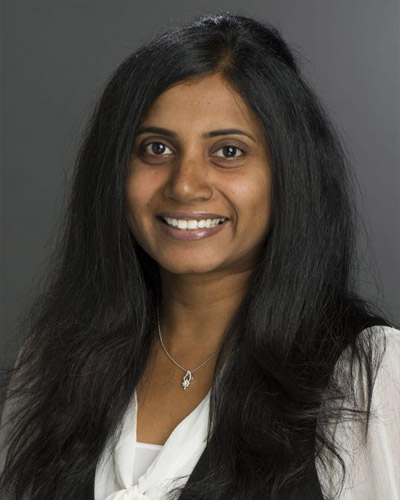
Paula Perez is a Researcher at the National Renewable Energy Laboratory (NREL) within the National Wind Technology Center. She holds a Master's and Bachelor's degree in Civil and Mechanical Engineering from the University of Colorado Boulder, respectively. Her work integrates technical, social, and economic aspects of wind energy to address supply chain challenges and equity opportunities in both land-based and offshore sectors. Education: Master in Civil Engineering, University of Colorado Boulder Education: Bachelor in Mechanical Engineering, University of Colorado Boulder Perez employs cost modeling, geospatial analysis, and stakeholder engagement to solve complex wind energy problems. Her research spans supply chain disruptions, electricity generation, and decentralized energy solutions in regions like Haiti and Argentina. She previously studied urban heat islands as a GEM Fellow at Oak Ridge National Laboratory. Scientific Awards: GEM Fellow
David Shmoys is a Professor at Cornell University, affiliated with the School of Operations Research and Information Engineering and the Department of Computer Science . He co-authored the influential book The Design of Approximation Algorithms (2011), which won the INFORMS Lanchester Prize in 2013, and received the Daniel H. Wagner Prize in 2018 for his work on bike-sharing optimization. His research bridges theoretical computer science and operations research, focusing on Approximation algorithms for NP-hard optimization problems Stochastic and deterministic inventory models Computational sustainability applications Shmoys' recent publications highlight applications in COVID-19 college reopening strategies Algorithmic redistricting for fair political representation Optimization of bike-sharing systems Stochastic inventory control Network design for coflow scheduling His methodological work emphasizes linear programming relaxations and sampling-based approaches for uncertain environments. Scientific awards include ACM Fellowship INFORMS Fellowship SIAM Fellowship NSF Presidential Young Investigator Best Paper Prizes at SODA and other conferences He has advised 27 PhD students, many of whom hold faculty positions at institutions like MIT, Waterloo, and Brown, and serves on editorial boards for journals including Mathematics of Operations Research and Operations Research . Cornell Tech's Institute of Computational Sustainability benefits from his leadership as Associate Director.
Professor Rob Stoll at the University of Utah's Mechanical Engineering Department specializes in environmental fluid dynamics, wildfire modeling, and urban/agricultural canopy flows. His work bridges computational modeling with field measurements across diverse domains. Develops GPU-accelerated QES simulation tools Focuses on wildfire-atmosphere coupling Advances low-cost sensor networks for environmental monitoring Research Trends revealed through 15 recent publications include: Wildfire propagation under heterogeneous terrain/fuel 3D wind modeling in vineyards and urban environments Particle transport in sparse and row-organized canopies Turbulence characterization in stable boundary layers Open-source hardware for atmospheric sensing Scientific Contributions 2008: Best PhD Dissertation (University of Minnesota) 2017-2022: NSF Grant for wildfire modeling 2020-2025: Systems approach for carrot blight management 2023-2026: Vineyard smoke exposure modeling grants Teaching Activities include graduate courses in Numerical Methods for Engineering Systems and advising PhD/Master's theses since 2015.
Nairen Cao is a Faculty Fellow at NYU Tandon School of Engineering, hosted by Professor Martin Farach-Colton. He holds a Ph.D. in Computer Science from Georgetown University, where he was advised by Jeremy T. Fineman and Ophir Frieder. Prior to his current position, he was a Postdoctoral Researcher at Boston College under the guidance of Hsin-Hao Su. Dr. Cao's educational background includes a Ph.D. in Computer Science from Georgetown University. His academic journey demonstrates a strong foundation in theoretical computer science with emphasis on algorithm design and analysis. Dr. Cao's research focuses on the design and analysis of algorithms, particularly in the areas of combinatorial optimization problems, graph algorithms, and parallel and distributed algorithms. His work addresses fundamental challenges in algorithm design for large-scale computational problems, with emphasis on efficient parallel implementations and theoretical guarantees. His research bridges theoretical computer science with practical applications in data analysis and network processing, contributing significantly to the advancement of algorithmic techniques for modern computing architectures. An analysis of Dr. Cao's recent publications reveals a strong focus on correlation clustering algorithms, shortest path problems, and parallel algorithm design. His work demonstrates a consistent trajectory toward developing more efficient algorithms with better approximation guarantees, particularly in the context of parallel and distributed computing environments. A significant portion of his research addresses fundamental graph problems, with applications spanning data mining, network analysis, and machine learning. His most recent work shows increasing sophistication in handling complex optimization problems while maintaining computational efficiency. Outstanding Paper Award at SPAA 2023 Outstanding Paper Award at SPAA 2022 Dr. Cao serves as a reviewer for top-tier theoretical computer science conferences including SPAA, SODA, STOC, FOCS, ITCS, PODC, and ICALP. He is actively involved in the academic community, organizing events such as the NYC Graduate Student TCS Day scheduled for October 18, 2024. His research appears to be supported by NSF funding (CCF-2008422 is mentioned in one of his publications), indicating recognition of the significance and potential impact of his work. Dr. Cao also contributes to the academic community through conference organization and peer review activities, helping to advance the field of theoretical computer science. Dr. Cao teaches CS-GY 6033: Design and Analysis of Algorithms I at NYU Tandon School of Engineering (Fall 2024). He appears to be actively involved in mentoring students through his research collaborations, though specific advisees are not listed in the provided information. His teaching focuses on fundamental algorithm design techniques that form the backbone of computer science education.
Saeid Moslehpour is Chair and Associate Professor in the Department of Electrical and Computer Engineering at the University of Hartford's College of Engineering, Technology, and Architecture. He holds a Ph.D. in Industrial Technology and Computer Engineering (1993) from Iowa State University, along with multiple degrees from the University of Central Missouri including an Ed.Sp in Industrial Technology. Ph.D., Industrial Technology and Computer Engineering - Iowa State University (1993) Ed.Sp, Industrial Technology - University of Central Missouri MS, Electronics - University of Central Missouri BS, Electronics - University of Central Missouri His research focuses on Soft Processors , Electronic Modeling , and Cyber Learning , with expertise in SPICE modeling, FPGA/VHDL/Verilog programming, microprocessor design, telecommunications, and digital signal processing. He has pioneered laboratory developments including wireless, telecommunications, and surface roughness analysis systems. Recent work includes publications on EEG signal analysis , space systems hazard analysis , and embedded electronics . He received academic honors from Phi Kappa Phi and Epsilon Pi societies and maintains certifications in telecommunications and Cisco networking systems. Phi Kappa Phi Academic Honor Society (1993) Epsilon Pi Industrial Technology Honor Society (1993) Excellent Student Scholarship (1992-94) As an ASEE editor and committee chair, he has shaped engineering education policy and assessment. His industry collaborations with Northern Net Technology and Pars Server Tehran demonstrate practical applications of his work.
Zhishan Guo is an Associate Professor in the Department of Computer Science at North Carolina State University, affiliated with the College of Engineering and the Operations Research Graduate Program. His research bridges real-time scheduling theory, machine learning theory, and cyber-physical systems. Ph.D., Computer Science, UNC-Chapel Hill (2016) M.Phil., Mechanical and Automation Engineering, The Chinese University of Hong Kong (2011) B.E., Computer Science and Technology, Tsinghua University (2009) Guo's work spans embedded and real-time systems, parallel/distributed systems, and healthcare information technology, with a focus on integrating machine learning into real-time scheduling and cyber-physical systems. Recent publications highlight advancements in neural network-based scheduling, adversarial defense mechanisms, and healthcare diagnostics for embedded systems. His scientific honors include the ACM SIGBED CAREER Award (2023), Best Paper Awards at RTSS (2023), ICIST (2023), and RTAS (2025), alongside the Humboldt Fellowship (2024). Guo's research is supported by grants from the National Science Foundation and NHK International Corporation, addressing scalable heterogeneous computing and intelligent robotics.
Donna Brown serves as a Research Associate Professor in the College of Engineering at the University of Illinois Urbana-Champaign, with her office located in the Electrical and Computer Engineering Building (2054 ECE Bldg). She maintains active roles in teaching, research, and academic advising within the university's engineering framework. Her academic credentials include: PhD in Computer Science from the Massachusetts Institute of Technology (1978) Dr. Brown's research program integrates theoretical computer science with educational technology, focusing on asynchronous learning systems, web-based education platforms, and VLSI design methodologies. Her algorithmic work spans parallel/distributed architectures, approximation techniques, and graph theory, consistently examined through the lens of societal technology impacts. This interdisciplinary approach bridges engineering rigor with pedagogical innovation. Her distinguished recognition includes: Outstanding Young Woman of America (1984) Campus Award for Innovation in Undergraduate Instruction Using Educational Technologies (1999) College of Engineering Advisor's List for advising excellence (1993, 1996) Dr. Brown has demonstrated exceptional commitment to student mentorship through multiple advising excellence awards, while her 1999 campus-wide teaching honor specifically acknowledges pioneering integration of educational technologies in undergraduate instruction. These accolades reflect sustained contributions to both curriculum development and individualized student guidance within engineering education.
Dr. Ehab Shoubaki is a Researcher at the University of North Carolina at Charlotte , specifically associated with the Duke Energy Smart Grid Laboratory at EPIC. He holds a Ph.D. in Electrical Engineering from the University of Central Florida (2009) and has six years of industry experience as a Senior Controls Engineer at PetraSolar Inc. University: University of North Carolina at Charlotte Role: Lab Manager, Duke Energy Smart Grid Laboratory Email: eshoubak@charlotte.edu His research focuses on cooperative controls and protection mechanisms for distributed power electronics-based energy resources (DERs) , emphasizing their impact on power distribution networks. He has authored/co-authored over 20 publications, with recent work addressing real-time co-simulation, grid-forming inverters, and hardware-in-the-loop (HIL) testing for renewable energy integration. Key Research Areas: Smart Grids, Distributed Energy Resources, Power Systems, Control Systems, Power Electronics His technical contributions in co-simulation testbeds, virtual synchronous machines, and solid-state circuit breakers highlight his expertise in advancing grid stability and reliability through innovative power electronics design.
Greg Herschlag is a Professor in the Department of Mathematics at Duke University, with research spanning gerrymandering, computational fluid dynamics, and high-performance computing. His work combines mathematical rigor with interdisciplinary applications. Affiliation: Duke University, Department of Mathematics Research Focus: Gerrymandering, Redistricting Algorithms, Lattice Boltzmann Methods, Monte Carlo Sampling Gregory Herschlag specializes in quantitative approaches to political redistricting and computational physics. His redistricting work employs Markov chain Monte Carlo methods, dimension reduction, and algorithmic fairness to analyze partisan bias. In fluid dynamics, he explores GPU optimization and memory access patterns for lattice Boltzmann simulations. Recent publications focus on redistricting algorithms, computational methods for gerrymandering, and fluid dynamics. He contributes to Duke's Data+ program through projects on topics like Durham school zoning, community safety, and climate resilience. Labs/Teams: Collaborates with Duke's Argus Lab on AI web scraping analysis and engages in interdisciplinary teams for climate and social impact projects.
Cauligi Raghavendra is a Professor of Electrical Engineering and Computer Science at the University of Southern California's Viterbi School of Engineering. He has held significant administrative roles including Vice Dean for Global Academic Initiatives (current), Senior Associate Dean for Strategic Initiatives (2006-2011), and Department Chair (2003-2005). His academic career spans multiple institutions including Washington State University (Boeing Chair Professor, 1992-1997) and The Aerospace Corporation (1997-2001). As a leading researcher in network systems, his work focuses on Computer Networks , Wireless and Sensor Networks , Parallel and Distributed Computing , and Machine Learning for Medical Applications . His research has produced groundbreaking contributions in inter-datacenter WAN optimization, sensor network energy efficiency, and medical imaging analytics through deep learning. His publications demonstrate consistent innovation across decades, with recent work (2023) developing interpretable frameworks for audio biomarker analysis in healthcare and (2021) creating machine learning pipelines for astronomical discovery. Earlier patents (1997-2000) established foundational techniques for ATM network routing, while his 2015 oilfield applications showcase cross-domain impact in industrial predictive maintenance. Dr. Raghavendra's recognition includes: Presidential Young Investigator Award (1985) IEEE Fellow designation His technical leadership appears in over 150 conference proceedings, patents, and journal papers spanning topics from fault-tolerant hypercube architectures (1980s-1990s) to modern cloud networking and medical AI applications.
Hoa Vu is an Associate Professor in the Department of Computer Science at San Diego State University's College of Engineering. His research spans theoretical computer science and machine learning with applications to data streams and distributed systems. Research interests focus on sketching, streaming, and distributed algorithms with recent work integrating machine learning predictions into classical algorithmic frameworks. Key contributions include advancements in densest subgraph detection, maximum coverage problems, and graph decomposition techniques for distributed environments. His publication trends show consistent contributions to top theoretical conferences (STOC, PODC, PODS) with increasing focus on learning-augmented algorithms since 2022. Recent work combines classical theoretical guarantees with practical machine learning applications. NSF award for research funding Program committee member for ISAAC 2025 Dr. Vu advises graduate students in theoretical computer science and algorithms research. His work demonstrates strong connections between theoretical foundations and practical streaming/distributed systems applications, particularly in graph algorithms and data summarization.
Paul Beame is a Professor and Associate Director for Facilities at the Paul G. Allen School of Computer Science & Engineering (University of Washington). He earned his B.Sc. in Mathematics (1981) , M.Sc. in Computer Science (1982) , and Ph.D. in Computer Science (1987) from the University of Toronto, followed by postdoctoral work at MIT (1986-87). His research spans computational complexity , proof complexity , quantum computing , and formal verification , with applications to databases and AI. Research Interests : Computational complexity theory, proof complexity, SAT-solving, quantum algorithms, time-space tradeoffs, communication complexity, circuit complexity, knowledge representation, probabilistic inference. Recent Publications : Focus on quantum time-space tradeoffs, multiparty communication complexity, formal verification of nonlinear arithmetic, and lower bounds for circuit and proof systems. Articles appear in ACM Transactions on Computation Theory , SIAM Journal on Computing , and conferences like STOC, FOCS, and NeurIPS. Teaching & Service : Active in theoretical computer science education and professional service, including program committee roles and tutorials. Personal : Engages in sports like squash and softball.
Rajendra Boppana, Ph.D., is a Professor in the Department of Computer Science at the University of Texas at San Antonio (UTSA). His research focuses on computer and information security, computer networks, and cybersecurity. He holds a Ph.D. in Computer Engineering from the University of Southern California, an M.Tech. in Computer Technology from the Indian Institute of Technology, New Delhi, and a B.Tech. in Electronics and Telecomm Engineering from Mysore University. His research emphasizes detecting ransomware, network anomalies, and cyber threats, with contributions to secure routing, parallel computing performance prediction, and pseudorandom number verification. Notable areas include live ransomware detection, generative honeypot systems, and vulnerability analysis in blockchain and software-defined networks. His work spans 30+ years, with publications on network security, parallel architectures, and intrusion detection. He is affiliated with the College of Sciences at UTSA, contributing to cutting-edge research in computational and cybersecurity domains.
Dhireesha Kudithipudi is a Professor in the Department of Computer Science at the University of Texas at San Antonio (UTSA) and Director of the MATRIX AI Consortium. Her work focuses on advancing neuromorphic computing, energy-efficient machine learning architectures, and lifelong learning systems. She holds a Ph.D. in Electrical and Computer Engineering from UTSA and an M.S. in Computer Engineering from Wright State University. Her research interests include AI algorithms, neuromorphic hardware design, spiking neural networks, and memristor-based systems. She leads initiatives in neuromorphic benchmarking (NeuroBench), energy-efficient computing roadmaps (EES2), and collaborative frameworks like the Neuromorphic Commons (THOR). Her lab develops neuromorphic chips with on-device learning capabilities, such as the Genesis chip, and explores applications in edge computing. Dr. Kudithipudi has pioneered techniques for continual learning in spiking networks, probabilistic metaplasticity, and low-precision numerical formats (e.g., PositCL). Her work bridges theoretical neuroscience principles with practical hardware implementations, emphasizing sustainability and scalability. She also contributes to NSF-funded projects like EFRI BRAID and NAIAD, advancing interdisciplinary AI research. Her lab’s collaborations include developing the NeuroBench framework for fair benchmarking and exploring neuromorphic systems for tasks like video/activity recognition and time-series forecasting. She advises on hardware-software co-design strategies for efficient neural network deployment on constrained devices.
Samuel Chevalier is an Assistant Professor in the Department of Electrical and Biomedical Engineering at the University of Vermont, part of the College of Engineering and Mathematical Sciences. A 6th generation Vermonter, he returned to his alma mater after completing his PhD at MIT and a postdoctoral fellowship at the Technical University of Denmark. Dr. Chevalier's research focuses on three primary areas: Designing industry-relevant optimization and control strategies for renewable-based power grids Building trustworthy machine learning tools for safety-critical engineering applications Developing advanced data-driven modeling techniques for the power and energy sectors His publication record demonstrates a strong interdisciplinary approach bridging power systems engineering and machine learning, with recent work spanning GPU-accelerated optimization, neural network verification for power systems, and novel approaches to renewable energy integration. His research addresses critical challenges in modern power grid operations as systems transition toward higher renewable penetration. Dr. Chevalier has received notable recognition including a prestigious Marie Skłodowska-Curie Postdoctoral Fellowship. He teaches EE5310 - Power System Analysis and in fall 2023 launched the Grid Verification Lab at UVM, where he is recruiting PhD students to work on network compression, machine learning verification, and distributed energy resource dynamics.