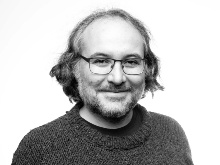
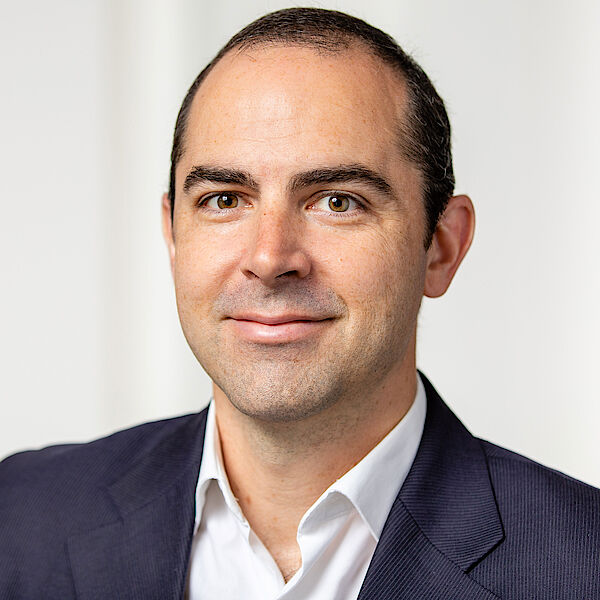
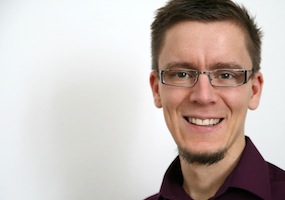
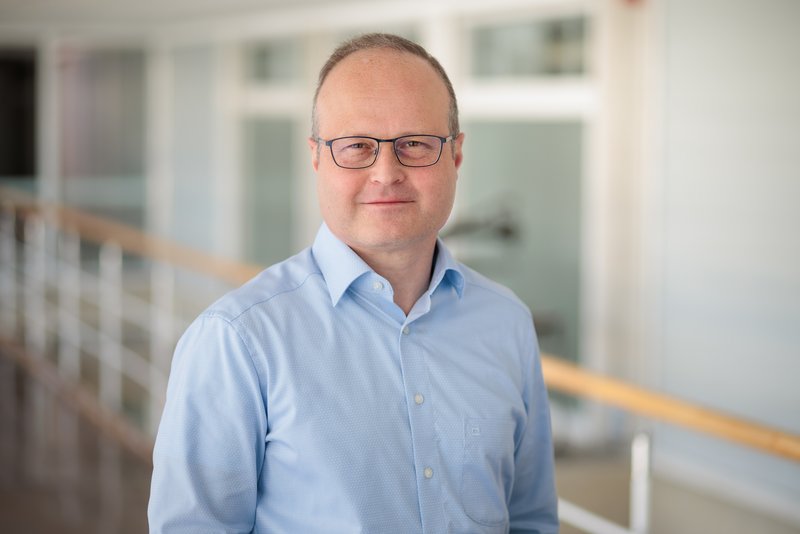
Daniel Hernández is a Postdoctoral Researcher at the Institute for Artificial Intelligence (KI) under the Cluster of Excellence IntCDC at the University of Stuttgart. He is part of the Analytic Computing group within the Institute for Parallel and Distributed Systems (IPVS). His work focuses on Semantic Web technologies , particularly SPARQL , RDF , and knowledge graph applications in interdisciplinary design workflows . Research Trends : His publications (2015–2025) emphasize semantic query processing , provenance computation , and interoperability between architectural data and knowledge graphs . Key innovations include the eSPARQL language for epistemic queries, NPCS for native provenance in SPARQL, and BHoM to bhOWL for integrating building data with ontologies. Teaching & Collaborations : He has held teaching roles at the University of Stuttgart ( Human-Computer Interaction with Knowledge Graphs ), University of Aalborg ( Group Supervisor ), and University of Chile ( Lecturer for The Web of Data ). Collaborations span institutions like Buro Happold , TU Wien , and INRIA , with publications in journals like Proceedings of the VLDB Endowment and conferences such as WWW and ISWC .
Volker Markl is a Professor at Technische Universität Berlin in the Institute of Software Engineering and Theoretical Computer Science, with additional affiliations at the Berlin Institute for the Foundations of Learning and Data (BIFOLD) and the German Research Center for Artificial Intelligence (DFKI). His research spans database systems, stream processing, and distributed data management with significant contributions to both theoretical foundations and practical implementations. Markl's research interests focus on next-generation data management systems, particularly for streaming and IoT environments. His work addresses critical challenges in distributed query processing, system integration, and performance optimization. He has pioneered approaches for stream processing in volatile infrastructures and developed innovative techniques for GPU-accelerated database operations. His NebulaStream project represents a major contribution to distributed stream processing systems. His publication record demonstrates consistent impact across top database venues including VLDB, SIGMOD, and ICDE. Recent work shows increasing focus on machine learning integration with database systems, privacy-preserving query processing, and educational approaches for teaching large-scale data management. Markl has mentored numerous researchers who have become prominent in the database community, with frequent collaborators including Steffen Zeuch, Tilmann Rabl, and Philipp Grulich. His leadership extends to major research initiatives and collaborations across European institutions.
Guillermo Gallego is a Professor of Robotic Interactive Perception at the Faculty of Electrical Engineering and Computer Science , Technische Universität Berlin , holding the Einstein Center Digital Future (ECDF) Professorship since 2019. His research bridges robotics , computer vision , and applied mathematics , focusing on optimization methods for interdisciplinary imaging and control problems. Education : PhD in Electrical and Computer Engineering (Georgia Tech, 2011), MS in Mathematics (Georgia Tech, 2009), MS in Electrical Engineering (Georgia Tech, 2007), MS in Mathematical Engineering (Universidad Complutense de Madrid, 2005). Gallego's work explores event-based vision to enhance robot perception through low-latency sensing and real-time 3D reconstruction . He previously held postdoctoral positions at the Institute of Neuroinformatics (University of Zurich/ETH Zurich) and Technical University of Madrid (Marie Curie Experienced Researcher). His interdisciplinary projects span applications in ocean remote sensing , autonomous driving , and space exploration . Key scientific awards include the Fulbright Fellowship (2005-2010) and Marie Curie Experienced Researcher (2011-2014). His recent publications focus on event camera algorithms for optical flow , SLAM , and noise estimation , reflecting his leadership in event-based vision research. Collaborations include institutions like University of Zurich , Georgia Tech , and University of Pennsylvania . Research Grants : Funded through ECDF and Marie Curie programs. Labs : Affiliated with the Einstein Center Digital Future and Institute of Neuroinformatics (Zurich/ETH Zurich).
Jianfeng Gu is a Ph.D. Candidate and researcher at the Technical University of Munich (TUM), affiliated with the Department of Computer Science and specifically the Chair of Computer Architecture and Parallel Systems led by Prof. Martin Schulz. He maintains an active research profile with numerous publications and contributes to the academic community through teaching seminars on Cloud Computing. His academic path began with a Bachelor of Software Engineering from Sun Yat-sen University in China (2014-2018), followed by a Master of Engineering from the same institution (2018-2020). Since April 2021, he has been pursuing his Ph.D. at TUM, advancing research in computing systems and architectures. Gu's research focuses on Heterogeneous Serverless Computing for Deep Learning applications, specializing in GPU, FPGA, and NPU technologies within serverless environments. His work addresses critical challenges in resource allocation, auto-scaling, and performance optimization for serverless inference systems. Additionally, he investigates Real-time Autonomous Driving Systems , developing advanced perception techniques through sensor fusion (particularly stereo-LiDAR fusion) for high-precision depth sensing and object detection in autonomous vehicles. His interdisciplinary approach bridges hardware acceleration, cloud infrastructure, and AI applications. His publication trajectory shows a progression from foundational computer vision and autonomous driving research (2018-2020) toward increasingly sophisticated work on serverless computing and federated learning (2021-2025). Recent publications focus on efficient resource sharing in heterogeneous serverless environments, with particular attention to GPU and FPGA allocation strategies that maintain service level objectives while optimizing costs. His work demonstrates strong technical depth across multiple computing domains. Best Paper Award at IEEE/ACM DATE 2021 15+ publications with 185+ citations Research featured in top venues for computer architecture and cloud computing As a Ph.D. researcher, Gu teaches seminars on Cloud Computing (IN2107) and contributes to multiple research projects at TUM's Chair of Computer Architecture and Parallel Systems. His work is supported by the department's research infrastructure and collaborations with faculty including Prof. Martin Schulz and Prof. Michael Gerndt. Gu works within TUM's advanced computing research environment, contributing to projects related to high-performance computing, serverless architectures, and autonomous systems. His research group maintains specialized hardware and software infrastructure for evaluating modern HPC architectures and accelerators, including FPGA clusters and GPU resources for deep learning research.
Raffi Khatchadourian is an Associate Professor in the Department of Computer Science at Hunter College and the Graduate Center of the City University of New York (CUNY). His research focuses on techniques for automated software evolution, particularly automated refactoring and source code recommendation systems, with the goal of easing the burden associated with evolving large and complex software through automated tools. He also conducts research on the automated analysis of Object-Oriented programs. Ph.D., Computer Science & Engineering, Ohio State University (2011) MS, Computer Science & Engineering, Ohio State University (2010) BS, Computer Science, Monmouth University (2004) Khatchadourian's research spans multiple areas of software engineering and programming languages, with particular emphasis on automated software evolution techniques. His work addresses critical challenges in refactoring legacy systems to modern language constructs, optimizing parallel processing in Java 8 streams, and addressing technical debt in machine learning systems. His recent research has expanded into deep learning program transformation, where he develops techniques to convert imperative deep learning code to more efficient graph execution models while ensuring safety. His approach combines static analysis, program transformation, and empirical validation to create practical tools that developers can integrate into their workflows. Analysis of Khatchadourian's recent publications reveals a strong focus on bridging the gap between theoretical program analysis and practical software engineering challenges. His work increasingly intersects with machine learning systems, examining both how to improve ML code through refactoring and how to ensure safety in deep learning frameworks. The research demonstrates consistent evolution from foundational work on Java language features toward more complex systems involving concurrency, deep learning, and automated program transformation. Distinguished Paper Award at SCAM '18 for work on Java 8 stream optimization EAPLS Best Paper Award at FASE '20 for study on Java 8 stream usage EAPLS Distinguished Paper Award at FASE '25 for Deep Learning refactoring work Best Paper Award nominee at IJCAI '24 for AI safety framework Khatchadourian actively mentors graduate and undergraduate students, with several advisees going on to successful academic and industry positions. His former Ph.D. student Tatiana Castro Vélez accepted a tenure-track Assistant Professor position at the University of Puerto Rico. He has supervised numerous master's theses and undergraduate research projects, often resulting in co-authored publications at top software engineering venues. His research has been supported by various grants, though specific funding details are not prominently featured in the available information. Through his work on tools like Fraglight for aspect-oriented programming and Hybridize Functions for deep learning refactoring, Khatchadourian has established a research group focused on practical program analysis and transformation. His lab develops Eclipse plugins and other IDE-integrated tools that help developers with automated refactoring, bug detection, and code optimization. The group maintains active collaborations with researchers at other institutions and contributes to open-source projects on GitHub.
Val Tannen is a Professor at the University of Pennsylvania, specializing in database systems, provenance analysis, and programming languages. His research focuses on data management, query languages, and systems like DBSP and ORCHESTRA. Collaborations include work with co-authors such as Zachary Ives, Susan Davidson, and Todd Green. Key research interests include provenance for databases, incremental view maintenance, and data integration. His work bridges theoretical foundations and practical applications in systems like DBSP for stream processing and ORCHESTRA for collaborative data sharing. Publications span provenance frameworks, query optimization, and distributed systems. While no awards are explicitly listed, his contributions to database theory and systems are widely recognized.
Manuel Penschuck is a Research Fellow at the Institute of Computer Science , Goethe University Frankfurt, Germany. His research focuses on algorithm engineering, graph theory, and scalable network generation, with emphasis on parallel computing, I/O-efficient algorithms, and random graph models. He actively contributes to conferences like ESA, SEA, and IPDPS, and has co-authored publications in top venues including LIPIcs , IEEE Transactions , and SIAM . His work includes engineering algorithms for non-linear preferential attachment , parallel shuffling , and hyperbolic graph generation . He has co-organized program committees for ESA, EuroPar, and SEA, and his collaborations span institutions such as MPI-INF, TU Darmstadt, and Australian National University. Recent publications highlight advances in uniform graph sampling, geometric network models, and distributed systems. His research integrates theoretical rigor with practical implementation, addressing challenges in big data and high-performance computing. He is a key contributor to the Networkit toolkit for large-scale network analysis.
Dominik Huber is a Ph.D. candidate and researcher at the Technical University of Munich , affiliated with the Chair of Computer Architecture & Parallel Systems . His work focuses on Dynamic Resource Management in High-Performance Computing (HPC) , with expertise in Parallel & Distributed Programming Models and Hardware-aware programming . He has actively contributed to teaching courses like Parallel Programming Systems and Advanced Computer Architecture . His research emphasizes adaptive resource allocation in hybrid HPC clusters, leveraging technologies such as MPI Sessions , PMIx , and frameworks like LAIK and XBraid . Recent projects include the DynRes software suite for dynamic resource management and collaborations on quantum-HPC integration. Huber has advised students on topics ranging from Dynamic Resource Management in Charm++ to CI Systems for HPC Software , and his publications address challenges in malleability, scheduling, and power-constrained environments. Current affiliations include participation in the SEANERGYS (EuroHPC) and PlasmaPEPS projects.
Thomas Neumann is a full-time Professor at the Department of Database Systems within the TUM School of Computation, Information and Technology at the Technical University of Munich . Research Focus : Query optimization and processing in database systems Hardware-aware database engine design Scalable RDF/semantic data management Hybrid OLTP/OLAP processing Join optimization algorithms Scientific Recognition : Gottfried Wilhelm Leibniz Prize (2020), Germany's most prestigious research award Academic Contributions : His recent publications focus on high-performance query execution strategies, hybrid transactional/analytical systems using virtual memory snapshots, and scalable graph processing techniques. These works demonstrate consistent advancements in database engine optimization for modern hardware architectures and large-scale semantic data management.
Dr. Wanja Hofer is a former research staff member at the Department of Computer Science 4 (Distributed Systems and Operating Systems) at Friedrich-Alexander-Universität Erlangen-Nürnberg (FAU). She specialized in embedded systems, real-time operating systems, and aspect-oriented programming. Her research focused on optimizing hardware-centric systems like Sloth and CiAO, addressing challenges in interrupt handling, scheduling, and software product line variability. Her academic journey includes a PhD in 2014 titled Sloth: The Virtue and Vice of Latency Hiding in Hardware-Centric Operating Systems . She contributed to key projects such as Sloth (time-triggered RTOS) and CiAO (aspect-oriented OS family), emphasizing scalability and configurability for automotive and embedded domains. Hofer also held roles like Web chair for EuroSys 2009 and co-maintained the EuroSys Research Directory. Her teaching involved Basics of Systems Programming in C and OS-related seminars. She advised over 15 graduate students on topics ranging from MPU-based task isolation to filesystem-level variability management. Notable contributions include hardware-accelerated interrupt handling, aspect-oriented OS design, and embedded system energy optimization. Hofer currently works at Brose Fahrzeugteile, applying her expertise in embedded systems and real-time computing to automotive technologies. Her work bridges academic innovation with industrial applications, particularly in safety-critical and resource-constrained environments.
Prof. Wolfgang Blochinger is a Professor in the Department of Computer Science at Reutlingen University, specializing in Services Computing and IT Security. He leads teaching programs in Wirtschaftsinformatik (Business Informatics) at both Bachelor and Master levels, focusing on foundational topics such as Programming Basics, Operating Systems, IT Security, Cloud Computing, and Big Data Technologies. His research emphasizes Cloud Computing and High Performance Computing, particularly in elasticity control, parallel processing, and cloud resource optimization. His research projects include developing elastic parallel systems for HPC applications, cloud migration strategies, and automated cloud service generation. Notable contributions involve frameworks like TASKWORK for elastic task parallelism and the Elasticity Description Language for cloud applications. He has published extensively on serverless computing, cost-efficient cloud resource utilization, and container-based isolation techniques. Prof. Blochinger collaborates with industry partners through the university's labs, including the AI-Reallabor AIDA and Cloud Lab. His work bridges academia and industry, addressing real-world challenges in distributed systems and cloud infrastructure. Current research trends focus on self-tuning cloud services and adaptive parallel algorithms for scalable computing environments.
Yue Li is an Associate Professor at the School of Computer Science, Nanjing University, where they co-run the PASCAL Research Group with Tian Tan. Their work focuses on static program analysis techniques and tools for programming languages, software engineering, security, and hardware verification. PhD in Computer Science from UNSW Sydney (2016) Postdoctoral research at Aarhus University (Denmark) and UNSW Sydney B.Eng and M.Eng from Northwestern Polytechnical University (2010, 2012) Research interests center on Program Analysis and Programming Languages , with a focus on: Pointer analysis for database-backed applications Context sensitivity optimization Reflection analysis in Java/Android Operational semantics for hardware languages Distributed dataflow analysis frameworks Developer-friendly static analysis tools Key publication trends (2016-2025) span static analysis , pointer precision , reflection handling , and tool frameworks across conferences like OOPSLA, PLDI, ICSE, ISSTA, and journals including TOPLAS and IEEE TSE. Notable artifacts include Tai-e and Chianina systems. 2025: ICSE Best Artifact & Distinguished Paper Awards 2024: IEEE TSE Publication on Generic Sensitivity 2023: OOPSLA Distinguished Artifact, SPLASH/ECOOP committees 2021: National Youth Talent Support Program, ZiJin Scholar 2016: ECOOP Distinguished Paper, CGO Best Paper As co-PI of PASCAL Research Group, they lead projects on precision-guided analysis, microservice systems, and cloud-based dataflow frameworks, with teaching awards for SICP and Software Analysis courses.
Prof. Dr. Rolf Wanka is a Professor at the Department of Computer Science, Friedrich-Alexander-Universität Erlangen-Nürnberg (FAU), specializing in efficient algorithms and combinatorial optimization. His research focuses on swarm intelligence, discrete optimization algorithms, and scheduling problems, particularly in timetabling and robotics applications. Education : Sc.D. (Dr. rer. nat.) in Computer Science His work includes theoretical and experimental analyses of particle swarm optimization (PSO) algorithms, addressing runtime complexity, stagnation behavior, and convergence properties. He has developed novel heuristics for timetabling and sorting problems, with applications in multi-robot systems and medical imaging. Notable collaborations include studies on Markov chain-based PSO and fairness in academic scheduling. Key trends in his recent publications span swarm intelligence , discrete optimization , and scheduling heuristics , with a focus on robust timetabling , runtime analysis , and stochastic algorithm behavior . While no explicit scientific awards are listed, his mentorship in the Max Weber-Programm highlights his advisory role in academia. His publications demonstrate interdisciplinary applications of algorithms in robotics , medical imaging , and parallel computing , leveraging both theoretical rigor and practical experimentation. The full description below provides exhaustive details on his academic contributions and affiliations.
Prof. Dr. Andreas Herkersdorf is a Full Professor and Chair of Integrated Systems at the Technical University of Munich (TUM) School of Computation, Information and Technology. His research focuses on application-specific multicore processors (MPSoC), FPGA-based prototyping, fault-tolerant systems, and energy-efficient architectures, with applications in IP packet processing, automotive systems, and visual computing. He has received multiple IBM innovation awards and serves on editorial boards including the DFG Review Board for computer architecture. Education: Dipl.-Ing. Electrical Engineering (TUM, 1987), Dr. techn. Electrical Engineering (ETH Zurich, 1991) Research: MPSoC architectures, autonomic computing, NoC resilience, FPGA acceleration, and self-optimizing systems. Awards: IBM Master Inventor (1998), IBM Outstanding Technical Achievement Award (2001), multiple IBM Innovation Achievement Awards (1996-2003) His recent publications emphasize hardware/software co-design, machine learning integration for runtime optimization, and network-on-chip innovations. He collaborates on projects involving 6G systems, smartNICs, and automotive communication protocols.
Prof. Markus Reisinger is a Professor for Industrial Organization and Microeconomics at the Frankfurt School of Finance & Management since 2015, heading the Economics & Law Department. Previously, he served as a Professor at WHU – Otto Beisheim School of Management (2011–2015). He holds a Ph.D. and undergraduate degree from the University of Munich. His research focuses on Industrial Economics and Competition Policy, with publications in top journals like the Journal of Political Economy and Management Science . He teaches Microeconomics I/II and Strategic Competition, and has conducted research visits at institutions such as the Kellogg School of Management and the Booth School of Business. Research interests include advertising strategies, market structure, strategic competition, and vertical integration. His work often addresses regulatory implications in digital markets, competition policy, and platform economics. Recent articles explore personalized pricing, segmentation in two-sided markets, and the impact of interchange fee regulations. Prof. Reisinger has contributed to edited volumes, including a chapter on the Economics of Internet Media in the Handbook of Media Economics . His teaching and research reflect a strong emphasis on applying theoretical frameworks to real-world competition dynamics.