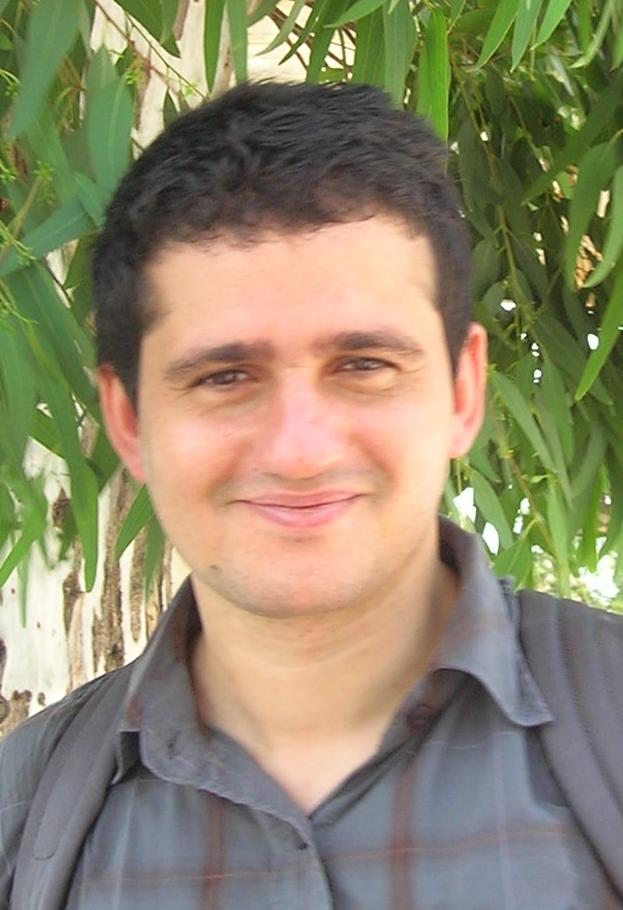
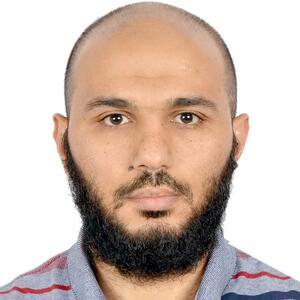
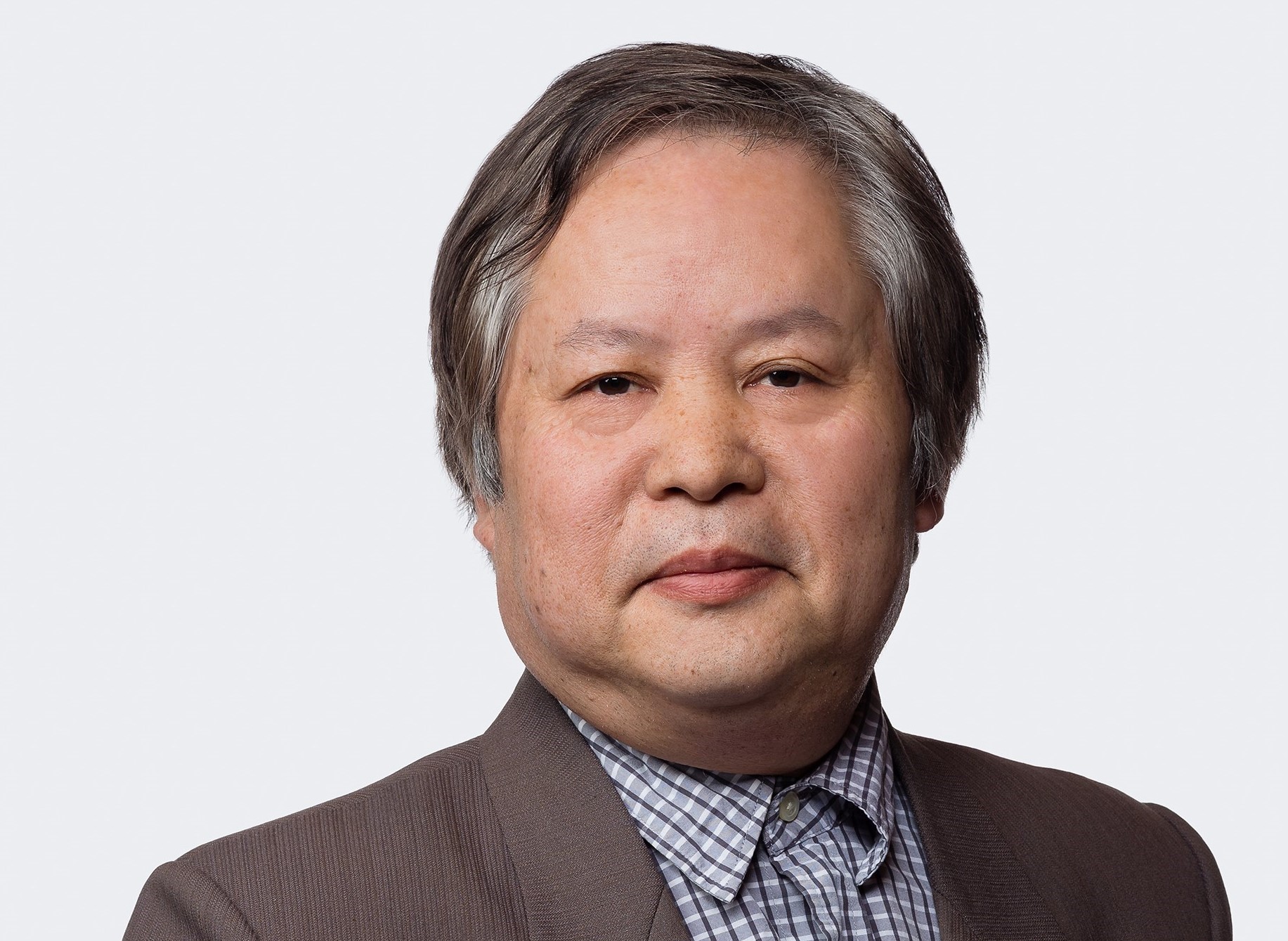
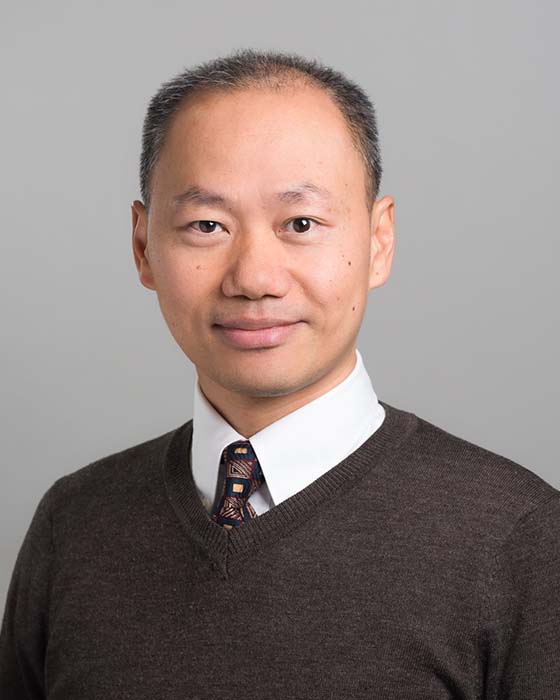
Mark R. Greenstreet is a Professor in the Department of Computer Science at the University of British Columbia (UBC). He holds a BSc from Caltech (1981), MA (1988), and PhD (1993) in Computer Science from Princeton University. His primary research focuses on formal verification of analog and mixed-signal (AMS) circuits, VLSI design, and hybrid systems. Notable contributions include the STARI signaling technique, tools like Coho for reachability analysis, and PReach for parallel model checking. He has advised numerous graduate students and collaborators, including Brad Bingham, Chao Yan, and Yan Peng. His work has been recognized with a Best Paper Award at the ASYNC Symposium. Supported by NSERC, Intel, and Oracle, his research bridges theoretical foundations and practical challenges in circuit design and verification. He teaches courses on formal methods, computer architecture, and automata theory at UBC.
Ismail Ben Ayed is an Associate Professor at École de technologie supérieure (ETS) in Montreal, Canada, holding the ETS Research Chair on Artificial Intelligence in Medical Imaging. His research bridges computer vision, optimization, and medical image analysis to develop advanced algorithms for clinical applications, with particular focus on cardiac and neurological imaging. His research program centers on medical image segmentation using novel optimization techniques, graph-based methods, and deep learning models. He pioneers approaches for handling volumetric bias, shape compactness, and distribution matching in MRI and cardiac imaging, directly addressing clinical challenges in spine labeling, ventricle segmentation, and tumor detection. His work emphasizes mathematical rigor combined with practical medical relevance. Analysis of his 15 most recent publications (2014-2017) reveals dominant themes in medical image segmentation (80% of works), particularly for cardiac MRI (35%) and neurological applications (25%). Key methodological contributions include distributed optimization frameworks (20%), advanced graph cut techniques (30%), and deep learning architectures (25%), published consistently in top-tier venues including CVPR, MICCAI, and TPAMI. His scientific recognition includes: MICCAI travel award (2017) Outstanding Reviewer Award at CVPR (2015) GE innovation award (2010) He actively mentors researchers as evidenced by his recruitment of PhD students and postdocs, with research supported by the ETS Research Chair and multiple patents. His service includes chairing MICCAI 2017/2015 and IPTA 2017, plus continuous program committee roles at CVPR, ICCV, and MICCAI since 2011. Leading the ETS Research Chair on AI in Medical Imaging, he directs a collaborative team working on clinical translation of computer vision techniques. Current projects focus on cardiac motion analysis, brain tumor segmentation, and spine labeling systems with direct applications in radiology workflows.
Hesham ElSawy is an Assistant Professor in the Department of Systems and Networks at the School of Computing, Faculty of Arts and Science, Queen's University. His work focuses on advancing next-generation wireless systems, with particular emphasis on federated learning, IoT networks, and edge computing. He is affiliated with Ingenuity Labs Research Institute, Queen's University, and contributes to interdisciplinary research at the intersection of communication theory and network optimization. His research interests span stochastic geometry modeling, energy-efficient protocols for massive IoT deployments, and resilient federated learning frameworks. ElSawy explores novel paradigms in aerial wireless networks, UAV-assisted communication, and network security through percolation theory applications. Recent publications highlight his contributions to system-level analysis of parallel computing at extreme edges, UAV-enabled federated learning architectures, and energy-as-a-service models for RF-powered networks. His work emphasizes practical implementations and large-scale network validation. ElSawy holds no listed awards or grants in the provided text but maintains active collaborations through Ingenuity Labs. His research addresses critical challenges in 5G/6G networks, including latency optimization, resource allocation, and heterogeneous network integration.
Carl Tropper is Professor Emeritus of Computer Science at McGill University, specializing in parallel discrete-event simulation. His research develops synchronization algorithms for large-scale systems including VLSI circuits, gravitational N-body simulations, and neuronal reaction-diffusion models. Education: BSc, McGill University PhD, Polytechnic Institute of New York Professional Experience: Former positions at Boeing, MITRE, and Caltech's Jet Propulsion Laboratory
Michel Gendreau is a Full Professor in the Department of Mathematics and Industrial Engineering at Polytechnique Montréal . His research focuses on the application of Operations Research to Transportation , Telecommunications , and Energy Systems , with an emphasis on Stochastic Optimization and Real-time Planning . He co-directs the Intelligent Transportation Systems Laboratory and is affiliated with the CIRRELT , IVADO , and Trottier Energy Institute . Education : Ph.D. in Computer Science (1984), Université de Montréal His work includes developing metaheuristics for complex optimization problems and dynamic transportation systems . Recent projects address smart supply chains and real-time logistics . He has supervised over 40 doctoral and master's students, including notable graduates like Sanchez-Martinez, Guillen Reyes, and Parada Pradenas. Dr. Gendreau has been recognized with prestigious fellowships from IFORS (2022) and INFORMS (2010). His academic contributions span 420 publications, with recent studies appearing in Reliability Engineering and System Safety and Networks , focusing on stochastic programming , multiperiod routing , and UAV network design . He collaborates extensively with industry partners and has secured grants from organizations like FRQNT and CIRRELT . His research integrates machine learning with operations research to solve real-world challenges in transportation , energy , and logistics .
Nick Koudas is a Professor in the Department of Computer Science at the University of Toronto. His research focuses on large-scale data management, integrating machine learning into data systems, and developing efficient query processing techniques for unstructured and streaming data. He holds a PhD from the University of Toronto, an MSc from the University of Maryland at College Park, and a Bachelor's from the University of Patras in Greece. Research interests include data systems, big data analysis, video query processing, and natural language interfaces for databases. He leads projects like ReDD (Relational Deep Dive), SVQ (Streaming Video Queries), and Reliable Text-to-SQL, aiming to bridge human-readable queries with database execution. His work emphasizes scalability, intelligence, and real-world applicability. Recipient of the University of Toronto's Inventor of the Year Award (2011), he translates research into startups like Sysomos, Aislelabs, and Workorb. His contributions span over 200 publications in top venues such as SIGMOD, VLDB, and ICDE. Courses taught include advanced data systems, database design, and system internals. Current projects explore schema extraction from unstructured data, video query optimization, and cost-effective machine learning pipelines. Collaborations with industry and academic partners drive innovations in both theory and practical applications.
Shahin Sirouspour is a Professor in the Department of Electrical and Computer Engineering at McMaster University. His research focuses on robotics, autonomous systems, control systems, and optimization, with applications in aerial robotics, teleoperation, haptics, medical robotics, and smart energy grids. He is affiliated with the Telerobotics, Haptics and Computational Vision Laboratory and teaches courses such as Non-linear Control Systems and Electrical Systems Integration Project. He holds a Ph.D. from the University of British Columbia and has supervised numerous graduate students. His lab includes advanced equipment like multi-axis robotic manipulators, haptic interfaces, and real-time computing systems. Education: B.Sc. and M.Sc. from Sharif University of Technology (Iran), Ph.D. from University of British Columbia (Canada). Current roles include accepting graduate students and leading research clusters in Digital & Smart Systems, Energy, and Transportation. Awards include the McMaster President's Award for Excellence in Graduate Supervision. His work bridges theoretical control systems with practical applications in healthcare, energy, and autonomous systems. Research highlights include developing control strategies for multi-agent robotic systems, smart grid optimization, and medical robotics. Collaborations with institutions like MacAUTO and industry partners (e.g., MDA Space Missions) enhance translational impact. His lab supports projects on asymmetric teleoperation, deformable tissue simulation, and microgrid energy management.
Dr. George Karakostas is an Associate Professor in the Department of Computing and Software at McMaster University. His research focuses on Scientific Computing, Optimization, and Theoretical Computer Science, with a particular emphasis on algorithms, scheduling, and resource management in data centers and mobile networks. He is actively involved in advising graduate students and contributes to cutting-edge research in digital twins, edge computing, and approximation algorithms. Dr. Karakostas holds a PhD (implied by title) and has authored numerous publications addressing challenges in workload distribution, thermal management, and task scheduling under deadline constraints. His work often intersects with practical applications in IoT, wireless networks, and energy-efficient infrastructure. Key research trends include optimizing resource allocation in distributed systems, developing efficient offloading strategies for mobile devices, and leveraging digital twins for system performance enhancement. Despite the volume of his publications, the focus consistently revolves around theoretical rigor paired with real-world applicability. Dr. Karakostas is affiliated with the Digital & Smart Systems research cluster and teaches advanced courses such as CAS 744: Advanced Topics in Design of Algorithms (Theory). His contact information includes karakos@mcmaster.ca and a faculty profile page at www.cas.mcmaster.ca/~gk.
Nathan Sturtevant is a Professor at the University of Alberta's Department of Computing Science, an Amii Fellow, and Canada CIFAR Chair. His research spans heuristic and combinatorial search problems, with applications in game AI and pathfinding algorithms. He collaborates with the games industry to implement his research in commercial products. Dr. Sturtevant's research explores search algorithms for single and multiple agents, covering areas such as bidirectional search, meta-learning for game theory, procedural content generation, and multi-agent pathfinding. His work integrates machine learning techniques with classical search algorithms to solve complex problems in game environments. Recent publications demonstrate innovations in search optimization, including novel frameworks for suboptimal bidirectional search, new puzzle difficulty metrics, and applications of transformer models to card game planning. His FarmQuest player telemetry dataset provides resources for studying player behavior in farming simulations.
Dr. Yangjun Chen is a Full Professor in the Department of Applied Computer Science at the University of Winnipeg, Canada. He holds a Ph.D. from the University of Kaiserslautern, Germany (1995). His research focuses on database systems, graph algorithms, computational complexity, and theoretical computer science. Key areas include Federated Databases, Deductive Databases, DNA Databases, and the P vs NP problem. Education: Ph.D. in Computer Science, University of Kaiserslautern, Germany (1995). Research interests span graph query processing, algorithm design, big data optimization, and NP-completeness. Recent work includes polynomial-time solutions for 2-MAXSAT and advancements in string matching algorithms for DNA databases. Publications highlight contributions to graph indexing, efficient reachability queries, and algorithmic efficiency in databases. His work often bridges theoretical foundations with practical database applications. Awards: Excellent Merit Award (2022-2023, 2021-2022) - University of Winnipeg Best Article, ACTA Scientific Computer Sciences (2022) Multiple Best Paper Awards at conferences like DBKDA 2016 and CyberC Summit Teaching includes Advanced Databases, Distributed Database Systems, and Algorithms courses at both undergraduate and graduate levels. Active in supervising research in database systems and theoretical computer science. Laboratory and team focus on database innovation, including projects on graph databases and efficient query processing techniques.
Professor Ben Liang is a faculty member at the Department of Electrical and Computer Engineering , University of Toronto, holding the L. Lau Chair . He has served on editorial boards of IEEE Transactions on Mobile Computing , IEEE Transactions on Wireless Communications , and Wiley Security and Communication Networks . His research focuses on networked systems , mobile communications , and distributed machine learning , with applications in wireless network virtualization, edge computing, and resource optimization. He explores stochastic scheduling , computation-communication co-design , and multi-resource fair allocation . Key publication trends: Wireless federated learning (2024-2025) Network virtualization and MIMO systems (2022-2025) Online distributed optimization (2023-2025) Stochastic resource management (2020-2024) Scientific Awards: Fellow of IEEE Best Paper Award, ACM MSWiM 2013 INFOCOM 2010 Finalist Ontario ERA Award 2007 IFIP Networking 2005 Best Paper Intel Foundation Graduate Fellowship 2000 Polytechnic University valedictorian 1997 Affiliated with IEEE , ACM , and Tau Beta Pi , he teaches courses like ECE368: Probabilistic Reasoning and ECE421: Machine Learning , emphasizing stochastic networks and random processes .
Dr. Alexandra Fedorova is a Professor in the Department of Electrical and Computer Engineering at the University of British Columbia (UBC), with an Associate Member role in the Computer Science department. She leads the Systopia systems research group, focusing on system software design, memory/storage management, and accelerator-centric computing. Her work emphasizes performance optimization, energy efficiency, and hardware-software co-design. She holds a PhD from Harvard University (2006), where she researched operating system scheduling under Margo Seltzer. Prior to UBC, she was an Associate Professor at Simon Fraser University (2006–2015). Fedorova is a recipient of the Alfred P. Sloan Research Fellowship and the Anita Borg Early Career Award. She consults for MongoDB's storage engine team and collaborates with industry on storage and performance challenges. Her research spans tools like Non-sequitur for program trace visualization, studies on storage-class memory (e.g., Optane), and frameworks for GPU acceleration. Recent efforts include Sunstone (spatial accelerator scheduling) and ExtMem (application-aware memory management). Her work bridges low-level systems with high-performance computing needs. Key contributions include optimizing NUMA systems, improving storage engine performance, and exploring processing-in-memory architectures. Fedorova’s projects often involve open-source collaboration, reflected in her GitHub repositories such as vividperf and perf-logging , which support performance analysis tools.
Dr. Dima Alhadidi is an Associate Professor in the School of Computer Science at the University of Windsor. His research focuses on Cybersecurity, Data Privacy, Machine Learning, and their applications in Health Informatics, Cloud Computing, and Smart Grids. He holds a PhD in Computer Science and Software Engineering from Concordia University (2010). His research interests include secure federated learning frameworks, privacy-preserving techniques for genomic and health data, and adversarial machine learning defenses. Notable contributions include Trustformer (2025), secure aggregation methods in federated learning, and hybrid malware classification using deep learning. Recent work emphasizes mitigating membership inference attacks and developing privacy-preserving analytics for distributed systems. Dr. Alhadidi actively advises graduate students on topics like social network clustering (NICASN 2022) and federated learning security. No scientific awards are explicitly listed. His research spans theoretical frameworks (e.g., λ_AOP calculus) to applied systems in smart grids and healthcare informatics.
Dr. Kenneth Kent is a Professor in the Department of Computer Science at the University of New Brunswick (UNB), where he has served for 14 years. He is the Director of the Information Technology Centre (ITC) and heads the Reconfigurable Computing Group. He also serves as Director of the IBM Centre for Advanced Studies - Atlantic and holds an Honorary Professorship at Hochschule Bonn-Rhein-Sieg. His research focuses on hardware/software co-design, reconfigurable computing, virtual machines, and embedded systems. Dr. Kent earned his PhD and Master of Science in Computer Science from the University of Victoria. His work has led to over 100 refereed publications and the supervision of 70+ graduate students. He co-founded WEnTech Solutions Inc., a software firm addressing waste-to-energy optimization. His awards include the IBM Faculty Fellow of the Year and Project of the Year (as Principal Investigator) for contributions to the J9 Java Virtual Machine. His articles span FPGA acceleration, compiler optimization, cloud storage security, and IoT intrusion detection. Recent work emphasizes energy-efficient Node.js systems and advancements in CAD tools like VTR 9 for FPGA architecture. Dr. Kent’s advising and grants include leading the IBM CAS Atlantic and directing industry-academia collaborations. He has pioneered technologies such as the Eclipse OpenJ9 JVM and the CephArmor storage interface, balancing academic research with commercial innovation. He leads the Reconfigurable Computing Group at UNB and collaborates with the Institute for Visual Computing in Germany. His research bridges theoretical computing and practical applications, with a focus on scalable systems and embedded technologies.
Jagath Samarabandu is a Professor in the Department of Electrical and Computer Engineering at Western University. He holds a Ph.D. and M.S. in Electrical Engineering from SUNY Buffalo, and a B.Sc. in Electronics and Telecommunication Engineering from the University of Moratuwa, Sri Lanka. His academic career spans since joining Western University in 2000, with prior post-doctoral experience at SUNY Buffalo and industry work at Life Imaging Systems Inc. Education: Ph.D. Electrical Engineering, SUNY Buffalo M.S. Electrical Engineering, SUNY Buffalo B.Sc (Eng) Electronics and Telecommunication, University of Moratuwa His research focuses on Artificial Intelligence, Machine Learning, Image Analysis, and Cyber Security , with applications in biomedical imaging, network intrusion detection, and civil infrastructure monitoring. He has supervised numerous graduate students working on topics ranging from chromosome analysis to smart grid security. Recent publications highlight his work in medical AI applications (auditory processing disorder diagnosis), industrial time-series analysis (using contrastive predictive coding), and network security frameworks (INSecS system development). He has contributed to 3D ultrasound segmentation, prostate motion compensation algorithms, and synthetic aperture radar systems. Key projects include NSERC-funded intelligent home monitoring systems for elderly care and low-cost synthetic aperture radar development for search-and-rescue applications.