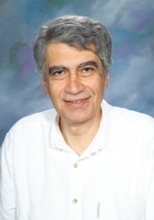
Mark Greenstreet is a Professor in the Department of Computer Science at the University of British Columbia. He specializes in formal verification, VLSI design, and analog/mixed-signal (AMS) circuit analysis. His research includes developing tools like PReach (a parallel model checker) and COHO (reachability analysis), with applications in cyber-physical systems and energy-efficient computation. He holds affiliations with the Institute for Computing, Information, and Cognitive Systems (ICICS). Research Focus: Formal verification of hardware/software systems, model checking, analog circuit verification, energy-time trade-offs in VLSI, and theorem-proving integration with SMT solvers. His work bridges theoretical mathematics and practical circuit design, addressing challenges in reliability, scalability, and performance. Awards & Recognition: Recipient of Best Paper Awards at ASYNC 2011 and ASYNC 2003 for contributions to synchronizer analysis and self-timed interfaces. His research is supported by NSERC, Intel, and Oracle. Supervision & Teaching: Supervised over 20 graduate students, focusing on formal methods, parallel computing, and verification. Teaches courses on parallel computation, formal verification, and computer architecture. Labs & Tools: Developed PReach and COHO as open-source verification tools. Active in research groups exploring analog circuit modeling, reachability analysis, and hybrid systems verification.
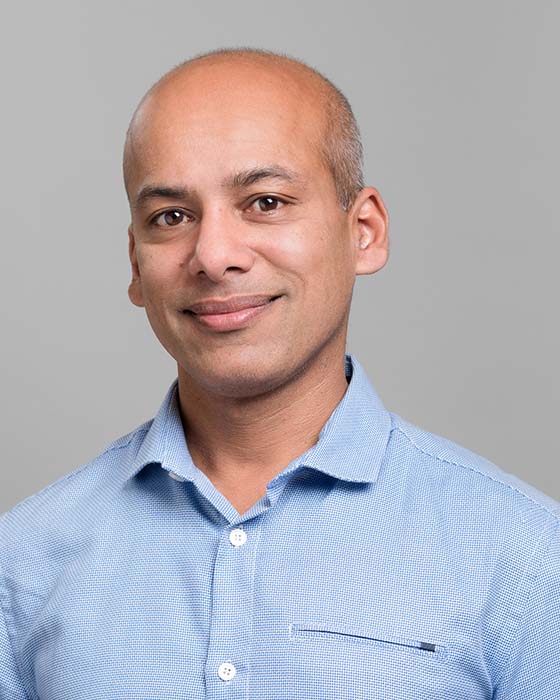
Dr. Wali Mohammad Abdullah is an Assistant Professor in the Department of Mathematics & Information Technology at Concordia University of Edmonton's Faculty of Science. His academic work focuses on computational methods and data-driven research. Ph.D., University of Lethbridge, Canada M.Sc., IICT, Bangladesh University of Engineering and Technology (BUET), Dhaka, Bangladesh B.Sc., MIST, Bangladesh University of Professionals (BUP), Dhaka, Bangladesh Research interests span optimization algorithms, high-performance computing, big-data analytics, artificial intelligence, and large language models. His recent publications emphasize computational efficiency in network analysis and foundation models. Key trends in his publications include: Foundational challenges in trustworthy AI development High-performance computing for network analysis Big-data optimization in complex systems Graph algorithms for triangle centrality and clique detection Sparse matrix techniques for scalability Reinforcement learning with domain knowledge integration
Jeffrey S. Racine is a Professor in the Department of Economics and a Professor in the Graduate Program in Statistics in the Department of Mathematics and Statistics at McMaster University. He occupies the Senator William McMaster Chair in Econometrics and is a Fellow of the Journal of Econometrics. He serves as an Associate Editor for Econometric Reviews and as the Deputy Editor-in-Chief for Econometrics. His previous academic appointments include Syracuse University, the University of South Florida, the University of California San Diego (two-year visiting appointment), and York University. Dr. Racine earned his Ph.D. from the University of Western Ontario in 1989 under the supervision of Aman Ullah. His educational background also includes a Master's degree from McMaster University and a Bachelor of Arts (Summa Cum Laude) from McMaster University. Professor Racine's research focuses on nonparametric estimation and inference, shape constrained estimation, cross-validatory model selection, frequentist model averaging, nonparametric instrumental methods, and entropy-based measures of dependence. His work bridges theoretical econometrics with practical computational implementations, with a strong emphasis on reproducible research. He has pioneered approaches for nonparametric estimation with mixed data types (both categorical and continuous predictors) and has made significant contributions to parallel distributed computing paradigms applied to computationally intensive nonparametric estimators. His recent publications demonstrate continued innovation in model averaging techniques, kernel density estimation, and quantile regression methods. Dr. Racine has received numerous professional recognitions including the Senator William McMaster Chair in Econometrics, being named a Fellow of the Journal of Econometrics, and receiving the Econometrics Best Paper Award in 2018. His scholarly output includes multiple books, monographs, and over 100 peer-reviewed publications in leading economics and statistics journals. As an educator and researcher, Professor Racine has made substantial contributions through his co-authored graduate textbook Nonparametric Econometrics: Theory and Practice (with Qi Li, Princeton University Press, 2007) and his monograph Nonparametric Econometrics: A Primer (Foundations and Trends in Econometrics, 2008). He has also authored influential books including An Introduction to the Advanced Theory and Practice of Nonparametric Econometrics (Cambridge University Press, 2019) and Reproducible Econometrics Using R (Oxford University Press, 2019). His work on software implementation is equally impactful, having co-authored the widely used R packages np and crs available on CRAN, which have become standard tools for nonparametric econometric analysis. Professor Racine maintains an active research program with collaborators worldwide and continues to advance the field of nonparametric econometrics through both theoretical developments and practical implementations. His work has applications across economics, statistics, and various social sciences where flexible modeling approaches are required.
Professor Nikitas J. Dimopoulos is a Professor and Lansdowne Chair in Computer Engineering at the University of Victoria, Department of Electrical and Computer Engineering. He joined the university in 1988 and has held academic positions at Concordia University. His research focuses on computer architecture, parallel systems, neural networks, fault detection, and power-aware systems. He received his BSc from the National and Kapodistrian University of Athens, and MSc/PhD from the University of Maryland. Research Interests: His work spans multicomputer systems, interconnection networks, neural networks applications, and grid computing. Specific areas include latency reduction in message passing, resource allocation in grids, and fault detection in communication networks. He has contributed to hardware design, VLSI optimization, and parallel processing architectures. Publications Overview: Over 100 peer-reviewed articles, focusing on topics like knapsack-based scheduling, direct-to-cache transfer techniques, and neural network applications. Key contributions include work on hypercycle-based interconnection networks and grid resource management. Advising & Grants: Supervised over 30 graduate students, with notable alumni in academia and industry. His grants include projects on cable network fault detection funded by Canadian Cable Labs. He edited volumes on embedded architectures and high-performance computing. Labs/Teams: Leads research groups in parallel computing and networked systems, collaborating with industry partners like Intel and Rogers Cable Systems.
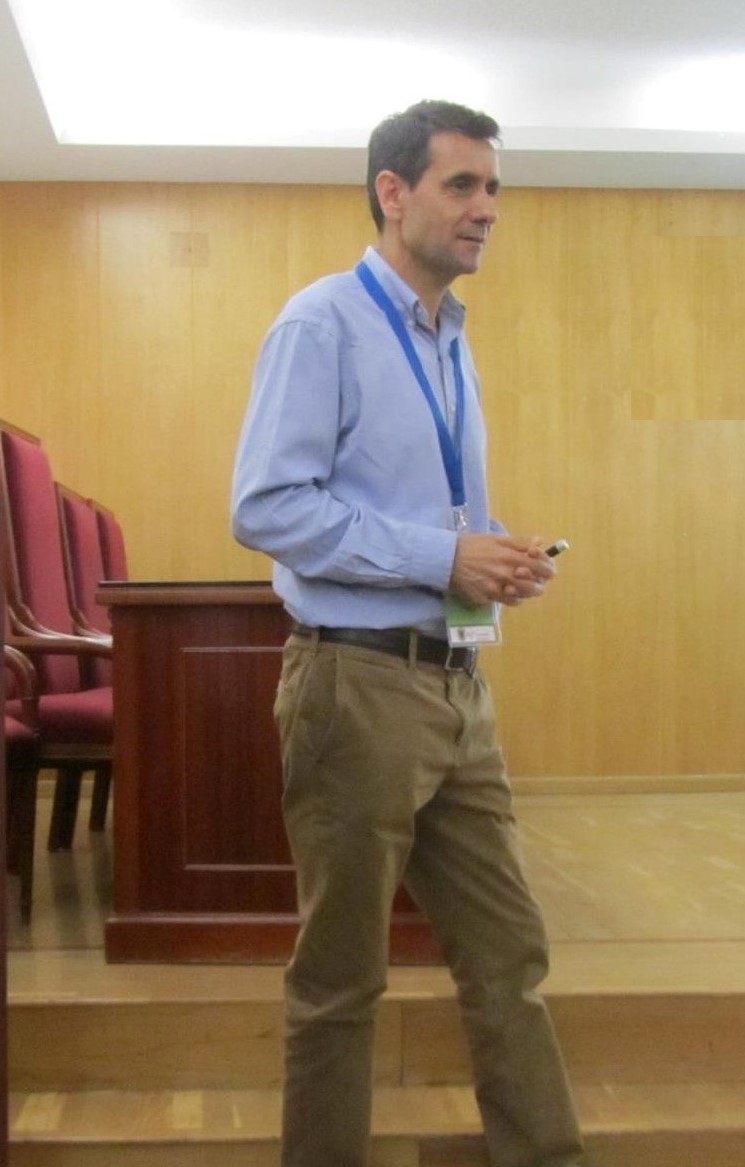
Dr. Fayez Gebali is a Professor in the Department of Electrical and Computer Engineering at the University of Victoria. He holds a BSc from Cairo University, another BSc from Ain Shams University, and a PhD from the University of British Columbia. His research focuses on computer communications, digital VLSI design, signal processing, and cybersecurity. He is particularly known for contributions to networks-on-chips, hybrid communication systems (e.g., FSO/RF), and cryptographic solutions for IoT devices. Education: BSc, Cairo University BSc, Ain Shams University PhD, University of British Columbia His research interests span computer architecture , communication networks , and secure embedded systems . Recent work emphasizes digital health applications, including AI-driven medical imaging (e.g., TongueTransUNet for tongue contour segmentation) and zero-trust frameworks for healthcare data protection (ZTCloudGuard). He has also published extensively on IoT security, cryptographic algorithms, and hardware acceleration techniques. Notable contributions include pioneering work on networks-on-chips (NoC) optimization, hybrid FSO/RF transmission systems, and efficient modular multipliers for constrained devices. His publications cover over 15 years of impactful research, with a focus on bridging theoretical advancements and practical implementations in high-performance computing and cybersecurity.
Ashvin Goel is a Professor in the Department of Electrical and Computer Engineering and Department of Computer Science at the University of Toronto , where he leads research at the intersection of Operating Systems , Reliability Engineering , and Computer Security . His work focuses on ensuring software systems can withstand bugs and vulnerabilities, with publications in top venues like SOSP , OSDI , and FAST . He received his PhD in Computer Science and Engineering from Oregon Graduate Institute in 2003, with prior degrees from UCLA (MS) and IIT Kanpur (BS). Current research projects include runtime verification systems like Recon and intrusion recovery frameworks such as Taser , often in collaboration with Professor Angela Demke Brown. His team explores kernel instrumentation, file system consistency, and security recovery methods. NSERC Discovery Accelerator Award 2012 FAST Best Paper Award 2012 Google Faculty Research Award 2011 Netapp Faculty Award 2008 Ontario Early Researcher Award Professor Goel's recent publications address deterministic concurrency control, distributed graph mining, and storage system reliability. He teaches graduate courses in Dependable Software Systems and Distributed Systems , with prior course development in operating systems security and time-sensitive applications.
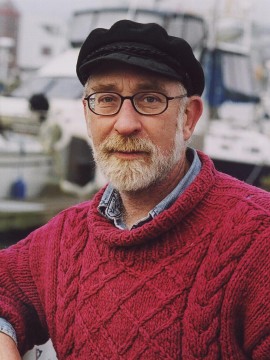
Tom Koch is an Adjunct Professor of Geography at the University of British Columbia's Department of Geography within the Faculty of Arts. With a multidisciplinary PhD spanning geography, ethics/philosophy, and medicine, he maintains an active research profile across medical geography, disease mapping, and bioethics. His work bridges historical and contemporary approaches to understanding epidemics spatially through mapping, while also addressing pressing ethical questions in healthcare, particularly around assisted dying and pandemic response. Dr. Koch's research interests span three interconnected domains: medical geography and disease mapping, medical ethics and bioethics, and journalism. His pioneering work in medical geography has generated influential books including Disease Maps: Epidemics on the Ground and Cartographies of Disease , exploring how spatial representation shapes our understanding of disease. In bioethics, he has published extensively on euthanasia, organ transplantation policy, and more recently, Canada's Medical Assistance in Dying (MAiD) legislation, with over 50 papers and books including Ethics in Everyday Places: Mapping Moral Stress, Distress, and Injury . His journalism background informs his public engagement, having conducted over 203 media interviews on the Covid-19 pandemic since January 2020. Analysis of his recent scholarly output reveals a clear trajectory connecting geography, ethics, and pandemic response. His publications demonstrate how spatial thinking informs ethical decision-making during health crises, with particular attention to how mapping technologies have transformed from woodblock prints to Web 3.0 platforms. This interdisciplinary approach reveals how disease mapping serves not just as a technical tool but as a framework for understanding moral dimensions of public health crises, particularly visible in his Covid-19 related work examining both spatial-temporal data democratization and the ethical failures of pandemic response. As an active public intellectual, Dr. Koch has engaged extensively with media and policy discussions, particularly regarding Canada's MAiD legislation and pandemic response. His background as both a journalist and researcher enables him to bridge academic scholarship with public discourse, making complex ethical and geographical concepts accessible to broader audiences while maintaining scholarly rigor.
Hongyang Zhang is an Assistant Professor at the University of Waterloo's David R. Cheriton School of Computer Science (part of the Faculty of Mathematics) and a faculty member of Vector Institute for AI. His research focuses on machine learning theory and applications, including inference acceleration for large language models (e.g., EAGLE series), world models for robotics and autonomous systems, and AI security. He leads the SafeAI Lab and is affiliated with the AI Institute and Cybersecurity and Privacy Institute. Education: Ph.D. in Machine Learning, Carnegie Mellon University (2019) Postdoc at Toyota Technological Institute at Chicago (2019–2021) Bachelor's degree from Peking University (2015) Research Interests: Inference acceleration (e.g., EAGLE-3 achieving 5× speedup) World models for infinite-horizon video generation (The Matrix) AI security, adversarial robustness, and watermarking System-2 LLMs for alignment and reasoning Awards & Recognition: 1st place in multiple adversarial vision challenges (NeurIPS 2018, CVPR 2021) AAAI New Faculty Highlights (2023) IEEE Senior Member (2024) Amazon Research Award and WAIC Yunfan Award Academic Leadership: Area Chair for ICML, NeurIPS, ACL, and ICLR Action Editor for Data-centric Machine Learning Research (DMLR) Teaching: Introduction to ML, Robustness of ML, and AI Security courses Labs & Teams: Leads the SafeAI Lab, collaborating on projects like EAGLE, The Matrix, and zkLLM.
Luis Rueda is a Professor in the School of Computer Science at the University of Windsor, specializing in machine learning applications in bioinformatics and computational biology. His research develops algorithms for cancer biomarker discovery, transcriptomic data analysis, and secure computing frameworks. Rueda's work integrates machine learning with biological data science, creating novel methods for single-cell RNA-seq analysis, cancer subtype classification, and medical image interpretation. Current projects focus on graph neural networks for spatial transcriptomics, federated learning for genomic privacy, and deep learning models for lung nodule detection in CT scans. Recent publications demonstrate emphasis on developing privacy-preserving frameworks for genomic data, advanced neural network architectures for medical image analysis, and computational methods for identifying therapeutic targets in cancer. Articles frequently address multi-modal data integration in oncology diagnostics. Student Mentoring Award, Faculty of Science (2022) Mitacs Accelerate Award (2021, 2020) Ontario Centres of Excellence - TalentEdge Award (2018) Collaborative Interdisciplinary Research Award (2016) Professional affiliations include Senior Member of IEEE and membership in ACM, IAPR, and ISCB. Rueda serves as Associate Editor for IEEE/ACM Transactions on Computational Biology and Bioinformatics and leads the Machine Learning in Bioinformatics Lab. Research has been supported by Mitacs, Ontario Centres of Excellence, and NSERC grants.
Mohsin Jamil is an Associate Professor in the Department of Electrical and Computer Engineering within the Faculty of Engineering and Applied Science at Memorial University of Newfoundland. His research specializes in power electronics, control systems, renewable energy integration, and smart grid technologies. Current projects focus on developing innovative power converters for electric vehicles, grid-forming converters for renewable integration, and AI-based control techniques for energy systems. Research spans several key areas: Advanced power electronic converters for energy storage and renewables Control strategies for community EV charging infrastructure Hybrid power systems for remote applications Neural network applications in power management Funded by NSERC, Mitacs, and university grants, his work has resulted in over 150 publications. Recognized as a Senior Member of IEEE and named to Stanford's World's Top 2% Scientists list in 2024, Jamil serves as Associate Editor for IEEE Access and other journals. Courses taught include Power Electronics, Power Systems Protection, and Grid Integration of Energy Systems. Research supervision includes 12+ graduate students working on projects in power converters, microgrid control, and renewable energy systems. Awards include the Best Teacher Award (2016) and Sidney D. Drell Academic Award (2021).
Parimala Thulasiraman is a Professor in the Department of Computer Science at the University of Manitoba, affiliated with the Faculty of Science. Her research focuses on high-performance computing, graph analytics, and network science, leveraging bio-inspired algorithms and machine learning. She leads the IDEAS (InterDisciplinary Evolving Algorithmic Science) Lab, which develops innovative optimization techniques for complex systems and scalable algorithms for multicore architectures. Her work spans applications in finance, genomics, and vehicular networks, supported by grants from NSERC, Research Manitoba, and MITACS. She holds senior membership in the ACM and IEEE and has been recognized with the University of Manitoba Teaching Recognition Award. Research interests emphasize evolutionary computation, parallel algorithms, and their real-world applications. Recent projects include GPU-accelerated multi-objective optimization, blockchain-based VANET security, and genomic data analysis using parallel suffix tree methods. Her publications explore cutting-edge topics like coevolutionary systems, ant brood clustering for portfolio management, and knowledge distillation in sentiment analysis. Grants & Awards: NSERC, Research Manitoba, MITACS ACCELERATE; Teaching Recognition Award Labs/Teams: IDEAS Lab (InterDisciplinary Evolving Algorithmic Sciences) Advising and grant activities involve interdisciplinary collaborations, with a focus on training the next generation of computational scientists. Current research trends include post-cloud computing models (dew-blockcloud systems), AI bot optimization, and blockchain applications in finance and transportation.
Doron Nussbaum is an Associate Professor at the School of Computer Science (SCS), Carleton University. He is affiliated with Herzberg Laboratories and holds offices in HP5378. His roles include teaching, research supervision, and academic administration. Education: Ph.D. Carleton (2001), M.C.S. Carleton University (1988), B.Sc. Tel Aviv (1985) Teaching: Taught COMP 3501 (Foundations of Game Programming & Computer Graphics) and COMP 5900 (Advanced Computer Gaming) in Fall 2012 Research Interests: Focus on algorithms, computational geometry, medical computing, spatial data modeling (GIS), computer graphics/visualization, parallel/distributed computing, robotics, and graph routing algorithms. Active in the PARADIGM Research Group for spatial data modeling. Office Hours: Previously held weekly hours (e.g., Fall 2011: Thursdays 16:00-17:00; Fall 2012: Mondays 13:00-15:00). Contact via email or phone (613-520-2600 x1390). Projects: Engaged in medical computing, computer gaming, robotics, and geographic information systems. Collaborates on game engine development, shader programming, and collision detection systems.
Nicola Santoro is a Distinguished Research Professor in the School of Computer Science at Carleton University, Ottawa, Canada. His academic career spans over four decades, with a focus on distributed computing, algorithms, and network systems. He holds a Ph.D. from the University of Waterloo (1979) and a D.Sc. from the University of Pisa (Italy). His research interests include algorithms, communication networks, distributed computing, robotics, graph theory, and wireless communication. He has contributed extensively to the theoretical foundations of distributed systems, mobile robotics, and fault-tolerant computing. Santoro's work emphasizes scalable and efficient solutions for dynamic networks and multi-agent systems. Key contributions include studies on black hole search in dynamic networks, distributed algorithms for autonomous robots, and network decontamination. His publications span over 400 articles in top-tier journals and conferences. He has also authored influential textbooks, such as Design and Analysis of Distributed Algorithms (Wiley, 2007) and Distributed Computing by Mobile Entities (Springer, 2019). Prof. Santoro has advised numerous graduate students and researchers, shaping the next generation of computer scientists. His work bridges theory and practice, with applications in robotics, sensor networks, and parallel computing.
Jean-Pierre Corriveau is an Associate Professor and Graduate Director at the School of Computer Science, Carleton University. He holds a Ph.D. in Natural Language Processing from the University of Toronto (1991), an M.C.S. from the University of Ottawa (1984), and a B.Sc. from the University of Ottawa. His research focuses on Object-Oriented Testing (scenario testing, test data generation) and Text Understanding (contextualized and generative comprehension), with recent emphasis on behavior-driven development and acceptance testing of systems with complex scenarios. Dr. Corriveau has extensive industry experience, including roles at Nortel where he contributed to the TELOS project, leading to the ObjecTime startup and subsequent IBM Rational Software Architect tools. His work bridges academia and industry, addressing challenges in software engineering, cybersecurity, and natural language processing. Notable contributions include frameworks for MapReduce optimization, secure localization in wireless sensor networks, and privacy-preserving data anonymization techniques. His publications span topics like AI detection in text, federated learning for NER, intrusion detection systems, and resilient network algorithms. He has advised on graduate studies as Director and contributed to teaching strategies for millennial students through innovative virtual learning environments in platforms like Second Life. His research trends reflect a blend of theoretical advancements in computational linguistics and practical software engineering solutions, with a recurring focus on system reliability, distributed computing, and privacy-preserving technologies. Grants and collaborations are implied through his tool development and industry partnerships, though specific grant details aren’t explicitly listed. Labs/teams associated with his work include the ObjecTime initiative and Carleton’s distributed systems research groups, though no dedicated lab names are mentioned. Future directions emphasize scalable testing methodologies and ethical AI integration in text analysis.
Mojtaba Ahmadi is a Professor in the Department of Mechanical and Aerospace Engineering at Carleton University, cross-appointed within the Faculty of Engineering and Design. He holds a B.Sc. from Sharif University, an M.Sc. from the University of Tehran, and a Ph.D. from McGill University. His research focuses on robotics, mechatronics, and control systems with applications in rehabilitation, aerospace, and biologically inspired systems. Key areas include robotic locomotion, real-time control, and neuromorphic computing. He has contributed to advancements in FPGA-based neural network implementations, memristor circuits, and soft actuators. Dr. Ahmadi has served on technical committees for conferences such as CA2008, ICA2009, and CSME 2008, and organized special sessions on control applications. His work bridges theoretical models with practical hardware solutions, emphasizing interdisciplinary approaches. Publications span topics from spiking neural networks and neuromorphic vision systems to low-resource digital neuron implementations. He actively explores applications in healthcare robotics and energy-efficient computing architectures.