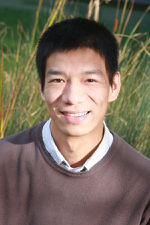
P. Sadayappan is a Professor at the School of Computing, University of Utah, specializing in high performance computing, compiler optimization, and scalable machine learning. His research focuses on developing efficient computational methods for scientific applications, particularly in the areas of sparse/dense matrix and tensor computations. His research interests include: Compiler Optimization for High Performance Computing Optimization of Sparse/Dense Matrix/Tensor Computations Scalable Machine Learning Algorithm-Architecture Co-Design Optimization Sadayappan's recent publications demonstrate a strong focus on tensor computations, GPU acceleration, and compiler optimizations for machine learning workloads. His work spans from fundamental compiler theory to practical implementations that improve performance across various architectures. A significant trend in his recent work involves the development of frameworks for efficient tensor operations, sparse matrix computations, and domain-specific code generation, with particular emphasis on performance portability across heterogeneous computing platforms. His notable scientific achievement includes receiving the ACM SIGPLAN Most Influential PLDI Paper Award in 2018 for his work on polyhedral compilation. Sadayappan has been principal investigator or co-investigator on numerous significant research grants, including: NSF award #2217154 (2022-2027): A Comprehensive Framework for Efficient, Scalable, and Performance-Portable Tensor Applications NSF award #2112606 (2021-2026): AI Institute for Intelligent CyberInfrastructure with Computational Learning in the Environment (ICICLE) NIH SBIR-Phase 2 (2023-2025): Enabling next generation machine learning for large scale image analysis NSF award #2009007 (2020-2024): Data Locality Optimization for Sparse Matrix/Tensor Computations DARPA SBIR-Phase 2 (2017-2022): Performance Portable Framework for Developing Graph Applications He teaches CS 4230/6230 (Parallel and High-Performance Computing) at the University of Utah and collaborates extensively with researchers across multiple institutions on projects involving computational chemistry, physics simulations, graph analytics, and machine learning.