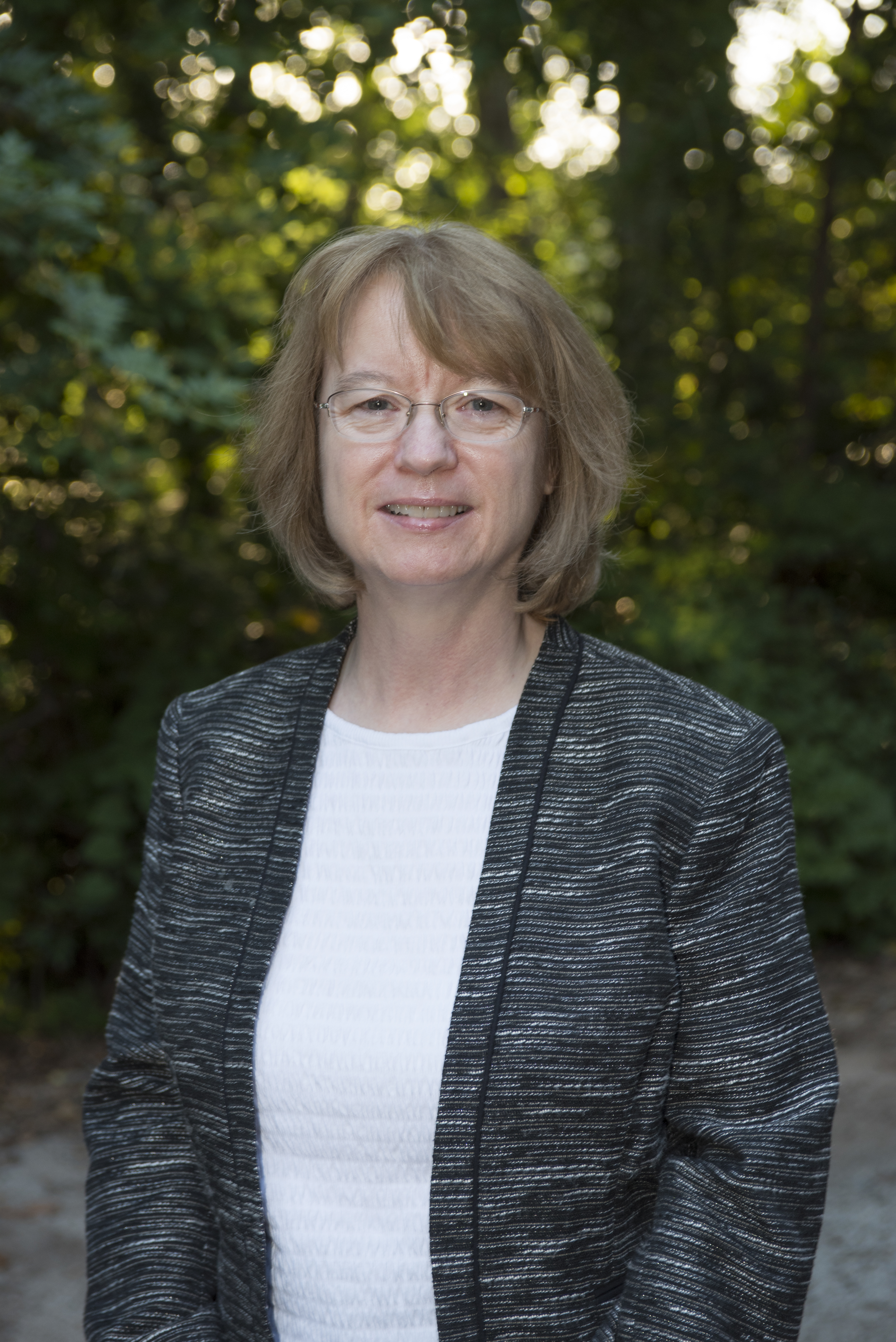
Amy W. Apon, Ph.D. is a Professor of Computer Science at Clemson University's School of Computing. She is currently on full-time leave serving as a Program Manager in the National Science Foundation (NSF) CISE/OAC division, where she focuses on computational and data-intensive initiatives. Her primary affiliation remains Clemson University, though she is not accepting new students during her NSF appointment. Research interests include cloud computing, performance modeling of parallel/distributed systems, data-intensive computing, and the strategic impact of high-performance computing on scientific research. Professional contact details: 100 McAdams Hall, Clemson, SC 29634 | Phone: 864-656-3444 | Fax: 864-656-0145.
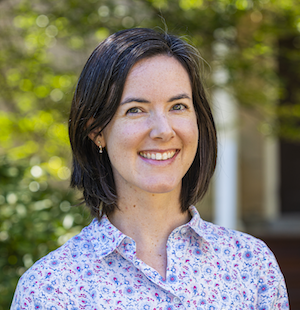
Sara Mathieson is an Associate Professor in the Computer Science Department at Haverford College. She holds a PhD in Computer Science from UC Berkeley (2015), advised by Yun S. Song, with a Designated Emphasis in Computational and Genomic Biology. Her research focuses on computational and population genetics, particularly demographic inference using statistical and machine learning methods. She has held prior positions at Swarthmore College (2017–2019) and Smith College (2015–2017). Education: PhD in Computer Science, UC Berkeley (2015) Bachelor's in Mathematics with Computer Science, MIT (2010) Harvey Mudd College (2006–2007) Research Interests: Developing statistical methods for genomic data Demographic inference in population genetics Applications of machine learning (GANs, CNNs) in evolutionary biology Analysis of endogamous populations and admixing dynamics Grants & Funding: NIH R15 Grant (2020–2027): 'Adaptive evolutionary inference frameworks using GANs' Lab & Collaborators: Current lab members: Kai Britt, Jadyn Elliott, Sarah Keim, etc. Notable alumni: Darshan Mehta (CRA Award), Sam Tan (CRA finalist)
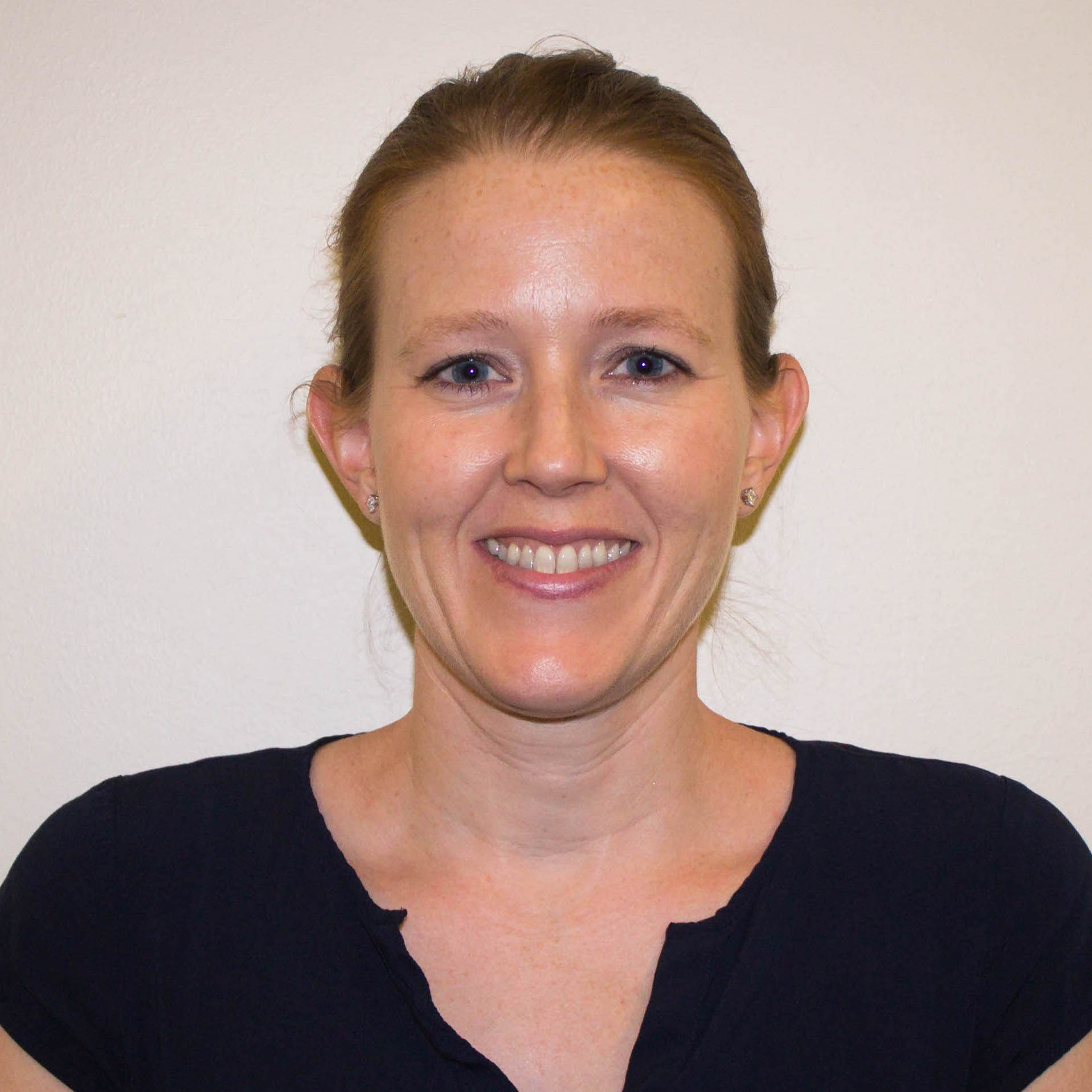
Dr. Amanda S. Hering is a Professor of Statistical Science at Baylor University and Co-Director of the Co-Graduate Program. She holds a Ph.D. in Statistics from Texas A&M University (2009), an M.S. from Montana State University (2002), and a B.S. from Baylor University (1999). Her research focuses on applying statistical methods to environmental and engineering challenges, particularly in water/wastewater systems, multivariate spatial-temporal analysis, and statistical process monitoring. She has co-authored influential books like Statistical Process Monitoring Using Advanced Data-Driven and Deep Learning Approaches (Elsevier, 2020) and serves as Associate Editor for Technometrics , Environmetrics , and others. Dr. Hering leads interdisciplinary projects such as the NSF-funded MoWaTER initiative ($1.157M), advancing data science education and water infrastructure optimization. Her work includes developing autonomous wastewater treatment systems, optimizing desalination processes, and creating fault detection algorithms for industrial systems. Notable recognitions include the Abel El-Shaawari Early Investigator Award (TIES, 2019) and a 2020 Intelligent Water Systems Challenge win for ammonia control models reducing energy consumption. Her research spans statistical methodologies for high-dimensional data, environmental monitoring, and sustainable infrastructure. Current projects involve Bayesian hierarchical models for groundwater analysis and AI-driven optimization of water reuse systems. She collaborates with national labs (e.g., NREL, Oak Ridge) and industry partners (e.g., Aqua-Aerobic Systems) to translate statistical innovation into real-world water solutions.
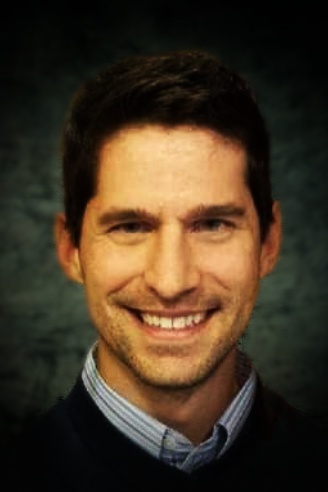
Brandon Morel serves as an Adjunct Professor at the School for Professional Studies, Saint Louis University. He holds a Master of Science (2003) and Bachelor of Science (2001) in Computer Engineering from the University of Kansas. His research focuses on Software Engineering, Artificial Intelligence, and Formal Methods. Key contributions include work on component adaptation and reuse in software systems, as seen in publications like SPARTACAS frameworks. He actively contributes to IEEE as a Member at Large. Contact: brandon.morel@slu.edu
Andrew Kirby is an Associate Research Scientist at the University of Wyoming's School of Computing. He specializes in scientific computing and high-performance computing, collaborating with institutions like NREL and NASA on wind energy and aerospace projects. His research leverages supercomputers such as Cheyenne and Summit, focusing on numerical methods for CFD and GPU acceleration. Education PhD in Mechanical Engineering, University of Wyoming (2018) MS in Applied Mathematics, Columbia University (2013) BS in Mathematics, University of Wisconsin-Madison (2011) Research Interests His work centers on high-fidelity simulations for wind energy systems, aerospace applications, and parallel algorithms for deep learning. He develops numerical methods for extreme-scale simulations and optimizes GPU-based solvers. Awards IEEE Outstanding Paper Award (2020) Blue Waters Graduate Fellowship (2016-2017) MIT Green AI Hackathon Supercomputing Award (2020) Grants & Advising He leads projects funded by NASA and DOE, including grants for NWSC Cheyenne and Summit supercomputers. His advising includes mentoring doctoral students and postdocs in CFD and HPC. Labs & Teams He contributes to the High Altitude CFD Laboratory at UW and collaborates with NASA Ames Research Center on aerodynamics research.
Dr. Yuede (YJ) Ji is an Assistant Professor in the Department of Computer Science and Engineering at the University of Texas at Arlington (UTA), leading the Graph Lab. His research focuses on graph-centric security, learning, and computing, intersecting High-Performance Computing (HPC), Security, Graph AI, and Graph Analytics. Prior to UTA, he was an Assistant Professor at the University of North Texas (2021–2024). He earned his Ph.D. from George Washington University in 2021 under Dr. Howie Huang. His work has been recognized with awards such as the Best Paper Award at NPC 2014 and the Best Poster Award at SMCDC 2023. Education: Ph.D., Computer Engineering, George Washington University (2021) M.S., Computer Science & Technology, Jilin University (2015) B.E., Software Engineering, Jilin University (2012) Research Interests: Graph-centric security, HPC, Graph AI, malware detection, and privacy-preserving systems. His research is funded by NSF, DOE, and Google. Grants & Fundings: NSF SHF: Small: An Accelerated Computation Architecture (2024–2027) NSF CICI: Secure Containers in HPC Infrastructure (2023–2026) Students & Advising: Advising Ph.D., M.S., and undergraduate students. Current advisees include Chaoqun Li, Emmanuel Emakhue Oseghale, and Xiao Hu. Awards: Best Editor Award, IEEE OJCOMS (2024) CSE Junior Faculty Research Award Nominee (2024) Labs & Teams: The Graph Lab develops scalable solutions for HPC security and graph analytics. Recent projects include BINGO (EuroSys ‘25) and TANGO (SC ‘23).
Adrian Sescu serves as Airbus Helicopters Professor, Graduate Coordinator, and Interim Associate Dean at Mississippi State University's Bagley College of Engineering. He holds a Ph.D. in Mechanical Engineering (2011), M.S. in Aerospace Engineering (2005), and B.S. in Aerospace Engineering (2004). Research focuses on fluid dynamics and aerodynamics: Boundary layer stability and control Theoretical and computational aeroacoustics Turbulence modeling and LES simulations Wind energy applications High-speed flow phenomena His 15 most recent publications demonstrate sustained focus on computational methods, aeroacoustics, and wind energy, with emerging work on vortex dynamics and flow control. Teaching covers fluid mechanics, aerodynamics, and CFD courses at both undergraduate and graduate levels.
Elizabeth Varki is an Associate Professor and Graduate Program Coordinator in the Department of Computer Science at the University of New Hampshire's College of Engineering and Physical Sciences. Her research focuses on computer operating systems, simulation/modeling, and systems analysis. She holds a Ph.D. in Computer Science from Vanderbilt University and multiple advanced degrees from the University of Delhi and Villanova University. Her work emphasizes performance evaluation of computing systems, storage optimization, and parallel systems design. Key research contributions include innovative approaches to storage positioning (GPSonflow), RAID systems (RAIDX), and cache prefetching techniques. Her teaching spans courses like Operating System Fundamentals, Database Systems, and Distributed Systems. Varki's publications span ACM Transactions, IEEE journals, and major conferences in performance evaluation and storage systems. Her advising and grants focus on advancing storage and distributed systems research, though specific grant details are not provided here. She is affiliated with the UNH's Computer Science department and contributes to interdisciplinary efforts in computational performance analysis.
Hamed Rezaei is an Adjunct Professor in the Department of Computer Science at the University of Wisconsin-Milwaukee, affiliated with the College of Engineering & Mathematical Sciences. He works as a full-time researcher at Rockwell Automation, focusing on computer networks, particularly congestion control and low-latency applications. Education: PhD in Computer Science, University of Illinois at Chicago MS in Computer Science, University of Illinois at Chicago BS in Computer Science, Razi University, Iran His research interests include: Congestion Control Software Defined Networking (SDN) Network Function Virtualization (NFV) Programmable Data Planes Publications highlight expertise in datacenter networking, congestion control, and low-latency systems. Key areas include network protocols, SDN-based traffic management, and security frameworks for large-scale networks. His work spans both theoretical and applied domains, including contributions to datacenter topologies (Superways), flow scheduling (ResQueue), and DDoS detection mechanisms. Contact: rezaeih@uwm.edu
Wes Bethel is an Associate Professor in the Department of Computer Science at San Francisco State University. His research focuses on quantum computing, machine learning applications in scientific modeling, and high-performance computing frameworks such as the SENSEI in situ visualization system. He leads efforts in optimizing quantum algorithms, real-time fusion energy modeling, and scalable data processing for large-scale simulations. Key research themes include quantum protocols for polynomial computation, GPU-based quantum circuit simulation, and machine learning-driven approaches to plasma physics and radio frequency (RF) heating analysis. His work bridges theoretical advancements with practical implementations in energy science and computational infrastructure. Recent projects emphasize accelerating RF modeling using AI surrogates, improving in situ visualization frameworks for heterogeneous architectures, and addressing challenges in classical-quantum system integration. Contributions span both methodological innovations and applied solutions for fusion energy research and distributed computing environments. No scientific awards are listed in the provided materials. Advising and grants information is not explicitly detailed here, though his publications indicate collaborative involvement in DOE-funded projects and fusion energy initiatives. He contributes to open-source tools like SENSEI and WarpVisIt, supporting community-driven advancements in scientific computing. Research labs and teams associated with his work likely include computational science groups focused on quantum computing, plasma physics modeling, and high-performance data management at San Francisco State University and collaborating institutions.
Dr. Daniel Huang is an Assistant Professor in the Department of Computer Science at San Francisco State University. His research focuses on quantum computing, probabilistic programming, machine learning, and theoretical computer science. He explores interdisciplinary areas such as hybrid classical-quantum systems, Gaussian process optimization, and computational chemistry modeling. His work bridges algorithmic design with practical applications, including quantum circuit simulation and molecular geometry optimization. Dr. Huang’s recent publications highlight advancements in GPU-based quantum computing, gradient-constrained neural networks, and probabilistic programming languages like Push. He emphasizes the integration of physical priors into machine learning models and explores disruptive technologies like quantum visualization tools. His research often involves collaborative projects, as seen in works on meta-Gaussian processes and data-parallel inference algorithms. His academic contributions span over a decade, with notable papers in probabilistic program semantics, logic in linear spaces, and compiler optimizations for probabilistic models. Though no awards or grants are explicitly listed, his active publication record reflects sustained scholarly engagement. Contact: danehuang@sfsu.edu , Thornton Hall 906.
James Wong is a Professor in the Department of Computer Science at San Francisco State University. He holds a Ph.D. in Computer Science from The University of Texas at Dallas (1990), an M.S. from Southwest Texas State University (1986), and a B.S. from the University of Toronto (1984). His research interests include Analysis of Algorithms, Internet Applications, System Testing Strategies, Scheduling Algorithms, Software System Testing, Web/Mobile Applications, Performance Analysis, and Computer-Aided Education. He has advised over 50 graduate students, overseeing projects ranging from mobile applications like iTutor and Tudou to system management tools like Waitless and EasyPool. His publications span topics like wireless sensor network localization, parallel computing heuristics, and scheduling theory. Notable work includes dynamic path planning for mobile beacons (2016), reconfigurable 3D free space optimization (2013), and foundational studies on message routing complexity (1998). His research bridges theoretical algorithm design with practical system implementation. Dr. Wong has taught courses such as Data Structures and Analysis of Algorithms, demonstrating commitment to both education and cutting-edge research. His contributions span academic leadership, software development methodologies, and innovative educational tools.
Dr. Ayman EL-Refaie is the Thomas H. and Suzanne M. Werner Endowed Chair in Secure and Renewable Energy Systems and Professor in the Department of Electrical and Computer Engineering at Marquette University's Opus College of Engineering. His research focuses on energy sustainability, hybrid/electrical traction applications, and aerospace power systems. Education: Ph.D. in Electrical and Computer Engineering, University of Wisconsin-Madison (2005) M.S. in Electrical and Computer Engineering, University of Wisconsin-Madison (2002) M.S. in Electrical Power and Machines, Cairo University (1998) B.S. in Electrical Power and Machines, Cairo University (1995) Research Focus: Dr. EL-Refaie specializes in electric machines and drives, power electronics, renewable energy systems, and applications in transportation and aerospace. His work addresses fundamental challenges in power conversion efficiency, thermal management, and rare-earth material reduction in electric motors. Publication Trends: Recent research emphasizes thermal management innovations, wide-bandgap semiconductor applications, rare-earth-free motor designs, and optimization techniques for electric traction systems. His work consistently bridges theoretical advancements with practical industrial applications. Awards and Honors: IEEE Fellow (2014) Nagamori Award (2019) First Prize Paper Award, IEEE IAS EMC (2013) Brian J. Chalmers Best Paper Award, ICEM (2014) GE 150 Publications Award (2016) GE 25 Issued Patents Award (2016) Hull Award - GE's highest early career researcher award (2011) Leadership and Projects: Dr. EL-Refaie has led major DOE-funded projects including a $6M program on advanced traction motors and a $12M initiative on non-rare-earth traction motors. He directs the EMPOWER (Electric Machines & Power Electronics at Marquette) Laboratory.
Weili Lily Wu is a Professor of Computer Science at the University of Texas at Dallas (UTD), affiliated with the Erik Jonsson School of Engineering and Computer Science . She holds a Ph.D. and M.S. in Computer Science & Engineering from the University of Minnesota (2002 and 1997, respectively). Her research focuses on social network analysis, big data, machine learning, and distributed database systems. She is an IEEE Fellow and recipient of the UCGIS Summer Assembly Student Travel Award (2000). Research interests include blockchain technologies, spatio-temporal data mining, wireless sensor networks, and algorithmic optimization for large-scale systems. Her work bridges theoretical computer science with practical applications in data-driven decision-making and network security. Publications span interdisciplinary domains such as computational biology, distributed systems, and database architectures. Recent trends highlight advancements in scalable machine learning frameworks and secure blockchain implementations. Professional Background : Postdoctoral roles at the University of Minnesota (1996–2002) included Research Assistant and Teaching Assistant. Current roles include leadership in UTD's data science initiatives and academic advising.
Anita Raja is a Professor of Computer Science at Hunter College and a member of the doctoral faculty at the Graduate Center, CUNY. She previously served as Acting Chair of the Department (2024-2025), Associate Dean of Research and Graduate Programs at The Cooper Union (2014-2019), and Associate Professor at the University of North Carolina at Charlotte (2003-2014). Educational Background: B.S. Honors in Computer Science with Mathematics minor (summa cum laude, Phi Beta Kappa) from Temple University (1996) M.S. (1998) and Ph.D. (2003) in Computer Science from University of Massachusetts Amherst Her research focuses on bounded rationality, distributed problem-solving, and artificial intelligence. She has pioneered real-time multiagent systems under uncertainty and limited resources, with significant contributions in automated refactoring of deep learning programs and healthcare risk prediction models. Scientific Awards: FASE 2025 Distinguished Paper Award 2024 TEDxCUNY Speaker 2021 NIH Decoding Maternal Morbidity Challenge Prize 2019 Crain's Notable Women in Tech 2010 IEEE IAT Best Paper Award 2006 UNCC Essam El-Kwae Research Award As director of the Distributed Artificial Intelligence Research (DAIR) Lab, Raja's work is supported by NSF, NIH, ONR, DARPA, DHS, and Pacific Northwest National Laboratory (PNNL). She co-chairs the Civic-Led Urban Adaptation Research Center (CIVIC-UARC) and serves on the AAAI Executive Council (2022-present).