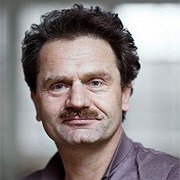
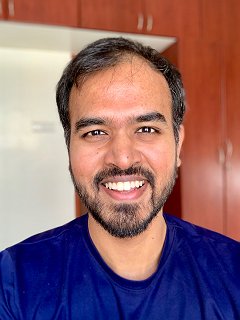
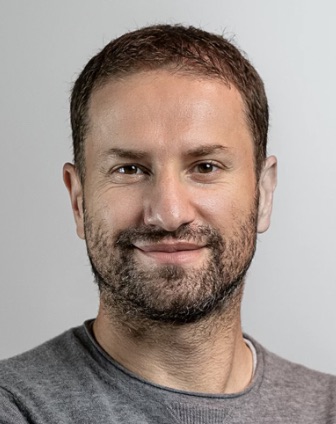
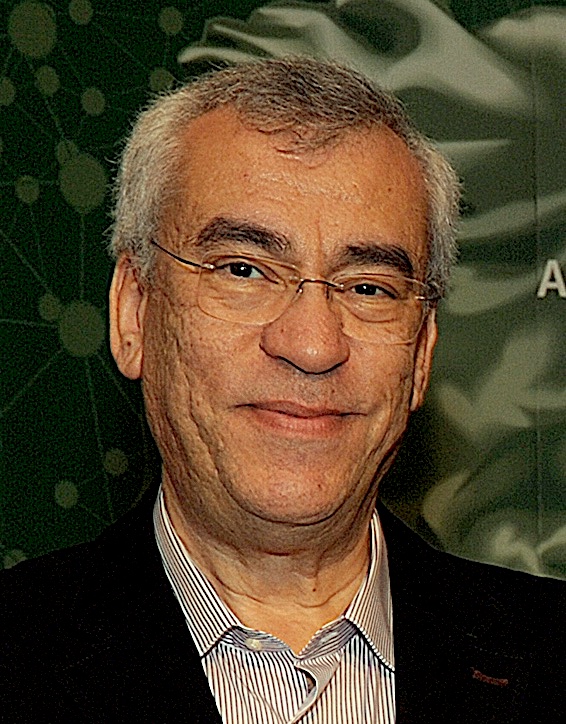
Javier Verdu Mula is a Professor at the Departament d'Arquitectura de Computadors (Universitat Politècnica de Catalunya - UPC) and a key researcher at the CRAAX - Centre de Recerca d'Arquitectures Avançades de Xarxes . His work focuses on computer architecture, parallel processing, and networking systems. Fields of Research include RISC-V virtualization, multithreaded processor optimization, and performance analysis of stateful networking applications. Scientific Awards include the BDigital Global Congress (2015) and Wayra Barcelona (2012) recognitions. Collaborations span institutions like Barcelona Supercomputing Center and researchers such as Manuel Alejandro Pajuelo, Mateo Valero Cortes, and Mario Nemirovsky. His recent publications address RISC-V hypervisor extensions, deep packet processing in parallel architectures, and statistical thread assignment models. He also holds patents in hardware virtualization and resource control systems.
Ana Edelmira Pasarella Sanchez is a Professor in the Department of Computer Sciences at the Faculty of Mathematics and Statistics, Universitat Politècnica de Catalunya (UPC). She is a member of the ALBCOM research group, focusing on algorithms, bioinformatics, complexity, and formal methods. Her work bridges theoretical computer science with practical data systems. PhD in Computer Science, Universitat Politècnica de Catalunya Her research centers on logic programming, knowledge representation, and graph databases. She explores how formal methods can enhance data processing, particularly through dynamic pipelines and trust-aware access control. Her work integrates Datalog, semantic reasoning, and big data frameworks to improve scalability and correctness in knowledge systems. She has contributed to foundational semantics of logic programs and their applications in security and data integration. Her recent publications highlight a trend toward efficient, adaptive data processing systems, especially for graph analytics and knowledge graphs. She compares paradigms like MapReduce and pipelining, advocating for dynamic, functional approaches to big data. Her work increasingly addresses real-world challenges in federated knowledge graphs and access control. SACMAT 2017 Best Paper Award Pasarella has been involved in multiple competitive R&D+i projects, such as 'Modelos y Técnicas para el Procesamiento de Información a Gran Escala' and 'Modelos y métodos basados en grafos para la computación en gran escala,' indicating sustained funding and collaborative leadership. She advises on research direction within her group and mentors through collaborative publications. She has served on the scientific committee of the Latin American Informatics Conference (CLEI), contributing to the broader academic community. She is part of the ALBCOM research group and collaborates extensively with researchers like Fernando Orejas, Maria-Esther Vidal, and Elvira Pino, working on logic-based frameworks for data and security systems.
Rosa Maria Badia Sala is a Research Professor at the Universitat Politècnica de Catalunya (UPC), affiliated with the Departament d'Arquitectura de Computadors and the Barcelona Supercomputing Center (BSC-CNS). She specializes in distributed computing, heterogeneous systems, and task-based programming models. Her work focuses on advancing high-performance computing (HPC), cloud computing, and workflow management for large-scale scientific applications. She holds a Doctorat en Informàtica and has been actively involved in numerous research projects, including contributions to the COMPSs programming framework and the optimization of HPC workflows. Her collaborations span institutions like BSC-CNS and international initiatives such as JLESC. Recent research includes GPU-accelerated computing, quantum optimization algorithms, and digital twins for power networks. Badia's publications span journals like Future Generation Computer Systems and IEEE Transactions on Parallel and Distributed Systems, reflecting her expertise in parallel computing, distributed systems, and real-time data analysis. She has supervised multiple doctoral theses and contributes to research grants focused on HPC and AI integration.
Fritz Henglein is a Professor at the Department of Computer Science, University of Copenhagen (DIKU), with affiliations also at Deon Digital. His career spans over three decades, with notable roles including Head of the Algorithms and Programming Languages (TOPPS) research group and Director of the HIPERFIT research center. Research interests include Programming languages and type systems Functional programming and DSLs High-performance computing Contracts and distributed ledger technology Algorithmic logic and formal semantics His work often bridges theoretical rigor with practical applications, particularly in financial information technology and compiler design. Collaborations include leadership in conferences like POPL, ICFP, and PEPM, with a focus on mentoring through academic events and community-building initiatives.
KC Sivaramakrishnan serves as an Adjunct Professor at the Indian Institute of Technology, Madras and CTO of Tarides, bridging academic research and industrial application in programming languages and systems. His dual roles reflect a commitment to advancing both theoretical foundations and practical implementations in computer science. His research spans Functional Programming, Language Runtimes, Concurrency/Parallelism/Distribution, and Weak Memory/Consistency models, with particular focus on the OCaml programming language. Sivaramakrishnan's work addresses fundamental challenges in concurrent and distributed systems through innovative language design and runtime techniques. Analysis of his publication record reveals a consistent trajectory from foundational work on effect handlers and concurrency models (2015-2020) to more recent contributions in verified systems, multicore programming, and distributed data types (2021-2025). His research demonstrates strong continuity in exploring how programming language principles can solve real-world systems challenges. Sivaramakrishnan actively contributes to the academic community through program committee memberships across major PL conferences including POPL, PLDI, ICFP, and SPLASH. His service spans multiple roles from committee member to track chair and diversity co-chair. As CTO of Tarides, he leads industrial efforts in OCaml compiler development and systems programming, maintaining a productive synergy between his academic research and industry leadership. His work with the OCaml community includes significant contributions to multicore support and effect handler implementations.
Carlos Molina Clemente is an Associate Professor of Computer Architecture at Rovira i Virgili University in Tarragona, Spain. He holds a M.Sc. in Computer Engineering (Universitat Politècnica de Catalunya, 1996) and a Ph.D. in Computer Science (UPC, 2005). His research focuses on Computer Architecture, Mobile/Sensor Networks, and Cloud Computing. He leads the Cloudlab research group and coordinates initiatives like GTDAWIN and BIOGEI. Key research areas include multicore scheduling, LoRaWAN protocols, LIDAR data analysis, and serverless computing. He has published over 50 articles in top-tier conferences/journals and supervised three doctoral theses. His work spans projects on cache architectures, real-time systems, and educational multicomputing solutions. Affiliations include the Department of Computer Engineering and Mathematics (DEIM) at URV, with offices at Campus Sescelades (Avinguda Països Catalans 26, Tarragona). Research highlights include contributions to non-uniform cache policies, predictive mobile network algorithms, and energy-efficient sensor networks.
Eliseo García García is a Professor at the University of Alcalá, affiliated with the Department of Automatic Control and Systems Engineering. He holds a Ph.D. from the University of Alcalá, awarded in 2005 for his thesis on computational electromagnetics. His primary research focuses on computational methods for electromagnetic analysis, including the development of efficient algorithms like the Characteristic Basis Function Method (CBFM) and hybrid techniques with the Multilevel Fast Multipole Algorithm (MLFMA). He is a core member of the GEC (Computational Electromagnetic Group), where he explores geophysical applications, antenna design, and high-frequency electromagnetic problems. His research interests bridge theoretical and applied electromagnetics, with particular emphasis on reducing computational costs in solving large-scale EM problems. Notable contributions include advancements in radar cross-section (RCS) computation, radome structure analysis, and geothermal exploration frameworks using hydrogeophysical methods. He has also published extensively on numerical techniques for antenna trajectory simulations and sparse matrix preconditioning. Eliseo’s work spans multiple disciplines, including aerospace engineering, environmental science, and software development, as evidenced by his contributions to Altair Feko 2023 updates. Despite no listed awards, his prolific publication record (over 70 articles from 2013–2024) underscores his active role in advancing computational electromagnetics and its interdisciplinary applications. His advising and grants section remains unreported, but his involvement in collaborative projects is implied through frequent co-authorships and institutional affiliations. He leads the GEC lab, focusing on cutting-edge computational tools and their practical deployment in real-world engineering challenges.
Alvaro Ordoñez Iglesias is an Assistant Professor at the University of Santiago de Compostela, affiliated with the Higher Technical School of Engineering and the Department of Electronics and Computing. He is a member of the ARQCOMP research group (Computer Architecture) and the CiTIUS research center. His research focuses on high-performance computing techniques for processing multi/hyperspectral remote sensing images, leveraging GPUs, multi-core CPUs, and cluster systems. He holds a PhD in 'Research in Information Technologies' (2021) from the University of Santiago de Compostela, with a thesis titled Efficient Registration of Multi and Hyperspectral Remote Sensing Images on GPU , supervised by Dra. Dora Blanco Heras and Dr. Francisco Argüello Pedreira. Prior to his current role, he was a Juan de la Cierva postdoctoral researcher at the University of A Coruña. His work emphasizes developing accurate image registration algorithms through spectral information exploitation and parallel/distributed computing. Key contributions include the HSI-MSER and HSI-KAZE algorithms, GPU-accelerated registration frameworks, and open-source tools like HypeRvieW for hyperspectral data processing. His publications span topics such as real-time registration on heterogeneous platforms, feature-based vs. area-based methods, and anomaly detection in river basins. Research collaborations involve multi-device algorithm implementations and benchmarking across diverse hardware architectures.
Juan Carlos Pichel is an Associate Professor at the Center for Research in Intelligent Technologies (CITIUS) within the University of Santiago de Compostela (Spain). He holds a B.Sc. in Physics and a Ph.D. in Computer Science from the same university (2006). His research focuses on parallel and distributed computing, Big Data technologies, quantum computing, and optimization for emerging architectures. He has held visiting positions at University Carlos III de Madrid and University of Illinois at Urbana-Champaign, and worked at the Galicia Supercomputing Center. Education: B.Sc. Physics (USC, Spain), Ph.D. Computer Science (USC, 2006). Research interests include: HPC frameworks (IgnisHPC), quantum computing tools (NetQIR), bioinformatics software (BigSeqKit/VeryFastTree), and misinformation detection systems. His work emphasizes interdisciplinary applications of parallel computing in genomics, health informatics, and social media analysis. Notable contributions: MPI4All (universal MPI bindings), IgnisHPC (HPC-Big Data framework), and VeryFastTree (phylogeny tool). Active in projects like C3HS (health search systems) and HYBRIDS (AI for democratic practices). Labs/Teams: Leads the ARQCOMP research group in Computer Architecture. Collaborates with multidisciplinary teams in bioinformatics, quantum computing, and social media analytics.
Manuel Eugenio Acacio Sanchez is a Professor in the Department of Computer Engineering and Technology at the University of Murcia's Faculty of Informatics. His research focuses on computer architecture, parallel systems, cache coherence, and hardware transactional memory. He earned his Ph.D. from the University of Murcia in 2003 with a thesis on directory-based coherence protocols for distributed-shared memory multiprocessors. Doctorate: Universidad de Murcia (2003) Academic Rank: Professor Research Interests include Hardware transactional memory Cache coherence protocols GPU and DNN accelerators Energy-efficient computing Parallel architectures Recent Article Trends emphasize cycle-level simulation tools (e.g., STONNE), hardware transactional memory optimizations, and neural network accelerator design. His work bridges microarchitectural improvements and application-specific efficiency in multicore systems. Labs & Teams : Affiliated with the Computer Architecture and Parallel Systems research group, previously part of the Architecture and Parallel Computing group.
Constantino Vázquez Blanco is a Researcher in Grid & Virtualization Technology at the Distributed Systems Architecture Group, affiliated with the Department of Computer Architecture and Automatic Control at Universidad Complutense de Madrid. He holds a PhD in Distributed Computing Architecture and has extensive experience in Grid computing, cloud infrastructure, and open-source projects like OpenNebula and GridWay. His work focuses on distributed systems, virtualization, and resource management. He has contributed to major EU projects such as RESERVOIR and BEinGRID, advancing cloud and grid technologies. Education: M.E. in Computer Science (2002, UCM), MSc in Computing & Internet Systems (2003, King's College London), PhD in Distributed Computing Architecture (2012, UCM). Professional experience includes roles at Altien Solutions, British Telecom, and leadership in academic research projects. Research interests include Grid federation, cloud computing, utility computing, and distributed virtualization management. He has published on grid benchmarking, workflow execution, and middleware integration. His work emphasizes scalable resource provisioning and interoperability in distributed systems. Grants and Projects: Involved in EU-funded initiatives like RESERVOIR (cloud computing), BEinGRID (Grid experiments), and OpenNebula development. His contributions span academic-industry collaborations and open-source tool development. Contact: Located at the Facultad de Informática in Madrid, reachable via email tinova@fdi.ucm.es.
Ahmed Bouajjani is a Professor at Paris Diderot University (Univ. Paris 7) and a Senior member of the Institut Universitaire de France . He leads the Automata, Structures, and Verification (ASV) pole of the IRIF laboratory and is a member of the Modeling and Verification team. His work focuses on formal methods, program verification, and automata theory, particularly for concurrent and infinite-state systems. Research Interests : Formal specification and verification, program verification, concurrency, model-checking algorithms, verification of infinite-state systems, automata, and logics. Teaching : He teaches courses such as Introduction to Artificial Intelligence and Game Theory , Formal Methods for Verifying Systems , and Algorithmic Program Verification at the university. Scientific Contributions : His recent articles address weak memory models, robustness in distributed systems, and inter-procedural analysis of list-manipulating programs. Keywords include Computer Science , Formal Verification , and Concurrency . Awards : He is a Senior member of the Institut Universitaire de France , a prestigious academic recognition. Labs and Teams : He is affiliated with the IRIF laboratory and its Modeling and Verification team, contributing to collaborative research in automata and verification.
Fernandez Jimenez, Agustin is a researcher at the Polytechnic University of Catalonia (UPC), affiliated with the Barcelona School of Informatics (FIB) and the Computer Architecture Department. He leads the AFJ Research Group focused on Programming Models and belongs to the PM (Programming Models) team. With over 97 documented academic activities, his work spans research, teaching, and innovation. His Orcid identifier is 0000-0003-1723-1772. Research interests include advanced computing paradigms, parallel architectures, and software optimization. His contributions are reflected in 51 indexed journal articles, 15 book chapters, and 3 doctoral theses supervised. He actively participates in competitive R&D projects and serves on conference scientific committees. Key activities include: 36 conference presentations 7 technical documents 5 competitive R&D projects 2 committee memberships Labs/Teams: Active member of the AFJ Research Group (PM - Programming Models).
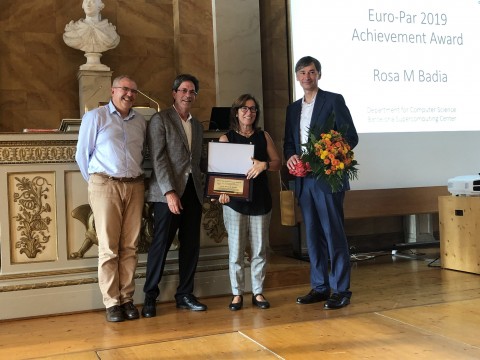
Rosa M. Badia is a Research Professor at the Universitat Politècnica de Catalunya · BarcelonaTech (UPC), affiliated with the Faculty of Computer Science of Barcelona (FIB) and serving as leader of the Workflows and Distributed Computing group at the Barcelona Supercomputing Center (BSC). Her work focuses on advancing high-performance computing (HPC), parallel processing, and distributed systems, contributing significantly to the visibility of the BSC and the Euro-Par conference series. Her research spans critical areas in computational science, including workflow optimization and scalable computing paradigms, aligning with trends in distributed systems and parallel computing. She has played a pivotal role in organizing workshops, chairing sessions, and co-authoring over 17 papers at Euro-Par, highlighting her sustained impact on the field. Scientific Awards: Euro-Par Achievement Award 2019 Rosa Badia actively mentors teams and collaborates on initiatives to promote women in technical careers, emphasizing the importance of conferences like Euro-Par for fostering global research partnerships.
Ankush Das is a tenure-track assistant professor in the Computer Science Department at Boston University. His research focuses on programming languages with applications in cryptographic protocols, distributed systems, and probabilistic and machine learning models. Prior to joining Boston University, he worked as an applied scientist at Amazon in the Automated Reasoning Group until December 2023. Dr. Das received his PhD from Carnegie Mellon University in 2021, where he was advised by Prof. Jan Hoffmann and worked closely with Prof. Frank Pfenning. He completed his undergraduate studies at IIT Bombay, India in 2015. His research interests span a wide range of topics within programming languages, with specific focus on resource analysis, session types, distributed protocols, and language design for smart contracts on the blockchain. He is particularly interested in developing type systems that can ensure safety and efficiency properties in concurrent and distributed systems. His work has led to the development of domain-specific languages like Nomos for implementing smart contracts and Rast for resource-aware session types with arithmetic refinements. Dr. Das's publication record demonstrates a consistent focus on advancing type theory and its applications to practical systems. His work frequently appears in top-tier programming languages conferences such as POPL, PLDI, and ICFP. A notable trend in his recent work is the extension of session types to handle probabilistic computations and resource-aware programming, reflecting the growing importance of these areas in modern distributed systems. His scientific achievements have been recognized with several prestigious awards: Distinguished paper award at POPL 2024 for "Parametric Subtyping for Structural Parametric Polymorphism" Best system description paper award by a junior researcher at FSCD 2020 for "Rast: Resource-Aware Session Types with Arithmetic Refinements" Dr. Das is actively mentoring PhD and undergraduate students at Boston University. His current advisees include Anthony DeRossi, Toby Ueno, Brendan Coyne, Qiancheng Fu, June Wunder, Sam Buxbaum, and Sakshi Sharma. He is looking for motivated PhD students to join his research group, with opportunities to work on cutting-edge problems in programming languages and their applications to distributed systems and security. At Boston University, Dr. Das leads research efforts in programming language theory and its applications. His work bridges theoretical foundations with practical implementations, particularly in the areas of smart contracts and distributed protocols. He has collaborated extensively with researchers from Carnegie Mellon University, including his former advisors Jan Hoffmann and Frank Pfenning.