Dr. Ari Rasch is affiliated with the University of Münster, engaged in research and academic activities related to computational science. His work focuses on projects such as SkelCL, PACXX, dOpenCL, the Real-Time Framework, Higher-Order Components for Grids, and the CrowdSim System. He holds a Researcher position within the university's computational science domain. Contact: a.rasch@uni-muenster.de . Research interests include parallel computing, real-time systems, and distributed software frameworks. Academic profiles: Google Scholar , LinkedIn .
Richard Schulze is a Researcher at the University of Münster, contributing to projects such as SkelCL, PACXX, and dOpenCL. His work focuses on parallel computing, compiler optimization, and auto-tuning frameworks for high-performance and distributed systems. He explores portable code generation for heterogeneous architectures using Multi-Dimensional Homomorphisms (MDH) and develops abstractions for OpenCL/CUDA programming. His research interests include advancing scheduling languages and systematic composition models, alongside probabilistic data linkage techniques. Recent publications emphasize auto-tuning methodologies for Python and interdependent parallel program parameters. Publications since 2018 highlight contributions to portable compiler design, performance optimization, and cross-platform parallelism. No scientific awards are explicitly mentioned. Consultation hours are by appointment, and he is affiliated with the university's computer science research groups.
Prof. Dr.-Ing. Alexander Verl is a leading academic at the University of Stuttgart , serving as Principal Investigator at the Institute for Control Engineering of Machine Tools and Manufacturing Units (ISW) . His work bridges control engineering , industrial robotics , and digital twin technologies to enhance precision in manufacturing systems. Research Interests : Improving positioning accuracy of industrial robots through transmission error modeling and compliance compensation. Developing adaptive preload control mechanisms for cable-driven parallel robots and rack-and-pinion systems. Advancing IT/OT convergence via Time-Sensitive Networking (TSN) and cloud-edge integration. Creating digital twin platforms for real-time simulation and quality monitoring in CNC machining. Exploring deep learning applications for perception of deformable linear objects in automation. Recent Work Trends show expertise in: smart manufacturing , Industry 4.0 , and data-driven control systems . Publications emphasize practical validation through industrial testbeds (e.g., KUKA KR210–2 robotics, CNC machine simulations) and theoretical contributions to elastokinematic models and nonlinear dynamics . Advising & Grants : Collaborates extensively with researchers like Armin Lechler and Michael Neubauer. Projects funded through academic-industry partnerships in automotive production, precision engineering, and Gaia-X-based data ecosystems.
Hans-Arno Jacobsen is a Professor at the Faculty of Computer Science (Technische Universität München, TU Munich) and affiliated with the Department of Electrical and Computer Engineering at the University of Toronto. His work spans Computer Science , Distributed Systems , and Artificial Intelligence . Research interests include Blockchain Technology , Consensus Algorithms , Graph Neural Networks , and Quantum Computing . Recent projects focus on decentralized consensus , energy-efficient databases , and federated learning in edge environments. His 15 most recent articles (2024–2025) explore topics such as dynamic resource orchestration , CRDT-based blockchains , and multimodal depression recognition . Collaborates with researchers like Ruben Mayer , Gengrui Zhang , and Shiqiang Wang on systems for federated computing , blockchain benchmarking , and distributed GNN training .
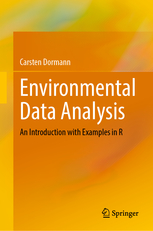
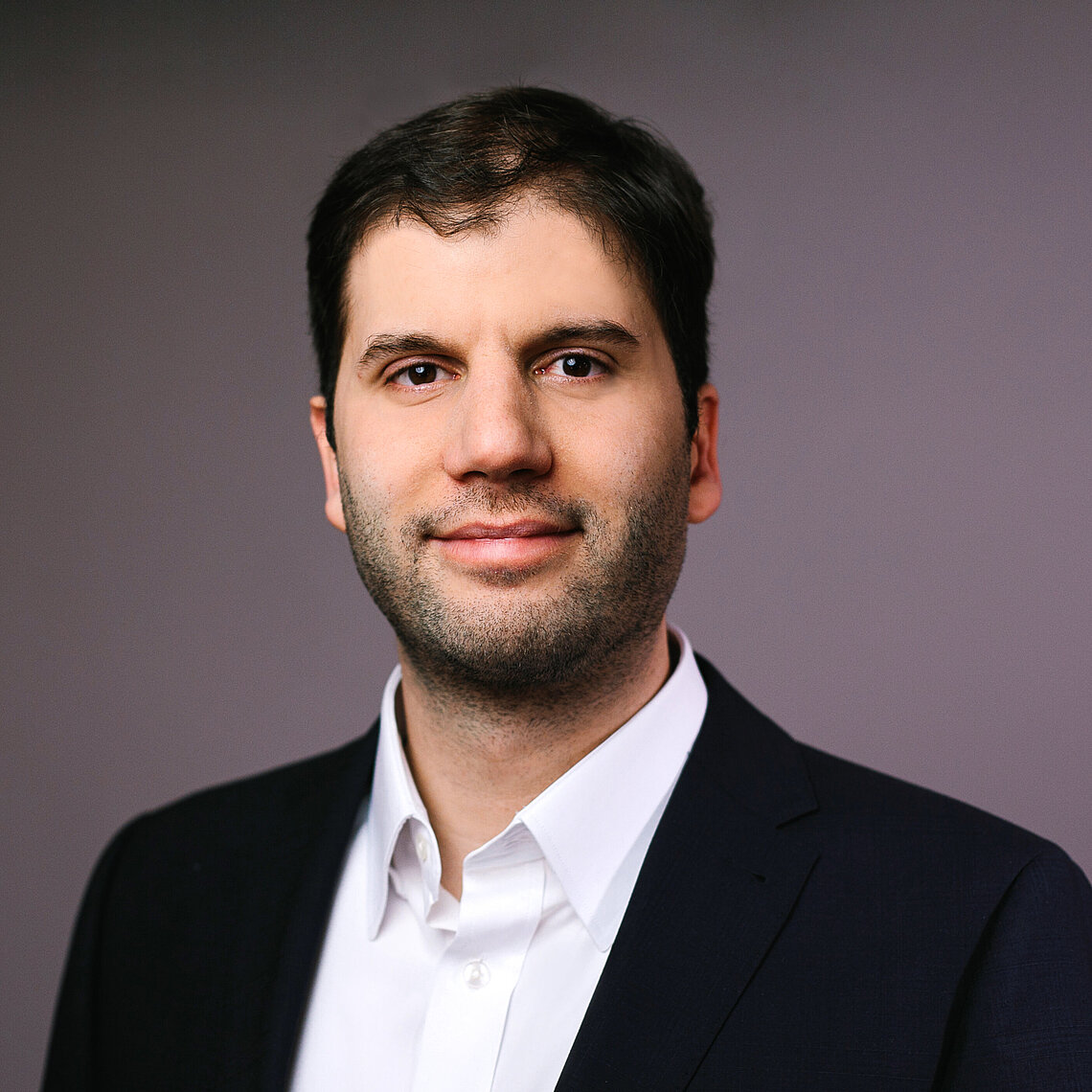
Carsten Dormann is a Full Professor at the University of Freiburg since 2011, working in the Department of Biometry and Environmental System Analysis within the Faculty of Biology. His work bridges statistical methodology with ecological applications, focusing on improving analytical approaches in environmental science. He leads research on statistical ecology, species distribution modeling, and plant-pollinator interactions, with a strong emphasis on methodological rigor and evidence-based environmental science. Professor Dormann completed his Diploma (equivalent to an MSc) in Biology at the University of Kiel (1996), followed by a PhD in Plant Ecology from the University of Aberdeen (2001) under Dr. Sarah Woodin and Prof. Steve Albon. He earned his Habilitation at the University of Göttingen (2008), and worked as a PostDoc and Senior Research Scientist at the Helmholtz Center for Environmental Research-UFZ (2002-2011) before joining Freiburg. Dr. Dormann's research focuses on comparing, challenging and improving the toolbox of statistical ecology . He investigates how ecological datasets, often small but complex, can be properly analyzed when common statistical approaches may fail. His work emphasizes formal statistical integration of ecological models and data , advocating for rigorous representation of ecological understanding through quantitative predictions. He champions an evidence focus in environmental science , drawing parallels with evidence-based medicine to promote transparent evaluation of causal mechanisms. Specific areas include spatial autocorrelation, null models, collinearity, species distribution modeling, and plant-pollinator interactions. His recent publications reveal a strong focus on ecological network analysis, species distribution modeling under climate change, and methodological improvements in ecological statistics. The research spans theoretical developments in network topology and practical applications in conservation, with increasing integration of machine learning approaches while maintaining ecological interpretability. A notable trend is the emphasis on temporal dynamics in ecological systems and developing more robust methods for predicting ecological responses to environmental change. Professor Dormann currently supervises twelve PhD students across various ecological and statistical topics, with an extensive record of past supervision spanning over thirty doctoral candidates. His teaching contributions include authoring the textbook Environmental Data Analysis: An Introduction with Examples in R (2017) and developing statistics courses for environmental sciences. He maintains an active scholarly blog discussing methodological challenges in ecology, with recent posts addressing species richness metrics, bias-variance trade-offs, and the relationship between ecological science and policy. His work bridges theoretical statistical development with practical ecological applications, emphasizing scientific credibility and methodological rigor throughout.
Andreas Wagner is a researcher affiliated with Helmholtz-Zentrum Dresden-Rossendorf , with a focus on interdisciplinary research spanning computational biology, systems biology, computer science, and materials science. His work explores genotype-phenotype mappings, evolutionary innovation, and robustness in biological systems, while also contributing to machine learning, numerical methods, and positron annihilation spectroscopy in physics. Wagner collaborates internationally, with co-authors from institutions in Germany, Austria, Finland, and beyond. Research Interests : Wagner's research bridges computational biology and systems biology, analyzing evolutionary processes through genotype networks, metabolic innovation, and gene regulatory circuits. He applies machine learning techniques to energy systems, such as solar power forecasting in federated learning frameworks. His physics work involves positron annihilation spectroscopy for material defect analysis, particularly in alloys and thin films. Publications & Data Science : He has published extensively on topics like robust numerical algorithms, adaptive cruise control optimization, and data-driven approaches for systematic reviews. His recent work includes matrix-free preconditioning methods and physics-regularized multi-modal image assimilation for medical imaging. Wagner contributes to open data initiatives, including datasets on radiation damage and material porosity via RODARE.
Benjamin Recht is a Professor at the California Institute of Technology , affiliated with the Center for the Mathematics of Information . His work spans Machine Learning , Control Systems , Reinforcement Learning , and Optimization , with a focus on theoretical guarantees, adaptive algorithms, and real-world applications. His research includes: Control Systems : Certainty equivalence, adaptive control, LQR, and robustness in dynamic environments. Machine Learning : Generalization bounds, interpolation in classifiers, test set overuse, and ethical frameworks for systemic harm detection. Neural Rendering : K-Planes for explicit radiance fields in space-time-appearance modeling. Recent publications (2025-2018) highlight trends in automating adaptive control , ethical machine learning , distributed computing , and 3D reconstruction . No student lists, awards, or lab details are explicitly mentioned.
Carlo Curino is a researcher at Microsoft Research , focusing on database systems, cloud computing, and machine learning integration. He has collaborated extensively with institutions including MIT, Microsoft, and the University of Wisconsin-Madison. His research spans Geo-distributed data analytics Automated configuration tuning Tensor-based database systems Data lake optimization Spark performance engineering Recent publications highlight his work on AI-driven systems like MotherNet and Rockhopper , alongside contributions to query processing over compressed data and log-structured tables. Collaborators include prominent figures such as Raghu Ramakrishnan and Jesús Camacho-Rodríguez . Key projects involve LST-Bench (cloud storage benchmarking), AutoComp (data compaction), and PyFroid (commodity workstation analytics). His work bridges database optimization with modern machine learning demands in enterprise environments.
Peter Nejjar is a Tenure-Track Juniorprofessor for Probability Theory at the University of Potsdam since January 2023. His research addresses fundamental questions of universality in stochastic systems , investigating why identical probability distributions emerge across disparate contexts like random matrices and growth models, with connections to combinatorics, mathematical physics, and numerical analysis. His primary research domains include stochastic particle systems (TASEP/ASEP), KPZ universality class phenomena, and Markov chain mixing behavior —particularly the cutoff phenomenon. Nejjar's work reveals deep structural parallels between shock fluctuations in interacting particle systems and random matrix eigenvalue distributions, leveraging connections to algebraic combinatorics through Schur processes. Recent publications demonstrate evolving focus from shock fluctuation theory (2015-2018) toward dynamical phase transitions in KPZ systems (2020-2022) and emerging interdisciplinary applications like DNA-based molecular tagging (2025). His collaborative network prominently features Patrik Ferrari across 7 publications, reflecting sustained focus on universality in exclusion processes.
Amin Totounferoush serves as a Researcher within the Analytic Computing group at the University of Stuttgart, Germany. His institutional affiliation places him at Universitätsstraße 32, room 2.201, 70569 Stuttgart, with office hours available by appointment. Contact is facilitated through direct phone lines +49 711 685 88409 and +49 711 685 78409. His research portfolio centers on advanced computational methodologies, with primary expertise in data-intensive systems and scalable computing architectures. Key focus areas include: Algorithm optimization for distributed environments Parallel processing frameworks Large-scale data analytics pipelines High-performance scientific simulations As a core member of the Analytic Computing research unit, Dr. Totounferoush contributes to developing next-generation computational tools for complex scientific problems. His work integrates theoretical computer science with practical engineering solutions for data-intensive challenges across academic and industrial applications.
Prof. Dr.-Ing. Horst Schulte is a Professor at the Department of Engineering I, HTW Berlin - University of Applied Sciences. His expertise lies in Control Systems Engineering, Electrical Engineering, and Renewable Energy Systems, with a focus on modeling, fault-tolerant control, and computational intelligence applications. Department of Engineering I, HTW Berlin Chair in Control Systems Group ResearchGate profile with 214 publications Research Interests include: Model-based and data-driven control systems Wind and photovoltaic power plants Takagi-Sugeno fuzzy systems Robust and fault-tolerant control Dynamic virtual power plants (DVPP) Computational intelligence in energy systems Scientific Awards : 10th Annual ISGAN Award (2024) HTW Berlin Research Award (2018/19) Best Paper in Control Theory (2013) Best BMBF Project of the Month (2012) Key Contributions involve power tracking control for renewables, fault reconstruction in wind turbines, and innovative converter control schemes. His work bridges theoretical control methods with practical energy system implementations.
Prof. Tal Raviv is an Associate Professor in the Department of Industrial Engineering at the Iby and Aladar Fleischman Faculty of Engineering, Tel Aviv University. He serves as head of the Shlomo Shmeltzer Institute for Smart Transportation and co-heads the Transportation and Logistics Lab. His educational background includes: BA in Economics from Tel Aviv University (1993) MBA from Recanati School of Business, Tel Aviv University (1997) PhD in Operations Research from Technion (2003) Postdoctoral fellowship at Sauder School of Business, University of British Columbia (2004-2006) Prof. Raviv's research focuses on operations research with emphasis on transportation and logistics, particularly smart transportation and sustainable logistics. His work develops optimization models for bike-sharing systems, vehicle routing, and urban mobility to enhance efficiency and user satisfaction while addressing sustainability challenges. Recent publications reveal a strong trend in shared mobility systems optimization, including inventory control and repositioning strategies for bike-sharing networks, analysis of user dissatisfaction due to unusable vehicles, and flexible delivery solutions using parcel lockers. His research bridges theoretical operations research with practical industry applications in transportation networks. Prof. Raviv has advised startup companies, applying his expertise to real-world business challenges. While specific grant details are not provided, his work demonstrates significant industry relevance through practical implementations. He leads the Transportation and Logistics Lab and the Shlomo Shmeltzer Institute for Smart Transportation, where his team develops innovative solutions for modern transportation challenges including data-driven routing, sustainable logistics, and smart infrastructure optimization.
Isaías A. Comprés Ureña serves as a Researcher at the Chair of Computer Architecture and Parallel Systems within the Department of Informatics at the Technical University of Munich (TUM), focusing on advancing exascale computing infrastructure and distributed memory systems. His research centers on High Performance Computing with specialized expertise in parallel programming standards including MPI and PMIx, distributed resource management, batch scheduling optimization, and automatic performance tuning for supercomputing environments. These areas directly support the development of next-generation HPC tools and frameworks for scientific computing workloads. Dr. Comprés actively contributes to international HPC initiatives through membership in the MPI Forum, Virtual Institute - High Productivity Supercomputing, and Eurolab4HPC collaborations, driving standardization efforts for process management and distributed memory programming models.
Dr. Kassian Kobert is a researcher at the University of Bielefeld, affiliated with the Faculty of Engineering, the Institute for Bioinformatics Infrastructure (BIBI), and the Center for Biotechnology (CeBiTec). His primary research base is within the Genome Informatics Group, where he focuses on computational approaches to genomic analysis and biological data processing. He maintains an active research presence with recent publications extending to 2022. Dr. Kobert's research interests center on bioinformatics and computational biology, with particular expertise in algorithm development for genomic data analysis. His work bridges computer science and biological applications, focusing on creating efficient computational methods for handling large-scale genomic datasets. His research spans phylogenetic inference, sequence alignment, viral evolution, and the development of specialized software tools for next-generation sequencing data processing. The interdisciplinary nature of his work connects computer science theory with practical biological applications, particularly in evolutionary biology and genomics. Analysis of Dr. Kobert's publication record reveals a consistent focus on developing computational methods for biological data analysis. His work demonstrates a trajectory from fundamental algorithm development to practical software implementation, with notable contributions including the PEAR read merger and ExaBayes phylogenetic analysis tool. His research shows strong emphasis on computational efficiency, particularly for handling the massive datasets generated by modern genomic technologies. The publications indicate expertise in both theoretical computer science aspects (algorithm design, computational complexity) and practical biological applications (viral evolution, phylogenetic analysis). Dr. Kobert appears to have significant involvement in software development for bioinformatics applications, with several publications describing tools that have become standard in genomic analysis workflows. His work on parallel computing approaches suggests engagement with high-performance computing environments necessary for modern genomic research.
Prof. Achim Streit is a Professor for distributed and parallel high-performance systems at the Karlsruhe Institute of Technology (KIT) and has served as one of the directors of the Steinbuch Centre for Computing (SCC) since 2010. He actively leads national and international initiatives including the Helmholtz program "Engineering Digital Futures", the National Research Data Infrastructure (NFDI), and the European Open Science Cloud (EOSC), with SCC operating GridKa—the German data hub for particle physics and a Tier 1 center of the Worldwide LHC Computing Grid. His research centers on secure, distributed management of large-scale scientific data, emphasizing metadata standards, AI-driven knowledge extraction, and quantum machine learning. He develops scalable solutions for data-intensive fields like climate research, materials science, and particle physics while prioritizing energy efficiency on heterogeneous computing systems. Streit champions open science, ensuring freely accessible software and datasets through rigorous research software engineering practices. The SCC under his direction implements federated IT services across Helmholtz platforms (HMC, Helmholtz.AI, HIFIS) and NFDI consortia (NFDI4Ing, NFDI-MatWerk, PUNCH4NFDI). His team collaborates extensively with disciplines ranging from energy research to humanities, focusing on distributed authentication infrastructures, data archiving, and resource optimization for global scientific communities.