Dave Voorhis is a Lecturer in Computing at the University of Derby's Department of Electronics, Computing and Mathematics. His research bridges computer science and environmental applications, with expertise in data processing architectures, game design evolution, and cloud-based computational frameworks. Research interests focus on relational database systems , big data analytics in educational contexts , and computational methods for environmental monitoring . His work demonstrates consistent innovation in applying computing principles to solve practical problems across diverse domains. Publication analysis reveals sustained contributions to: Satellite data processing techniques for climate science Foundational database architecture research Pedagogical approaches for data science education This interdisciplinary output establishes significant connections between computational theory and real-world implementations.
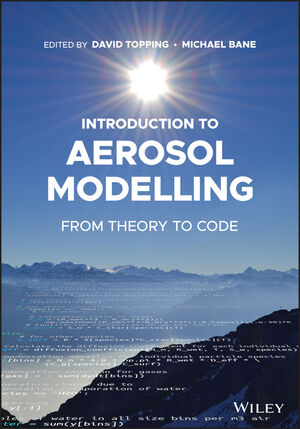
Dr. Michael K. Bane is a Senior Lecturer in Green Software Engineering & Performance Computing at Manchester Metropolitan University , within the Department of Computing & Mathematics, Faculty of Science and Engineering. A Senior Fellow of the Higher Education Academy (HEA) and founder of GreenCompute.UK , he leads the university's Greener Compute Club and the £120K UKRI Net Zero project "ENERGETIC" on heterogeneous computing for carbon reduction. Current teaching: Unit Lead for High Performance Computing & Big Data (UG/MSc) and Green Software Engineering modules Previous roles: University of Liverpool lecturer, UKRI Hartree Centre research scientist, and University of Manchester HPC team leader Research focuses on Energy Efficient Performant Computing (EEPC), exploring: Heterogeneous architectures (FPGA/GPU/accelerator integration) Carbon-aware scheduling systems Quantifying ICT's environmental footprint Green AI development Emerging hardware-software synergies Key contributions: Co-edited Introduction to Aerosol Modelling: From Theory to Code (2022) Authored 20+ publications on HPC, parallel algorithms, and sustainable computing Recipient of EMS 'best paper' award for climate modeling work
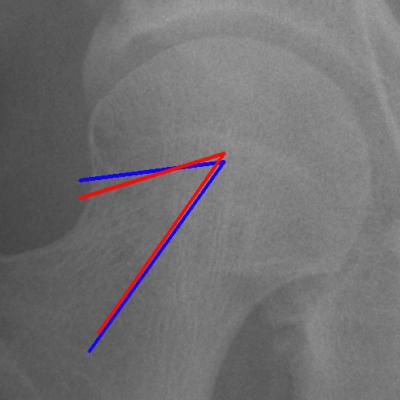
Irina Voiculescu is an Associate Professor and Stipendiary Lecturer in the Department of Computer Science at the University of Oxford. Her research focuses on 3D geometric modeling, medical imaging analysis, and AI-driven clinical decision support. She leads the Medical Imaging research group, developing tools like OxMedIS for automated segmentation of MRI, CT, and ultrasound data. Her work emphasizes GPU-accelerated algorithms and reinforcement learning to reduce reliance on manual annotations. Education: PhD in Constructive Solid Geometry (CSG) from the University of Bath (1999). Research interests include medical image segmentation, GPU computing, cephalometric landmark detection, and infant hip dysplasia screening. Collaborates with orthopaedic clinicians and industry partners. Notable contributions: Developed novel evaluation metrics for segmentation accuracy, pioneered GPU-based watershed algorithms, and advanced AI applications in hip and knee imaging. Her team’s work on automated Graf classification for infant hip screening was recognized at ECCV 2024. Awards: Best Paper Award at DEMI 2023, Best Workshop Paper at HSI 2009. Editorial roles include Associate Editor for SPIE Journal of Medical Imaging. Advising: Supervises PhD students in medical AI, including NIHR-funded researchers. Past students include Nanqing Dong (federated learning) and Ziyang Wang (transformer networks). Runs the Spatial Reasoning group, known for the Oxford Robot Games and robotic sheepdog projects. Publications: Over 80 peer-reviewed papers since 2008, with recent focus on few-shot learning, domain adaptation, and clinical validation of AI models.
Rosa Filgueira is a Lecturer at the School of Computer Science, University of St Andrews, and Group Leader of the Systems Research Group (SRG). She holds an Honorary Research Fellow title and is a member of the UK Young Academy. Her career includes roles as Assistant Professor at Heriot-Watt University, Vice President Applied Researcher at JPMorgan Chase, and Senior Data Scientist at the British Geological Survey. She earned her BSc and MSc from the University of Deusto (Spain) and a PhD from University Carlos III Madrid (Spain). Her research focuses on advanced information processing technologies to accelerate scientific discovery, emphasizing distributed systems, data-streaming optimizations, and reproducible frameworks. Key areas include serverless computing, adaptive communication techniques, and AI-driven software analysis. She teaches CS3031 Databases (undergraduate) and CS5020 Principles of Computer Communication Systems (postgraduate), supervising multiple student projects. Rosa’s work addresses challenges in health, earth sciences, and digital humanities. Notable projects include cultural analytics frameworks for the creative industries and AI tools for historical text mining. She leads initiatives like the Laminar serverless framework and the frances NLP tool for heritage texts. Her awards include the UK Young Academy membership and National Librarian's Research Fellowship. Current grants include the British Academy-funded Decoding Democracy project. She actively collaborates internationally, contributing to IEEE eScience conferences and open-source projects like dispel4py and Inspect4py. Labs/Teams: Systems Research Group (SRG), leading interdisciplinary collaborations in HPC and data science. Her work bridges computer science with domain-specific applications, emphasizing real-world impact through reproducible software solutions.
Dr. Gianni Antichi is a Senior Lecturer at Queen Mary University of London's School of Electronic Engineering and Computer Science, and an Associate Professor at Politecnico di Milano. His research focuses on network architecture, programmable hardware, and data plane optimization. He holds grants from EPSRC and Facebook Research, and has received multiple awards including Best Paper at SIGCOMM 2017. Antichi teaches modules on distributed systems, computer networks, and Internet protocols. Research Interests: End-host networking stacks, programmable hardware (SmartNICs/FPGA), network telemetry, data center optimization, and traffic analysis. His work spans from low-level data plane design to high-level network monitoring solutions. Key Awards: EPSRC New Investigator Award (2020), Facebook Networking Research Award (2020), Best Student Paper at EuroSys 2025, and ACM SIGCOMM Best Paper (2017). Grants & Projects: Leads NEAT (EPSRC-funded network telemetry project), and collaborates with industry on software data plane optimization. Active in mentoring PhD students and researchers in distributed systems and network hardware. Labs/Teams: Part of Queen Mary’s Centre for Networks, Communications and Systems, focusing on programmable networking and high-performance systems.
Dr. Deepayan Bhowmik is a Senior Lecturer and Director of Research at Newcastle University's School of Computing. He holds a PhD in Electronic and Electrical Engineering from the University of Sheffield. His research focuses on image/signal processing, AI, neuromorphic vision systems, and their applications in media security, remote sensing, and space research. He actively contributes to UN Sustainable Development Goals related to clean water, environmental sustainability, and responsible consumption. Grants & Collaborations: PI of £2M EPSRC-funded North East Space Communications Accelerator (2025-2029) Co-I in Airbus-funded Smart Earth Observation Satellite Constellation project (2024-2028) Lead on JPEG Trust international standard for media authenticity Research Interests: Combines theoretical advancements in signal processing with practical applications in media forensics, environmental monitoring, and heterogeneous computing. Recent work addresses AI-generated media manipulation detection and satellite imagery analysis for ecological challenges like water hyacinth infestation. Publications: Over 28 peer-reviewed articles spanning watermarking techniques, FPGA optimization, and remote sensing applications. Recent trends show increasing focus on AI-driven media security and space-based earth observation systems.
Antonio Barbalace is a Senior Lecturer at the Institute for Computing Systems Architecture (ICSA), School of Informatics, The University of Edinburgh. He leads the Systems-Nuts research group and holds key roles including ICSA Lab Manager, interim IoT Lab Manager, and MSc in Computer Science program director. He is also an affiliate member of the Edinburgh Quantum Software Lab and an adjunct Associate Professor in the Department of Electronic and Computer Engineering at Virginia Tech. His research focuses on system software, particularly operating systems, virtualization, and runtime environments for heterogeneous and distributed architectures—from embedded systems to data centers. His work spans OS design (e.g., Popcorn Linux), compiler frameworks (LLVM), real-time systems, scheduling, synchronization, networking, storage, and performance analysis. Recently, he has explored operating systems for Quantum Processing Units and classical simulation of quantum systems. His interests also include power efficiency, fault-tolerance, and security in system software. His recent publications, accepted at ASPLOS'25 and EUROMLSYS'25, highlight innovative work in fused-kernel OS design (Stramash) and kernel-level remote shared memory for AI inference (RMAI), indicating a strong trajectory in high-performance, low-latency system architectures for modern computing paradigms. Scientific Awards: No scientific awards listed in the provided text. Advising and Grants: Antonio actively advises multiple PhD and Master’s students at the University of Edinburgh and has previously supervised students and postdocs at Virginia Tech and Stevens Institute of Technology. His research is supported by current and past projects such as Data-center scale classical simulation of quantum computers, Quantum circuit cutting, Popcorn Linux Next++, and in-storage processing. He has secured funding from sources including ONR and AFOSR during his time at Virginia Tech. Labs and Teams: He leads the Systems-Nuts Research Group , which is part of ICSA and collaborates with the Quantum Software Lab (QSL) at the University of Edinburgh. The group focuses on systems software optimization and quantum computing architecture, supported by hardware testbeds for experimental research.
Gordon Brebner is an Honorary Professor at the School of Informatics, University of Edinburgh, affiliated with the Institute for Computing Systems Architecture. His position reflects a distinguished association with one of the leading informatics schools in the UK, contributing to research and academic advancement in computing systems. His research interests center on computer architecture and system design, particularly in high-performance and reconfigurable computing environments. These areas are critical for advancing scalable computing solutions, including cloud infrastructure and specialized hardware accelerators. No recent publications or scientific awards were listed in the provided text. There is no public information available here regarding student supervision, grants, or laboratory leadership.
Professor Hamed Al-Raweshidy is a distinguished Professor of Communications Engineering at Brunel University London, where he serves as Director of the Wireless Networks and Communications Centre (WNCC) and Director of Postgraduate Studies in Electronic and Computer Engineering. With over three decades of academic and industry experience, he has established himself as a leading researcher in wireless communications and networking technologies. His educational background includes a BEng and MSc from the University of Technology in Baghdad (1977 and 1980), a Post Graduate Diploma from Glasgow University (1987), and a PhD from Strathclyde University (1991). Prior to his current position, he worked with prestigious organizations including Space and Astronomy Research Centre in Iraq, PerkinElmer in the USA, Carl Zeiss in Germany, British Telecom in the UK, and several renowned universities. Professor Al-Raweshidy's research focuses on next-generation wireless technologies, particularly in the areas of 6G networks, quantum communications, artificial intelligence applications in networking, radio over fibre technologies, Internet of Things (IoT), edge computing, and cybersecurity. He has published over 370 papers in international journals and conferences, demonstrating his prolific contribution to the field. His recent work shows a strong emphasis on integrating quantum technologies and AI with wireless communications, particularly for healthcare applications, secure network operations, and efficient resource management. The trend in his publications indicates a strategic shift toward practical implementations of theoretical concepts in real-world scenarios, with particular attention to energy efficiency and security in next-generation networks. Member of NETworld 2020 Network, advising the European Commission on research directions Principal investigator for EPSRC and European projects including the MAGNET EU project (2004-2008) Editor of the first book on Radio over Fibre Technologies for Mobile Communications Networks Guest editor for the International Journal of Wireless Personal Communications As an academic leader, Professor Al-Raweshidy serves on numerous editorial boards, conference committees, and review panels including the EPSRC peer Review College and panels for the EU Commission, Hong Kong, and Cyprus. He is frequently invited to deliver lectures at prestigious institutions worldwide and serves as an external examiner for several top universities. His leadership extends to industry collaboration, where he acts as a consultant for major telecommunications companies including Vodafone, Ericsson, Nokia, Siemens, and others, bridging the gap between academic research and commercial applications.
Dr. Takebumi Itagaki serves as a Senior Lecturer in Communications and Computer Technologies within the Electronic and Electrical Engineering Department at Brunel University London's College of Engineering, Design and Physical Sciences. He holds the position of Programme Manager for the Brunel-CQUPT Transnational Education program and serves as TNE-CQUPT Manager. His international research leadership is exemplified by his role as coordinator of the ITU-T Focus Group on Audio Visual Accessibility – Working Group D. Dr. Itagaki earned his academic credentials through a BEng from Waseda University (Japan), a Postgraduate Diploma from City University London, and a PhD in Engineering/Music from Durham University (UK) in 1998. His professional affiliations include membership in IEEE, IET, and the Audio Engineering Society. His research program spans digital television systems (DVB, ISDB), digital signal processing, parallel processing architectures, computer music, and computer architecture. Recent work demonstrates significant expansion into IoT applications for disaster management and healthcare analytics. His research methodology consistently bridges theoretical signal processing with practical implementation in broadcast and communication systems. Analysis of his publication record reveals an evolution from foundational work on transputer networks and granular synthesis in the 1990s to contemporary applications in digital television accessibility, mobile broadcast technologies, and IoT systems. His work maintains consistent focus on multimedia systems while adapting to emerging technological landscapes and societal needs. Dr. Itagaki has secured significant research funding through multiple EU projects including SAVANT (as prime contractor and administrative coordinator), INSTINCT (as project manager), and DTV4All (as coordinator). His current research portfolio includes ICT collaboration between China and Europe, with particular emphasis on IoT techniques for disaster prediction and climate change mitigation. His research group IEHS (Integrated Electronic Health Systems) works at the intersection of communication technologies and healthcare applications, developing systems for emergency response and medical diagnostics. The group's work on the Emergency TeleOrthoPaedics m-health system demonstrates practical implementation of wireless communication links for specialized medical care.
Kai Han is an Assistant Professor at The University of Hong Kong's School of Computing and Data Science, where he directs the Visual AI Lab. His research focuses on computer vision, machine learning, and artificial intelligence with specific interests in open-world learning, 3D vision, generative AI, and foundation models. He aims to achieve principled visual understanding and build reliable AI systems that close the intelligence gap between machines and humans. Dr. Han's research interests span multiple areas in visual AI, with particular emphasis on developing methods for open-world visual understanding. His work addresses fundamental challenges in category discovery, visual correspondence, 3D reconstruction, and generative modeling. He has made significant contributions to novel category discovery, open-set recognition, and visual correspondence problems, with his AutoNovel framework being particularly influential in the field. His current research explores the intersection of generative models and visual understanding, particularly focusing on how foundation models can be leveraged for comprehensive visual analysis. His publication record demonstrates a clear evolution from traditional computer vision problems toward more challenging open-world scenarios and generative approaches. Early work focused on 3D reconstruction of transparent and mirror surfaces, while more recent publications explore category discovery, visual correspondence, and generative AI. The trend shows increasing focus on foundation models, large language model integration with vision systems, and creating more robust visual understanding systems that can handle real-world open-set scenarios. Best Paper Runner-Up Award at CVPR Workshop on Continual Learning in Computer Vision, 2022 Outstanding Reviewer for ICCV 2021 (top 5%) Outstanding Reviewer for CVPR 2021 Outstanding Reviewer for CVPR 2020 Travel Award, ICLR 2020 Doctoral Consortium Travel Grant, ICCV 2017 Dr. Han actively mentors PhD students and postdocs, with numerous students appearing as first authors on his publications. His lab has secured multiple funding opportunities including HKU-PS, HKPFS, PGS, HKU-BICI, and HKU-ASTRI scholarships. He serves as Area Chair for major conferences including CVPR 2026, ICLR 2026, and AAAI 2026, demonstrating his standing in the research community. His lab, the Visual AI Lab, focuses on creating robust visual understanding systems that can handle real-world scenarios beyond closed-set recognition.
Jade Alglave is a Professor of Computer Science at University College London, working within the Department of Computer Science. She is affiliated with the PPLV research group led by Peter O'Hearn, focusing on foundational aspects of programming languages and verification. Her work bridges the gap between theoretical computer science and practical systems implementation, particularly in the domain of memory models and concurrency. Alglave's research spans distributed computing, systems software, information systems, theory of computation, and software engineering, with a particular emphasis on weak memory models and concurrent systems . Her work develops formal methods for specifying, verifying, and testing memory models across various hardware architectures including ARM, POWER, and x86. She has made significant contributions to understanding the formal semantics of concurrent programming and has developed tools like the diy7 suite for generating and analyzing litmus tests that expose subtle concurrency behaviors. Her publications reveal a consistent research trajectory focused on creating rigorous formal frameworks for understanding weak memory behaviors, with applications to hardware verification, compiler design, and operating system development. The work has significant implications for ensuring correctness in concurrent and parallel systems where memory consistency is critical. Alglave actively contributes to the research community through professional activities including serving as a conference referee for major venues, participating in the ERC member DAC, reviewing for journals like TOPLAS, serving on program committees for JFLA and PLDI, and organizing workshops like CAV.
Professor Daniel Coca is an Honorary Professor of Nonlinear and Complex Systems in the School of Electrical and Electronic Engineering at the University of Sheffield, specializing in mathematical and computational methods for complex dynamical systems across physics, engineering, life sciences, and finance. Education: MEng PhD Research Interests: His work focuses on nonlinear and complex dynamical systems with applications in stem cell population dynamics, crystal growth, brain activity, solar wind-magnetosphere interaction, and financial markets. He develops advanced techniques in bioimaging (diffuse optical tomography, protein identification) and reconfigurable computing (FPGA hardware acceleration for proteomics and control algorithms), while advancing nonlinear control theory for PDEs and predictive systems. Publications: Recent work (2016-2020) demonstrates expertise in inverse problems for dynamical systems (Frobenius-Perron operator solutions), spiking neural network modeling (liquid state machines, sensory circuit identification), and interdisciplinary applications including urban air quality monitoring, stem cell characterization, and fly vision neuroscience. His publications span high-impact journals in computational neuroscience, environmental engineering, and nonlinear dynamics. Grants: Professor Coca has secured substantial funding from EPSRC, BBSRC, and MRC, including £2.1M for the Urban Flows Observatories, £530k for Digital Fly Brain, and multiple FPGA proteomics projects. His £4M+ apportioned grant portfolio covers digital built Britain, stem cell dynamics, and neuroimaging systems.
Dr. Bakhtiar Amen is Lecturer in Artificial Intelligence at the STEM Academy, City St George's, University of London, specializing in distributed machine learning and big data analytics with applications in healthcare and real-time systems. He holds a PhD from University of Huddersfield on 'Distributed Contextual Anomaly Detection from Big Event Streams' (VC Scholarship Award 2017), an MSc in Advanced Computer Science (Distinction), and BSc in Software Engineering. His industry collaborations include NHS projects on diabetic neuropathy prediction and partnerships with Birmingham City Council, Aston University, and international institutions. His research exhibits strong focus on: Healthcare AI applications (diabetes risk prediction, 2024) Real-time social media analytics (COVID-19 detection, 2022) Distributed anomaly detection systems (2015-2018) Mobile computing innovations (2014-2016) Professional memberships include ACM, British Computer Society, and IEEE Computer Society.
Dr. Karla Vargas is a Research Fellow in Distributed Computing at the University of Surrey's Department of Computer Science, within the Faculty of Engineering and Physical Sciences. Her research focuses on distributed systems and computer science fundamentals, with expertise developed through advanced academic training in Mexico. Education: BSc in Computer Science, National Autonomous University of Mexico (UNAM), 2014 MSc in Computer Science, UNAM, 2017 PhD in Computer Science and Engineering, UNAM, 2021 (Advisor: Prof. Sergio Rajsbaum) Research Focus: Specializes in distributed computing architectures, algorithms, and systems design. Her work contributes to foundational aspects of concurrent and parallel computing paradigms. No scientific awards, student advising, research grants, lab affiliations, or team collaborations are documented in the available materials.