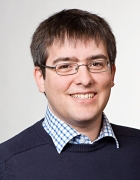
Thomas Neumann is a full-time Professor at the Department of Database Systems within the TUM School of Computation, Information and Technology at the Technical University of Munich . Research Focus : Query optimization and processing in database systems Hardware-aware database engine design Scalable RDF/semantic data management Hybrid OLTP/OLAP processing Join optimization algorithms Scientific Recognition : Gottfried Wilhelm Leibniz Prize (2020), Germany's most prestigious research award Academic Contributions : His recent publications focus on high-performance query execution strategies, hybrid transactional/analytical systems using virtual memory snapshots, and scalable graph processing techniques. These works demonstrate consistent advancements in database engine optimization for modern hardware architectures and large-scale semantic data management.
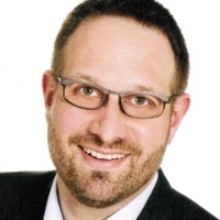
Dominik Huber is a Ph.D. candidate and researcher at the Technical University of Munich , affiliated with the Chair of Computer Architecture & Parallel Systems . His work focuses on Dynamic Resource Management in High-Performance Computing (HPC) , with expertise in Parallel & Distributed Programming Models and Hardware-aware programming . He has actively contributed to teaching courses like Parallel Programming Systems and Advanced Computer Architecture . His research emphasizes adaptive resource allocation in hybrid HPC clusters, leveraging technologies such as MPI Sessions , PMIx , and frameworks like LAIK and XBraid . Recent projects include the DynRes software suite for dynamic resource management and collaborations on quantum-HPC integration. Huber has advised students on topics ranging from Dynamic Resource Management in Charm++ to CI Systems for HPC Software , and his publications address challenges in malleability, scheduling, and power-constrained environments. Current affiliations include participation in the SEANERGYS (EuroHPC) and PlasmaPEPS projects.
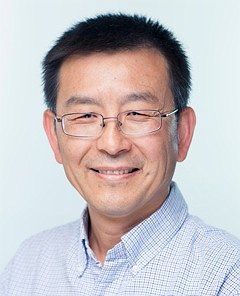
Prof. Dr. Andreas Herkersdorf is a Full Professor and Chair of Integrated Systems at the Technical University of Munich (TUM) School of Computation, Information and Technology. His research focuses on application-specific multicore processors (MPSoC), FPGA-based prototyping, fault-tolerant systems, and energy-efficient architectures, with applications in IP packet processing, automotive systems, and visual computing. He has received multiple IBM innovation awards and serves on editorial boards including the DFG Review Board for computer architecture. Education: Dipl.-Ing. Electrical Engineering (TUM, 1987), Dr. techn. Electrical Engineering (ETH Zurich, 1991) Research: MPSoC architectures, autonomic computing, NoC resilience, FPGA acceleration, and self-optimizing systems. Awards: IBM Master Inventor (1998), IBM Outstanding Technical Achievement Award (2001), multiple IBM Innovation Achievement Awards (1996-2003) His recent publications emphasize hardware/software co-design, machine learning integration for runtime optimization, and network-on-chip innovations. He collaborates on projects involving 6G systems, smartNICs, and automotive communication protocols.
Mohammad Sadoghi is a Professor at the University of California, Davis, with former affiliations at Purdue University, IBM T.J. Watson Research Center, and the University of Toronto. His research focuses on distributed systems, blockchain technologies, consensus protocols, and fault-tolerant computing. He has contributed extensively to transaction processing, stream processing architectures, and the integration of edge-cloud systems with blockchain frameworks. Current Affiliation: University of California, Davis Former Affiliations: Purdue University, IBM, University of Toronto Research Interests include consensus algorithms, Byzantine fault tolerance, distributed ledger technologies, and scalable data processing. He has pioneered systems like ResilientDB and ByShard, addressing challenges in global-scale distributed systems and blockchain fabrics. His work bridges theoretical foundations with practical implementations, emphasizing real-world applications in edge computing and hybrid cloud-edge environments. Key publications highlight advancements in consensus protocols, blockchain scalability, and fault-tolerant architectures. Recent trends in his work focus on concurrent consensus mechanisms, DAG-based systems, and secure geo-replication. Contributions span both academic publications and industry-oriented solutions, such as the Bedrock platform for BFT protocol analysis. Grants and advising roles are implied through his extensive research output, though specific grants are not detailed in the provided text. His collaborations include projects on self-curating databases (e.g., L-Store) and systems like SplitJoin for stream processing.
Alin Deutsch is a Professor of Computer Science at the University of California, San Diego (UCSD), specializing in database systems, graph databases, and formal verification. He has contributed significantly to research areas including query optimization, data integration, and privacy-preserving systems. His work spans theoretical foundations and practical implementations, such as the Linked Data Benchmark Council (LDBC) and the TigerGraph database system. He co-authored over 100 papers and has been involved in major conferences like SIGMOD and VLDB. Research interests include graph query processing, parallel computing, data-centric business processes, and automated system verification. Recent work focuses on scalable hybrid analytics and graph databases. Deutsch is also active in database education, co-authoring a paper on UCSD's database curriculum. He has led projects in privacy-aware systems, such as policy-aware location-based services, and contributed to tools like CLIDE for interactive query formulation in service-oriented architectures. His collaborations involve industry partners like TigerGraph and academic institutions globally.
Athinagoras Skiadopoulos is a computer systems researcher at Stanford University's School of Engineering, Department of Computer Science, focusing on the intersection of database systems and operating systems. His work centers around the innovative DBOS (Database-oriented Operating System) project and large-scale machine learning infrastructure, collaborating with prominent researchers including Christos Kozyrakis and Michael Stonebraker. His primary research interests include: Database-oriented Operating Systems (DBOS) Distributed systems for large-scale machine learning Resource management and optimization in data-intensive systems Transaction processing and data governance High-performance networking for accelerated computing Fault tolerance in distributed training systems Skiadopoulos's research trajectory shows a clear evolution from foundational DBOS architecture toward applications in large-scale machine learning systems. His early publications established the DBOS framework for operating system design using database principles, while his recent work addresses critical challenges in distributed training of massive neural networks. Systems like ReCycle and SlipStream demonstrate innovative approaches to pipeline adaptation and failure recovery during distributed training. His most recent 2025 work on accelerating Mixture-of-Experts training represents the cutting edge of efficient large model training infrastructure. Through his research, Skiadopoulos has established himself in both the database and systems research communities, with publications in premier venues including SOSP, OSDI, VLDB, and CIDR. His work consistently bridges theoretical database concepts with practical systems implementations, demonstrating how database techniques can solve real-world systems challenges in modern computing environments.
Holger Schwarz is an Associate Professor (Apl. Professor) at the Institute for Parallel and Distributed Systems (IPVS) within the Faculty of Computer Science, Electrical Engineering and Information Technology at the University of Stuttgart. He serves as Head of the Infrastructure Department and is actively involved in research and teaching in the areas of data management, database systems, and data analytics. Professor Schwarz earned his doctorate (Dr. rer. nat.) from the University of Stuttgart in 2003 with a dissertation on "Integration of Data Mining and Online Analytical Processing." He later completed his habilitation (Dr. rer. nat. habil.), qualifying him as a university professor in Germany. His primary research interests focus on data management systems , particularly in the domains of data lakes, lakehouses, enterprise data platforms, and metadata management. Professor Schwarz investigates how to design efficient and scalable data architectures that support modern analytical workloads while addressing challenges in data integration, governance, and democratization. His work bridges theoretical database concepts with practical industrial applications, as evidenced by numerous collaborations with industry partners. Professor Schwarz's recent publications demonstrate a clear trend toward enterprise data management solutions, particularly focusing on data lakehouse architectures, enterprise data marketplaces, and advanced clustering techniques. His research shows a consistent pattern of addressing real-world data management challenges through innovative architectural patterns and algorithmic improvements, with strong emphasis on practical industrial implementation. Professor Schwarz supervises numerous research projects including MetaMan (metadata management in complex data landscapes), DLArchitecture (design of comprehensive data lake architecture), INTERACT (interactive rapid analytic concepts), and VALID-Partition (improving prediction quality using domain knowledge). He also coordinates the University of Stuttgart's projects within the Software Campus initiative and serves as Managing Director of the Technology Partnership Lab and as a Member of the Board of Directors of the Industrial Data Lab. His teaching portfolio includes courses on Advanced Information Management, Database Systems, and Data Science projects across multiple semesters, demonstrating his commitment to educating the next generation of data management professionals.
Jingling Xue is a Scientia Professor at the School of Computer Science and Engineering at the University of New South Wales (UNSW) in Sydney, Australia. As an IEEE Fellow of the Computer Society, he leads the Programming Languages and Compilers research group, focusing on practical applications of compiler optimization and program analysis techniques. His work bridges theoretical foundations with real-world software systems, particularly in developing open-source tools for large-scale program analysis. Professor Xue received his B.Eng and M.Eng degrees from Tsinghua University in 1984 and 1987, respectively, followed by a PhD from the University of Edinburgh in 1992. His academic journey has established him as a leading figure in programming languages and compiler technology. Xue's research spans programming languages, compiler technology, and program analysis with emphasis on practical relevance. His current projects include compiler techniques for improving parallelism and locality, pointer/alias analysis for million-line-scale programs, and static/dynamic analysis for detecting bugs and security vulnerabilities in real-world applications like web browsers and Android apps. His group actively develops open-source tools to support scientific replicability and reproducibility in these areas. His recent publications demonstrate a strong focus on applying program analysis techniques to modern challenges including AI compilers, homomorphic encryption, security vulnerability detection, and graph processing systems. The work shows evolution from traditional compiler optimization to addressing emerging domains like privacy-preserving computation and deep learning systems while maintaining rigorous theoretical foundations. Scientific Awards: Best Paper Award at CGO'13 Best Paper Award at CGO'16 Distinguished Paper Award at ECOOP'16 Distinguished Paper Award at ICSE'18 Distinguished Paper Award at ISSTA'19 Distinguished Paper Award at ASE'19 Distinguished Artifact Award at ISSTA'23 Best Artifact Award at FSE'23 Distinguished Paper Award at ASE'23 Test-of-Time Award at CGO'21 Professor Xue has successfully supervised 30 PhD students to completion, many of whom now work as professors or researchers in academia and industry. He has served as Program Chair for major conferences including LCTES'13, CC'18, CGO'20, and General Chair for LCTES'20. His group currently focuses on memory safety in Rust, smart contract analysis, AI compilers, compilation for privacy-preserving computation, and adversarial attacks in deep learning. The Programming Languages and Compilers group maintains strong connections with industry partners, translating theoretical advances into practical tools for real-world software development challenges. Their work on pointer analysis, memory safety, and compiler optimizations continues to influence both academic research and industrial practice.
Sebastian Maier is a Researcher at the Department of Computer Science 4 (Distributed Systems and Operating Systems) at Friedrich-Alexander-University Erlangen-Nuremberg, part of the Faculty of Engineering. His work focuses on invasive computing, many-core architectures, and distributed systems. He has contributed to projects like the iRTSS (Invasive Run-Time Support System) and the OctoPOS kernel, emphasizing system software for resource arbitration and latency-aware systems. Maier has taught courses such as System-level Programming in C and Operating Systems exercises from 2013 to 2019. His research interests include hardware-software co-design, embedded systems security, and runtime systems for future architectures. He has advised students on thesis topics like distributed TCP/IP stacks and asynchronous communication interfaces in many-core systems. His recent work explores dynamic hardware-managed queues (DySHARQ) and resource arbitration mechanisms for tile-based architectures. These efforts aim to optimize parallel processing and real-time performance in embedded systems. Maier has also collaborated on latency-aware operating systems (LAOS) and security in embedded systems (SESES). Key Projects: iRTSS, AAM (Asynchronous Abstract Machines), SHARQ, LAOS Lab/Teams: Part of the Invasive Computing SFB/TRR 89 project (Project C1) His publications span conferences like ROME, ROSS, and HiPEAC, addressing challenges in many-core kernel design, scalability, and hardware-accelerated systems. Current research trends focus on adapting system software to heterogeneous and dynamic many-core environments.
Sarah Neuwirth is a tenured Professor for Computer Science at Johannes Gutenberg University Mainz (JGU) and a Visiting Researcher at the Jülich Supercomputing Centre. She manages JGU's High Performance Computing (HPC) division, coordinates regional/national HPC activities, and represents JGU in NHR, Gauss-Allianz, and HPC committees. Education : PhD (Dr. rer. nat.) in Computer Science (2018), Heidelberg University Diplom in Computer Science (2012), University of Mannheim Bachelor of Science in Computer Science (2010), University of Mannheim Research Interests : Parallel File and Storage Systems Modular Supercomputing (resource disaggregation/virtualization) Performance Engineering High Performance Computing Networking Reproducible Benchmarking Parallel I/O Publications Trends : Her work focuses on HPC performance modeling, parallel I/O optimization, modular supercomputing, network characterization, and reproducible benchmarks. Key themes include resource disaggregation, automated workflows, and data-intensive distributed applications. Scientific Awards : 2023 PRACE Ada Lovelace Award for HPC ZONTA Science Award 2019 Grants & Leadership : She leads the High Performance Computing division at JGU, participated in European DEEP projects, and serves on SC conference committees.
Prof. Dr.-Ing. Holger Blume serves as Vice President for Research and Transfer at Leibniz University Hannover while maintaining his academic position as Professor in the Architectures and Systems Section within the Faculty of Electrical Engineering and Computer Science. He holds multiple leadership positions including Chairperson of the Research Commission and Central Ethics Committee, Executive Board member of eNIFE (Leibniz Research Initiative for Neurosciences), and membership in both the Laboratory of Nano and Quantum Engineering and L3S Research Centre. His research interests span computer architecture, hardware design, signal processing, AI accelerators, hearing aid technology, and biomedical engineering. His work bridges theoretical computer science with practical applications in automotive systems, medical devices, and quantum engineering. Professor Blume's research demonstrates strong interdisciplinary connections between electrical engineering, computer science, and biomedical applications, with particular emphasis on hardware-oriented solutions for real-world problems. Analysis of his recent publications (2023-2025) reveals a strong focus on hardware acceleration for AI and signal processing applications, particularly in automotive radar/LiDAR systems and hearing aid technology. His work shows consistent innovation in RISC-V processor design, specialized hardware for mathematical functions, and biomedical applications of engineering principles. The research demonstrates a clear trajectory toward energy-efficient, specialized computing architectures for specific application domains. As Vice President for Research and Transfer, Professor Blume oversees significant research initiatives at Leibniz University Hannover, which hosts multiple Clusters of Excellence including PhoenixD (Photonics, Optics, and Engineering), QuantumFrontiers, and Hearing4all. The university participates in numerous collaborative research centers and junior research groups funded by DFG, BMBF, and EU programs. Professor Blume is actively involved in multiple research facilities including the Laboratory of Nano and Quantum Engineering and the L3S Research Centre. His work connects with Leibniz University's research focuses on optical technologies, quantum optics and gravitational physics, and biomedical research and technology. His leadership positions indicate strong involvement in shaping the research strategy and ethical framework of the university's scientific endeavors.
Pan Hui is Chair Professor of Computational Media and Arts at Hong Kong University of Science and Technology, where he serves as Director of the Center for Metaverse and Computational Creativity and HKUST-DT Systems and Media Laboratory. He concurrently holds the Nokia Chair in Data Science position at the University of Helsinki. His interdisciplinary research spans ubiquitous computing, mobile systems, and social networks. Research interests focus on: Data-driven systems design for mobile/cloud platforms Immersive human-data interaction through AR/VR Social network analysis using big data analytics Energy-efficient mobile computing architectures Publications show strong focus on augmented reality systems, cloud computing optimization, and human-computer interaction, with recent work advancing real-time visualization and low-latency tracking techniques. Awards and honors include: Fellowship in Royal Academy of Engineering (2020) Membership in Academia Europaea (2019) IEEE Fellow (2018) ACM Distinguished Scientist (2016) Leads multiple research initiatives including H2O (Hong Kong-Helsinki Oasis for Innovation) and supervises doctoral students working on metaverse technologies. Directs laboratories focusing on systems/media integration and computational creativity.
Prof. Dr. Miroslaw Malek is a Professor and Chair of Computer Architecture and Communication at the Humboldt University of Berlin's Institute of Computer Science. His research focuses on parallel/distributed systems, dependability, real-time systems, and embedded systems. He leads the Computer Architecture Research Group (ROK) and has supervised numerous PhD students across multiple institutions. Malek's work emphasizes fault management, network reliability, and proactive system design. His academic roles include advising on over 25 PhD theses and co-authoring influential books like Responsive Computer Systems . He holds a prominent position in the field, with extensive contributions to service availability, failure prediction, and fault-tolerant computing. Key affiliations include the Faculty of Mathematics and Natural Sciences and the Institute of Computer Science at Humboldt University. Research Interests: - Parallel/distributed/embedded systems - Dependability and real-time responsiveness - Web service architecture and fault tolerance - Network reliability and failure prediction Notable Achievements: - Developed consensus-based frameworks for responsive systems - Pioneered failure prediction methods using hidden Markov models - Authored/co-authored over 30 books and 200+ peer-reviewed publications - Supervised 25+ doctoral students at UT Austin and Humboldt University - Active in international workshops and symposiums on dependability and fault tolerance Labs/Teams: - Computer Architecture Research Group (ROK) at Humboldt University - Collaborations with TU Berlin, Duke University, and University of Minnesota
Alan D. Fekete is a Professor at the University of Sydney's Department of Computer Science, specializing in database systems, distributed data management, and consistency models. His work spans transaction processing, cloud computing, and query optimization, with recent focus on enhancing database concurrency and serializable execution. Key Research Areas: Database Concurrency & Transaction Isolation Multicore Scalability & Distributed Systems Cloud Data Consistency & Replication Query Optimization & NoSQL Performance Recent publications (2023-2025) explore transactional frameworks for analytical interfaces, DB-OS co-design for data ingestion, and mixed isolation levels for serializable execution. Earlier works (2018-2014) address scalable lock managers, coordination avoidance in databases, and consistency properties in cloud storage. He has contributed to educational initiatives, including a data-centric computing curriculum (2021) and teaching threading concepts (2008). Collaborations include co-authors like Nancy Lynch, Uwe Röhm, and Joseph Hellerstein.
Phillip Raffeck is a researcher at the Department of Computer Science (INF) within the Chair of Computer Science 4 (System Software) at Friedrich-Alexander-Universität Erlangen-Nürnberg (FAU). His work focuses on real-time systems, embedded systems, and energy-aware computing, with a particular emphasis on worst-case execution time (WCET) and energy consumption (WCEC) analysis. He has contributed to projects like the Invasive Run-Time Support System (iRTSS) and tools for energy-neutral system design. Department: Department of Computer Science (INF) University: Friedrich-Alexander-Universität Erlangen-Nürnberg (FAU) Position: Researcher His research spans real-time systems , multi-core optimization , and power-aware computing . Key contributions include migrative synchronization protocols , energy-neutral operating systems , and code metrics for timing analysis . Recent work explores carbon-aware co-design and predictable migration in embedded environments. Publications highlight collaborations with teams across Germany and international symposia like RTSS, WCET, and EMSOFT. His article trends reflect advancements in intermittent execution models , transactional networking , and static analysis toolchains . He serves as a secondary reviewer for conferences including RTAS and ISORC. Phillip supervises graduate theses on topics such as DMA-based OS offloading , dynamic migration , and interrupt latency analysis . He contributes to teaching courses like Betriebsystemtechnik and Systemnahe Programmierung in C at FAU.