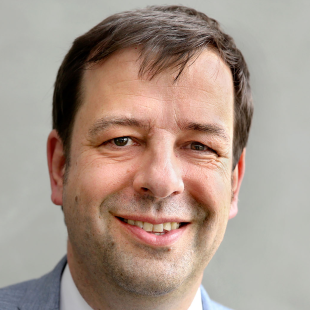
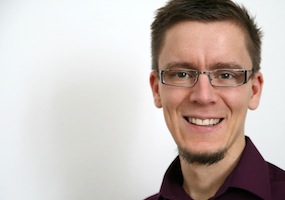
Prof. Dr. Christian Plessl is a W3 Professor of High-Performance Computing at the Institute of Computer Science, University of Paderborn. He leads the Paderborn Center for Parallel Computing (PC²), a national HPC center within the NHR alliance. His roles include Director of PC², Board Member of the NHR association, and member of the Sonderforschungsbereich 901. Education: PhD (Dr. sc. ETH) in Computer Engineering, ETH Zürich (2006) MSc in Electrical Engineering, ETH Zürich (2001) Postdoc at ETH Zürich (2007–2011) Research Interests: Architecture and tools for high-performance parallel and reconfigurable computing, FPGA acceleration, quantum chemistry, scientific computing, adaptive systems, and energy-efficient HPC solutions. Key projects include EKI-App (FPGA-based neural networks), FPGA4XPCS (X-ray spectroscopy), and HighPerMeshes (unstructured grid frameworks). Publications: Over 100 peer-reviewed works, focusing on FPGA acceleration, HPC frameworks, and quantum computing. Recent trends emphasize energy-efficient neural networks, FPGA-based quantum computing, and scalable HPC algorithms. Awards: Best Paper Awards at HEART 2023, ReConFig 2012/2014 Paderborn University Research Awards (2018, 2009) SEW-EURODRIVE Student Award (2001) Grants & Projects: Principal investigator in DFG, BMBF, and EU-funded projects. Collaborates with AMD/Xilinx, Intel/Altera, and Fujitsu. Leads initiatives like PerficienCC (custom computing) and HighPerMeshes. Labs/Teams: Directs the High-Performance Computing group at PC², focusing on FPGA supercomputing and HPC infrastructure. Active in the NHR alliance for national HPC coordination.
Guo Li is affiliated with the Beijing Institute of Technology, School of Management and Economics. Their research spans computer vision, optimization algorithms, signal processing, and machine learning. Collaborations include work on image super-resolution, sensor networks, and energy systems. Publications are distributed across journals like Comput. Electron. Agric. , IEEE Trans. Circuits Syst. , and Entropy . Research interests focus on computational methods for image processing, algorithm design, and interdisciplinary applications in agriculture and energy. Recent work emphasizes lightweight neural network architectures, sparrow search algorithms, and thermodynamic modeling in materials science. Notable contributions include advancements in citrus fruit detection, fatigue life assessment of superalloys, and load forecasting techniques. Active in international conferences such as CVPR, ICC, and NSDI, with a strong publication record since 1998.
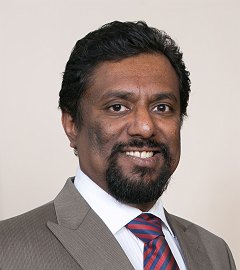
Professor Saman Amarasinghe is a full Professor in the Department of Electrical Engineering and Computer Science (EECS) at the Massachusetts Institute of Technology (MIT), and Principal Investigator at MIT's Computer Science and Artificial Intelligence Laboratory (CSAIL). He leads the Commit compiler research group, which focuses on programming languages and compilers that maximize application performance on modern computing platforms. His work spans multiple academic departments and research centers, with strong affiliations to both MIT's School of Engineering and CSAIL. Professor Amarasinghe's research interests center around high-performance domain-specific languages and compiler technology . His work combines language design with sophisticated compilation techniques to deliver unprecedented performance for targeted application domains. His research spans multiple areas including image processing (Halide), sparse tensor algebra (TACO), graph analytics (GraphIt), stream computations (StreamIt), and bioinformatics (Seq). A significant thread throughout his work is the application of machine learning for compiler optimizations, from Meta optimization in 2003 to the OpenTuner autotuner framework. Analysis of Professor Amarasinghe's recent publications reveals a strong focus on sparse computing , compiler vectorization , and domain-specific language implementation . His work consistently bridges theoretical compiler concepts with practical performance gains across diverse application domains. The progression from earlier work on StreamIt and Halide to more recent projects like GraphIt and TACO shows an evolution toward more specialized, high-performance DSLs targeting specific computational patterns. His 2020-2025 publications particularly emphasize sparse tensor operations, GPU acceleration, and machine learning integration with compiler technology. ACM Fellow (2019) Professor Amarasinghe has made significant contributions to academic entrepreneurship and student development. He founded Determina, Inc. (acquired by VMware) based on security research from his MIT lab and co-founded Lanka Internet Services, Ltd., Sri Lanka's first ISP. As faculty director of MIT Global Startup Labs, his programs across 17 countries have helped create over 20 successful startups. His teaching includes the popular Performance Engineering of Software Systems (6.172) course with Professor Charles Leiserson, as well as innovative project-based courses like the Open Source Software Project Lab and Bring Your Own Software Project Lab. His educational approach emphasizes hands-on experience with compiler and language design concepts. Professor Amarasinghe leads the Commit compiler research group at MIT CSAIL, which has produced numerous influential domain-specific languages and compilers including Halide, TACO, Simit, StreamIt, and GraphIt. The lab maintains strong industry connections through projects like OpenTuner and Determina, and collaborates with researchers worldwide on compiler technology. The group's work spans both theoretical compiler research and practical implementation, with a consistent focus on bridging the performance gap between high-level programming abstractions and hardware capabilities.
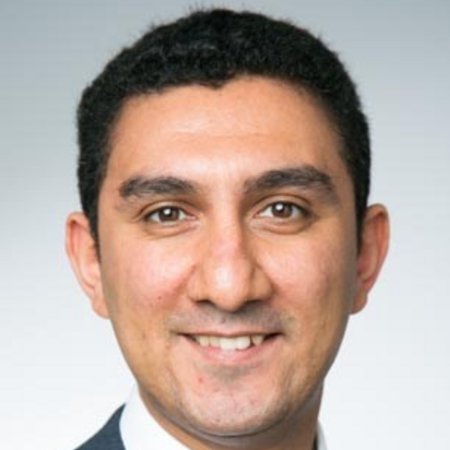
Professor Amr Rizk is the Director of the Networks and Communication Systems (NCS) Lab at the University of Duisburg-Essen, where he has been serving as Professor since April 2021. Previously, he was Assistant Professor at Ulm University (2019-2021) and completed his habilitation at TU Darmstadt in 2019. His academic journey includes research positions at prestigious institutions including University of Massachusetts Amherst, University of Warwick, and TU Darmstadt where he was an Athene Young Investigator. Professor Rizk's research spans multiple aspects of networking and communication systems with a particular focus on network performance analysis, stochastic modeling, and practical implementations. His work bridges theoretical foundations with real-world applications, especially in content delivery, video streaming, and network protocols. He has made significant contributions to network calculus, quality of experience optimization, and novel approaches to congestion control and caching mechanisms. His publication record demonstrates consistent high-impact contributions across top networking conferences and journals. Recent work shows a growing emphasis on programmable data planes, AI/ML applications in networking, and advanced techniques for network measurement and performance prediction. His research group at Duisburg-Essen maintains strong connections with both academic and industrial partners in the networking ecosystem. Best Paper Award at ACM MMSys Conference (2023) Distinguished TPC Member for IEEE INFOCOM (2020, 2022) Best Paper Award at ACM/USENIX Middleware Conference (2017) Athene Young Investigator Award, TU Darmstadt (2017) Professor Rizk serves as Associate Editor for Elsevier Computer Communications and has extensive experience with research funding bodies as a reviewer. His leadership extends to conference organization, including roles as PC Co-Chair for IEEE MIPR (2023) and Steering Committee member for Workshop on Network Calculus (2022). He maintains active participation in numerous top networking conferences as Technical Program Committee member, reflecting his standing within the international networking research community.
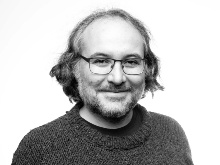
Andrew Ho is an active academic researcher with publications spanning computer science, electrical engineering, and interdisciplinary applications. His recent work focuses on hybridizable discontinuous Galerkin methods for plasma simulations (2024) and AI/LLM applications in scholarly knowledge organization. 2025: Project Alexandria (LLM for copyright-free knowledge) 2024: Hybridizable DG plasma methods, GPU-accelerated kinetic simulations 2023: Low-resource translation techniques 2022: Multimodal VR interfaces 2003-2006: High-speed serial link transceivers and radiography artifact detection His research interests include: Computer science applications in plasma physics and medical imaging LLM-based scholarly knowledge graphs and literature reviews High-speed communication systems Educational technology implementations Co-authors include Vladimir Stojanovic (Stanford, 2003-2005), Carl W. Werner (2003-2005), and Genia Vogman (GPU plasma simulations, 2024).
Prof. Akash Kumar is a Professor at the Chair of Embedded Systems at Ruhr University Bochum, Germany. He previously held professorships at TU Dresden (2015–2024) and the National University of Singapore (NUS; 2011–2015). His research focuses on design automation of embedded systems, reliability optimization, and approximate computing, with a strong emphasis on FPGA and emerging technologies. He leads projects such as Lean-MICS (DFG-funded) and SecuREFET-II, addressing cross-layer reliability and secure circuits. Education: PhD in Multimedia Multiprocessor Systems from Eindhoven University of Technology (TUe) and NUS (2005–2009), Master of Technological Design (Embedded Systems) from NUS (2003–2004), and B.Eng (Computer Engineering) from NUS (1999–2002, First Class Honours). Research interests span embedded systems, reconfigurable architectures, and hardware-software co-design. His work includes optimizing energy efficiency, fault tolerance, and cross-layer approximation techniques. Recent publications highlight advancements in FPGA-based accelerators, machine learning optimizations, and mixed-criticality systems. Active in grants and leadership, Kumar is Principal Investigator on multiple DFG and industry-funded projects, emphasizing collaborative research in distributed computing and approximate architectures. His contributions bridge theory and practice, with applications in edge AI, IoT, and cybersecurity.
Prof. Dr.-Ing. Richard Membarth is a Research Professor for System-on-a-Chip and AI at the Edge Computing at Technische Hochschule Ingolstadt (THI). He is affiliated with the Hardware-Software Co-Design group and holds a secondary position at the German Research Center for Artificial Intelligence (DFKI) Saarbrücken. Co-creator of DSL frameworks like AnyDSL and Hipacc Key contributor to MetaDL (AI metaprogramming) and PRIME (predictive rendering) His research bridges GPU computing , domain-specific languages , and compiler technology , with recent work on Vulkan SPIR-V compilation and device-driven SpMV algorithms . Notable awards include the HiPEAC Paper Award (2018) and multiple Best Paper Awards for his compiler frameworks.
Dr. Erma Perenda serves as Professor and Chair of Distributed Signal Processing at RWTH Aachen University, Germany, leading research within the Department of Distributed Signal Processing. Her contact details include email perenda@dsp.rwth-aachen.de and phone +49 241 80-27879, with office location at Kopernikusstraße 16, 52074 Aachen in the ICT Cubes facility. Her research spans: Distributed Signal Processing Wireless Communications Machine Learning (Deep Reinforcement Learning, Federated Learning) Modulation Classification AI-driven Network Optimization She focuses on solving real-world challenges in wireless systems including hardware impairments, channel variations, and energy efficiency through advanced AI techniques. Analysis of her 2018-2024 publications reveals consistent innovation in applying multi-agent deep reinforcement learning to wireless power allocation, developing robust modulation classification methods resilient to channel impairments, and implementing federated learning for industrial edge computing. Her work bridges theoretical machine learning with practical wireless communication constraints. Scientific Awards: No awards documented in available sources Advising and Grants: No student advisees or grant information provided Labs and Teams: Leads Distributed Signal Processing research group at RWTH Aachen University Based in ICT Cubes building focusing on wireless AI systems
Mohamed Sarwat is an Associate Professor at Arizona State University specializing in databases , spatial data management , and recommender systems . His research focuses on GeoSpark —a cluster computing framework for spatial data—and its extensions like GeoSparkViz for visualization and GeoSparkSim for traffic simulation. Key Contributions: LARS* (Location-Aware Recommender System), Horton* (Graph Reachability), Sindbad (GeoSocial Platform), and Riso-Tree (Graph Database Indexing) Research Themes: Integration of spatial/temporal data with machine learning, efficient indexing for big geospatial datasets, and scalable frameworks for mobility data science His work spans collaborations with 23+ co-authors across institutions like University of Minnesota, University of Melbourne, and University of Salzburg. Current projects emphasize GeoTorchAI —a spatiotemporal deep learning system—and mobility data science infrastructure.
Daniel Hernández is a Postdoctoral Researcher at the Institute for Artificial Intelligence (KI) under the Cluster of Excellence IntCDC at the University of Stuttgart. He is part of the Analytic Computing group within the Institute for Parallel and Distributed Systems (IPVS). His work focuses on Semantic Web technologies , particularly SPARQL , RDF , and knowledge graph applications in interdisciplinary design workflows . Research Trends : His publications (2015–2025) emphasize semantic query processing , provenance computation , and interoperability between architectural data and knowledge graphs . Key innovations include the eSPARQL language for epistemic queries, NPCS for native provenance in SPARQL, and BHoM to bhOWL for integrating building data with ontologies. Teaching & Collaborations : He has held teaching roles at the University of Stuttgart ( Human-Computer Interaction with Knowledge Graphs ), University of Aalborg ( Group Supervisor ), and University of Chile ( Lecturer for The Web of Data ). Collaborations span institutions like Buro Happold , TU Wien , and INRIA , with publications in journals like Proceedings of the VLDB Endowment and conferences such as WWW and ISWC .
Volker Markl is a Professor at Technische Universität Berlin in the Institute of Software Engineering and Theoretical Computer Science, with additional affiliations at the Berlin Institute for the Foundations of Learning and Data (BIFOLD) and the German Research Center for Artificial Intelligence (DFKI). His research spans database systems, stream processing, and distributed data management with significant contributions to both theoretical foundations and practical implementations. Markl's research interests focus on next-generation data management systems, particularly for streaming and IoT environments. His work addresses critical challenges in distributed query processing, system integration, and performance optimization. He has pioneered approaches for stream processing in volatile infrastructures and developed innovative techniques for GPU-accelerated database operations. His NebulaStream project represents a major contribution to distributed stream processing systems. His publication record demonstrates consistent impact across top database venues including VLDB, SIGMOD, and ICDE. Recent work shows increasing focus on machine learning integration with database systems, privacy-preserving query processing, and educational approaches for teaching large-scale data management. Markl has mentored numerous researchers who have become prominent in the database community, with frequent collaborators including Steffen Zeuch, Tilmann Rabl, and Philipp Grulich. His leadership extends to major research initiatives and collaborations across European institutions.
Jianfeng Gu is a Ph.D. Candidate and researcher at the Technical University of Munich (TUM), affiliated with the Department of Computer Science and specifically the Chair of Computer Architecture and Parallel Systems led by Prof. Martin Schulz. He maintains an active research profile with numerous publications and contributes to the academic community through teaching seminars on Cloud Computing. His academic path began with a Bachelor of Software Engineering from Sun Yat-sen University in China (2014-2018), followed by a Master of Engineering from the same institution (2018-2020). Since April 2021, he has been pursuing his Ph.D. at TUM, advancing research in computing systems and architectures. Gu's research focuses on Heterogeneous Serverless Computing for Deep Learning applications, specializing in GPU, FPGA, and NPU technologies within serverless environments. His work addresses critical challenges in resource allocation, auto-scaling, and performance optimization for serverless inference systems. Additionally, he investigates Real-time Autonomous Driving Systems , developing advanced perception techniques through sensor fusion (particularly stereo-LiDAR fusion) for high-precision depth sensing and object detection in autonomous vehicles. His interdisciplinary approach bridges hardware acceleration, cloud infrastructure, and AI applications. His publication trajectory shows a progression from foundational computer vision and autonomous driving research (2018-2020) toward increasingly sophisticated work on serverless computing and federated learning (2021-2025). Recent publications focus on efficient resource sharing in heterogeneous serverless environments, with particular attention to GPU and FPGA allocation strategies that maintain service level objectives while optimizing costs. His work demonstrates strong technical depth across multiple computing domains. Best Paper Award at IEEE/ACM DATE 2021 15+ publications with 185+ citations Research featured in top venues for computer architecture and cloud computing As a Ph.D. researcher, Gu teaches seminars on Cloud Computing (IN2107) and contributes to multiple research projects at TUM's Chair of Computer Architecture and Parallel Systems. His work is supported by the department's research infrastructure and collaborations with faculty including Prof. Martin Schulz and Prof. Michael Gerndt. Gu works within TUM's advanced computing research environment, contributing to projects related to high-performance computing, serverless architectures, and autonomous systems. His research group maintains specialized hardware and software infrastructure for evaluating modern HPC architectures and accelerators, including FPGA clusters and GPU resources for deep learning research.
Dr. Wanja Hofer is a former research staff member at the Department of Computer Science 4 (Distributed Systems and Operating Systems) at Friedrich-Alexander-Universität Erlangen-Nürnberg (FAU). She specialized in embedded systems, real-time operating systems, and aspect-oriented programming. Her research focused on optimizing hardware-centric systems like Sloth and CiAO, addressing challenges in interrupt handling, scheduling, and software product line variability. Her academic journey includes a PhD in 2014 titled Sloth: The Virtue and Vice of Latency Hiding in Hardware-Centric Operating Systems . She contributed to key projects such as Sloth (time-triggered RTOS) and CiAO (aspect-oriented OS family), emphasizing scalability and configurability for automotive and embedded domains. Hofer also held roles like Web chair for EuroSys 2009 and co-maintained the EuroSys Research Directory. Her teaching involved Basics of Systems Programming in C and OS-related seminars. She advised over 15 graduate students on topics ranging from MPU-based task isolation to filesystem-level variability management. Notable contributions include hardware-accelerated interrupt handling, aspect-oriented OS design, and embedded system energy optimization. Hofer currently works at Brose Fahrzeugteile, applying her expertise in embedded systems and real-time computing to automotive technologies. Her work bridges academic innovation with industrial applications, particularly in safety-critical and resource-constrained environments.
Prof. Wolfgang Blochinger is a Professor in the Department of Computer Science at Reutlingen University, specializing in Services Computing and IT Security. He leads teaching programs in Wirtschaftsinformatik (Business Informatics) at both Bachelor and Master levels, focusing on foundational topics such as Programming Basics, Operating Systems, IT Security, Cloud Computing, and Big Data Technologies. His research emphasizes Cloud Computing and High Performance Computing, particularly in elasticity control, parallel processing, and cloud resource optimization. His research projects include developing elastic parallel systems for HPC applications, cloud migration strategies, and automated cloud service generation. Notable contributions involve frameworks like TASKWORK for elastic task parallelism and the Elasticity Description Language for cloud applications. He has published extensively on serverless computing, cost-efficient cloud resource utilization, and container-based isolation techniques. Prof. Blochinger collaborates with industry partners through the university's labs, including the AI-Reallabor AIDA and Cloud Lab. His work bridges academia and industry, addressing real-world challenges in distributed systems and cloud infrastructure. Current research trends focus on self-tuning cloud services and adaptive parallel algorithms for scalable computing environments.
Yue Li is an Associate Professor at the School of Computer Science, Nanjing University, where they co-run the PASCAL Research Group with Tian Tan. Their work focuses on static program analysis techniques and tools for programming languages, software engineering, security, and hardware verification. PhD in Computer Science from UNSW Sydney (2016) Postdoctoral research at Aarhus University (Denmark) and UNSW Sydney B.Eng and M.Eng from Northwestern Polytechnical University (2010, 2012) Research interests center on Program Analysis and Programming Languages , with a focus on: Pointer analysis for database-backed applications Context sensitivity optimization Reflection analysis in Java/Android Operational semantics for hardware languages Distributed dataflow analysis frameworks Developer-friendly static analysis tools Key publication trends (2016-2025) span static analysis , pointer precision , reflection handling , and tool frameworks across conferences like OOPSLA, PLDI, ICSE, ISSTA, and journals including TOPLAS and IEEE TSE. Notable artifacts include Tai-e and Chianina systems. 2025: ICSE Best Artifact & Distinguished Paper Awards 2024: IEEE TSE Publication on Generic Sensitivity 2023: OOPSLA Distinguished Artifact, SPLASH/ECOOP committees 2021: National Youth Talent Support Program, ZiJin Scholar 2016: ECOOP Distinguished Paper, CGO Best Paper As co-PI of PASCAL Research Group, they lead projects on precision-guided analysis, microservice systems, and cloud-based dataflow frameworks, with teaching awards for SICP and Software Analysis courses.