Andang Sunarto is an Associate Professor affiliated with the State Islamic Institute (IAIN) Bengkulu, Indonesia and the Lepage Research Institute, Slovakia . His work bridges Numerical Analysis , Computational Mathematics , and Algorithm Design with applications in Robotics , Image Processing , and Sharia-Compliant Systems . Research Focus: Fractional Calculus, Nonlinear PDEs, GPU-Accelerated Algorithms Collaborations: International institutions including Union of Czech Mathematicians and Physicists and University of Prešov His recent publications (2021–2025) emphasize Iterative Methods for solving Time-Fractional Diffusion Equations and Porous Medium Models . He also explores Digital Islamic Education and Halal Tourism Development . Despite no listed awards, his work spans diverse domains like Mobile Banking Evaluation , Environmental Pollution Analysis , and Ethnobotanical Applications . Andang actively designs EdTech tools (e.g., Wordwall-based modules) and contributes to computational methods in Climate Modeling and Nonlinear Diffusion .
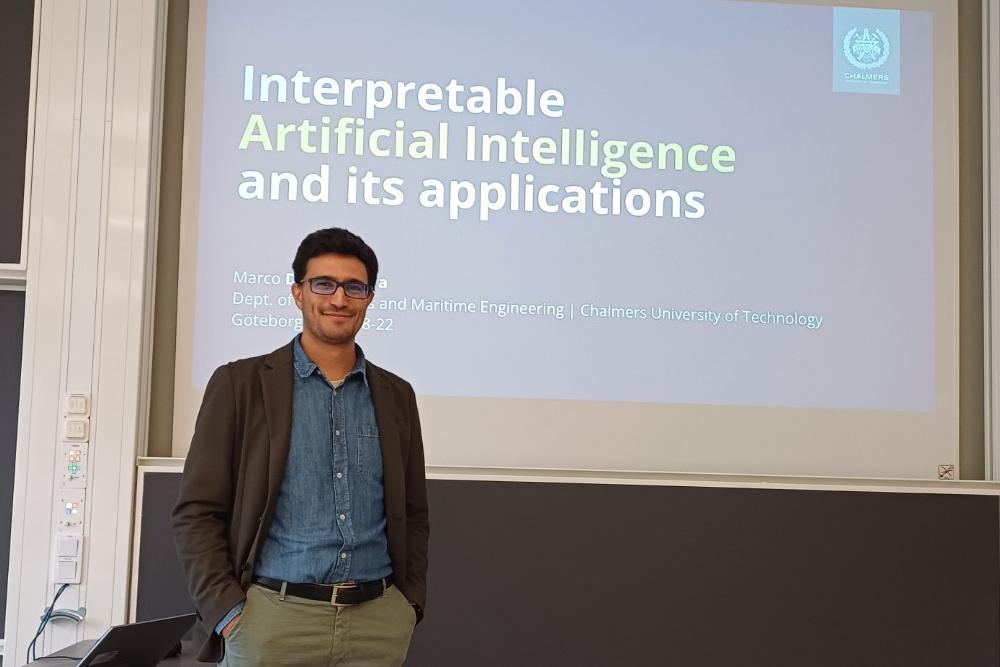
Marco L. Della Vedova is a Senior Lecturer in Applied Artificial Intelligence at Chalmers University of Technology, Sweden. He works in the Vehicle Engineering and Autonomous Systems division within the Department of Mechanics and Maritime Sciences, as part of Prof. Mattias Wahde's research group. Since 2025, he has served as Director of the Data Science and AI master's programme (MPDSC) at Chalmers, where he teaches courses including Introduction to Artificial Intelligence and Digitalization in Sports. Dr. Della Vedova earned his academic foundation at the University of Pavia, Italy, where he completed his BSc (2006), MSc (2009), and PhD (2013) in Computer Engineering. His doctoral research focused on "Real-Time Physical Systems and Electric Load Scheduling" under Prof. Tullio Facchinetti. During his PhD studies, he spent a year at U.C. Berkeley hosted by Prof. Francesco Borrelli at the Model Based Predictive and Distributed Control Lab. His research spans multiple AI domains with a strong emphasis on interpretability. Dr. Della Vedova develops interpretable methods for conversational AI, naturalness evaluation of forests using canopy height models, and geospatial applications. His work bridges theoretical AI with practical societal benefits, particularly in environmental monitoring, transportation systems, and orienteering. He has previously contributed to cloud computing, hate speech detection, and cyber-physical energy systems, demonstrating his interdisciplinary approach to AI research. Dr. Della Vedova's publication record reveals a consistent trajectory of impactful research across multiple domains of artificial intelligence. His recent work shows a strong focus on interpretability in AI systems, with significant contributions to natural language processing, geospatial analysis, and causal inference. The research demonstrates both theoretical depth and practical applications, particularly in environmental monitoring and social media analysis. His methodology often combines traditional machine learning approaches with novel interpretability techniques, creating bridges between complex AI systems and human understanding. Dr. Della Vedova has received several prestigious recognitions for his work: Best PhD thesis award from the Order of the Engineers of Bergamo (2013) Italian champion of Il Cervellone (2012) Top Italian performer in IEEEXtreme 6.0 programming competition (148th overall globally, 2012) Premio Arturo Schena award from Fondazione Credito Valtellinese (2010) With over 50 students supervised through bachelor's and master's theses, Dr. Della Vedova has established himself as a dedicated mentor in the AI community. His current PhD students include Minerva Suvanto working on interpretable NLP and Vivien Lacorre developing AI for railway infrastructure inspection. His supervision spans diverse topics from forest naturalness evaluation to hate speech detection and transportation optimization. Beyond formal supervision, he actively contributes to educational initiatives including serving as Director of Chalmers' Data Science and AI master's program and developing innovative teaching methods that connect theoretical concepts with real-world applications. Dr. Della Vedova is deeply embedded in both academic and professional communities. He leads the Applied Artificial Intelligence research group at Chalmers while maintaining strong connections with European research networks through projects like the ERASMUS+ EUrienteering initiative. His interdisciplinary approach is reflected in collaborations across computer science, environmental science, and social sciences. Notably, he applies his AI expertise to orienteering both as a researcher developing localization methods and as a licensed Event Advisor for the International Orienteering Federation, demonstrating how his professional and personal interests converge in innovative ways.
Dario De Marinis is an Assistant Professor at the Department of Mechanics, Mathematics & Management, Politecnico di Bari, Italy. His research focuses on fluid dynamics with applications in biomedical engineering, aerospace, and computational physics. Research Interests Fluid-structure interaction modeling Microfluidics and particle transport Biomedical applications (blood flow, valve mechanics) Aerospace engineering (hypersonic flows, turbulence) Numerical methods (Lattice Boltzmann, immersed boundary) Publications Trend Dario's recent work (2015–2025) spans computational fluid dynamics, with emphasis on multiphase flows, viscoelastic material behavior, and biomedical microfluidic devices. He has contributed to aerospace applications and turbulent thermal flows.
Professor Abdel Lisser is affiliated with CentraleSupélec, where he conducts research in Gif-sur-Yvette, France. His work spans multiple disciplines including stochastic optimization, game theory, and machine learning. Research Interests: Stochastic Optimization, Chance Constrained Optimization, Distributionally Robust Optimization, Stochastic Game Theory, Physics-Informed Neural Networks. His recent publications focus on integrating stochastic programming with deep learning frameworks to address complex optimization problems under uncertainty. Key areas include Markov Decision Processes, joint chance constraints, and applications in autonomous vehicle control and network design. In 2025, he published on single-controller stochastic games, convex approximations for Markov processes, and physics-informed neural networks for nonlinear equations. 2024 contributions include distributionally robust Markov decision processes, neurodynamic optimization, and CNN-based equilibrium prediction in games. Email: abdel.lisser@l2s.centralesupelec.fr Institution: L2S, CentraleSupélec Location: 3 rue Joliot Curie, 91190 Gif-sur-Yvette, France
Sonia Lopez Alarcon is an Associate Professor in the Department of Computer Engineering at the Kate Gleason College of Engineering, Rochester Institute of Technology (RIT). She has been a faculty member since 2009, teaching core courses like Computer Organization and developing quantum computing curricula including the new CMPE-257 undergraduate course and CMPE-757 graduate course. Her research bridges computer architecture and quantum computing with emphasis on practical quantum circuit implementation. Her educational background includes a Bachelor of Physics and Master's in Device Physics from the University Complutense of Madrid (2002), followed by a PhD in Computer Engineering (2009) where she researched cache hierarchy in simultaneous multithreaded architectures. During her studies, she gained industry experience at Lucent Technologies and Fundetel working on integrated circuit design. Dr. Lopez Alarcon's primary research focuses on Quantum Computing and heterogeneous hardware solutions, specifically quantum circuit compilation processes, scalability challenges, and error resilience techniques. She investigates how to translate theoretical quantum algorithms into executable circuits while managing noise and resource constraints, with applications in optimization problems and physics simulations. Her work connects computer engineering principles to emerging quantum technologies. Analysis of her publication timeline shows a strategic shift from traditional computer architecture (2015-2018 cache/HLS research for GPU/heterogeneous systems) to quantum computing (2019-2021). Recent work explores quantum algorithms for combinatorial optimization (Grover's), quantum simulation of physical systems, and machine learning applications, reflecting her adaptation to the rapidly evolving quantum landscape while maintaining her architectural expertise. Her teaching excellence has been recognized through multiple awards: Kate Gleason College of Engineering Exemplary Performance in Teaching Award (2016, 2017, 2020) Computer Engineering Most Effective Teacher Award (2016) She actively mentors graduate students including Mark Danza (MS Computer Engineering candidate 2025), with whom she collaborated on quantum machine learning research featured in Quantum Zeitgeist (May 2025). She contributes to RIT's quantum information science minor launched in 2022, developing curriculum and supervising student research in this emerging field. Dr. Lopez Alarcon leads quantum computing research efforts within RIT's Department of Computer Engineering, collaborating with colleagues like Cory Merkel on quantum algorithm applications. Her work is supported through her personal research website and integration into university-wide quantum initiatives, positioning her at the forefront of academic quantum computing education and research.
Labros Bisdounis is a Professor at the Department of Electrical and Computer Engineering, University of the Peloponnese, Greece. He previously held positions at the Technological Educational Institute of Western Greece, including Associate Professor, Full Professor, and Dean of the School of Technological Applications (2016–2018). He has extensive industry experience as a senior research engineer and project manager at Intracom S.A. (2000–2008), focusing on VLSI circuits and telecom applications. His research interests include CMOS circuit timing/power modeling, low-power/high-speed design, MOSFET modeling, and sensor applications. He has authored over 30 papers with 740+ citations and is an IEEE member. Education: Diploma in Electrical Engineering (1992), University of Patras Ph.D. in Electrical Engineering (1999), University of Patras Research Interests: CMOS circuit timing and power dissipation modeling Deep-submicron/nano-CMOS circuit design MOSFET device modeling Low-power embedded systems and SoC Sensor applications and organic electronics Leadership Roles: Dean of the School of Engineering, University of the Peloponnese (2023–present) Director of Training & Lifelong Learning Centre (2019–2019) Board Member, Hellenic NARIC (2016–2019) Collaborations: Active at the Hellenic Open University as a tutor in Computer Architecture and Digital Systems modules. Co-developed the AETHER framework for pervasive computing and contributed to energy-aware SoC designs for 5 GHz WLANs.
Dr. Markus Zimmermann is a researcher at the Institute of Neuroscience and Medicine (INM-4: Physics of Medical Imaging) at the Research Center Jülich. His work focuses on advancing quantitative MRI techniques, particularly in water content mapping, multiparametric imaging, and ultrahigh-field MRI applications. He contributes to developing methods for eddy current characterization, multi-exponential relaxometry, and rapid whole-brain protocols. His research addresses neurological and medical imaging challenges, including cerebral pathologies and neurobiological implications. Key areas of expertise include MRI parameter estimation, medical imaging algorithms, and the integration of advanced imaging techniques for clinical and neuroscience applications. His projects often involve collaborations to validate methodologies using in vivo/ex vivo experiments and super-resolution reconstruction. Dr. Zimmermann’s work aims to enhance diagnostic precision and understanding of brain physiology through innovative MRI technologies.
Professor Sebastian Stein is a faculty member in the Electronics and Computer Science department at the University of Southampton, specializing in artificial intelligence and multi-agent systems. He holds a PhD from the University of Southampton (2008) and an MEng in Computer Science from the University of Warwick. His research focuses on citizen-centric AI, mechanism design, and applications in smart energy, transportation, and disaster response. He leads or collaborates on projects such as the EPSRC-funded 'Citizen-Centric Artificial Intelligence Systems' and 'Future Electric Vehicle Energy networks supporting Renewables (FEVER)'. Education: PhD in Multi-Agent Systems (University of Southampton, 2008), MEng Computer Science (University of Warwick) Research Groups: Agents, Interaction and Complexity research group His work emphasizes incentive engineering in dynamic systems, sequential decision-making under uncertainty, and societal challenges like smart mobility and electric vehicle infrastructure. Key awards include the Blue Sky Ideas Award (AAMAS-2021) and Best Demonstration Award (AAMAS 2025). He currently supervises multiple PhD students in computer science and engineering.
Garth Gibson is a Professor in the Computer Science Department and Department of Electrical and Computer Engineering at Carnegie Mellon University's School of Computer Science. He serves as Co-Director of the Master of Computational Data Science program and as Associate Dean for Master's Programs. Gibson has been a faculty member at CMU since 1991, after receiving his Ph.D. and M.Sc. in Computer Science from the University of California at Berkeley and a Bachelor of Mathematics in Computer Science and Applied Mathematics from the University of Waterloo. Gibson's research focuses on large-scale parallelism in computer systems, secondary memory system technologies and optimization, scalable file and key-value storage systems, scalable machine learning, and systematic testing for large scale systems. His work bridges theoretical concepts with practical implementations, with a strong emphasis on shepherding technological advances from academic research to commercial reality. He has made significant contributions to RAID technology, network-attached secure disks (NASD), and parallel file systems that have shaped industry standards and products. Gibson's recent publications reveal a strong trend toward data-intensive scalable computing, with increasing focus on machine learning systems, distributed storage solutions, and high-performance computing infrastructure. His research has evolved from foundational storage technologies to address the challenges of petascale and exascale computing environments, with particular attention to the intersection of storage systems and machine learning workloads. The papers demonstrate a consistent theme of addressing system scalability challenges through innovative architectural approaches. Scientific Awards: 2014 Fellow of the IEEE for contributions to the performance and reliability of transformative storage systems 2012 Fellow of the ACM for contributions to the performance and reliability of storage systems 2012 Jean-Claude Laprie Award in Dependable Computing Industrial/Commercial Product Impact Category 2011 SIGOPS Hall of Fame for the SIGMOD88 RAID paper 1999 Reynold B. Johnson Information Storage Award 1999 Allan Newell Award for Research Excellence 1998 Test of Time Award 1991 A.C.M. Doctoral Dissertation Award (tied for second) Gibson has advised numerous graduate students who have gone on to influential positions in both academia and industry, including Swapnil Patil who won first place in the 2010 ACM Graduate Student Research Competition. He has secured significant research funding through initiatives like the DOE Petascale Data Storage Institute and the Intel Science and Technology Center for Cloud Computing. His research has been supported by collaborations with national laboratories including Los Alamos, Sandia, Oak Ridge, Pacific Northwest, and Lawrence Berkeley. Gibson founded CMU's Parallel Data Laboratory (PDL) in 1993, which has grown into a vibrant research community comprising 6-9 faculty members, 2-3 dozen students, and 4-10 staff. The PDL operates with guidance from the Parallel Data Consortium, which includes 15-25 companies interested in parallel data systems. He also founded Panasas Inc. in 1999, a scalable storage cluster company that has deployed technology in national laboratories, energy sectors, and other high-performance computing environments. More recently, Gibson established the Big Learning research group and created the Systems Major curriculum within CMU's Master of Computational Data Science program.
Robson E. De Grande is an Associate Professor in the Department of Computer Science at Brock University, Canada. He holds a PhD from the University of Ottawa (2012) and BSc/MSc degrees from the Federal University of São Carlos, Brazil. His research focuses on vehicular networks, intelligent transportation systems, distributed systems, and cloud computing. He serves on program committees for conferences like DS-RT, MobiWac, and MSWiM, and has organized multiple workshops and special sessions. Education: PhD in Computer Science, University of Ottawa, Canada (2012) MSc and BSc in Computer Science, Federal University of São Carlos, Brazil (2006, 2004) Research Interests: Vehicular Networks (5G, Handover Management) Edge Computing and IoT Performance Modeling/Simulation High-Performance Distributed Systems Intelligent Transportation Systems Publications: Over 100 peer-reviewed articles across journals like IEEE Transactions on ITS, Elsevier Internet of Things, and conferences like IEEE ICC and ACM MobiWac. Recent work emphasizes ML-driven vehicular network optimization and distributed simulation frameworks. Teaching: Teaches Advanced Computer Networks (COSC 4P14), Parallel Computing (COSC 3P93), and graduate-level Mobile Cloud Computing courses. Research Team: Supervises PhD/MSc students and undergraduate researchers in topics like vehicular edge computing, traffic prediction, and simulation systems.
Luca Pavarino is a Professor at the Department of Mathematics, University of Pavia. His research focuses on scientific computing and numerical methods, particularly in the context of cardiac electrophysiology and multiphysics systems. He leads the Scientific Computing group, specializing in domain decomposition methods (BDDC/FETI-DP), isogeometric analysis, and parallel algorithms. His work integrates advanced numerical techniques with biomedical applications, including cardiac electromechanical coupling, drug testing on cardiac tissues, and modeling genetic cardiac disorders like LQT8 syndrome. Key contributions include scalable solvers for nonlinear systems, preconditioners for heterogeneous media, and operator learning for ionic dynamics. Research interests span computational cardiology, numerical analysis, and parallel computing, with applications to biophysics and drug discovery. His projects often involve interdisciplinary collaborations between mathematics, engineering, and medicine. Notable contributions include: Development of BDDC/FETI-DP preconditioners for cardiac models Integration of machine learning with cardiac electrophysiology High-performance computing for multiphysics systems (Biot’s consolidation, protein stability) Labs/Teams: Scientific Computing Group at the University of Pavia’s Department of Mathematics.
Val Tannen is a Professor at the University of Pennsylvania, specializing in database systems, provenance analysis, and programming languages. His research focuses on data management, query languages, and systems like DBSP and ORCHESTRA. Collaborations include work with co-authors such as Zachary Ives, Susan Davidson, and Todd Green. Key research interests include provenance for databases, incremental view maintenance, and data integration. His work bridges theoretical foundations and practical applications in systems like DBSP for stream processing and ORCHESTRA for collaborative data sharing. Publications span provenance frameworks, query optimization, and distributed systems. While no awards are explicitly listed, his contributions to database theory and systems are widely recognized.
Arijit Khan is an Associate Professor in the Department of Computer Science at Aalborg University, Denmark. He leads the Data Engineering, Science and Systems group and is affiliated with the Technical Faculty of IT and Design. His research focuses on Graph Neural Networks , Blockchain , Data Management , and AI interpretability . He is the Principal Investigator (PI) of a major project on Data Management, Fundamental Algorithms, and Machine Learning for Emerging Problems in Large Networks (2022–2027). Research Interests : Graph Data Management & Machine Learning Blockchain Transaction Analysis Large Language Model + Knowledge Graph Synergies Healthcare AI (e.g., ICU glucose prediction) Explainable AI for Graph Neural Networks Research Trends : His publications emphasize neuro-symbolic systems , uncertain graph analysis , and AI-driven blockchain insights . Recent work bridges large language models with knowledge graphs and explores GPU performance optimization via shader code analysis. Awards & Grants : No explicit awards listed, but his active research grants include a 5-year project on large network analysis with interdisciplinary applications in life and health sciences. Funding emphasizes algorithmic innovation and data science integration. Labs/Teams : Head of the Data Engineering, Science and Systems research group, focusing on AI for societal impact ('AI for the People') and scalable graph data systems. Collaborations span blockchain analytics, healthcare informatics, and GPU architecture design.
Chris Geoga is Assistant Professor of Statistics at the University of Wisconsin-Madison's School of Computer, Data & Information Sciences. His research develops computational methods for spatial statistics, focusing on scalable Gaussian process models, spectral analysis techniques, and high-performance statistical computing. Geoga's work enables efficient analysis of large spatial datasets through innovations in covariance approximation, automatic differentiation, and numerical algorithms. Research areas include: Scalable inference for nonstationary spatial processes Machine-precision spectral likelihood computation Automatic differentiation for covariance functions Hierarchical matrix methods for spatial statistics Irregular time series analysis He develops open-source Julia libraries including Vecchia.jl for Gaussian likelihood approximations, GPMaxlik.jl for statistical inference, and BesselK.jl for specialized mathematical functions. Applications span environmental monitoring, fluid dynamics, and large-scale spatiotemporal modeling.
Dr. Debajyoti Mondal is an Associate Professor in the Department of Computer Science at the University of Saskatchewan. His research focuses on algorithms, network visualization, computational geometry, and visual analytics. He holds a PhD from the University of Manitoba and has held postdoctoral positions at the University of Waterloo and Microsoft Research. Mondal's work spans interdisciplinary applications, including collaborations with Saskatoon Transit and academic medicine. He has authored over 100 peer-reviewed publications and secured grants such as NSERC Discovery, CFI, and Canada First Research Excellence grants. His awards include the 2023 New Scholar RSAW Award. Education: Ph.D. in Computer Science, University of Manitoba, 2016 MSc in Computer Science, University of Manitoba, 2012 BSc. Engg. in Computer Science, Bangladesh University of Engineering and Technology, 2009 Research Interests : Algorithms, graph drawing, computational geometry, visual analytics, and interdisciplinary applications in software engineering, transportation, and bioinformatics. His lab (VGA Lab) develops visualization systems for big data analysis. Key Contributions : Advanced theoretical foundations in computational geometry and graph drawing, developed practical visualization tools, and contributed to climate-related projects like Global Water Futures. Grants & Awards : NSERC Discovery Grant (2018-2024) CFI Grant (2021-2025) Microsoft Research Internship (2015-2016) New Scholar RSAW Award (2023) Labs/Teams : Leads the VGA Lab, collaborating with interdisciplinary teams on projects like Clone-World (software clone visualization) and SET-STAT-MAP (mixed data visualization).