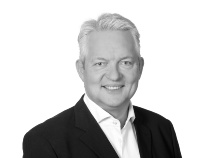
Huayue Zhang is a Researcher at the Professorship of Audio Information Processing, Technical University of Munich. He holds a Master's in Architectural Technology from Harbin Institute of Technology (2019–2022) and a Bachelor's in Civil Engineering from Harbin University of Science and Technology (2014–2018). Since 2023, he has served as a Scientific Assistant at TUM. Research Areas : Virtual Acoustic Environments for Learning Spaces Psychoacoustics and Auditory Modeling Applications of Hearing Aids and Cochlear Implants Acoustic Monitoring and Virtual Acoustics Zhang’s work spans interdisciplinary fields, including deep learning for remote sensing , slope stabilization monitoring , and image processing techniques . His recent publications focus on neural network architectures for image denoising, SAR-based disaster assessment, and LiDAR semantic segmentation. Key Projects : HAPPAA: Exploring human auditory perception in acoustic environments Auralization: Sound-field simulation for virtual spaces Binaural Unmasking: Enhancing speech intelligibility in noise He collaborates with international teams on environmental monitoring, leveraging multi-source satellite data and drone imagery for flood and landslide assessments. His technical expertise includes signal processing and multimedia systems design.
Michael Petter is a faculty member at the Technische Universität München (TUM), affiliated with the School of Computer Science II (Informatik 2) and the Department of Languages and Description Structures in Computer Science. He specializes in compiler design, static analysis, and formal verification, with a focus on developing tools like the Goblint framework for multi-threaded C programs. His teaching spans courses such as Compiler Construction, Program Optimization, and Functional Programming, reflecting his expertise in programming languages and software engineering. His research interests include static analysis techniques, concurrency control, and abstract interpretation frameworks. He has contributed to advancements in flow-sensitive analysis, context-sensitivity management, and precision recovery in program analysis. Recent work emphasizes improving static analysis tools for industrial benchmarks and enhancing their usability through incremental methods. Petter’s publications highlight innovations in numerical abstract domains (e.g., octagons), non-local jump misuse detection, and thread-modular analysis for multi-threaded systems. His involvement in projects like the DFG Research Training Group ConVeY underscores his commitment to advancing continuous verification in cyber-physical systems. He advises thesis projects on topics like quantum computing at compile time and program synthesis, fostering interdisciplinary collaboration. While actively engaged in academic events and editorial roles, he maintains a lab focused on cutting-edge compiler and static analysis research.
Ana Djurdjevac is an Assistant Professor in the Department of Numerical Analysis and Stochastics at the Freie Universität Berlin , within the Department of Mathematics and Computer Science. Her research focuses on numerical analysis, stochastic processes, and partial differential equations, with particular emphasis on uncertainty quantification and mathematical modeling in evolving domains. She teaches advanced courses such as Numerical Methods for Stochastic Differential Equations and Stochastik I , reflecting her expertise in computational methods and probabilistic frameworks. Her work integrates theoretical analysis with practical numerical techniques, addressing challenges in domains such as fluid dynamics, quantum systems, and biological surface fluctuations. Recent contributions include studies on hybrid algorithms for particle systems, rough homogenization in stochastic dynamics, and synchronization mechanisms in conservation laws. Djurdjevac actively participates in academic events, including the 2025 SIAM Conference on Computational Science and Engineering, and collaborates on projects involving quasi-Monte Carlo methods for Bayesian inversion and domain decomposition techniques. Professional activities highlight her role in shaping emerging fields like stochastic PDEs on evolving domains and feedback loops in agent-based models. While no specific awards are listed, her prolific publication record and teaching roles underscore her contributions to computational science and applied mathematics.
Prof. Felix Höfling holds a W2 non-tenure professorship for 'High-performance computing in molecular dynamics' at Freie Universität Berlin (since 2015). He leads the Computational Statistical & Biological Physics group within the Department of Mathematics and Computer Science. Prior roles include research associate positions at the Max Planck Institute for Intelligent Systems (2010–2015), postdoctoral research at the University of Oxford (2009), and doctoral work at Ludwig-Maximilians-Universität München (2006, summa cum laude). His research focuses on computational methods in statistical and biological physics, including molecular dynamics simulations, anomalous transport in crowded environments, and high-performance computing. Notable contributions include studies on liquid-vapor interfaces, colloidal dynamics, and the interplay between microscopic and macroscopic transport phenomena. His work integrates theoretical modeling, numerical simulations, and interdisciplinary applications in soft matter and biophysics. Editorial Board Member of Communications Physics (since 2023) Director of the CECAM node 'Mathematics and Computation in Molecular Simulation' (since 2022) Head of the MSc Examination Board for Computational Sciences (since 2019) His research articles explore topics such as surface tension modulation, confined fluids, and active matter systems. Key achievements include a highly cited review on anomalous transport in biological cells (2013) and contributions to the development of the H5MD molecular data format. Awarded 'Distinguished Referee' by the European Physical Journal (2013) Recipient of grants for projects on open systems and parallel computing Prof. Höfling oversees the Computational Statistical & Biological Physics lab, emphasizing collaborative research in computational physics and interdisciplinary applications.
Prof. Dr. Willy Dörfler is a full professor at the Institute for Applied and Numerical Mathematics within the Faculty of Mathematics at Karlsruhe Institute of Technology (KIT). He leads the research group on Numerical Methods for Partial Differential Equations and teaches advanced courses including Adaptive Finite Element Methods and Modeling and Simulation of Li-Ion Batteries . His work focuses on numerical analysis, scientific computing, and multi-physics simulations. His research spans Partial differential equations with adaptive discretization Wave propagation and space-time methods Battery modeling with chemo-mechanical coupling Lattice Boltzmann techniques for fluid dynamics Applications in mechanics, optics, and electrochemistry as evidenced by his 15 most recent publications. These works emphasize finite element methods, discontinuous Galerkin approaches, and high-performance computing for complex systems. Contact: willy.doerfler@kit.edu | Office hours: Mondays 14:30–15:30 during lecture periods
Dr. Stephan Simonis is a Research Fellow at the Karlsruhe Institute of Technology (KIT), working within the Department of Mathematics and specifically with the Institute for Applied and Numerical Mathematics (IANM2). He leads the LBRG Mathematical Modeling and Numerics Lab since 2023 and serves as an associate editor for the Elsevier journal Examples and Counterexamples since 2024. He is also a member of the steering committee for the EU-funded FALCON project (doi: 10.3030/101138305). Dr. Simonis completed his education as follows: BSc and MSc in Mathematics at KIT, Germany and KTH, Sweden (2011-2018) PhD in Mathematics at KIT (2023), with research visits at UFRGS, Brazil and ETH Zürich, Switzerland Dr. Simonis's research focuses on Applied and Computational Mathematics, particularly in developing and analyzing numerical methods for partial differential equations. His work centers on lattice Boltzmann methods for multi-physics simulations, including applications to fluid flow, blood flow, and solid mechanics. He integrates robust numerical schemes with uncertainty quantification and machine learning, leveraging high-performance computing to explore complex parameter spaces. His research has significant applications in engineering and scientific computing. His publication record demonstrates a strong focus on numerical analysis of lattice Boltzmann methods, with recent work expanding into uncertainty quantification, machine learning integration, and applications to complex fluid dynamics problems. The breadth of his work spans theoretical analysis, algorithm development, and practical implementation in the OpenLB library, with publications in top journals across mathematics, physics, and engineering disciplines. Dr. Simonis has received numerous accolades for his work: ERASMUS+ EQF7 scholarship (2016-2017) DAAD PPP mobility funding (2019) KIT Faculty Teaching Award (2021) KHYS Networking Grant (2022) KHYS ConYS Grant (2024) Oberwolfach Leibniz Graduate Student (2024) NHR Starter project (2024) DAAD PRIME fellowship (2025) Dr. Simonis actively mentors students through various thesis projects in mathematics, fluid dynamics, and high-performance computing. His current open thesis topics focus on lattice Boltzmann methods, relaxation schemes, and stability analysis. He has secured significant research funding including the DAAD PRIME fellowship and NHR Starter project, demonstrating strong support for his research program. His teaching portfolio includes Computational Fluid Dynamics and Simulation Lab, Parallel Computing, and Project-centered Software Lab across multiple semesters. As leader of the LBRG Mathematical Modeling and Numerics Lab since 2023, Dr. Simonis oversees a research group focused on developing advanced numerical methods. His involvement in the EU-funded FALCON project and as associate editor for Examples and Counterexamples further demonstrates his growing leadership in the computational mathematics community.
Prof. Dr. Christian Wieners is a faculty member at the Institute for Applied and Numerical Mathematics , part of the Faculty of Mathematics at Karlsruhe Institute of Technology (KIT) . He has held leadership roles, including Head of the KIT Department of Mathematics (2012-2015) and Speaker of the GAMM activity group on numerical methods for PDEs (2010-2017). Academic Rank: Professor Research Focus: Scientific Computing, Discontinuous Galerkin Methods, Multigrid Algorithms, and Applications in Solid Mechanics and Cardiac Modeling His research spans Numerical Analysis , Computational Mechanics , and Biomedical Engineering , with a focus on parallel finite element methods for wave equations, phase-field fracture, and multi-physics cardiac simulations. Recent work includes adaptive space-time DG methods, visco-acoustic inversion, and digital twins for heart modeling. He has served as an Associated Editor for SIAM Journal of Scientific Computing (2008-2013) and a Section Editor for Numerical Analysis in ZAMM. His publications highlight collaborations in Parallel Computing , Visco-Elastic Models , and Nonlocal Plasticity . Prof. Wieners teaches courses like Numerische Mathematik and Grundlagen der Kontinuumsmechanik , with a history of lectures on Scientific Computing , Machine Learning in Mathematics , and Multigrid Methods . His work integrates Mathematical Rigor with Engineering Applications .
Steffen Winter is a Lecturer (PD Dr.) at the Institute of Stochastics, Karlsruhe Institute of Technology (KIT). His research specializes in Fractal Geometry, Geometric Measure Theory, Stochastic Geometry, and Dynamical Systems. He leads the DFG-funded project Scaling of curvature measures and the modified Weyl-Berry conjecture and serves as Principal Investigator for project 12 ( Morphometric Roughness of Nanostructured Surfaces ) within the DFG Priority Programme 2265 (Random Geometric Systems). Winter's work explores the mathematical foundations of fractals, stochastic processes, and geometric measurements. Key themes include Minkowski content, curvature measures, self-similar sets, percolation models, and applications to materials science and geoscience. Recent publications emphasize fractal dimensionality, surface roughness quantification, and stochastic convergence in complex systems. He teaches advanced courses including Stochastic Geometry , Fractal Geometry , and Markov Chains , and mentors students through seminars and proseminars. No awards or research grants besides DFG projects are documented.
Suhail Yousaf is a Lecturer in Computer Science at the School of Computer Science & Engineering, Constructor University Bremen gGmbH. His academic career spans roles at the University of Engineering and Technology Peshawar, Pakistan, where he served as an Assistant Professor (2018-2023) and Lecturer (2013-2018, 2005-2007). He earned his PhD and MSc in Distributed and Parallel Computer Systems from Vrije Universiteit Amsterdam (2009-2014, 2007-2009), and an MSc in Computer Science from Quaid-i-Azam University, Islamabad (2002-2004). Education PhD in Distributed Computer Systems, Vrije Universiteit Amsterdam (2009-2014) MSc in Parallel and Distributed Computer Systems, Vrije Universiteit Amsterdam (2007-2009) MSc in Computer Science, Quaid-i-Azam University (2002-2004) His research focuses on distributed computing, machine learning, and environmental monitoring. Key areas include earthquake phase classification, landslide detection, and PM2.5 forecasting using neural networks and time-series analysis. He has also contributed to GPU acceleration in optimization algorithms and fake news detection via ensemble methods. Recent publications highlight his interdisciplinary work in environmental science and high-performance computing. For instance, the 2024 paper 'ConvEQ' applies convolutional neural networks to seismic signal processing, while 2020 studies explore crop monitoring, air quality prediction, and GPU-based simplex method improvements. Teaching Roles MDE-CS-02 Parallel and Distributed Computing (Spring 2025, Spring 2024) SDT-104 Scientific Programming with Python (Fall 2024) CH-250 Programming in Python and C++ (Fall 2023) ACS-201 Databases and Web Services (Fall 2024, Fall 2023) ACS-106 Distributed Development (Spring 2024, Fall 2023)
Amey Bhangale is an Assistant Professor in the Department of Computer Science and Engineering at the University of California, Riverside. Prior to this, he held positions as a post-doctoral fellow at the Weizmann Institute of Science under Irit Dinur and a research fellowship at the Simons Institute. His research focuses on Approximation Algorithms , Probabilistically Checkable Proofs , Hardness of Approximation , and Analysis of Boolean Functions . Research Trends His recent work explores inapproximability bounds for constraint satisfaction problems, parallel repetition theorems, and additive combinatorics in finite fields. Notable collaborations include Subhash Khot, Dor Minzer, and Yang P. Liu. Teaching CS219: Advanced Algorithms (2025) CS141: Intermediate Data Structures and Algorithms (2024) CS218: Design and Analysis of Algorithms (2023) CS215: Theory of Computations (2021-2023)
Prof. Dr. rer. nat. Malte Prieß is a Professor for Cloud Technologies at Kiel University of Applied Sciences since October 20224, following eight years as Dean and Professor of Applied Computer Science at Schleswig-Holstein Cooperative State University (DHSH) . He teaches modules including Cloud Computing , Web Applications , and Advanced Cloud Computing , with additional involvement in Agile Development Methods and Software Engineering . Academic Background: Diploma in Physics (with distinction) from Leibniz University Hanover and Max Planck Institute for Gravitational Physics (2002-2007) Dr. rer. nat. (magna cum laude) from Kiel University in Algorithmic Optimal Control (2008-2012) Research Interests focus on the intersection of cloud computing, artificial intelligence, and modern software engineering . His work includes surrogate-based optimization for climate models, AI-driven document capture systems , and ethical considerations in AI deployment within project work. Recent Publications demonstrate expertise in AI vulnerability assessment , deep learning training optimization , and document search algorithms for governmental agencies. Scientific Recognition: Best Paper Award at CLOUD COMPUTING 2025 for "Graph of Effort" vulnerability assessment Accepted fellowship at AI Campus (Stifterverband) for "Teaching AI, learning AI at DHSH" (2022) Research Projects: Central Innovation Programme for SMEs (ZIM): "AI MODULES for the skilled trades" (2024/25) HR dashboard for DRK Schwesternschaft, Lübeck Scalable Data Analytics project under BMBF FHprofUnt program (2018)
Prof. Gerd Balzer is a Professor in the Department of Electrical Power Systems at Technische Universität Darmstadt. His research focuses on power system reliability, HVDC technology, short-circuit current calculations, and asset management. He has extensively contributed to the analysis of electrical networks, including transformer behavior, capacitor impact on short circuits, and grid integration challenges. His work addresses critical issues such as fault current mitigation, network stability under renewable integration, and optimal maintenance strategies. Key research areas include: High-Voltage Direct Current (HVDC) systems and their interaction with AC networks Transient and steady-state analysis of electrical networks Asset management for infrastructure systems Risk-based optimization of maintenance and replacement strategies His recent publications emphasize advancements in short-circuit current calculation methods for complex systems, including those involving HVDC converters and meshed networks. He has also explored the impact of modern grid components like capacitors and renewable energy systems on network stability. Prof. Balzer's collaborative projects address real-world challenges such as offshore wind park integration, voltage regulation in distribution grids, and congestion management using advanced controllers. His work aligns with global efforts to enhance grid resilience and reliability amid evolving energy landscapes.
Richard Schulze is a Researcher at the University of Münster, contributing to projects such as SkelCL, PACXX, and dOpenCL. His work focuses on parallel computing, compiler optimization, and auto-tuning frameworks for high-performance and distributed systems. He explores portable code generation for heterogeneous architectures using Multi-Dimensional Homomorphisms (MDH) and develops abstractions for OpenCL/CUDA programming. His research interests include advancing scheduling languages and systematic composition models, alongside probabilistic data linkage techniques. Recent publications emphasize auto-tuning methodologies for Python and interdependent parallel program parameters. Publications since 2018 highlight contributions to portable compiler design, performance optimization, and cross-platform parallelism. No scientific awards are explicitly mentioned. Consultation hours are by appointment, and he is affiliated with the university's computer science research groups.
Nico Bohlinger is a PhD researcher at TU Darmstadt specializing in Intelligent Autonomous Systems . He employs Deep Reinforcement Learning (DRL) for advanced robot locomotion across diverse morphologies. Current focus on multi-embodiment learning Developing neural architectures for scalable DRL Experienced in humanoid and quadrupedal robots (Unitree H1, A1, Go2) Research contributions include: Unified Robot Morphology Architecture (URMA) Zero-shot policy transfer between simulated and real-world environments Vertical ground perturbation analysis for locomotion robustness His 8 publications since 2022 demonstrate expertise in cross-morphology policy learning and morphology-aware value function scaling . Nico actively supervises master's theses and teaches Robot Learning courses while leading the RL-X research framework development.
Prof. Dr.-Ing. Alexander Verl is a leading academic at the University of Stuttgart , serving as Principal Investigator at the Institute for Control Engineering of Machine Tools and Manufacturing Units (ISW) . His work bridges control engineering , industrial robotics , and digital twin technologies to enhance precision in manufacturing systems. Research Interests : Improving positioning accuracy of industrial robots through transmission error modeling and compliance compensation. Developing adaptive preload control mechanisms for cable-driven parallel robots and rack-and-pinion systems. Advancing IT/OT convergence via Time-Sensitive Networking (TSN) and cloud-edge integration. Creating digital twin platforms for real-time simulation and quality monitoring in CNC machining. Exploring deep learning applications for perception of deformable linear objects in automation. Recent Work Trends show expertise in: smart manufacturing , Industry 4.0 , and data-driven control systems . Publications emphasize practical validation through industrial testbeds (e.g., KUKA KR210–2 robotics, CNC machine simulations) and theoretical contributions to elastokinematic models and nonlinear dynamics . Advising & Grants : Collaborates extensively with researchers like Armin Lechler and Michael Neubauer. Projects funded through academic-industry partnerships in automotive production, precision engineering, and Gaia-X-based data ecosystems.