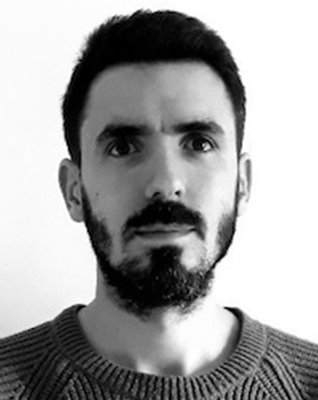
Thomas Chambrion is a Professor of Applied Mathematics at the University of Burgundy, affiliated with the engineering school ESIREM and the Institute of Mathematics of Burgundy (IMB). He leads the Statistics, Probability, Optimization and Control (SPOC) research team at IMB, focusing on theoretical and applied aspects of control systems. His research encompasses: Quantum control : Infinite-dimensional bilinear systems, Schrödinger/Gross-Pitaevskii equations, molecular rotation Optimization : Real-time constraints, switching systems, signal denoising algorithms Cross-disciplinary applications : Fluid dynamics (swimmer locomotion), MRI pulse design, industrial process modeling Recent publications (2020-2024) show a strong emphasis on controllability analysis for quantum systems and development of efficient algorithms for signal processing. His work frequently employs geometric methods, perturbation theory, and statistical modeling. No grants or awards are detailed in the available information. His laboratory, SPOC, operates within the Institute of Mathematics of Burgundy, collaborating extensively with researchers in quantum physics and engineering.
Clément QUINTON is an Associate Professor at the University of Lille, affiliated with both Inria and the CRIStAL laboratory (Centre de Recherche en Informatique, Signal et Automatique de Lille). He is an elected member of the laboratory council and maintains offices in both the Inria building (Room B312) and the M3 building (Room 224) at the Cité Scientifique campus. Dr. QUINTON is a member of the Spirals research team and holds the HDR (Habilitation à Diriger des Recherches), a French academic qualification that allows him to supervise PhD students. Dr. QUINTON's research spans several areas within computer science, with a primary focus on parallel computing, polyhedral models, and hardware acceleration. His work bridges theoretical computer science with practical applications in embedded systems and biomedical monitoring. He has made significant contributions to the fields of: Polyhedral compilation and loop optimization techniques High-level synthesis for FPGA-based hardware acceleration Systolic array design and parallel architectures Disruption-tolerant wireless sensor networks for biomedical applications Sustainable software engineering and cloud configuration Application of Large Language Models to software development Analysis of Dr. QUINTON's publication history reveals a consistent research trajectory that began with foundational work in parallel algorithms and systolic arrays, evolving toward more contemporary applications involving FPGA acceleration, polyhedral compilation, and biomedical sensor networks. His recent work shows increasing interest in sustainable computing, cloud architectures, and the application of Large Language Models to software engineering challenges. This evolution demonstrates his ability to adapt theoretical computer science concepts to address emerging technological challenges. Dr. QUINTON has supervised numerous PhD students whose research aligns with his expertise: Virginie Amand: Sustainable software services using large-scale models Alexandre Bonvoisin: Frugal software architectures for cloud-native microservices Tristan Coignion: Energy impact of Large Language Models for code Edouard Guegain: Software optimization through configuration (defended September 2023) Brell Péclard Sanwouo Chekam: Automatic detection and correction of side-channel vulnerabilities in cryptographic libraries Nada Zine: Complex and self-adaptive software systems Maxime Huyghe: Sustainable software services development based on Language Models (LLM) As a member of the Spirals research team at Inria and CRIStAL, Dr. QUINTON contributes to a collaborative environment focused on software engineering, system architecture, and sustainable computing. His work bridges theoretical computer science with practical applications in healthcare monitoring, cloud computing, and energy-efficient software development.