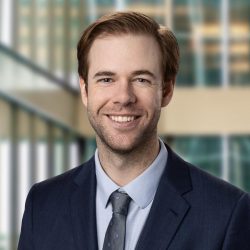
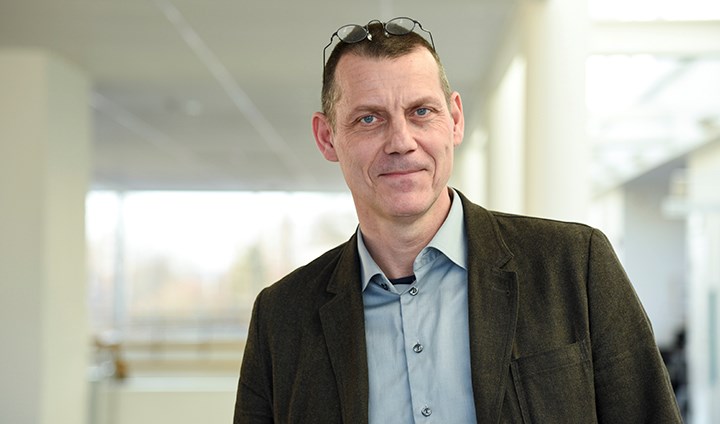
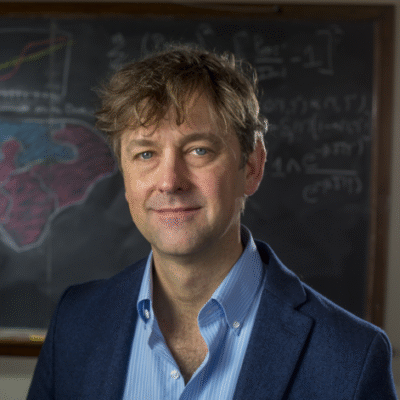
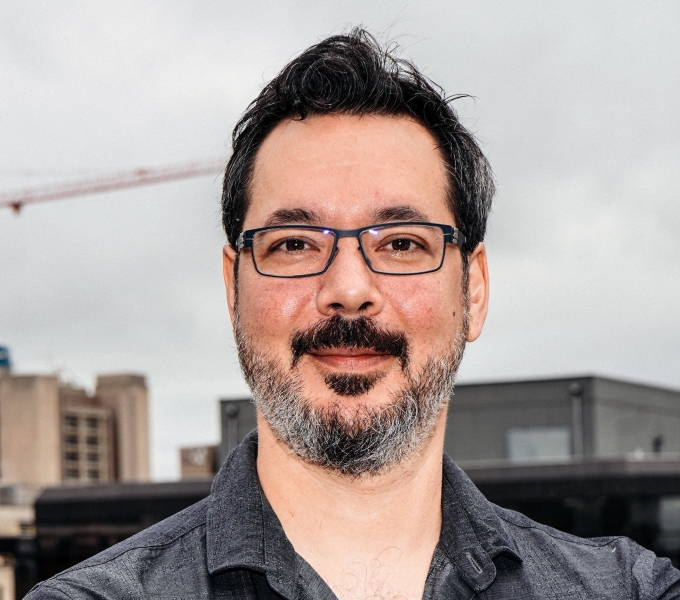
Professor Dave Campbell is affiliated with Carleton University's School of Mathematics and Statistics and School of Computer Science. He specializes in inferential data science, Bayesian algorithms, and computational statistics. His research interests include differential equation models, uncertainty quantification, and time-series analysis. He has advised multiple graduate students in areas like statistical language models and machine learning. Recent work includes studies on climate impacts on human conflict, forensic entomology, and NMR-based metabolite quantification. Active in open data initiatives, he maintains ShinyApps for ecological and educational datasets. Teaching includes Statistical Computing and Statistical Language Models courses.
Voula Tsouna is a distinguished Professor in the Department of Philosophy at the University of California, Santa Barbara (UCSB), affiliated with the College of Letters and Science. She serves as President of the Society of Ancient Greek Philosophy (SAGP) and is a member of the Scientific Committee of the Fondation Hardt. Her email is vtsouna@philosophy.ucsb.edu. Her education includes a PhD from the University of Paris X, France. Tsouna specializes in ancient Greek philosophy, with a focus on Socrates, Plato, the Socratic schools, and Hellenistic philosophy. Her research explores Epicurean ethics (via Philodemus' texts), Cyrenaic epistemology, and Stoic philosophy. Notable works include critical editions of Philodemus' On Choices and Avoidances , The Epistemology of the Cyrenaic School , The Ethics of Philodemus , and a 2022 commentary on Plato’s Charmides . She co-edited Conceptualising Concepts in Greek Philosophy (2024) and is currently working on Aristotle’s metaphysics and ethics, as well as Plato's Republic Books 8-9. Her recent publications (2013–2024) analyze Epicurean concepts like epibole, Stoic technai, and Aristotelian sōphrosunē, while engaging with broader themes in Greek philosophy’s methodological and ethical debates. Her work bridges textual analysis with philosophical reconstruction, emphasizing ancient responses to skepticism, ethics, and epistemology. Tsouna’s contributions include co-editing book series for Cambridge University Press and advancing interdisciplinary approaches to Hellenistic texts. She actively participates in academic societies and contributes to the preservation and interpretation of ancient philosophical heritage.
Valerie Hecht is an Adjunct Senior Lecturer in Biological Sciences at the University of Tasmania's School of Natural Sciences. Her research focuses on genomics, plant physiology, and gene expression, particularly in legumes. She explores mechanisms controlling flowering time, photoperiod adaptation, and plant development using genomic tools like microarrays and next-generation sequencing. Her work has advanced understanding of legume domestication, photoperiod response pathways, and molecular regulators such as the FLOWERING LOCUS T (FT) homologs. She has contributed to projects like the Australian Research Council-funded 'Ultra-high Throughput Genotyping of Eucalyptus' (2007–2009), totaling $263,000, where she collaborated with Vaillancourt R and others. Key research areas include: Flowering time genetics Legume genomics Photoperiodic adaptation Molecular mechanisms of plant development Publications highlight her expertise in pea (Pisum sativum), Eucalyptus, and Medicago truncatula systems. She maintains an active research profile via LinkedIn and ResearchGate.
Jeffrey S. Rosenthal is a Professor in the Department of Statistical Sciences at the University of Toronto, Faculty of Arts and Science. He holds a PhD in Mathematics from Harvard University and a BSc from the University of Toronto. PhD, Mathematics, Harvard University BSc, University of Toronto His research centers on probability theory , stochastic processes , and statistical computation , with a particular focus on Markov chain Monte Carlo (MCMC) algorithms . His work spans theoretical foundations and practical applications, including random walks on groups and interdisciplinary modeling. He is also known for his public engagement in statistics through bestselling books and media appearances. The recent publications reflect a sustained focus on the theoretical underpinnings and convergence properties of MCMC methods, including adaptive and non-reversible algorithms. His work also extends into data science applications, such as analyzing streaks in online chess and the long-term impact of the COVID-19 pandemic on mortality. The keywords span probability, statistics, computational mathematics, and machine learning, indicating a blend of theoretical rigor and applied relevance. Scientific Awards and Honors: CRM-SSC Prize in Statistics COPSS Presidents' Award SSC Gold Medal Fellow of the Royal Society of Canada Fellow of the Institute of Mathematical Statistics Alumnus of Influence, University College Pierre Robillard Award SSC Student Research Presentation Award Savage Award Finalist Academic Supervision and Grants: Professor Rosenthal has supervised a large and diverse group of students, including numerous PhD candidates, MSc students, and post-doctoral fellows, many of whom have gone on to successful academic careers. His research is supported by ongoing publications and collaborations, indicating active grant funding and a vibrant research program. He maintains a well-documented research team and provides extensive resources for students and collaborators. Research Teams and Labs: He leads an active research group in probability and computational statistics, with a documented team of current and past post-doctoral fellows, PhD students, and research assistants. The group maintains a collaborative environment, as evidenced by joint publications and team photos, and focuses on advanced topics in MCMC theory and applications.
Tameem Albash is a Research Associate Professor at the University of New Mexico , affiliated with the Department of Physics and Astronomy in the College of Arts and Sciences . His research focuses on quantum information science, quantum computing, and quantum annealing. He holds a PhD from the University of Southern California (2010). Education: PhD in Physics, University of Southern California, 2010 Research interests include quantum annealing optimization, quantum simulation, noise mitigation in quantum systems, and the interplay between quantum error correction and classical computational methods. His work explores topics like non-stoquastic Hamiltonians, many-body localization, and the application of machine learning to quantum systems. Recent studies investigate the efficiency of quantum annealing hardware for combinatorial problems, decoherence effects in quantum simulations, and the use of neural networks for state approximation. His articles highlight advancements in classical simulation techniques for quantum phenomena, such as analyzing macrostate vs. microstate dynamics in 1D Ising models. He also examines hybrid approaches combining quantum and classical methods to address limitations in current quantum hardware. Despite no listed awards, his contributions to quantum computing benchmarks and hardware validation are notable. Labs/Teams: Albash's research aligns with UNM's Quantum Information Science initiatives, though specific lab affiliations are not detailed in the provided text.
Joshua Brault is a Senior Data Scientist at the Bank of Canada, specializing in the intersection of data science and macroeconomic modeling. He holds a Ph.D. in Economics from Carleton University (2021), an M.A. from Carleton University (2016), and a B.Sc. from Trent University (2014). His research focuses on business cycles, monetary policy, and quantitative methods, with notable contributions to dynamic stochastic general equilibrium (DSGE) model estimation and econometric techniques. Brault's work emphasizes applying advanced computational methods, such as parallel tempering algorithms, to enhance macroeconomic model accuracy. His recent studies explore inflation dynamics, central bank policy frameworks, and granular data challenges. He has published in journals like the Journal of Money, Credit and Banking and authored Bank of Canada staff working papers on topics such as Taylor rule reliability and DSGE estimation. His academic background includes a postdoctoral fellowship at Université du Québec à Montréal, reinforcing his expertise in structural macroeconomic analysis. Brault’s research bridges theoretical models with practical policy applications, contributing to the Bank of Canada’s understanding of economic stability and data-driven decision-making.
Patrik Lundell is a Professor of History at Örebro University, specializing in media history and political history. He previously held professorships at Mid Sweden University (2016–2018) and earned his PhD in History of Sciences and Ideas from Lund University in 2002. His research focuses on the evolution of print media, including their marketing strategies and public discourse dynamics, with particular attention to parallels between historical media phenomena and modern social media. Lundell also explores right-wing extremist advocacy in interwar Europe and WWII, analyzing how intellectual elites engaged with Nazi Germany. He emphasizes historical perspectives to critically evaluate contemporary media environments. Key research areas include the transformation of media systems from the 18th century to present, the role of media in shaping public opinion, and the intersection of media with political movements. His work challenges simplistic narratives about media progress, advocating for nuanced historical analysis to understand modern media dynamics. Lundell has developed databases tracking textual migrations between Sweden and Finland, and his methodologies incorporate digital humanities tools for computational history analysis. His academic trajectory includes a Docent title from Lund University (2009), and his research has been disseminated through numerous articles, books, and collaborative projects. While no specific grants or awards are listed, his contributions to media historiography and critical analysis of far-right media rhetoric have positioned him as a leading scholar in these fields.
Benn Macdonald is a Lecturer in Statistics & Data Analytics at the University of Glasgow's School of Mathematics & Statistics. His research focuses on statistical emulation, computational statistics, Bayesian modelling, and applications in biomedical engineering. He holds an ORCID identifier (0000-0003-3728-5305) and is based in Room 210B. Research interests include: Biomedical modeling (e.g., cardiac mechanics, left ventricle dynamics) Statistical methods for parameter inference and model selection Applications of Gaussian processes in mechanistic models Computational biology and systems biology Key publications (2019-2013) address topics like statistical emulation for clinical decision support, gradient matching in systems biology, and parameter estimation in biomechanical models. His work bridges theoretical statistics with practical biomedical applications. Advising includes Hongjin Ren's research on Gaussian Process Emulation. Collaboration networks span institutions like the University of Glasgow's School of Mathematics & Statistics and external clinical partners.
Dr. Mehmet Cevri is an Assistant Professor at Istanbul University's Faculty of Science, Department of Mathematics, where he has been serving since 2011. He specializes in Bayesian statistical methods, signal processing, and mathematical modeling with applications spanning from genetics to engineering. Education: 2003-2009: Doctorate in Mathematics/Applied Mathematics, Marmara University Institute for Graduate Studies in Pure and Applied Sciences 1999-2002: Postgraduate in Mathematics/Applied Mathematics, Marmara University 1995-1999: Undergraduate in Mathematics Education, Marmara University Ataturk Faculty of Education Research Focus: Dr. Cevri's research encompasses a broad spectrum of mathematical and computational methods, with particular emphasis on Bayesian inference and signal processing . His work includes developing sophisticated algorithms for extracting sinusoidal signals from noisy data, analyzing genetic traits using Bayesian methods, and applying mathematical clustering techniques to biological data. His expertise extends to optimization techniques, stochastic processes, and numerical analysis. His recent publications demonstrate a consistent focus on Bayesian approaches to signal processing problems , particularly in recovering sinusoids from noisy environments. He has also applied his mathematical expertise to biological problems, including the analysis of ostracoda habitat preferences and genetic trait transmission probabilities. Research Projects: 2015: "Bayesian Estimates of Genetic Characters" (Project Executive) 2012-2014: "Family Tree Analysis with Bayesian Logical Inference Method" (Project Executive) 2013: "Performance Analysis of Gibbs Sampling in Bayesian Inference of Sinusoids" (Project Executive) 2010-2013: "Positron Lifetime Spectrum Analysis with Bayesian Statistical Inference" 2007-2010: "Bayesian Spectrum Estimation of Harmonic Signals" 2007-2010: "Bayesian Model Selection and Parameter Estimation" Teaching and Supervision: Dr. Cevri teaches a variety of mathematics courses ranging from foundational mathematics to specialized topics like integral transforms and Bayesian data analysis. He has supervised multiple thesis students including F. Fırat and E. Serhan, contributing to the development of future researchers in mathematical sciences.
Charles Geyer is a Professor at the School of Statistics, University of Minnesota . His work spans computational statistics, spatial statistics, and statistical genetics, with applications to endangered species conservation and stochastic process modeling. Research Interests: Spatial statistics, Markov chain Monte Carlo methods, likelihood inference in exponential families, constrained optimization, and statistical software development. Software Contributions: Developed R packages mcmc , aster , rcdd , and trust for Monte Carlo methods, life history analysis, computational geometry, and optimization. Teaching: Instructs graduate and undergraduate courses including Stat 5101, Stat 5102, Stat 5421, Stat 5601, and advanced seminars on computational statistics. Publications: Notable works include research on maximum likelihood estimation in exponential families, fuzzy P-values, geometric ergodicity in MCMC, and computational methods for conservation genetics.
Jonathan Mattingly is a Professor in the Department of Mathematics at Duke University and currently serves as the interim Director of the Rhodes Information Initiative at Duke (iiD). His research focuses on stochastic processes, gerrymandering, and algorithmic fairness in political districting. Professor, Department of Mathematics, Duke University Interim Director, Rhodes Information Initiative at Duke His work uses advanced mathematical modeling and computational algorithms to analyze electoral redistricting plans, serving as key evidence in legal cases such as the NC partisan gerrymandering case before the Supreme Court. He has developed methods like multiscale parallel tempering for redistricting sampling and studied stochastic stabilization mechanisms. Recent awards include the Simons Fellow in Mathematics (2024) and AAAS Fellow (2025) . He has led Data+ projects since 2015, mentoring students like Sophie Guo and James Wang, with tools for analyzing voting patterns and generating synthetic elections. Expert Report on North Carolina Redistricting (2021) Mathematical Gerrymandering Detection (2020) The trajectory of his work spans stochastic partial differential equations, Markov chain analysis, and geometric ergodicity, with applications ranging from biochemical systems to political science.
Nick Tawn is an Associate Professor at the University of Warwick, specializing in computational statistics and Bayesian methodology. His research focuses on scalable Monte Carlo techniques, particularly MCMC and SMC algorithms, with applications to multi-modal target distributions. He completed his PhD in 2017 on 'Towards Optimality of the Parallel Tempering Algorithm,' and continues to advance parallel tempering and related methodologies for complex Bayesian settings. His work integrates insights from Machine Learning and Data Science to enhance computational efficiency in statistical inference. Beyond academia, he channels his passion for cycling, swimming, and running into algorithmic innovation, drawing inspiration from the multi-modality of his physical adventures. A CV is available upon request via email to n.tawn.1@warwick.ac.uk.
Bryan McGovern is a Professor and Chair of the Department of History and Philosophy at Kennesaw State University (KSU). He specializes in 19th-century Irish and Irish-American history, with a focus on topics such as sectarianism, nationalism, and cultural identity. McGovern holds a Ph.D. in History from the University of Missouri (2003). His research explores overlooked aspects of Irish diaspora experiences, including the evolution of St. Patrick’s Day symbolism and the role of Irish-Americans in movements like the Fenians. Education: Ph.D. in History, University of Missouri (2003). Research interests include the intersection of religion, politics, and identity in Irish and Irish-American communities. He is currently writing a book on the Irish in Georgia and has co-authored works such as The Fenians: Irish Rebellion in the North Atlantic World . His articles span journals like New Hibernia Review and Pennsylvania History , addressing themes from Young Ireland’s global legacy to Andrew Jackson’s ties with Protestant Irish immigrants.
Yaohang Li is a Professor in the Department of Computer Science at Old Dominion University (ODU), part of the College of Sciences. His research focuses on computational biology, computational science, Monte Carlo methods, and high-performance computing. He holds a Ph.D. in Computer Science from Florida State University (2003), an M.S. from Florida State (2000), and a B.S. from South China University of Technology (1997). Dr. Li has secured over $15M in research funding, including an NSF CAREER Award (2009) and multiple federal/state grants. His work spans protein structure modeling, bio-inspired algorithms, and parallel computing. Notable contributions include novel sampling approaches for protein modeling and GPU-accelerated optimization methods. He has authored/co-authored numerous peer-reviewed articles in journals like Journal of Computational Biology , IEEE Transactions , and Physical Review . Key Research Areas: Protein Loop Prediction, Parallel Tempering Algorithms, Grid Computing Security Grants: Includes $13.5M NOAA ISET Cooperative Center and $1M NSF Bio-inspired Control Systems Project Awards: 2009 NSF CAREER Award, 2005 Young Researcher Award (NCSU), and 2005 Ralph E. Powe Junior Faculty Enhancement Award. His lab collaborates on interdisciplinary projects such as the Consortium for Research Computing for Sciences (CRCSET) and develops tools like the Variational Autoencoder Inverse Mapper (VAIM) for QCD analysis. Advises on HPC systems and security in distributed computing environments.
Robin Lee is an Associate Professor with a secondary appointment in the University of Pittsburgh School of Medicine. His research focuses on cell signaling pathways, particularly the NF-κB and TNF pathways, integrating experimental and computational approaches to understand molecular mechanisms of inflammation, gene regulation, and cellular decision-making. He develops advanced imaging tools like SunRISER and dNEMO for studying mRNA dynamics in live cells. His work bridges systems biology, immunology, and biophysics to uncover how cellular networks process signals and respond to environmental stimuli. Key research interests include stochastic signal processing in NF-κB signaling, quantized dynamics of cytokine receptors, and the role of ubiquitin in disease. Lee collaborates on developing small molecule inhibitors targeting inflammatory pathways and employs stochastic modeling to analyze complex biological networks. His lab also explores dopamine receptor modulation of Wnt signaling and cell proliferation control, contributing to neurobiology and cancer research. Lee's articles highlight innovative methods for long-term mRNA tracking, computational modeling of cell signaling, and mechanistic insights into NF-κB's role in cellular fate decisions. His work has advanced understanding of how signaling networks decode environmental cues to regulate transcription, inflammation, and cell survival.