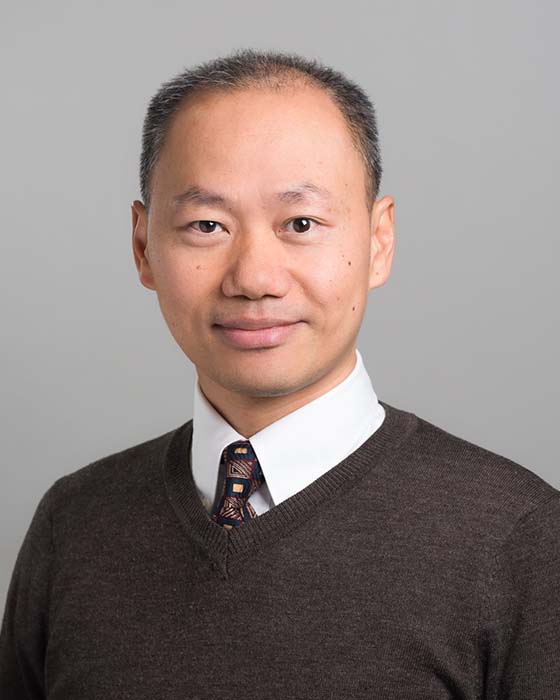
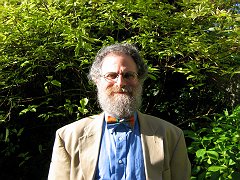
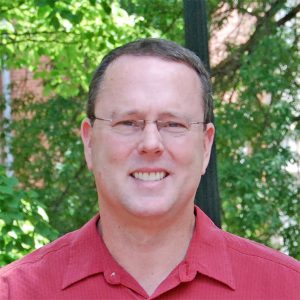
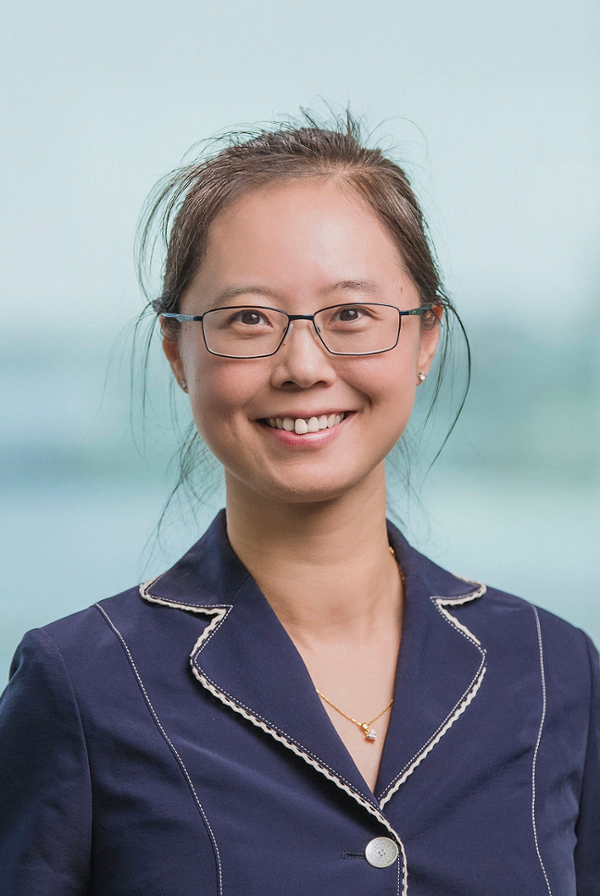
Professor Ben Liang is a faculty member at the Department of Electrical and Computer Engineering , University of Toronto, holding the L. Lau Chair . He has served on editorial boards of IEEE Transactions on Mobile Computing , IEEE Transactions on Wireless Communications , and Wiley Security and Communication Networks . His research focuses on networked systems , mobile communications , and distributed machine learning , with applications in wireless network virtualization, edge computing, and resource optimization. He explores stochastic scheduling , computation-communication co-design , and multi-resource fair allocation . Key publication trends: Wireless federated learning (2024-2025) Network virtualization and MIMO systems (2022-2025) Online distributed optimization (2023-2025) Stochastic resource management (2020-2024) Scientific Awards: Fellow of IEEE Best Paper Award, ACM MSWiM 2013 INFOCOM 2010 Finalist Ontario ERA Award 2007 IFIP Networking 2005 Best Paper Intel Foundation Graduate Fellowship 2000 Polytechnic University valedictorian 1997 Affiliated with IEEE , ACM , and Tau Beta Pi , he teaches courses like ECE368: Probabilistic Reasoning and ECE421: Machine Learning , emphasizing stochastic networks and random processes .
Caoimhín De Barra is an Associate Professor of History at Gonzaga University , joining in 2018. He earned his Ph.D. from the University of Delaware (2014) and previously served as Assistant Professor of Irish History and Culture at Drew University . Research Focus: Language-identity dynamics in nationalism Teaching: British/Irish/European history, imperialism, nationalism Publications: The Coming of the Celts, A.D. 1860 (2018), Gaeilge: A Radical Revolution (2019) Contact: debarra@gonzaga.edu His publications analyze Celtic nationalism's transnational influences, including Welsh-Irish interactions and imperial education comparisons. He actively promotes the Irish language through advocacy and coaching Gonzaga's hurling team, blending historical scholarship with cultural preservation.
Philip Wadler is Professor of Theoretical Computer Science at the University of Edinburgh and Senior Research Fellow at IOHK. He is an ACM Fellow, Fellow of the Royal Society, and Fellow of the Royal Society of Edinburgh. His work spans programming language design, type systems, and formal verification, with significant contributions to Haskell, Java, and XQuery. He has held leadership roles in ACM SIGPLAN and served on editorial boards for major journals. Research Interests: Wadler's research focuses on the foundations of programming languages , including Gradual and session typing Language-integrated query Functional and logic programming XML data models Parametricity and free theorems Verification of smart contracts Publication Trends: Recent articles emphasize type safety, formal verification, and blockchain applications. Key themes include gradual typing (blame calculus), session types for concurrency, and logical foundations of programming. His 2015–2025 papers show sustained focus on type theory and language design . Awards & Recognition: POPL Most Influential Paper (2003 for 1993 work) SIGPLAN Distinguished Service Award Best Paper SBMF 2018 Royal Society-Wolfson Fellowship (2004–2009) ACM Fellow (2007) Fellow of Royal Society of Edinburgh (2005) Advising & Grants: He has supervised numerous PhD students in programs like the Centre for Doctoral Training in Pervasive Parallelism. His EPSRC Programme Grant "From Data Types to Session Types" (2013–2020) funded major advances in concurrency theory. Current work with IOHK explores blockchain verification using Haskell-based Plutus.
Dr. Achim Rohde is a Middle East historian serving as Research Fellow at the University of Hamburg's Asia-Africa Institute and Head of Memorial Development at the Lower Saxony Memorials Foundation. He holds a doctorate from Freie Universität Berlin and has held academic positions at institutions including Philipps University Marburg, Goethe University Frankfurt, and TU Berlin. Research Focus: Modern Middle East history (20th/21st century), gender studies, memory politics, and critical analysis of Orientalism and educational systems. Publications: 15 most recent articles span topics from Jihadist masculinity to post-2003 Iraqi education reforms , Tunisian democratization , and German academic discourse on non-Christian religions . Teaching: Courses on Arab Spring legacies, Islamic popular culture, and gender dynamics in Middle Eastern societies across multiple universities between 2002-2021. Academic Network: Collaborations with institutions like German Institute for Global Area Studies, Heinrich-Böll-Stiftung, and editorial work on comparative Middle East studies. Key Projects: Contributions to Social Contexts of Rebellion in Early Islamic Period (SCORE) , InterSaME , and RomanIslam Center for transcultural empire studies.
David Colon is a Tenured Lecturer at the Centre for History (CHSP) of University of Paris Institute of Political Studies, specializing in propaganda, communication, and digital history. His research focuses on mass persuasion mechanisms, information warfare, and media influence from historical and contemporary perspectives. Position: Tenured Lecturer Institution: Sciences Po (University of Paris Institute of Political Studies) Research Themes: • Propaganda and psychological manipulation • Digital history and modern information warfare • Political communication and social movements Scientific Awards: Prix Akropolis 2019 Prix Jacques Ellul 2020 Teaching & Publications: Holder of the agrégation in history, Colon contributes to graduate studies and has published extensively on propaganda, including works on Edward Bernays, cognitive warfare, and artificial intelligence's role in information manipulation.
James H. Anderson is the Kenan Distinguished Professor and Department Chair in the Department of Computer Science at the University of North Carolina at Chapel Hill, where he has been a faculty member since 1993. A leading researcher in real-time systems and distributed computing, he previously served at the University of Maryland (1990-1993). His educational background includes: B.S. in Computer Science from Michigan State University (1982) M.S. in Computer Science from Purdue University (1983) Ph.D. in Computer Sciences from the University of Texas at Austin (1990) Anderson's research focuses on real-time systems, distributed and concurrent algorithms, multicore computing, and operating systems. His work addresses fundamental challenges in scheduling, resource management, and reliability in time-critical environments, with recent emphasis on GPU acceleration for AI workloads and heterogeneous platforms. He investigates novel approaches to budget enforcement, processing graph scheduling, and timing predictability in complex systems. Analysis of his recent publications reveals a strong trend toward applying real-time scheduling principles to GPU and heterogeneous computing architectures. Key research thrusts include enabling predictable AI acceleration, managing timing uncertainties in autonomous systems, and developing composable resource partitioning techniques for safety-critical applications. His distinguished honors include: U.S. Army Research Office Young Investigator Award (1995) Alfred P. Sloan Research Fellowship (1996) Seven Computer Science Student Association Teaching Awards (1995-2019) Fellowships from IEEE (2012), ACM (2013), AAAS (2020), and AAIA (2022) IEEE TCRTS Outstanding Technical Achievement and Leadership Award (2018) Anderson actively mentors through the TOPICS Club, a reading group for undergraduate students that he co-leads with Cynthia Sturton and Danielle Szafir. His professional leadership includes chairing IEEE TCRTS (2016-2017) and ACM SIGBED (2019-2021), plus service as program/general chair for major conferences including RTSS, PODC, ECRTS, and RTAS. He directs ongoing research initiatives in real-time systems through collaborative projects and the TOPICS Club, which provides undergraduates with hands-on research experience in cutting-edge computer science topics.
Dr Fleur Stolker is the Herchel Smith Teaching and Research Fellow in Law at Emmanuel College, University of Cambridge. From October 2024, she will serve as Director of Studies in Law at Emmanuel and an Affiliated Lecturer in Law at the Law Faculty. Her scholarly work bridges legal history, socio-legal analysis, and interdisciplinary studies. Education: LLB and LLM in Jurisprudence and Philosophy of Law from Leiden University; LLM in Health Law from University of Amsterdam; MSt and DPhil in Legal History from University of Oxford Fleur’s research focuses on early modern English legal history, particularly equity and bankruptcy systems, examining their socio-legal context and intersections with Roman legal traditions. Her current project explores cross-border insolvency and financial rehabilitation in 16th–18th century English, Dutch, and colonial legal systems, drawing parallels to modern social justice challenges. Her publications include studies on the Office of the Lord Chancellor’s equitable function and historical bankruptcy frameworks. She teaches undergraduate Civil Law, Equity, and Land Law at Emmanuel, alongside Legal History lectures for postgraduates at the Law Faculty. Scientific Awards: Junior Research Fellowship at New College, Oxford Fleur combines academic rigor with diverse professional experience, including roles at legal libraries, law firms, and auction houses. Her teaching emphasizes interdisciplinary connections across legal fields.
Professor Stuart C. Althorpe is a Professor of Theoretical Chemistry at the Department of Chemistry, University of Cambridge, where he leads the Althorpe Research Group. His work focuses on quantum dynamics and the application of quantum mechanics to chemical reactions, particularly examining how quantum effects influence atomic and molecular motion in systems ranging from isolated reactions to liquid water and ice. Professor Althorpe's research interests center on quantum dynamics , with specific focus on quantum tunneling , conical intersections , and path-integral methods . His group develops computational techniques that bridge quantum statistics and classical dynamics, creating methods like Matsubara dynamics to model quantum effects in complex systems. Key research areas include visualizing complete wave functions of chemical reactions, calculating tunneling splittings in water clusters, and investigating quantum interference effects at electronic degeneracies. The group employs both pen-and-paper theoretical derivations and high-performance computational algorithms for parallel CPUs and GPUs to tackle these challenging problems. The trends in Professor Althorpe's recent publications (2018-2024) reveal an evolution from foundational quantum dynamics methods toward increasingly sophisticated applications in complex, dissipative environments. His work consistently bridges computational chemistry and quantum physics, with growing emphasis on connections between quantum dynamics, chaos theory, and quantum information concepts. The publications demonstrate methodological innovation in path-integral approaches, particularly in handling quantum effects in condensed-phase systems like water and ice, while maintaining strong connections to experimental observations. Professor Althorpe has mentored over two dozen PhD students and postdoctoral researchers who have secured positions at leading institutions including ETH Zürich, UCL, EPFL, and various industry roles. His research group maintains active international collaborations, most notably with Professor D.J. Wales at Cambridge (on water clusters) and Professor Richard N. Zare at Stanford University, where theoretical calculations interpret detailed experimental measurements of reaction dynamics. The Althorpe Group operates within the Department of Chemistry at the University of Cambridge as part of the Theoretical Research Interest Group. The group's work contributes significantly to understanding quantum mechanical phenomena in chemical processes, with implications for fields ranging from atmospheric chemistry to biochemistry. Professor Althorpe organized the 2019 Faraday Discussion on "Quantum effects in complex systems," demonstrating his leadership in advancing theoretical frameworks for quantum phenomena in chemistry.
Dr. Shuangshuang Jin is an Associate Professor in the School of Computing with a joint appointment in the Department of Electrical and Computer Engineering at Clemson University's College of Engineering, Computing and Applied Sciences. Previously, she served as a Senior Research Scientist at Pacific Northwest National Laboratory. Her educational background includes a Ph.D. in Computer Science (2007), M.S. in Computer Science (2003) from Washington State University, and a B.S. in Computer Science (2001) from Wuhan University. Ph.D., 2007 - Washington State University, Computer Science M.S., 2003 - Washington State University, Computer Science B.S., 2001 - Wuhan University, Computer Science Dr. Jin specializes in high-performance computing (HPC), distributed and parallel computing, general-purpose computation on graphical processing units (GPGPU), and HPC-based big data analysis, machine learning, scientific computation, and visualization. Her research focuses on applying these technologies to electrical engineering (power and energy systems, power electronics), automotive engineering, systems biology, and computer graphics. She leads the High-Performance Computing Enabled Science and Engineering (HPCeSE) Lab, where she supervises six PhD students working on HPC implementations for power system dynamic simulation, GridPACK application development, data-driven model-based smart control of power electronics converters, and other cutting-edge projects. Her recent publications demonstrate expertise in accelerating power system simulations, PV inverter reliability assessment, edge computing for power systems, and virtual prototyping of vehicle powertrain systems. The research trends show increasing focus on GPU acceleration, real-time simulation capabilities, and integration of HPC with emerging power system challenges. Junior Faculty Excellence in Teaching award (2021) Churchill Carter Fellowship (2022-2023) Zucker Graduate Education Center PhD Grant (2023) Doctoral Dissertation Completion Award (2023-2024) Outstanding Masters Student in Computer Science award (2022) Dr. Jin has successfully secured multiple grants from DOE, DOD, and other agencies for projects including 'Vehicle Propulsion Digital Twins', 'GridPACK-Wind', and 'Tool for Reliability Assessment of Critical Electronics in PV (TRACE-PV)'. She has advised numerous PhD and Master's students who have gone on to positions at national laboratories and industry. Her HPCeSE Lab maintains strong connections with Pacific Northwest National Laboratory, Fermi National Accelerator Laboratory, and other research institutions, providing students with valuable internship opportunities. Dr. Jin leads the High-Performance Computing Enabled Science and Engineering (HPCeSE) Lab at Clemson University, which focuses on developing optimized HPC-based parallel programming algorithms and architectures to solve complex scientific and engineering domain problems. The lab works on smart grid modeling and simulation, power electronics reliability assessment, ground vehicle systems prototyping, and advanced grid analytics, utilizing OpenMP, MPI, Pthreads, and CUDA/OpenCL on various computing platforms.
Erika Lee is the Bae Family Professor of History and Radcliffe Alumnae Professor at Harvard University, serving as Director of the Schlesinger Library on the History of Women in America. A past president of the Organization of American Historians, she is a leading scholar of U.S. immigration, Asian American history, and xenophobia across the 19th-21st centuries. Her research centers on immigration history, Asian American history, and the intersections of race, xenophobia, law, gender, and society. Lee examines how systemic racism and exclusionary policies have shaped American identity, with particular focus on Asian American experiences and the historical roots of contemporary anti-immigrant sentiment. Lee's recent publications (2020-2024) analyze xenophobia during crises like the COVID-19 pandemic, anti-Asian discrimination, and immigration policy weaponization. Her work reveals historical patterns connecting past exclusion laws to modern nativist movements while highlighting immigrant resilience and the power of public history. Lee's honors include: American Book Award Asian/Pacific American Award for Literature Andrew Carnegie Fellowship Election to the American Academy of Arts & Sciences Immigrant Heritage Award Pioneer Award from OCA Champion for Justice Award She received the Andrew Carnegie Fellowship for research funding and testified before Congress on anti-Asian discrimination. As a public intellectual, Lee frequently contributes to media discussions on immigration and race through major outlets including the New York Times and CNN. Lee co-founded three digital humanities initiatives: Immigrant Stories (documenting immigrant experiences through digital storytelling), #ImmigrationSyllabus (educational resource on immigration history), and Immigrants in COVID America (tracking pandemic impacts on immigrant communities).
Guimu Guo is an Assistant Professor in the Department of Computer Science at Rowan University's College of Science & Mathematics. His research focuses on parallel and distributed computing techniques for large-scale graph mining problems, with applications in bioinformatics and transportation engineering. Ph.D. in Computer Science from University of Alabama at Birmingham M.Sc. in Computer Science from Tongji University Dr. Guo has published extensively in top-tier venues like VLDB, ICDE, and IEEE BigData. His work spans graph mining algorithms, parallel computing, and interdisciplinary applications in transportation and genomics. He actively mentors PhD and Master's students, offering fully funded positions. Key research trends include: Advancing GPU-accelerated graph decomposition techniques Developing distributed frameworks for subgraph querying and task concurrency Exploring parallel algorithms for frequent pattern mining and clique-like subgraphs Scientific Recognition: NSF CRII Award UAB Outstanding PhD Student Award Alabama GRSP Awards (Rounds 15 & 16) Teaching spans from foundational object-oriented programming to advanced graduate courses in parallel programming. His lab group has produced significant contributions to subgraph mining, transportation simulation, and genome assembly systems.
Dr. Éric Hébrard is a Senior Lecturer in Astrophysics at the University of Exeter since 2018, with prior academic roles including NASA Goddard Senior Research Fellow and CNRS Research Associate. His work bridges planetary atmospheres, astrochemistry, and combustion modeling with expertise in 3D chemical simulations. PhD in Physics and Chemistry of Planetary Atmospheres, Université Paris 7 (2006) Magna cum laude Magistère Interuniversitaire de Chimie, ENS Paris (2003) Research focuses on: Exoplanetary atmosphere modeling (hot Jupiters, TRAPPIST-1e) Photochemical kinetics and UV absorption Coupling of atmospheric circulation and chemistry Cross-disciplinary combustion-atmosphere analogs Chemical validation strategies for model accuracy Scientific contributions include: NASA-funded research on organic-rich habitable zones Development of KIDA kinetic database for astrochemistry STFC Consolidated Grant for multi-dimensional chemical models Quantum chemistry integration for Titan atmosphere studies Awards: Higher Education Academy Fellowship (ASPIRE program) NASA Postdoctoral Fellowship (2015-2017) CNES Postdoctoral Fellowship (2007-2009)
Professor Amr Rizk is the Director of the Networks and Communication Systems (NCS) Lab at the University of Duisburg-Essen, where he has been serving as Professor since April 2021. Previously, he was Assistant Professor at Ulm University (2019-2021) and completed his habilitation at TU Darmstadt in 2019. His academic journey includes research positions at prestigious institutions including University of Massachusetts Amherst, University of Warwick, and TU Darmstadt where he was an Athene Young Investigator. Professor Rizk's research spans multiple aspects of networking and communication systems with a particular focus on network performance analysis, stochastic modeling, and practical implementations. His work bridges theoretical foundations with real-world applications, especially in content delivery, video streaming, and network protocols. He has made significant contributions to network calculus, quality of experience optimization, and novel approaches to congestion control and caching mechanisms. His publication record demonstrates consistent high-impact contributions across top networking conferences and journals. Recent work shows a growing emphasis on programmable data planes, AI/ML applications in networking, and advanced techniques for network measurement and performance prediction. His research group at Duisburg-Essen maintains strong connections with both academic and industrial partners in the networking ecosystem. Best Paper Award at ACM MMSys Conference (2023) Distinguished TPC Member for IEEE INFOCOM (2020, 2022) Best Paper Award at ACM/USENIX Middleware Conference (2017) Athene Young Investigator Award, TU Darmstadt (2017) Professor Rizk serves as Associate Editor for Elsevier Computer Communications and has extensive experience with research funding bodies as a reviewer. His leadership extends to conference organization, including roles as PC Co-Chair for IEEE MIPR (2023) and Steering Committee member for Workshop on Network Calculus (2022). He maintains active participation in numerous top networking conferences as Technical Program Committee member, reflecting his standing within the international networking research community.
Perry Anderson is a Research Professor of History at the University of California, Los Angeles (UCLA). His work focuses on state structures, political ideas, and European integration, with publications spanning classical, feudal, and modern systems of power. He has taught across continents, held residencies at European institutes of advanced study, and lectured at prestigious institutions including the Collège de France. His research interests include: Comparative historical analysis of state structures Political philosophy (justice, equality, hegemony) European Union history and legal evolution Modernity and postmodernity discourses Anderson's recent lectures at the Collège de France (2022) examined the interplay of law, sovereignty, and European integration, culminating in critical reflections on the Ukraine war's impact on European construction.
Laurent Caraffa is a Researcher at Université Gustave Eiffel, working at the LaSTIG laboratory of IGN (National Institute of Geographic and Forest Information). His research focuses on large-scale 3D data processing, including surface reconstruction from point clouds and images, leveraging triangulated structures and implicit methods. His work also covers indexing and searching within point clouds for large-scale place recognition, with applications in urban environments and navigation systems. Caraffa's research interests span 3D Data Processing, Surface Reconstruction, Point Cloud Processing, Large-scale Place Recognition, Indexing and Retrieval, Big Data, Cloud Computing, Mathematical Optimization, 3D Mapping, and Photogrammetry in degraded conditions. His work bridges theoretical computational geometry with practical applications in geographic information systems and autonomous navigation. His publication record demonstrates significant contributions to distributed 3D processing, particularly through advancements in Delaunay triangulation, watertight surface reconstruction, and neural radiance fields. Recent work shows a clear trajectory toward more efficient and scalable methods for processing massive 3D datasets, with growing emphasis on implicit representations and learning-based approaches for 3D reconstruction. Caraffa actively participates in the scientific community through organizing events like the Big Data Day 2023 at IGN and contributing to major research projects. His work has resulted in publications in top-tier conferences including ICLR, CVPR, ISPRS, and IEEE Big Data, establishing him as a significant contributor to the field of large-scale 3D data processing. As a research supervisor, Caraffa currently co-supervises four PhD students working on projects funded by AID, Criteo, and Huawei, focusing on large-scale place recognition, implicit representations for 3D reconstruction, and 3D reconstruction in degraded conditions. He is also the co-founder of ExtraLabs, a company developing distributed computing solutions for cooperative digital twins, demonstrating the practical impact of his research.