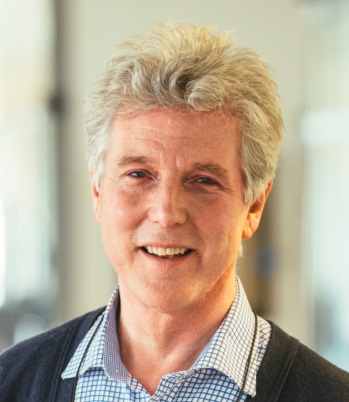
Bengt Jonsson is a Professor at the Division of Computer Systems, Department of Information Technology, Uppsala University. His research focuses on formal methods, real-time and distributed systems, semantics and verification of concurrent systems, and IoT security. Current Projects: UPMARC (Software Technology for Multicore Programming), aSSIsT (Secure Software for IoT), and Designed for UPDATE (Safe Embedded Software Updates) Past Projects: CoDeR-MP (Multicore Real-Time Applications), ProFun (Wireless Sensor Networks), CONNECT (Networked Component Synthesis) His work includes automated verification, model checking, and symbolic execution for concurrent systems. Recent publications address dynamic partial order reduction, IoT protocol testing, and lock-free data structures. Scientific Awards : CAV Award 2017 He advises PhD students and teaches courses like Model-Based Development of Embedded Systems and graduate-level symbolic execution. Personal interests include piano playing and orienteering.
Pedram Beldar is a researcher affiliated with the University of Skövde , specifically the School of Engineering Science and Department of Engineering . He actively contributes to the fields of Industrial Engineering , Operations Research , and Production Optimization . His research focuses on optimization algorithms for manufacturing processes, including batch processing , flexible transfer lines , and energy-efficient production . He has collaborated on projects like Digitalized and optimized production planning for energy-efficient production (May 2022 - April 2025) and Virtual Engineering . His work emphasizes sustainable manufacturing and smart Industry 4.0 solutions. The trends in his publications highlight applications of operations research to non-identical parallel machines , cross-docking systems , and teaching-learning-based optimization , with a growing emphasis on sustainable production in recent years. He is involved in course coordination for bachelor-level industrial engineering courses and collaborates with researchers such as Masood Fathi , Amir Nourmohammadi , and Gilbert Laporte .
Torsten Wik is a Professor in Control Engineering at Chalmers University of Technology. He leads the Control Engineering research group and focuses on process control with theoretical and applied methodologies. Institution: Chalmers University of Technology Department: Control Engineering His research spans optimal control, model reduction, and systems with model uncertainties. Applications include energy-saving systems, environmental improvement, biological systems (water purification, recirculating fish farms, LED greenhouse lighting), and battery estimation/modeling/control. Recent work emphasizes battery degradation diagnosis, state estimation, fast charging, and reconfigurable systems. Key methodologies include physics-informed frameworks, machine learning integration, entropy-based predictive algorithms, and hypergraph modeling. Applications extend to electric vehicles, photovoltaic systems, fuel cells, and biofilm reactors. Publications highlight collaborations across engineering domains, focusing on control theory, electrochemical modeling, and real-time optimization. His work bridges theoretical advancements with industrial applications in energy systems, transportation, and sustainable agriculture.
Christoph Kessler is a Professor and Head of the Software and Systems (SAS) division at the Department of Computer and Information Science (IDA), Linköping University, Sweden. He leads the Programming Environment Laboratory’s research group focusing on compiler technology, parallel computing, and heterogeneous systems. His work includes the development of tools like OPTIMIST, PARAMAT, and SkePU, and he has contributed over 100 publications in journals and conferences. He holds a PhD from the University of Saarbrücken and a Habilitation from the University of Trier. Research interests span parallel programming, compiler optimization, and energy-efficient scheduling for heterogeneous systems. He has secured a 30M SEK grant from SSF for the ASTECC project, advancing adaptive software for edge-cloud computing. Notable contributions include frameworks for GPU-based systems and methodologies for optimizing resource allocation on many-core architectures. His team’s work emphasizes practical applications in high-performance computing, including tools for course management (StASy) and energy-aware scheduling algorithms. The SAS division, under his leadership, focuses on software engineering and computer systems research with strong industry collaboration.
Mathias Haage is a Senior Lecturer and Project Manager at the Department of Computer Science, Lund University, affiliated with the Faculty of Engineering (LTH). He is a member of LTH's Profile Areas in 'Circular Building Sector' and 'AI and Digitalization,' and part of ELLIIT: the Linköping-Lund initiative on IT and mobile communication. His research focuses on Robotics and Automation, particularly in construction and industrial applications. He leads projects like the 'Center for Construction Robotics' and 'RobotLab LTH,' emphasizing automation in construction processes and smart manufacturing. Key research topics include parallel-kinematic manipulators, industrial robot applications, and ontology-based knowledge representation for robotics. He has contributed to advancements in construction automation, flexible manufacturing systems, and robot skill reusability. His work aligns with UN Sustainable Development Goals related to industry, innovation, and infrastructure. Haage has supervised over 33 research outputs, including peer-reviewed conference papers and journal articles. Notable collaborations include projects with Heidelberg Materials Cement Sverige AB and FORMAS. He actively participates in initiatives like the Robotics Week for Schools and AI Lund seminars, promoting public engagement in robotics and AI.
Seif Haridi is a Professor at KTH Royal Institute of Technology in Stockholm, Sweden, specializing in parallel and distributed computing systems. He holds dual roles as Chair-Professor of Computer Systems and Chief Scientific Advisor at RISE SICS. His research integrates systems engineering with theoretical foundations, focusing on programming systems, distributed computing, and big data technologies. Key contributions include co-designing SICStus Prolog, the Mozart Programming System, and Apache Flink, as well as leading the development of HOPS, a European big data platform awarded the IEEE Scale Prize 2017. He has led major EU projects like EIT-Digital’s cloud computing initiative and co-founded startups such as LogicalClocks and HiveStreaming. His teaching includes courses on distributed algorithms and peer-to-peer computing at KTH. Notable awards include the European Data Science Technology Innovation 2019. His work spans systems like HOPS, Flink, and Kompics, emphasizing scalability and robustness in distributed environments. Current projects include CDA (Continuous Deep Analytics) and ExtremeEarth for geospatial data analysis. Research interests include distributed algorithms, consensus protocols, and cloud-native systems. His lab’s contributions to scalable storage (e.g., HopsFS) and stream processing (Apache Flink) highlight his impact on both academia and industry.
Yuan Yao serves as an Assistant Professor in the Department of Information Technology at Uppsala University, Sweden. His academic role spans teaching and research within the Computer Systems division, focusing on cutting-edge computer architecture and parallel computing systems. He maintains active collaborations across international institutions, particularly in energy-efficient hardware design and emerging computing paradigms. His educational journey includes: B.S. in Micro-electronics from Northwestern Polytechnical University, China (2009) M.S. in System-on-Chip Design from KTH Royal Institute of Technology, Sweden (2014) Ph.D. in Electrical Engineering and Computer Science from KTH Royal Institute of Technology (2019) Yao's research centers on power and thermal management for chip multi-processors, Network-on-Chips (NoCs), and GPUs. He pioneers hardware/software co-design for high-performance computing, coherency mechanisms for emerging memory technologies, and performance analysis of on-chip networks. Recent work expands into neural network acceleration and battery-less Internet of Things architectures, reflecting a trajectory toward energy-constrained specialized systems. His methodology integrates formal modeling with practical implementation for real-world impact. Publication trends reveal consistent innovation in energy efficiency across parallel architectures. From foundational DVFS techniques for NoCs (2016-2018) to recent breakthroughs in battery-less IoT (2023-2024), his work demonstrates evolutionary progression toward novel computing domains. Key thematic threads include thermal-aware optimization, memory consistency protocols, and hardware acceleration for AI workloads, with applications spanning data centers to embedded systems. Scientific recognition includes: Best paper candidate at IEEE International Symposium on High Performance Computer Architecture (HPCA) 2018 for in-network packet generation research Yao actively supervises graduate researchers and leads collaborative projects in computer architecture. His grant portfolio supports work on battery-less IoT systems and neural network accelerators, though specific funding details aren't publicly enumerated. Current projects emphasize sustainable computing through novel architectures for energy-harvesting environments. He operates within Uppsala University's Computer Systems division, contributing to research groups focused on hardware acceleration, embedded systems, and networked architectures. His lab environment fosters interdisciplinary work bridging computer architecture, energy harvesting, and machine learning for next-generation computing platforms.
Xin Zhao is an Associate Professor at the Fluid Dynamics Division within the Department of Mechanics and Maritime Sciences at Chalmers University of Technology. His research focuses on multidisciplinary design and analysis of aircraft propulsion systems and air traffic management, including conventional, hybrid, electric, and hydrogen propulsion systems, aviation noise and emissions modeling, and thermal management systems for aero engine applications. Dr. Zhao's primary research interests include: Advanced propulsion technologies for sustainable aviation Noise prediction and abatement techniques Flight procedure optimization using meteorological data Boundary layer ingestion aerodynamics Environmental impact assessment of aviation systems Thermal management in aero engines His recent publications demonstrate a strong focus on sustainable aviation solutions, with emphasis on noise reduction techniques, flight procedure optimization, and hybrid-electric propulsion systems. The research consistently addresses both theoretical modeling and practical applications in aircraft design and operations. Dr. Zhao leads and contributes to numerous research projects funded by the European Commission, Swedish Transport Administration, and Swedish Energy Agency, including: HOPE (2023-2027): Hydrogen Optimized multi-fuel Propulsion system NEFAT (2023-2025): Noise Exposure in Future Air Traffic IMOTHEP (2020-2023): Hybrid Electric Propulsion technologies SUBLIME (2019-2022): Boundary Layer Ingesting Model Experiment STATMET (2019-2022): Statistical Meteorological database for flight procedures
David Black-Schaffer is a Professor at Uppsala University's Department of Information Technology, specializing in computer systems research. As of 2023, he serves as Dean of Research for the Faculty of Science and Technology. His work bridges software and hardware innovations to enhance data movement efficiency in computer systems, with applications commercialized through a startup and integrated into industry standards like OpenCL. Black-Schaffer earned his PhD in Electrical Engineering from Stanford University in 2008, focusing on many-core processor programming. His career spans roles at Apple Inc. (contributing to OpenCL standards), postdoctoral research at Uppsala University, and academic progression from assistant to full professor (2010–2017). He has held leadership roles including Head of the Division of Computer Systems (2022) and department representative on the faculty Advisory Committee for Research (2021). His research spans computer architecture, memory systems, parallel programming, and simulation techniques. Recent publications (2024–2020) explore garbage collection, cache optimization, memory contention, NUMA systems, and instruction scheduling. Key trends include software-hardware co-design for power efficiency, reuse-aware data placement, and machine learning for performance modeling. Knut & Alice Wallenberg Foundation: Wallenberg Academy Fellowship Prolongation (2020–2025), Wallenberg Academy Fellow (2016–2021) Swedish Research Council (VR): Project Grant (2019–2024), Young Researcher Grant (2015–2018), Framework Grant (2012–2017) European Research Council: ERC Starting Grant (2017–2022) Teaching Awards: Uppsala Engineering and Science Student Union Pedagogical Prize (2012), Uppsala University Pedagogical Prize (2016), Uppsala Technical Physics Students' Teaching Award (2019) Other Grants: ScalableLearning flipped classroom project (2012–2020), Arm Ltd. collaborations on memory system designs He pioneered flipped-classroom teaching through the ScalableLearning project, impacting over 80,000 students. His research is conducted in collaboration with institutions like Arm Ltd., with past contributions to Apple's OpenCL implementation and UPMARC research center.
Martin Karp is a Research Fellow and postdoctoral researcher at KTH Royal Institute of Technology's Department of Engineering Mechanics, working under Dan Henningson. His research focuses on high-fidelity numerical simulations of turbulence and transition, with a specialization in high-performance computing (HPC) and supercomputing architectures. He holds a PhD in computer science from KTH and an MSc in Engineering Physics from Lund University, complemented by studies at ETH Zürich's computer science department. His research interests explore computational limits in nonlinear chaotic systems and future computational advancements. He leads the development of the Neko framework, a scalable simulation tool for extreme-scale CFD with extensive accelerator support. Karp's work emphasizes GPU and FPGA acceleration, parallel computing, and optimizing algorithms for heterogeneous architectures. Key contributions include large-scale turbulence simulations using GPUs, reducing communication in conjugate gradient methods, and evaluating FPGA-based flow solvers. His publications span journals like Concurrency and Computation and Scientific Reports , with conference presentations at IEEE Cluster, PASC, and HPCAsia. Karp's research bridges theoretical computational limits and practical HPC implementation, addressing challenges in precision, scalability, and hardware utilization. His educational background combines engineering physics with computer science, enabling interdisciplinary approaches to fluid dynamics and high-performance simulation. Current projects aim to push the boundaries of computational fluid dynamics through novel algorithm design and leveraging emerging hardware capabilities.
Masoumeh Ebrahimi is an Associate Professor at KTH Royal Institute of Technology, Division of Electronics and Embedded Systems, and holds an Adjunct Professor position at the University of Turku, Finland. She leads research in hardware acceleration, neural architecture search, and fault-tolerant systems. Her work bridges machine learning, embedded systems, and network-on-chip (NoC) design. Research Interests: Hardware-Accelerated Machine Learning 6G Network Architectures Fault-Tolerant Computing High-Performance GPU Systems Network-on-Chip (NoC) Design Federated Learning Key Projects: Co-supervisor of Hui Chen’s postdoc project Generalizing hardware acceleration for nonlinear functions . Active in Digital Futures, a cross-disciplinary center focusing on societal challenges using digital tech. Collaborates on edge computing, 6G networks, and resilient embedded systems. Labs & Teams: Core member of KTH’s Digital Futures initiative, advancing AI accelerators and next-gen communication systems. Engaged in EU-funded projects on NoC reliability and federated learning frameworks.
Ming Xiao is an Associate Professor in the Division of Information Science and Engineering at KTH Royal Institute of Technology's School of Electrical Engineering and Computer Science (EECS). He is affiliated with the Digital Futures Faculty and leads research in wireless communications, machine learning, and network coding. His work focuses on 6G networks, distributed learning, and secure communications. Affiliations: KTH EECS, Digital Futures, Swedish Research Council, EU Horizon Europe projects Roles: Editor for IEEE Transactions on Wireless Communications, TPC Co-Chair for VTC Fall Research Interests: Dr. Xiao's expertise spans wireless communication systems (e.g., mmWave, NOMA), network coding, machine learning applications in communications, and energy-efficient distributed systems. He has pioneered work on intelligent reconfigurable surfaces (RIS), federated learning in edge computing, and integrated sensing-communications (ISAC). Projects: Ongoing EU-funded projects include ASCENT (autonomous vehicular networks) and COVER (unmanned aerial vehicles for emergency response). Past projects include 6G channel coding and intelligent energy management in smart communities. Grants: Over 12 active grants from VR, EU Horizon Europe, FORMAS, STINT, and VINNOVA Awards: IEEE Vehicular Technologies Society Best Paper Award (2023), World Top 2% Researcher (2020–2023), Highly Cited Researcher in Computer Science/Engineering. Labs/Teams: Leads the KTH Digital Futures initiative, collaborates with RISE Research Institutes, and manages a team of 12 PhD students/postdocs focusing on 6G, distributed ML, and secure IoT.
Anders Lansner is a Professor of Computer Science at Stockholm University and holds an affiliated professorship at KTH Royal Institute of Technology. He leads the Lansner Lab (Computational Biology and Neurocomputing) at the Department of Computational Science and Technology (CST) within the School of Computer Science and Communication (CSC) at KTH. His research focuses on computational neuroscience and brain-like computing, emphasizing mathematical and computational models of neuronal networks in the neocortex and basal ganglia. Key projects include developing neuromorphic algorithms for supercomputers and FPGA-based hardware implementations. Lansner manages the computational neuroscience platform for the Stockholm Brain Institute (SBI) and the neuroinformatics platform for StratNeuro (Karolinska Institutet). His lab contributes to EU projects such as FACETS and NEUROChem, and collaborates with KTH’s Electronics Department on modular brain-inspired FPGA designs. Research interests span synaptic plasticity mechanisms, memory systems (episodic, semantic, and working memory), and applications in neuromorphic computing. He supervises graduate students and teaches courses in computational neuroscience. Lansner’s work bridges theoretical neuroscience with engineering, aiming to advance brain-inspired AI and hardware systems. His lab’s StreamBrain framework supports heterogeneous computing architectures for brain-like neural networks. Notable collaborations include cross-disciplinary efforts in neuromorphic hardware development (e.g., memristor-based learning engines) and olfactory system modeling. Lansner’s research addresses both fundamental brain mechanisms and technical applications in data analysis and neurorobotics.
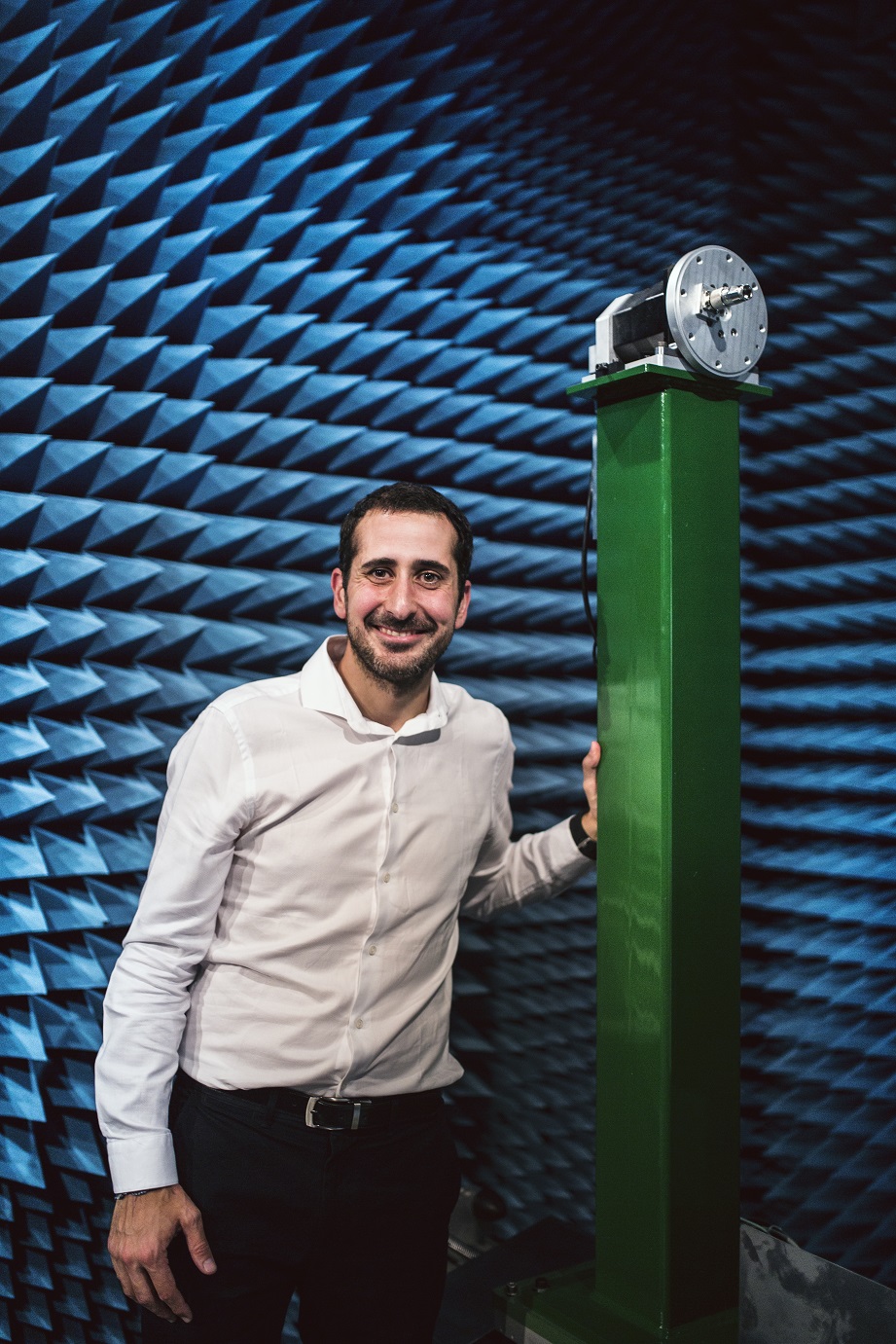
Oscar Quevedo Teruel is a Full Professor in the School of Electrical Engineering and Computer Science (EECS) at KTH Royal Institute of Technology, where he is affiliated with the Division of Electromagnetic Engineering and Fusion Science. He leads the Antenna Laboratory and serves as Director of the Master’s Programme in Electromagnetics, Fusion and Space Engineering. He is also an Associate Editor of IEEE Transactions on Antennas and Propagation and founder and Editor-in-Chief of Reviews of Electromagnetics. Research Interests: His research spans advanced electromagnetic structures, including glide symmetries, transformation optics, metasurfaces, lens antennas, and geodesic lenses. These are applied to 5G/6G communications, satellite systems, and millimeter-wave technologies. He investigates low-dispersive leaky-wave antennas, high-impedance surfaces, and periodic electromagnetic structures for enhanced performance in modern wireless systems. The recent publications highlight a strong trend in leveraging glide symmetry and metasurfaces to design compact, efficient, and broadband antennas—particularly for Ka-band and 60 GHz applications. His work integrates ray tracing, physical optics, and transformation optics to model and optimize geodesic and graded-index lenses. The research emphasizes industrial applications in telecommunications, satellite systems, and radar, often in collaboration with Ericsson, ESA, and other leading institutions. Scientific Awards and Leadership: Distinguished Lecturer, IEEE Antennas and Propagation Society (2019–2021) Chair, IEEE APS Educational Initiatives Programme (since 2020) Member and Vice-Chair, EurAAP Board of Directors (since 2021, Vice-Chair since 2022) EurAAP Delegate for Sweden, Norway, and Iceland (2018–2020) Advising and Grants: He supervises multiple PhD and Master’s students and leads numerous research projects funded by SSF, Vinnova, VR, ESA, STINT, ONR, and industry partners including Ericsson, SAAB, and Thales. These projects focus on innovative antenna systems for 5G/6G, satellite communications, and space instrumentation. He is also the KTH leader in several international collaborations, including MSCA Doctoral Networks and COST Actions. Laboratories and Teams: He is responsible for the Antenna Laboratory within the Sustainable Power Lab at KTH and leads the 'Radio electronics and antennas' area in SweWIN, the Swedish Wireless Innovation Network. His team actively collaborates with industrial and academic partners across Europe and the US.
Michael Doggett is an Associate Professor and Senior Lecturer in the Department of Computer Science at Lund University, affiliated with ELLIIT and the LTH Profile Area: AI and Digitalization. His research focuses on image synthesis leveraging custom and programmable hardware, with contributions to real-time rendering, GPU programming, and augmented reality. He holds roles as Director of Third Cycle Studies and Project Manager, and has led initiatives in efficient GPU programming and real-time pixel synthesis. Education details are not explicitly listed, but his work aligns with UN Sustainable Development Goals related to innovation and infrastructure. His research interests emphasize hardware acceleration, light transport algorithms, and rendering efficiency. Recent publications explore opacity micromaps, sparse shading in AR, and caustics modeling. He supervises PhD projects such as 'DLXR: Real-Time Pixel Synthesis' and 'Efficient GPU Programming'. Notable collaborations include work with Facebook (2018-2020) and organizing the ACM SIGGRAPH Symposium. His grants include projects funded by the Swedish Research Council and ELLIIT. Michael is a member of Lund University's Parallel Systems research group and actively contributes to academic conferences and peer review.