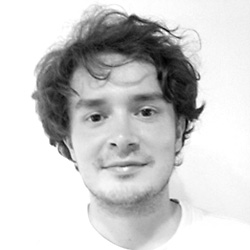
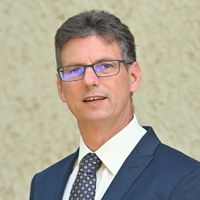
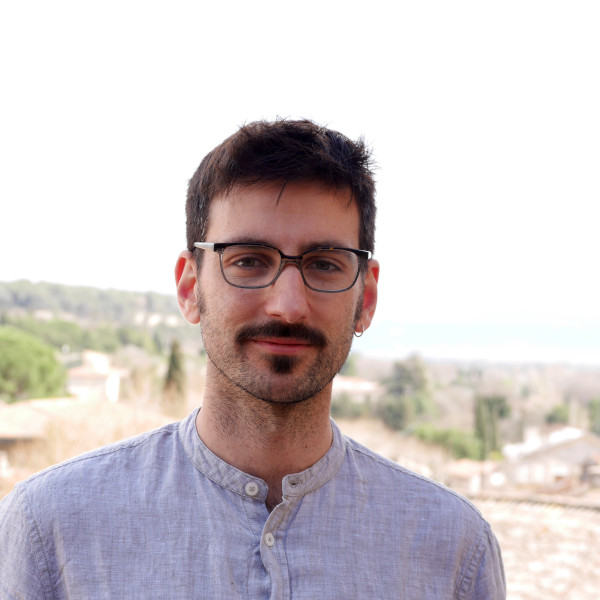
Edouard Oyallon is a CNRS Researcher at Sorbonne University's MLIA team within the Institute of Intelligent Systems and Robotics (ISIR). His research focuses on machine learning foundations, particularly the symmetries of deep neural networks, and large-scale distributed/decentralized training algorithms. He has contributed to frameworks like Kymatio for wavelet scattering transforms and collaborates on projects such as SHARP (Frugal Learning) and ADONIS (ANR-funded). He advises multiple PhD and postdoctoral researchers and teaches advanced deep learning courses at Institut Polytechnique de Paris (IPP). Grants include the ADONIS project (ANR/Sorbonne) and participation in VHS and CoCa4AI initiatives. His work spans theoretical and applied aspects, with recent emphasis on optimizing LLM training at exascale. He maintains active roles in academic service, including organizing workshops on federated learning and graph machine learning.
Andrea Simonetto is a Research Professor at the Applied Mathematics Unit (UMA) , ENSTA Paris, Institut Polytechnique de Paris. His work spans optimization, control theory, and learning algorithms for large-scale and streaming data , with applications in smart grids, intelligent transportation, personalized health, and quantum computing. Current research focuses on online algorithms for time-varying optimization , personalized optimization for cyber-physical systems , and variational quantum algorithms . Past contributions include theoretical and algorithmic advances in convex/non-convex optimization, distributed optimization (robotic networks, smart grids), and signal processing for sparse reconstructions and parallel computing in particle filtering. Key application domains include renewable energy integration , quantum state preparation , and human-in-the-loop control systems . His research is published in journals like ACM Transactions on Quantum Computing , IEEE Control Systems Letters , and Automatica .
Philippe Poignet is a Professor at the University of Montpellier, affiliated with the Institut Universitaire de Technologie (IUT) and conducting research at the LIRMM (Laboratory of Informatics, Robotics, and Microelectronics of Montpellier). He served as Director of LIRMM from July 2015 to October 2023 and co-heads the IRP with Stanford University since 2025. His work focuses on Surgical Robotics, with a particular emphasis on medical device development, control systems, and biomedical applications. Co-founder of startup ACUSURGICAL (retinal surgery robotics) Scientific collaborator with STERLAB (flexible ureteroscopy robotics) Co-organized Summer School on Surgical Robotics (SSSR) for 20 years His research spans medical robotics , control theory , and biomedical imaging , with applications in needle steering, tissue interaction, and surgical precision. Recent publications highlight advances in soft tensegrity design , model predictive control , and multi-modality imaging registration . Scientific recognition includes: Best Paper Award at ARK’22 Prix de l’Innovation de l’I-Site MUSE (2020) Chevalier des Palmes Académiques (2019) He supervises doctoral students in projects related to flexible robotics , bioimpression , and robotic shoulder surgery , with collaborations across Europe and industry partners like CARANX Medical and CEDRAT Technologies.
Pierre Renaud is a Professor at INSA Strasbourg and Deputy Director of the ICube laboratory, specializing in Medical and Surgical Robotics, Mechatronics, and Additive Manufacturing. His research focuses on developing advanced robotic systems for healthcare applications, including surgical robots, compliant mechanisms, and MRI-compatible devices. He leads projects such as SPIRIT (multi-material additive manufacturing for medical robotics) and contributes to national initiatives like TIRREX and LABEX CAMI. Education: PhD in Mechanics from Université Clermont-Auvergne (2003), M.Sc. from ENS Cachan (1998), and Agrégation in Mechanical Engineering (1999). Visiting Associate Professor at Stanford University (2010–2011) as a Fulbright Fellow. Research Themes: Mechatronics for medical robotics, compliant systems, additive manufacturing integration, and tensegrity-based robots. Collaborates with IHU Strasbourg for surgical technology development and Axilum Robotics for industrial applications. Key Projects: Robotic assistance for interventional radiology, magnetic elastography, and beating heart surgery. Active in international collaborations (e.g., ANR, H2020 ITN ATLAS). Labs/Teams: Head of the Robotics, Data Science, and Healthcare Technologies group at ICube. Engaged in Equipex IRIS and ROBOTEX platforms for robotic innovation.
François Chaumette is a Senior Research Scientist (Directeur de recherche) at Inria, affiliated with IRISA and the Centre Inria de l'Université de Rennes. He has been a key researcher in robotics and computer vision since 1990 and led the Lagadic research team from 2004 to 2017. His research interests are centered on robot vision, particularly visual servoing and active perception . He has made foundational contributions to image-based and position-based visual servoing, and his work integrates control theory, computer vision, and robotics. His research spans applications in mobile robotics, aerial systems, medical robotics, space robotics, and soft object manipulation. The recent publications highlight a consistent focus on visual servoing under complex constraints—such as motion blur, occlusions, and deformations—applied to drones, cable-driven robots, and space systems. There is a strong emphasis on robustness , stability analysis , and hybrid sensing (e.g., vision + proximity, vision + force). His work with the RemoveDebris mission demonstrates real-world impact in space robotics. AFCET/CNRS Prize for best Ph.D. in Automatic Control Best paper awards at RFIA 1996 & 2004 Best paper in IEEE T-RA (2002) Best paper in IEEE RA-L (2019) Best paper in IEEE RAM (2020) IEEE Fellow (2013) He has advised over 30 Ph.D. students, many of whom have become active researchers in robotics. He has served in editorial roles for top journals including IEEE Transactions on Robotics , IEEE Robotics and Automation Letters , and the International Journal of Robotics Research . He was elected to the IEEE RAS Administrative Committee (2016–2018) and served on ERC grant panels for robotics. Chaumette is the main developer of ViSP (Visual Servoing Platform), a widely used C++ library for visual tracking and servoing. His leadership in both theoretical advances and software tools has significantly shaped the visual servoing community.
Edouard Laroche is a Professor of Automation (CNU 61 section) at the University of Strasbourg, where he has been teaching since 2008. He currently serves as Deputy Director of the Faculty of Physics and Engineering since 2016 and as Training Quality Officer for the Vice President of Training and Success Pathways since 2021. His academic journey includes being a Lecturer at the Louis Pasteur University of Strasbourg from 2000 to 2008, and he earned his Doctorate from ENS Cachan in 2000 with a thesis on multi-model methodologies for the identification and robust control of asynchronous machines. His educational background includes: Engineer from the National School of Electricity and Mechanics of Nancy DEA PROTEE in 1994 Former student of ENS de Cachan/Paris Saclay Associate Professor of Electrical Engineering in 1995 DEA in science and technology teaching (1996) Authorized to direct research in 2007 with HDR on 'Identification and Robust Control of Electromechanical Systems' Laroche's research focuses on robust control, modeling and identification, robot control, flexible systems, and control of electrical systems. His primary research area since 2002 has been the robust control of flexible robots, with collaborations with G. Mercère (LIAS, Poitiers) and O. Prot (XLim, Limoges). His work addresses LPV modeling and identification of series manipulators with flexibilities, robust control across workspace, and identification and control of cable parallel robots. He has secured funding from Région Grand-Est, FEDER, CNRS PEPS IDRAC (2010-2011), and Preciput-ANR (2009). His recent publications primarily focus on university pedagogy, examining student working methods development, online teaching enhancement, cross-curricular teaching implementation, curriculum redesign, and innovative assessment methods. These works reflect his dual commitment to advancing control systems research and improving educational practices in higher education. Notable scientific contributions include organizing major conferences: CDC 2019 (1600 participants) as local organization lead, IFAC World Congress 2017 (3000 participants) as registration manager, and ECC'14 as local organization lead. He also served as animator for the 'Methods and Tools for Synthesis and Robustness Analysis' working group of the GDR MACS from 2007 to 2014. His teaching spans multiple programs: Faculty of Physics and Engineering: Automatic Control, Methodologies of University Work Telecom-Physics-Strasbourg: Continuous Automatic Control, Sustainable Engineering, Robust Control Bachelor of Science in Health Sciences: Methodologies of University Work Laroche maintains his research laboratory at ICube - AVR (Bd S. Brant, BP 10413, F-67412 Illkirch cedex) and actively offers doctoral thesis topics and internships in automation and control systems.
Overview Dr. Jean-François DOLLINGER is a Researcher-Lecturer at CESI LINEACT (Strasbourg campus), affiliated with the Engineering and Numerical Tools research team. His academic roles include teaching Computer Science courses (undergraduate/graduate) and supervising student projects in algorithmics, programming, databases, and networks. Education: PhD in Computer Science (2011-2015), University of Strasbourg - ICube Lab MSc in Computer Science (2009-2011), University of Strasbourg (Highest Honors) BSc in Computer Science (2008-2009), University of Strasbourg (Honors) Research Interests: Focuses on edge-cloud computing, high-performance distributed systems, combinatorial optimization in IoT networks, and smart city infrastructure. Specializes in optimizing federated learning, WSN deployment strategies, and hybrid CPU/GPU execution frameworks. Advising & Collaboration: Supervises PhD/Master’s students (e.g., A. BAAHMED on federated learning, K. BOUHOUCH on OpenStack edge deployment) Collaborated with Indonesian universities (Mercu Buana) on RPL protocol extensions Research Team: Leads the Engineering and Numerical Tools group, developing frameworks for edge-cloud infrastructures and BIM-based WSN deployments in smart buildings.
Abdel Lisser is a Professor at CentraleSupélec, affiliated with the Laboratory of Signals and Systems (L2S). His research focuses on stochastic optimization, distributionally robust optimization, and game theory with applications in control systems, networks, and autonomous systems. He has made significant contributions to chance-constrained programming, Markov decision processes, and neurodynamic optimization. His work bridges mathematical foundations with practical applications in energy management, telecommunications, and machine learning. Notable recent research includes the development of physics-informed neural networks for solving nonlinear optimization problems and stochastic trajectory planning for autonomous vehicles. Lisser collaborates internationally, with publications in top journals such as *Journal of Optimization Theory and Applications* and *IEEE Transactions on Neural Networks and Learning Systems*. He advises on projects involving robust control and decision-making under uncertainty. His laboratory, L2S, is a leading center for systems analysis and optimization at Paris-Saclay.
Sylvain Durand Chamontin serves as an Associate Professor at INSA Strasbourg, affiliated with the ICube research laboratory (UMR 7357) and the AVR (Automation, Vision, Robotics) team. His teaching encompasses advanced automation (anti-windup, Smith predictor, LQ control), embedded systems/IoT, motorization/axis control, linear automation (state feedback, observers), and sequential automation (GRAFCET, GEMMA) for electrical engineering, mechatronics, and mechanical engineering students across 2nd–5th year programs. His research centers on frugal design and control of embedded cyber-physical/robotic systems under resource constraints, with a dedicated focus on non-periodic sampling and event-driven techniques . Key domains include event-driven control architectures, dynamic vision sensor-based visual servoing, aerial robotics (UAVs/aerial manipulators), and swarm robotics. This work systematically reduces computational load, communication overhead, and energy consumption while maintaining robust performance in resource-limited environments—critical for embedded implementations in drones and cyber-physical systems. Analysis of Durand's 15 most recent publications (2022–2025) reveals a dominant trend in event-driven control for robotics, increasingly integrating machine learning for adaptive tuning. His work targets practical applications in aerial robotics, including UAV stabilization under ground effects, elastic-suspension aerial manipulation, and event-based visual servoing. A strong emphasis on frugality permeates techniques like non-periodic sampling and resource-aware control strategies, directly addressing hardware limitations in embedded platforms. Durand mentors award-winning PhD students including M. Pivert (Best Student Paper Award, IFAC Robotics 2025), T. Paul (i-PhD Innovation Contest 2022), and A. Yiğit (Best PhD Award in French Robotics 2021). He leads multiple ANR-funded projects: e-VISER (event-driven visual control, 2018–2021), DexterWide (cable robots, 2015–2018), and current initiatives eSWARM (modular UAVs, 2023–2025), muteSWARM (acoustic swarm control, 2023–2027), STRAD (street art drone, 2022–2026), TIR4sTREEt (urban micro-climatology, 2022–2026), and dark-NAV (GPS-denied navigation, 2021–2025). Within ICube's AVR team, Durand drives laboratory development of the dextAIR robot (omnidirectional aerial manipulator with elastic suspension) and embedded control systems for cable-driven parallel robots and swarm robotics. His experimental work emphasizes real-time implementation, energy efficiency, and frugal engineering principles—translating theoretical event-driven control into hardware solutions for resource-constrained robotic applications.
Benoit Piranda is an Associate Professor of Computer Science at the University of Franche-Comté , affiliated with the FEMTO-ST Institute and its Complex Networks Team (DISC/OMNI) . He leads the development of VisibleSim , a parallel behavioral simulator for modular robots. University: University of Franche-Comté Institute: FEMTO-ST Team: DISC/OMNI Role: Researcher & Software Developer Research Focus: Distributed algorithms for modular robots, programmable matter, physical simulations, and parallel execution environments. His work spans self-reconfiguration, communication protocols, and efficient scene encoding for large-scale robotic systems. Article Trends: Recent publications highlight advancements in 2D/3D lattice modular robot algorithms Porous structure reconfiguration Time synchronization protocols VisibleSim simulation framework Multi-scale distributed displays Security protocols for programmable matter Conference Involvement: Active in program committees for DARS, IEEE ATC, IROS, and AINA. Former Publicity Chair positions.
Prof. Patrick HORAIN is a Professor and Director of ARMEDIA studies at Telecom SudParis. His research focuses on computer vision, 3D motion capture, GPU-accelerated image processing, and Fourier ptychography microscopy. He has contributed to advancements in real-time 3D gesture capture, malaria diagnosis using CNNs, and virtual telepresence systems. Key areas of expertise include real-time monocular vision systems, medical imaging applications, and hardware acceleration frameworks like GpuCV. He has edited conference proceedings for IHCI (Intelligent Human Computer Interaction) and authored over 50 peer-reviewed publications since 1984. His work spans 30+ years, with notable contributions in gesture recognition, virtual reality interaction, and multimodal human-computer interfaces. Current research emphasizes biomedical imaging techniques and neural network applications in microscopy.
Marc Gouttefarde is a CNRS Senior Researcher (DR2) at LIRMM (Laboratoire d'Informatique, de Robotique et de Microélectronique de Montpellier), part of University of Montpellier. He leads the Robotics Department at LIRMM and serves as Scientific Advisor for Robotics at CNRS Informatics. His research focuses on cable-driven parallel robots, with significant contributions to workspace analysis, robot design, control systems, and practical applications. His research interests center on cable-driven parallel robots (CDPRs), with expertise in workspace analysis, design optimization, motion planning, and control systems. Gouttefarde pioneered the CoGiRo cable configuration that enables large workspace to footprint ratios, demonstrated in the CoGiRo prototype capable of handling 300+ kg payloads. His work spans multiple applications including marine litter removal, building facade construction, and industrial manufacturing. He has developed methodologies for determining smallest maximum cable tension and contributed to vibration analysis and damping techniques for cable robots. His recent publications show a strong trend toward underwater applications of cable-driven robots, particularly for marine environmental remediation. The MAELSTROM project's robotic seabed cleaning platform represents a significant practical application of his research. Additional trends include hybrid actuation systems combining cables with thrusters, advanced control strategies for pick-and-throw applications, and optimization of cable routing for reconfigurable systems. His work consistently bridges theoretical analysis with practical implementation through numerous demonstrators. Crossley Best Paper Award for 'Discrete reconfiguration planning for Cable-Driven Parallel Robots' Gouttefarde has coordinated multiple significant research projects including the ANR CoGiRo project that developed the large-dimension CDPR prototype, the DexterWide ANR project demonstrating coordinated motion of CDPRs with on-board manipulators, and the HEPHAESTUS EU project for curtain wall installation. He currently participates in the ANR CABTIVE project on 3D printing with cable robots and the AAutonom project for agricultural applications. His leadership extends to coordinating the 'Robotique Centrée sur l'Humain' initiative supported by Région Occitanie. As Head of LIRMM Robotics Department, Gouttefarde oversees one of France's leading robotics research groups. His team, the DEXTER team, focuses on cable-driven parallel robots and their applications. The group has developed multiple demonstrators including the CoGiRo robot, the robotic seabed cleaning platform for marine litter removal, and systems for building facade construction. Their research bridges theoretical analysis with practical implementation, consistently validating theoretical results through physical prototypes.
Aldo Gonzalez-Lorenzo is an Associate Professor (maître de conférences) at Aix-Marseille University in Arles, France, where he conducts research at the GMOD team of the Laboratoire d'Informatique et des Systèmes (LIS). His academic work bridges theoretical computer science with practical applications in computational topology and discrete geometry. His primary research interests focus on computational topology and discrete geometry, with particular emphasis on homology computation, digital topology, and geometric modeling. Gonzalez-Lorenzo develops algorithms for analyzing topological features in digital objects, with applications ranging from 3D mesh processing to motion planning for robotics. His work combines theoretical foundations with practical implementations, often resulting in efficient computational methods for complex topological problems. Analysis of his recent publications reveals a strong trend toward practical applications of topological methods. His work spans from theoretical contributions in Alexander duality and discrete Morse theory to applied research in motion planning, CO2 storage analysis, and 3D mesh processing. A notable pattern is his development of efficient computational methods for measuring and analyzing topological holes across various domains, demonstrating the versatility of topological approaches in solving diverse computational problems. 2022 CG:SHOP Geometric Optimization Challenge winner (with team Shadoks) for coordinated motion planning Best paper award at GTMG 2021 for research on measuring holes in 3D meshes Gonzalez-Lorenzo actively participates in multiple research groups including IAPR-TC18, GT GDMM, and GTMG. His work at the GMOD team within LIS focuses on developing computational methods that bridge theoretical topology with practical applications in computer graphics, robotics, and scientific computing. He has developed several interactive tools and web applications to demonstrate and apply his research, including visualizations of Parcoursup algorithms and interactive tools for working with HDVFs (Homological Discrete Vector Fields).
Dr. Jonas Peeck is a researcher at the Institute of Computer and Network Engineering (IDA), Braunschweig University of Technology. He teaches courses such as Introduction to Electronic Systems and Technische Informatik II for Bachelor students. His research focuses on time-critical communication processing of large data objects in safety-critical systems, with applications to autonomous systems, industrial automation, and robotics. Education PhD (Dr.-Ing.) in Computer and Network Engineering, TU Braunschweig, 2023 M.Sc. in Computer Science, TU Braunschweig, 2018 B.Sc. in Computer Science, TU Braunschweig, 2015 Jonas Peeck’s work examines sensor-to-actuator chains, prioritizing wireless communication reliability under resource constraints. His publications address real-time Ethernet protocols (TSN), CNN acceleration on multi-core processors, and error-resilient V2X data transmission. Key trends include data-centric communication, synchronization mechanisms, and resource-efficient middleware for autonomous systems. His research has been published in journals like ACM Transactions on Embedded Computing Systems and IEEE Transactions on Vehicular Technology , alongside conference papers at IEEE COMPSAC, RTSS, and IECON. Jonas Peeck’s work bridges theoretical analysis with practical implementations in mobility and industrial automation contexts.
Matthieu Puigt is a Professor at Université du Littoral Côte d'Opale, specializing in signal and image processing with a focus on statistical machine learning , low-rank approximations , and sparse component analysis . His research extends to hyperspectral data fusion, unmixing, and restoration, as well as applications in chemistry and computational imaging . He leads the SPECIFI research team. Research Themes : Blind source separation, compressive learning, sensor calibration, and big data analysis Applications : Audio signal processing, environmental monitoring via drones, and urban air quality assessment His recent work includes developing VAE-based hyperspectral image emulators, tensor decomposition methods for multisensor data, and frameworks for butterfly species recognition. He advised Valentin Mullet's 2022 thesis on blockchain traceability systems and actively contributes to IEEE and GRETSI conferences.