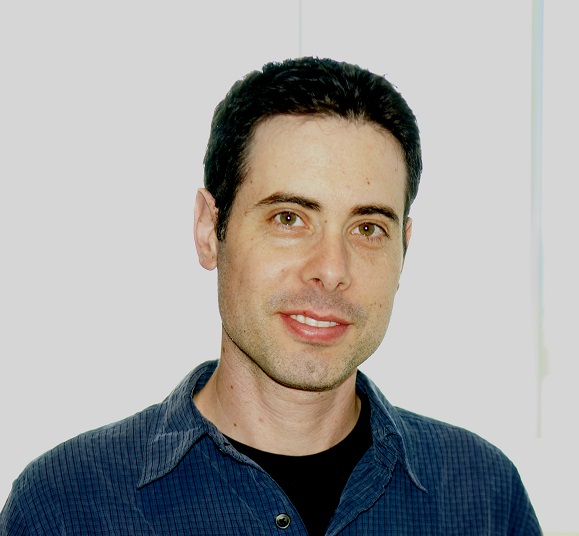
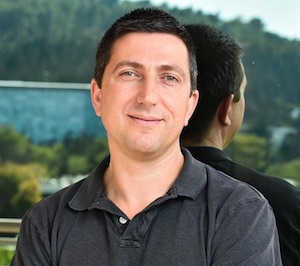
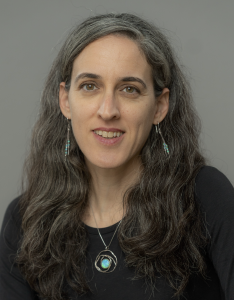
Eran Treister is an Assistant Professor at the Ben Gurion University of the Negev in the Department of Computer Science. He completed his postdoctoral fellowship at the University of British Columbia (2014-2016) and earned his PhD from the Technion in 2014 under Prof. Irad Yavneh. His research spans computational science, numerical methods, and machine learning, with a focus on: Scalable algorithms for inverse problems Graph Neural Networks (GNNs) optimization Seismic and optical imaging via PDE solvers Low-precision deep learning acceleration Multilevel preconditioning techniques Recent work explores: Graph neural networks for PDEs with adaptive meshes Deep learning approaches to Helmholtz equation modeling 3D shape reconstruction via parametric level sets He serves on editorial boards: SIAM Journal on Scientific Computing (2024-) Copper Mountain Conference on Multigrid Methods (2025) International Conference on Machine Learning (ICML) as Area Chair (2025) Current teaching: Optimization Methods for Data Science (Spring 2025) Deep Learning Mini-Project (Winter 2024/5) Advanced Numerical Optimization (Spring 2025)
Oren Weimann is a Professor in the Department of Computer Science at the University of Haifa, Faculty of Natural Sciences. His research lies at the intersection of theoretical computer science, algorithm design, and data structures, with a strong focus on planar graphs, combinatorial pattern matching, and fine-grained complexity. He has published extensively in top-tier venues such as STOC, SODA, ICALP, PODC, and ESA. Education: Ph.D., Massachusetts Institute of Technology (MIT), 2005–2009. Advisor: Erik Demaine. Dissertation: "Accelerating Dynamic Programming" Postdoc, Weizmann Institute of Science, 2009–2011. Host: David Peleg M.Sc., University of Haifa, 2004–2005. Advisor: Gad Landau. Dissertation: "Using PQ trees for Comparative Genomics" B.A., Technion – Israel Institute of Technology, 1999–2002 Oren Weimann's research centers on the design and analysis of efficient algorithms, particularly for planar and structured graphs. His work explores fundamental problems such as shortest paths, distance oracles, fault tolerance, edit distance, and pattern matching. He investigates both upper and lower bounds, often pushing the limits of what is computationally feasible under fine-grained complexity assumptions. His contributions include optimal labeling schemes, compressed data structures, and breakthroughs in dynamic and distributed graph algorithms. His recent publications reveal a consistent trend in developing highly efficient algorithms for planar graphs, with a focus on distance computation, fault tolerance, and compression. Keywords across these works include planar graphs, dynamic programming, string matching, and conditional lower bounds, reflecting a deep integration of algorithmic techniques and complexity theory. He frequently collaborates with leading researchers such as Shay Mozes, Paweł Gawrychowski, and Philip Bille. Scientific Awards: Best Paper Award, CPM 2007 Best Paper Award, ICALP 2020 (mentioned in context of work) Oren Weimann has advised numerous PhD and Master’s students, including Yaseen Abd-Elhaleem, Nathan Wallheimer, Aviv Bar-natan, and Shon Feller, whose dissertations have led to publications in major conferences. He has also mentored several postdoctoral researchers such as Shay Golan, Itai Boneh, and Panagiotis Charalampopoulos. His work has been supported by competitive research grants, though specific grant titles are not listed in the text. He has served on the program committees of key conferences including SODA, ICALP, CPM, ESA, and SPIRE, demonstrating active leadership in the theoretical computer science community. He is associated with a vibrant research group focused on algorithms and data structures, likely involving collaboration with students and postdocs on projects related to graph algorithms, string processing, and complexity. While no formal lab name is mentioned, his collaborative output suggests a strong, productive research team at the University of Haifa.
Michael Elkin is a Professor in the Department of Computer Science at Ben-Gurion University of the Negev, Israel. His research focuses on Theoretical Computer Science, Discrete Mathematics, and Algorithms, with specializations in graph algorithms, distributed computing, and metric embeddings. He has held editorial roles, including Associate Editor of the Journal of Computer and System Sciences, and has contributed to numerous program committees for top conferences like FOCS and SODA. Elkin's research interests include low-distortion embeddings, streaming and dynamic graph algorithms, and approximation algorithms. His work bridges distributed and centralized algorithm design, with applications in network optimization and computational geometry. Recent trends in his publications emphasize efficient spanner constructions, symmetry-breaking in distributed systems, and algorithmic approaches to graph coloring and metric spaces. Elkin has advised multiple PhD and Master’s students, including Leonid Barenboim (winner of the 2015 Distributed Computing Doctoral Dissertation Award) and Shay Solomon. He has been awarded Best Paper and Best Student Paper awards at PODC conferences for groundbreaking contributions to distributed algorithms. Additionally, he leads a postdoctoral research group focusing on graph algorithms and metric embeddings, collaborating with Eden Chlamtac and Ofer Neiman. Teaching highlights include courses on Distributed Algorithms, Design of Algorithms, and Metric Graph Algorithms. His academic service includes organizing academic programs and mentoring early-career researchers in theoretical computer science.
Eran Yahav is a Professor in the Computer Science Department at the Technion, Israel Institute of Technology, and serves as CTO at Tabnine. His research bridges programming languages, software engineering, program analysis, and machine learning, focusing on program synthesis, verification, and code intelligence. Research Interests: His work spans program synthesis , abstract interpretation , verification of concurrent systems , binary analysis , and AI for code . He leads the PRIME project, which uses machine learning and static analysis to enable programming with millions of examples, improving code completion, search, and prediction. The recent publications reflect a strong trend toward integrating neural models with program analysis—using structured representations of code (e.g., AST paths) for property prediction, generating sequences from code (code2seq), learning distributed representations (code2vec), and interpreting neural networks via automata extraction. His work consistently appears in top-tier venues such as POPL, PLDI, ICSE, OOPSLA, and ICLR. Scientific Awards: Best paper award at ISSTA'07 Best paper award at ISSTA'06 Advising and Grants: He has advised numerous PhD and Master’s students, many of whom have published in premier conferences and now hold academic or industry positions. While specific grants are not mentioned, his sustained high-impact research and leadership in major projects (e.g., PRIME, Fender, SAFE) imply significant funding support. He has served on program committees for PLDI, POPL, CAV, OOPSLA, and VMCAI, reflecting his standing in the programming languages and verification communities. Labs and Teams: He leads a research group focused on program analysis and synthesis, with strong collaborations, particularly with Martin Vechev and others, on concurrency, synthesis, and machine learning for code. The group has developed influential tools such as PRIME, code2seq, code2vec, TRACY, and SAFE.
Erez Petrank is a Professor at the Department of Computer Science , Technion - Israel Institute of Technology , where he holds the Andrew and Erna Viterbi Chair. His research focuses on concurrent computing , programming languages , and systems with an emphasis on memory management . Additional interests include parallelism , cryptography , data structures , approximation algorithms , and distributed computing . Research Trends Recent publications highlight his work on safe memory reclamation (ERA Theorem, VBR), lock-free data structures (queues, stacks, B+ Trees), and persistent memory algorithms (NVTraverse, Mirror). These works span concurrent computing , distributed systems , and memory efficiency in multi-threaded environments. Scientific Awards Distinguished Paper Award at Euro-Par 2015 Contact Information Email: erez@cs.technion.ac.il Office: Taub 528, Technion Phone: +972-73-378-4942
Keren Censor-Hillel is a Professor in the Department of Computer Science at the Technion, Israel Institute of Technology. Her research focuses on distributed computing and theoretical computer science, with a particular emphasis on simplifying parallel programming and optimizing network bandwidth through algorithmic innovation. Her work has been supported by prestigious grants including the ISF (2014, 2023), NSF-BSF (2016), ERC Starting Grant (2017), and Henry Taub Research Grant (2018). She actively mentors graduate students and postdoctoral researchers, seeking candidates with strong algorithmic and mathematical foundations. Research Highlights: Contributions to lock-free algorithms, maximal independent set problems, and vertex connectivity analysis. Media Recognition: Featured in Communications of the ACM, MIT News, and other outlets for her work on distributed systems. Keren serves as a key organizer for academic events like the Technion Distributed Computing Seminar (TDC) and supports initiatives such as Women in Theory (WIT).