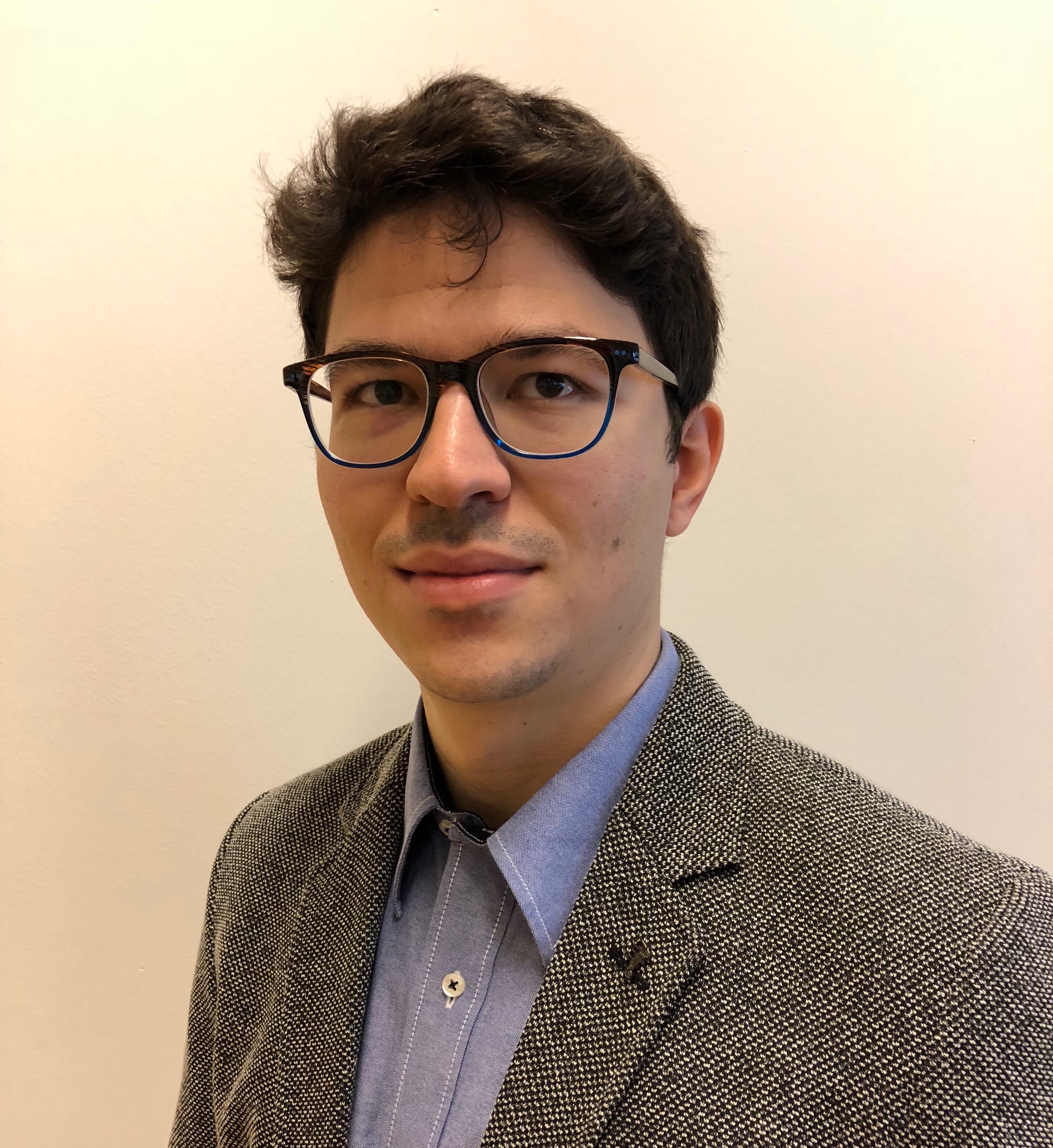
Alexandros Daglis is an Associate Professor of Computer Science at the Georgia Institute of Technology, with an adjunct appointment in the School of Electrical and Computer Engineering. His research focuses on blurring boundaries between network and compute for high-performance, scalable microsecond-scale services in datacenters, particularly through network endpoints and memory-centric computing. Primary Affiliation: Georgia Tech College of Computing, School of Computer Science Adjunct Affiliation: School of Electrical and Computer Engineering Key research areas include: Rack-scale computing and network-compute co-design CXL-based memory systems Low-latency datacenter architectures Transactional memory and concurrency control Edge-cloud continuum and geo-distributed infrastructures He has received prestigious awards including the NSF CAREER Award, Google Faculty Research Award, and Georgia Tech's Outstanding Junior Faculty Teaching Award. His students include Marina Vemmou (network-compute co-design), Albert Cho (memory system design), and Peidi Song (microsecond-scale scheduling). Grants: NSF, IARPA, Intel, Samsung Teaching: High Performance Computer Architecture, Systems and Networks, Datacenter Design
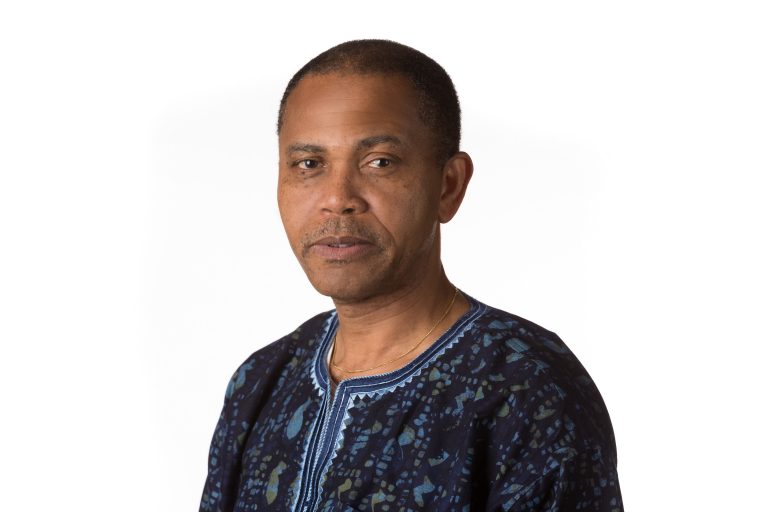
James Essegbey is a Professor of African Languages and Linguistics in the Department of Languages, Literatures & Cultures at the University of Florida (Gainesville), affiliated with the Center for African Studies, Center for Latin American Studies, and African American Studies. His research focuses on language endangerment documentation, syntax-semantics interfaces, and West African languages like Ewe, Akan, and Nyangbo. He holds a PhD from Leiden University (1999) and has held postdoctoral fellowships in the Netherlands and Germany. Key research areas include: Documentation of endangered languages (e.g., Nyangbo, Tutrugbu) Syntax of Kwa languages and Atlantic creoles Cultural influences on linguistic structures (e.g., left-hand taboos in Ghana) Creole genesis and trans-Atlantic language contacts Award-winning scholar with over 20 years of grant-funded projects, including: NSF grants for CoLang and documentary linguistics training programs NSEP funding for African languages summer institutes Leadership in language revitalization initiatives Teaching includes courses on Akan language, African elements in the Americas, and methods of language documentation. Active in professional organizations like the African Studies Association and Society for Pidgin and Creole Languages.
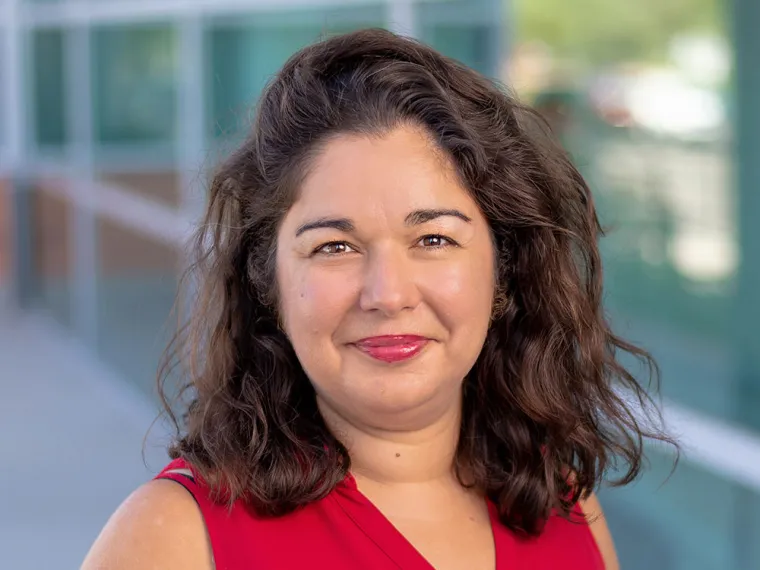
Tamar Kugler is an Associate Professor of Management and Organizations at the Eller College of Management, University of Arizona, with a specialization in behavioral decision-making. She holds a PhD in Experimental and Social Psychology (2004) from Hebrew University of Jerusalem. PhD in Management Organizational Behavior Laboratory Economic Science Laboratory Center for Trust Studies Behavioral Decision Making Think Tank Econ Affiliated Faculty Her research focuses on interactive decision-making , group decision dynamics , emotional influences on decisions , and trust mechanisms . She has pioneered work on disgust's paradoxical effects on prosocial behavior and developed innovative methods for measuring emotions in digital environments. Her publications span high-impact journals like Social Psychological and Personality Science and Games and Economic Behavior , covering topics from the Braess paradox in traffic networks to asymmetric participation games. Recent work explores guilt's role in ethical behavior and default options in conflict resolution. National Science Foundation grant for emotion research Binational Science Foundation grant with Eyal Ert Eller College Small Grant Program awards Journal editorial board memberships Kugler's methodological expertise includes behavioral experiments, game theory applications, and virtual reality simulations for studying social interactions.
Benjamin Recht is a Professor in the Department of Electrical Engineering and Computer Sciences and Department of Statistics at the University of California, Berkeley. Previously, he was an Assistant Professor in the Department of Computer Sciences at the University of Wisconsin-Madison. Recht received his BS in mathematics from the University of Chicago and his MS and PhD from the MIT Media Laboratory, followed by a postdoctoral fellowship at Caltech's Center for the Mathematics of Information. His research interests span Machine Learning, Optimization, Control Theory, and Statistics , with a focus on both theoretical foundations and practical applications. Recht's work addresses fundamental questions in reproducibility, generalization, and robustness of machine learning systems, while also developing novel methods for control, computer vision, and data analysis. Recht's recent publications reveal a strong focus on reproducibility in machine learning , with papers like "The Mechanics of Frictionless Reproducibility" (2024), alongside continued contributions to statistical learning theory ("Interpolating Classifiers Make Few Mistakes", 2023) and computer vision ("Plenoxels", 2022; "K-planes", 2023). His work increasingly addresses societal implications of AI , including papers on systemic harm detection and post-deployment evaluation. NSF Career Award Alfred P. Sloan Research Fellowship 2012 SIAM/MOS Lagrange Prize in Continuous Optimization Presidential Early Career Award for Scientists and Engineers 2014 Jamon Prize 2015 William O. Baker Award for Initiatives in Research 2017 and 2020 NeurIPS Test of Time Awards Recht has advised numerous PhD students who have gone on to faculty positions at top universities and research roles at leading technology companies. His work on optimization algorithms has been widely influential, including the development of methods like HOGWILD! for parallel stochastic gradient descent. He co-founded the Conference on Learning for Decision and Control and has served on editorial boards for the Journal of Machine Learning Research and Mathematical Programming. His research group spans both theoretical and applied work, with connections to healthcare (adaptive medication tapering), computer vision (radiance fields), and social impact (systemic harm detection in deployed systems).
Dr. Oliver Kennedy is an Associate Professor in the Department of Computer Science and Engineering at the University at Buffalo's School of Engineering and Applied Sciences. He serves as Co-Director of Graduate Studies and leads the Online Data Interactions (ODIn) Lab. His research focuses on databases, programming languages, and user interfaces for data science, with particular emphasis on scalable compilers and managing uncertainty in data. Kennedy holds a PhD in Computer Science from Cornell University (2011), MS from Cornell (2008), and dual BS degrees in Computer Science and Computer Engineering from NYU and Stevens Institute of Technology (2005). His work bridges theoretical computer science with practical data management challenges. His recent publications demonstrate a strong focus on improving database query processing, uncertainty management in data systems, and developing practical tools for data integration and exploration. Awarded the NSF CAREER Award in 2018, Kennedy's research has significant implications for efficient data processing in scientific and commercial applications.
Adam M. Enders is an Associate Professor in the Department of Political Science at the University of Louisville. He also teaches advanced courses on measurement and scaling at the ICPSR Summer Program. His research examines the intersection of political psychology and societal dynamics, focusing on conspiracy theories, core values, partisanship, and polarization. Enders holds a Ph.D. (2016) and M.A. (2013) in Political Science from Michigan State University, and a B.A. (2011) in Political Science and Public Policy from Albion College. His work investigates how conspiratorial thinking influences public opinion, the role of racial prejudice in political behavior, and how subjective perceptions contribute to polarization. Publications appear in top journals like the American Journal of Political Science and Journal of Politics . He has also contributed to The Atlantic and Politico Magazine , analyzing modern conspiracism and its political ramifications. Teaching focuses include political psychology, public opinion dynamics, and quantitative research methods. His methodological expertise in scaling and measurement underpins much of his empirical work, emphasizing rigorous design to explore complex belief systems.
Anand Padmanabhan is a Research Associate Professor in the Department of Geography & Geographic Information Science at the University of Illinois at Urbana-Champaign (UIUC), affiliated with the School of Earth, Society & Environment within the College of Liberal Arts & Sciences. He holds a Ph.D. in Computer Science from the University of Iowa, alongside an MS in Computer Science (University of Iowa) and a BE in Computer Engineering (University of Mumbai). His research focuses on advanced cyberinfrastructure, cyberGIS, geospatial data science, and high-performance computing. He leads the spatial algorithms and systems team at the CyberGIS Center for Advanced Digital and Spatial Studies, developing cyberGIS capabilities to leverage advanced computing for geospatial innovation. His work emphasizes scalable geocomputation, cloud-based frameworks, and reproducible research environments, with contributions to tools like CyberGIS-Compute and EasyScienceGateway. Recent publications highlight advancements in science gateway frameworks, middleware systems, and geospatial education platforms. He serves as Online MS Program Adviser and has secured NSF and EPA grants for interdisciplinary projects. His work spans transdisciplinary training programs, urban sensing analytics, and integration of social media with geospatial data.
Dr. Michele Kennerly is an Associate Professor at Pennsylvania State University, holding joint appointments in the Department of Communication Arts and Sciences and the Department of Classics and Ancient Mediterranean Studies. She is affiliated with the College of the Liberal Arts. In addition to her teaching and research, she has held significant leadership roles, including President of the American Society for the History of Rhetoric (2019–2021) and Secretary General of the International Society for the History of Rhetoric (2020–2025). She is also a member of the Leadership Board for the Colloquium for Ancient Rhetoric and the Advisory Board of Brill's book series International Studies in the History of Rhetoric . Alongside Damien Smith Pfister and Casey Boyle, she co-founded and co-edits the University of Alabama Press series Rhetoric + Digitality . Her work bridges classical rhetoric with contemporary digital and media studies. Education: Michele Kennerly received her B.A. from Austin College in 2004, followed by an M.A. and Ph.D. from the University of Pittsburgh in 2006 and 2010, respectively. Her academic journey reflects a deep engagement with classical and rhetorical studies, culminating in her current interdisciplinary research. Research Interests: Dr. Kennerly’s research focuses on rhetorical theory and its historical reception, particularly in the ancient Mediterranean world and their modern resistive interpretations. She explores how classical texts and concepts influence contemporary discourse, including their roles in automation discussions, queer film adaptations, and medieval rhetorical practices. Her current projects include analyzing invocations of ancient Athens in automation discourse and examining the rhetorical strategies in Jane Campion’s film adaptation of The Power of the Dog and 13th-century Italian notary Brunetto Latini’s works. She emphasizes interdisciplinary approaches, integrating rhetoric with poetics, informatics, and media studies. Her scholarly contributions span classical rhetoric, digital humanities, and media studies. Recent work highlights the intersection of ancient rhetorical theories with modern technologies and cultural phenomena, such as automation, digital networks, and film. She critically examines how historical concepts are reinterpreted in contemporary contexts, reflecting her commitment to linking past and present rhetorical practices. Outstanding Teaching Award for Tenure-Track Faculty (2021) At Penn State, she directed the graduation-required communication course for six years and the undergraduate program in Communication Arts and Sciences (CAS) for three years. She mentors students in collaborative and independent research on the history of rhetoric. Her grants and leadership roles underscore her pedagogical and scholarly impact. Labs/Teams: She contributes to projects like Ancient Rhetoric + Digital Networks and collaborates on the Rhetoric + Digitality book series. She actively engages with academic societies and editorial boards to advance interdisciplinary rhetoric studies.
Vinay Lal is Professor of History and Asian American Studies at the University of California, Los Angeles (UCLA), where he has been teaching since Fall 1993. He holds a joint appointment in the Department of History and the Asian American Studies Department. Born in Delhi and raised across multiple countries including India, Indonesia, Japan, and the United States, Lal brings a global perspective to his scholarship and teaching. His educational journey began at Johns Hopkins University, where he earned both his B.A. (1982) and M.A. (1982) from the Humanities Center with concentrations in literature, history, and philosophy. He then studied film in Australia and India on a Thomas J. Watson Fellowship before pursuing his Ph.D. at the University of Chicago's Department of South Asian Languages and Civilizations, which he completed with Distinction in 1992. His dissertation, 'Committees of Inquiry and Discourses of 'Law and Order' in Twentieth-Century British India', received the Marc Galler Award for the best dissertation in the Division of the Humanities at the University of Chicago. Lal's research spans an extraordinary breadth of intellectual interests, with primary focus on Indian history, historiography, public and popular culture in India, the Indian diaspora, colonialism, human rights, American politics, the architecture of nonviolence, Gandhi studies, and the global politics of knowledge systems. His work consistently challenges conventional disciplinary boundaries, engaging with topics ranging from the politics of religion and ethnicity in South Asia to the moral and political thought of Mohandas Gandhi, from the partition of India to the intersection of history and popular cinema. His scholarship reflects a deep commitment to decolonizing knowledge systems and exploring alternative epistemologies from the Global South. His publications reveal a scholar deeply engaged with both historical analysis and contemporary political issues. The 15 most recent articles demonstrate his consistent focus on South Asian politics, historical memory, nonviolence, and the politics of knowledge. His writing spans academic journals, major newspapers, and public intellectual platforms, with a distinctive voice that bridges scholarly rigor and public accessibility. His work on Gandhi, colonialism, and contemporary Indian politics forms a particularly strong thread throughout his recent publications. Fellow of the World Academy of Art and Science (elected February 2000) William R. Kenan Fellow, Society of Fellows in the Humanities, Columbia University (1992-93) Senior Fellowship from the American Institute of Indian Studies National Endowment for the Humanities Fellowship for University Teachers Fellowship from the Society for the Promotion of Science/Japan Area Studies Center Listed among the '101 Most Dangerous Professors in America' in David Horowitz's book Fulbright-Nehru Fellowship for Academic and Professional Excellence Fellow at the Stellenbosch Institute for Advanced Study (STIAS), South Africa (2024) Oxford University Press India Academic (Humanities) Delegate (2022-2028) As a dedicated mentor, Lal has supervised numerous PhD students who have gone on to prominent academic careers at institutions including CSU-Sacramento, UNC-Charlotte, O.P. Jindal University, UC Irvine, and the University of Pittsburgh. His teaching portfolio at UCLA is exceptionally broad, encompassing undergraduate courses on Indian Civilization, British India, contemporary South Asia, and world history, along with graduate seminars on Indian politics and religion, historiography of modern India, nationalism and colonialism, Indian cinema, and postcolonial theory. His lecture courses are available in their entirety on his academic YouTube channel, which has garnered over 3 million views and 36,000 subscribers. Lal has also served as University of California's Director of the Education Abroad Program in India and as Professor of History at the University of Delhi during 2010-11. Lal is a founding member of the Backwaters Collective on Metaphysics and Politics (2010-2020), which met annually in Kerala, and was associated with Multiversity, a group of scholars focused on decolonizing Western knowledge systems. His current work includes a four-book project titled 'The Genocide and Hope Quartet: Studies in the Architecture of Oppression and the Redemptive Possibilities of Nonviolence', examining Dandi, Auschwitz, Hiroshima, and Robben Island. He maintains an active public intellectual presence through his blog 'LAL SALAAM' and his academic YouTube channel, making scholarly content accessible to wider audiences.
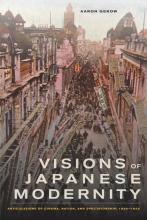
Aaron Gerow is the A. Whitney Griswold Professor of Film and Media Studies and East Asian Languages and Literatures at Yale University. He specializes in East Asian film and media, with a focus on Japanese cinema’s historical, theoretical, and cultural dimensions. Gerow holds a PhD from the University of Iowa and has taught at Yokohama National University and Meiji Gakuin University in Japan, where he also contributed to the Yamagata International Documentary Film Festival. Education: Columbia University: A.D. (1985), M.F.A. (1987) University of Iowa: M.A. (1992), Ph.D. (1996) His research explores early Japanese cinema, film theory, animation, and censorship. Key works include Visions of Japanese Modernity (2010) and Kitano Takeshi (2007). Gerow is currently writing on the history of Japanese film theory and has supervised reprints of prewar film journals. His interdisciplinary approach bridges film studies, literary analysis, and cultural history. Publications span monographs, edited volumes, and peer-reviewed articles, reflecting his engagement with both Japanese and global cinematic traditions. Gerow’s work often critiques national narratives and explores transnational influences in media. His advising and grants include contributions to Yale’s doctoral program in East Asian cinema and collaborations on film preservation projects. Gerow’s online presence includes a curated website with resources on Japanese film studies and links to his publications.
Thuy T. Le is a Professor of Electrical Engineering at San Jose State University's College of Engineering. With a distinguished career spanning several decades, he teaches graduate and undergraduate courses in digital system design, computer architecture, microprocessor systems, and related fields. His academic journey began with earning B.S., M.S., and Ph.D. degrees from the University of California, Berkeley. Professor Le's research interests encompass a broad spectrum of cutting-edge technological domains. His primary focus areas include System-on-Chip (SoC) and Embedded System Design, Hardware Accelerators for complex algorithms, Quantum Computing, implementation of Probability theory and Monte Carlo simulation, and radiation effects on electronic devices and systems. His work bridges traditional electrical engineering with emerging computational paradigms, demonstrating a consistent ability to adapt to evolving technological landscapes while maintaining strong foundations in core engineering principles. Analysis of Professor Le's publication record reveals a consistent trajectory from nuclear reactor physics and computational methods toward modern hardware acceleration and quantum computing. His early work focused on nuclear reactor simulation and radiation shielding, then evolved to parallel computing and distributed systems, and has recently centered on hardware acceleration for complex algorithms, quantum computing applications, and AI hardware. This progression demonstrates his ability to transition between major technological paradigms while maintaining expertise in computational methods and hardware implementation. Professor Le has demonstrated significant leadership in professional service, having served as keynote speaker, general chair, technical program chair, session chair, reviewer, and committee member for numerous international conferences. His service extends beyond academia through his role as Co-Founder and Advisor of the Vietnamese Strategic Ventures Network and Chairman of the Board of the United States–Vietnam Foundation. In his educational role, Professor Le has made substantial contributions to engineering curriculum development and assessment. He has taught a wide range of courses including EE271 (Advanced Digital System Design), EE210, EE250, and various project/thesis courses. His research advising spans digital system design, ASIC, SOC, and hardware accelerators. He has also collaborated with local companies on projects related to high-performance system architectures, parallel algorithms, digital arithmetic, and System-on-Chip verification.
Dr. Salvatore Attardo is Professor of Linguistics in the Department of Literature and Languages at East Texas A&M University's College of Humanities, Social Sciences and Arts. He previously served as Dean of the College (2011-2018) and Head of the Department (2007-2011). Currently teaching primarily in the online Applied Linguistics program he helped establish, he maintains active research and publication in multiple linguistic subfields. His research spans Pragmatics , Semantics , Humor Studies , and English Grammar , with recent focus on Social Eye Tracking methodologies. His work bridges theoretical linguistics with practical applications in language teaching and digital communication. Notable contributions include developing frameworks for analyzing humorous discourse structures across cultures and historical periods. His publication record demonstrates consistent scholarly output, including over ten books and 100+ peer-reviewed articles. Recent works focus on eye-tracking applications in linguistics and satirical news analysis. He served as Editor-in-Chief of Humor: International Journal of Humor Research for ten years and sits on multiple journal editorial boards. Dr. Attardo collaborates extensively with his wife, Dr. Lucy Pickering, particularly on eye-tracking research. His teaching philosophy emphasizes those transformative moments when students grasp underlying linguistic systems, especially in humor courses where ancient Egyptian jokes reveal structural parallels to modern cartoons.
Azadeh Davoodi is a Vilas Distinguished Achievement Professor and Associate Chair of Undergraduate Studies in the Department of Electrical and Computer Engineering at the University of Wisconsin-Madison. Her research focuses on Electronic Design Automation (EDA), integrated circuit debug, and machine learning applications in VLSI design. She holds editorial roles in journals like IEEE TCAD and ACM TRETS, and has chaired major conferences such as ISPD 2015 and served on technical program committees for DAC, ICCAD, and others. Education: PhD in Electrical Engineering, University of Maryland-College Park (2006) Research Interests: Machine learning for VLSI chip design VLSI design automation for machine learning IC-CAD for emerging nanotechnologies Hardware security Recent Research Trends: Her work bridges machine learning and hardware design, with publications on neural network optimization, distributed inference, and explainable AI for circuit design. She emphasizes energy-efficient CNNs, latency reduction in edge computing, and security in split manufacturing. Awards: 2025 DATE Best Paper Candidate 2024 Vilas Distinguished Achievement Professor 2015 ACM Best Paper Award 2011 NSF CAREER Award Service and Grants: Leads NSF-funded projects on explainable ML for CAD and holds grants for distributed neural network synthesis. Her service includes roles as IEEE HKN member and editorial board positions. Labs/Teams: Engages in interdisciplinary research teams at UW-Madison, focusing on EDA innovation and hardware-software co-design.
W. Eric Wong is a Professor of Computer Science at The University of Texas at Dallas (UTD), affiliated with the Erik Jonsson School of Engineering and Computer Science. He holds a Ph.D. in Computer Science from Purdue University (1993), following earlier degrees from Purdue and Eastern Michigan University. His research focuses on reducing software production costs while enhancing reliability, safety, and quality through program-based and architecture/design-based testing methodologies. Key areas include automated test generation, fault localization, debugging, and software safety analysis. Professional Background: Tenured Professor at UTD since 2002 Prior roles include Senior Scientist at Telcordia Technologies (1995–2002) and Consultant at Texas Instruments (2004–2005) Active in industry partnerships, such as projects with Motorola, Avaya Labs, and Raytheon Research Interests: Software Testing & Debugging Dependable Software Development Security Requirements Engineering Fault Localization Techniques Model-Based Testing Software Reliability Modeling Awards & Recognition: 2007 IEEE COMPSAC Best Paper Award 1997 NASA Quality Assurance Special Achievement Award Recipient of a $404,772 NSF grant for software safety and reliability research (2021) Professional Activities: Editorial roles for journals like Journal of Systems and Software and International Journal of Software Engineering Program Chair for ISSRE 2012, COMPSAC 2010, and multiple ACM SAC conferences Member of IEEE Reliability Society Administrative Committee (2008–2013) IBM System z Curriculum Advisory Panel member Labs & Teams: Leads the Software Engineering Group at UTD, collaborating on projects like eXVanatge (dependable software solutions) and Fault-Prone Module Identification in telecommunications systems. Engages in cross-disciplinary efforts with industry and international institutions.
Erin Finneran is a Senior Lecturer in the Department of English at Washington University in St. Louis, with over 20 years of teaching experience. She specializes in Irish and British Literary Modernism, focusing on authors such as Samuel Beckett, Virginia Woolf, and Oscar Wilde. Her teaching spans courses like Ampersand: Literary Culture of Modern Ireland and Argumentation , emphasizing close reading and liberal arts education. Finneran holds a Ph.D. from Washington University, an M.A. from University College Dublin, and a B.A. from Kenyon College. Her academic career includes roles at both Washington University and University College Dublin. Research interests center on modernist literature, with a particular emphasis on parody in Beckett’s early works and the intersection of gender, identity, and narrative form. She has developed courses exploring themes like alienation in modern literature and the evolution of literary culture in Ireland. Finneran’s pedagogical approach prioritizes student engagement across diverse backgrounds. Publications listed reflect interdisciplinary collaboration in public health and behavioral science, though these appear unrelated to her primary literary focus. These include studies on HIV care interventions, intimate partner violence among sexual minority men, and HPV education. While the connection to her literary expertise is unclear, the listed articles suggest possible parallel research streams or potential data overlap. No formal grants or awards are mentioned in the provided materials. Her professional activities focus on undergraduate education and curriculum development in modernist literature.