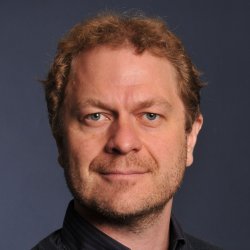
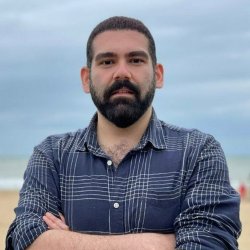
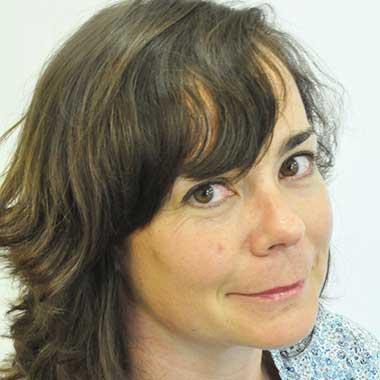
Professor Wasiu O Popoola is a Professor of Communications Engineering and Director of Electronics and Electrical Engineering at the School of Engineering, University of Edinburgh . With over 150 publications and a RAEng/Leverhulme Trust Research Fellowship (2022), his work focuses on optical wireless communication systems including VLC/LiFi, FSO, and underwater optical communications. BSc (First Class Hons), MSc (Distinction), PhD in optical communications (Northumbria University) Professional memberships: Fellow of Higher Education Academy (FHEA), Fellow of IET (FIET), Senior Member IEEE Research Interests span Indoor/Outdoor/Underwater Optical Wireless Communication , Modulation Techniques , and LiFi Applications . His 2025 articles explore underwater turbulence mitigation and hybrid RF-water communication systems . Earlier works include Best Poster Award at IEEE ICSAE 2016 and top-downloaded IEEE Xplore article (2008). Scientific Awards include: 2022 RAEng/Leverhulme Trust Research Fellowship 2016 IEEE ICSAE Best Poster Award 2009 'Xcel Best Engineering and Technology Student' (PhD) He contributes to editorial work as Associate Editor (IEEE Access) , Guest Editor (Optik Journal) , and peer reviewer for Physics World . Recent projects involve BOLD (Defence Science and Technology Laboratory) and TITAN Extension (University of Strathclyde) focusing on diffuse optical wireless systems and UAV swarm networks .
Professor Stuart C. Althorpe is a Professor of Theoretical Chemistry at the Department of Chemistry, University of Cambridge, where he leads the Althorpe Research Group. His work focuses on quantum dynamics and the application of quantum mechanics to chemical reactions, particularly examining how quantum effects influence atomic and molecular motion in systems ranging from isolated reactions to liquid water and ice. Professor Althorpe's research interests center on quantum dynamics , with specific focus on quantum tunneling , conical intersections , and path-integral methods . His group develops computational techniques that bridge quantum statistics and classical dynamics, creating methods like Matsubara dynamics to model quantum effects in complex systems. Key research areas include visualizing complete wave functions of chemical reactions, calculating tunneling splittings in water clusters, and investigating quantum interference effects at electronic degeneracies. The group employs both pen-and-paper theoretical derivations and high-performance computational algorithms for parallel CPUs and GPUs to tackle these challenging problems. The trends in Professor Althorpe's recent publications (2018-2024) reveal an evolution from foundational quantum dynamics methods toward increasingly sophisticated applications in complex, dissipative environments. His work consistently bridges computational chemistry and quantum physics, with growing emphasis on connections between quantum dynamics, chaos theory, and quantum information concepts. The publications demonstrate methodological innovation in path-integral approaches, particularly in handling quantum effects in condensed-phase systems like water and ice, while maintaining strong connections to experimental observations. Professor Althorpe has mentored over two dozen PhD students and postdoctoral researchers who have secured positions at leading institutions including ETH Zürich, UCL, EPFL, and various industry roles. His research group maintains active international collaborations, most notably with Professor D.J. Wales at Cambridge (on water clusters) and Professor Richard N. Zare at Stanford University, where theoretical calculations interpret detailed experimental measurements of reaction dynamics. The Althorpe Group operates within the Department of Chemistry at the University of Cambridge as part of the Theoretical Research Interest Group. The group's work contributes significantly to understanding quantum mechanical phenomena in chemical processes, with implications for fields ranging from atmospheric chemistry to biochemistry. Professor Althorpe organized the 2019 Faraday Discussion on "Quantum effects in complex systems," demonstrating his leadership in advancing theoretical frameworks for quantum phenomena in chemistry.
Simon Moore is a Professor of Computer Engineering at the University of Cambridge's Department of Computer Science and Technology. He leads the Computer Architecture research group, focusing on secure processors and subsystems, particularly the CHERI project. His work emphasizes formal verification, hardware-software co-design, and scalable security solutions. He is a Fellow and Director of Studies at Trinity Hall, overseeing undergraduate admissions and mentoring in Computer Science. Research Interests: Moore's primary focus is the CHERI secure processor architecture, integrating RISC-V cores with formal verification. His work spans secure hardware design, memory safety, and embedded systems. Notable contributions include the CHERI-RISC-V microarchitecture, CheriABI, and formal verification frameworks. Key Projects: CHERI, CheriBSD, Morello (ARM collaboration) Recent Achievements: Test of Time Award (IEEE Security & Privacy 2025), finalist for Bhattacharyya Award (2022) Grants: Innovate UK Digital Security by Design, DARPA Mission Oriented Resilient Clouds Publications: Over 200 papers on secure architectures, including influential work on CHERI's capability model, formal verification, and hardware security. Recent focus areas include temporal memory safety, embedded system security, and GPU-based capability systems. Labs/Teams: Directs the Computer Architecture Group and collaborates with industry partners like ARM and Microsoft on CHERI implementations.
Dr Graeme Bragg is a Senior Teaching Fellow at the University of Southampton within the Department of Electronics and Computer Science . His work spans teaching, research, and technical development with a focus on event-driven computing, bioinformatics, and computational modeling. He actively supervises PhD students and collaborates on interdisciplinary projects. Research Interests: Parallel computing, event-driven systems, genotype imputation, Petri net simulations, subglacial hydrology modeling Teaching: Specializes in hardware description languages and computational methods for engineering students Technical Expertise: RISC-V architecture, FPGA acceleration, bespoke compute fabric development His recent publications demonstrate expertise in applying event-driven computing to diverse problems including: 2025: Automated marking systems for SystemVerilog labs 2025: Seasonal dynamics in subglacial hydrology 2023: Genotype imputation using custom hardware 2022: Optimization algorithms and graph analysis Current research explores: Custom RISC-V FPGA clusters for bioinformatics Event-triggered systems for scientific simulations Parallel computing solutions for molecular modeling Contact: gmb@ecs.soton.ac.uk | +44 23 8059 2784
Dr. Stefan Klus is a Lecturer at the School of Mathematics and Physics, University of Surrey. His research focuses on data-driven model reduction, transfer operator approximation, and kernel-based machine learning applied to dynamical systems. He specializes in interdisciplinary applications across quantum physics, fluid dynamics, and computational biology. Education: PhD in Industrial Mathematics (2011, Paderborn University) and Habilitation (2020, Freie Universität Berlin). Research Interests : Data-driven modeling and reduced-order methods Koopman operator theory and transfer operators Machine learning for dynamical systems (e.g., Deeptime library) Tensor decompositions and quantum systems analysis Graph-based analysis (e.g., microbiome dynamics) Publications : Klus has contributed to over 50 peer-reviewed articles, with recent work emphasizing: Kernel methods for quantum chemistry and physics Tensor-based approaches for high-dimensional systems Applications in climate science (e.g., Pacific SST modeling) Agent-based modeling and social systems Technical Contributions : Co-developer of the Deeptime Python library for dynamical modeling Pioneer in Koopman operator-based model reduction Advanced graph kernel methods for microbiome analysis
Louise Reardon is Professor of Governance and Public Policy at the University of Birmingham's School of Government, Department of Public Administration and Policy. She serves as School Deputy Director of Research (Impact) and is Thematic Research Lead for Transport at UK Parliament. Her internationally recognized expertise spans transport policy and governance, with research focusing on institutional collaboration across scales to advance local transport goals, technological innovation, and sustainability. Louise earned her PhD in Political Science from the University of Sheffield (2014), MA in Governance and Public Policy from the University of Sheffield (2009), and BA (hons) in Philosophy, Politics and Economics from the University of Durham (2008). She holds a Post-Graduate Certificate in Higher Education (2018) and is a Senior Fellow of the Higher Education Academy (2020). Her research interests center on transport policy and governance, with specific focus on multilevel governance, agenda setting, policy implementation, smart mobility transitions, urban governance, and wellbeing. As a political scientist, she advances theoretical understanding of policy processes through transport analysis, examining how local dynamics influence issue recognition, agenda setting, policy change, and approaches to wicked problems. Her work consistently bridges academic theory with practical policy application. Louise's research portfolio demonstrates a clear trajectory toward increasingly complex, interdisciplinary climate-related transport research. Her recent publications show strong emphasis on net-zero transitions, smart city governance, and pandemic recovery implications for transport systems, with growing international collaboration particularly with Indian and Australian institutions. The trend indicates deepening engagement with practical policy implementation challenges alongside theoretical contributions. Senior Fellow of the Higher Education Academy, 2020 Louise regularly provides scientific advice to diverse stakeholders and serves on the UK Department for Transport's Transport Research Innovation Grant advisory board. She co-edited the Handbook of Transportation and Public Policy (2025) and previously co-chaired the Governance and Decision-Making Processes Special Interest Group for the World Conference on Transport Research Society. She serves on editorial boards for Research in Transportation Business & Management and Local Government Studies. As an educator, Louise led the College of Social Science's first Degree Apprenticeship programme and specializes in blended teaching approaches. She has supervised PhD students on evidence use in local policymaking, center-local government relations, and walking's role in climate change agendas. She actively seeks new doctoral students interested in multi-level governance, policy change, sustainable transitions, and urban governance topics.
Tom Mitchell is a Professor of Audio and Music Interaction at the University of the West of England (UWE), Bristol . As leader of the Creative Technologies Laboratory , his research focuses on interactive technologies for creative expression, blending computer science, music, and artificial intelligence. He is the principal investigator for the UKRI Future Leaders Fellowship project "Sensing Music Interactions from the Outside-In" and co-investigator for the Bridge , a £3M creative technology facility. His research spans digital musical instrument design , GPU-accelerated audio processing , and sonification of scientific data . Recent work includes accessibility improvements in virtual environments, AI-driven DMI development, and interdisciplinary collaborations like the MiMU Gloves with Imogen Heap. He also contributes to robotics teleoperation through auditory feedback systems. Selected publications highlight trends in GPU acceleration for audio , generative AI in musical contexts , and human-robot collaboration via sonification. As a software developer , he specializes in C++ and the Juce library , with applications in live performance systems and scientific visualization projects like Soma and danceroom Spectroscopy . UKRI Future Leaders Fellow Active in AHRC and WECA-funded projects Best paper nominations at EvoMUSART and International Faust Conference Mitchell collaborates with institutions including the Bristol Robotics Laboratory , Computer Science Research Centre , and Pervasive Media Studio . His work bridges academic research with commercial applications through ventures like May Productions and x-io Technologies.
Naratip Santitissadeekorn is a Senior Lecturer in Data Assimilation at the School of Mathematics and Physics, University of Surrey, where he is affiliated with the Mathematics at the Interface Group. His work bridges mathematics, data science, and real-world applications in urban planning, crime analysis, and geophysical fluid dynamics. Dr. Santitissadeekorn received his PhD from Clarkson University in 2008, with a dissertation titled "Transport Analysis and Motion Estimation of Dynamical Systems of Time-Series data." His doctoral research was supervised by Professor Erik Bollt. Following his PhD, he completed two significant postdoctoral positions: from 2008-2011 at the University of New South Wales, Sydney, Australia, working with Professor Gary Froyland on numerical techniques for finite-time Lagrangian coherent set identification, with applications to delimiting the polar vortex and Agulhas rings; and from 2011-2014 at the University of North Carolina-Chapel Hill, working with Professor Chris Jones on data assimilation projects. Dr. Santitissadeekorn's research focuses on inverse problems and data assimilation in geophysical fluid dynamics, the applications of Lagrangian Coherent Structures (LCS), and computational ergodic theory. His work combines theoretical mathematics with practical applications, particularly in urban growth modeling and crime analysis. He has developed innovative methods for identifying coherent structures in fluid flows, estimating transition probabilities from spatiotemporal data, and creating data-driven frameworks for urban expansion scenarios. His research demonstrates how mathematical techniques can be applied to solve real-world problems in environmental science, urban planning, and public safety. An analysis of Dr. Santitissadeekorn's recent publications (2020-2023) reveals a strong focus on urban expansion modeling and network analysis. His work on urban growth has evolved from basic cellular automata models to sophisticated frameworks that manage uncertainty through parameter clustering and growth mode identification. His research on Hawkes processes has advanced ensemble-based filtering techniques for analyzing count data in large networks. These publications demonstrate a consistent pattern of applying mathematical rigor to complex spatiotemporal phenomena, with increasing emphasis on data-driven approaches and practical applications. Dr. Santitissadeekorn has made significant contributions to data assimilation methods, particularly through the development of the extended Poisson-Kalman filter (ExPKF) for urban crime modeling. His teaching includes courses in Algebra and Bayesian Statistics, reflecting his expertise in both theoretical and applied mathematics. While specific awards are not mentioned in the available information, his extensive publication record in high-impact journals demonstrates recognition within his field. Dr. Santitissadeekorn's research has practical implications for urban planning and law enforcement. His work on urban expansion models helps planners understand different growth trajectories, while his crime modeling research contributes to improved police patrolling strategies. His interdisciplinary approach, combining mathematics, computer science, and domain-specific knowledge, positions him at the forefront of applying data science to societal challenges.
Dr. Werner Bauer is a Lecturer in Mathematics at the University of Surrey, affiliated with the Mathematics at the Interface Group within the School of Mathematics and Physics. His research focuses on numerical analysis and scientific computing, particularly in the Mathematics of Planet Earth. Key areas include parallel-in-time methods for oscillatory PDEs, structure-preserving discretizations for fluid dynamics, stochastic flow models for ensemble prediction, and geometric formulations of fluid and magnetohydrodynamic systems. He also explores finite difference and finite element methods, with prior work on grid adaptation in weather and climate models. His research interests span numerical methods for geophysical flows, stochastic modeling of oceanic and atmospheric dynamics, and energy-conserving computational frameworks. Bauer’s recent work emphasizes uncertainty quantification, ensemble forecasting, and the development of compatible finite element schemes to ensure physical conservation laws in simulations. Bauer’s publications highlight advancements in structure-preserving discretizations, stochastic parameterization of mesoscale eddies, and variational integrators for geophysical equations. His work bridges applied mathematics and computational science with applications in climate modeling and environmental fluid dynamics.
Mahdi Boloursaz Mashhadi is a Lecturer in Communications and AI at the Institute for Communication Systems (ICS), part of the School of Computer Science and Electronic Engineering at the University of Surrey, UK. He is a Surrey AI Fellow and an IEEE Senior Member, with a focus on advancing AI-driven wireless communication systems. He holds B.S., M.S., and Ph.D. degrees in mobile telecommunications from Sharif University of Technology, Tehran, Iran. Prior to joining Surrey, he served as a postdoctoral research associate at Imperial College London’s Intelligent Systems and Networks (ISN) Research Group (2019–2021). His research interests span AI/ML integration with wireless systems, including semantic communications, federated learning, generative AI for telecom, and beamforming optimization in massive MIMO architectures. He also explores edge computing, distributed deep learning frameworks, and energy-efficient communication designs using reconfigurable intelligent surfaces (RIS). Mahdi has been recognized with the IEEE EWDTS Best Paper Award and IEEE ComSoc Exemplary Reviewer Awards (2021–2022). He leads the UKTIN/DSIT 12M£ national project TUDOR and collaborates with industry on cutting-edge 5G/6G innovations. He has contributed to the ITU’s AI/ML in 5G challenge as a panel judge and serves as an editor for Springer’s Wireless Personal Communications Journal. His roles include advising on government/industry projects and advancing interdisciplinary research at the 5G/6G Innovation Centre. He emphasizes practical implementations of AI in telecommunications, aiming to bridge theoretical advancements with real-world applications.
Dr. Éric Hébrard is a Senior Lecturer in Astrophysics at the University of Exeter since 2018, with prior academic roles including NASA Goddard Senior Research Fellow and CNRS Research Associate. His work bridges planetary atmospheres, astrochemistry, and combustion modeling with expertise in 3D chemical simulations. PhD in Physics and Chemistry of Planetary Atmospheres, Université Paris 7 (2006) Magna cum laude Magistère Interuniversitaire de Chimie, ENS Paris (2003) Research focuses on: Exoplanetary atmosphere modeling (hot Jupiters, TRAPPIST-1e) Photochemical kinetics and UV absorption Coupling of atmospheric circulation and chemistry Cross-disciplinary combustion-atmosphere analogs Chemical validation strategies for model accuracy Scientific contributions include: NASA-funded research on organic-rich habitable zones Development of KIDA kinetic database for astrochemistry STFC Consolidated Grant for multi-dimensional chemical models Quantum chemistry integration for Titan atmosphere studies Awards: Higher Education Academy Fellowship (ASPIRE program) NASA Postdoctoral Fellowship (2015-2017) CNES Postdoctoral Fellowship (2007-2009)
Giuliano Casale is a Professor in the Department of Computing at Imperial College London, leading the Quality of Service Research Lab (QORE). His research focuses on performance assurance, resource management, and fault-tolerance in distributed systems. He teaches courses on Probability and Statistics and Scheduling and Resource Allocation at undergraduate and Master’s levels. Casale’s work spans cloud computing, edge AI, and machine learning applications in system modeling. Key contributions include methodologies for performance engineering, anomaly detection, and automated resource management in large-scale systems. He actively participates in international conferences, delivering keynote speeches on topics such as performance evaluation and AI-driven systems. His research integrates queueing theory, machine learning, and generative models to address challenges in distributed software systems. Casale also engages in service activities like PhD admissions tutoring and collaborates on projects involving resilience planning and cloud service optimization. His lab, QORE, emphasizes practical solutions for real-world distributed systems, including edge federations and serverless architectures. Casale’s work bridges theoretical performance analysis with industrial applications, contributing to advancements in both academia and industry.
Patrick Antolin is an Associate Professor at Northumbria University's Department of Mathematics, Physics and Electrical Engineering. His research focuses on solar atmospheric phenomena, including coronal heating via MHD waves, coronal cooling processes (e.g., coronal rain and prominences), and thermal instabilities. He holds dual PhDs from Kyoto University (2009, numerical simulations) and the University of Oslo (2012, solar observations). Education: BSc Mathematics (2003), Universidad de los Andes, Colombia BSc Physics (2004), Universidad de los Andes, Colombia MSc (2006), Kyoto University, Japan PhD (2009), Kyoto University PhD (2012), University of Oslo Research Interests: Magnetohydrodynamics (MHD) and wave dynamics Numerical modelling (parallel computing) Forward modelling of observational diagnostics Solar observations using space- and ground-based instruments His work emphasizes understanding coronal heating mechanisms, thermal non-equilibrium processes, and the role of magnetic topology in solar phenomena. Key Contributions: Developed models for coronal rain formation via thermal instabilities near magnetic null points Investigated MHD wave-driven heating in coronal loops Advanced techniques for decomposing solar EUV emissions to study plasma components Awards: 2018: The Cool Alter-Ego of the Hot Solar Corona (recognizing contributions to thermal non-equilibrium research) Grants & Activities: Recipient of STFC Ernest Rutherford Fellowship (2016–2019) Collaborator on Solar Orbiter/EUI Consortium since 2020 Organized COSPAR 2021 sessions on solar physics Lab/Team: Leads a research group focusing on solar coronal dynamics, numerical simulations, and multi-wavelength observational analysis.
Kirsty Ogg is a Lecturer in Curating within the Art Department at Goldsmiths, University of London. She serves as Interim Director of Mimosa House, a space dedicated to promoting diversity and access in the arts. Previously, she was Director of New Contemporaries (2013-2023), where she expanded support for emerging artists, and held curatorial positions at Whitechapel Gallery (2009-2013) and The Showroom (1998-2008). Kirsty's research focuses on the intersection of emerging art practice, arts education, and access. Her work is informed by her background in grassroots, DIY artist-led organizations, with particular interest in understanding and overcoming socio-economic and cultural barriers that prevent artistic emergence. She is currently exploring parallels between artist-led cultures and pre-18th century egalitarian pirate communities, investigating how radical democratic principles from the Golden Age of Piracy might inform contemporary curatorial and institutional practices. Her recent publications reveal a strong focus on emerging artists, digital curation platforms, and the evolving landscape of contemporary art institutions. Ogg has produced numerous exhibition catalogs for the Bloomberg New Contemporaries series and has organized conferences addressing critical issues in curatorial practice, artist development, and the relationship between art schools, museums, and the academy. Kirsty serves as External Examiner for the MLitt Curatorial Practice Contemporary Art program at Glasgow School of Art (2022-2025) and previously for the Curating Contemporary Art MA at Royal College of Art (2018-2020). Her professional activities demonstrate significant engagement with artist development, institutional critique, and creating pathways for emerging talent in the contemporary art world.
Alastair F. Donaldson is a Professor and Director of Research in the Department of Computing at Imperial College London, where he leads the FastPL research group. His academic career spans over a decade at Imperial, progressing from Lecturer (2011-2014) to Senior Lecturer (2014-2017), Reader (2017-2020), and Professor (2020-present). He has also held significant industry positions, including Founder and Director of GraphicsFuzz Ltd. (acquired by Google in 2018), Senior Software Engineer at Google (2018-2021), and Visiting Researcher at both Google and Microsoft Research Redmond. Donaldson earned his PhD from the University of Glasgow under Alice Miller, following a BSc (hons, First Class) in Computing Science and Mathematics. His postdoctoral work included an EPSRC Postdoctoral Research Fellowship at the University of Oxford and a Research Fellowship at Wolfson College Oxford. His research focuses on formal analysis, software testing and programming languages techniques for improving software reliability, with special emphasis on high-performance systems. Donaldson's work bridges theoretical foundations with practical applications, particularly in compiler testing, GPU programming verification, and metamorphic testing. His research has significantly influenced both academia and industry, as evidenced by the acquisition of his startup GraphicsFuzz by Google. Analysis of his recent publications reveals a strong focus on fuzz testing techniques applied across diverse domains including compilers, GPUs, cryptographic protocols, and large language models. His work consistently combines formal methods with practical testing approaches, addressing challenges in compiler correctness, memory models, and API verification across multiple platforms. 2017 BCS Roger Needham Award EPSRC Early Career Fellowship Best Paper Award, EuroSys 2024 Best Paper Award, MET 2021 Best Paper Award, IWOCL 2019 Best Paper Award, IISWC 2019 Best Paper Award, ICST 2016 ACM SIGSOFT Distinguished Paper Award, ISSTA 2023 ACM SIGSOFT Distinguished Paper Award, FSE 2017 ACM SIGPLAN Most Influential OOPSLA Paper Award, 2022 (for GPUVerify) As Director of Research in the Department of Computing, Donaldson oversees research strategy and development. His FastPL research group investigates novel techniques for programming, testing and reasoning about high performance systems. He has served on numerous program committees and held leadership roles including PLDI Steering Committee Chair (2022-2025) and PACM-PL Advisory Board member. His industry engagement includes testifying as an Expert Witness in the IBM UK Ltd v LzLabs GmbH & Ors case. The FastPL research group, which Donaldson leads, focuses on formal analysis, software testing and programming languages. The group has made significant contributions to compiler testing, GPU verification, and metamorphic testing techniques, with practical impact demonstrated by the acquisition of GraphicsFuzz. Current research directions include fuzzing for zero-knowledge proof circuits, randomized testing of decompilers, and systematic testing of large language models for code generation.