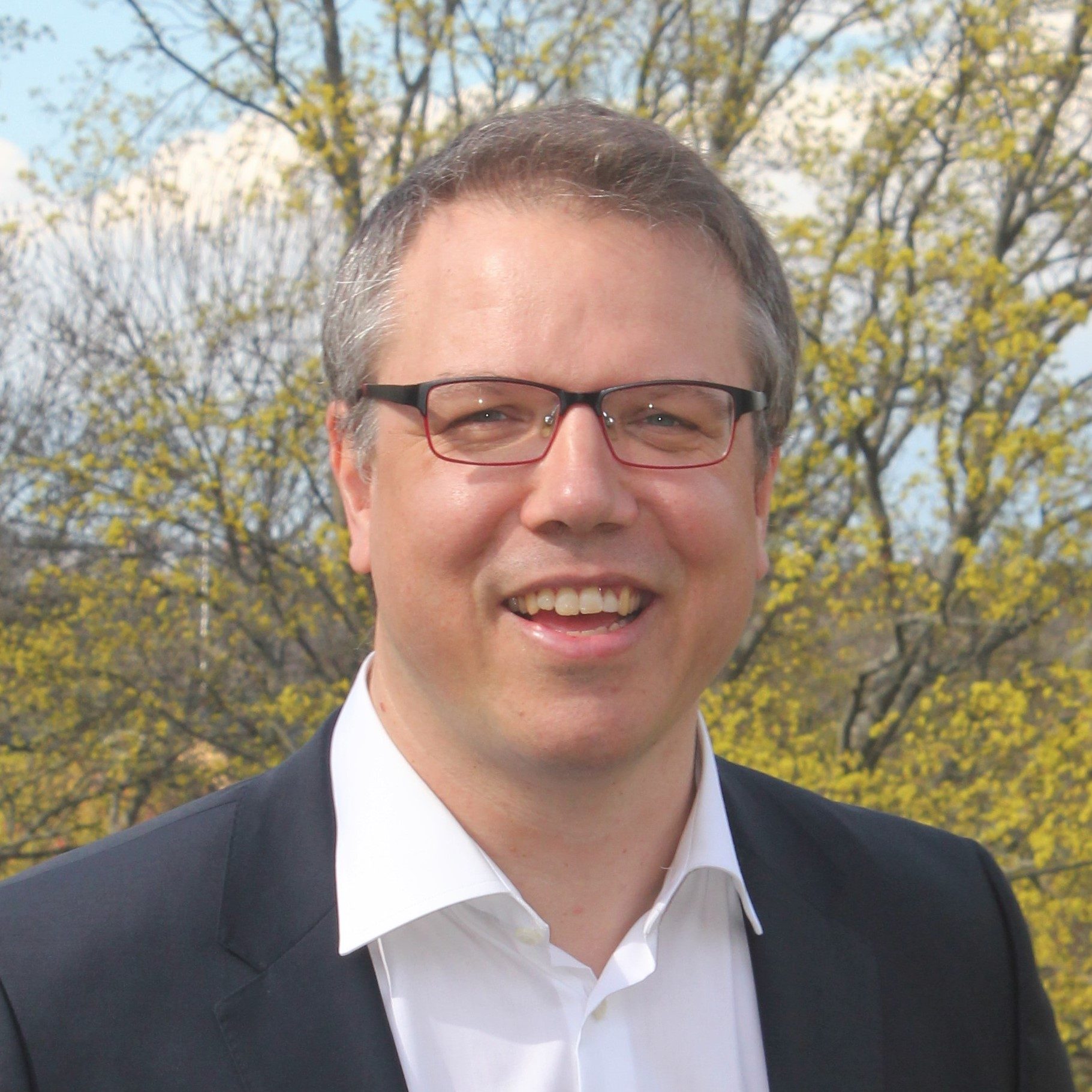
Tommy Persson is a Research Engineer at the Department of Computer and Information Science (IDA) within Linköping University. His research focuses on artificial intelligence, parallel computing, and robotics, with contributions to autonomous systems, distributed architectures, and high-performance computing. He is affiliated with the Artificial Intelligence and Integrated Computer Systems (AIICS) division, which emphasizes theoretical and applied AI research. His work spans domains such as unmanned aerial vehicle experimentation, parallel graphics code generation, and radar system optimization. Collaborations include projects with colleagues like Patrick Doherty and Peter Fritzson, reflecting a multidisciplinary approach to computational challenges. No scientific awards are explicitly mentioned, but his contributions to technical domains like MIMD systems and sensor technology highlight his expertise. Advising roles or grants are not detailed in the provided information. Persson is based at Campus Valla, contributing to both research and the academic community through his role in IDA and AIICS.
Sindri Magnússon serves as an Associate Professor in Machine Learning at Stockholm University's Department of Computer and Systems Science. His research focuses on distributed optimization, machine learning, and data-driven decision-making within complex network systems, with applications spanning power grids, IoT infrastructure, and satellite operations. His educational background includes a B.Sc. in Mathematics from the University of Iceland (2011), an M.Sc. in Applied Mathematics (Optimization and Systems Theory) from KTH Royal Institute of Technology (2013), and a Ph.D. in Electrical Engineering from KTH (2017). He completed postdoctoral research at Harvard University (2018-2019) following a 9-month visiting PhD stint there in 2015-2016. Magnússon's research integrates theoretical optimization frameworks with practical machine learning implementations, particularly emphasizing reinforcement learning, federated systems, and distributed algorithms for resource-constrained environments. His work bridges theoretical guarantees with real-world applications in critical infrastructure and industrial systems. Analysis of his recent publications reveals a strong focus on communication-efficient distributed learning, non-stationary reinforcement learning environments, and predictive maintenance systems. His team consistently develops novel algorithms addressing asynchronous updates, model mismatch in federated settings, and multi-objective optimization challenges across IoT and satellite networks. Major awards include the IEEE ICASSP best student paper award (as supervisor) and a prestigious Swedish Research Council (VR) Starting Grant. VR Starting Grant: Resource Constrained Machine Learning in Complex Networks (PI, 4 MSEK, 2021-2024) Digital Futures: DEMOCRITUS project on critical societal infrastructures (Co-PI, 4 MSEK, 2021-2024) Vinnova: Smart Converters for Climate-neutral Society (PI, 3 MSEK, 2022-2025) He actively supervises seven PhD candidates including main supervision for Ali Beikmohammadi, Shubham Vaishnav, and Mohsen Amiri, plus industrial PhD projects with Spotify. As Associate Editor for IEEE/ACM Transactions on Networking, he contributes significantly to the networking and machine learning research communities.
Johan Karlsson is a Professor in the Department of Mathematics at KTH Royal Institute of Technology, Sweden. He serves as Associate Director Executive Research at Digital Futures, a cross-disciplinary research center focusing on digital technologies for societal challenges. He holds a PhD in Optimization and Systems Theory from KTH (2008) and an MSc in Engineering Physics (2003). His research focuses on inverse problems, optimization, model reduction, and their applications in remote sensing, signal processing, and control theory. He leads the Decision-making in Critical Societal Infrastructures (DEMOCRITUS) project and collaborates on initiatives like the Lindquist Symposium in Systems Theory. Teaching includes advanced courses such as Optimal Control and Convexity and Optimization in Linear Spaces . He supervises PhD students and has authored/co-authored numerous papers in journals like SIAM Journal on Control and Optimization and IEEE Transactions on Automatic Control . His work integrates optimal transport theory, control systems, and computational methods to address complex engineering and environmental challenges. Key affiliations include KTH’s Department of Mathematics and Digital Futures, with collaborations across academia and industry. His research group actively engages in workshops, conferences, and interdisciplinary projects to advance theoretical and applied aspects of optimization and systems theory.
Ingo Sander is a Professor in Electronic Systems Design at KTH Royal Institute of Technology, affiliated with the Digital Futures Faculty and the Division of Electronics and Embedded Systems. He joined KTH in 1993 and has held his current professorship since 2018. His research focuses on formal system design methodologies like ForSyDe, emphasizing embedded systems, mixed-criticality applications, and design automation. He co-founded the cross-disciplinary Digital Futures research center, which addresses societal challenges through digital technology innovation. Education: MSc in Electrical Engineering (Technical University of Braunschweig, 1990), PhD and Docent at KTH (2003, 2009). Professional experience includes work at Ericsson (1991–1993). Research Interests: Design methodologies for embedded systems, models of computation (MoCs), formal verification, and cyber-physical systems. Key contributions include the ForSyDe framework and design space exploration techniques for multiprocessor platforms. His work bridges theoretical foundations with practical implementations, targeting safety-critical and high-performance embedded systems. Teaching: Ingo Sander supervises numerous master’s degree projects in computer engineering, electrical engineering, and ICT innovation. He leads courses on embedded software, systems design, and simulation. Labs & Projects: Digital Futures collaborates with Stockholm University and RISE, advancing innovations in digital technologies. Sander’s projects include the SAFEPOWER initiative for energy-efficient mixed-criticality systems and CONTREX for control systems design.
Xi Wang is an Associate Professor in the Department of Production Engineering at KTH Royal Institute of Technology, Sweden, and serves as the Division Head of Industrial Production Systems (IPS). He holds a PhD from the University of Auckland (2013) and a Bachelor's from Tianjin University (2008). His research focuses on Cloud-based Manufacturing, Sustainable Manufacturing, Robotics, Digital Twin Technology, and Computer-aided Design. He is actively involved in editorial roles for journals like the International Journal of Manufacturing Research and the Journal of Manufacturing Systems. Education: PhD in Mechanical Engineering, University of Auckland, 2013 Bachelor of Mechanical Engineering, Tianjin University, 2008 Research Interests: Dr. Wang’s work emphasizes integrating advanced technologies into manufacturing systems, including: Cloud Manufacturing: Cyber-Physical Systems and Service Composition Sustainable Practices: Energy Efficiency and Recycling Systems Robotics: Collaborative Systems and Calibration Methods Digital Twin: High-Fidelity Modeling for Industry 5.0 His recent publications highlight optimization algorithms, predictive modeling, and blockchain applications in manufacturing. Professional Contributions: Managing Editor, International Journal of Manufacturing Research (IJMR) Editorial Board Member of 3+ international journals Lead researcher on EU-funded projects like SYMBIO-TIC and CAPP-4-SMEs Lab/Team Involvement: His research groups focus on Human-Robot Collaboration and Smart Production Logistics , with projects addressing real-time adaptive systems and safety frameworks.
Magnus Wiktorsson is a Professor at KTH Royal Institute of Technology's Department of Sustainable Production Development within the Digital Futures Faculty. His work focuses on smart production logistics, sustainability, and digital transformation in manufacturing systems. He explores applications of machine learning, IoT, blockchain, and digital twins to enhance supply chain visibility, optimize production processes, and achieve circular economy goals. His research integrates technical and socio-technical perspectives, addressing challenges in human-robot collaboration, data-driven decision-making, and Industry 4.0/5.0 transitions. Key themes include material efficiency, real-time data utilization, and participatory modeling in urban and industrial logistics. Recent work emphasizes frameworks for adaptive scheduling, explainable AI in logistics, and blockchain-based collaboration models. Wiktorsson collaborates with industry partners to validate frameworks through case studies, pilot projects, and simulation-based methodologies. His contributions span academic publications and contributions to strategic innovation programs like Produktion2030, focusing on sustainability and resilience in manufacturing systems.
Concetta Burgarella is a Researcher at the Department of Organismal Biology, Uppsala University, Sweden, affiliated with the Human Evolution Program and the Schlebusch lab, focusing on evolutionary genetics of human and plant systems. Her research employs population genetics to investigate how demographic history, mating systems, and selective pressures shape genetic diversity in wild and domesticated species. Funded by a Marie Skłodowska-Curie fellowship, her current work examines co-evolution between human populations and African cereals. Recent publications (2020-2025) reveal interdisciplinary expertise across human population history (Bantu expansion), plant evolution (wheat, yam, millet), and genomic methodologies, highlighting adaptation patterns, domestication processes, and diversification mechanisms. Scientific Awards: Marie Skłodowska-Curie fellowship Her primary active grant is the Marie Skłodowska-Curie fellowship supporting human-cereal co-evolution research. While no advisees are documented, she collaborates with international teams on population genomics projects. As a core member of the Schlebusch lab, she contributes to human evolutionary genomics research while advancing parallel studies on plant domestication and adaptation through cross-institutional partnerships.
Oskar Kviman is a doctoral student at KTH Royal Institute of Technology working in the Lagergren Lab within the Division of Computational Science and Technology. His research bridges machine learning, statistics, and computational biology with a focus on developing and applying advanced probabilistic methods. His primary research interests include: Bayesian phylogenetics and probabilistic machine learning Variational inference, variational auto-encoders, and sequential Monte Carlo methods Generative AI techniques including flow matching, Schrödinger bridges, and diffusion models Computational cancer research focusing on differential expression testing and spatial transcriptomics Kviman's publication record demonstrates significant contributions to variational inference methodology, particularly in phylogenetics and generative modeling. His work spans top machine learning conferences including ICML, NeurIPS, and AISTATS, showing consistent development of techniques that improve efficiency and accuracy in probabilistic modeling. Recent publications focus on multi-marginal flow matching, variational resampling, and mixture learning in black-box variational inference. He has been recognized for his peer review contributions as a Top reviewer (10%) for AISTATS 2023. Kviman has supervised master's theses for Xindi Liu and Ricky Molén at KTH and serves as a lecturer for 'Statistical Methods in Applied Computer Science' since 2021, while previously working as a teaching assistant for 'Machine Learning, Advanced Course' and 'Deep Learning, Advanced Course'.
Shahab Fatemi is an Associate Professor at the Department of Physics, Umeå University, leading the Computational Space Physics research group. His primary research focuses on plasma interactions with planetary bodies using hybrid-kinetic simulations and spacecraft data, with a particular emphasis on Mercury, the Moon, and comets. He completed his Ph.D. in Space Science at Luleå University of Technology (2014) and held postdoctoral positions at UC Berkeley and NASA's Ames Research Center. He is a co-investigator on NASA's Lunar Vertex mission (launching 2025) and contributes to ESA/JAXA's BepiColombo mission to Mercury. His technical expertise includes developing the Amitis parallel plasma simulation code in C++/CUDA/MPL. Teaching responsibilities include undergraduate courses on Spacecraft Technology and Design , Research Topics in Physics , and Machine Learning in Physics . He supervises PhD/postdoc/undergraduate researchers and collaborates internationally across institutions like IRF Kiruna and NASA's Goddard Space Flight Center. Research interests span planetary magnetospheres, solar wind interactions, and plasma modeling, with recent work analyzing Mercury's field-aligned currents, lunar exosphere dynamics, and Ganymede's atmospheric/plasma environment. His computational tools enable 3D simulations of planetary plasma environments at unprecedented resolution. Key projects include: Leading Mercury plasma studies via BepiColombo's MIPA instrument Developing Lunar Vertex's PRISM payload for magnetic anomaly investigation Simulating Ceres' plasma environment under variable solar wind conditions Labs/teams: Computational Space Physics Group (Umeå) BepiColombo/SERENA collaboration NASA Lunar Science Working Group Future work includes expanding Amitis code capabilities for exoplanetary plasma studies and preparing for JUICE mission data analysis at Ganymede.
Yi Wang is a Professor of Embedded Systems at the Department of Information Technology, Uppsala University , Sweden. He leads research in real-time and embedded systems with a focus on modeling, analysis, and implementation of safety-critical applications. He is affiliated with the Embedded Systems Group and serves as a Principal Investigator (PI) in major research centers such as UPMARC and projects like CUSTOMER (ERC Advanced Grant), CoDeR-MP, and CERTAINTY. Research Interests: Yi Wang’s work centers on Embedded Systems Design, Real-Time Scheduling, Multicore Programming, and Model-Checking of Real-Time Systems . His research addresses fundamental challenges in timing predictability, schedulability analysis, and the verification of complex real-time systems. He has made significant contributions to the digraph real-time task model, mixed-criticality systems, and timing analysis of ROS 2 systems. His work bridges theory and practice, often resulting in deployable tools and formal methods for industrial applications. Recent Research Trends: His most recent publications (2023–2025) focus on optimizing real-time performance in ROS 2, managing parallel task graphs with resource contention, improving GPU-based inference on embedded platforms, and enhancing timing predictability in multithreaded executors. These works reflect a strong trend toward applying formal real-time theory to modern robotics, AI integration, and multicore embedded architectures. Scientific Tools and Leadership: He is a key contributor to foundational tools in real-time systems: UPPAAL – Model checking for timed automata TIMES – Schedulability analysis and code generation CATS – Compositional analysis of timed systems TIMES-Pro – Based on the digraph real-time task model Advising and Research Funding: Yi Wang has supervised numerous PhD students and postdocs. He has led or participated in multiple large-scale funded projects supported by the Swedish Research Council (VR), the Swedish Foundation for Strategic Research (SSF), and the European Commission (FP7, ERC). These include UPMARC (10-year Linnaeus center), CoDeR-MP (with ABB and SAAB), SAVE++ (with VOLVO), and CREDO. Laboratories and Research Groups: He is a core member of the Embedded Systems Group at Uppsala University and leads research within the UPMARC center, which focuses on programming models and analysis techniques for multicore architectures. His lab develops formal methods and tools to ensure correctness and timing guarantees in embedded and cyber-physical systems.
Dawit Mengistu is a Senior Lecturer in Computer Engineering at the Department of Computer Science, Faculty of Natural Science, Malmö University. His research focuses on deep learning applications, edge computing, and distributed simulation systems. 2022: Deep Learning Approaches for Crack Detection in Bridge Concrete Structures 2024: Concrete Crack Detection Using Multi-Source Data Augmentation in Deep Learning Models 2018: Session Key Agreement for End-to-End Security in Time-Synchronized Networks His research spans artificial intelligence and system performance optimization , with specific interests in: Multi-agent simulation scalability Edge computing for IoT devices Concrete structural analysis via neural networks Grid environment resource management Article trends show increasing focus on infrastructure AI and distributed systems , while earlier works concentrated on simulation algorithms and middleware. No recent scientific awards listed in available data.
Håkan Sundell is an Assistant Professor of Computer Science at the University of Borås , affiliated with the Faculty of Librarianship, Information, Education and IT and the Department of Information Technology . Since 2006, he has been active as a teacher in informatics and a research group leader for the CSL@BS research group , while also serving as program manager for the System Architecture Education with a Focus on Software Development . His research spans Artificial Intelligence , Parallel and Distributed Systems , Concurrent Programming , and Machine Learning Applications , with a particular emphasis on lock-free data structures and GPU algorithms . He has developed over 30 courses and supervised multiple doctoral students to completion. Scientific contributions include advancements in non-blocking algorithms, real-time systems, and AI-driven marketing tools. His article trends reflect interdisciplinary work in data science for fashion retail , district heating analytics , and marketing campaign optimization . Key Awards: Best Paper Award at IPDPS 2003 Recognized as a pioneer in Swedish computer game development As a main supervisor since 2012, he has driven externally funded research projects (VR, SSF, KKS, HUR) and served on university committees, including chairing the education committee from 2018–2022.
Amira Soliman is a Senior Lecturer at Halmstad University's School of Information Technology, specializing in artificial intelligence and machine learning with applications in healthcare. Her work bridges the gap between advanced computational techniques and practical healthcare solutions, focusing on improving patient outcomes through data-driven approaches. Dr. Soliman's research interests span a wide range of areas in AI and data science: Artificial Intelligence and Machine Learning for healthcare applications Graph analytics and network analysis in healthcare systems Federated learning for privacy-preserving healthcare analytics Healthcare informatics and clinical decision support systems Social network analysis for public health applications Distributed systems for large-scale healthcare data processing Her recent publications demonstrate a strong focus on applying advanced machine learning techniques to healthcare challenges, particularly in the areas of heart failure prediction, dementia diagnosis, and synthetic health data generation. Her work often combines clinical expertise with cutting-edge AI methodologies, resulting in practical tools that can be implemented in real-world healthcare settings. A notable trend in her research is the emphasis on explainability and interpretability of AI models in medical contexts, ensuring that clinicians can understand and trust the recommendations made by these systems. As an educator, Dr. Soliman teaches courses including Artificial Intelligence for healthcare, Smart Healthcare with applications, Big-data Parallel Programming, and Applied Data Mining. She also provides thesis supervision for both MSc and PhD students. Her teaching approach emphasizes the practical application of theoretical concepts, preparing students to tackle real-world challenges in healthcare AI. Dr. Soliman has served as a peer reviewer for prestigious journals and conferences including IEEE Internet Computing, Data Mining and Knowledge Discovery, Journal of Social Network Analysis and Mining, Journal of Future Generation Computer Systems, IEEE/WIC/ACM International Conference on Web Intelligence, and European Conference on Parallel and Distributed Computing. Her research has been supported through projects such as HaRP (Heart failure Readmission Prediction) and PadAI (AI for better mental health in young people).
Kateryna Morozovska is a Researcher at the KTH Royal Institute of Technology , affiliated with the Division of Decision and Control Systems and the School of Electrical Engineering and Computer Science . Her work bridges computational methods and energy systems development, focusing on physics-informed machine learning for renewable energy integration and power transformer optimization. Education B.S. and M.S. in Electrical Mechanics from Zaporizhzhya National Technical University (2013) European Energy Masters program with mobility at DTU (Denmark), TU Delft (Netherlands), and NTNU (Norway) PhD in Electrical Engineering from KTH (2020) on 'Dynamic rating for applications in renewable energy' Licentiate from KTH (2019) Research Focus Kateryna's research emphasizes Physics-Informed Neural Networks (PINNs) for power system optimization, including transformer thermal modeling, cellulose degradation analysis, and renewable energy integration. Her projects explore dynamic rating techniques to enhance grid efficiency and sustainability, funded by Vinnova and applied in PV-power plants and wind farms. Scientific Contributions She has developed frameworks for transformer cost analysis, wind farm sizing, and sensor placement optimization using PINNs and MILP. Her work addresses environmental trade-offs in wind energy, such as raw material mining impacts, and investigates thermodynamic challenges in nanocellulose and power systems. Affiliations Kateryna collaborates with industry partners through the PINN Summer School and contributes to SweGRIDS and Mendeley communities. Her teaching includes hands-on PINN training and multi-GPU machine learning.
Joakim Andén-Pantera is an Associate Professor in the Division of Probability, Mathematical Physics and Statistics at the Department of Mathematics, KTH Royal Institute of Technology. His research spans signal processing, statistical data analysis, and machine learning with applications in cryo-electron microscopy, biomedical signal analysis, and audio classification. His educational background includes advanced training in mathematics and signal processing leading to his current academic position. Though specific degree details aren't provided in the text, his research profile indicates deep expertise in mathematical methods for signal representation. Professor Andén-Pantera's work focuses on developing mathematical frameworks that extract discriminative information from signals while remaining invariant to irrelevant variations like translation, frequency-shifting, and noise. His research bridges theoretical mathematics with practical applications across multiple domains: Developing wavelet scattering transforms for robust signal representation Applying these techniques to cryo-EM for molecular structure analysis Creating methods for audio and music classification through time-frequency analysis Designing algorithms for biomedical signal processing, particularly ECG analysis Contributing to computational methods for cosmological parameter estimation His publication record shows consistent contributions in both theoretical signal processing and practical implementations. The research trajectory demonstrates increasing sophistication in applying scattering transforms and deep learning to diverse signal processing challenges across biology, medicine, and acoustics. Notable scientific recognition includes: Best Paper Award (2nd Place) at IEEE International Workshop on Machine Learning for Signal Processing (2015) Best Paper Award (1st Place) at International Conference on Digital Audio Effects (2012) Best Paper Award at IPDPS for cuFINUFFT implementation Professor Andén-Pantera advises graduate students on degree projects in financial mathematics, mathematical statistics, and engineering mathematics. His research group develops computational tools including ASPIRE for cryo-EM and Kymatio for wavelet scattering transforms. He teaches courses in Applied Statistics, Probability Theory, and Statistical Learning at KTH. He leads the development of several influential open-source software projects that have become standard tools in their respective fields, with Kymatio particularly gaining widespread adoption across multiple research communities.