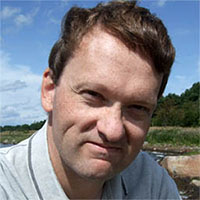
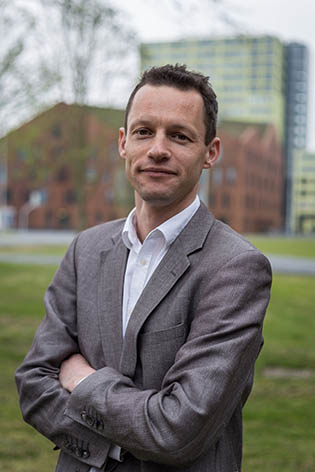
Raymond Cheng is a Researcher and blockchain lecturer with a focus on security, privacy, and distributed systems. He earned his Ph.D. in Computer Science from the University of Washington and holds degrees in Physics, Electrical Engineering, and Computer Science from MIT. His research spans blockchain scalability, privacy-preserving protocols, and decentralized infrastructure. Key projects include Kariba Labs , MASQ Foundation , and Open Source Observer , where he works on tools for public goods funding, secure smart contracts, and open-source analytics. Raymond's publications highlight advancements in blockchain-based databases (FalconDB), confidential smart contracts (Ekiden), and privacy-preserving messaging (Talek). His work often intersects with internet freedom and secure, scalable systems. He co-founded multiple organizations, including the Decentralization Institute and Public Goods Foundation , and has been featured in Forbes , Wired , and MIT Technology Review for his contributions to privacy and blockchain innovation.
Zihao Fu is a Research Assistant Professor at The Chinese University of Hong Kong (CUHK), specializing in Large Language Models (LLMs) and Natural Language Processing (NLP) . His work bridges computational methods with social sciences, focusing on model instability, repetition, hallucination, and algorithmic fairness. He has held research positions at the Oxford Internet Institute and the Language Technology Lab at the University of Cambridge. Education Ph.D. in Systems Engineering and Engineering Management (2017–2021), CUHK M.Eng. in Aeronautics and Astronautics (2012–2015), Beihang University B.Eng. in Automation Science (2008–2012), Beihang University His research explores the theoretical foundations of LLMs, addressing challenges like repetition , instability , and hallucination . He integrates linguistics , cognitive science , and fairness frameworks to enhance both foundational understanding and real-world applications of language technologies. Recent work includes biomedical NLP applications ( BAND dataset ), parameter-efficient model adaptation, and fairness toolkits ( OxonFair ). Zihao leads projects like BioCaster (disease outbreak monitoring) and CAM-Tool (cloud task distribution). He is actively mentoring postdoctoral researchers at CUHK and CUHK (Shenzhen), with expertise in machine learning , knowledge base integration , and parallel computing systems . His industry experience includes developing distributed algorithms at Alibaba Cloud’s PAI platform.
Eric Dieu is a Professor of Greek Language and Literature at the Université Toulouse – Jean Jaurès. His research focuses on Greek linguistics , philology , and comparative studies of Indo-European languages , with expertise in accentuation, morphology, semantics, and etymology. Positions: 2020–present: Full Professor at Toulouse; 2021–2022: Humboldt Research Fellow at Würzburg; 2009–2020: Maître de Conférences Research Themes Greek Accentuation: Monograph on Greek accentuation rules ( Traité d’accentuation grecque , 2022) Comparative Indo-European Studies: Investigates suppletion in Greek and IE languages, Hittite and Armenian connections Lexicology: Contributions to the Chronique d’Étymologie Grecque (25+ entries) Recent Publications include studies on Homeric philology, Greek toy terminology, and anthroponymic suffixation. His scientific awards comprise the 2023 Alfred Croiset Prize and 2008 Émile-Benveniste Publication Grant. Advising: Supervises PhD students Irène Maréchal (Greek adjectives) and Lise Patissou (Greek verb suffixes). Previously directed Toulouse’s Langues, Littératures et civilisations anciennes department (2019–2021).
Onur Güntürkün serves as Professor for Psychology at Ruhr University Bochum and holds a Permanent Fellowship at the Wissenschaftskolleg zu Berlin (Institute for Advanced Study). His academic career spans decades of pioneering research in comparative cognition, with a focus on evolutionary parallels between avian and mammalian cognitive systems. As a Permanent Fellow, he leads the "One Cognition" project investigating convergent evolution of cognitive abilities across species with vastly different neuroanatomies. Academic Background: Diploma in Psychology, Ruhr University Bochum Dr. phil. in Psychology, Ruhr University Bochum Güntürkün's research centers on the paradox of equivalent cognitive abilities emerging from radically different neural architectures—specifically how birds with tiny brains (3-25g) and no neocortex achieve cognitive feats matching chimpanzees. His work demonstrates that corvids and parrots exhibit identical cognitive capabilities to primates in working memory, problem-solving, and social cognition. He investigates whether algorithmic constraints or neural implementation bottlenecks drive this convergence, using working memory as a model system due to its well-defined parameters across species. His experimental approach integrates behavioral studies with neural circuit analysis to uncover universal principles of cognitive evolution. Analysis of his publication history reveals a consistent trajectory from foundational neuroanatomical studies toward theoretical frameworks for cognitive convergence. The most recent works (2021-2024) emphasize circuit-level homologies between avian pallium and mammalian neocortex, while earlier publications established birds as valid models for complex cognition. Key thematic clusters include neural lateralization mechanisms, sensory modality effects on cognition, and evolutionary constraints on information processing. His 2024 Trends in Cognitive Sciences paper synthesizes two decades of evidence showing birds solve mental problems using cognitive mechanisms nearly identical to mammals despite 300 million years of divergent evolution. Professional Recognition: Honorary Doctorate (Dr. h.c.) Güntürkün actively contributes to scientific discourse through invited colloquia, including an upcoming presentation at Wiko on November 25, 2025. While specific grant details aren't documented in the source material, his sustained research output and leadership in major projects indicate significant funding acquisition. His work bridges neuroscience, evolutionary biology, and cognitive psychology, fostering interdisciplinary collaborations evident in co-authored publications with researchers from diverse fields. As Principal Investigator of the "One Cognition" project, Güntürkün directs a research initiative examining why evolution repeatedly produces similar cognitive solutions across phylogenetically distant species. This work involves comparative analysis of neural circuits across avian and mammalian models, with particular focus on working memory constraints and neural implementation strategies. His laboratory at Ruhr University Bochum collaborates with international teams studying bird cognition, contributing to the growing paradigm shift recognizing avian intelligence as a powerful model for understanding universal cognitive principles.
Margaret Beissinger is a Research Scholar and Lecturer in the Department of Slavic Languages and Literatures at Princeton University. Her work bridges Balkan studies, Romani cultural practices, and oral tradition analysis. PhD in Folklore & Mythology (South Slavic and Romanian), Harvard University, 1984 AB in Folklore & Mythology, Harvard University, 1976 Her research focuses on Balkan oral epics , Romani music-making , and gender dynamics in southeastern European narratives . She has conducted extensive fieldwork in southern Romania since the 1980s, examining Romani musicians' roles as both marginalized and celebrated performers. Her publications reveal a trajectory from foundational studies on Romanian oral epic poetics to contemporary analyses of manele (Balkan ethnopop) and Romani adaptation in post-Communist societies. Key themes include identity negotiation , musical hybridity , and oral tradition survival in modernity.
Dr. Tiantai Deng is a Lecturer in Electronics and Digital Systems at the School of Electrical and Electronic Engineering , University of Sheffield (since 2021). His industrial background includes a senior research engineer role at HiSilicon/Huawei , where he focused on hardware architecture design for CNN, GEMM, and image/video processing on FPGAs/ASICs. Education: BEng, MSc, PhD Research interests span FPGA-based hardware acceleration , sparse processing architecture for CNN/GEMM, number system design , approximation computing , and high-level design environments . His work integrates algorithm-hardware co-optimization for efficiency in AI and mathematical computing. Recent publications emphasize neurodynamic systems for opinion modeling, parallel processing elements for ODE/AI acceleration, and low-power FPGA implementations for clustering/modulation classification. Earlier work addressed combustion dynamics and image processing pipelines. Contact: t.deng@sheffield.ac.uk | Office: G108, Sir Frederick Mappin Building, Sheffield S1 3JD | ORCID 0000-0003-4507-5746
Severin Reiz is a Researcher at the School of Informatics, Technische Universität München, affiliated with the Chair of Scientific Computing (SCCS). His work spans interdisciplinary domains, combining computational methods with mechanical engineering and machine learning. Research focus: Reactive flow modeling, hierarchical matrices, and optimization in neural networks. Teaching involvement: Tutorials for Modeling and Simulation, Quantum Computing, and Parallel Computing courses. Project roles: Main Developer of ExaNIML (2018-2020), Program Manager of SPPEXA (2017-2019). He has conducted research stays at institutions like the University of Texas at Austin (2018). Additional activities include organizing the SCCS Colloquium, leading a soccer department, and volunteering with the Münchener Flüchtlingsrat.
Daniel Boley is a Professor and Distinguished University Teaching Professor at the University of Minnesota, within the College of Science and Engineering, Department of Computer Science and Engineering. He serves as the Director of Graduate Studies for the Graduate Program in Data Science, which offers a Master's of Science and a Post-Baccalaureate Certificate. His office is located in Kenneth H. Keller Hall at 4-225C. Professor Boley's research spans computational methods in linear algebra, scalable data mining algorithms, and applications in systems biology and bioinformatics. His work focuses on scalable algorithms for convex optimization in machine learning, analysis of networks and graphs from metabolic biochemical networks, and wireless device networks. He has made significant contributions to numerical linear algebra methods for control problems, parallel algorithms, and iterative methods for matrix eigenproblems. His research interests also include algebraic models in systems and evolutionary biology, and biochemical metabolic networks. His recent publications demonstrate a strong focus on applying graph theory and network analysis to diverse domains including robot swarms, medical imaging (particularly for glioblastoma and COVID-19 diagnosis), and metabolic network analysis. His work bridges theoretical computer science with practical applications in biology and medicine, with a consistent emphasis on developing scalable computational methods. The trend shows increasing interdisciplinary collaboration, particularly with medical researchers. Distinguished Member by the ACM Top university award for post baccalaureate, graduate and professional education Distinguished University Teaching Professor title Professor Boley has advised numerous PhD students including Tatiana Lenskaia (2021), Shaozhe Tao (2018), Ham Ching Lam (2014), and others dating back to 1994. His research has been supported by various grants enabling work on scalable computation of elementary pathways through metabolic networks, Markov models of viral evolution, and scalable data mining algorithms for text analysis. He has developed software tools for clustering, dot plot visualization, and educational graphics. Professor Boley directs the Graduate Program in Data Science and has been involved in projects such as the Principal Direction Divisive Partitioning (PDDP) Project. His research group develops practical implementations of theoretical advances, including the PDDP clustering algorithm, Dot.py genome viewer, and various educational graphics tools for introductory programming courses. He maintains active collaborations across disciplines, particularly in bioinformatics and medical imaging applications.
Jonathan Attwood is an MRC Clinical Research Training Fellow and Honorary Clinical Teaching Fellow at Oxford Medical School, University of Oxford. He serves as a Medical Tutor at Harris Manchester College and is an Associate Fellow of the Higher Education Academy UK, with affiliations to St Hugh's College and Brasenose College through the Nuffield Department of Clinical Neurosciences (NDCN). His educational background: Medical degree from Oxford Medical School (2017) Exchange clerkship in neurology at Harvard Medical School Neurosurgery placement at UCSF His research integrates epidemiological, neuropsychological, and neuropathological methods to investigate the lifelong consequences of traumatic brain injury (TBI), particularly its links to neurodegenerative diseases like Alzheimer's. He examines how brain injuries lead to long-term physical and mental health issues, neural recovery mechanisms, and protein misfolding pathways causing dementia. His parallel work in art and neuroscience explores cognitive processes through museum-based experiments, revealing how artistic contexts illuminate brain function. His publication portfolio demonstrates a multidisciplinary trajectory spanning clinical sports neurology, TBI-dementia pathology, historical neurosurgery analysis, and cognitive perception studies. Recurring themes include longitudinal TBI outcomes, neurovascular hypotheses in neurodegeneration, and methodological innovations in real-world cognitive assessment. His scientific recognition includes: MRC Clinical Research Training Fellowship NIHR Academic Clinical Fellowship Teaching Excellence Award Tutor of the Term Award Attwood co-supervises student research projects and directs concussion education initiatives for healthcare students and athletes through the Concussion Legacy Foundation. His work is funded by competitive national fellowships supporting his DPhil in clinical neuroscience. He maintains active roles in the Oxford Traumatic Brain Injury Research Group and Neurodegeneration and Inflammation Research Group under the mentorship of Professors Gabriele De Luca, Edward de Haan, and Margaret Esiri.
Dr Allen Stroud is an Assistant Professor (Research) at Coventry University’s Research Centre for Peace and Security, Chair of the British Science Fiction Association, and an award-winning author whose creative practice informs his academic research. Education: PhD Creative Writing, University of Winchester (2017) – “Investigation and Application of Writing Structures and World Development Techniques in Science Fiction and Fantasy” Postgraduate Diploma Management Studies, Buckinghamshire New University (2009) MA Creative Writing, University of Bedfordshire (2005) Postgraduate Certificate Learning & Teaching in Higher Education, Buckinghamshire New University (2004) Research Interests: Stroud’s research explores the intersection of speculative fiction and real-world strategic foresight. He deploys narrative world-building techniques—traditionally confined to genre writing—as practical tools for forecasting, scenario planning and myth construction. Particular emphases include the representational politics of disability in science fiction, the referential qualities of fantasy texts, and the pedagogical value of creative practice. Recent Publications Overview: Across 2020-2024 Stroud has published fifteen major works, ranging from the nine-volume Fractal Series (hard-science space opera) to critical reference texts such as the Historical Dictionary of Fantasy Literature . Collectively these outputs examine future space colonisation, corporate-political conflict, terrorism, energy security and post-human ethics. Parallel scholarly articles investigate game narrative, futures methodologies and genre historiography. Scientific Awards: Outstanding Contribution to Research, Coventry University (2016) Grants & Research Leadership: Principal Investigator, Creative Futures Phase 1 (2022-2023) – DSTL & Coventry University partnership embedding science-fiction writers within UK Ministry of Defence futures analysis. Member, Resilience Beyond Observed Capabilities (RBOC) Network. Regular contributor, Technology & Innovation Executive Roundtable (TIER). Creative Labs & Editorial Roles: Stroud leads cross-media teams developing game narratives and transmedia storyworlds. He served as Lead Writer for Snapshot Games ( Chaos Reborn , Phoenix Point ), Frontier Developments ( Elite: Dangerous ) and Larian Studios ( Baldur’s Gate 3 ). He is editor of the British Fantasy Society Journal and chaired FantasyCon 2017-2018.
Lei Chen is a Chair Professor and Director of HKUST Big Data Institute at the Hong Kong University of Science and Technology , where he has served since 2005. His research spans data-driven machine learning , crowdsourcing systems , and uncertain database processing , with notable contributions in privacy-preserving spatial queries and graph neural networks . Ph.D. in Computer Science, University of Waterloo (2004) MS in Computer Science, Asian Institute of Technology (1997) BS in Computer Science, Tianjin University (1994) His work focuses on: Spatial Crowdsourcing - Efficient task assignment and privacy frameworks Graph Processing - Novel indexing for heterogeneous networks Explainable AI - Human-centric model interpretation techniques Uncertain Data - Probabilistic query processing with crowdsourcing Recent publications cluster around secure data federation , distributed graph training , and privacy-preserving mobility systems , reflecting his leadership in ACM and IEEE communities. Students include 15 active Ph.D. candidates and 20+ graduated researchers now at institutions like BeiHang University and Huawei Noah's Ark Lab . Awards: ACM Fellow (2024), VLDB Best Paper (2022), SIGMOD Test-of-Time Award (2015).
Christoph Breunig is a Professor in the Department of Economics at the University of Bonn. His work bridges theoretical econometrics with empirical applications, focusing on nonparametric methods, instrumental variable modeling, and causal inference. His research addresses challenges in high-dimensional data, missingness mechanisms, and treatment effect estimation. University: University of Bonn Department: Economics Academic Rank: Professor Email: cbreunig@uni-bonn.de Research Trends: Nonparametric and semiparametric estimation techniques Applications of instrumental variables in causal inference Handling missing data and measurement error High-dimensional statistical models with economic applications Specification testing in complex regression frameworks Connections between microeconomic theory and empirical methods
Erik Lindahl is a Professor at Stockholm University with a co-affiliation at KTH Royal Institute of Technology. He leads a research group at SciLifeLab focused on membrane proteins, particularly ion channels and pumps that transport ions for nervous system functioning. His work bridges computational and experimental approaches in biophysics. Dr. Lindahl's research spans multiple disciplines within biophysics and computational biology. His team uses bioinformatics to build models of human receptors based on bacterial structures, biomolecular simulations to understand molecular-level interactions, and experimental techniques like electrophysiology and spectroscopy. Key research areas include voltage-gated ion channels, ligand-gated ion channels, ATPase pumps, and allosteric modulation. His group has made significant contributions to understanding how these molecular machines function at the atomic level. The recent publications reveal a strong focus on the structural and functional mechanisms of ion channels and membrane proteins. His work combines molecular dynamics simulations with experimental validation, particularly in the areas of voltage sensing, alcohol modulation of receptors, and ion pump mechanisms. The publications demonstrate expertise in both computational methodology development and biological application. Dr. Lindahl leads a substantial research group with multiple PhD students, postdocs, and researchers. His team collaborates extensively, as evidenced by the multi-institutional authorship on his publications. He also contributes to major methodological developments in computational biophysics, most notably through his involvement with the GROMACS molecular simulation package. The research group operates at the intersection of several laboratories and facilities, leveraging both computational resources and experimental setups for electrophysiology and structural biology. This integrated approach allows the team to tackle complex questions about membrane protein function from multiple angles, combining theoretical modeling with empirical validation.
Alex Psomas is an Assistant Professor in the Department of Computer Science at Purdue University, directing research at the intersection of computer science and economics. His work develops algorithmic solutions for fair resource allocation, with applications to food rescue networks and social welfare systems. Funded by NSF and Google, his lab collaborates with non-profits including 412 Food Rescue. Research combines theoretical computer science with practical implementations, particularly in dynamic fair division and mechanism design. Current projects develop AI systems for equitable food distribution through the Indy Hunger Network partnership. Recent publications advance multi-agent resource allocation with work appearing in NeurIPS, EC, and ACM Transactions. The 2024 EAAMO paper received Best Student Paper honors for its impact on food insecurity interventions. Major Recognition: NSF CAREER Award for algorithmic fairness research Google AI for Social Good Award MEGA-ACE grant for blockchain applications The Purdue AI for Social Good Lab develops open-source tools deployed in food banks nationally. PhD students investigate approximation algorithms for combinatorial optimization problems.
Daan Crommelin holds a part-time professorship in Numerical Analysis and Dynamical Systems at the KdV Institute for Mathematics, University of Amsterdam, and is a senior researcher at CWI Amsterdam's Scientific Computing group. He serves on CWI's management team and previously led its Scientific Computing group (2013–2021). His research focuses on stochastic modeling of multiscale systems, uncertainty quantification, and rare event analysis, with applications in climate science, renewable energy, and fluid dynamics. Crommelin combines methods from scientific computing, applied probability, and dynamical systems to address challenges in atmosphere-ocean-climate modeling. He has contributed to projects like the EU-funded VECMA initiative for exascale computing and collaborated on superparameterization techniques for climate models. His work also extends to epidemic modeling and computational chemistry. Crommelin earned his PhD in 2003 from Utrecht University, with a thesis co-supervised by KNMI, and holds an MSc in theoretical physics and an MA in philosophy from the University of Amsterdam.




.jpg)