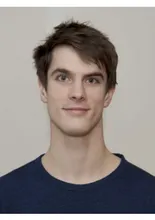
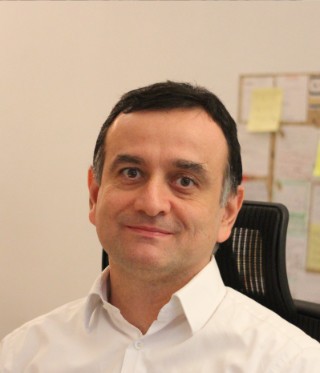
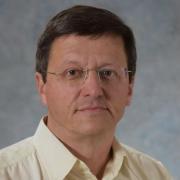
Stepan Vanecek is a Doctoral Candidate and Scientific Employee at the Chair of Computer Architecture and Parallel Systems within Technische Universität München . His work spans software tool development, performance analysis, and HPC system optimization. Research focus on HPC architecture, quantum computing integration, and heterogeneous memory systems Active in performance modeling, GPU bottleneck detection, and hardware topology representation Led development of tools like sys-sage and GPUscout Research Trends from recent publications show: Quantum-HPC system integration frameworks Dynamic hardware topology modeling GPU memory bottleneck visualization Heterogeneous computing optimization techniques Scientific Recognition : Hans Meuer Award (ISC'25) for quantum-HPC research Student Mentorship : Supervised 17+ theses (6 MA, 11 BA) since 2022, including GPU performance analysis, sys-sage API development, and heterogeneous system evaluation projects.
Ludmila Pöppel is a Professor at Stockholm University , affiliated with the Department of Slavic and Baltic Languages, Finnish, Dutch and German . Her research focuses on discourse analysis , lexical semantics , phraseology , and corpus linguistics , often intersecting with political discourse and construction grammar . Research Themes: Analyzing near-synonyms in Russian (e.g., беспорядки vs. волнения), combinatorial properties of words, and semantic shifts in political terminology like революция (revolution) vs. переворот (coup). Key Projects: Leadership in the TELICORE collaboration between Stockholm University, Higher School of Economics (Russia), and Ilia State University (Georgia), and contributions to the Russian-Swedish dictionary database for discursive units. Publications: Her work spans corpus-driven studies of Russian constructions (e.g., дело в том, что, то-то и N), their cross-linguistic parallels, and the pragmatic functions of focus particles. She emphasizes empirical data from Sketch Engine and the Russian National Corpus to identify language-specific features. Advising: Supervises doctoral students and numerous undergraduate and master's theses, integrating her research on political discourse into teaching at all levels, including courses on corpus linguistics and lexical semantics . Labs/Networks: Member of the Language and Power Network , analyzing how language shapes political narratives in polarized climates.
Adam Abate is a Professor in the Department of Bioengineering and Therapeutic Sciences at the University of California San Francisco (UCSF), with affiliations to the UCSF-UC Berkeley Joint Graduate Group in Bioengineering , Biophysics Graduate Program , and Quantitative Biosciences Institute . His laboratory develops droplet-based microfluidic technologies for high-throughput biological applications including directed evolution , single-cell analysis , and genomic sequencing . He also co-founded biotech companies GnuBIO, Inc. and Mission Bio . PhD in Physics of Soft Materials (University of Pennsylvania, 2006) Research keywords: Microfluidics , Directed Evolution , Single-Cell Analysis , Soft Condensed Matter Physics , Drug Encapsulation , Digital Biology His work enables massively parallel biochemical assays in picoliter droplets, achieving thousands of reactions per second with minimal reagent consumption. Key applications include PCR-activated cell sorting , metagenomic analysis , and epigenomic profiling of tumors . Selected scientific awards: NIH New Innovator Award (2014-2019) NSF CAREER Award (2013-2018) White House Presidential Early Career Award World Economic Forum recognition Stanley A. Marks Scholar (Harvard University)
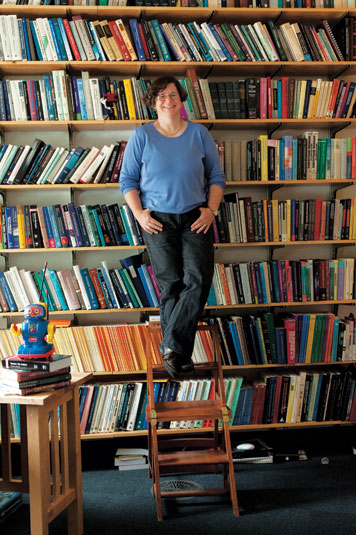
Leslie Kaelbling serves as the Panasonic Professor in MIT's Department of Electrical Engineering and Computer Science (EECS) and Director of Research for the MIT Quest for Intelligence, while also holding an investigator position at the Computer Science and Artificial Intelligence Laboratory (CSAIL). Her academic background includes a BA in philosophy and PhD in computer science, both earned at Stanford University. Professor Kaelbling's research centers on building intelligent robots capable of operating in uncertain environments through advanced learning, state estimation, and planning techniques. Her work bridges theoretical AI foundations with practical robotics applications, focusing on creating systems that adapt to complex real-world scenarios through probabilistic reasoning and decision-making under uncertainty. Analysis of her recent publications reveals a strong trajectory toward integrating foundation models with robotic planning systems, particularly leveraging vision-language models for constraint inference and diffusion models for task-motion planning. Her research increasingly emphasizes uncertainty quantification, neuro-symbolic representations, and sample-efficient learning methods for long-horizon manipulation tasks. Key scientific recognitions include: Fellow of the Association for the Advancement of Artificial Intelligence (AAAI) Founder and inaugural Editor-in-Chief of the Journal of Machine Learning Research As Director of Research for the MIT Quest for Intelligence, she leads strategic initiatives advancing human and machine intelligence research, fostering cross-laboratory collaborations between CSAIL, neuroscience, and cognitive science groups to develop next-generation AI systems. Her leadership extends to shaping research directions in embodied intelligence and foundational learning algorithms.
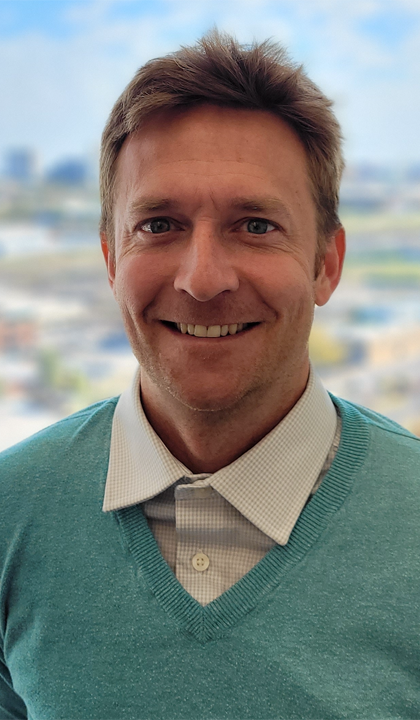
Stephen Ferris, Ph.D., is an Assistant Professor in the Department of Molecular Microbiology and Immunology at Saint Louis University School of Medicine. His laboratory is located at the Doisy Research Center in St. Louis, MO, where he leads research on fundamental immunological processes in cancer and autoimmune diseases. Dr. Ferris completed his Ph.D. and postdoctoral training at Washington University in St. Louis, specializing in immune responses to self-antigens. His research bridges cancer immunology and autoimmunity, with parallel investigations into tumor neoantigens and Type 1 Diabetes mechanisms. Research Focus: The Ferris Lab employs transgenic mouse models, CRISPR-based genetic manipulation, and advanced flow cytometry to study: Requirements for immune responses against cancer self-antigens Failure mechanisms of tumor rejection in patients Aberrant immune activation in Type 1 Diabetes Shared pathways between autoimmune disorders and cancer immunity Experimental approaches include NOD mouse models, tumor cell line studies, and in vitro/in vivo immune cell functional assays. Publication Trends: Recent articles (2022-2025) demonstrate consistent focus on dendritic cell biology (cDC1/cDC2 subsets), T cell regulation in tumor microenvironments, genetic control of immune cell development (Zeb2/Irf8 enhancers), and immunotherapy optimization. Sex differences in immune responses and metabolic influences on immunosurveillance emerge as recurring themes.
Prof. Dr. Marcel Honegger is a Lecturer in Robotics and Mechatronics at the Institute of Mechatronic Systems within the School of Engineering at Zurich University of Applied Sciences (ZHAW). He co-leads the Institute and focuses on the development of robot systems, drive controls, and control/regulation software for robotics and mechatronics. Ph.D., ETH Zurich (1996-1999) Dipl. Mech. Eng., ETH Zurich (1990-1996) His research spans robotics, mechatronics, and control systems, with recent work on predictive maintenance using autoencoder-based anomaly detection for delta robots and RGBD segmentation for agricultural automation. Earlier projects involved adaptive controllers for parallel manipulators and Java frameworks for robot control systems. Honegger has led projects such as the full automatic sprinkler robot (FASR) and the Advanced Rail Track Information System . He previously worked as a Senior R&D Engineer at CSEM Alpnach (2001-2009) and Project Manager at maxon motor ag (2009-2014). His publications reflect expertise in industrial automation, sensor integration, and mechanical design. He is involved in teaching and R&D collaborations, with an ORCID ID: 0009-0004-8178-136X.
Lecturer Ahmet Ağaoğlu is affiliated with Yeditepe University, where he has served in the Faculty of Engineering and Architecture , Department of Mechanical Engineering , since 2016. He teaches undergraduate and graduate courses in mechanical engineering and computational methods. Education: PhD in Mechanical Engineering (2018), Yeditepe University Master's in Mechanical Engineering (2010), Yeditepe University BSc in Mechanical Engineering (2007), Yeditepe University Research interests include robotics, engineering optimization, and numerical analysis, with a focus on parallel manipulators and rehabilitation platforms for disabled individuals. His work spans computational modeling, precision micromachining, and practical applications in mechanical systems. Publications and projects highlight his expertise in workspace optimization algorithms (ASME 2010) and the design of a rehabilitation platform for mobility assistance (2011). Though limited in number, these outputs reflect interdisciplinary applications of mechanical engineering principles. Teaching duties encompass courses such as Engineering Project , Introduction to Mechanical Engineering , and Numerical Analysis , delivered in English across multiple academic terms since 2016.
Professor Angela Moles is a plant ecologist at the University of New South Wales (UNSW Sydney), where she holds the rank of Professor in the School of Biological, Earth and Environmental Sciences (BEES). She is Acting Director of “Inspiring Ecology Teaching” for the Ecological Society of Australia, Chair of the BEES Equity, Diversity and Inclusion committee, and serves on the NSW Threatened Species Scientific Committee, the NSW Biodiversity Conservation Advisory Panel, and the ARC College of Experts. Education Postgraduate Diploma in Higher Education (Learning & Teaching), Macquarie University, 2006 PhD in Ecology, Macquarie University, 2004 BSc(Hons) in Botany & Ecology, Victoria University of Wellington, 1997 Research Focus Professor Moles leads the Big Ecology Lab , an international and highly collaborative group that tackles large-scale questions in plant ecology and global change biology. Her team combines field experiments, synthesis of global datasets, glasshouse studies of rapid evolution, and analyses of herbarium and seed-bank specimens. Core themes include: How Australian plant communities are responding to rapid climate change The ecology and evolution of introduced species, including whether some are evolving into new ‘native’ species Global patterns in seed ecology, plant–animal interactions, and plant defence strategies Quantifying selective processes that generate worldwide variation in plant form and function Research Outputs & Trends With >170 peer-reviewed publications, her recent work (2022–2025) is dominated by studies on climate-driven shifts in flowering phenology, the evolution of invasiveness, global gradients in seed traits, and novel methodological advances—from non-destructive chlorophyll spectrometry to citizen-science training apps. These studies collectively inform both fundamental ecology and practical conservation under rapid global change. Awards & Honours Distinguished Fellow, International Biogeography Society (2022) Nancy Millis Medal for Women in Science, Australian Academy of Science (2021) Frank Fenner Prize for Life Scientist of the Year (2013) Australian Ecology Research Award, Ecological Society of Australia (2018) Edgeworth David Medal, Royal Society of NSW (2010) L’Oréal-UNESCO For Women in Science Fellowship (2008) Research Supervision & Funding Professor Moles has supervised 20+ PhD and >30 honours students to completion. Current PhD candidates include Karen Zeng, Giancarlo Chiarenza, Joe Atkinson, Frederick Dadzie, Inna Osmolovsky, Marcus Greenwood, and Iain Campbell. Her lab’s research is supported by the Australian Research Council (ARC), Hermon Slade Foundation, and industry partners. She actively seeks motivated graduate students interested in large-scale ecology, invasion biology, or climate-change impacts. Laboratory & Facilities The Big Ecology Lab is housed in the Biological Sciences Building (D26, 4th floor east) and the Samuels Building at UNSW. Facilities include controlled-environment glasshouses, field experimental sites across Australia and >75 global study locations, and access to Australia’s herbaria and seed banks. Weekly lab meetings and an inclusive, collaborative culture are hallmarks of the group.
Ali Emre Turgut is an Associate Professor at Middle East Technical University (METU) in Ankara, Turkey. His research intersects robotics, control systems, and bio-inspired design, with a focus on swarm robotics, UAVs, and complex systems. He maintains a formal email address ( aturgut@metu.edu.tr ) and an online presence at users.metu.edu.tr/aturgut . Education B.Sc. in Electrical Engineering, METU (1996) M.Sc. in Electrical Engineering, METU (1999) Ph.D. in Electrical Engineering, METU (2008) Research Interests center on swarm robotics , mechatronics , and unmanned aerial vehicles (UAVs) . His work explores self-organization in robotic swarms, bio-inspired control mechanisms, and adaptive systems for complex environments. Key themes include: Swarm intelligence for collective motion and task specialization Design and control of aerial and legged robots Applications in environmental monitoring, manufacturing, and biological interaction Publication Trends highlight his leadership in swarm robotics, with recent works addressing predictive flocking algorithms, biohybrid platforms, and exoskeleton-assisted motor learning. His studies often integrate hardware design with computational models. Advising and Grants information is unavailable in the provided texts, though his active research role since 2008 suggests significant contributions to graduate training and funded projects in robotics.
Xiaokang Qiu is an Associate Professor at the Elmore Family School of Electrical and Computer Engineering , Purdue University , with a Ph.D. in Computer Science from University of Illinois at Urbana-Champaign (2013). His research focuses on Programming Languages and Software Engineering , particularly theories, algorithms, and tools for program synthesis, verification, and logic-based analysis. Research Interests His work addresses: Formal methods for heap-manipulating programs using separation logic Automated deduction and decision procedures for data structures Syntax-guided synthesis of concurrent and bit-vector programs Integration of machine learning with formal verification Scalable verification of hardware memory consistency Network protocol optimization through program synthesis Recent Publications Recent work includes PLDI 2025 on concurrent string synthesis, POPL 2024 on bit-vector synthesis, and POPL 2023 on comparative network design. His tools like STRAND and VCDryad enable automated verification of complex data-structure manipulations. Grants & Awards Recipient of: NSF SHF Small Award (2024, co-PI, $593K) NSF FMitF Award (2023, PI, $750K) Tenure at Purdue (2023) Professional Service Active in program committees for PLDI , POPL , CAV , and ATVA conferences. Developed tools like DryadSynth (PLDI 2020), ImpSynt (OOPSLA 2017), and JSketch (ESEC/FSE 2015).
Alvo Aabloo is a Full Professor at the University of Tartu's Institute of Technology, where he leads the Intelligent Materials and Systems Laboratory (IMS Lab). His affiliations include a postdoctoral position at Uppsala University (1995–1996) and ongoing roles at the University of Tartu since 2005. The IMS Lab, accessible via www.ims.ut.ee , specializes in electroactive polymers, biomimetic robotics, and sustainable materials. His research integrates Advanced Materials , Nanotechnology , and Soft Robotics , with emphasis on: Biomimetic actuators (e.g., spider-leg exoskeletons, plant-inspired fluid transport) Ionic polymer-metal composites for precision manipulation Acoustic metamaterials for noise control Green sensors using bacterial cellulose and bio-derived ionic liquids Recent publications (2022–2025) reveal trends in: Robotics education tools (ROS2 web labs, 3D-printable robots) Programmable metamaterials for environmental applications Textile-based encoding and wearable compliance modulation He pioneers sustainable tech, such as all-printed micro-supercapacitors and biodegradable artificial muscles, while collaborating globally on projects spanning Italy, China, and Sweden.
Stephen Chong is a Gordon McKay Professor of Computer Science in the Harvard John A. Paulson School of Engineering and Applied Sciences, where he serves as Co-Director of Undergraduate Studies for Computer Science. His academic career spans over a decade of teaching and research at Harvard, where he has made significant contributions to programming languages and information security. Chong received his PhD from Cornell University under the guidance of Andrew Myers, and a bachelor's degree from Victoria University of Wellington, New Zealand. Prior to graduate school, he worked as a consultant and contractor in the software industry, bringing practical experience to his academic research. Professor Chong's research focuses on language-based information security, using programming language techniques to provide information security assurance. His work bridges the gap between theoretical foundations and practical applications, developing tools and frameworks that help programmers write trustworthy programs. His research has evolved to address increasingly complex security challenges in modern computing environments, from web applications to cyber-physical systems. His recent publications reveal a strong trend toward integrating advanced programming language techniques with security analysis, particularly through the use of Datalog, SMT solvers, and program synthesis. His work on Formulog has been particularly influential, extending Datalog with mechanisms to construct and reason about SMT formulas for static analysis. His research has expanded to address security challenges in cyber-physical systems, where sensor attacks pose unique threats to safety-critical infrastructure. Chong has received numerous prestigious awards including an NSF CAREER award, an AFOSR Young Investigator award, and a Sloan Research Fellowship. He has also served in leadership roles for major conferences including CSF 2012-2013, PLMW @ PLDI 2021, and as SIGPLAN-M Chair for 2025-2026. As an educator, Chong has mentored numerous students through Harvard's undergraduate research programs and has served as a thesis advisor. His teaching portfolio includes foundational courses like CS51, systems courses like CS61, and advanced topics in programming languages (CS152) and compilers (CS1530). He has been instrumental in shaping Harvard's computer science curriculum, particularly in security and programming languages. Chong leads a research group focused on language-based security, with projects including Formulog (for SMT-based static analysis), PRINCESS (for autonomous adaptation of software), and work on secure shell scripting (Shill). His group collaborates with researchers across Harvard and other institutions to tackle challenging problems at the intersection of programming languages and security.
Prof. Amir Boag is a Professor in the Physical Electronics Department of the School of Electrical Engineering at Tel Aviv University. He received his B.Sc. and B.A. degrees Summa Cum Laude in 1983, M.Sc. in 1985, and Ph.D. in 1991, all from the Technion - Israel Institute of Technology. His academic journey includes faculty positions at the Technion (1991-1992), a Visiting Assistant Professorship at the University of Illinois at Urbana-Champaign (1992-1994), and industry experience at Israel Aircraft Industries (1994-1999) before joining Tel Aviv University in 1999. Prof. Boag's research focuses on computational electromagnetics and acoustics, specializing in numerically efficient algorithms, beam representations of fields, radar imaging techniques including Synthetic Aperture Radar, quantum-electromagnetic simulations, and antenna/nano-antenna design. His work bridges theoretical developments with practical applications in electromagnetic and acoustic systems. His research group comprises over ten graduate students working on cutting-edge problems in wave physics. Prof. Boag has published more than 130 journal articles and presented over 300 conference papers. He has been instrumental in organizing the Tel Aviv University Antenna Symposium and Underwater Acoustics Symposium, with the 13th Underwater Acoustics Symposium scheduled for October 23, 2025. IEEE Fellow (2008) for contributions to integral equation based analysis, design, and imaging techniques Fellow of the Electromagnetics Academy Former Associate Editor for IEEE Transactions on Antennas and Propagation Holder of approximately ten patents in electromagnetics and antenna design Prof. Boag's research demonstrates strong continuity in developing efficient numerical methods for electromagnetic and acoustic problems, with increasing focus on quantum-electromagnetic interactions and nano-scale applications in recent years. His work maintains strong connections between fundamental theory and practical engineering applications, particularly in radar and imaging systems.
Luc Rolland is a Lecturer at the University of the West of Scotland, affiliated with the School of Computing, Engineering and Physical Sciences. He has maintained an active research profile since 1996 with recent collaborations at Centrale Nantes, Memorial University, and other international institutions. His research focuses on high-performance robotics systems design across multiple application domains. Rolland's work spans material handling systems, high-speed milling machinery, solar tracking mechanisms, palettizing solutions, reconfigurable robots, and stair-climbing platforms. His expertise extends to robot modeling, simulation, and control systems with particular emphasis on path planning and path pursuit certification. Recent publications (2021-2023) demonstrate a strategic expansion into healthcare robotics, decontamination systems, and autonomous vehicle validation. His work shows strong interdisciplinary connections between mechanical engineering, environmental science, and public health applications, particularly in ozone-based decontamination systems and UAV technology. Advanced robotics system design and implementation Parallel manipulator development for specialized applications UAV path planning and sense-and-avoid systems Hydrogen fuel cell systems for maritime applications Validation methodologies for autonomous vehicle features Rolland actively supervises three PhD students on projects related to UAV path planning, sense-and-avoid systems, and hydrogen-powered ship design. His research collaborations span Memorial University of Newfoundland, Centrale Nantes, and other international institutions. He has served as a visiting researcher at Ostfalia University of Applied Sciences and Changchun Institute of Technology, while also hosting academic visitors and providing peer review services for academic journals.
Dr. Chloe Porter serves as Reader in English Literature within the Department of English at the University of Sussex's School of Media, Arts and Humanities. Her academic profile centers on early modern drama with specialized expertise spanning Shakespeare, Marlowe, and Aphra Behn, approached through innovative frameworks of visual and material culture. Her research investigates dramatic representations of making, creation, and coming-into-being across early modern theater. The foundational monograph Making and Unmaking in Early Modern English Drama (2013) established her examination of unfinished images and artistic processes within post-Reformation contexts, arguing that concepts of completion carried transgressive associations for Renaissance playwrights. Current scholarship focuses on narratives of beginnings—including creation myths, birth depictions, and political/religious foundation stories—with related publications in Textual Practice analyzing John Lyly's work. A parallel project explores Aphra Behn's strategic appropriations of Shakespeare, particularly her adaptation of The Tempest to examine imperial collapse in The Emperor of the Moon . Dr. Porter maintains an active teaching schedule including convening 'Staging the Renaissance: Shakespeare' and 'Living & Dying: Medieval to Renaissance,' tutoring 'Thinking Literature,' supervising dissertations, and lecturing on 'Reading Literature 2.' Her scholarly output demonstrates consistent engagement with material culture methodologies across 17 publications including monographs, edited collections, journal articles, and book chapters. Office hours are held Tuesdays 2-4 pm in room 229 (Arts B Building), with supervision available for graduate research in her specialized fields.