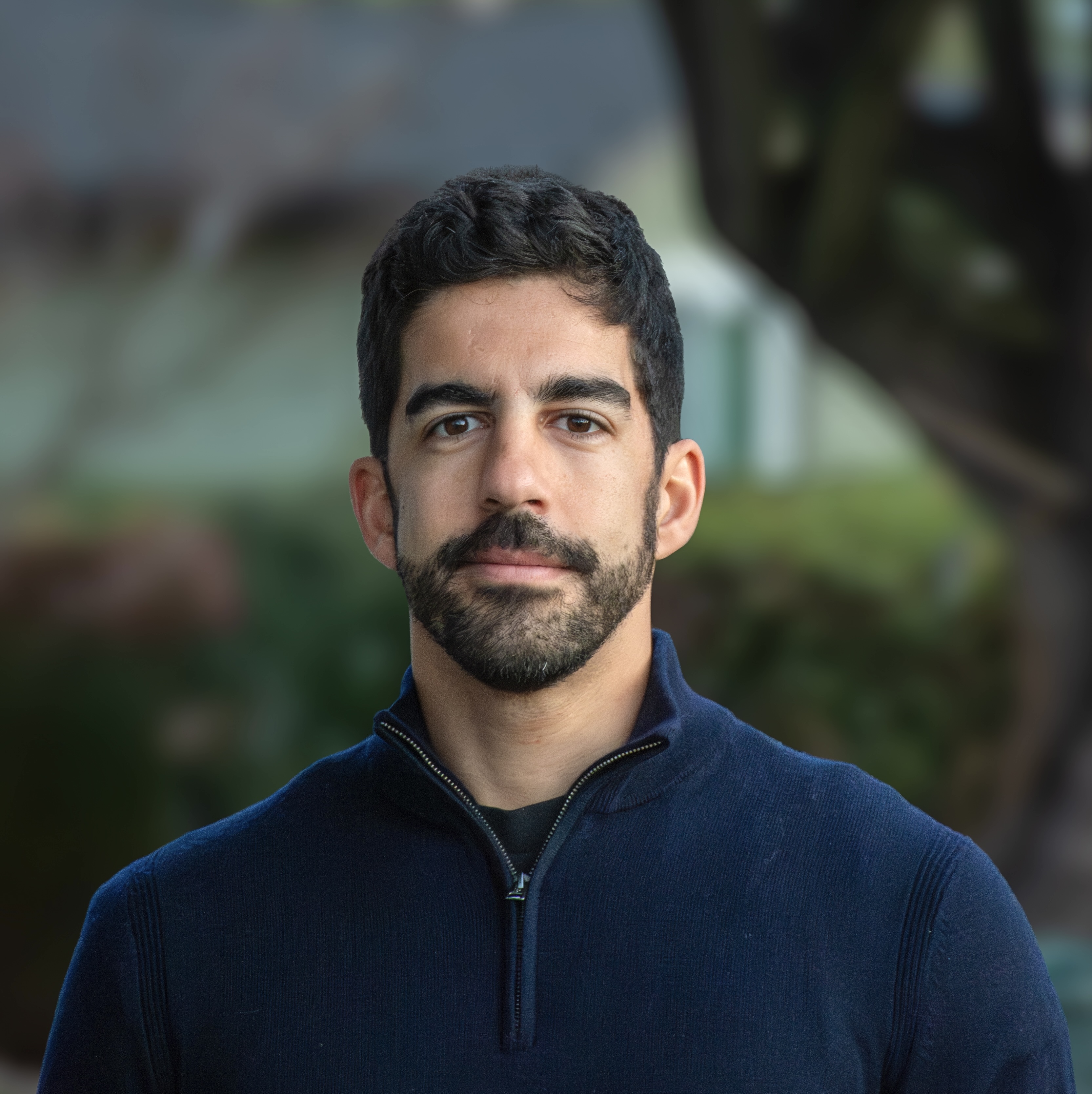
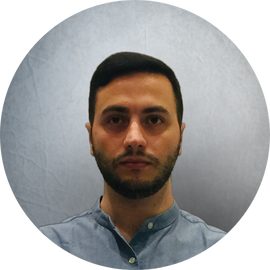
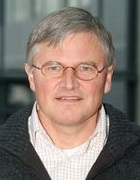
Yannis Chronis is an incoming Assistant Professor at the Department of Computer Science , ETH Zurich (starting August 2025), where he will join the ETH Systems Group . Prior to this, he spent 3 years as a Systems Researcher at Google's Systems Research Group in Sunnyvale, USA. He holds a Ph.D. in Computer Science from the University of Wisconsin-Madison (advised by Prof. Jignesh Patel) and a Bachelor's/Master's from the University of Athens, Greece (advised by Prof. Yannis Ioannidis). His research focuses on optimizing databases and data processing for modern hardware through software-hardware co-design. Key areas include database efficiency in memory-centric architectures, learned query optimizers, and cloud resource management. His work is supported by a Facebook Fellowship and has been recognized with the EDBT 2016 Medal for best paper. Teaching: Taught CS 564 - Database Management Systems at UW-Madison (Spring 2022). Service: Served on program committees for SIGMOD, VLDB, CIDR, and others, and chairs the CIDR Proceedings Committee. Key Publications: His recent work includes studies on memory-centric computing for databases, cardinality estimation benchmarks, and adaptive query processing techniques.
Ugur Cetintemel is the Khosrowshahi University Professor of Computer Science at Brown University, where he has been since completing his PhD at the University of Maryland in 2001. His research focuses on data management systems, database systems, distributed systems, and stream processing, with recent work integrating AI techniques into database systems. He teaches courses such as Database Management Systems and Data Science fundamentals. Notable contributions include the Aurora and Borealis stream processing engines, S-Store for transaction processing, and DBPal for natural language interfaces. His work emphasizes scalable, efficient systems for large-scale data challenges. Education: PhD in Computer Science, University of Maryland, 2001 MS in Computer Science, Bilkent University, 1996 BS in Computer Science, Bilkent University, 1994 Research Interests: Data management, stream processing, distributed systems, predictive analytics, and AI integration with databases. Key projects include optimizing database systems for modern hardware, developing real-time stream processing frameworks, and exploring interactive data exploration techniques. Grants & Advising: Extensive contributions to grants and collaborations, though specific grant details are not listed. Supervises graduate students in areas like database systems and machine learning integration. Part of the Brown Data Management Group. Labs/Teams: Leads research within the Brown Data Management Group, focusing on advancing database systems for big data and real-time analytics.
Elaine Shi is a Professor with a joint appointment in the Computer Science Department (CSD) and Electrical and Computer Engineering (ECE) at Carnegie Mellon University. She is also an Adjunct Professor of Computer Science at the University of Maryland. Her research focuses on cryptography, security, mechanism design, algorithms, blockchains, and programming languages. She co-founded Oblivious Labs, Inc., and her work on Oblivious RAM and differential privacy has been adopted by Signal, Meta, and Google. Education: Not explicitly listed, but her academic roles imply advanced degrees in computer science. Research Interests: Shi's work spans foundational areas such as secure computation, privacy-preserving algorithms, and blockchain protocols. She emphasizes practical implementations, such as Oblivious RAM and cryptographic compilers like Viaduct. Her research also explores game-theoretic mechanisms for decentralized systems and explores the intersection of theory and practice in secure distributed systems. Publications: Over 150+ articles in top venues like Eurocrypt, S&P, and CCS, covering topics like oblivious algorithms, blockchain security, and differential privacy. Recent work includes optimizing obfuscation, secure aggregation, and transaction fee mechanisms. Packard Fellow, Sloan Fellow, ACM Fellow, IACR Fellow Co-founder of CMU's Crypto Group and Crypto Seminar Series Advising & Grants: Supervises a large group of students and postdocs, with notable alumni holding academic and industry roles. Active in securing grants for research in secure computation and blockchain technologies. Labs & Teams: Leads research in Oblivious Labs and collaborates on projects like the Viaduct compiler and secure enclaves for privacy-preserving computation.
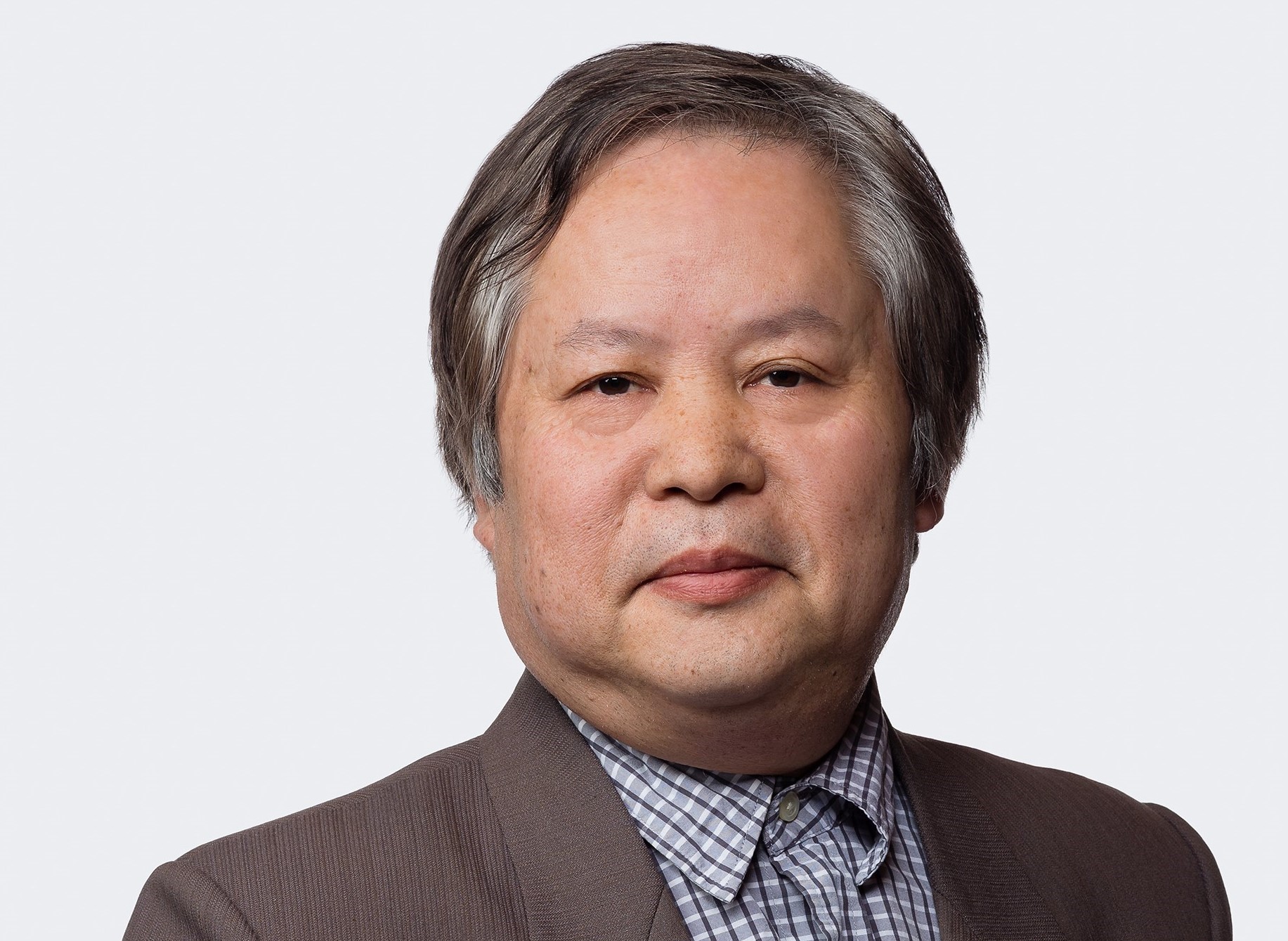
Dr. Song Jiang is a Professor in the Department of Computer Science and Engineering at The University of Texas at Arlington (UTA). He holds a PhD from the College of William and Mary (2004) and has held academic positions at institutions such as Wayne State University and Los Alamos National Laboratory. His research focuses on system infrastructure for large language models (LLMs) and big data processing, including GPU/CPU memory systems, file and storage systems, and high-performance computing (HPC) I/O systems. He has received significant funding from the National Science Foundation (NSF) and industry partners like VMware and Tencent. Education: B.S. and M.S. from University of Science and Technology of China (1993, 1996), Ph.D. in Computer Science from College of William and Mary (2004). Postdoctoral research at Los Alamos National Laboratory (2004–2006). Research interests include file and storage systems, data management, big data analytics, and optimizing computing architectures for AI/ML. Key contributions include the LIRS replacement algorithm (adopted in MySQL and NetBSD), CLOCK-Pro page replacement (used in Linux), and swap token algorithms (Linux kernel). Awards include the 2022 ACM SIGMETRICS Test of Time Award and 2009 NSF CAREER Award. His work has led to 15+ patents and impactful industry collaborations with Facebook, Baidu, and others. Advising: Supervised 14+ PhD/Master’s students, including current advisees Chen Zhong and Sujit Maharjan. Active roles in doctoral committees and thesis supervision. Grants: Over $2.5M in NSF funding for projects like 'Software Defined Cache for Index Search' and 'Taming Small Data Writes'. Industry grants include VMware’s $240K project on distributed key-value storage. Labs/Teams: Leads research on persistent memory systems, key-value stores, and LLM infrastructure through UTA’s CSE department and collaborations with industry partners.
CHAN Chee Yong is an Associate Professor in the Department of Computer Science at the School of Computing, National University of Singapore (NUS) . He earned his Ph.D. in Computer Science from the University of Wisconsin-Madison and holds B.Sc. and M.Sc. degrees in Computer Science from NUS. Education : Ph.D., Computer Science, University of Wisconsin-Madison M.Sc., Computer Science, NUS B.Sc., Computer Science (1st Class Honours), NUS His research focuses on database systems , emphasizing query processing and optimization , transaction management , and database usability . He has contributed extensively to XML data dissemination, skyline computation, and multicore database performance optimization, with publications in venues like ACM SIGMOD, VLDB, and IEEE ICDE. Recent publications show increasing emphasis on join optimization , transaction healing , and spatial-keyword queries , reflecting trends in multicore systems, complex query processing, and XML data management. His work combines theoretical rigor with practical applications in distributed databases and data engineering. Notable professional roles include Associate Editor for the VLDB Journal , ACM SIGMOD Record , and IEEE Transactions on Knowledge and Data Engineering . He has served on program committees for major conferences like SIGMOD, ICDE, and VLDB across 2003-2026. Dr. Chan has supervised 9 PhD students and 10 M.Sc./M.Comp. students , including WANG TaiNing (2021), LI Meiying (2020), and TRAN Quoc Trung (2011). His advisees have been placed in institutions like the Institute for Infocomm Research and Huawei Shannon Lab.
Yihan Sun is an Assistant Professor at the University of California, Riverside (UCR) since January 2020. He earned his Ph.D. in Computer Science from Carnegie Mellon University (CMU) , advised by Guy Blelloch , and holds a Bachelor's degree in Computer Science from Tsinghua University . Research Interests: Yihan Sun focuses on the theory and practice of parallel computing , including Parallel algorithms and data structures Write-efficient algorithms for Non-Volatile Memory (NVM) Computational geometry (range trees, Delaunay triangulations) Graph algorithms (SSSP, SCC, cluster-based BFS) Concurrent and persistent data structures Multi-version concurrency control (MVCC) with garbage collection Applications in databases, transactional systems, and computational biology Recent Research Trends: His work on join-based parallel balanced trees has been foundational, supporting four balancing schemes (AVL, red-black, weight-balanced, treaps) and enabling efficient implementations in graph analytics, spatial queries, and dynamic programming. Recent publications focus on output-sensitive algorithms , scalable graph libraries (PASGAL) , and pedagogical approaches to teaching parallel algorithms. Teaching: He teaches CS260 (Parallel Algorithms) at UCR and has served as a guest lecturer for MIT 6.886 (Algorithm Engineering) and CMU 15-859 (Algorithms in the real world) . He also contributed to algorithm education through a tutorial at the ACM Symposium on Principles and Practice of Parallel Programming (PPoPP 2019) . Labs & Collaborations: Yihan is a core contributor to the PAM (Parallel Augmented Maps) library, which has been integrated into systems like Aspen (graph-streaming) and C-trees . He collaborates with teams at CMU-Parlay , PBBS , and Ligra , with his code available on Github for community feedback.
Dr. Yangjun Chen is a Full Professor in the Department of Applied Computer Science at the University of Winnipeg, Canada. He holds a Ph.D. from the University of Kaiserslautern, Germany (1995). His research focuses on database systems, graph algorithms, computational complexity, and theoretical computer science. Key areas include Federated Databases, Deductive Databases, DNA Databases, and the P vs NP problem. Education: Ph.D. in Computer Science, University of Kaiserslautern, Germany (1995). Research interests span graph query processing, algorithm design, big data optimization, and NP-completeness. Recent work includes polynomial-time solutions for 2-MAXSAT and advancements in string matching algorithms for DNA databases. Publications highlight contributions to graph indexing, efficient reachability queries, and algorithmic efficiency in databases. His work often bridges theoretical foundations with practical database applications. Awards: Excellent Merit Award (2022-2023, 2021-2022) - University of Winnipeg Best Article, ACTA Scientific Computer Sciences (2022) Multiple Best Paper Awards at conferences like DBKDA 2016 and CyberC Summit Teaching includes Advanced Databases, Distributed Database Systems, and Algorithms courses at both undergraduate and graduate levels. Active in supervising research in database systems and theoretical computer science. Laboratory and team focus on database innovation, including projects on graph databases and efficient query processing techniques.
Laxman Dhulipala serves as an Assistant Professor in the Department of Computer Science at the University of Maryland, College Park, while also working as a research scientist at Google Research with the Graph Mining team. Dr. Dhulipala earned his Ph.D. from Carnegie Mellon University under Guy Blelloch's supervision and completed a postdoctoral fellowship at MIT with Julian Shun. His research centers on efficient parallel algorithms, particularly for parallel clustering and graph processing, along with developing computational models for emerging hardware technologies. His scholarly output demonstrates significant expertise across parallel computing domains, with particular emphasis on scalable graph algorithms, dynamic data structures, and computational geometry. Dr. Dhulipala's work bridges theoretical computer science with practical systems implementation, producing algorithms that achieve both theoretical optimality and real-world performance. His research group has made substantial contributions to benchmarking frameworks including the Graph Based Benchmark Suite (GBBS) and ParClusterers Benchmark Suite, establishing standardized evaluation methods for graph processing systems. The collective work shows progression from theoretical foundations to practical implementations that handle massive-scale datasets. Best Paper Award at SPAA 2022 Best Paper Runner Up at VLDB 2022 Distinguished Paper Award at PLDI 2019 Memorable Paper Award Finalist at NVMW'20 CMU's SCS Dissertation Award Honorable Mention As an educator, Dr. Dhulipala mentors numerous graduate students while teaching advanced courses in algorithm design and parallel computing. His research collaborations span multiple institutions including Carnegie Mellon University, MIT, and Google Research, reflecting his position at the intersection of academia and industry research.
Prof. Dr. Peter Sanders is a full professor in Theoretical Computer Science at the Karlsruhe Institute of Technology (KIT), leading the Algorithm Engineering group. His academic career includes a doctoral degree from Karlsruhe University and research stints at institutions like the Max Planck Institute for Informatics. He specializes in algorithm theory and engineering, focusing on parallel computing, large-scale data processing, and graph partitioning. His research bridges theoretical foundations with practical implementations, emphasizing real-world applications in optimization, route planning, and distributed systems. Education: Ph.D. in Computer Science, Karlsruhe University (1996) Bachelor/Master studies at Karlsruhe University (1988-1996) Research Interests: Algorithm design and analysis Parallel and distributed algorithms Graph algorithms and partitioning Algorithm engineering for big data High-performance computing Publications: Over 250 papers, emphasizing parallel algorithms, distributed systems, and graph theory. Recent work includes scalable SAT solving, hypergraph partitioning, and distributed string sorting. His contributions have advanced practical applications in route planning, load balancing, and large dataset processing. Awards: Recipient of the prestigious Leibniz Prize (DFG) and Baden-Württemberg State Research Prize. He coordinated the DFG Priority Program on Algorithm Engineering and is an active reviewer for major funding bodies. Consulting: Engages with companies like SAP and Google, focusing on optimization, route planning, and database algorithms. Leads projects on algorithm scalability and real-world problem-solving. Labs/Teams: Heads the Algorithm Engineering group at KIT, fostering collaborations in distributed computing and algorithmic research.
Tilmann Rabl is a Professor affiliated with the Hasso Plattner Institute (HPI) at the University of Potsdam, Germany. His research focuses on database systems, distributed computing, and scalable data processing. He leads projects exploring serverless cloud infrastructure, stream processing, and machine learning integration with databases. Key areas of research include optimizing GPU-based data processing, developing benchmarks like TPCx-IoT and TPCx-AI, and advancing techniques for distributed systems, including RDMA and NVLink-based architectures. His work emphasizes practical systems, such as Skyrise (serverless data processing), Rhino (distributed state management), and PROTEUS (scalable machine learning). Rabl has contributed to foundational tools like BlockJoin for matrix partitioning and has explored performance trade-offs in persistent memory and CXL device memory. His collaborative projects address challenges in real-time data analytics, sensor data coherence, and interoperable data science workflows.
Alessandro Fogli is a PhD Student at Imperial College London in the Department of Computing, affiliated with the Large-Scale Data & Systems (LSDS) Group . His research focuses on systems support for data analytics in cloud environments, including distributed systems, resource management, and query processing. Education PhD in Computer Science, 2019–Present, Imperial College London MSc in Computer Science, 2015–2017, Roma Tre University BSc in Computer Science, 2012–2015, Roma Tre University His research spans Distributed Systems , Databases , Data Analytics , and Modern Hardware . Recent work examines chiplet-based processor architectures and runtime mapping systems, with applications in performance optimization and hardware-aware query execution. Scientific Contributions Co-developed CHARM (2025), a runtime mapping system for chiplet heterogeneity Published in VLDB (2024) on OLAP processing for chiplet-based CPUs Contributed to HeatWave at Oracle Labs, improving query offloading to in-memory accelerators
David A. Bader is a Distinguished Professor and founder of the Department of Data Science at NJIT's Ying Wu College of Computing, and Director of the Institute for Data Science. He holds a Ph.D. in Electrical Engineering from the University of Maryland (1996), an M.S. in Electrical Engineering from Lehigh University (1991), and a B.S. in Computer Engineering from Lehigh University (1990). His research focuses on large-scale graph analytics, parallel computing, and high-performance computing frameworks like Arachne and Arkouda. Dr. Bader has received prestigious awards including the IEEE Sidney Fernbach Award, ACM Fellowship, SIAM Fellowship, and AAAS Fellowship. His work emphasizes scalable algorithms for big data, quantum computing applications, and real-time graph processing systems. He leads research on dynamic graph algorithms, GPU optimization, and interdisciplinary data science projects. Education: Ph.D., Electrical Engineering, University of Maryland, 1996 M.S., Electrical Engineering, Lehigh University, 1991 B.S., Computer Engineering, Lehigh University, 1990 His research interests span parallel computing paradigms, graph theory applications, and high-performance computational systems. Recent work includes quantum interior point methods, scalable graph analytics frameworks, and efficient string processing algorithms. He actively contributes to open-source projects like GraphBLAS and LAGraph. Key Awards: 2022 Innovation Hall of Fame, University of Maryland 2021 ACM Fellow 2021 IEEE Sidney Fernbach Award 2010 IEEE Fellow Bader’s lab focuses on advancing big data infrastructure and has developed tools for large-scale graph analysis, including Arachne and Arkouda. His collaborations bridge academia and industry, addressing challenges in cybersecurity, climate modeling, and bioinformatics.
Ke Yi is a Professor in the Department of Computer Science and Engineering at the Hong Kong University of Science and Technology (HKUST), where he also serves as Director of the MSc Program in Big Data Technology. His research spans database theory and systems, query processing, data security and privacy, parallel and distributed algorithms, and computational geometry, with a focus on bridging theoretical guarantees with practical implementations. Dr. Yi earned his B.Eng. in Computer Science and Technology from Tsinghua University (1997-2001) and his Ph.D. in Computer Science from Duke University (2001-2006), advised by Professors Pankaj K. Agarwal and Lars Arge. Before joining HKUST in 2007, he was a Research Specialist at AT&T Labs-Research (2006-2007). His research interests center on database theory and systems with particular emphasis on query processing techniques, data security and privacy mechanisms, and efficient algorithms for big data. Yi's work consistently demonstrates the rich interdependence between theoretical foundations and practical implementations, favoring simple algorithms with elegant analyses that provide valuable insights for real-world applications. His research group has developed several notable system prototypes including Quorion (query optimization), DPSQL (differentially private SQL), SparkSQL+ (next-generation query planning), SecYan (secure query processing), CROWN/Cquirrel (continuous query processing), and XDB (online aggregation). Yi's publication record shows a clear evolution toward privacy-preserving database technologies, particularly differential privacy, with an increasing focus on practical implementations that maintain theoretical guarantees. His recent work has centered on query processing under differential privacy, secure multi-party computation for databases, and efficient algorithms for big data analytics, demonstrating consistent contributions to both theoretical foundations and practical systems. ACM SIGMOD Best Paper Award (2016, 2022) ACM PODS Test-of-Time Award (2022) ACM Distinguished Member (2021) Multiple ACM SIGMOD Best Paper Honorable Mentions Google Faculty Research Award (2010) HKUST School of Engineering Young Investigator Research Award (2012) Professor Yi has supervised numerous Ph.D. and MPhil students, many of whom have gone on to prestigious academic and industry positions at institutions including Nanyang Technological University, University of Waterloo, EPFL, Alibaba Cloud, and Google. His research has been generously supported by Hong Kong RGC, Alibaba, Huawei, ByteDance, Microsoft, and Google. In addition to his research leadership, Yi has made significant contributions to the academic community through editorial roles (ACM TODS, IEEE TKDE), program committee chairs (PODS 2026, ICDT 2021), and numerous service roles in top database conferences. His laboratory, the HKUST Database Lab (hkustDB), has become a leading center for database research in Asia, developing innovative prototypes that bridge theoretical database research with practical implementations. The lab maintains active GitHub repositories for their open-source projects and collaborates extensively with both academic and industry partners worldwide.
Holger Pirk is a researcher at Imperial College London , UK, focusing on database systems and data science. His work bridges hardware-aware query optimization, in-memory processing, and machine learning integration. He collaborates with institutions like MIT, TU Delft, and VU Amsterdam. Affiliation: Imperial College London, UK Key Collaborators: Samuel Madden (MIT), Martin Kersten (CWI), Georgios Theodorakis (Imperial), Stefan Manegold (CWI) Research Interests include: Hardware-conscious database optimization Stream/window aggregation algorithms Portable execution models via homoiconicity Compiler-database system integration Efficient tree/index structures Recent Publications (2023-2025) address topics like database kernel composition (BOSS), LLM-generated text compression, hardware-efficient data imputation, and fault-tolerant stream processing. His work emphasizes CPU/cache efficiency, parallelism, and cross-domain system design.
Prof. Dr. Alfons Kemper is a Full Professor of Computer Science at Technische Universität München (TUM), leading the Chair of Database Systems (Computer Science III) within the School of Computation, Information and Technology. He has held academic roles since 1984, including Dean of the Faculty of Computer Science at TUM (2006–2010) and Head of the Department of Computer Science at TUM since 2022. His research focuses on optimizing database systems for distributed and main-memory environments, with contributions to query optimization, transaction management, and hybrid OLTP/OLAP systems. Education: M.Sc. (1981), Ph.D. (1984) from USC Los Angeles; Habilitation (1991) from Karlsruhe Institute of Technology. Research Interests: Main-memory database systems, distributed database architectures, query optimization techniques, and hardware-aware database designs. His work emphasizes leveraging modern hardware (e.g., HTM) and addressing data explosion challenges in both enterprise and scientific applications. Awards: ACM Fellow (2022), ICDE Ten-Year Influential Paper Award (2021), Fellow of GI (2016). Major publications include the seminal textbook Database Systems: An Introduction (10th ed., 2016) and foundational work on HyPer, a hybrid main-memory database system. Leadership: Organized VLDB 2017 in Munich, served as PC co-chair for ICDE 2017. Active in academic governance, including roles at the Free University of Bozen-Bolzano and TUM's Bavarian Elite Master Program in Software Engineering.