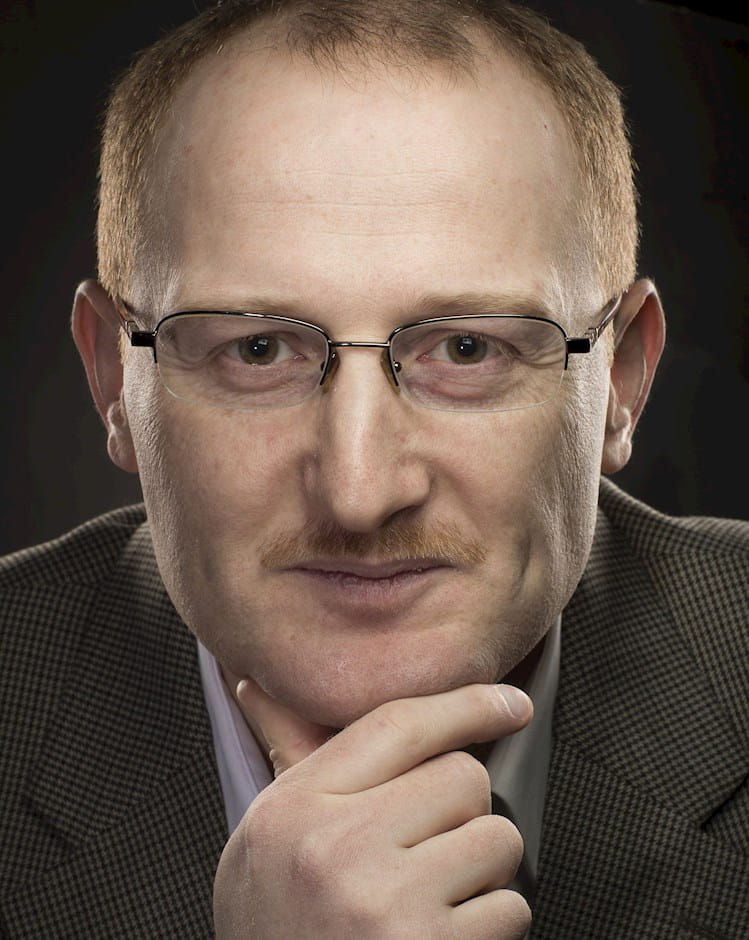
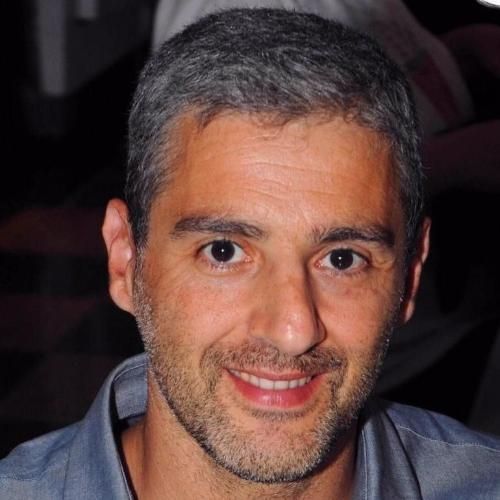
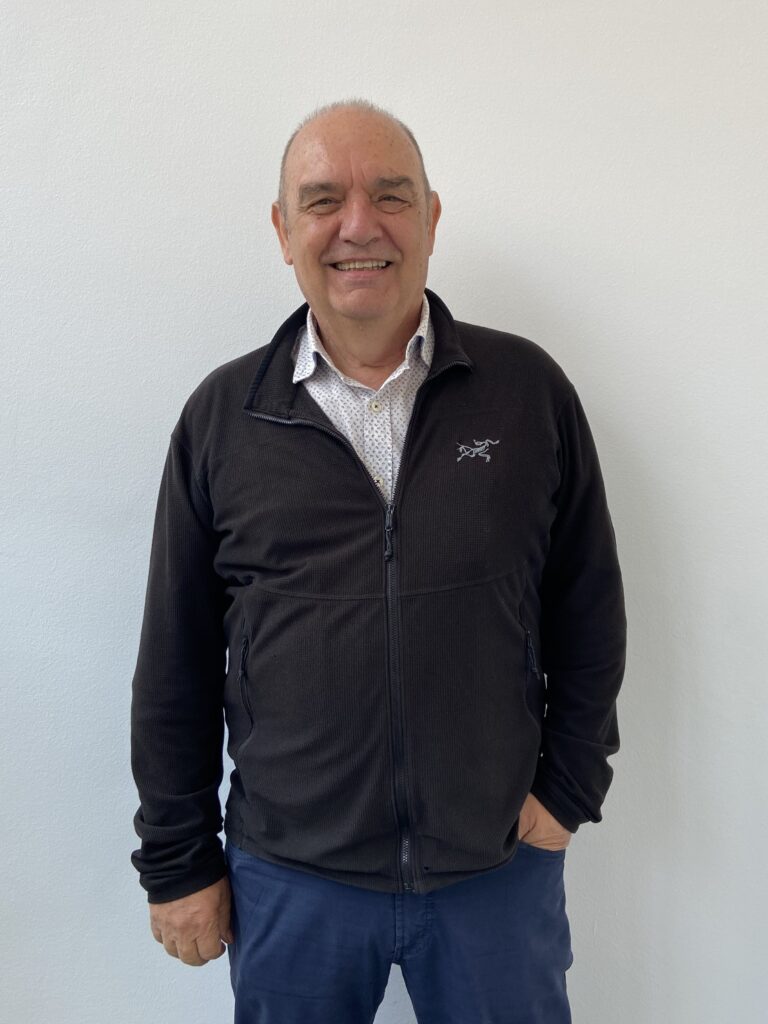
Albert Y. Zomaya is a Chair Professor of High Performance Computing & Networking at the University of Sydney's School of Computer Science. He also directs the Centre for Distributed and High Performance Computing. His research focuses on parallel and distributed computing, networking, and complex systems. He holds numerous prestigious fellowships, including IEEE Fellow, AAAS Fellow, and Fellow of the Australian Academy of Science. Roles: Chair Professor, Director of Centre for Distributed and High Performance Computing Affiliations: University of Sydney His expertise spans advanced computing architectures and networking solutions, with contributions to high-performance systems and complex adaptive systems. His awards reflect recognition for impactful research in computer science and engineering.
Maria Teresa Abad Soriano is affiliated with the Universitat Politècnica de Catalunya (UPC), specifically within the Faculty of Computer Science (FIB), Department of Computer Sciences. She is a researcher in the GPLN - Natural Language Processing Group and the TALP Research Center, contributing to both educational technologies and computational linguistics. Her work spans decades, showing sustained academic engagement. Her research interests focus on educational technology, higher education internationalization, computer-supported collaborative learning, distance learning systems, knowledge representation, and academic mentorship . These are reflected in her long-term involvement in projects related to e-learning platforms, tutoring systems, and institutional development in computing education. The analysis of her recent publications (2019–2024) reveals a strong trend towards the internationalization of higher education in computing, with detailed studies on mobility, academic policies, and institutional impact. Earlier works (1990s–2000s) center on algorithmic education, groupware modeling, and intelligent tutoring systems, showcasing a career that evolved from technical AI and educational software to broader educational policy and management. She has contributed to competitive R&D+i projects such as OPENMT and SKATeR, and has co-authored technical reports, conference papers, and indexed journal articles. Her collaborations include key figures like Nuria Castell, Juan Antonio Pastor, and Maria Felisa Verdejo. Scientific Awards: No scientific awards were mentioned in the provided text. She has supervised or contributed to the Doctoral Program in Business Administration and Management, and her technical and educational outputs suggest an advisory role in research, though specific students are not listed. She has participated in multiple competitive research projects funded under Spain’s National Research Plans, indicating success in grant acquisition. Her work with open datasets and technical documentation supports open science and institutional transparency. She is actively involved in research groups such as GPLN and TALP, which focus on natural language processing and language technologies, contributing to both theoretical and applied advancements in the field.
Burhaneddin Sandikci is an Associate Professor of Operations Management at the Booth School of Business, University of Chicago . His research focuses on decision-making under uncertainty in medical decision-making and healthcare operations , using advanced methodologies such as Markov decision processes , stochastic programming , and simulation . His recent work includes: Equilibrium analysis of marginal organ transplantation to address shortages. Modeling breast cancer screening with supplemental tests for high-risk patients. Developing parallel bounding methods for multistage stochastic programs . His publications appear in top-tier journals like Operations Research , Management Science , and Hepatology . He has received prestigious awards including the IIE Pritsker Doctoral Dissertation Award and INFORMS Bonder Scholarship . His research bridges operations management with healthcare policy , impacting organ allocation, transplant outcomes, and hospital capacity optimization.
David Lopez Vilariño is a **Professor** at the **University of Santiago de Compostela**, affiliated with the **Department of Electronics and Computing** within the **Faculty of Physics**. He earned his PhD in 2001 with a thesis titled *"Active contours at the pixel level: design and implementation on cellular network architectures,"* advised by Dr. Diego Cabello Ferrer. His research focuses on **Computer Architecture**, **FPGA Acceleration**, **LiDAR Data Analysis**, and **Embedded Systems**, with notable contributions to LiDAR-based applications in urban planning, infrastructure monitoring, and medical imaging. He is part of the **ARQCOMP (Computer Architecture)** and **Artificial Vision** research groups. His work spans topics such as high-performance computing, parallel processing, and hardware optimization for vision-capable systems. Key projects include developing FPGA-based solutions for real-time video surveillance, retinal vessel analysis, and autonomous navigation systems. Publications emphasize **LiDAR data processing**, including algorithms for road detection, power line characterization, and 3D point cloud analysis. He also pioneered tools like the *Open Lidar Visualizer and Analyser* for 3D stereoscopic visualization. His expertise bridges hardware design and software development, particularly in leveraging FPGAs for embedded vision systems. No scientific awards or grants are explicitly listed, but his prolific publication record highlights sustained innovation in computer vision and geospatial technologies. His research team collaborates on projects involving manycore systems, GPU acceleration, and reconfigurable computing architectures.
Manuel Carro is an Associate Research Professor and holds a dual appointment as Associate Professor at Universidad Politécnica de Madrid, Spain. He serves as Director and previously as Deputy Director at IMDEA. His research focuses on declarative programming languages, parallelism, service-oriented computing, and formal methods. He leads projects in the CLIP lab and participates in European/ national initiatives. Education: PhD in Computer Science, Universidad Politécnica de Madrid (2002) Research Highlights: Manuel investigates implementation of logic/constraint languages, quality analysis of service compositions, and data-driven behavior in service-oriented systems. He applies advanced operational semantics techniques like tabling and parallelism. His work also covers workflow analysis, visualization, and verification techniques. Affiliations: UPM Representative in NESSI ETP Steering Committee Conference Coordinator, Association of Logic Programming Labs & Teams: Active in the CLIP lab, focusing on programming language implementation and service-oriented computing research.
Josep Casanovas is a Full Professor at the Statistics and Operations Research Department of the Technical University of Catalonia (UPC), affiliated with the Barcelona School of Informatics. He previously served as head of inLab FIB (2012-2020) and as dean (1998-2004) and vice-rector (2006-2011) of UPC, leading strategic initiatives in university governance and ICT policies. His research focuses on Modelling and Simulation , Internet and Information Systems , and Urban Mobility . He has led projects for the European Union, including C-ROADS Spain, REMEDiAL, and ECHORD++, addressing intelligent transport, software automation, and robotic innovation. Recent publications highlight his work on agent-based simulation for urban health, deep learning applications in traffic and energy savings, and wildfire management tools . He co-directs LogiSim and coordinates the Severo Ochoa Research Excellence Program at the Barcelona Supercomputing Center (BSC-CNS).
Adrián García Gutiérrez is a Professor in the Department of Aerospace Engineering at the University of León's College of Engineering. His research focuses on aerospace systems, uncertainty quantification in CFD, atmospheric boundary layer modeling, and airship technology. Recent publications highlight his work in parallel orbital propagation algorithms, stochastic optimization of high-altitude platforms, and neural network applications for wind profiling. Key trends include aerodynamic modeling under uncertainty and interdisciplinary approaches combining turbulence analysis with LiDAR measurements. He contributes to educational innovation in aerospace engineering through simulation-based learning tools and leads the GITA Tecnología Aeroespacial research group.
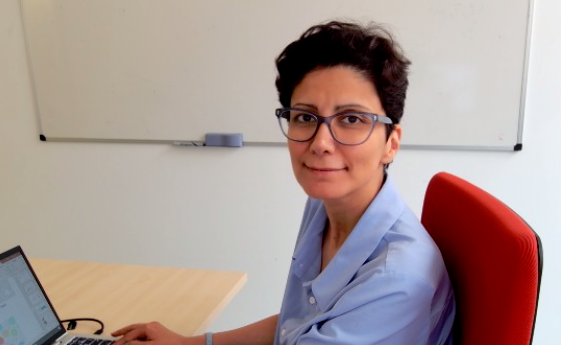
Pooran Memari is a CNRS Researcher at the Laboratoire d'Informatique de l'École Polytechnique (LIX), UMR CNRS 7161, Institut Polytechnique de Paris, and an Affiliate Professor (part-time) at École Polytechnique. She leads research in geometric modeling within the GeomeriX team at LIX-Inria, focusing on theoretical foundations and applications in accessibility and neurocognition. Her academic journey includes: HDR (Habilitation à diriger des recherches), Institut Polytechnique de Paris, 2024 Ph.D. in Geometric Modeling, INRIA Sophia-Antipolis, 2010 Master in Image and Geometry, University of Nice-Sophia Antipolis, 2006 Engineering Degree, École Polytechnique, 2005 Bachelor in Mathematics, Sharif University of Technology, 2002 Dr. Memari's research bridges geometric modeling, computational geometry, and computer graphics with real-world impact. She pioneers techniques in shape representation, point pattern synthesis, and surface reconstruction, advancing proximity encoding and clustering algorithms. Her work extends to accessibility applications—developing geometric models for visually impaired navigation through multisensory perception—and neurocognition validation via tactile interfaces. This interdisciplinary approach integrates theoretical rigor with practical tools like the CGAL library. Recent publications (2024-2019) reveal a cohesive trajectory in geometric processing: advancing point pattern synthesis through image-based editing (Patternshop), stability-incorporated neighborhood graphs (SING), and multi-class disk distributions; innovating surface reconstruction via Voronoi-based methods (BallMerge); and expanding applications to virtual worlds simulation and neurocognitive accessibility. Key themes include bridging discrete geometry operators with high-dimensional data analysis and translating theoretical insights into tools for visual computing. Dr. Memari actively mentors the next generation of researchers, advising eight PhD students on topics ranging from generalized Voronoi diagrams to neurocognition-driven tactile navigation. She coordinates Computer Science Projects for École Polytechnique's Bachelor program since 2019 and co-leads the Interaction, Graphics & Design master's program at IP-Paris. Her leadership extends to editorial roles at Computer Graphics Forum and Graphical Models Journal, alongside prominent conference positions including SGP Program Co-Chair (2023) and Eurographics STARs Co-Chair (2025). As a core GeomeriX team member, she drives collaborative projects in geometric modeling and virtual environments. She coordinates the LIX Seminar since May 2025 and serves on the French Eurographics Chapter board, fostering community engagement through initiatives like the IGD master's program and Eurographics symposia.
Daniel Jimenez Gonzalez is a faculty member at the Universitat Politècnica de Catalunya (UPC), affiliated with the Department of Computer Architecture within the School of Informatics (FIB). He is an active researcher in programming models and high-performance computing, contributing extensively to the field through publications, projects, and academic supervision. Research Interests: His work focuses on Computer Architecture , Programming Models , and Parallel Computing . He investigates task-based programming, runtime systems, compiler optimizations, and performance modeling for multi-core and heterogeneous architectures. His research addresses challenges in scalability, energy efficiency, and resilience in modern computing environments. His recent publications show a consistent trend in task-based programming models , runtime scheduling , and performance optimization across diverse architectures, including NUMA and GPU-accelerated systems. The work spans from theoretical modeling to practical implementation, often targeting real-world HPC applications. Scientific Awards: No awards explicitly mentioned in the provided text. Advising and Grants: While specific students are not listed, his involvement in doctoral theses and R&D projects suggests an active role in mentoring graduate students. He has participated in both competitive and non-competitive R&D+i projects, indicating grant acquisition and project leadership experience in areas related to programming models and computer architecture. Labs and Teams: He is a member of the UPC PM - Programming Models research group, which focuses on the design, analysis, and optimization of modern programming paradigms for high-performance systems.
Francisco Carreras Martínez is an Associate Professor in the Department of Mathematics at the Faculty of Mathematics, University of Valencia, Spain. His research is centered on differential geometry, particularly in the areas of Riemannian and pseudoriemannian almost-product manifolds, curvature tensors, and geometric invariants. His research interests include Differential Geometry , Riemannian Geometry , Almost-Product Manifolds , Curvature Tensor , Index Form of Geodesics , and Kaehler Submanifolds . His work bridges pure mathematics with applications in mathematical biology, notably in computational modeling of cardiac electrophysiology. The most recent publications indicate a sustained focus on geometric structures and their analytical properties, with a notable interdisciplinary contribution in 2011 on a parallel computational model of the heart. This reflects a trend toward applying advanced geometric and analytical methods to complex biological systems. Francisco Carreras Martínez completed his doctoral studies at the Universitat de València with a thesis on linear invariants of Riemannian almost-product manifolds, supervised by Dr. Antonio Martínez Naveira. He has collaborated with researchers such as Vicente Miquel, Fernando Giménez, and Antonio M. Naveira. While specific grant information is not provided, his publication record suggests involvement in collaborative and possibly funded research projects, particularly in interdisciplinary domains. He is affiliated with the research group in Geometry and Topology at the University of Valencia, contributing to both theoretical developments and applied mathematical modeling.
Oscar Romero Moral is a Professor at the Polytechnic University of Catalonia (UPC), affiliated with the Department of Services and Information Systems Engineering at the Barcelona School of Informatics (FIB). He leads research in the inSSIDE, inLab FIB, and DTIM groups, focusing on data management, data science, and big data technologies. His work emphasizes knowledge graphs, data governance, and machine learning integration with data systems. Affiliations: UPC, inSSIDE, inLab FIB, DTIM Group Research Interests: Data Management, Data Engineering, Big Data, Knowledge Graphs, Data Governance, Machine Learning Integration He has authored over 276 academic contributions, including peer-reviewed articles on federated healthcare data systems, GPU-accelerated workflows, and graph-driven data integration. His recent work addresses challenges in heterogeneous computing, automated data governance, and scalable data architectures. Romero has served on the program committees of major conferences like VLDB, ICDE, and EDBT, and led competitive research projects in data systems and analytics. He collaborates extensively with industry partners and academic institutions, driving innovations in distributed data management and edge computing.
Daniel Nagy is an Assistant Professor at the Department of Electronics and Computing within the Higher Polytechnic School of Engineering at the University of Seville. His research focuses on nanoelectronics, semiconductor device simulation, and TCAD technologies. He leads the ARQCOMP research group, specializing in computer architecture and novel transistor design. Education details are not explicitly provided in the texts, but his academic focus suggests advanced training in electronics engineering or related fields. His research interests include quantum transport phenomena, nanoscale device variability analysis, and computational modeling of FinFETs, nanowire FETs, and nanosheet transistors. He has extensively contributed to TCAD simulation frameworks such as NESS (Nano-Electronic Simulation Software), emphasizing open-source tools. Research Trends: His work emphasizes transistor scaling challenges for sub-2nm nodes, device variability mitigation, and the development of modular simulation tools. Key topics include nanosheet FET optimization, POM-based molecular memory systems, and benchmarking of emerging transistor architectures. His studies often bridge quantum mechanics (via Schrödinger equation modeling) with classical transport phenomena. No scientific awards are mentioned in the provided texts. He has advised no publicly listed PhD/Master’s students. His ARQCOMP group collaborates on next-generation electronic device architectures and simulation methodologies. Labs/Teams: The ARQCOMP group focuses on advancing computer architecture and nanoelectronic device simulation through interdisciplinary approaches, integrating computational physics, materials science, and electrical engineering.
José Herrera Sanz is an Assistant Professor at the Department of Automation, University of Alcalá (Spain). He holds a Doctorate from Universidad Complutense de Madrid (2008) with a thesis titled Modelo de programación para infraestructuras Grid computacionales , supervised by Dr. Rubén Manuel Santiago Montero and Dr. Ignacio Martín Llorente. His research focuses on Grid computing, distributed systems, and sustainability in programming models. He is affiliated with the PROGRESSUS research group (Programming & Sustainability), exploring topics like distributed task scheduling, grid middleware, and high-performance computing applications. His work spans over 15 peer-reviewed articles since 2003, addressing challenges in virtual machine placement, genetic algorithms, and bioinformatics grid benchmarking. Key contributions include the GridWay DRMAA implementation, optimization of fusion physics workflows, and distributed loop execution frameworks. His research emphasizes sustainable computing practices and scalability in grid environments.
Ricardo Augusto Massarico Serafim is a Professor in the Department of Pharmaceutical Chemistry at IQS, University School of Engineering and Chemistry, Ramon Llull University in Barcelona, Spain. He serves as Principal Investigator for the Pharmaceutical Chemistry Research Group (Grup de Química Farmacèutica), leading a research project funded by Agència de Gestió d'Ajuts Universitaris i de Recerca (AGAUR) from January 2022 to June 2025. With an h-index of 10 and 564 citations across 26 research outputs, his work bridges medicinal chemistry and pharmaceutical sciences. Dr. Massarico Serafim's research focuses on developing novel therapeutic agents with particular emphasis on covalent inhibitors targeting USP7 and protein kinases, natural product-based dermatological applications, and treatments for Chagas disease. His fingerprint analysis reveals significant contributions to Protein Kinase research (91%), Cruzipain studies (66%), and investigations into natural compounds like Naringenin, Chlorogenic Acid, and their effects on Trypanosoma Cruzi. His work spans both fundamental biochemical mechanisms and applied pharmaceutical development. His recent publications demonstrate a strong trend toward covalent drug design, particularly for cancer targets like USP7 and protein kinases, while maintaining parallel research on natural flavonoids for topical applications. The 2024-2025 publications show increasing sophistication in molecular design, with multiple papers focusing on unconventional binding modes and scalable synthesis methods for covalent inhibitors. His research combines computational modeling, synthetic chemistry, and biological evaluation to develop targeted therapeutics. Among his notable scientific contributions are the development of covalent USP7 inhibitors with unconventional binding modes, scalable synthetic routes for specialized chemical probes, and comprehensive safety evaluations of natural polyphenols for topical use. His work on chlorogenic acid, apigenin, kaempferol, and naringenin has been particularly influential, with one 2024 paper accumulating 8 Scopus citations and significant social media attention. As Principal Investigator of the Pharmaceutical Chemistry Research Group, Dr. Massarico Serafim leads a multidisciplinary team of approximately 20 researchers including Borrell, Lloveras, Semino, and others. His research has received consistent funding support, with publication output showing steady growth from 1 paper in 2010 to 4 papers in 2025. His collaborations span multiple institutions, with recent external collaborations visible across various country territories as indicated in his research network map.
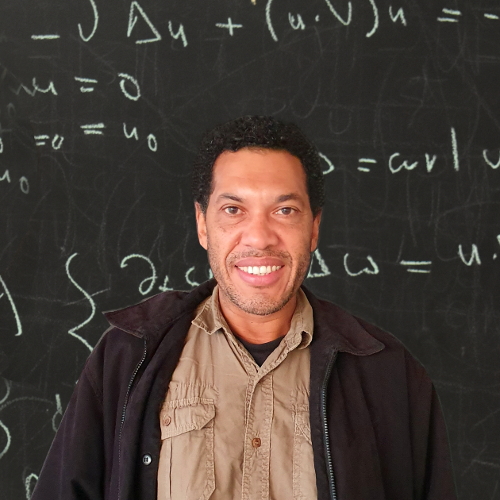
Alexandre Santos Francisco is Professor of Fluid Mechanics at Fluminense Federal University (Universidade Federal Fluminense) in Brazil, holding a PhD in Nuclear Engineering. He will soon serve as Visiting Professor at the ERC Advanced Grant project DyCon under Prof. Enrique Zuazua (FAU, University of Deusto, and Universidad Autónoma de Madrid), focusing on computational mathematics and porous media research. His academic credentials include: PhD in Nuclear Engineering (1994–2000), Federal University of Rio de Janeiro Master's Degree in Nuclear Engineering (1990–1993), Federal University of Rio de Janeiro Bachelor's Degree in Mechanical Engineering (1984–1990), Federal University of Rio de Janeiro Internship at Petrobras (1988) Francisco's research centers on porous media, computational mathematics, and computational fluid mechanics, with emphasis on numerical methods for heterogeneous media flows. His work bridges nuclear engineering safety, environmental contaminant transport, and industrial process optimization through advanced simulation techniques. Analysis of his 15 most recent publications reveals dominant trends in multiscale modeling for porous media, parallel computing implementations, and reliability assessment in nuclear systems. Key application areas include waste disposal simulation, steam generator integrity, and multiphase industrial processes, consistently integrating mathematical rigor with engineering challenges. No scientific awards are documented in the provided materials. While student advisement details are absent, his upcoming ERC Advanced Grant project DyCon involvement signifies active grant-funded research. The project will expand his work on mathematical control theory for complex systems under Prof. Zuazua's supervision. He collaborates internationally through the ERC DyCon project, leveraging expertise in numerical methods to address multiscale dynamics in porous media, with future work likely advancing computational techniques for energy and environmental applications.