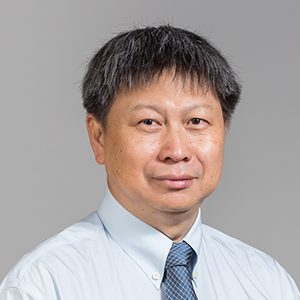
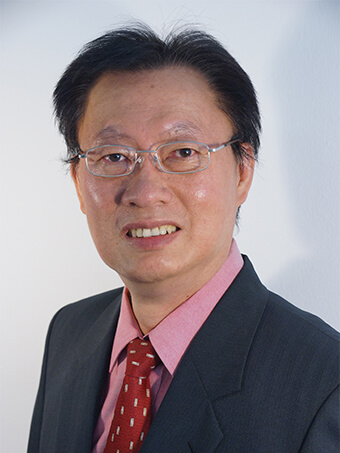
TAN Tiow Seng is an Associate Professor at the School of Computing, National University of Singapore . He holds a Ph.D. in Computer Science from the University of Illinois Urbana-Champaign (1993), an M.Sc. in Computer Science from NUS (1988), and a B.Sc. in Mathematics & Computer Science from NUS (1984). Research Interests : Design of geometric algorithms for GPU acceleration Applications in interactive graphics, visualization, and game development Development of robust GPU software for geometric computation Selected Publications demonstrate expertise in Delaunay triangulation, Voronoi diagrams, convex hulls, and GPU-based distance transforms. His team pioneered GPU-accelerated mesh refinement techniques and parallel recurrence optimization. Scientific Awards : NUS/SOC Teaching Excellence Award (1999, 2004, 2022) C. W. Gear Outstanding Graduate Student Award (UIUC, 1992) National University Overseas Graduate Scholarship (1988–1992) Data Processing Managers’ Association Award (1984) Industry Contributions : Holds five US/Singapore patents Chairman/co-founder of G Element Pte Ltd , a graphics/visualization company Served as expert panel member for Media Development Authority (MDA) funding evaluations
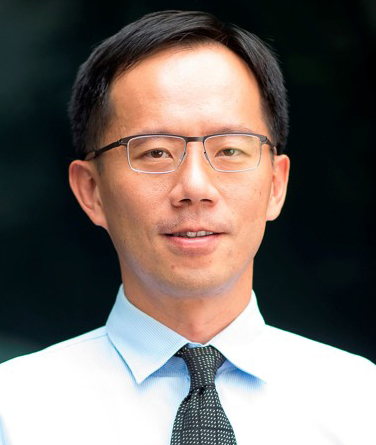
CHENG Shih-Fen is an Associate Professor of Computer Science at Singapore Management University (SMU) and a Principal Research Scientist at Amazon. He holds a PhD in Industrial and Operations Engineering from the University of Michigan and a BSE in Mechanical Engineering from National Taiwan University. His research focuses on modeling and optimization of complex systems in urban computing, decision-making, and transportation, with notable contributions to taxi fleet management, ride-hailing systems, and sustainable logistics. Research interests include Artificial Intelligence , Decision Optimization , Machine Learning , and Urban Sustainability . Notable achievements include prestigious awards from CIKM, AAMAS, and INFORMS. He has advised students such as Qian Shao and Pang Jin Tan, who received SMU Presidential Doctoral Fellowships. Key contributions include the Driver Guidance System (DGS) for taxis and patented taxi demand prediction models. Publications span top venues like IJCAI, AAAI, and Transportation Science. He is a Senior Editor of Electronic Commerce Research and Applications and actively contributes to professional communities like INFORMS and AAAI.
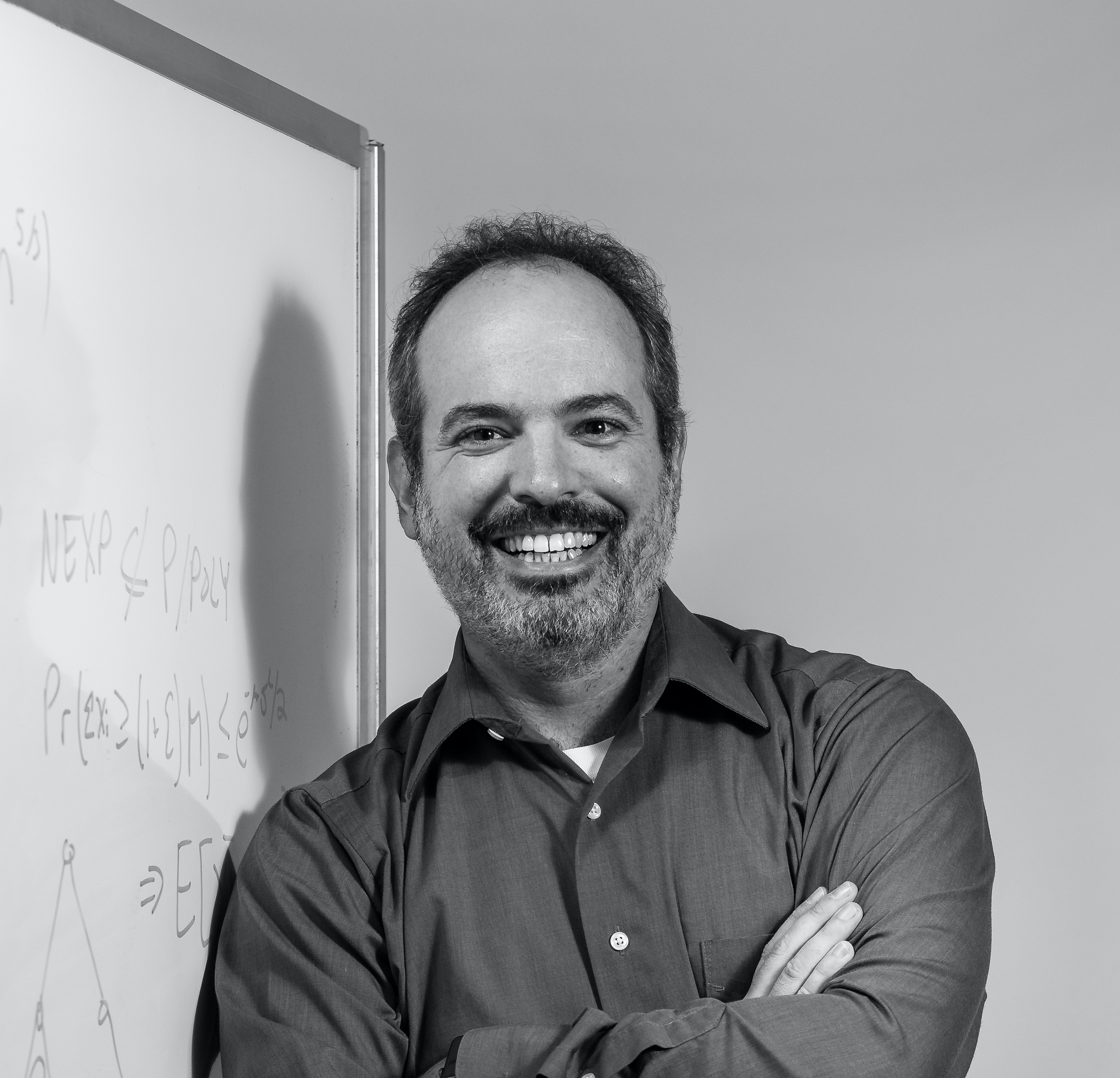
Seth Gilbert is the Dean's Chair Associate Professor and Head of the Department of Computer Science at the National University of Singapore. His research focuses on designing robust, scalable algorithms for large-scale distributed systems, particularly in the domains of Byzantine agreement, dynamic networks, and contention resolution. He holds a PhD from MIT (advised by Nancy Lynch) and completed a postdoc at EPFL under Rachid Guerraoui. His work emphasizes three core techniques: accountability (identifying network failures), work-sharing (task distribution in asynchronous environments), and contention resolution (efficient resource allocation). Notable contributions include the DConstructor (PODC 2020) and Polygraph (ICDCS 2021) protocols for accountable Byzantine agreement. He has received multiple awards, including the Edsger W. Dijkstra Prize (2021) and Best Paper Awards at DISC, ICDCS, and IPDPS. Prof. Gilbert has served as program chair for DISC 2021, OPODIS 2019, and SPAA 2016, and currently chairs the DISC Steering Committee. His career includes industry experience at Microsoft (Visual Studio team) and early work on solar car engineering at Yale University.
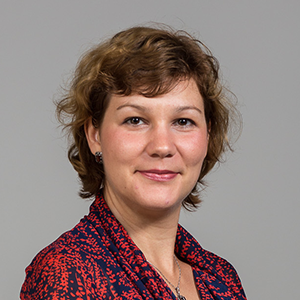
Cristina Carbunaru is a Senior Lecturer at the National University of Singapore in the Department of Computer Science. She holds a Ph.D. in Computer Science (2013) from NUS and a B.Eng. in Computer Engineering from Politehnica University of Bucharest. Her teaching focuses on software engineering, computer networks, parallel computing, and performance analysis. Education: Ph.D. (NUS, 2013), B.Eng. (Politehnica University of Bucharest) Research Interests center on analytic modeling and performance analysis for distributed systems, alongside educational innovations in authentic learning and automatic assessment . Her work examines peer-assisted file distribution, flash crowd dynamics, and heterogeneous swarm behavior. Scientific Awards include: Singapore Ministry of Education Graduate Studies Award (2008-2014) Special Merit Fellowship from Politehnica University of Bucharest (2002-2007) She has published extensively on distributed system performance, focusing on peer-to-peer networks and scalability challenges.
Julie Cailler is an Associate Professor at the University of Lorraine, affiliated with CNRS, Inria, and LORIA in Nancy, France. She is a member of the VeriDis Team and focuses on automated deduction, interactive proof systems, and logic in computer science. PhD in Theoretical Computer Science from the University of Montpellier (2023) Former Associate Professor at the University of Regensburg Her research interests include: Designing concurrent and parallel decision procedures for first-order logic Integration of automated and interactive theorem proving Proof system interoperability and formal verification Recent publications highlight her work on: SC-TPTP format extensions for sequent-based proofs (CADE-30, 2025) Graph Neural Networks for word equation solving (ATVA 2024, 2025) Deskolemization strategies in first-order logic (LPAR 25, 2024) Scientific recognition: Woody Bledsoe Award (2022) Best Newcomer Prover (CASCJ11, 2022) She supervises students in projects related to: Automated theorem prover development Logic programming and deduction modulo theory Formal verification and proof tool integration Julie is actively involved in academic service as: Co-head of GT LVP (Languages and Program Verification) working group PC member for major conferences like FMCAD, FSTTCS, and ITP
Marcus ANG Teck Meng is an Associate Professor of Operations Management (Education) at the Lee Kong Chian School of Business, Singapore Management University. He is also the Academic Director and Track Coordinator of the International Trading Institute (ITI). His academic journey began at the National University of Singapore, where he earned dual B.Sc. degrees in Mathematics, followed by an S.M. in High Performance Computing and a Ph.D. in 2008. Ph.D., National University of Singapore, 2008 S.M., High Performance Computing for Engineering Systems, Singapore-MIT Alliance under NUS, 2003 B.Sc. (Hon), Mathematics, National University of Singapore, 2002 B.Sc., Mathematics, National University of Singapore, 2001 His research focuses on the theoretical and applied aspects of operations management, particularly in inventory management , stochastic models , and robust optimization . His work bridges mathematical rigor with real-world applications in supply chains, healthcare, and e-commerce. He has made significant contributions to warehouse storage optimization, hospital resource planning, and online retail fulfillment under uncertainty. The recent articles reflect a strong trend in applying robust optimization and stochastic modeling to logistics and service operations. His research spans domains such as healthcare analytics, e-commerce fulfillment, and inventory systems. Keywords like operations research , supply chain management , and data analytics dominate, with sub-fields including appointment scheduling, risk measures, and warehouse layout optimization. His teaching excellence has been widely recognized: Winner, SMU Undergraduate Excellent Teacher Award (2020) Winner, SMU Undergraduate Innovative Teacher Award (2018) Nominee, SMU Undergraduate Innovative Teacher Award (2021, 2022) Multiple appearances on SMU Dean’s Teaching Honour List (Undergraduate and Postgraduate) MPA Research Fellow (AY2019–2023) Dean’s List, NUS Department of Mathematics (AY1998–2001) He leads the International Trading Institute (ITI) and has been involved in pedagogical innovation through TEL grant-funded projects such as Inn or Out and Pricing Boss . While no formal list of advisees is provided, his role as Academic Director and course coordinator suggests active mentorship and supervision of students in operations and analytics. He has no known lab or research team explicitly mentioned, but his case studies and projects indicate strong industry engagement and applied research leadership.
ZHENG Baihua serves as Professor of Computer Science at Singapore Management University's School of Computing and Information Systems (SCIS), concurrently holding leadership roles as Associate Dean for SCIS Post-Graduate Research Programmes and Director of the Master of Science in Computing programme. Currently on leave but maintaining full-time faculty status, his academic career spans over two decades with foundational training from Hong Kong University of Science and Technology. Professor Zheng's research program integrates artificial intelligence, data science, and urban computing to solve critical challenges in mobility and sustainability. His expertise centers on trajectory data management, social network analysis, and spatio-temporal modeling, with significant contributions to trajectory compression algorithms, influence minimization in social networks, and real-time traffic prediction systems. His work bridges theoretical database innovations with practical applications in smart city infrastructure and public health interventions. Analysis of recent publications (2024-2025) reveals a dominant focus on physics-informed trajectory processing, GPU-accelerated indexing for high-dimensional data, and transformer-based models for urban mobility prediction. Key trends include the fusion of graph neural networks with spatio-temporal dynamics, novel approaches to contact tracing through timeline graphs, and differentiable search techniques for structured data discovery. These works consistently target real-world deployment in transportation systems and epidemic control. No scientific awards are documented in available institutional records. Information regarding student supervision, research grants, laboratory facilities, or collaborative teams remains unspecified in current public profiles.
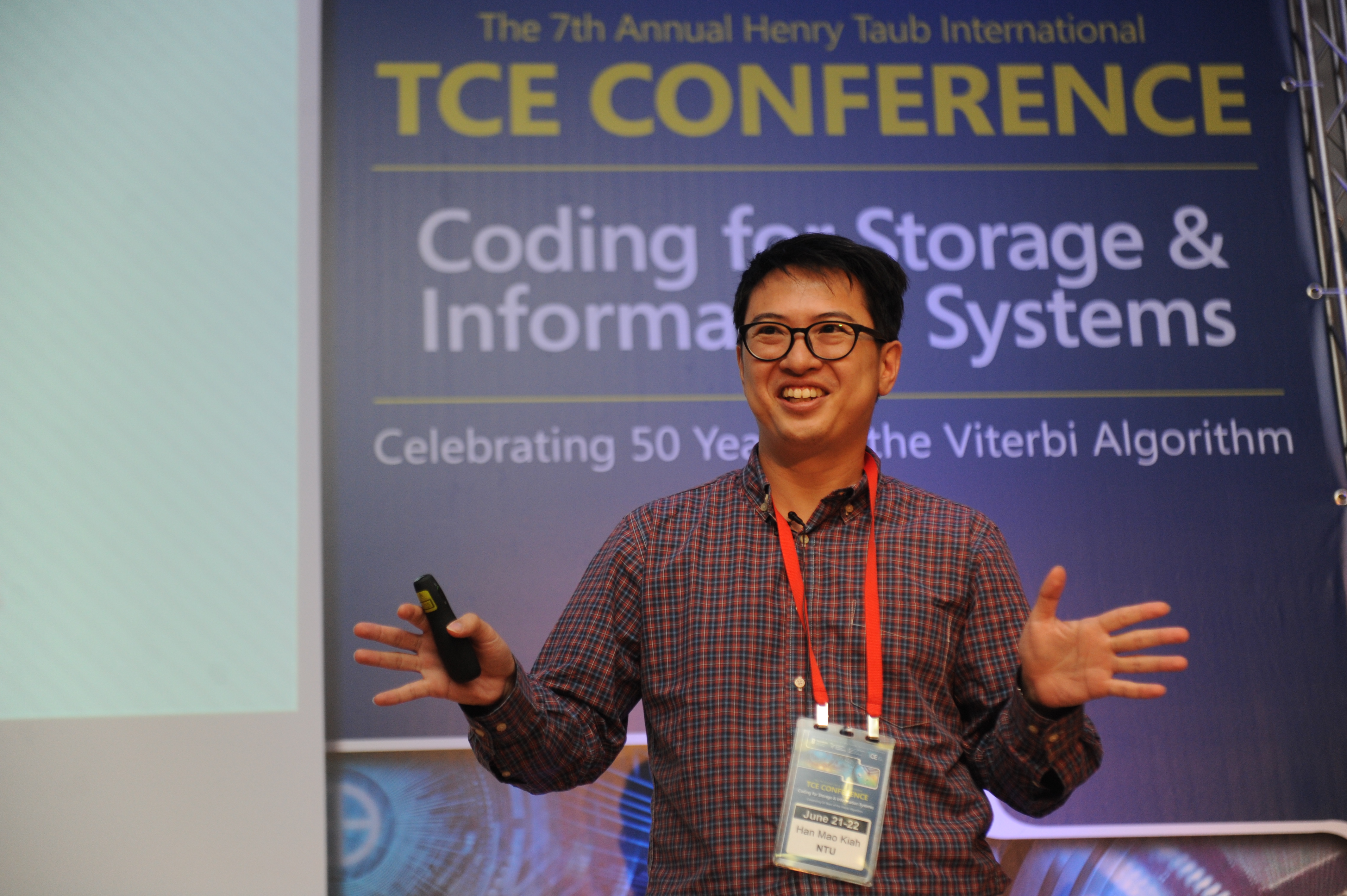
Han Mao Kiah is an Assistant Professor at Nanyang Technological University , specializing in Coding Theory and Combinatorics . He earned his Ph.D. in Mathematics at NTU under Yeow Meng Chee and held a postdoctoral position at the Coordinated Science Lab, University of Illinois at Urbana-Champagne with Olgica Milenkovic . Current Role: Assistant Professor, NTU, Department of Mathematics Education: Ph.D. in Mathematics (NTU), Postdoc (University of Illinois) His research focuses on Coding Theory for applications in DNA-based data storage , Reed-Solomon codes , and combinatorial designs . Recent work includes Private Information Retrieval , Sequence Reconstruction , and Error Correction in distributed systems. Key trends in his publications involve Reed-Solomon codes , Private Information Retrieval , and DNA sequence profiling with a focus on Efficient Algorithms and Constrained Coding for error control in emerging storage systems. ISITA Early Career Researcher Paper Award (2022, Researcher: D. T. Dao) Memorable Paper Award Finalist (2021, Student: J. Chrisnata) Best Student Paper Award (2020, Student: J. Chrisnata) Student Paper Award Finalist (2012)
Penghui Yao is a Professor in the Department of Computer Science and Technology at Nanjing University, where he is a member of the CS Theory group. His academic career spans prestigious institutions including the Centre for Quantum Technologies at National University of Singapore, Centrum Wiskunde Informatica (CWI), Institute for Quantum Computing (IQC) at University of Waterloo, and Joint Center for Quantum Information and Computer Science (QuICS) at University of Maryland. Education: BSc in Mathematics from East China Normal University PhD from Centre for Quantum Technologies, National University of Singapore (supervised by Rahul Jain and Miklos Santha) Professor Yao's research focuses on quantum computing and theoretical computer science, with particular expertise in quantum algorithms and computational complexity. His work bridges classical and quantum information theory, with significant contributions to analysis of Boolean functions and their quantum applications. He has developed novel approaches to communication complexity problems in both classical and quantum settings, advancing our understanding of the fundamental limits of computation. His recent publications reveal a strong trend toward practical quantum algorithms with applications in distributed systems, quantum simulation, and quantum cryptography. The breadth of his work spans from theoretical foundations of quantum complexity classes to experimental implementations of quantum processes, demonstrating both depth in theoretical understanding and relevance to practical quantum computing challenges. Professor Yao actively mentors the next generation of quantum computing researchers, supervising multiple PhD and Master's students at Nanjing University while maintaining collaborations with international research groups. His service to the community includes program committee roles for major quantum computing conferences including QIP and TQC.
Assoc Prof Anupam Chattopadhyay is an Associate Professor in the College of Computing & Data Science at Nanyang Technological University (NTU), Singapore. He also holds a courtesy appointment in the School of Physical & Mathematical Sciences. His research focuses on computer architecture, security, design automation, and quantum computing. Anupam received his PhD from RWTH Aachen University in 2008, followed by roles at CoWare R&D and RWTH Aachen as a Junior Professor before joining NTU in 2014. Education: B.E., Jadavpur University, India MSc, ALaRI, Switzerland PhD, RWTH Aachen University, Germany Research Interests: Anupam’s work spans quantum computing, hardware security, AI security, post-quantum cryptography, and emerging technologies. His contributions include novel high-level synthesis techniques for cryptography, reliability estimation flows for embedded processors, and exploration of coarse-grained reconfigurable architectures. His research has been featured in major outlets like The Economist and Asian Scientist. Awards: Borcher's plaque (2008) for outstanding doctoral dissertation Nomination for Best IP Award (ACM/IEEE DATE 2016) Nomination for Best Paper Award (International Conference on VLSI Design 2018) Advising & Grants: Anupam leads a team of over 20 researchers, overseeing projects funded by various grants. He has advised numerous doctoral students and collaborates with institutions like Temasek Labs and the Indian Statistical Institute. Labs & Teams: His research group focuses on advanced topics in secure computing, quantum-resistant systems, and hardware-software co-design, leveraging cutting-edge tools and platforms for next-generation technologies.
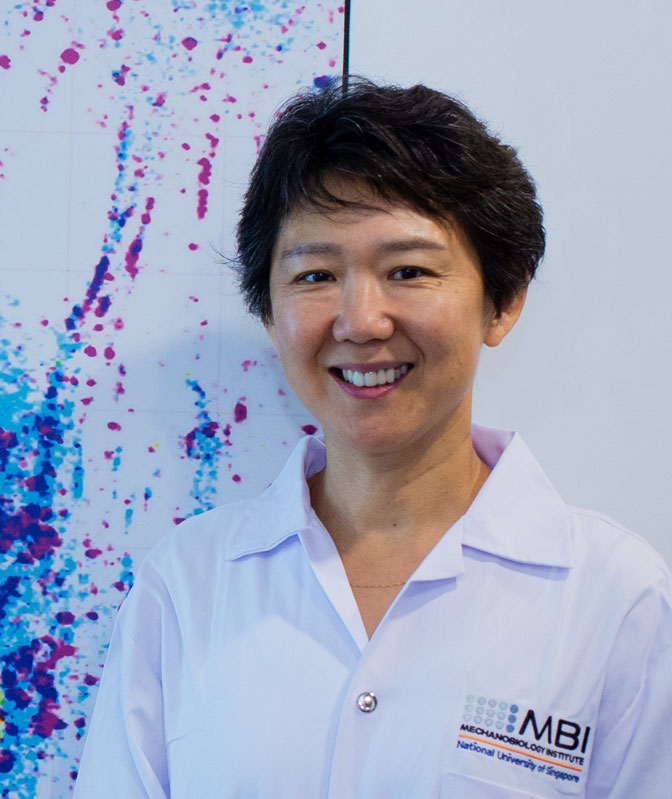
LI Rong is a Professor (courtesy appointment) in the Department of Mechanical Engineering at the National University of Singapore (NUS), and Director of the Mechanobiology Institute (MBI), a Research Centre of Excellence at NUS. She concurrently holds a Distinguished Professorship in the Department of Biological Sciences at NUS. Previously, she served as Bloomberg Distinguished Professor of Cell Biology at Johns Hopkins School of Medicine and Department of Chemical and Biomolecular Engineering at Johns Hopkins University. Her research focuses on cellular dynamics and mechanics, integrating genetics, quantitative imaging, biophysical measurements, mathematical modeling, genomics, and proteomics. This interdisciplinary work aims to understand how eukaryotic cells transmit genomes, adapt to environments, and organize for specialized functions. Her recent publications span entity profiling, temporal data management, and big data analytics systems. Key contributions include the MAROON+ system for temporal entity profiling, HC-Store for hybrid MapReduce-RDBMS systems, and frameworks for optimizing algorithmic trading strategies using MapReduce. LI Rong's leadership roles include directing the Mechanobiology Institute and holding distinguished appointments across multiple institutions. Her work bridges engineering, biology, and computational sciences, reflecting her expertise in both mechanobiology and big data systems.
Weng Fai WONG is an Associate Professor and Deputy Head of the Department of Computer Science at the School of Computing, National University of Singapore (NUS). With over three decades of academic experience at NUS, he has established himself as a leading researcher in computer systems, with particular expertise in the interface between hardware and software stacks. Dr. Wong received his B.Sc. (First Class Honors) and M.Sc. from the National University of Singapore in 1989 and 1991 respectively, followed by a Dr.Eng.Sc. from the University of Tsukuba in 1993. His academic journey began at NUS (then DISCS) in 1985, where he progressed from student to Senior Tutor in 1989, and later returned from Japan as a Lecturer in 1993. Dr. Wong's research focuses on systems and networking, with special emphasis on hardware-software co-optimization. His current research interests include approximate computing , neuromorphic computing , and hardware acceleration for deep learning. His work spans computer architecture , embedded systems , compilers and runtime systems , and programming languages . He has made significant contributions to optimizing software for novel hardware including FPGAs, GPUs, and non-volatile memory technologies. His recent publications (2023-2025) demonstrate a strong focus on energy-efficient AI computing, with particular emphasis on spiking neural networks, large language model acceleration, and FPGA-based solutions for graph processing and machine learning workloads. His research shows a clear trajectory toward green AI through hardware-software co-design that minimizes energy consumption while maintaining computational effectiveness. Dr. Wong is a Member of ACM and a Senior Member of IEEE. His paper "Exploiting half precision arithmetic in Nvidia GPUs" was a Best Paper Finalist at the IEEE High Performance Extreme Computing Conference (HPEC 2017). As Deputy Head of the Department of Computer Science at NUS, Dr. Wong plays a key leadership role in academic administration while maintaining an active research program. His work has been supported by numerous research grants, though specific details are not provided in the available information. Dr. Wong leads research in the Systems & Networking area at NUS, with particular focus on the Hardware-Software Interface Laboratory. His team explores innovative approaches to bridge the gap between theoretical computer science and practical hardware implementation, with applications spanning from edge computing to large-scale data centers.
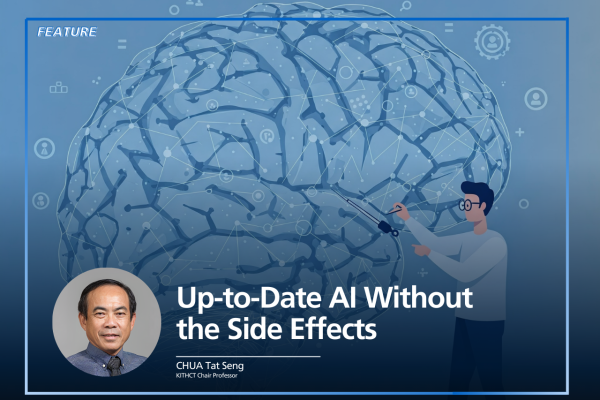
Professor Chua Tat Seng is a distinguished academic at the National University of Singapore's School of Computing, serving as KITHCT Chair Professor and Director of the NUS-Tsinghua Extreme Search Center (NExT). He also holds Distinguished Visiting Professorships at Tsinghua and Zhejiang Universities in China. PhD in Computer Science (University of Leeds, 1983) Founding Dean of School of Computing (1998-2000) Co-founded ViSenze and 6Estates technology startups His research focuses on unstructured multimodal data analytics, with particular emphasis on multimedia information retrieval, social media analytics, recommendation systems, and trustworthy AI. He has pioneered work in computational wellness and fintech applications, establishing the Lab for Media Search and leading NExT++ research initiatives. Over 300 publications in leading venues (CVPR, SIGIR, WWW, AAAI) Recipient of ACM SIGMM Technical Achievement Award (2015) Supervised 37 PhD students since 2004 Editorial leadership in ACM Transactions and IEEE Multimedia Recent work explores multimodal LLMs, knowledge editing techniques (AlphaEdit), and 3D generation frameworks, reflecting his commitment to advancing web intelligence and user empowerment.
Professor Toh Kim Chuan is the Leo Tan Professor in Science and serves as Research Director (Technical) at the Institute of Operations Research and Analytics (IORA) within the National University of Singapore (NUS). His primary affiliation is with the Department of Mathematics in the Faculty of Science. His research focuses on matrix optimization problems, large-scale semidefinite programming, fast algorithms for statistical and machine learning tasks, and iterative methods for solving large linear systems in optimization contexts. His recent work emphasizes contributions to nonsmooth nonconvex optimization, distributionally robust optimization, and scalable algorithms for sparse and low-rank optimization problems. Notable methodologies include Bregman proximal algorithms, adaptive sieving techniques, and inexact augmented Lagrangian methods. Professor Toh is also actively involved in developing computational tools like CDOpt for Riemannian optimization and frameworks for low-bit communication in distributed model training. While no specific awards are listed, his extensive publication record (over 150 papers from 2020-2025) demonstrates significant contributions to optimization theory and applications. His research bridges theoretical foundations with practical implementations, addressing challenges in large-scale systems, machine learning, and operations research.
Dr. Tay Seng Chuan is an Associate Professor in the Department of Physics at the National University of Singapore (NUS). He is also the Deputy Director of the Centre for Remote Imaging, Sensing and Processing (CRISP) since 2001. His roles include coordination of the SM2/SM3 Bridging Courses under the Office of the Provost and Warden at Ridge View Residences . PhD in Computer Science from NUS (1999) Master of Science in Computer and Information Sciences from NUS (1994) His research interests span Remote Sensing , Image Processing , Parallel Simulation , Performance Modeling , High Level Architecture (HLA), and Information Technology Applications . He has contributed to Parallel Discrete-Event Simulation , Performance Analysis , and IT in Education . His publications focus on Time Warp Algorithms , Distributed Simulation , Parallel Processing , and Java-based Educational Tools . He has received multiple Meritorious Teaching Awards from NUS. Meritorious Teaching Award (2000) Meritorious Teaching Award (1999) Science Teaching Award (1997) In administration , he has served as Deputy Director at CRISP, Head of Education Division at CITA (1998–2001), and Webmaster of the Physics Department (1996–2001). He has also supervised UROPS projects on topics like Memory Management for Parallel Simulation and Remote Sensing Data Processing .